Old boxes tend to pile up quickly after online orders, holiday deliveries, moves, and everyday purchases. Many people break them down for recycling right away, which is often the right call, but some boxes can still be useful before they leave the house. With a little creativity and a practical mindset, reused boxes can become simple storage solutions that help reduce clutter, organize daily essentials, and make your home more functional without adding extra cost.
1. Turn Sturdy Shipping Boxes Into Closet Storage Bins
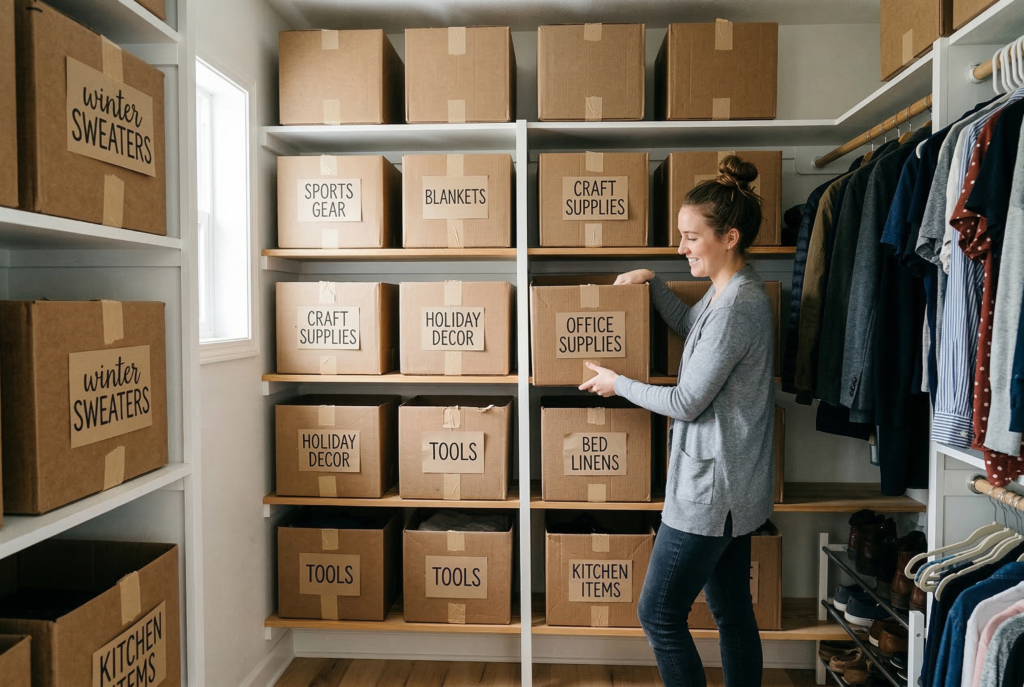
One of the easiest ways to reuse old boxes is to turn them into closet organizers. Medium and small shipping boxes work especially well for storing accessories, seasonal items, or clothing that doesn’t need to hang. Scarves, hats, belts, workout gear, and even folded T-shirts can all be grouped neatly in labeled box bins.
To make them more useful, trim the flaps, reinforce the corners with tape, and cover the outside with kraft paper, contact paper, or leftover fabric for a cleaner look. Adding a handwritten or printed label helps everyone in the household know what belongs inside.
This works well in bedroom closets, linen closets, and hallway storage because it creates clear categories without requiring you to buy matching containers. When storage is visible and simple, it’s easier to maintain.
2. Create Drawer Dividers for Kitchen and Junk Drawers
Small leftover boxes from food packaging, deliveries, or household products can be cut down and used as drawer dividers. This is one of the most practical DIY storage ideas because drawers often become cluttered when small items shift around without structure.
In the kitchen, these dividers can separate measuring spoons, tea bags, snack packets, twist ties, or reusable food clips. In office drawers, they can hold pens, sticky notes, chargers, and paper clips. In that one catch-all junk drawer nearly every home seems to have, box dividers can create order quickly without much effort. Instead of focusing on making every drawer look perfect, the goal is to help you find things more easily and keep loose items from getting mixed up.
3. Use Decorative Boxes to Organize Open Shelves

Not every storage solution has to be hidden. If you have shelves in a home office, living room, or playroom, reused boxes can help create a more organized look while containing visual clutter.
Choose boxes that are in good shape and similar in size. Cover them with wrapping paper, neutral paper, peel-and-stick wallpaper, or fabric to make them look intentional. Then use them to store cables, craft materials, greeting cards, small toys, or extra household supplies.
This approach is especially helpful for open shelving because it keeps the space from looking overly busy. Instead of seeing many small items scattered across a shelf, you see a few contained storage units that are much easier on the eyes.
4. Make Magazine Files for Paper and Mail Control
Paper clutter builds up fast in many households. School forms, unopened mail, receipts, takeout menus, and printed documents can spread across counters and desks before you even notice it. Old cereal boxes and similar cardboard packaging can be turned into magazine-style file holders that help contain all of it.
Cut the box diagonally to create an open-front file shape, then cover it if you want a cleaner appearance. These DIY files can be used for incoming mail, bills to review, school paperwork, coupons, or household reference documents. This kind of paper organization works well because it gives important items a temporary home before they become countertop clutter. It also makes it easier to sort what needs action and what can be recycled right away.
5. Reuse Boxes for Seasonal Storage in Utility Spaces
Garages, laundry rooms, closets, and utility shelves often hold seasonal items that don’t need fancy containers. Old boxes can be a practical solution for storing decor, cleaning supplies, pet accessories, winter gear, or summer extras as long as the boxes are clearly labeled and kept dry.
Group items by season or purpose so everything is easier to locate later. One box might hold holiday table linens, another might store outdoor picnic supplies, and another could be reserved for cold-weather accessories. Labeling matters here because plain boxes all start to look the same once they’re stacked. This kind of reuse is especially useful if you’re trying to organize your home on a budget. You don’t need expensive bins for every category, especially in storage areas where function matters more than appearance.
6. Build a Simple Kids’ Craft or Homework Station

Families with children often deal with a steady flow of crayons, markers, glue sticks, scissors, notebooks, and random paper scraps. Old boxes can help create low-cost organization systems that make these items easier to manage.
A larger box can become a portable homework caddy or art supply station. Smaller boxes placed inside it can separate supplies by type so everything doesn’t get dumped together. Kids can also help decorate the outside with stickers, paint, or drawings, which can make them more interested in using the system consistently.
This works well because children usually respond better to storage that’s simple and easy to access. When cleanup feels manageable, they’re more likely to put things away with less resistance.
7. Turn Flat Boxes Into Under-Bed Organizers
Low-profile boxes can be surprisingly helpful under the bed, especially in smaller homes where storage space is limited. Shoe boxes, shallow delivery boxes, or cut-down cardboard containers can hold off-season clothing, extra linens, gift wrap, or rarely used accessories.
To make them slide more easily, reinforce the bottom and keep the contents light enough to move without strain. Labels are worth adding here too, since under-bed storage tends to become forgotten storage when items aren’t clearly identified.
This is a smart way to use overlooked space without purchasing specialized bins right away. For renters, apartment dwellers, and anyone trying to maximize storage in a compact home, under-bed box storage can be a simple win.
8. Create Donation and Sort Boxes for Ongoing Decluttering
One of the best uses for old boxes is temporary decluttering support. Instead of waiting for a big annual cleanout, keep one or two boxes in a closet, laundry room, or office for items you’re ready to remove from the house.
You might label one box “Donate” and another “Relocate.” The donate box can collect clothes, books, toys, or household items you no longer need. The relocate box can hold things that belong in another room until you have a few minutes to put them back properly. This method helps prevent clutter from building up again because it gives you a quick way to act on decisions in the moment. When you notice something that no longer fits your space or routine, you already have a place for it.
9. Use Box Lids and Small Cartons to Organize Bathroom and Vanity Supplies

Bathroom storage often gets messy because many products are small, lightweight, and easy to knock over. Box lids and trimmed cartons can help create simple categories inside drawers, cabinets, or vanity shelves.
Use them to separate hair accessories, travel-size toiletries, skincare items, backup soap, cotton rounds, or first-aid basics. If the space is visible, you can wrap the boxes in plain paper or a wipeable liner to make them look more polished. This kind of organization is helpful because it keeps everyday essentials from getting lost behind half-used products and scattered packaging. It also makes it easier to see what you actually have, which can cut down on duplicate purchases.
Conclusion

Reusing old boxes for DIY storage is a practical way to reduce household clutter while making better use of what you already have. With a little cutting, labeling, and grouping, simple cardboard boxes can become effective organizers for closets, drawers, shelves, kids’ supplies, and seasonal storage. These solutions won’t replace every long-term storage container, but they can solve a lot of everyday organization problems quickly and affordably.
The best part is that box reuse can support both home organization and smarter household habits at the same time. Instead of letting boxes pile up or buying storage before you know what you need, you can test simple systems first and create order with materials already on hand. When storage feels practical and easy to maintain, a clutter-free home becomes much more realistic.
Related Article
- 15 Creative Ways to Repurpose Jars and Containers for Eco-Friendly, Budget-Friendly Home Organization
- 15 Upcycling Ideas for Home Organization to Reduce Clutter, Save Money, and Create Functional Storage Solutions
- 10 Thrift Store Finds for Home Organization to Save Money, Reduce Clutter, and Create Functional Spaces