Garden tools have a way of multiplying quietly. One trowel becomes three. A rake leans against the wall “just for now” and somehow lives there for months. Before you know it, your garage corner, patio, or shed feels more like a tripping hazard than a functional workspace.
The real challenge isn’t a lack of storage ideas. It’s figuring out which solutions actually work for your space, your tools, and your daily habits. This guide focuses on practical, space-saving garden tool storage ideas that solve the most common problems homeowners and renters face, without turning organization into another project that never sticks.
1. Start With Reality, Not Pinterest: Declutter With Use in Mind
Before installing anything or buying storage systems, the most important step is facing how you actually garden. Many people store tools based on what they might use one day instead of what they use now. That’s how clutter quietly wins.
Lay out all your garden tools in one place and group them by frequency of use. Tools used weekly should never be buried behind seasonal or specialty items. Anything you haven’t touched in over a year deserves a serious second look. Rusty duplicates, broken handles, or tools kept “just in case” often take up prime storage space while slowing you down.
Decluttering at this stage is about creating storage that supports how you garden today, not how you think you should.
2. Wall Storage Works Best When Visibility Is the Priority

One of the biggest frustrations gardeners mention is owning tools they forget they even have. That’s where wall-mounted storage consistently outperforms floor-based solutions.
Pegboards and wall racks work because they keep tools visible. When tools are upright, spaced apart, and clearly seen, you’re far more likely to put them back properly after use. This alone reduces clutter dramatically.
For renters or anyone avoiding permanent wall damage, removable wall systems and heavy-duty adhesive hooks can still handle most hand tools and lightweight long tools. The key is spacing tools so nothing overlaps. If tools touch, they’ll tangle. If they tangle, they’ll end up leaning in a corner again.
3. Vertical Storage Solves Small Spaces Better Than Large Sheds
Small yards, patios, and balconies fail because space is used horizontally instead of vertically.
Wall-mounted racks designed for long-handled tools like shovels, rakes, and hoes keep the floor clear and reduce the chance of moisture damage. Tools stored upright dry faster after use, which significantly lowers the risk of rust.
For homes without a shed, a narrow vertical zone along a fence, garage wall, or utility area often holds more tools than expected. The trick is committing to vertical storage fully, instead of mixing it with floor piles.
4. Simple DIY Solutions Often Last Longer Than Fancy Systems
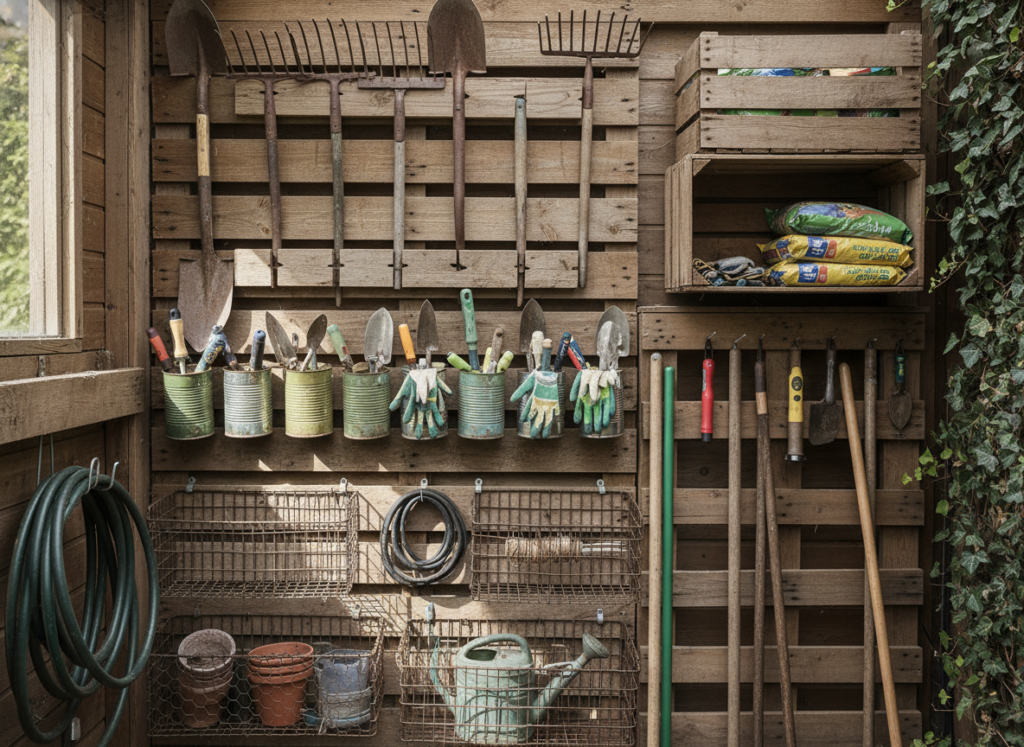
Not every effective storage solution needs to be store-bought. In fact, some of the most durable garden tool storage setups are DIY because they’re tailored exactly to the tools you own.
PVC pipe sections mounted vertically are especially effective for awkward long-handled tools that don’t sit well on hooks. Each tool gets its own slot, which prevents tipping and tangling. This setup works exceptionally well in narrow sheds or garage corners where wall space is limited. When DIY built intentionally, these systems often outperform adjustable commercial racks that slowly loosen or sag over time.
5. Mobile Storage Is Ideal for Active Gardeners
If you move between different areas of your yard or garden, fixed storage can become inconvenient fast. That’s where mobile tool storage earns its place. A rolling cart stocked with frequently used tools eliminates repeated trips back to the shed or garage. For people who garden in short sessions after work, this alone can double productivity. The key is restraint. A mobile station should hold only daily-use tools. Anything else belongs in static storage.
6. Small Items Need Just as Much Planning as Large Tools
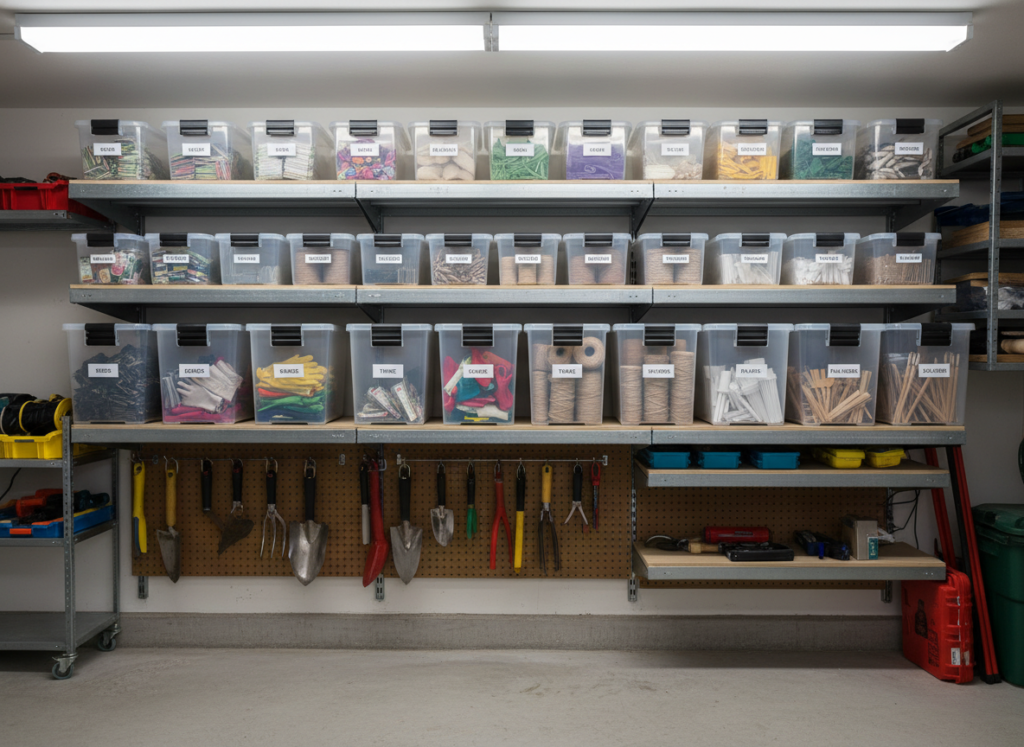
Seeds, gloves, twine, plant labels, and pruners are often the messiest part of garden storage because they’re easy to scatter and hard to see.
Clear containers outperform opaque bins here for one reason: they prevent overbuying and rediscovery clutter. When you can see what you already have, you stop buying duplicates and stop shoving extras into random drawers.
Storing small items by task rather than by type often works better. For example, keeping pruning gloves, shears, and ties together creates a grab-and-go system that mirrors how you actually work.
7. Overhead Storage Should Be Reserved for Low-Frequency Tools
Ceiling-mounted racks and overhead shelves are incredibly useful, but only when used strategically. They’re ideal for tools used seasonally or occasionally, such as ladders, snow shovels, spreaders, or bulky hoses.
Storing daily-use tools overhead creates frustration and increases the chance of accidents. Good storage reduces effort. If a tool feels annoying to retrieve, it won’t be returned properly. Overhead storage works best when it supports your workflow.
8. Repurposed Storage Often Fits Real Gardens Better Than New Products
Repurposing isn’t just about saving money. It’s about adaptability. Old crates, shoe organizers, mailboxes, and shelving units can often be customized to fit awkward spaces better than pre-designed garden storage systems.
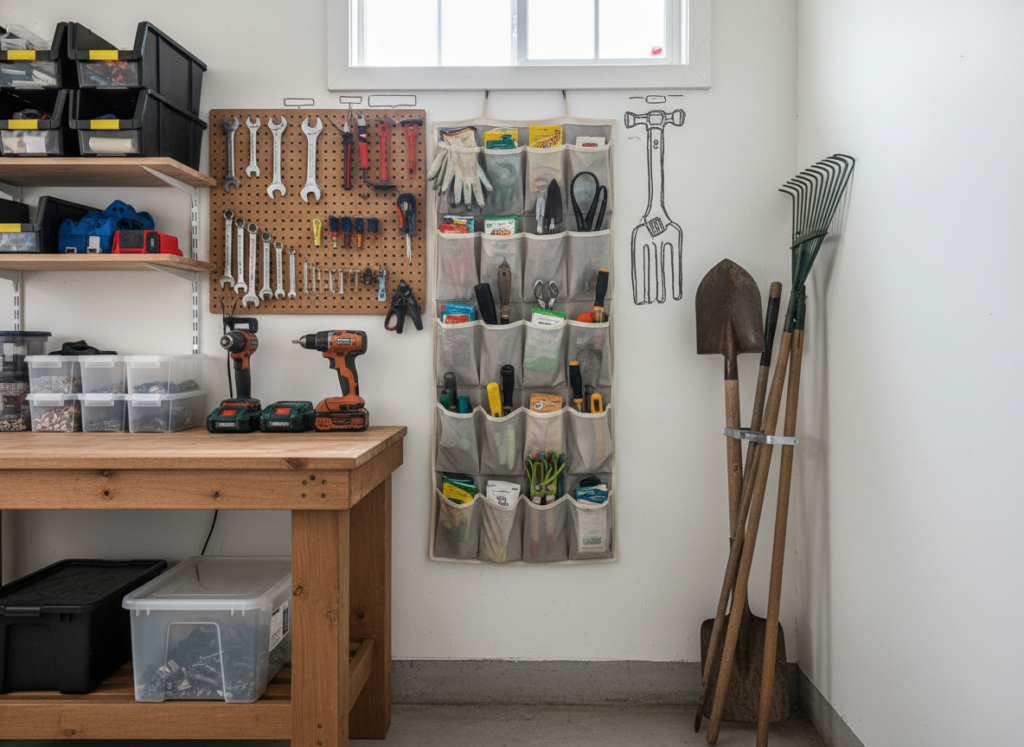
A repurposed vertical shoe organizer, for example, can hold gloves, seed packets, and hand tools in a slim footprint that fits behind a door or along a narrow wall. These solutions feel intuitive because they evolve alongside your habits. When storage feels flexible, it’s easier to maintain long term.
9. Heavy Tools Need Stable, Weight-Rated Solutions
Axes, sledgehammers, and large digging tools shouldn’t share storage with lightweight hand tools. When heavy tools are poorly supported, they damage walls, fall over, and become safety hazards. Dedicated heavy-duty racks with proper spacing protect both your tools and your space. They also make it easier to spot wear or damage before a tool fails mid-use.
10. Maintenance Is Part of Storage, Not a Separate Task
Even the best storage system fails if tools go in dirty or wet. A quick wipe-down before storing tools dramatically extends their lifespan and keeps storage areas cleaner.
Sharp tools benefit from occasional oiling. Wooden handles last longer when kept dry and elevated. When maintenance is integrated into storage habits, tools naturally stay organized because they’re easier to handle and safer to store.
Conclusion: Storage That Matches How You Garden Actually Lasts
Clever garden tool storage is about finding the right few solutions that fit your space, your tools, and your routine.
When storage prioritizes visibility, accessibility, and ease of return, clutter stops creeping back in. Tools last longer. Gardening feels less like setup and cleanup and more like the thing you actually enjoy. The most successful systems are the ones you barely notice because they quietly work, season after season.
Related Articles
What Are Modular Tool Storage Systems and Which Brands Offer the Best Solutions for Your Space?