

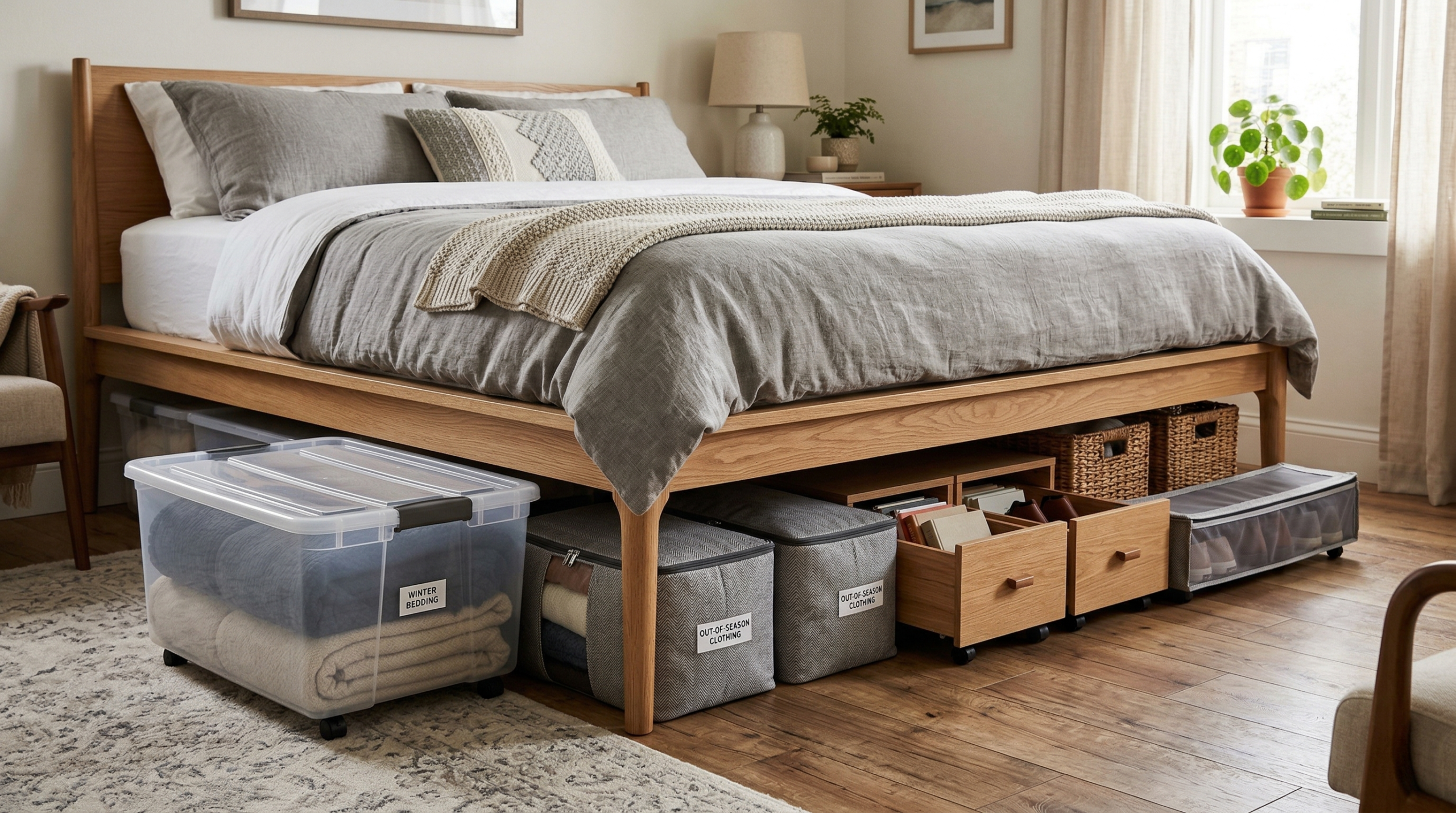
Under-bed storage is one of the easiest ways to create more room in a bedroom without adding bulky furniture or making the space feel crowded. In smaller homes, apartments, guest rooms, and shared bedrooms, every bit of hidden space matters.
The area under the bed often gets ignored or turns into a dusty place for forgotten items, but with the right setup, it can become one of the most useful storage zones in the room. A smart under-bed system can help reduce visible clutter, improve organization, and make everyday bedroom living feel calmer and more functional in 2026.
Why Under-Bed Storage Still Works So Well in Small Bedrooms
Small bedroom organization works best when it uses overlooked space instead of relying only on more shelves, more baskets, or more furniture. That’s what makes under-bed storage so practical. It uses square footage that already exists while keeping everyday clutter out of sight.
For many people in the United States, bedrooms have to do more than provide a place to sleep. They may also need to hold off-season clothing, extra linens, shoes, work items, sentimental keepsakes, or overflow from small closets. Under-bed storage helps absorb that pressure. When used intentionally, it can make the whole room feel more open and easier to manage.
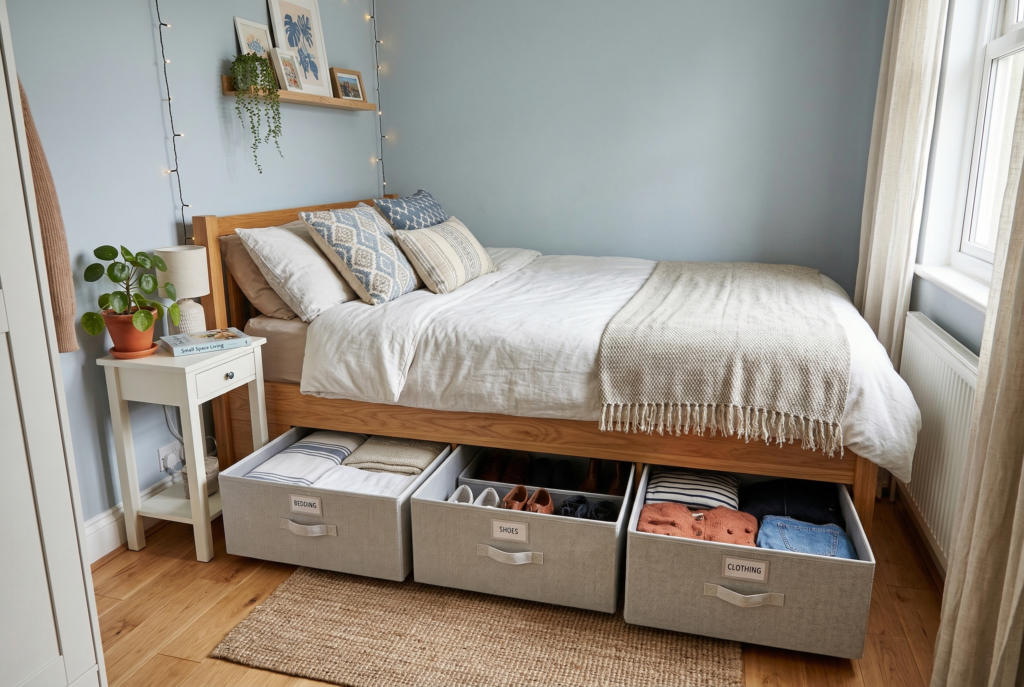
1. Use Low Rolling Bins for Easy Everyday Access
Rolling bins are one of the most practical under-bed storage ideas because they make it easy to reach items without dragging heavy containers across the floor. This works especially well for people who want to store things they use somewhat regularly, such as extra blankets, workout clothes, or seasonal accessories.
The biggest advantage is convenience. When storage slides in and out easily, it’s much more likely to stay organized. This is especially helpful in smaller bedrooms where bending, lifting, and moving furniture around can quickly become frustrating. A simple rolling bin system keeps hidden space useful instead of turning it into a forgotten zone.
2. Store Off-Season Clothing in Flat Fabric Containers
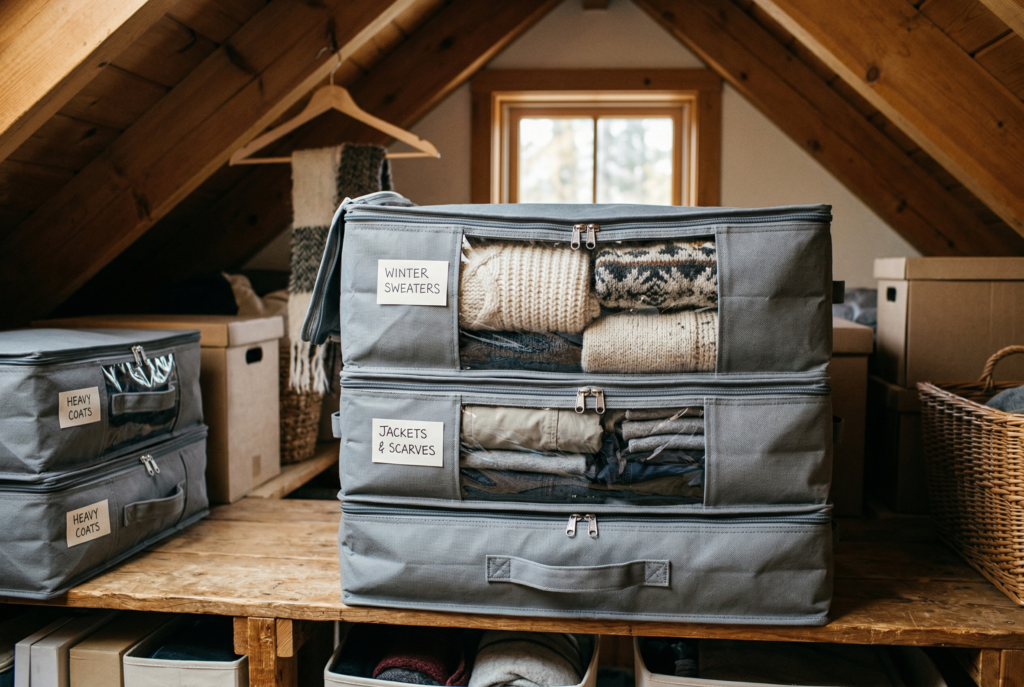
Bulky sweaters in summer and lightweight clothes in winter can take up valuable closet room when they aren’t currently needed. Flat fabric storage bags work well under the bed because they keep clothing protected while making the most of a low, wide space.
This idea is especially useful for anyone living with limited closet storage. Rotate clothing by season and keep only what’s needed in the dresser and closet. That simple change can make a small bedroom feel much less crowded. Choose containers with clear tops or labels so you can find what you need without opening every bag.
3. Use Clear Under-Bed Boxes for Shoes and Accessories
Shoes often create more bedroom clutter than expected, especially when closet floors are full or entryway storage is limited. Under-bed shoe storage can help contain that category without leaving pairs scattered around the room. Clear boxes make this even easier because you can see what’s inside at a glance.
This works well for off-season shoes, dress shoes, special occasion footwear, or accessories like bags and belts that don’t need daily access. Keeping them under the bed frees up more convenient storage for the items you use most often while still keeping everything protected and organized.
4. Add Drawer-Style Under-Bed Storage for a Built-In Feel
If you want under-bed storage to feel more intentional and polished, drawer-style units can create a more built-in look. Some bed frames come with storage drawers already included, but standalone drawer systems can also work well when they fit the space properly.
This approach is ideal for bedrooms that need to feel streamlined. Instead of random bins and mismatched boxes, drawer-style storage creates a cleaner visual system. It can be especially helpful for storing pajamas, extra bedding, children’s clothing, or items that need a more organized home than a simple open bin can provide.
5. Keep Extra Bedding Hidden but Easy to Reach
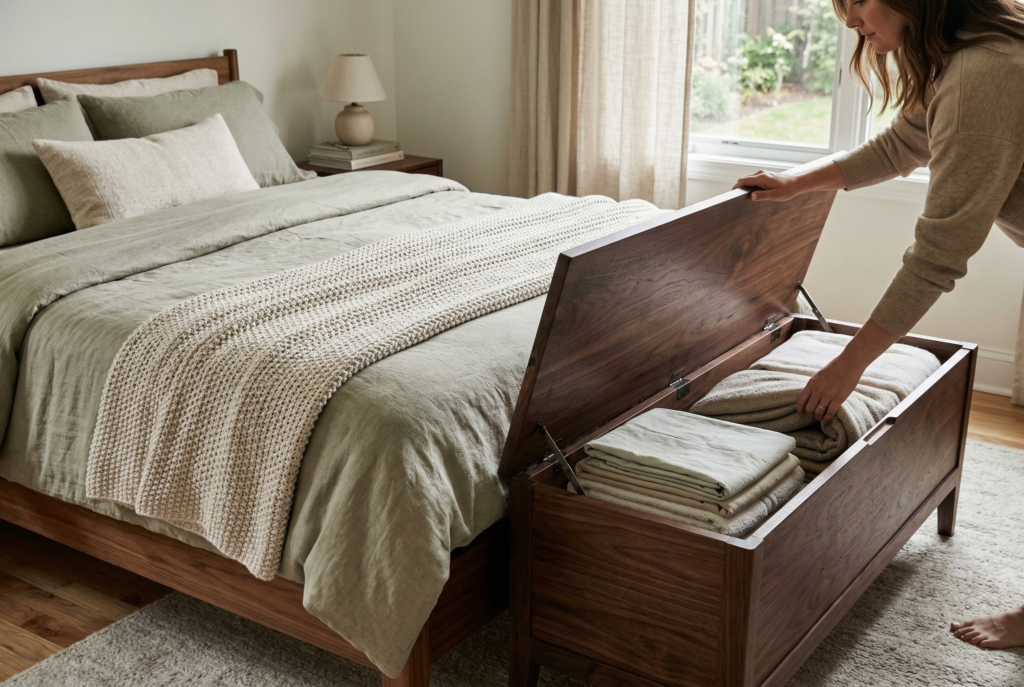
Extra sheets, pillowcases, blankets, and duvet covers take up more closet space than many people realize. Under-bed storage is a smart place for them because they’re soft, flexible, and often used only occasionally. Keeping bedding under the bed also makes sense in guest rooms, children’s rooms, or smaller primary bedrooms where linen closets are limited.
The key is to contain bedding in a way that keeps it clean and easy to identify. Use zippered bags or labeled bins so the storage feels tidy rather than stuffed. This keeps the room more functional while still making guest-ready items easy to access.
6. Create a Memory Storage Zone for Keepsakes
Sentimental items can quickly fill shelves, closet corners, and dresser drawers if they don’t have a clear place to live. The space under the bed can work well for a small number of keepsake containers, especially for items you want to keep but don’t need to see every day.
This might include photo albums, letters, baby keepsakes, or memory boxes from past seasons of life. The important part is restraint. Under-bed sentimental storage works best when it’s curated and contained, not when it becomes a place to hide unlimited clutter. A clearly defined memory zone can protect meaningful items without letting them take over the rest of the bedroom.
7. Use Vacuum-Sealed Bags for Bulky Soft Items
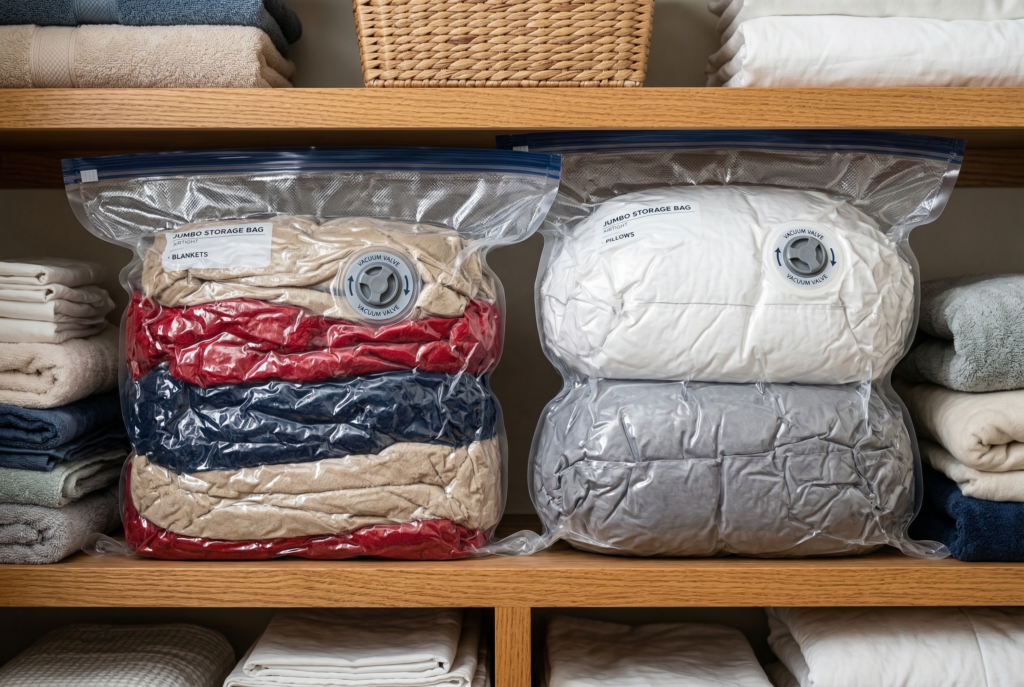
Comforters, winter coats, extra pillows, and heavy blankets can be difficult to store in a small room because they take up so much volume. Vacuum-sealed bags can make under-bed storage far more efficient by reducing the size of bulky fabric items.
This is one of the smartest options for apartments, small homes, or shared bedrooms where every inch matters. It’s also useful for seasonal rotation. Just be selective about what goes into sealed bags, and make sure the items are clean and fully dry before storing them. This method works best for things you won’t need immediate access to every week.
8. Turn the Space Into a Small Apartment Overflow Zone
In smaller homes, the bedroom sometimes has to absorb items that don’t fit anywhere else. Under-bed storage can help handle that overflow in a more organized way. It may hold gift wrap, travel gear, backup toiletries, tech accessories, or paperwork that doesn’t need to live out in the open.
This idea works best when the categories are intentional and limited. Instead of sliding random household clutter under the bed, create a few defined groups and assign each one a container. That way the space serves a purpose without becoming a hidden mess that’s hard to manage later.
9. Use Under-Bed Storage for Kids’ Rooms and Shared Bedrooms
Children’s rooms and shared bedrooms often need more storage than they have space for. Under-bed bins can help contain toys, books, extra clothes, art supplies, or bedding without taking up floor space needed for play or movement. For shared rooms, this can also help define personal storage zones. Each child can have their own labeled containers under the bed, which makes cleanup simpler and reduces arguments about where things belong. A storage system that’s easy for kids to use is much more likely to hold up in everyday life.
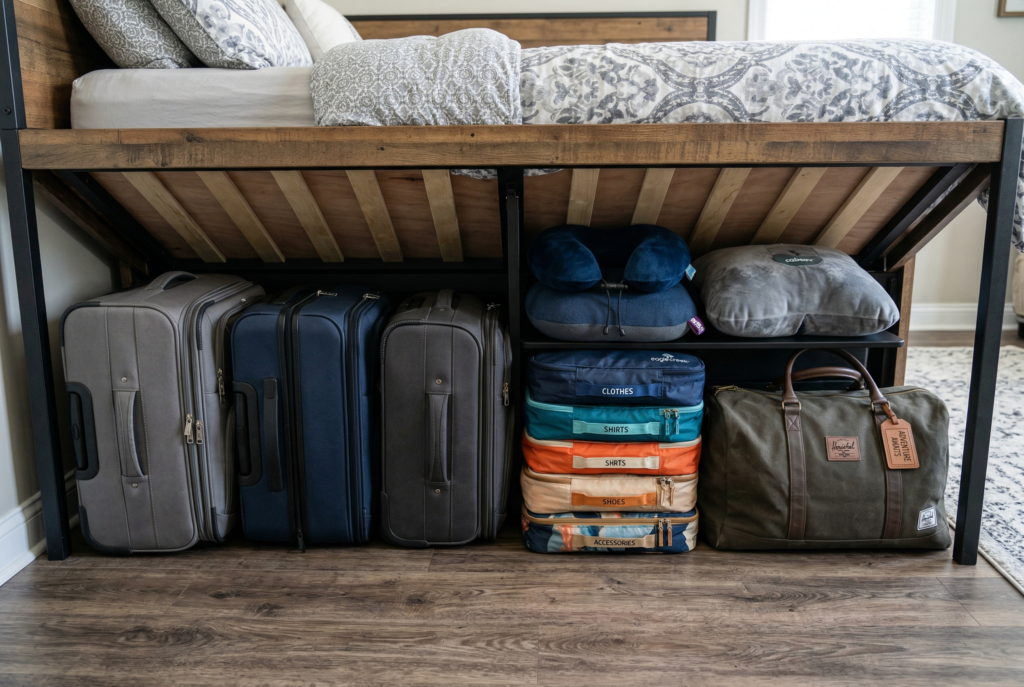
10. Store Travel Items Where They Don’t Crowd the Closet
Suitcases, packing cubes, travel pillows, and weekend bags can take over closet floors quickly. If the under-bed clearance is high enough, this is often one of the best places to keep travel gear. It keeps those items nearby but out of the way until they’re needed.
This is particularly useful for people who travel occasionally but don’t want luggage eating up prime closet space all year long. You can even use empty suitcases as storage containers themselves by filling them with travel accessories or off-season items before sliding them under the bed.
11. Choose Bed Risers if You Need More Storage Height
Some beds simply don’t offer enough clearance to make under-bed storage worthwhile. In those cases, bed risers can create extra height and make the hidden space much more usable. This is especially common in dorm-style bedrooms, apartments, or older bed frames that sit too low to the ground.
Used carefully, bed risers can turn a tight gap into a genuinely useful storage zone. That added height may be enough for deeper bins, larger bedding bags, or drawer-style systems that wouldn’t otherwise fit. It’s a practical upgrade for small bedroom living when adding furniture isn’t a good option.
12. Match the Storage Method to What You Actually Need
One of the smartest under-bed storage ideas is also the simplest: match the container to the category. Shoes need structure. Soft linens can go into zippered bags. Frequently used items need easy-glide bins. Keepsakes need protection. When storage matches the actual item, the system works better and stays organized longer.
This matters because under-bed space can become messy very quickly when containers are chosen without a clear purpose. The best setup is rarely the one that holds the most. It’s the one that makes the room easier to live in every day.
Conclusion
Under-bed storage ideas can create hidden space, better organization, and smarter small bedroom living by turning an often-wasted area into one of the most useful parts of the room.
From rolling bins and shoe boxes to fabric bags, vacuum-sealed bedding, keepsake storage, and travel item solutions, the right setup can reduce clutter and make a bedroom feel more spacious without adding bulky furniture. The best system is the one that fits your real needs and your actual routine. When under-bed storage is used with intention, it helps the entire bedroom feel cleaner, calmer, and much easier to manage every day.
Related Articles
- Affordable Storage Ideas for Renters: Clever Solutions for Small Spaces
- Modern Storage Ideas to Transform Every Room in Your Home in 2026
- How to Choose the Right Storage Containers for Maximum Organization and Space Efficiency