

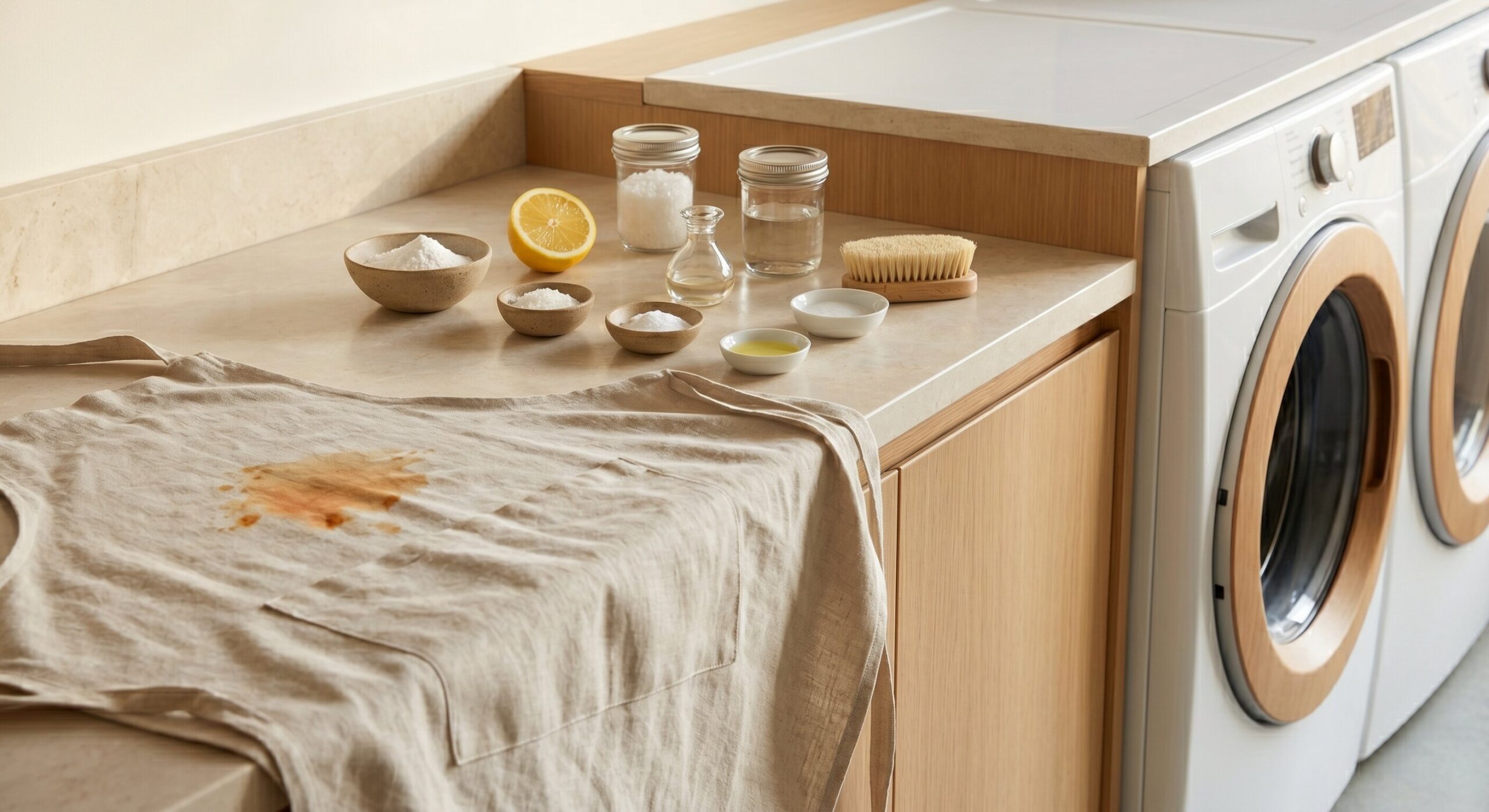
Bright green spinach or deep red beet stains often ruin a favorite shirt during meal prep or a family dinner. It’s a common frustration, but there’s no need to panic. This guide focuses on natural stain remover methods that remain safe for the environment and the home.
Mastering these laundry tips ensures that clothes stay in great condition without a trip to the store for harsh chemicals. The process usually requires only 15 to 30 minutes of active time and costs between $0 and $5 using simple pantry items. The difficulty level for these techniques is considered easy.
The Golden Rules of Organic Stain Removal
Understanding how to remove vegetable stains involves basic kitchen science. Many vegetables contain pigments like lycopene in tomatoes or turmeric in curry that bond quickly to fabric. A vital rule is to avoid the anti-goal of using bar soap directly on a fresh stain. The alkalinity in bar soap often sets tannin-based pigments permanently.
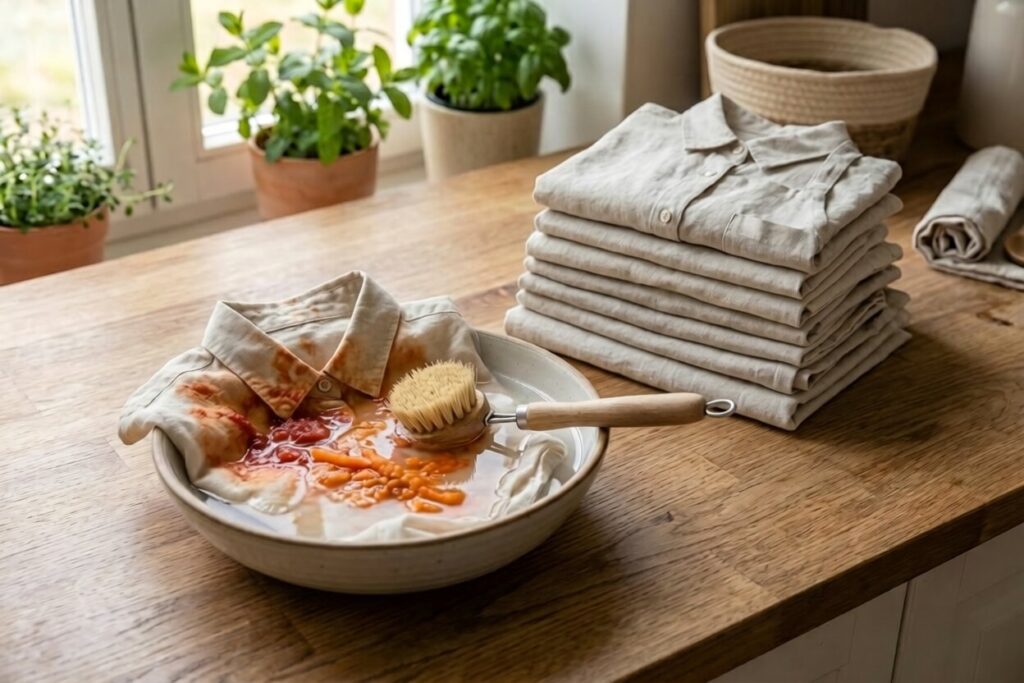
Additionally, clothes shouldn’t go into the dryer until the mark is completely gone because high heat acts as a glue for organic stains. Cold water is the best choice since hot water can effectively cook the pigment into the fibers. When searching for the best stain remover for clothes, the simplest methods often provide the most effective tomato stain removal.
7 Natural DIY Tricks for Every Pantry
Before starting any treatment, an expert tip is to scrape off excess residue and flush the back of the fabric with cold water. This pushes the pigment out rather than deeper into the weave.
1. The White Vinegar Soak
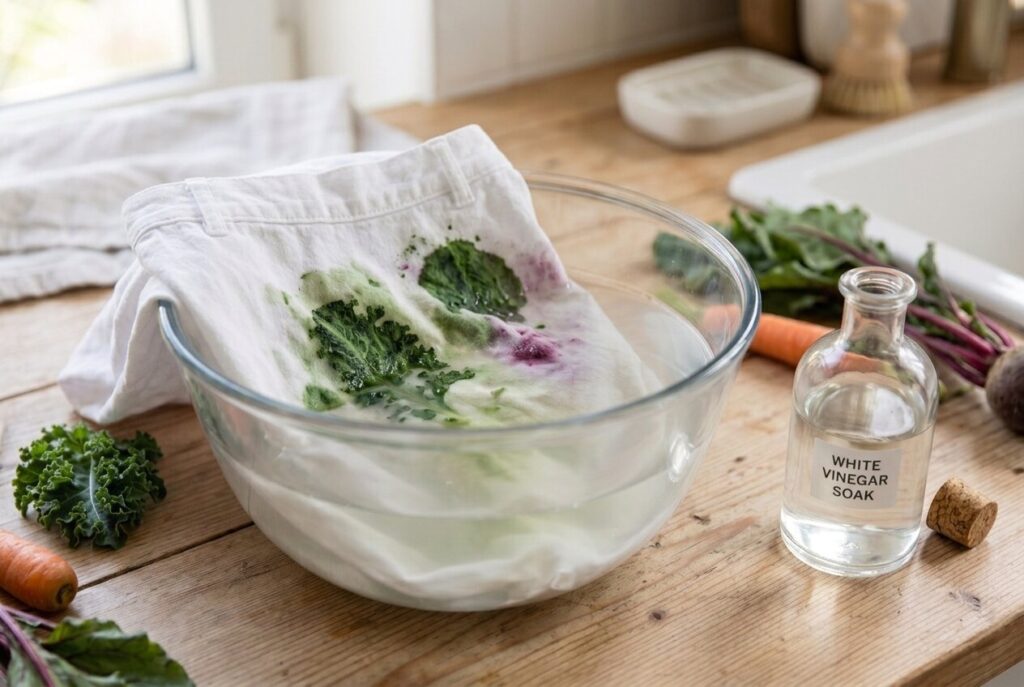
White vinegar is a powerhouse for breaking down alkaline vegetable pigments. It’s particularly effective for tannin-based marks like those from berries or leafy greens. One should soak the stained area in a solution of vinegar and water to help release the bond between the pigment and the fabric. It’s a versatile natural stain remover that works on a wide variety of vegetables from kale to carrots.
2. Baking Soda Paste
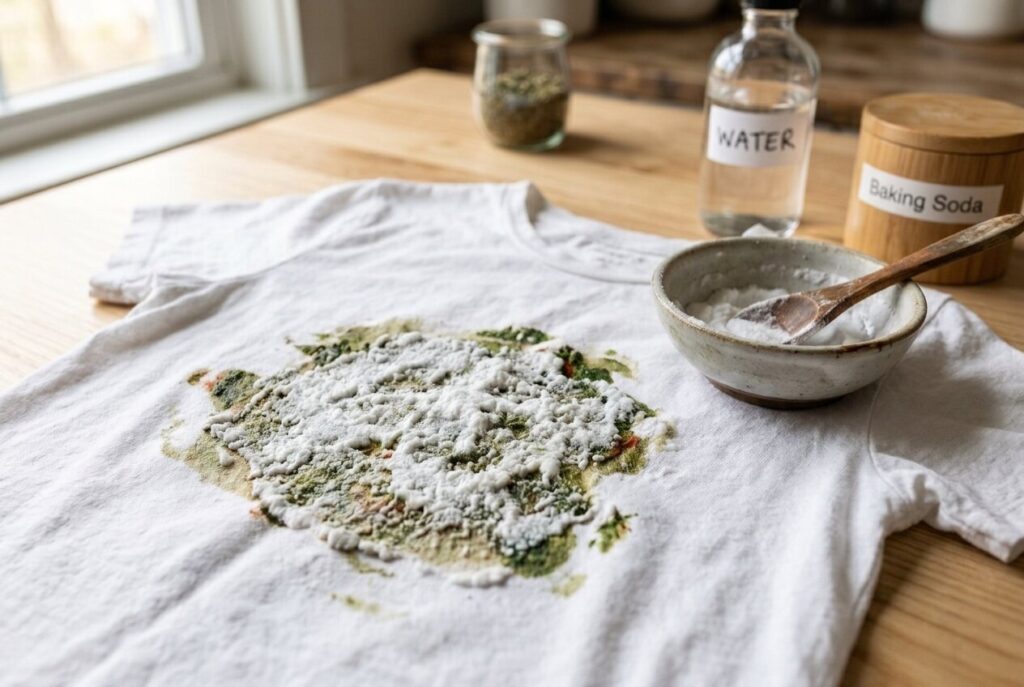
Mixing baking soda with a small amount of water creates a gentle abrasive paste. This method is perfect for lifting stubborn particles that have started to settle into the fabric fibers. The paste should sit on the stain for several minutes to draw out the organic material before the garment goes into the wash.
3. Lemon Juice Bleach
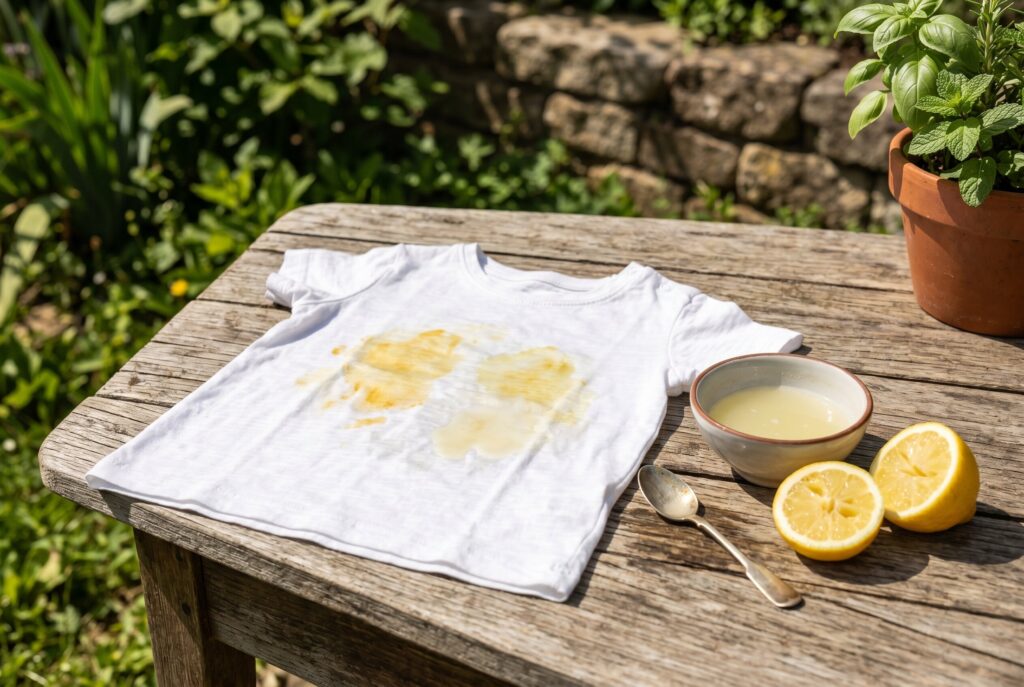
For yellow vegetable stains on white cotton, lemon juice acts as a natural alternative to harsh chemicals. After applying the juice, placing the garment in direct sunlight allows UV rays to act as a catalyst to lift the color. This technique shouldn’t be used on dark or delicate fabrics as it can cause unwanted fading.
4. Salt for Fresh Liquid Stains
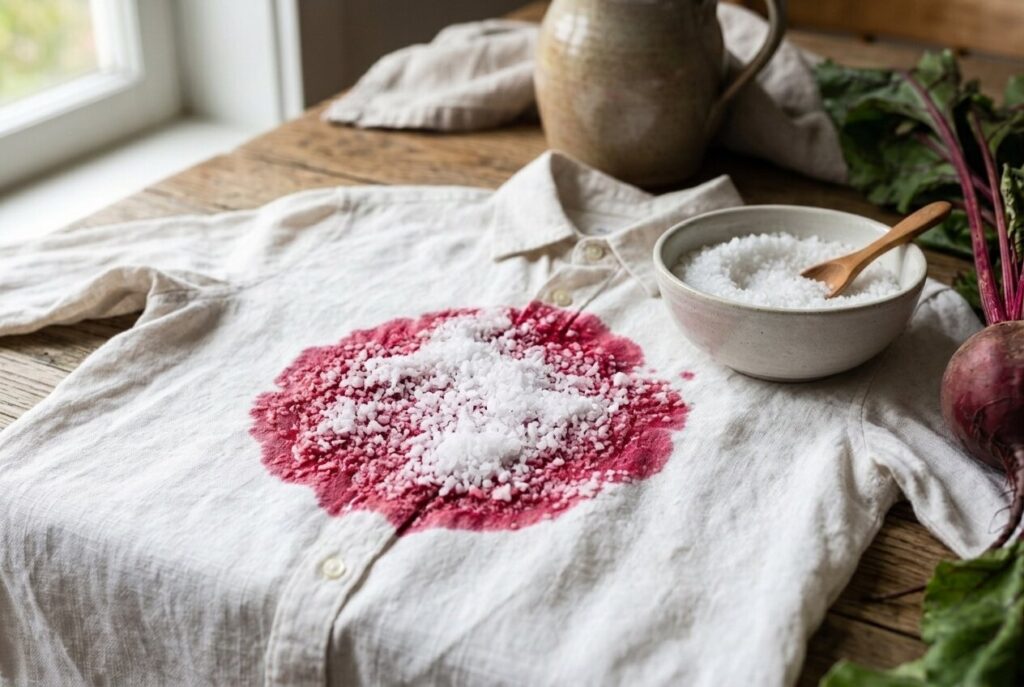
Salt serves as an emergency absorbent for fresh, watery juice spills. If a spill just happened, a thick layer of salt helps pull the liquid away from the fibers before it has a chance to dry. It’s a quick first-aid step that makes the eventual deep clean much easier.
5. Dish Soap Degreaser
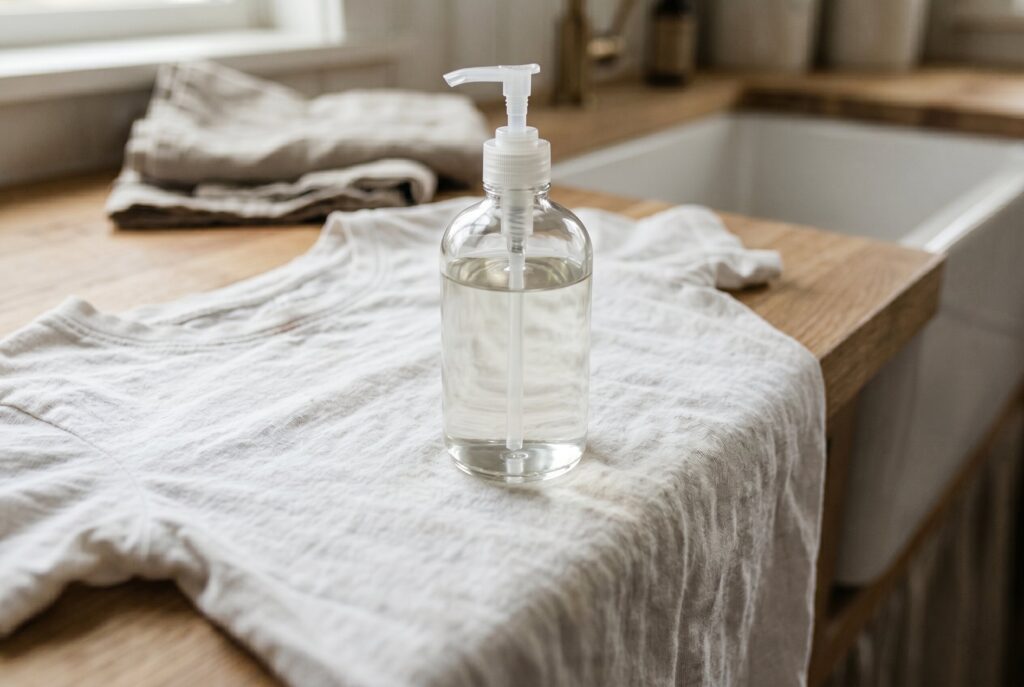
Vegetable sauces like pesto or tomato sauce often contain high amounts of oil or grease. Standard detergents sometimes fail to break down these lipids, but dish soap is specifically designed for this task. Applying a small amount of clear dish soap directly to the spot helps break the oily bond so the pigment can be flushed away.
6. Hydrogen Peroxide (For Whites Only)
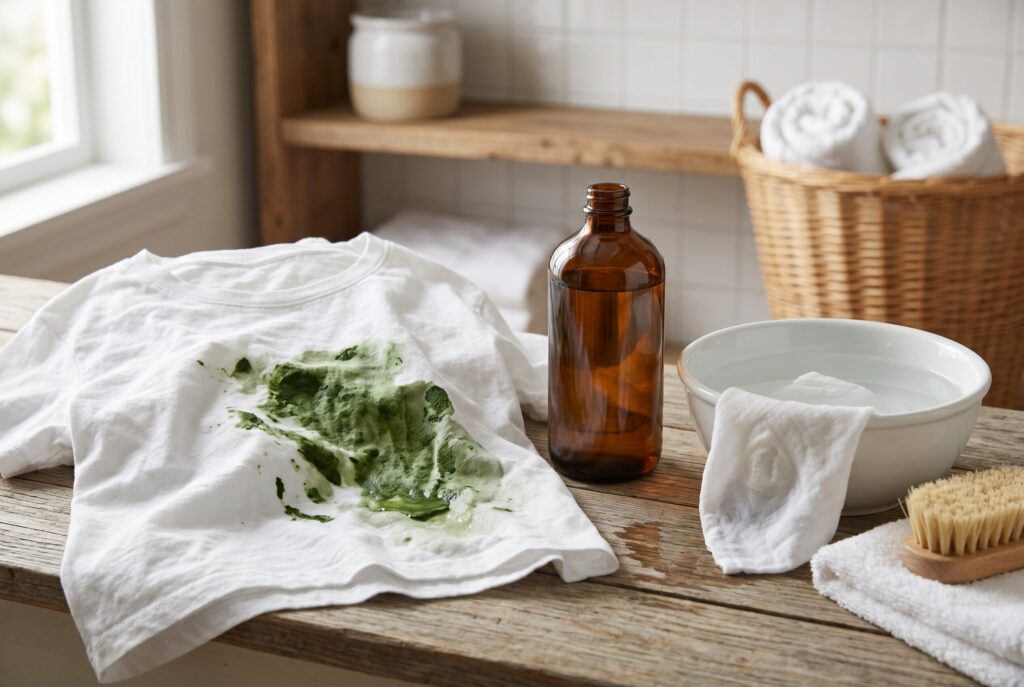
When wondering how to get stains out of white clothes, hydrogen peroxide is a reliable natural alternative to chlorine bleach. It works by breaking down the chemical structure of the pigment without producing harsh fumes. It’s important to use this only on white items, as it can strip the color from dyed fabrics.
7. Club Soda Flush
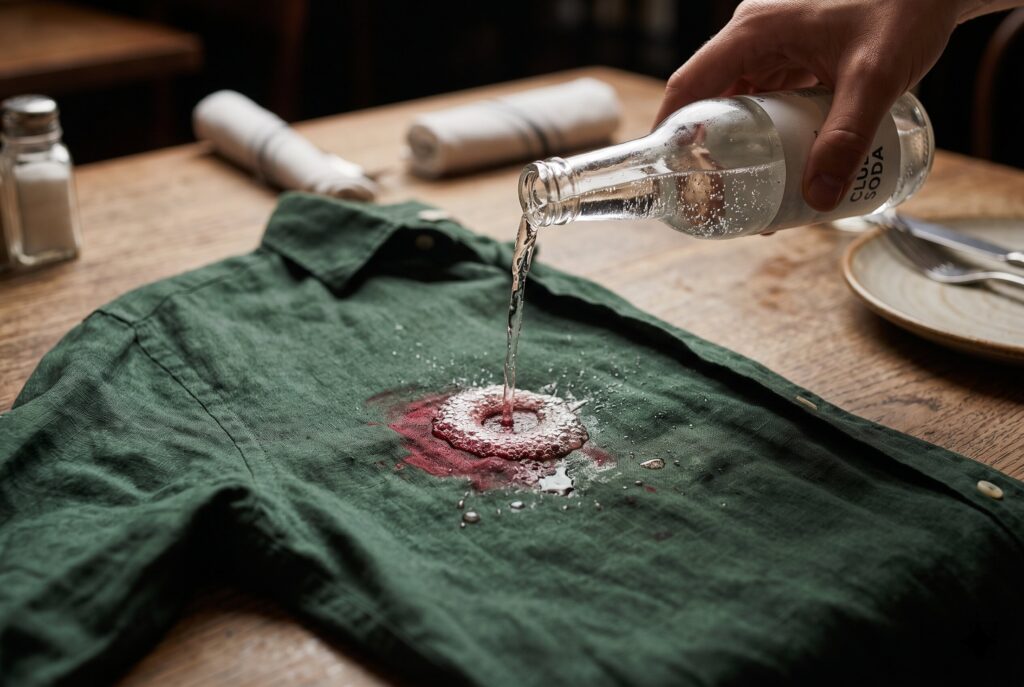
The club soda flush is the classic on-the-go method for handling accidents at restaurants. The carbonation in the water helps dilute and lift pigments before they set into the garment. This provides a temporary fix until a more thorough cleaning can happen at home.
Fabric First: Cotton vs. Silk vs. Synthetics
Different materials require specific care to avoid permanent damage.
| Material | Safety Guide | Best Practice |
| Cotton & Linen | High durability | Can handle vinegar, lemon, and light scrubbing. |
| Silk & Wool | Extremely delicate | Avoid ammonia and heavy scrubbing; use the tamp technique. |
| Synthetics | Heat sensitive | Avoid high heat which can melt fibers and lock in the stain. |
Testing any solution on an inconspicuous section first ensures the fabric is colorfast and won’t be ruined.
Save vs. Splurge: When DIY Isn’t Enough
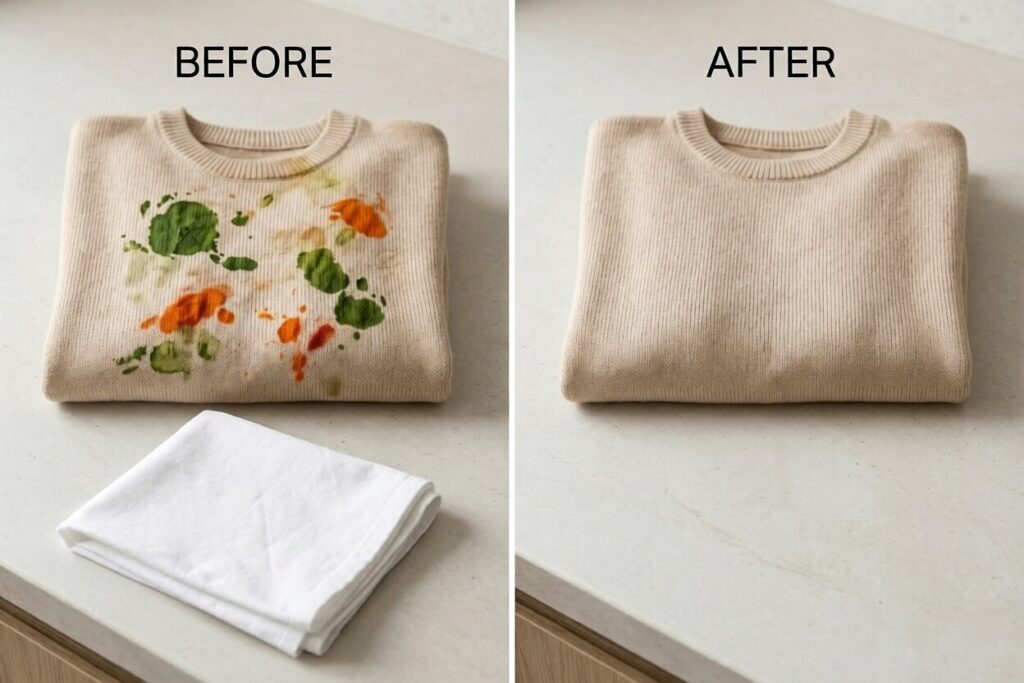
Pantry staples handle 90% of fresh vegetable spills, which is great for saving money. Usually, learning how to remove vegetable stains is as easy as grabbing vinegar or baking soda. If a stain’s stubborn or dry, a Tide Pen or Shout can be a lifesaver. For heavy whitening, OxiClean is a top-tier choice for the best stain remover for clothes. If you’re facing difficult, set-in marks, Miss Mouth’s is a popular option. It’s always smart to have a professional backup for those times you’re dealing with a mess that won’t budge.
Crucial Measurements for Success
Cleaning success often depends on using the correct recipes. Dissolving 2 tablespoons of borax into 1 cup of warm water creates a powerful pre-soak for many types of food stains.
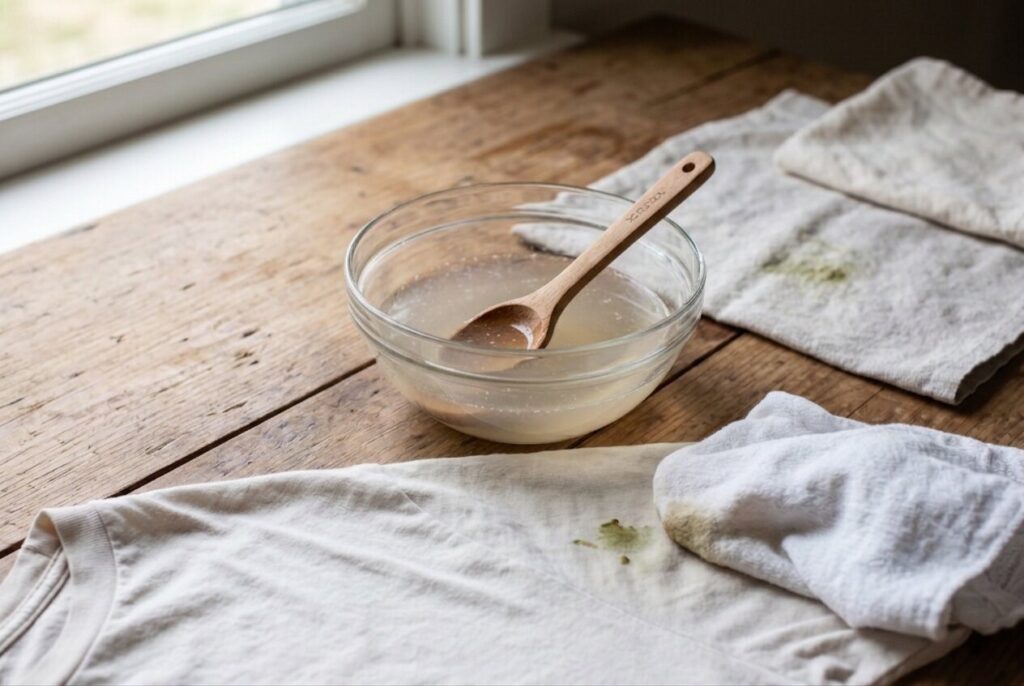
Additionally, adding 1/2 cup of white vinegar to the final rinse cycle helps brighten the entire load. When applying these solutions, the tamp technique is essential. Instead of rubbing, which spreads the pigment, one should use a dampened cloth to lightly tap or tamp the area. This lifts the stain vertically out of the fabric.
Conclusion: Success is All in the Chemistry
Learning how to get stains out of white clothes comes down to speed and chemistry. If you’re looking for how to remove vegetable stains, dish soap works for oily sauces while vinegar handles pigments. Keeping these laundry tips in mind ensures you’re ready for any kitchen mishaps. It’s also easy to read the guide on how to remove coffee stains or download a printable stain removal chart if you need extra help.
Related Articles
- Best Stain Remover for Clothes: 17 Chemical-Free DIY Hacks (2026)
- How to Remove Oil Stains from Clothes: 7 Hacks for Old Grease (2026)
- How to Remove Red Wine From Clothes: 11 Fast Emergency Hacks (2026)
- How to Get Period Blood Out of Clothes: 7 Mom-Approved Cold-Water Hacks
- How to Get Ink Out of Clothes: 7 Safe DIY Hacks (That Actually Work)
- How to Get Stains Out of White Clothes: 9 Hacks (Without Bleach!)
- 12 Effective Stain Removal Methods: Easy Ways to Remove Every Type of Tough Stain at Home