

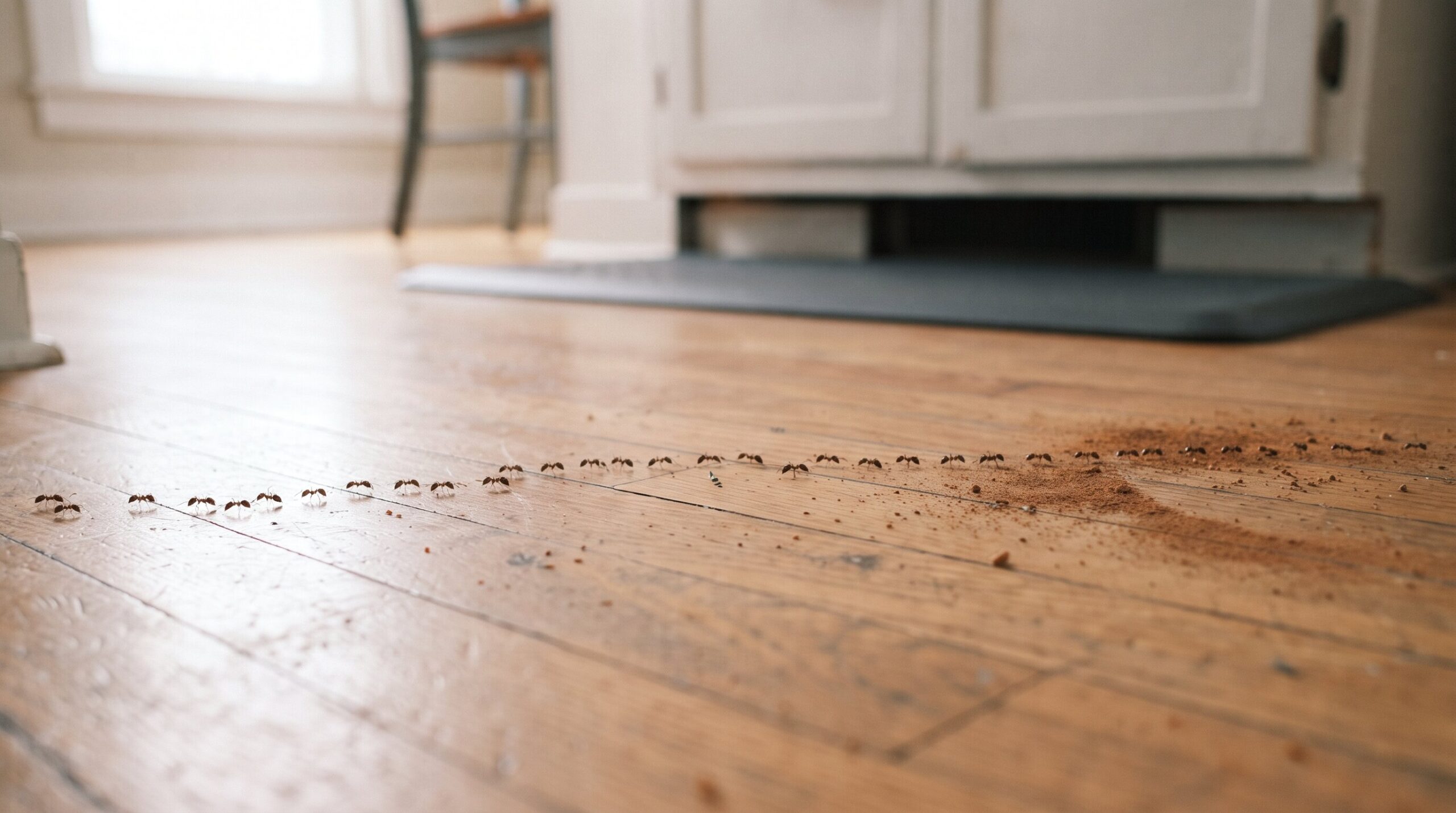
Ants are stressful enough on their own. But when you have dogs or cats at home, the problem becomes more delicate. You aren’t only asking how to kill ants. You’re looking for a pet safe ant killer solution that protects paws, noses, whiskers, and food bowls at the same time.
The safest ant killer safe for pets approach isn’t always the strongest chemical. A better strategy combines multiple layers of prevention: removing food sources, erasing scent trails, sealing entry points, and placing treatments where pets can’t reach them. Some natural ant killer methods are genuinely low risk, while others only sound harmless and may still be unsafe, especially around cats.
The Pet-Safe Myth: Why Commercial Ant Sprays Are Risky
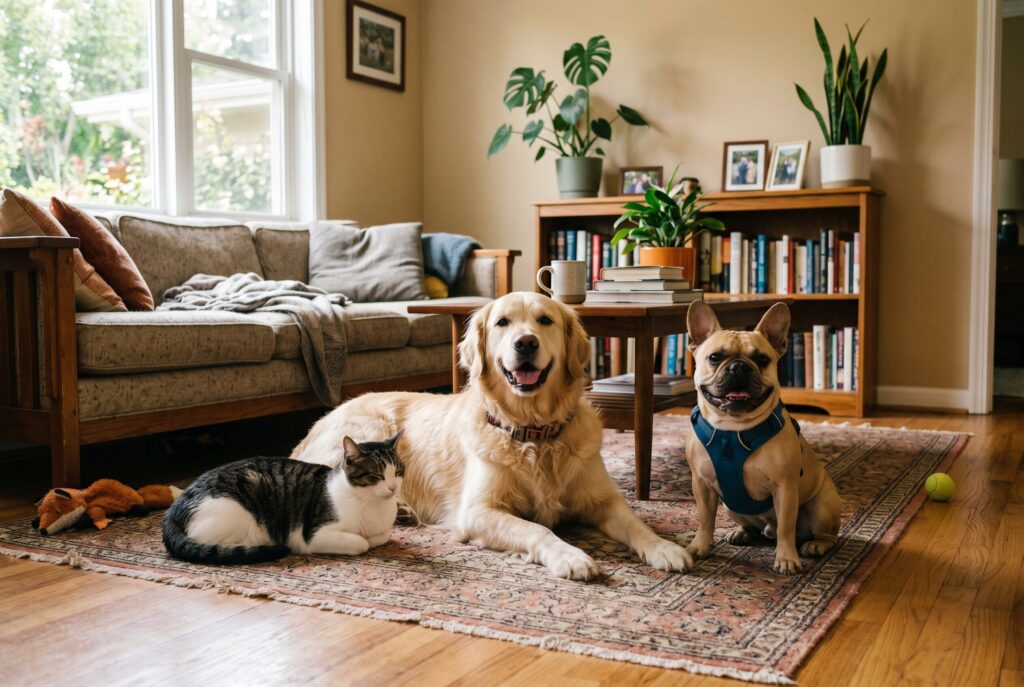
A label that says pet-friendly doesn’t mean your pet can roll in it, lick it, or breathe it during application. Many sprays are lower risk once fully dry, but wet residue can irritate paws, noses, mouths, or airways. Commercial ant spray also has a bigger weakness: it usually kills only visible ants. It doesn’t always reach the colony. When ants are nesting behind walls, outside the foundation, or under flooring, spraying the trail may only create a temporary pause. For homes with pets, the safest long-term approach is usually prevention plus inaccessible baiting, not repeated floor spraying.
Remedy 1: Food-Grade Diatomaceous Earth
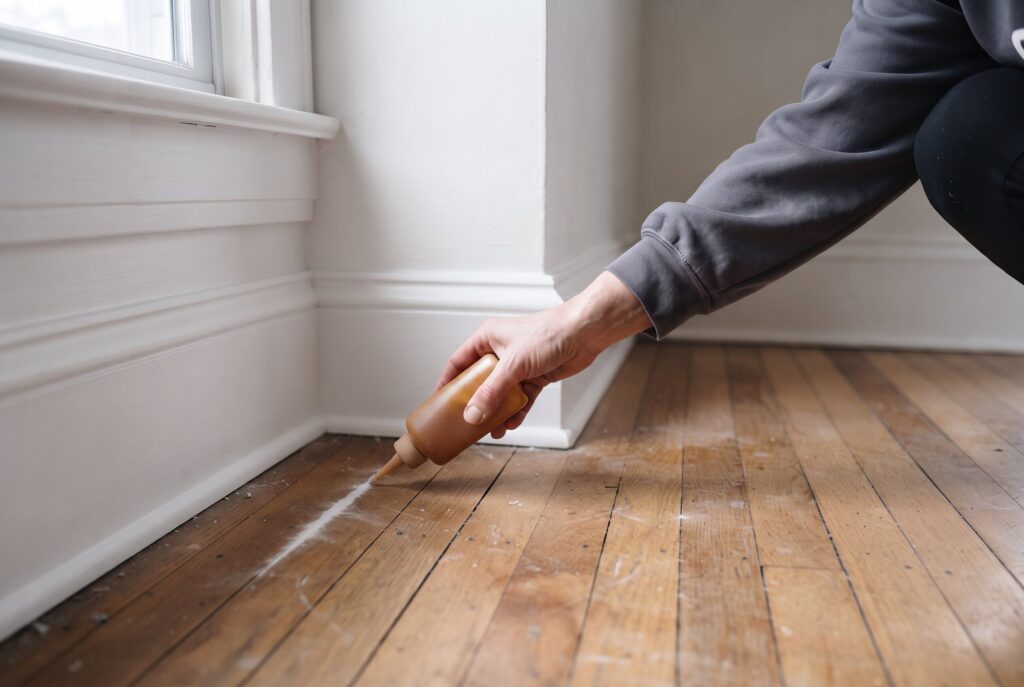
Food-grade diatomaceous earth is one of the better natural options for pet homes. It works physically, not chemically. The fine powder damages ants’ outer coating, causing them to dry out. Use only food-grade diatomaceous earth, never pool-grade DE. Apply a very thin line in dry cracks, behind appliances, under baseboards, or along entry gaps where pets don’t walk through it. Don’t pile it heavily. Ants may avoid thick powder.
Pet safety note: food-grade DE is generally low risk if a small amount is licked, but the dust shouldn’t be inhaled by pets or people. Apply gently and keep pets away while dust is airborne.
Remedy 2: White Vinegar Wipe-Down
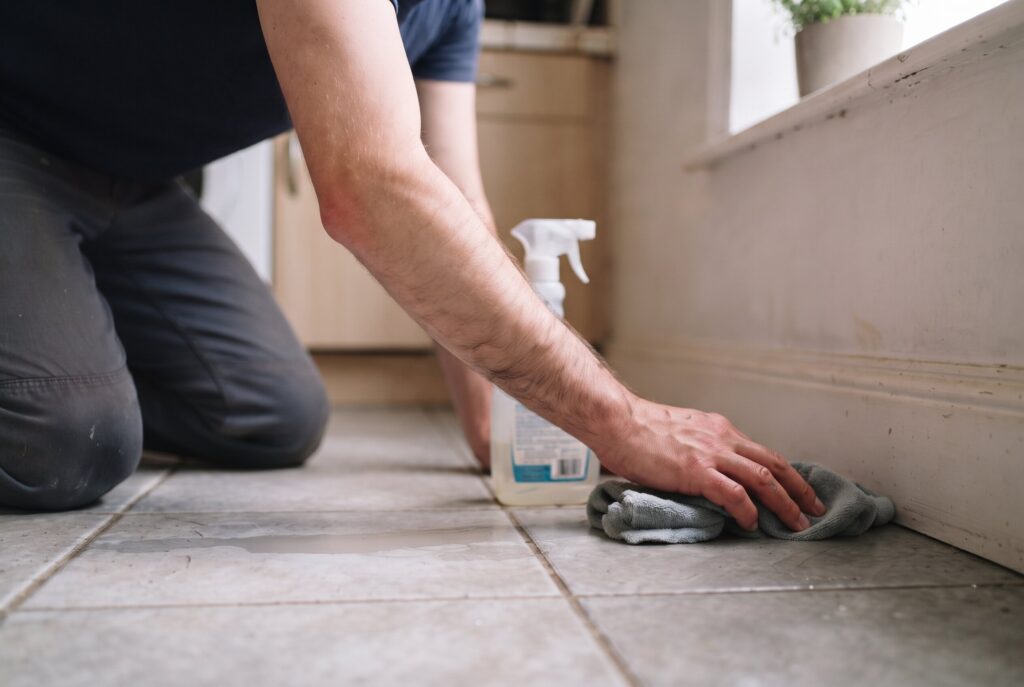
Vinegar ant spray doesn’t work like a true killer. It’s better understood as a scent trail disruptor. Ants leave pheromone paths that tell the colony where to go. A simple mix of equal parts white vinegar and water can help erase those paths from counters, baseboards, windowsills, and kitchen floors.
This method is one of the safest for both dogs and cats. It’s also useful around pet feeding zones after food spills. Let surfaces dry before pets return, mostly because the smell can be unpleasant and some surfaces may be sensitive to vinegar.
Remedy 3: Baking Soda and Powdered Sugar
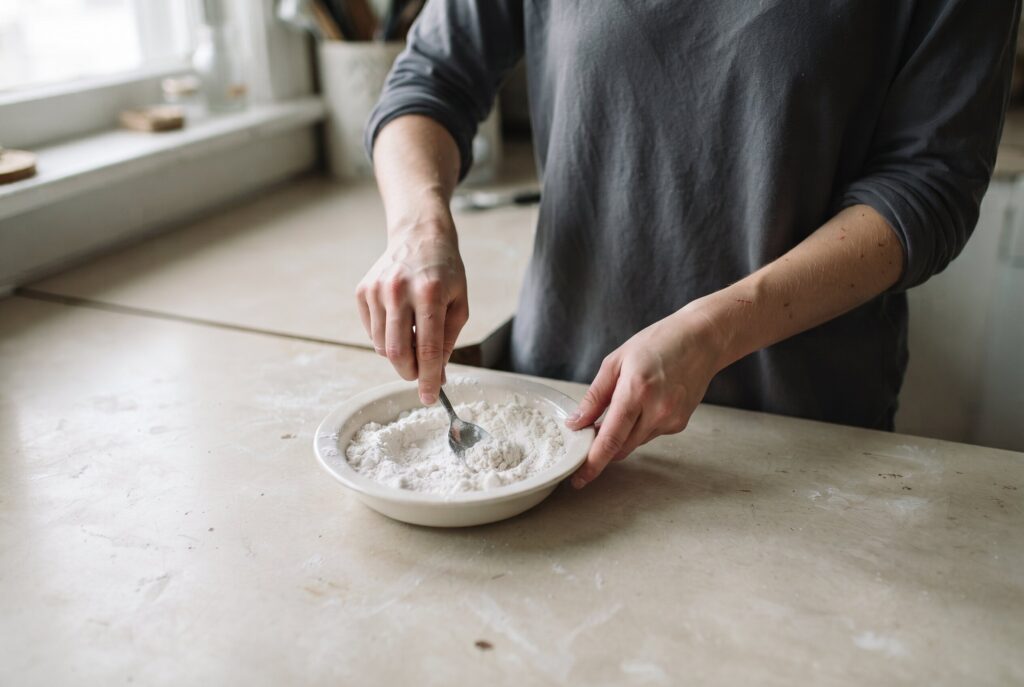
A common low-toxicity DIY bait is a 1:1 mix of baking soda and powdered sugar. The sugar attracts ants, while the baking soda is intended to disrupt them after ingestion. This method is less reliable than borax bait, but it has a strong safety advantage. If a dog or cat licks a small amount, it’s unlikely to cause serious poisoning. Still, don’t leave piles where pets can snack on them. Sugar can attract pets, and eating too much of anything unusual can upset the stomach. Use this method for light ant activity, not major infestations.
Remedy 4: Borax, Effective but Not Risk-Free
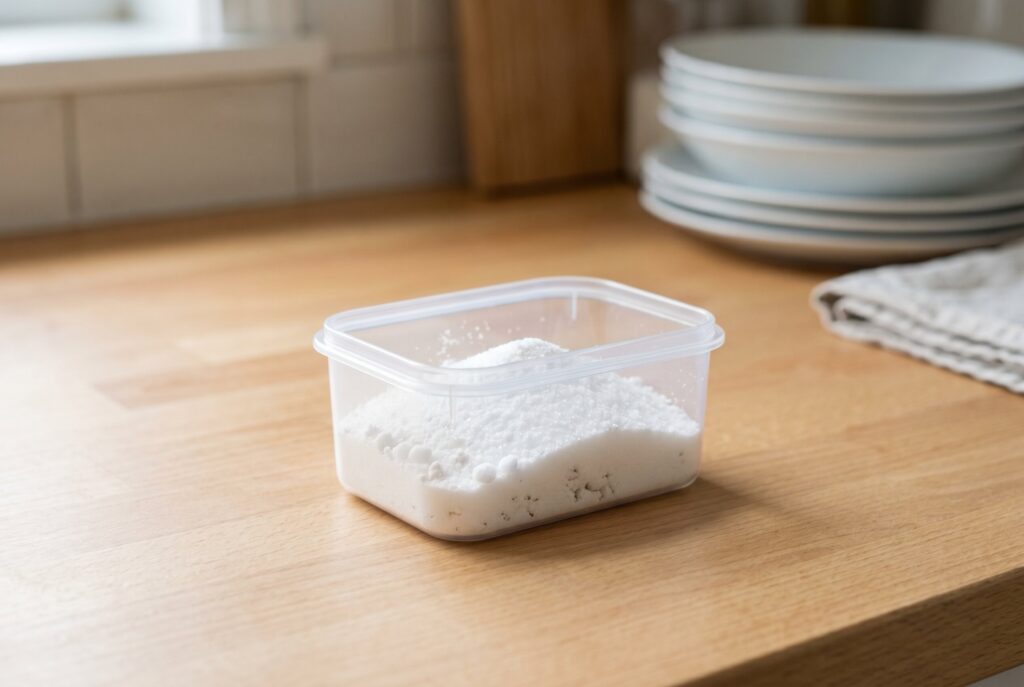
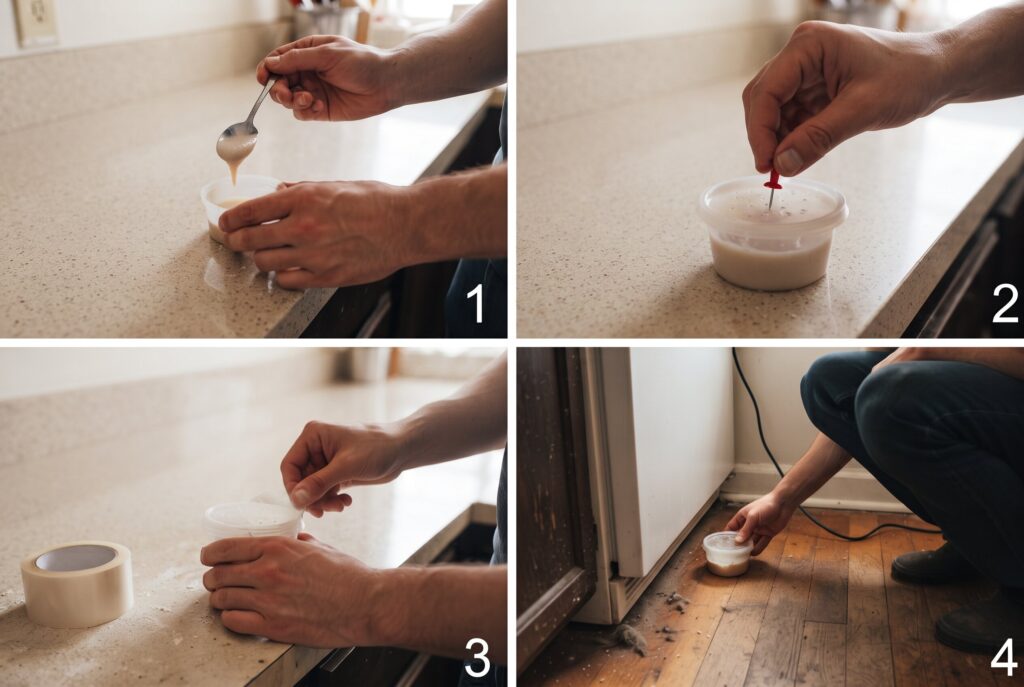
Borax for ants works because it can be carried back to the colony. That makes it far more powerful than many repellents. But borax isn’t truly harmless to pets. For a safer setup, make a DIY safe ant bait station. Place borax and sugar bait inside a small plastic container. Punch tiny holes large enough for ants but too small for a pet’s tongue. Tape the lid securely. Place it behind the refrigerator, inside a closed cabinet, or under a heavy appliance where pets can’t reach it. Never place open borax bait on floors, near pet bowls, or along areas where a curious dog or cat may lick it.
Remedy 5: Peppermint Oil, Warning for Cats
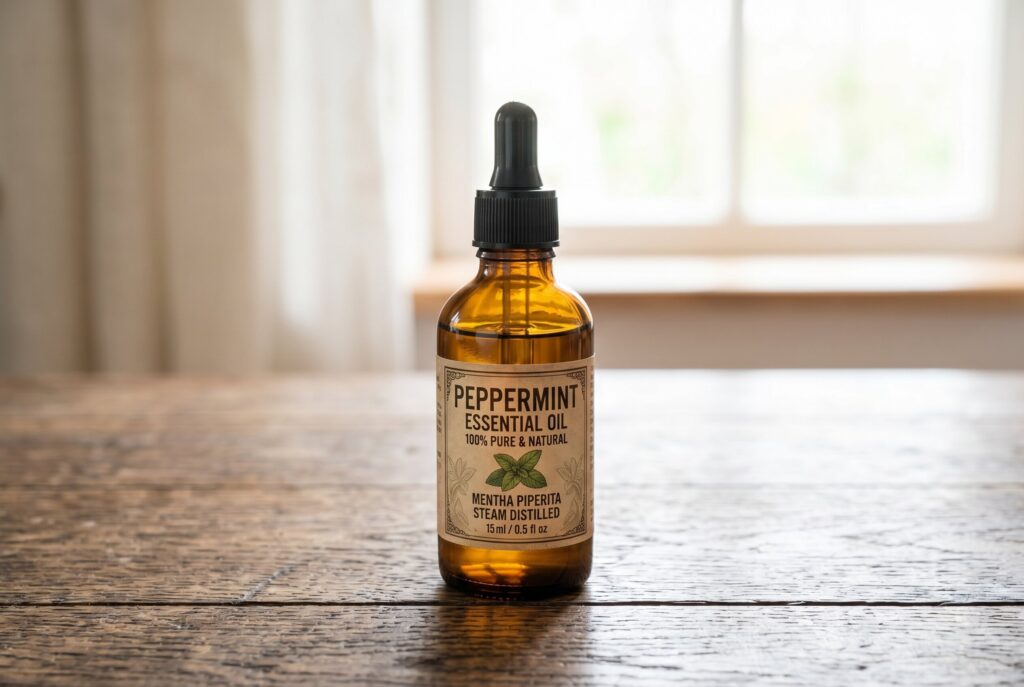
Peppermint oil ants advice is everywhere online, but this is where pet safety gets serious. Peppermint oil can repel ants, and some dog-only households use it in tiny diluted amounts around entry points. But essential oils can be dangerous for cats. Cats have limited ability to process many essential oil compounds, and exposure through skin contact, licking, or inhalation can cause harm.
If you have cats, skip peppermint oil. If you have dogs, use caution, keep it diluted, avoid direct contact areas, and don’t spray near bedding, bowls, or toys. Natural doesn’t always mean safe.
Emergency Guide: What If My Dog Ate Terro Liquid Ant Baits?
If your dog ate Terro or any ant bait, stay calm but act quickly. Many liquid ant baits contain borax at relatively low concentrations, so a small accidental lick may cause mild stomach upset rather than severe poisoning. However, risk depends on your pet’s size, the amount eaten, the product ingredients, and whether the plastic bait station was chewed or swallowed.
Call your veterinarian or ASPCA Animal Poison Control at (888) 426-4435 for case-specific advice. ASPCA Poison Control is available 24 hours a day, 365 days a year, and a consultation fee may apply. Bring or photograph the product label so the expert can identify the active ingredient.
Conclusion
The best ant killer safe for pets is prevention first. Store pet food in airtight containers, wash pet bowls daily, and clean up crumbs quickly to help prevent ants from invading your home. Seal cracks, gaps, windows, and door thresholds. Keep trash tightly closed. Then choose treatment carefully: vinegar for trails, food-grade diatomaceous earth for dry hidden cracks, baking soda for low-risk light activity, and borax only inside safe ant bait stations. A pet-safe plan doesn’t mean ignoring the problem. It means controlling ants effectively while keeping the animals who trust your home safe and protected.
Related Articles
- How to Get Rid of Ants in the House: 7 Safe Hacks to End Them For Good
- Natural Ant Repellent: 5 Kitchen Formulas to Stop the Invasion