

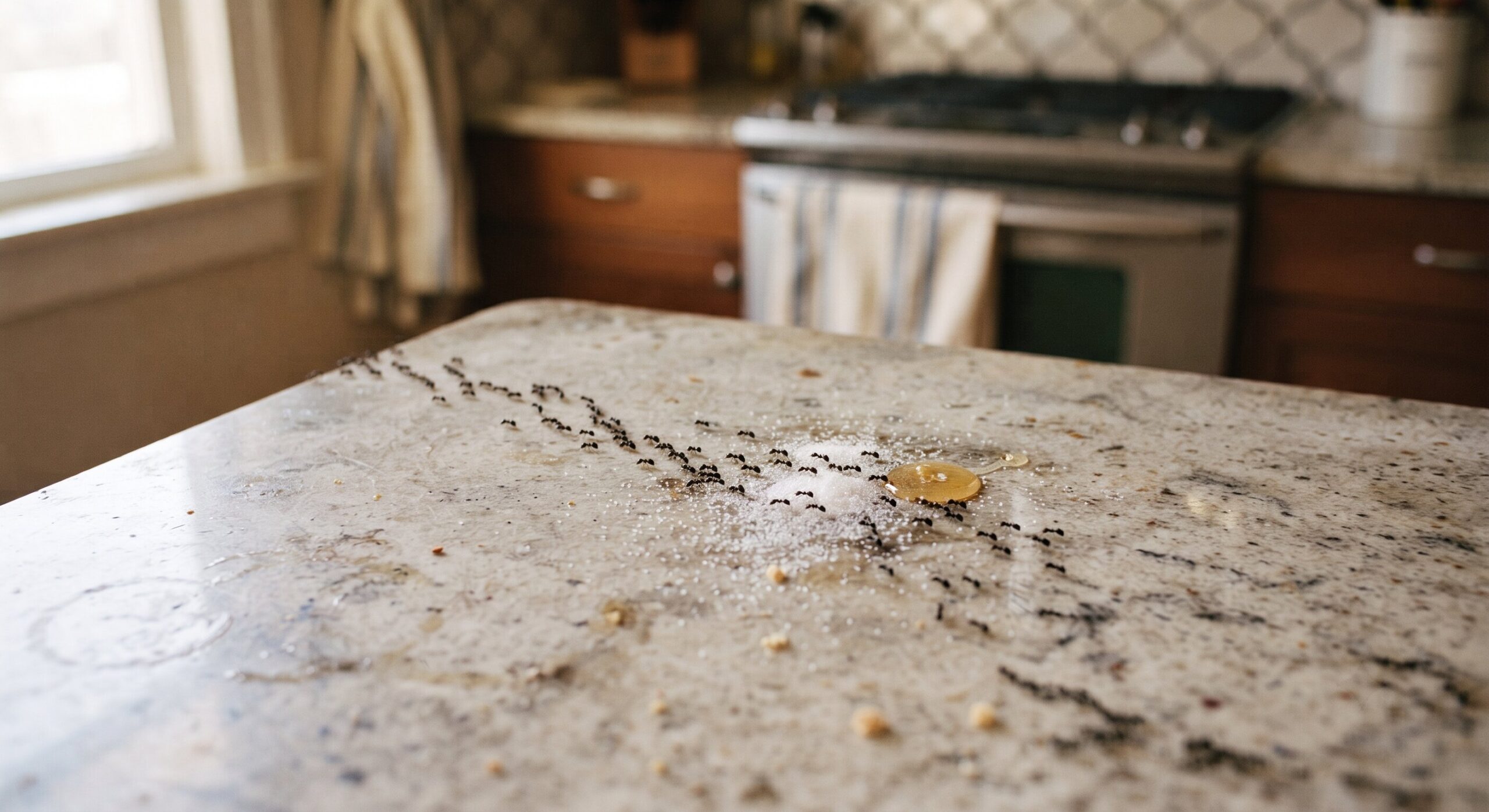
Seeing one ant on the counter rarely means there’s only one ant. It usually means a scout has found food, moisture, or shelter, then left a scent trail for the rest of the colony to follow. That’s why learning how to keep ants out of house spaces takes more than wiping the counter once. Effective ant prevention starts with understanding why they enter in the first place and how quickly a small trail can turn into a larger infestation.
The real goal isn’t just killing the ants you see. It’s breaking the trail, removing the attraction, and reaching the colony. If you want to know how to get rid of ants permanently and how to keep ants out of house areas long term, you need a method that works slowly enough for ants to carry it home, but safely enough for your household.
Why Ant Spray Fails: The Secret to Killing the Colony
Ant spray feels satisfying because it works instantly. You spray the line, the ants die, and the counter looks clear. But that’s often temporary. Most ant spray products are contact killers. They kill visible foragers, not the hidden colony. In some cases, disturbing ants with the wrong spray can cause the colony to scatter or relocate. Indoor ant trails usually respond better to bait because the ants bring it back to the nest and spread it through the colony over time. Sprays may help in the moment when you need to stop visible activity quickly, but bait is far more effective when the goal is lasting control instead of temporary relief.
Hack 1: The Borax for Ants Sweet Trap
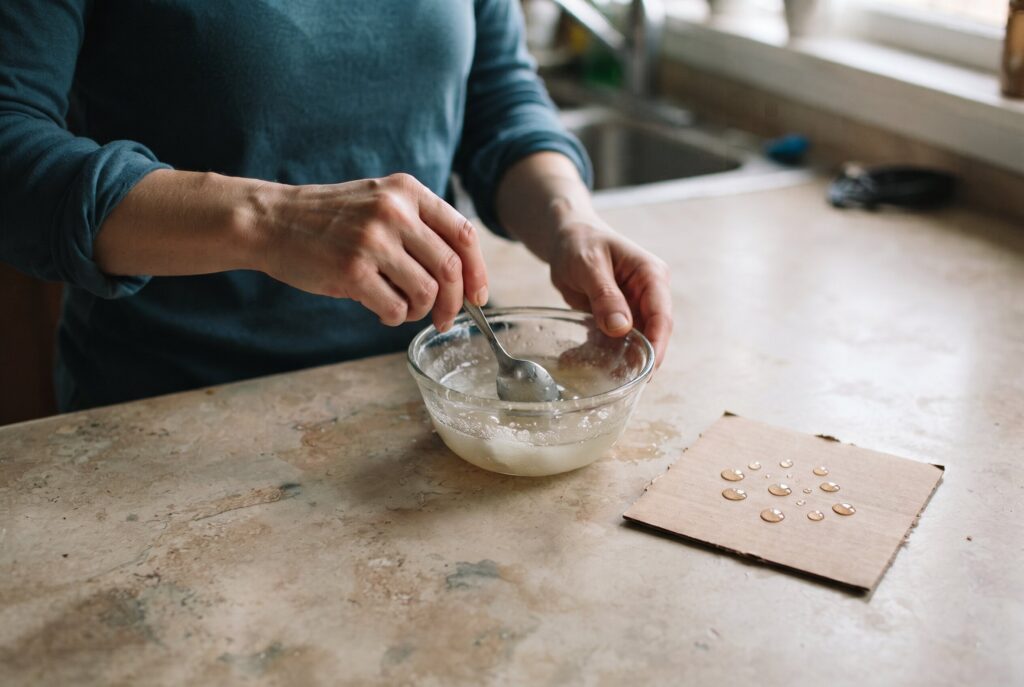
Borax for ants is one of the most effective DIY methods because it works as bait. The trick is patience. If the mixture is too strong, ants die before returning to the colony. If it’s balanced, they carry it back. Mix one part borax with three parts sugar, then add a little warm water until it forms a syrup. Place small drops on cardboard near ant trails, but away from children and pets. Replace the bait every few days. This is often the best ant killer for sugar-seeking ants because the sugar attracts them while the borax does the real work. For anyone asking how to get rid of sugar ants, this is usually a smarter strategy than spraying the ants you see.
Hack 2: Destroying the Scent Trail
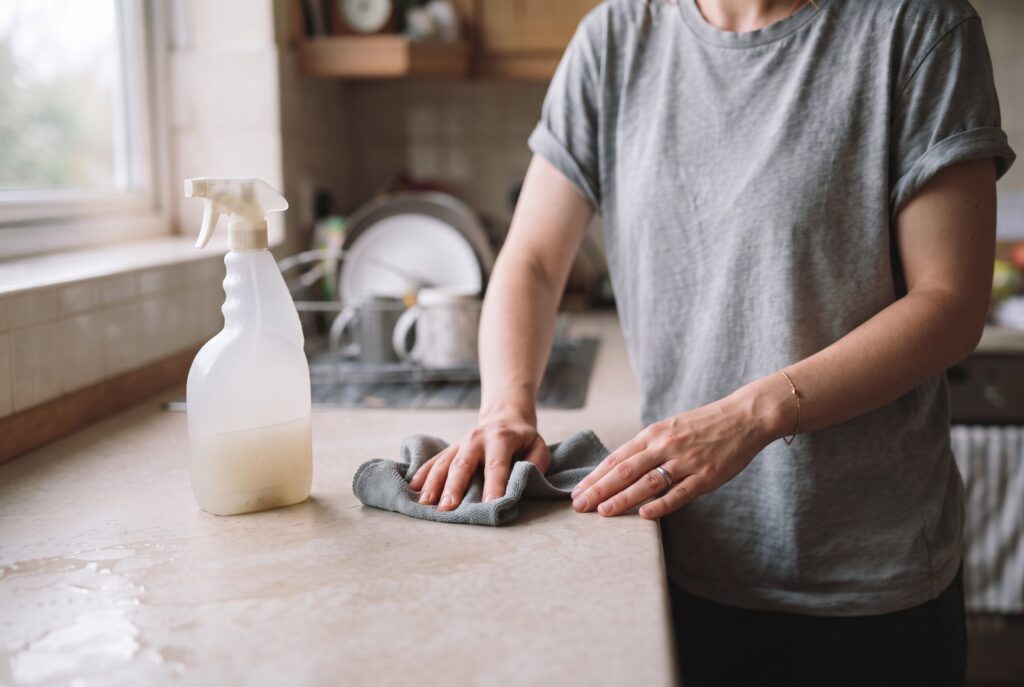
Does vinegar kill ants? Not very well as a true colony killer. But vinegar is excellent for destroying pheromone trails. Ants follow invisible chemical paths. If you only remove the ants but leave the trail, more ants can keep coming. Mix equal parts white vinegar and water, then wipe counters, baseboards, windowsills, and entry points.
Vinegar works best as a natural ant repellent and trail cleaner. Use it after placing bait, not directly on the bait trail. If you erase the trail too early, ants may not find the bait.
Hack 3: Diatomaceous Earth, the Micro Shredder
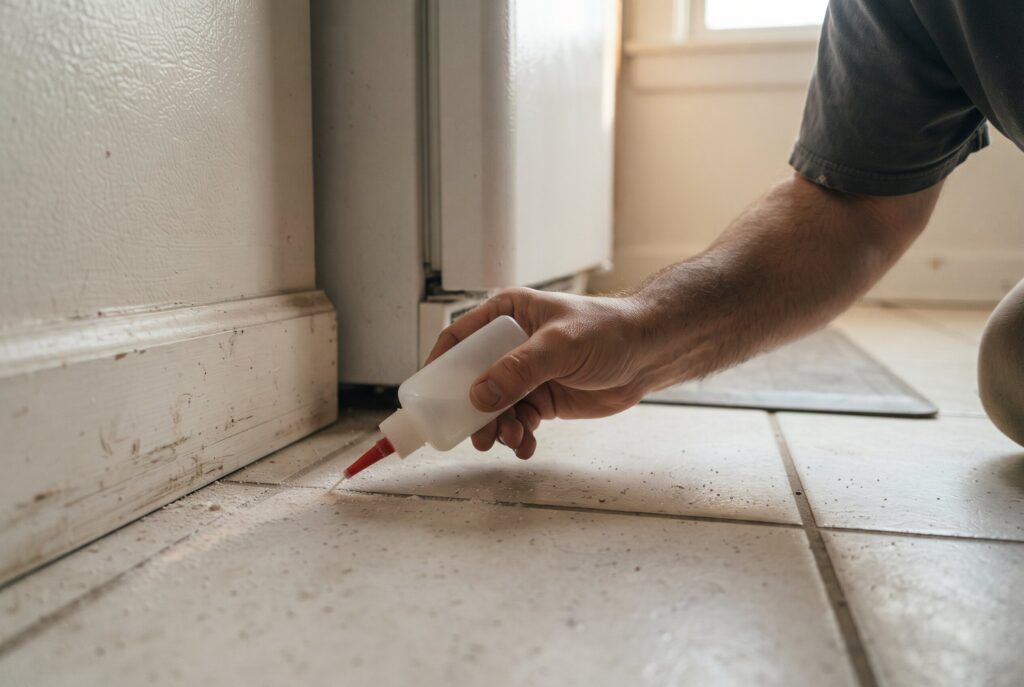
Food grade diatomaceous earth is a powder made from fossilized algae. It kills ants physically rather than chemically by damaging their outer coating, which dries them out. Use it in dry cracks, baseboards, behind appliances, and entry points. A thin dusting is enough. Piles of powder are less effective because ants may avoid them. As an ant killer indoor option, diatomaceous earth is useful for barriers and hidden paths. Keep it dry, since moisture reduces effectiveness. Use food grade only, and avoid breathing in the dust while applying it.
Hack 4: The Peppermint Oil Defense Line
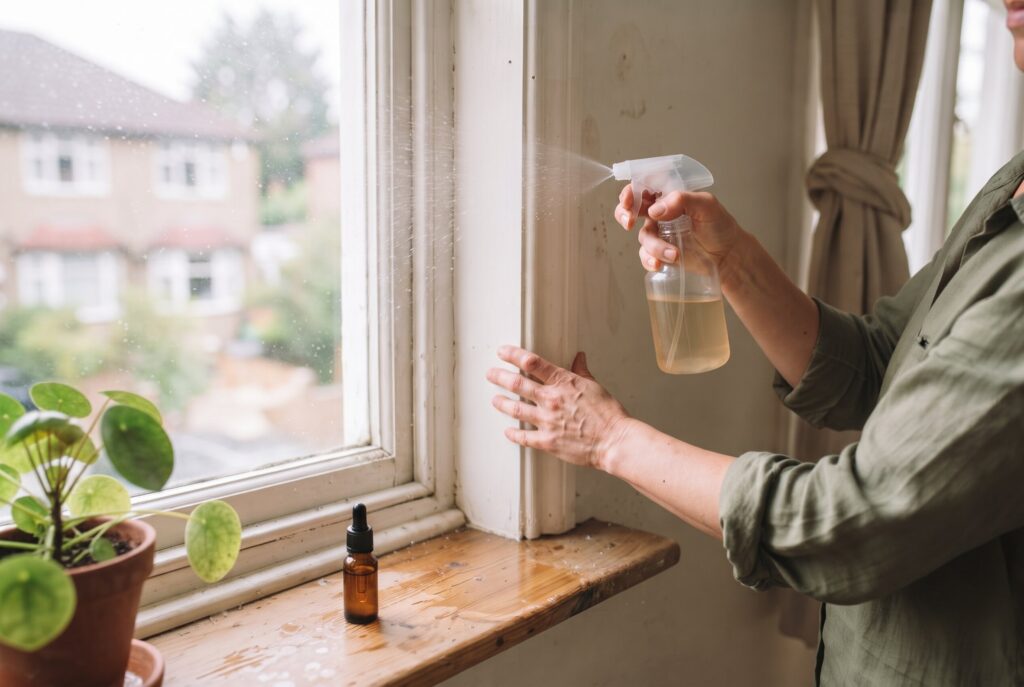
Peppermint oil for ants works best as a deterrent, not a colony killer. Ants dislike strong mint scents, so peppermint can help keep ants out of house entry points after the main infestation is under control. Add 10 to 15 drops of peppermint oil to a cup of water, shake well, and spray around windows, door frames, baseboards, and gaps where ants enter. You can also place peppermint soaked cotton balls near problem areas. Use caution around pets, especially cats, because some essential oils can be unsafe for them. Natural doesn’t always mean risk-free.
Hack 5: What About Bleach and Baking Soda?
Bleach can kill ants when sprayed directly on them, but it rarely solves the actual problem. The colony usually stays untouched, and the ants often return once the scent fades. Since bleach doesn’t function as a bait, the ants can’t carry it back to the nest, and repeated use may also damage certain surfaces or leave behind harsh fumes indoors. Does baking soda kill ants? Sometimes, especially when mixed with powdered sugar, but results are inconsistent. The theory is that ants eat the sweet mixture and the baking soda disrupts them internally. Still, borax bait is generally more reliable for colony control. Use bleach only for cleaning hard surfaces when appropriate. Don’t rely on it as your main ant strategy.
Hack 6: Outdoor Prevention
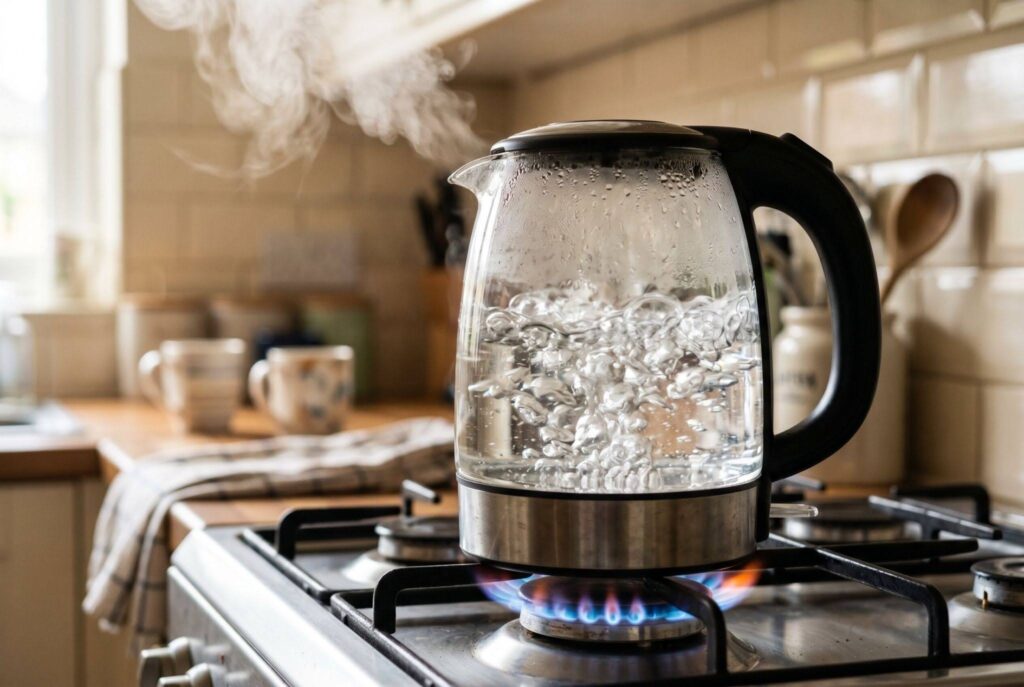
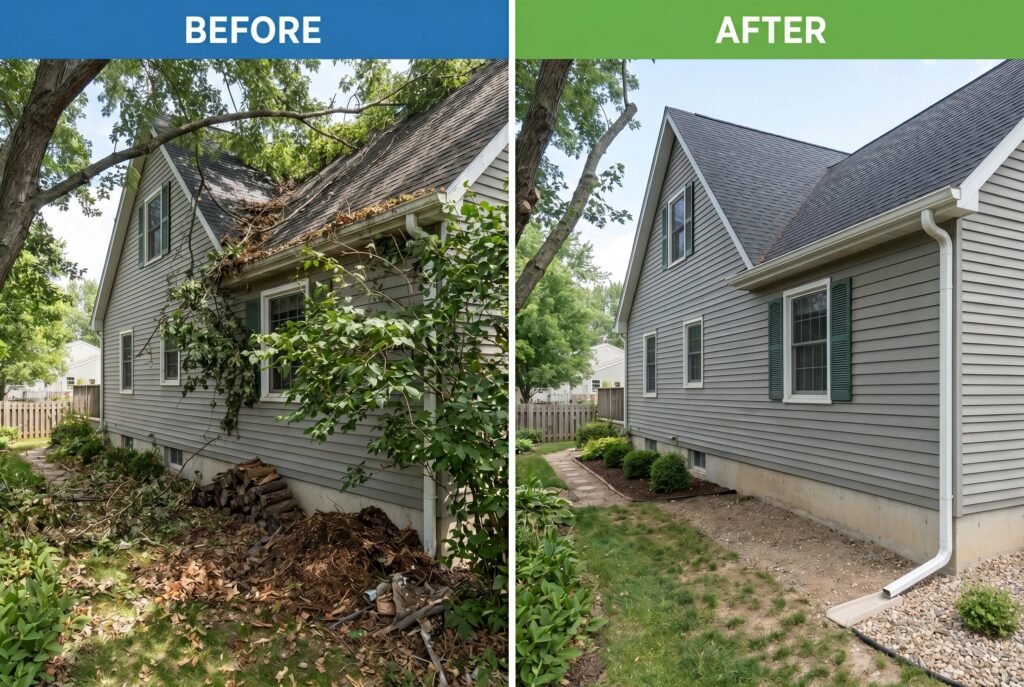
Many indoor ant problems begin outside. If you want to know how to get rid of ants in yard areas, start by removing the conditions that invite them toward the house. Trim branches away from walls and roofs. Clear leaves, mulch, and wood piles from the foundation. Fix outdoor leaks and standing water. Seal cracks around windows, doors, pipes, and utility lines. For visible outdoor nests, boiling water can reduce activity, though it may not eliminate deep colonies. Outdoor baits can work better when ants are actively foraging.
Hack 7: When It’s Time to Call an Ant Exterminator
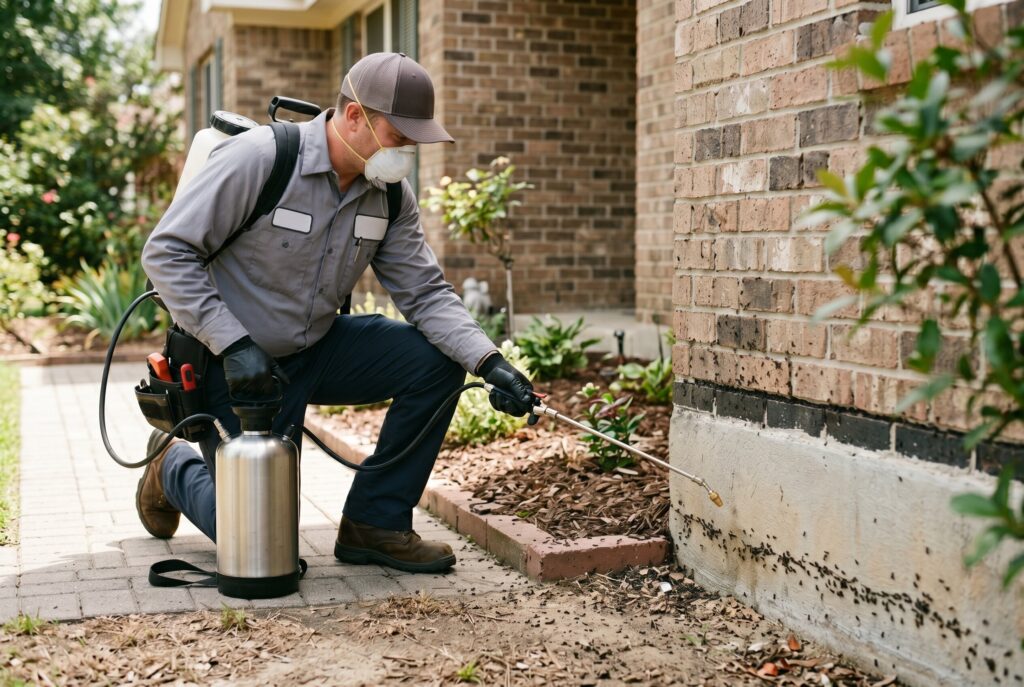
DIY methods work for many small sugar ant trails, but not every infestation should be handled alone. Call an ant exterminator if you see carpenter ants, ants coming from walls, repeated infestations, large outdoor mounds, or fire ants near play areas. Carpenter ants can signal moisture damage or wood nesting. Fire ants can sting and create safety risks. Professional ant control services are also worth considering if bait disappears for weeks but ants keep returning. That can mean the colony is large, hidden, or incorrectly identified.
Conclusion
The fastest method isn’t always the best method when learning how to get rid of ants permanently. Sprays kill the ants you see, while baits target the colony hidden behind the walls. To truly understand how to get rid of ants permanently, focus on removing food sources, following the trail, placing bait carefully, sealing entry points, and reducing outdoor access around the home. Vinegar, peppermint oil, and diatomaceous earth can support the process, but colony bait is usually what creates lasting results.
Most ant problems take several days to improve, and it’s completely normal to see more activity near the bait at first because the ants are finding it and carrying it back to the colony, so keep food sealed, avoid disturbing the bait, and give the strategy enough time to fully work.
Related Articles
- Pet Safe Ant Killer: 5 Natural Remedies Safe for Dogs & Cats (2026)
- How to Get Rid of Ants in Kitchen: 7 Food-Safe Steps