

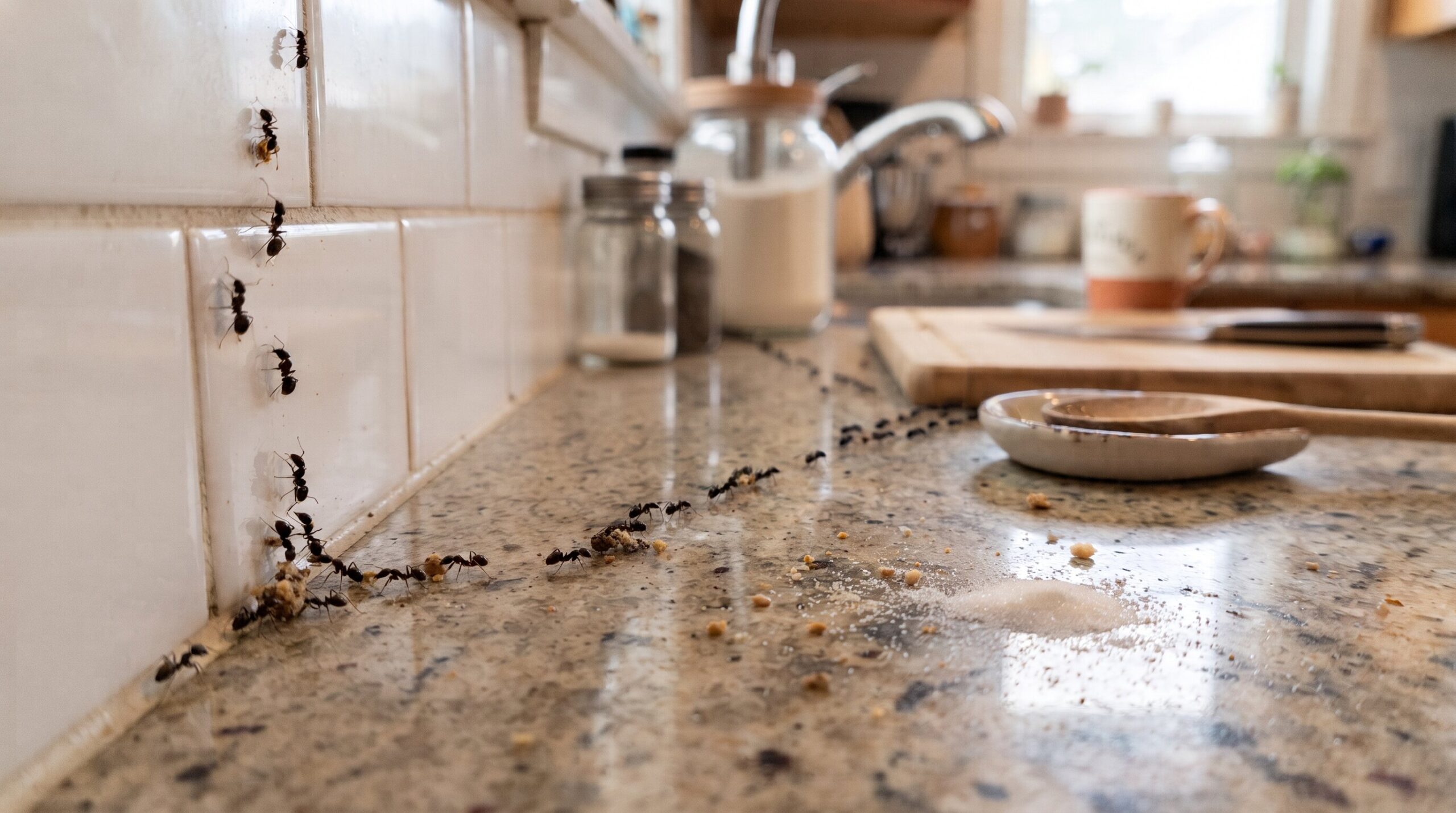
Nobody wants to spray harsh chemicals on the same countertops where they prepare dinner. If you’re wondering how to get rid of ants in kitchen spaces naturally and safely, the best approach is simple: erase the scent trail, remove food and water, use a safe bait, then seal the entry points. Ants in kitchen areas usually arrive for crumbs, sugar, grease, moisture, or easy access through tiny cracks. A food-safe system works best when it targets all of those problems together. Learning how to get rid of ants in kitchen environments also means staying consistent with cleaning routines and eliminating the conditions that attract ants in the first place.
Step 1: The Pheromone Eraser
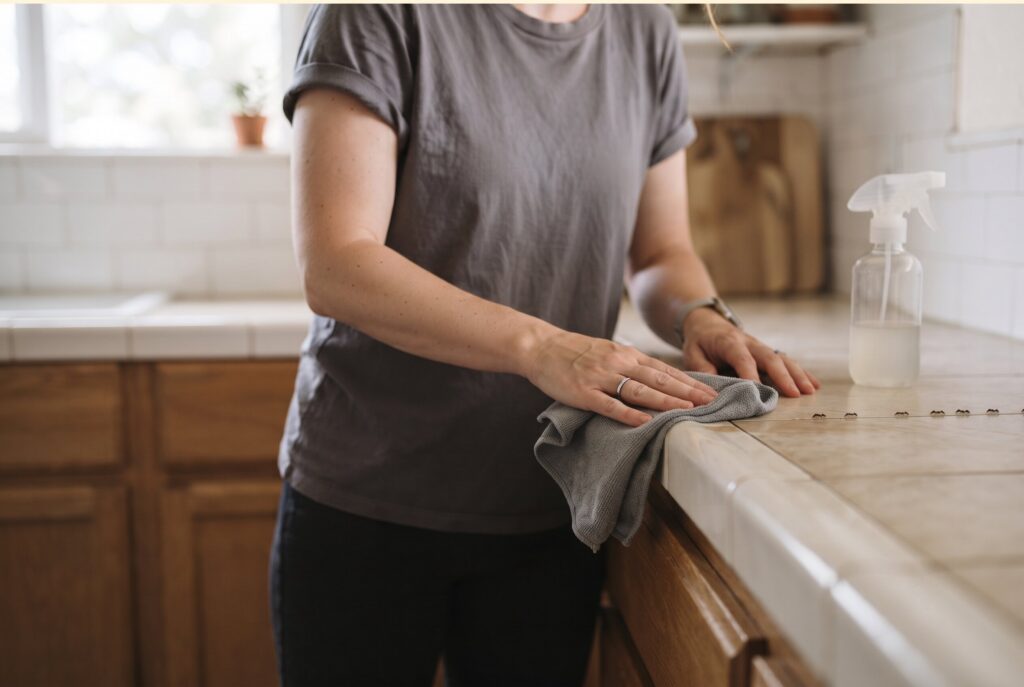
Does vinegar kill ants? Usually, no. Vinegar doesn’t reliably kill ants on contact. Its real power is that it erases the chemical trails ants use to navigate. This makes it especially useful in the kitchen, where ants often follow invisible scent paths across countertops, sinks, cabinets, and pantry shelves.
Mix equal parts white vinegar and water in a spray bottle. Wipe counters, cabinet edges, baseboards, trash areas, and the path where ants are walking. In kitchen spaces, pay extra attention to food prep surfaces, areas behind appliances, under the sink, and anywhere crumbs or moisture collect. Don’t just spray the visible ants. Clean the full trail from food source to entry point. Let the surface dry before placing bait or repellents. This step gives you a clean reset.
Step 2: Deploying the Baking Soda Bait Station
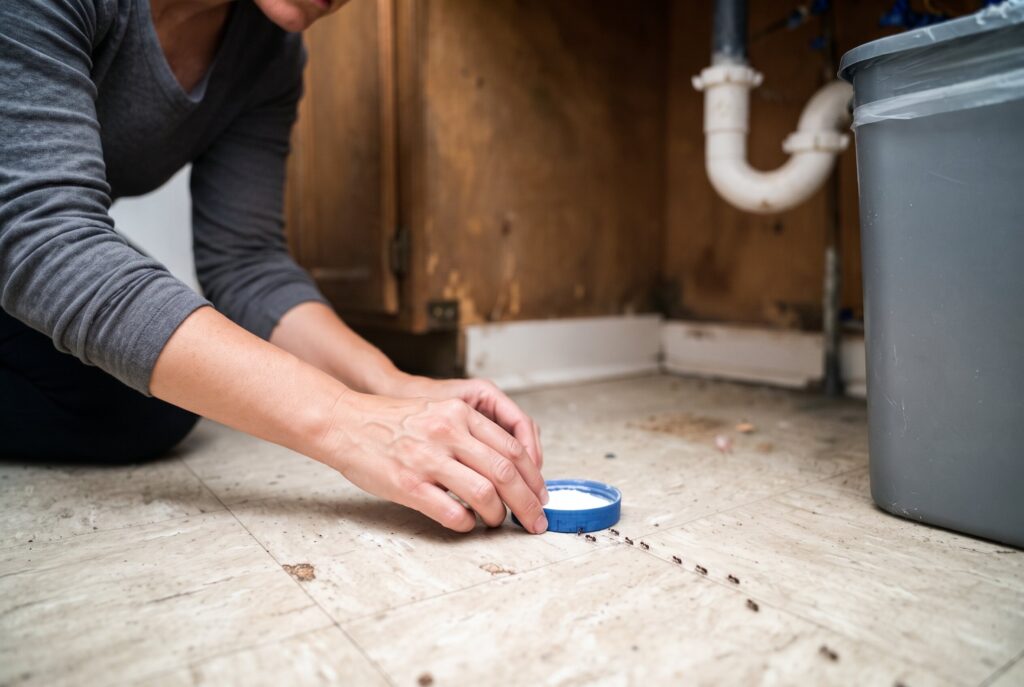
Does baking soda kill ants? Baking soda alone usually doesn’t work because ants ignore it. It becomes more useful when mixed with powdered sugar, which attracts ants. This method is often used in kitchens because it’s inexpensive and avoids harsh chemical sprays around food areas.
Mix one part baking soda with one part powdered sugar. Place a small amount in a shallow lid near the ant trail, but away from food prep surfaces. In kitchen areas, good placement spots include behind the trash can, under the sink, near baseboards, or beside appliances where ants commonly travel. The sugar acts as the lure, while the baking soda is the active ingredient. This is a slower natural ant killer, so patience matters. Don’t clean the bait area too aggressively once ants start feeding. Let them carry the mixture back toward the nest.
Step 3: The Mechanical Wall
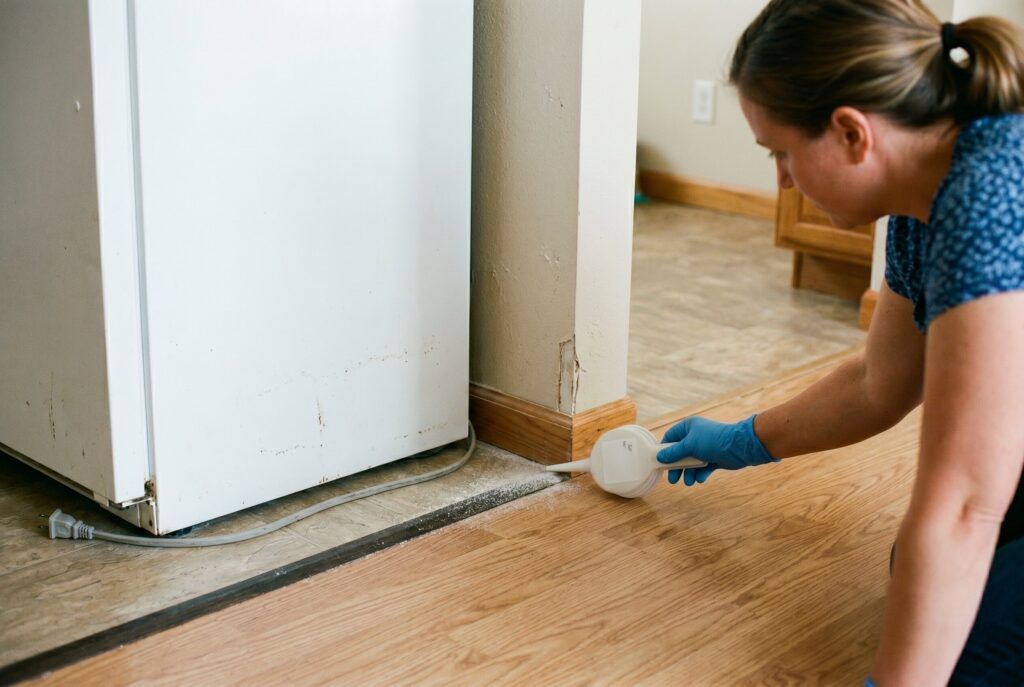
Food-grade diatomaceous earth is a physical barrier that can help with ants in kitchen baseboards, gaps, and dry corners. It works by damaging the ants’ outer coating and drying them out. In kitchens, it’s most effective in hidden, low-moisture areas where ants regularly travel but food preparation does not happen directly.
Use only food-grade diatomaceous earth. Apply a very thin dusting under the refrigerator, behind appliances, along baseboards, and near dry wall gaps. In kitchen spaces, focus on dry corners near the pantry, beneath the sink cabinet, or around small entry cracks where ants often enter searching for food and water. Don’t dump piles. Ants may walk around thick powder. Keep it away from open food, cutting boards, and areas where children or pets may stir up dust. Even food-grade powder can irritate lungs if inhaled.
Step 4: Aromatic Deterrents
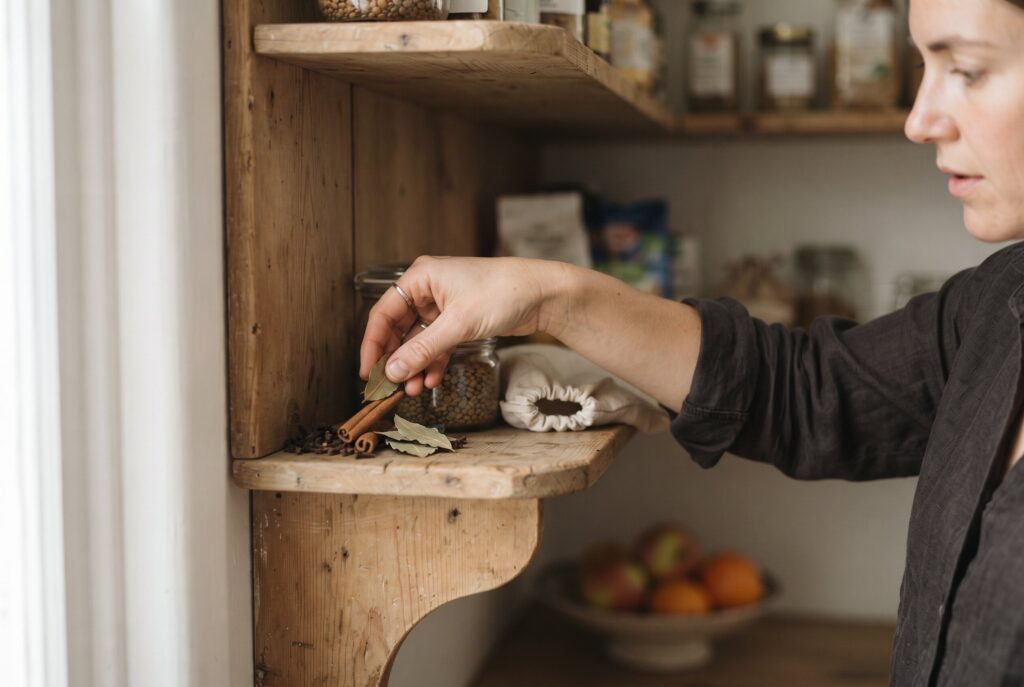
What do ants hate? Ants dislike strong scents that interfere with their ability to follow trails. Cinnamon, cloves, bay leaves, peppermint, and citrus can all act as natural ant repellent options. These scents are especially helpful in kitchen areas where ants search for sugar, crumbs, grease, and moisture.
Place whole cloves, cinnamon sticks, or bay leaves in pantry corners and near shelf edges. In kitchens, you can also place them near fruit bowls, snack cabinets, coffee stations, or small gaps where ants commonly appear. These are cleaner than powders and won’t make a mess around packaged food. Peppermint oil can also work, but use caution. It isn’t ideal around cats and some pets. If you have pets, stick with vinegar, sealed food storage, and dry spice barriers.
Step 5: The Dry Sink Rule for Nighttime
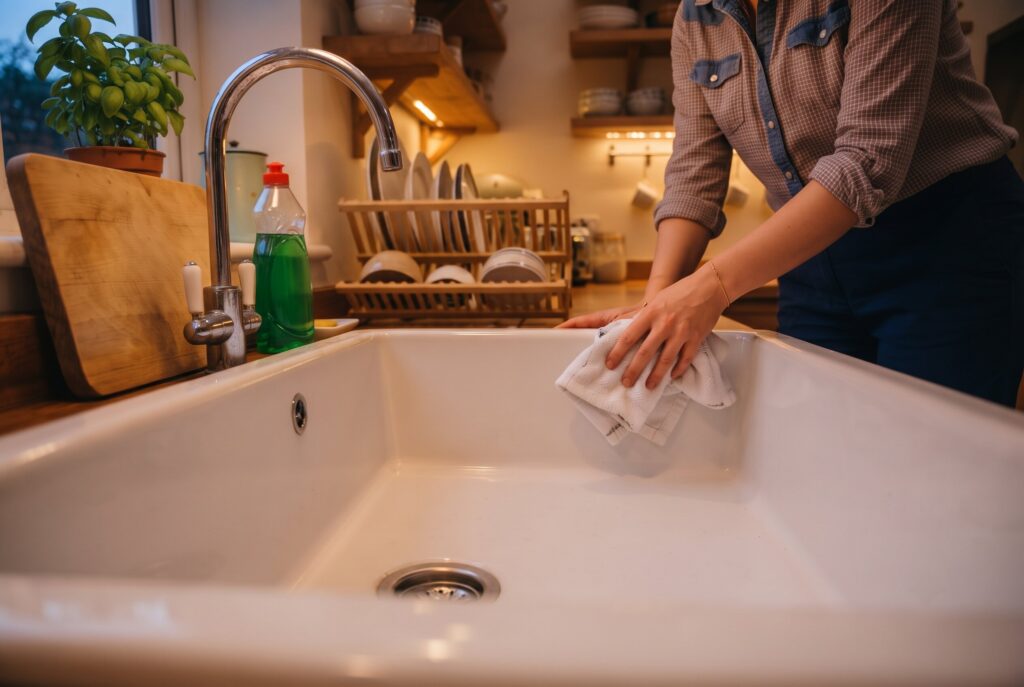
Ants don’t only look for food. They also look for water. A damp sink, wet sponge, leaking faucet, or condensation under the sink can attract them overnight. In kitchens, moisture is often just as attractive to ants as crumbs or sugar, especially around sink cabinets and dishwashing areas.
Before bed, wipe the sink basin dry. Rinse and dry the drain area. Don’t leave wet sponges, sticky cups, pet bowls, or damp towels out overnight. In kitchen spaces, also check for small leaks under the sink, water collecting behind appliances, or condensation near pipes and dishwashers. This one habit can make your kitchen less attractive within days.
Step 6: The Airtight Pantry Lockdown
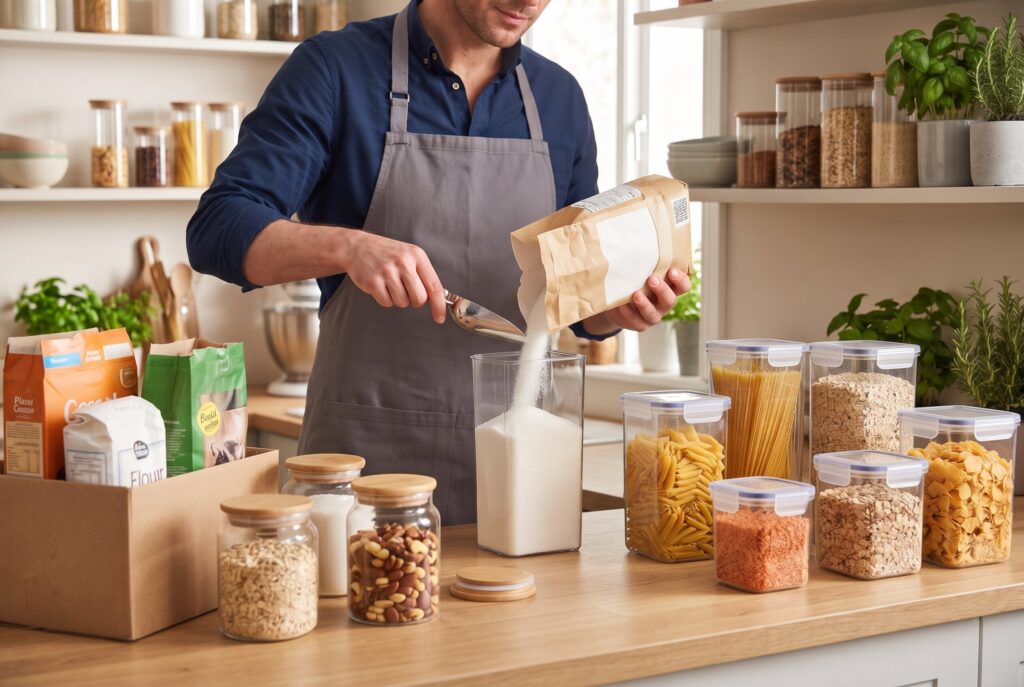
Cardboard boxes, folded cereal bags, and half-closed sugar bags aren’t ant-proof. In kitchens, ants can find even the smallest food opening surprisingly fast, especially around sweet or dry pantry items. Move sugar, flour, cereal, rice, cookies, pet food, and baking ingredients into airtight glass, acrylic, or hard plastic containers. Wipe sticky jars before putting them back on shelves. In kitchen pantry areas, it also helps to organize shelves regularly and remove old crumbs or spilled ingredients hiding behind containers. Also check for hidden attractants: syrup drips, honey lids, spilled protein powder, fruit bowls, trash bins, and crumbs under appliances.
Step 7: Sealing the Micro-Cracks
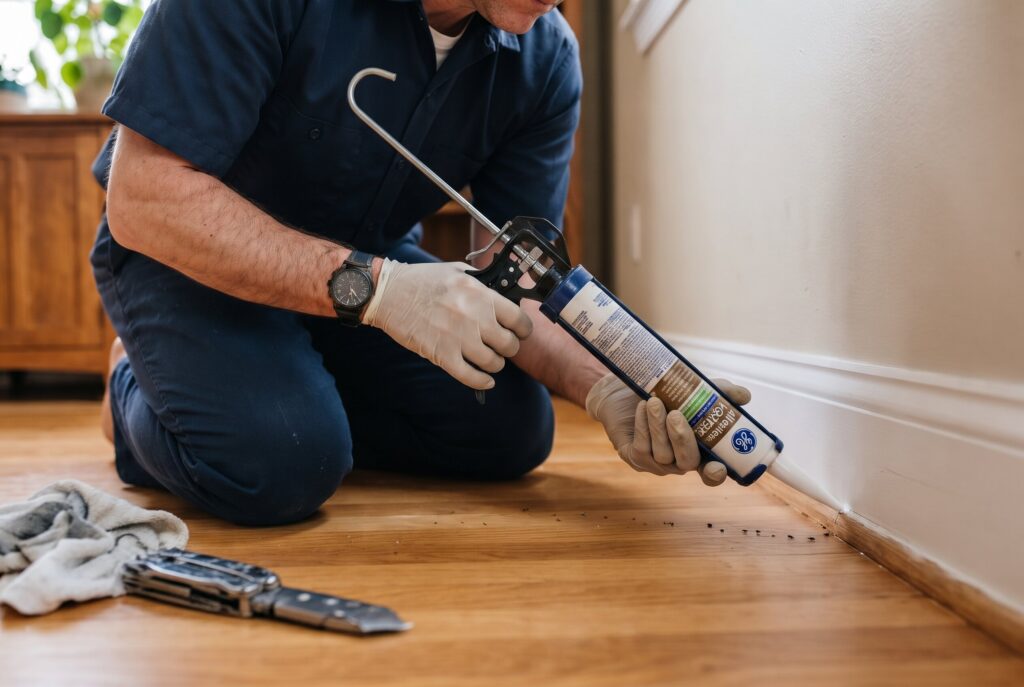
To solve how to keep ants out of house long term, you need to find the entry point. In many homes, kitchen areas are the most common access zones because ants are drawn to food, moisture, and small wall gaps around plumbing or cabinets. Follow the trail backward. Look around windows, door frames, baseboards, plumbing holes, backsplash seams, and where countertops meet walls.
Use non-toxic silicone caulk to seal tiny gaps after the ant activity slows. Don’t seal too early if you’re using bait, because you want ants to carry bait back first. In kitchens, focus especially on gaps under the sink, around pipe openings, behind appliances, and near pantry shelving. For renters, use removable weatherstripping, door sweeps, or temporary gap filler where allowed.
Conclusion
Learning how to get rid of ants isn’t about one magic ingredient. It’s about a system: clean the trail, bait the colony, block dry entry points, remove food, remove water, and seal cracks. Natural methods take patience, but they keep your kitchen safer and cleaner. If ants return every week, the colony may be larger than expected. At that point, use a stronger bait plan or contact a pest professional.
Related Articles
- How to Get Rid of Ants in the House: 7 Safe Hacks to End Them For Good
- Natural Ant Repellent: 5 Kitchen Formulas to Stop the Invasion