

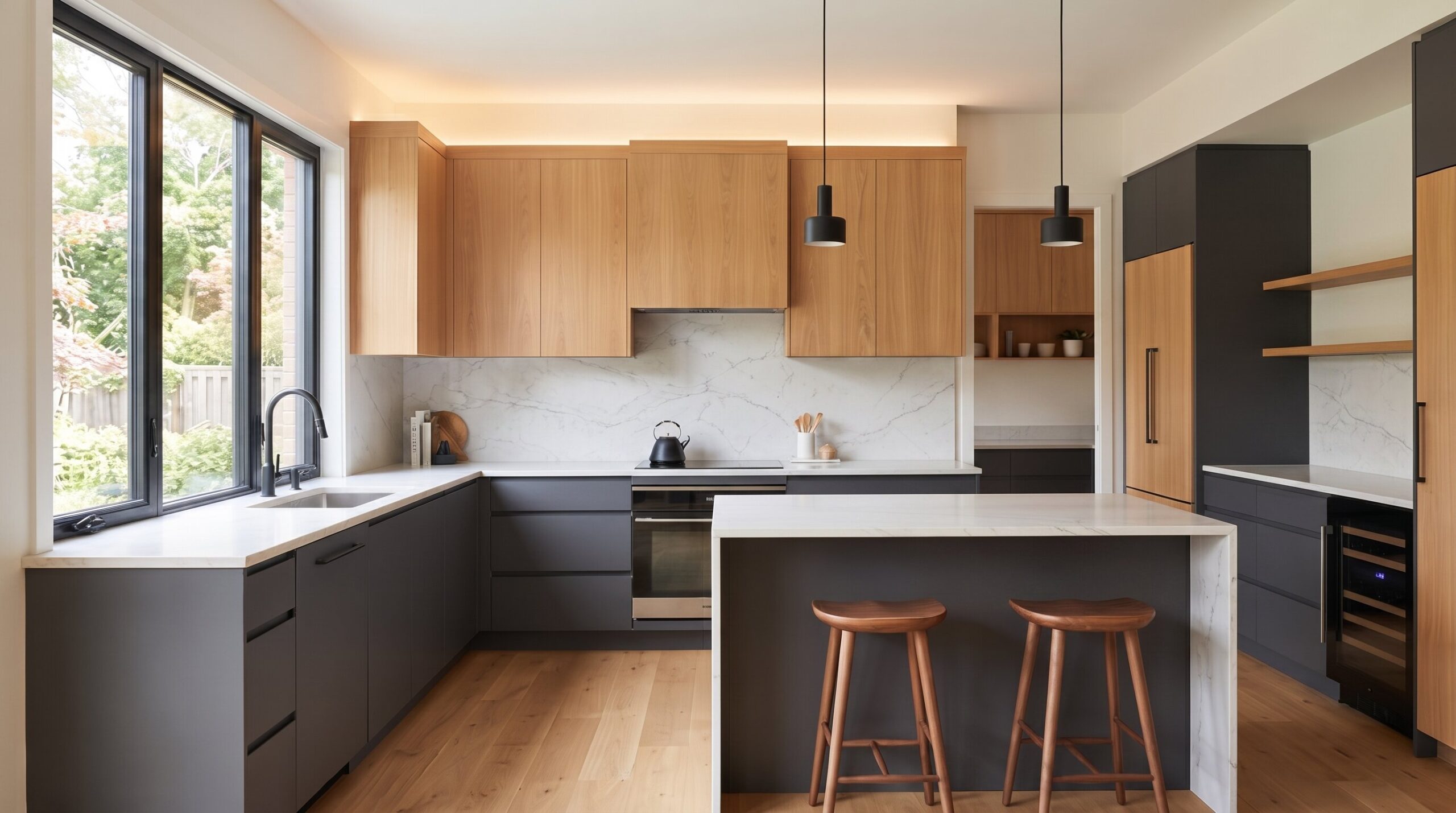
Two tone kitchen cabinets are still stylish in 2026, but the trend has changed. The best kitchens no longer rely on harsh black and white contrast alone. Instead, kitchen cabinet color trends are moving toward warm wood, earthy paint, soft matte finishes, and balanced contrast that feels natural rather than forced.
Are two tone kitchen cabinets still in style? Yes. In 2026, the strongest two tone kitchen cabinet ideas pair natural wood grains like white oak or walnut with sage green, warm taupe, soft charcoal, mushroom beige, navy, or cream. The safest rule is simple: keep lighter colors on the upper cabinets and use darker tones below to ground the room.
Rule 1: The “Dark Bottom, Light Top” Formula
Why Dark Colors Belong on Lower Cabinets
One of the most important principles behind successful two tone kitchen cabinets is the “dark bottom, light top” formula. This design rule exists because darker colors naturally carry more visual weight, making them ideal for lower cabinets where they can anchor the entire kitchen. Lighter colors on upper cabinets help reflect both natural and artificial light, keeping the room feeling brighter, taller, and more spacious. When dark colors are placed on upper cabinets instead, the ceiling can appear lower and the kitchen may feel visually heavy or cramped.
That’s why combinations like white uppers and dark lower cabinets remain one of the most timeless and effective layouts in modern kitchen design. By grounding the space with rich lower cabinetry while keeping the eye level light and airy, homeowners can create a kitchen that feels balanced, sophisticated, and welcoming for years to come.
The Mixed Material Trend: Wood and Paint Combinations
1. White Oak and Sage Green Cabinets
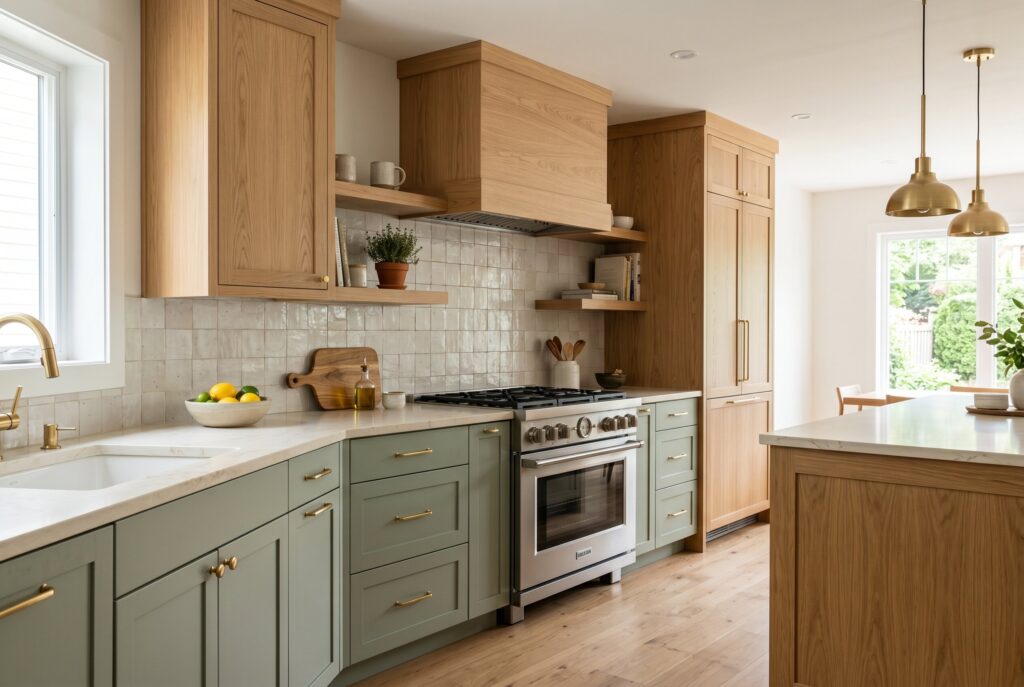
White oak and sage green is one of the most elegant two tone kitchen cabinet ideas for 2026. The wood keeps the kitchen warm and natural, while sage green adds calm color without overwhelming the space. This combination works especially well with cream quartz, handmade tile, brass hardware, and soft white walls.
2. Walnut and Soft Black Cabinets
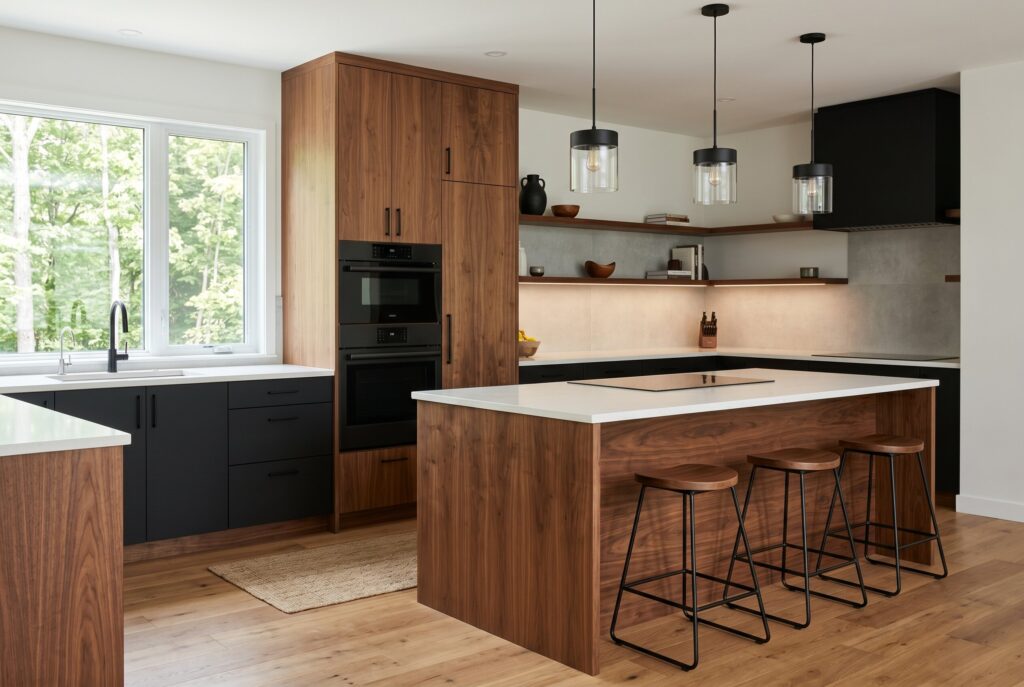
Black and wood kitchen cabinets can feel dramatic, but walnut makes the look warmer and easier to live with. Use walnut on the island or tall pantry wall, then pair it with soft black lower cabinets. The result feels modern, grounded, and architectural without becoming cold.
3. Rift Sawn Oak and Warm White Cabinets
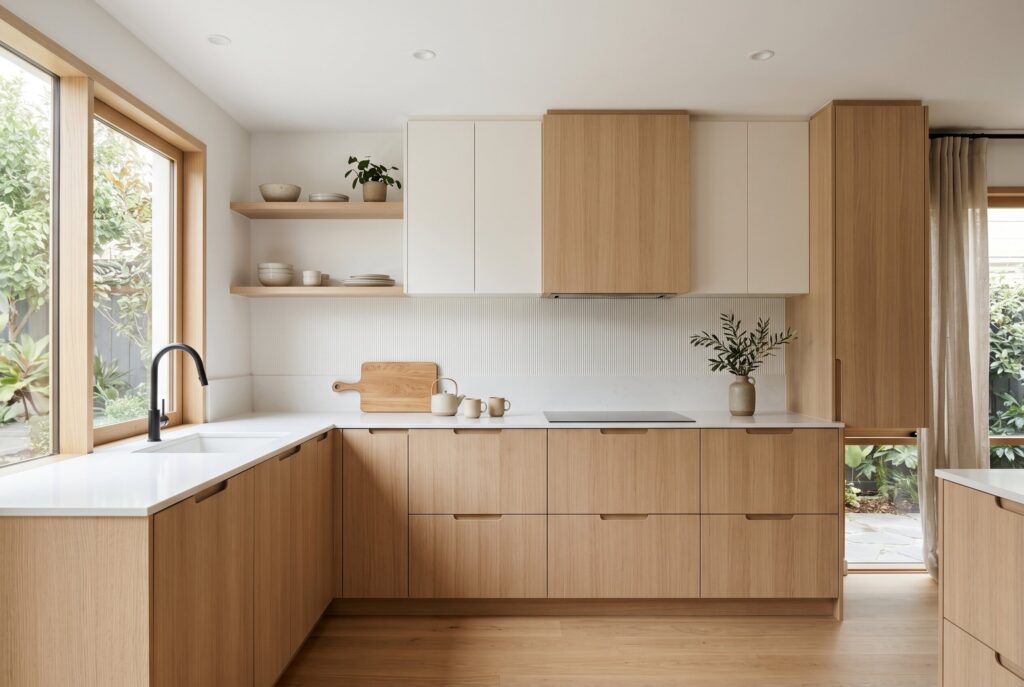
Rift sawn oak gives the kitchen subtle texture, while warm white cabinets keep the room bright. This is a smart choice if you want two tone kitchen cabinets that feel timeless rather than trendy. It works beautifully in minimalist, Japandi, and organic modern kitchens.
4. Natural Maple and Mushroom Cabinets
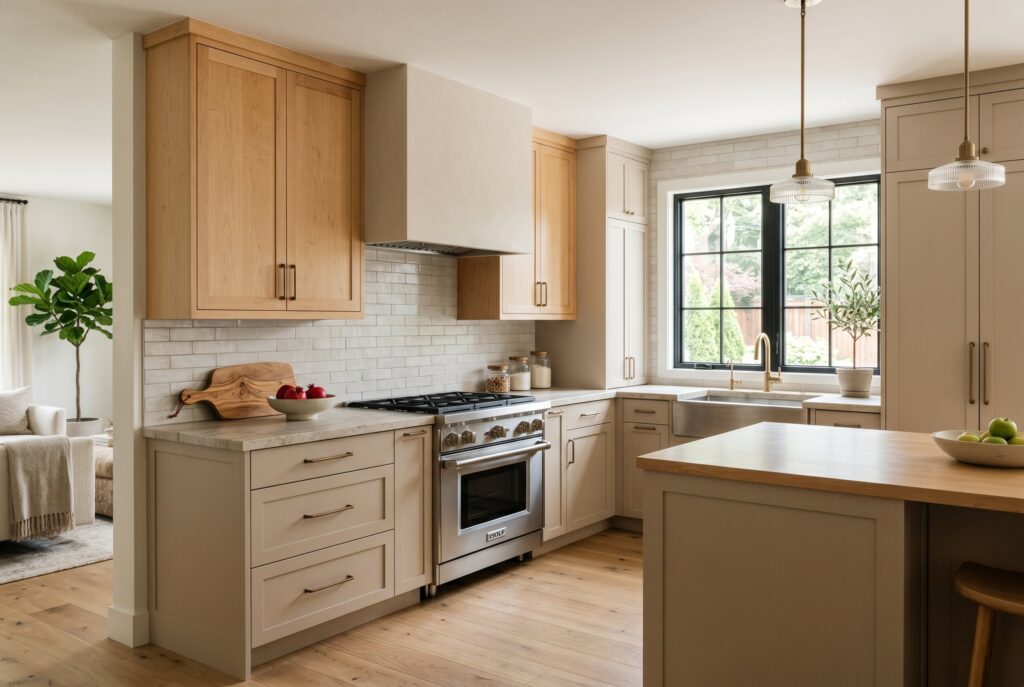
Natural maple has a quiet golden tone that pairs well with mushroom beige paint. This palette feels soft and earthy, making it ideal for homeowners who want warmth but don’t want strong color. It also works well with stone counters and muted bronze hardware.
5. White Oak Uppers and Forest Green Lowers
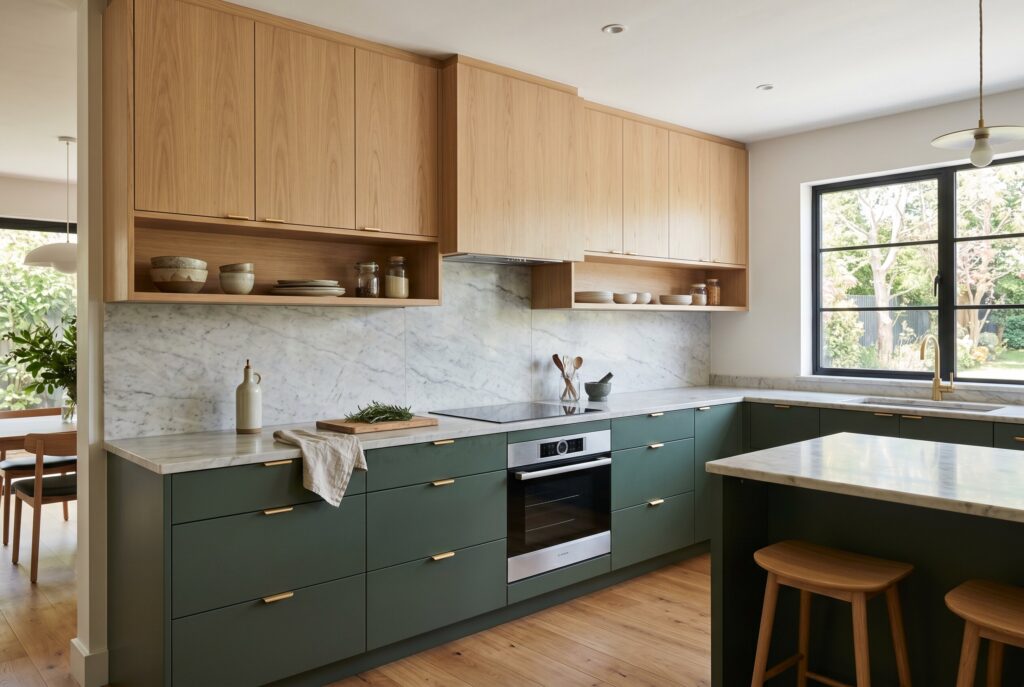
Green and wood kitchen cabinets feel especially rich when the green is deep and muted. White oak uppers keep the upper half light, while forest green lower cabinets create depth. This layout follows the dark bottom, light top formula, so the kitchen feels open but still grounded.
6. Walnut Island with Cream Perimeter Cabinets
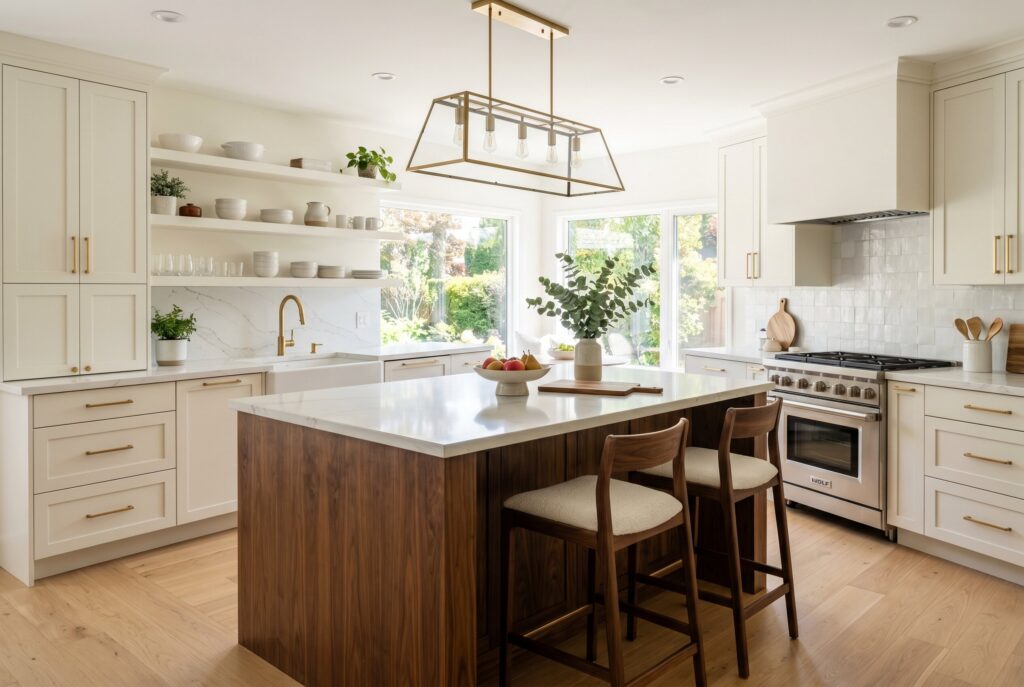
If you want a safer version of two tone kitchen cabinets, keep the perimeter cabinets cream and use walnut on the island. This creates contrast without splitting every cabinet into two colors. It is subtle, expensive looking, and easy to decorate around.
Earthy and Organic: The New Painted Palettes
7. Mushroom Beige and Cream Cabinets
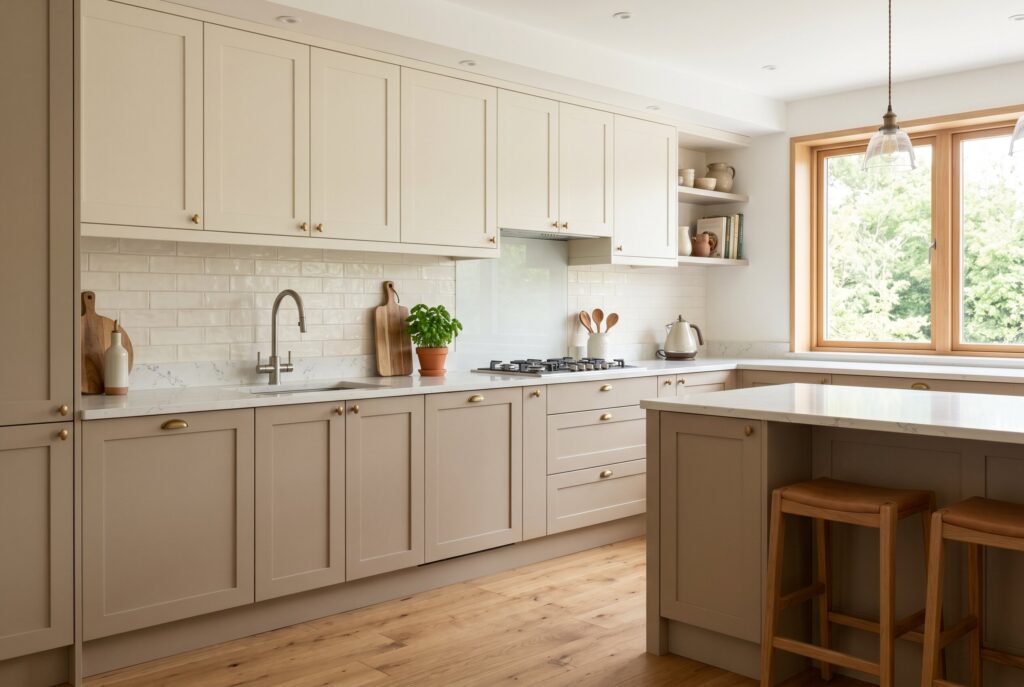
Mushroom beige is one of the most important kitchen cabinet color trends for 2026. Pair mushroom lower cabinets with cream uppers for a soft layered look. It is perfect for people who dislike stark white kitchens but still want the room to feel bright. This combination also works beautifully with natural wood accents and warm brass hardware. The overall effect feels cozy, timeless, and much more inviting than cooler gray-based palettes.
8. Taupe Lowers and White Uppers
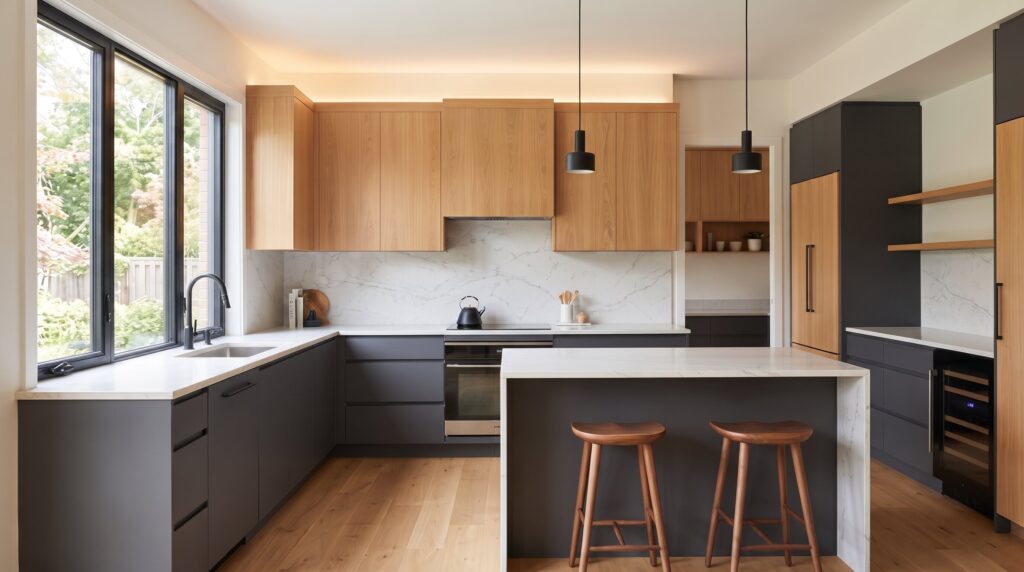
White uppers and dark lower cabinets don’t always need to feel dramatic. A taupe lower cabinet gives gentle contrast while keeping the kitchen calm. This combination is ideal for transitional homes because it works with both classic and modern finishes. It also pairs easily with marble countertops, wood flooring, and mixed-metal hardware. The softer contrast creates a timeless look that feels elegant without being overly trendy.
9. Terracotta Island with Warm White Cabinets
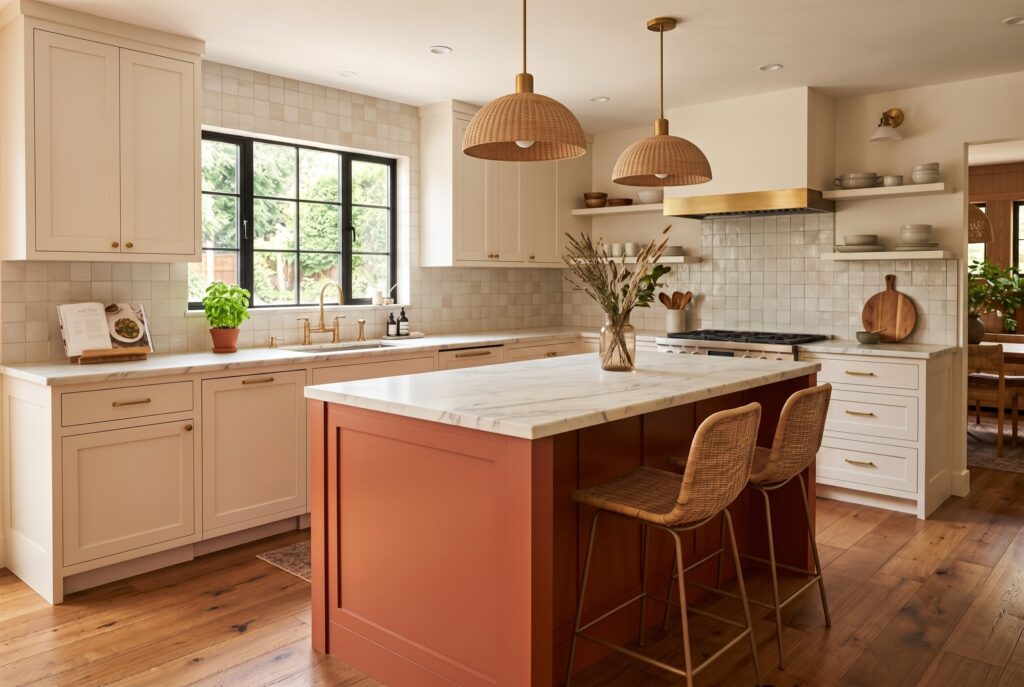
A terracotta painted kitchen island contrast brings energy to an otherwise neutral kitchen. Keep the perimeter cabinets warm white so the room doesn’t feel too busy. Terracotta looks best with wood floors, woven stools, creamy backsplash tile, and warm lighting. This earthy shade adds personality without overpowering the space. It’s especially effective in kitchens that want a Mediterranean, organic modern, or rustic-inspired feel.
10. Olive Green Lowers and Ivory Uppers

Olive green is deeper than sage but softer than forest green. When paired with ivory uppers, it feels mature and grounded. This is one of the strongest two tone kitchen cabinet ideas for homeowners who want color that still feels natural. Olive green also complements brass hardware, natural stone countertops, and warm wood finishes beautifully. The result is a kitchen that feels rich, timeless, and connected to nature without becoming too dark or overpowering.
11. Charcoal Lowers and Soft White Uppers

Charcoal lower cabinets create depth without the severity of pure black. Soft white uppers keep the eye level bright and prevent the room from feeling heavy. Add brass or brushed nickel hardware to connect the two tones. This color combination works especially well in modern and transitional kitchens that want contrast without looking overly bold. Charcoal also hides everyday wear better than lighter cabinet colors, making it both stylish and practical for busy homes.
12. Muted Blue Gray and Cream Cabinets
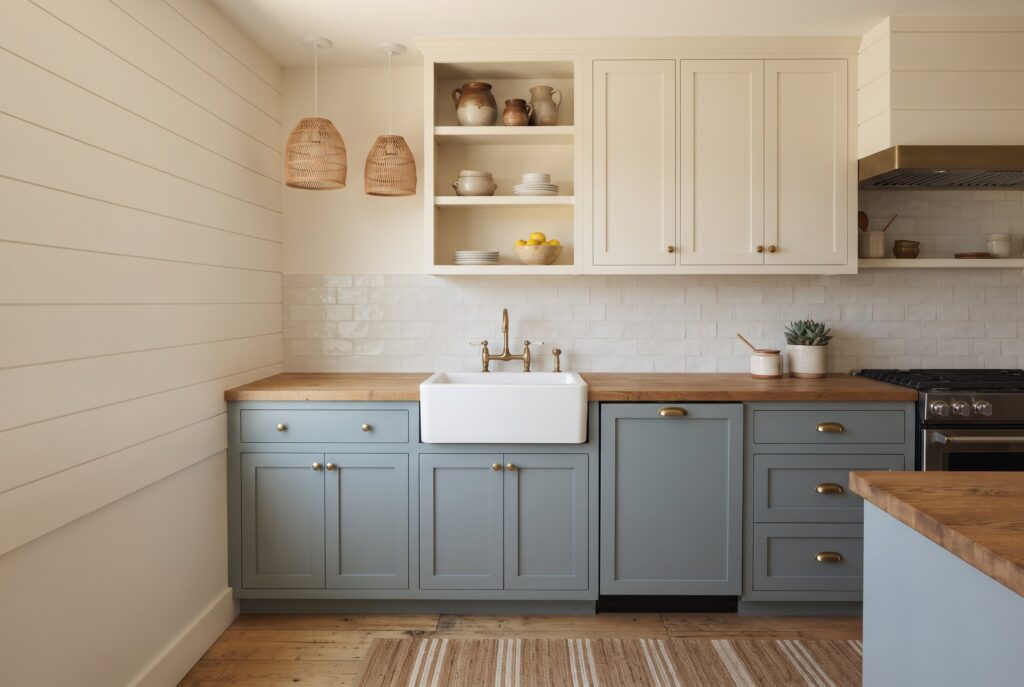
Muted blue gray cabinets are perfect for kitchens that need color but not drama. Use blue gray on the lowers and cream on the uppers. This palette feels relaxed, coastal, and classic, especially with marble style quartz and pale wood flooring. It also works beautifully with brushed nickel hardware and soft natural lighting. The overall look feels airy and timeless while still adding subtle personality to the kitchen.
The Accent Island: A Safer Way to Go Two Tone
13. Navy Island with White Cabinets
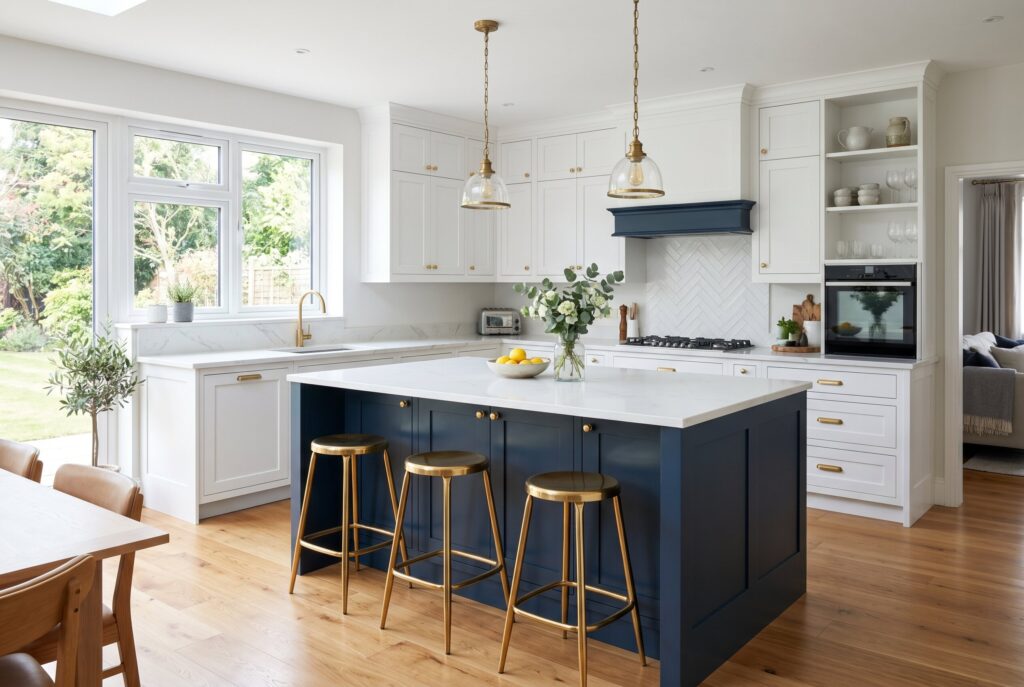
Navy and white kitchen cabinets remain popular because they feel crisp and timeless. A navy island is the easiest way to try the look without committing to navy lowers everywhere. It creates a strong focal point in open kitchens and pairs well with gold, nickel, or black hardware. Navy also adds depth without feeling as harsh as black, making it easier to live with long term. Combined with white cabinetry and warm wood accents, the overall look feels clean, elegant, and versatile across both modern and classic homes.
14. Charcoal Island with Light Gray Cabinets
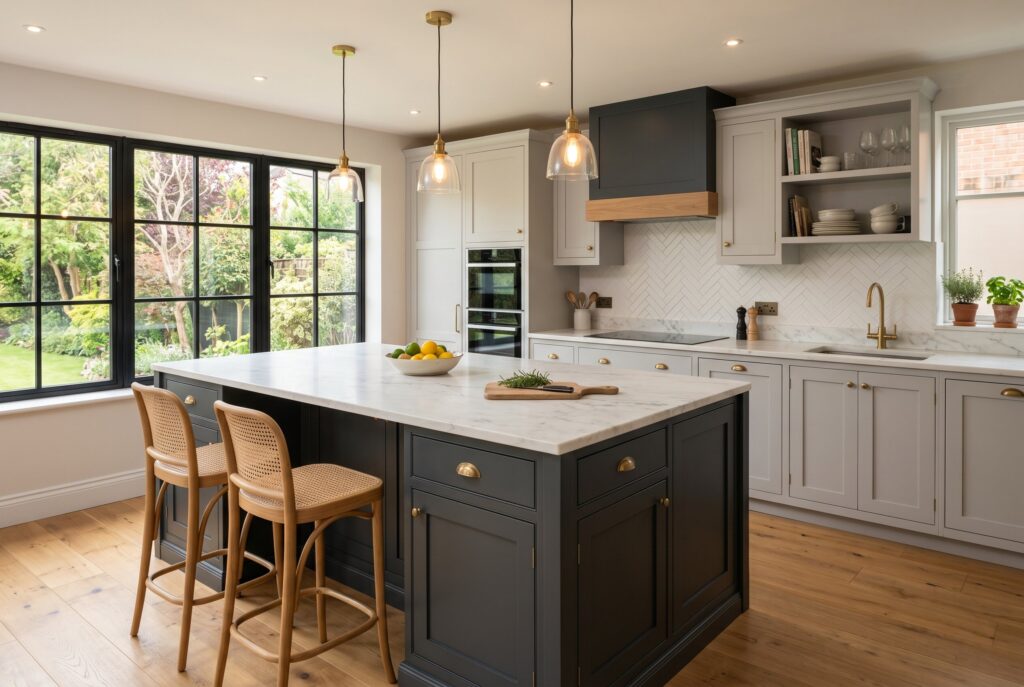
A charcoal island adds modern depth to light gray perimeter cabinets. This approach works well when you want a painted kitchen island contrast that feels polished but not loud. Use warm lighting so the charcoal doesn’t look flat at night. Brass or wood accents can also soften the cooler gray tones and make the kitchen feel more inviting. The result is a balanced, contemporary look that still feels warm and livable.
15. Forest Green Island with Cream Cabinets
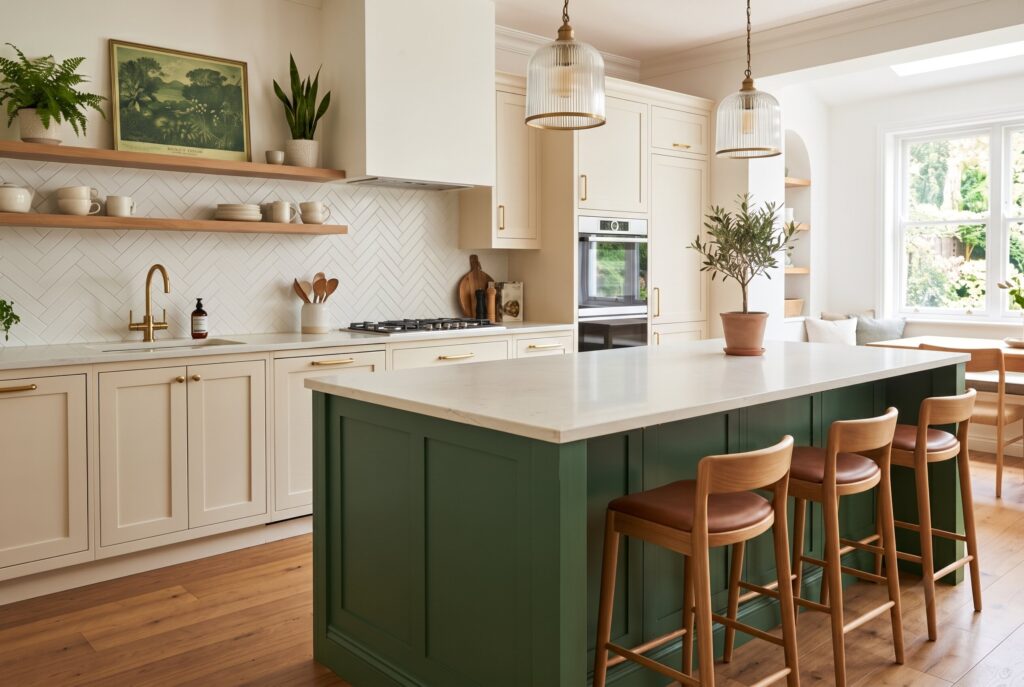
A forest green island gives a neutral kitchen personality. It works best when repeated subtly through styling, such as green ceramics, plants, or artwork. This keeps the island from feeling disconnected from the rest of the room. Forest green pairs especially well with warm wood tones, creamy whites, and brass hardware for a rich organic look. The color adds depth and character while still feeling timeless and connected to nature.
16. Walnut Island with White Cabinets
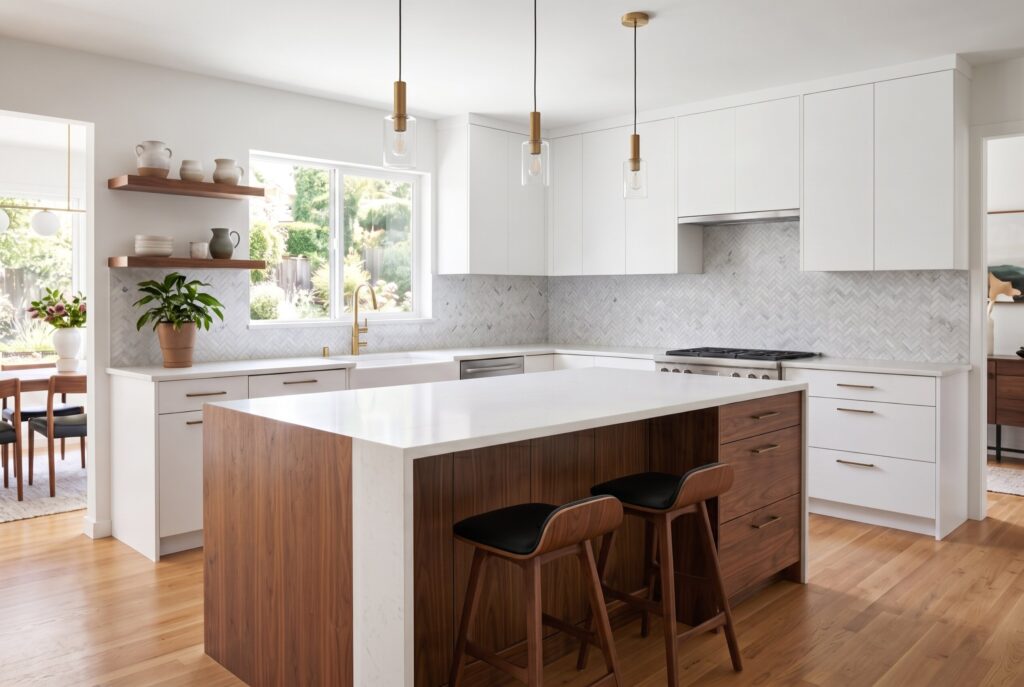
A walnut island can act as the second tone even when the rest of the kitchen is white. This is ideal for homeowners who love wood but don’t want a fully wood kitchen. The island becomes furniture-like, which makes the entire space feel warmer and more inviting. Walnut also adds natural texture and depth that prevents an all-white kitchen from feeling flat or overly sterile. Paired with soft lighting and simple hardware, the result feels timeless, elegant, and organic.
17. Black Island with Natural Wood Cabinets
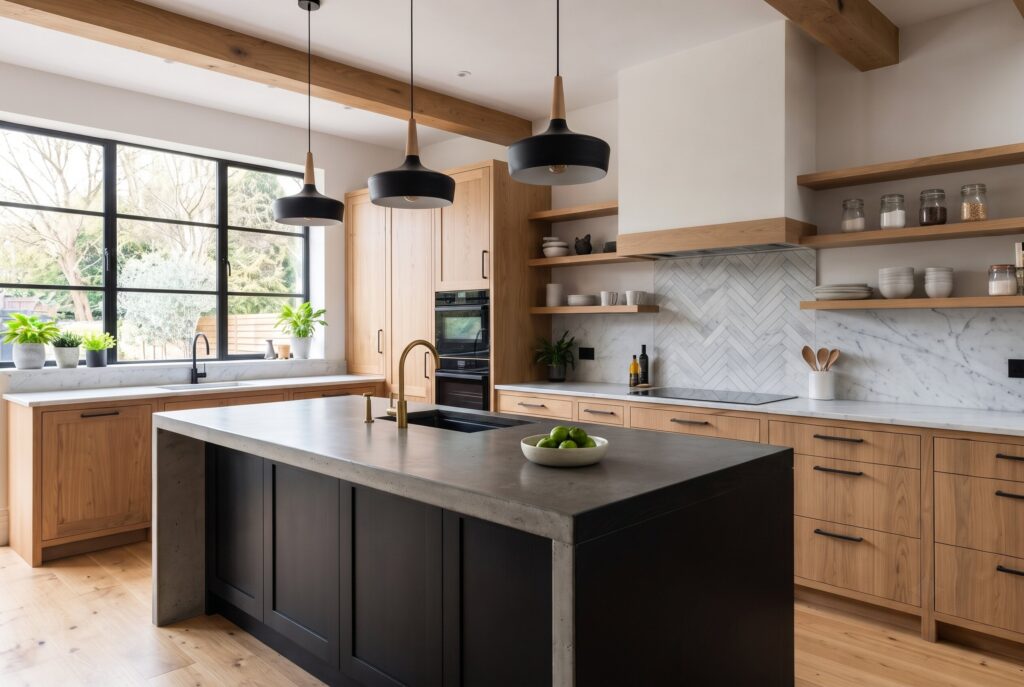
Black and wood kitchen cabinets feel sleek when the black is limited to the island. Natural wood cabinets soften the look, while the black island gives the kitchen structure. This is a strong choice for modern industrial and contemporary homes. Keeping the wood tones warm helps balance the boldness of the black and prevents the kitchen from feeling too stark. Add metal lighting fixtures or matte black hardware to reinforce the clean, architectural feel of the space.
18. Deep Blue Island with Pale Oak Cabinets
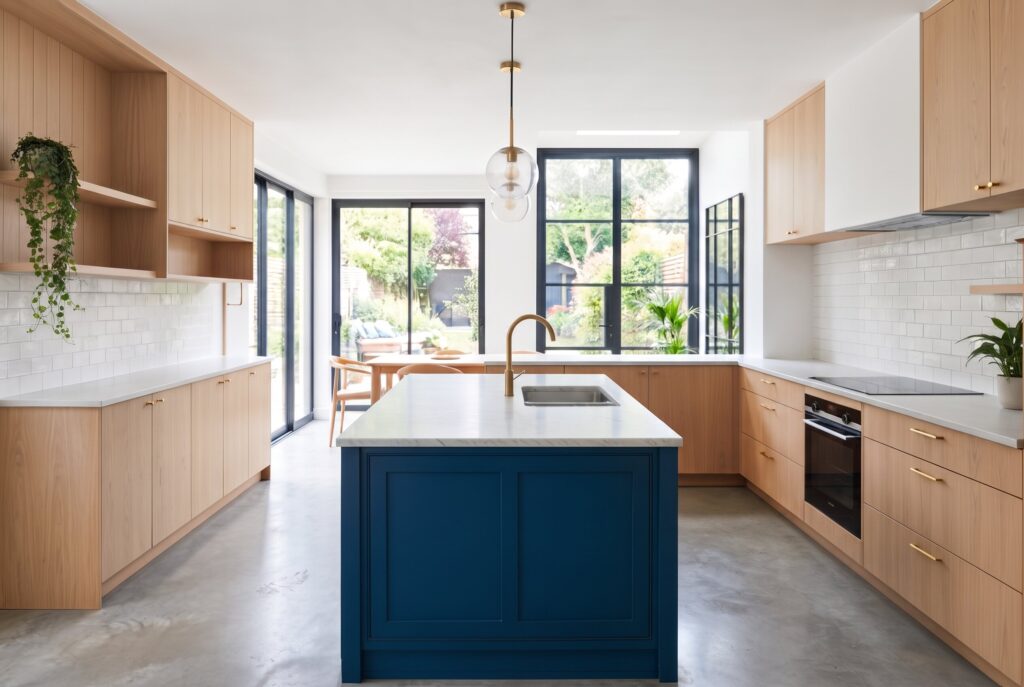
Deep blue and pale oak create a refined balance between color and nature. The blue island adds richness, while pale oak cabinets keep the kitchen airy. This combination works especially well in homes with lots of natural light. Sunlight helps highlight the natural grain of the oak while preventing the deep blue from feeling too heavy. The overall effect feels calm, upscale, and effortlessly modern without losing warmth.
Modern Farmhouse to Coastal: Styling Your Combinations
19. Coastal Blue and White Cabinets
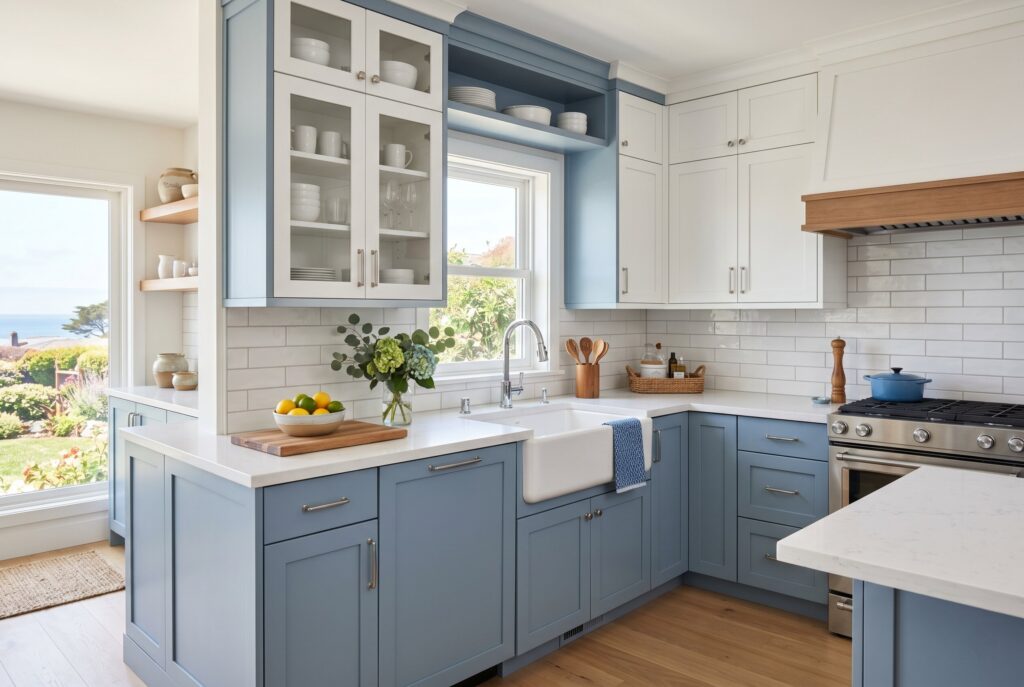
For a coastal kitchen, use soft blue lower cabinets with white uppers. The key is choosing a muted blue rather than a bright beachy shade. This keeps the room sophisticated and fresh instead of themed. Pale wood flooring, woven textures, and brushed nickel hardware help complete the relaxed coastal look without overwhelming the space. The result feels light, airy, and timeless while still adding subtle color and personality.
20. Modern Farmhouse White and Wood Cabinets
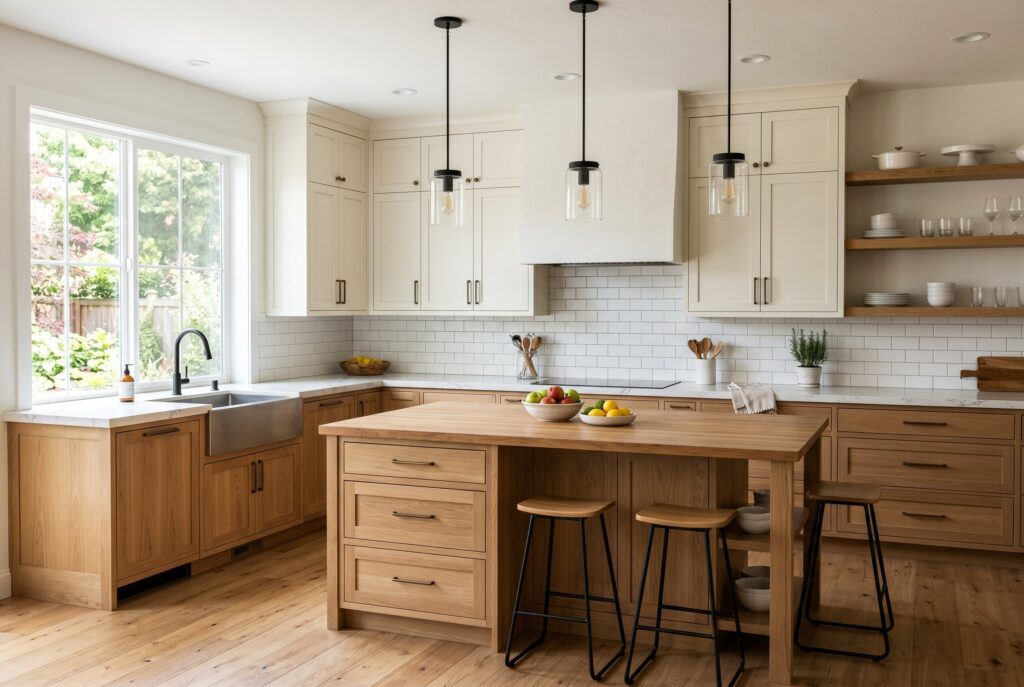
Modern farmhouse two tone kitchen cabinets look best when the contrast is soft. Pair creamy white uppers with natural wood lowers or a stained wood island. Avoid overly distressed finishes if you want the kitchen to feel current in 2026. Instead, focus on clean lines, warm textures, and subtle rustic details that feel timeless rather than overly decorative. Black hardware, warm lighting, and simple shaker cabinets help complete the modern farmhouse look without making the space feel dated.
21. Transitional Beige and White Cabinets
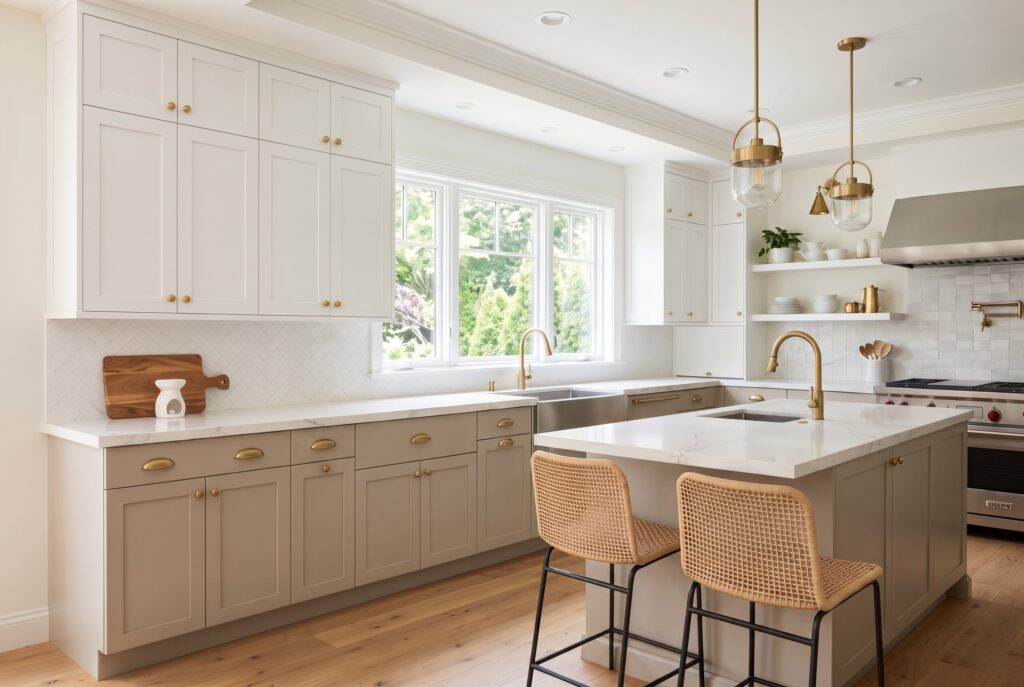
A beige and white palette is perfect for transitional kitchens. Beige lower cabinets add warmth, while white uppers keep the room polished. This look is quiet, flexible, and easy to update with new hardware or lighting. It also blends effortlessly with both traditional details and modern finishes, making it ideal for long-term appeal. Warm wood accents, soft stone countertops, and brushed metal hardware help complete the balanced, timeless aesthetic.
22. Modern Industrial Black and Oak Cabinets
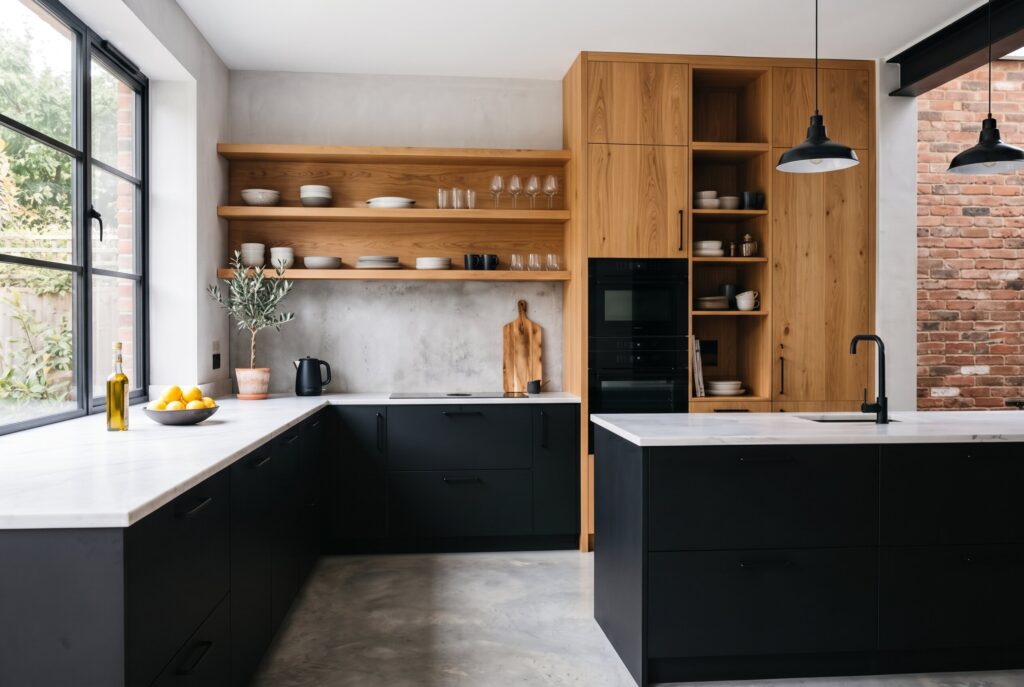
For a stronger style statement, pair matte black cabinets with oak accents. Use black on the lowers or island and oak on floating shelves, tall cabinets, or drawer fronts. The wood prevents the black from feeling too severe. This combination creates a modern, architectural look while still keeping the kitchen warm and inviting. Soft lighting and natural textures help balance the bold contrast and make the space feel more livable.
23. Monochromatic Greige Cabinets
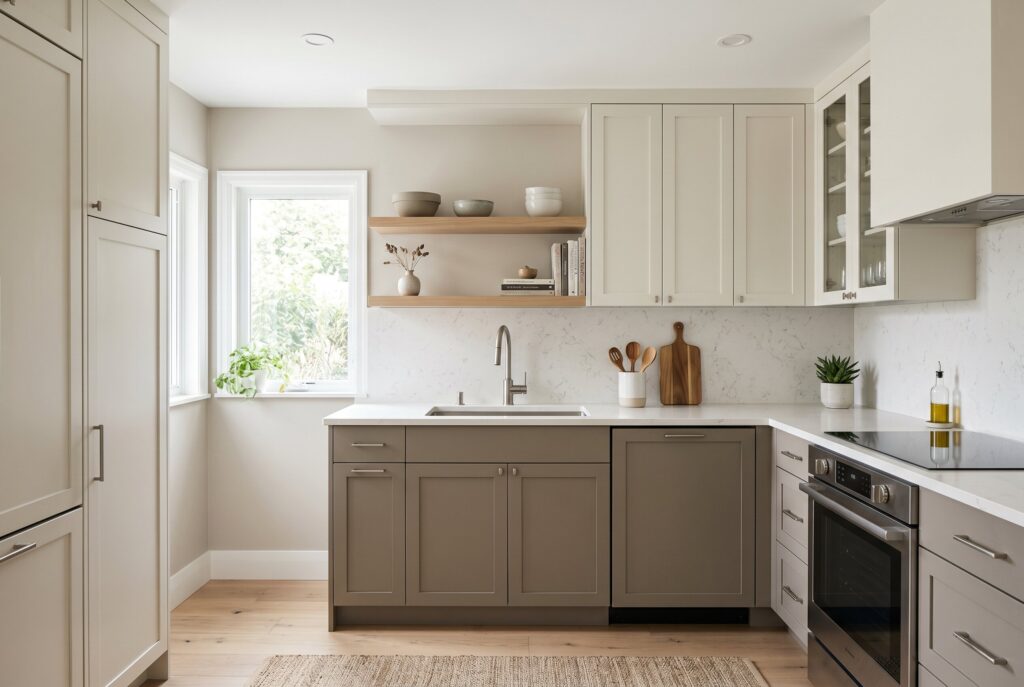
Two tone kitchen cabinets can also be subtle. Use light greige uppers and deeper greige lowers for a tone on tone effect. This creates depth without bold contrast and works beautifully in smaller kitchens. The layered neutrals make the space feel calm, cohesive, and more visually expansive. Add warm lighting and textured materials like wood or stone to keep the monochromatic palette from feeling flat.
3 Costly Mistakes When Painting Your Cabinets
- Ignoring undertones: Warm wood floors can clash with cool gray cabinets, making the kitchen feel unbalanced. Always compare cabinet samples with flooring, countertops, and backsplash under real lighting before committing to a color combination.
- Choosing the wrong finish: Matte cabinets look modern and photograph beautifully, but they can show fingerprints and stains more easily. Satin or semi gloss finishes are usually more practical for busy kitchens because they’re easier to clean and more durable over time.
- Forgetting hardware: Cabinet hardware can completely change the final look of your kitchen. Brass adds warmth to blue and green cabinets, black hardware creates bold contrast with wood tones, and brushed nickel keeps navy and white kitchen cabinets looking timeless and classic.
Conclusion
Two tone kitchen cabinets work best when the palette feels balanced in your actual home. Test large paint samples on upper and lower cabinet areas, then watch them in morning, afternoon, and evening light. The best 2026 kitchens aren’t just two colors. They are thoughtful combinations of wood, paint, light, hardware, and proportion. When the colors support the room instead of fighting it, your kitchen will feel current now and timeless later.
Related Articles
- 11 Best 2 Tone Kitchen Cabinets: Perfect Color Combos With Paint Codes
- 9 Two Tone Cabinet Rules That Make Small Kitchens Look Bigger
- 13 Painted Kitchen Cabinet Ideas and How to Get a Pro Finish in 2026
- 17 Red Kitchen Cabinets: Modern Painted Ideas to Wow Guests in 2026
- Sage Green Kitchen Cabinets: 27 Modern Farmhouse Ideas 2026
- High End Kitchen Cabinets: 25 Contemporary Kitchen Ideas