

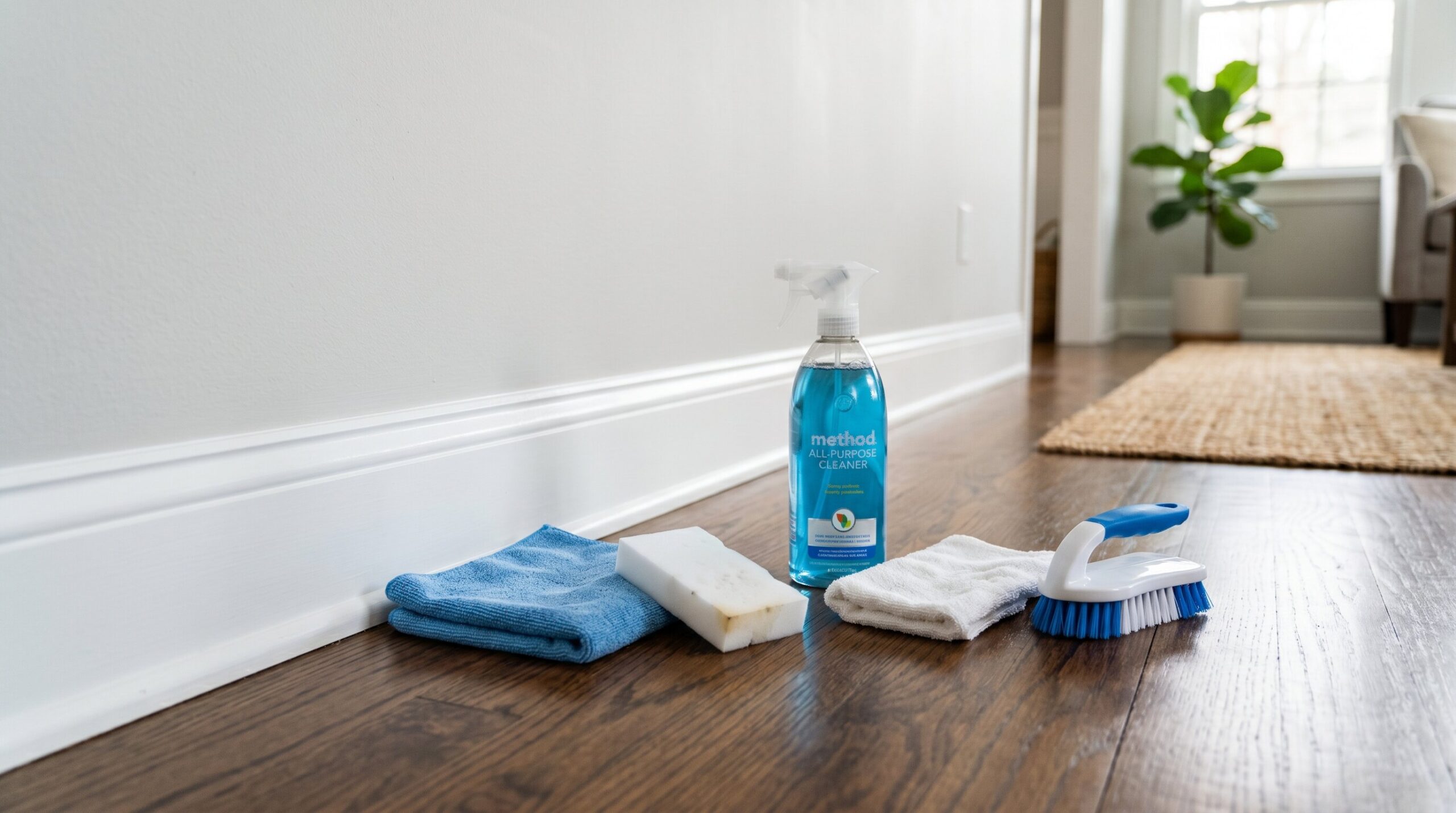
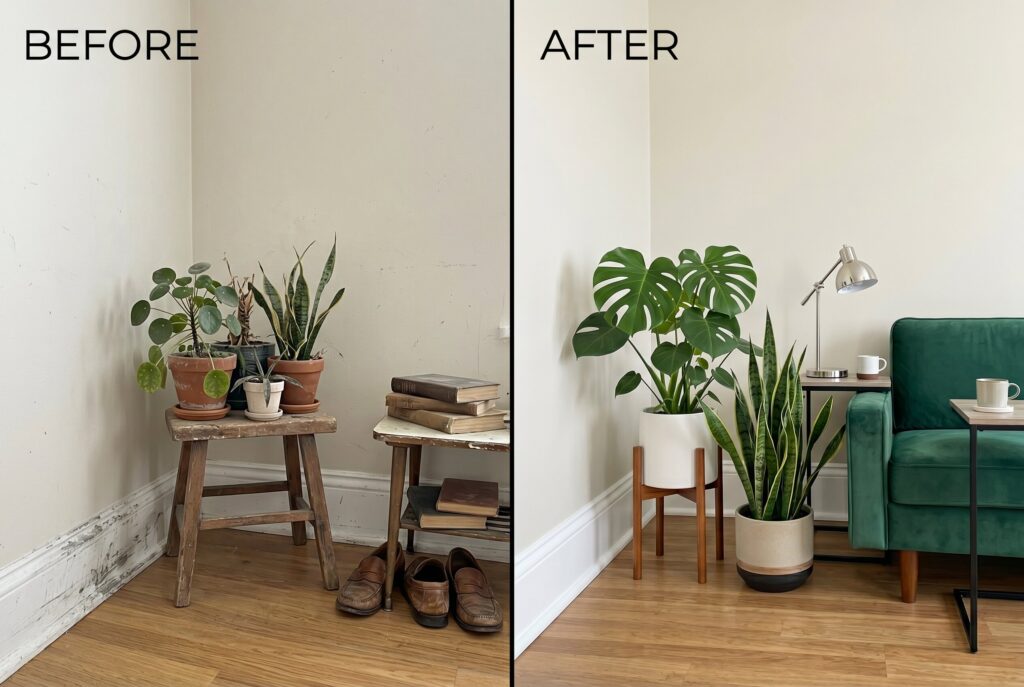
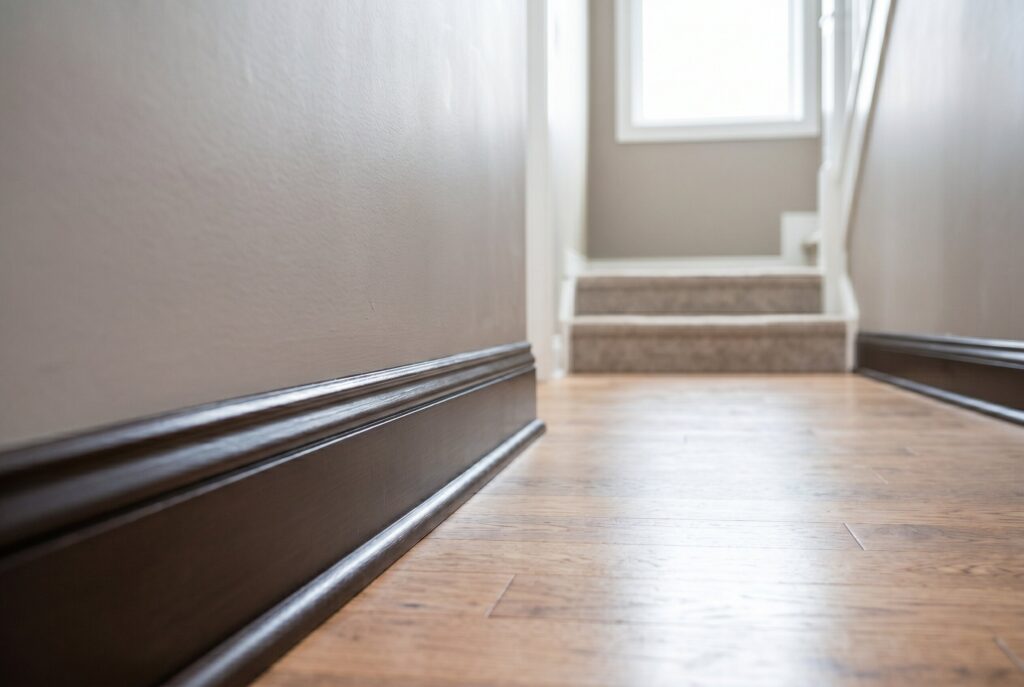
Cleaning baseboards is often cited as a least favorite household chore. While frequently neglected, especially in homes with pets, pristine trim significantly elevates the overall aesthetic and creates a professional, polished atmosphere.
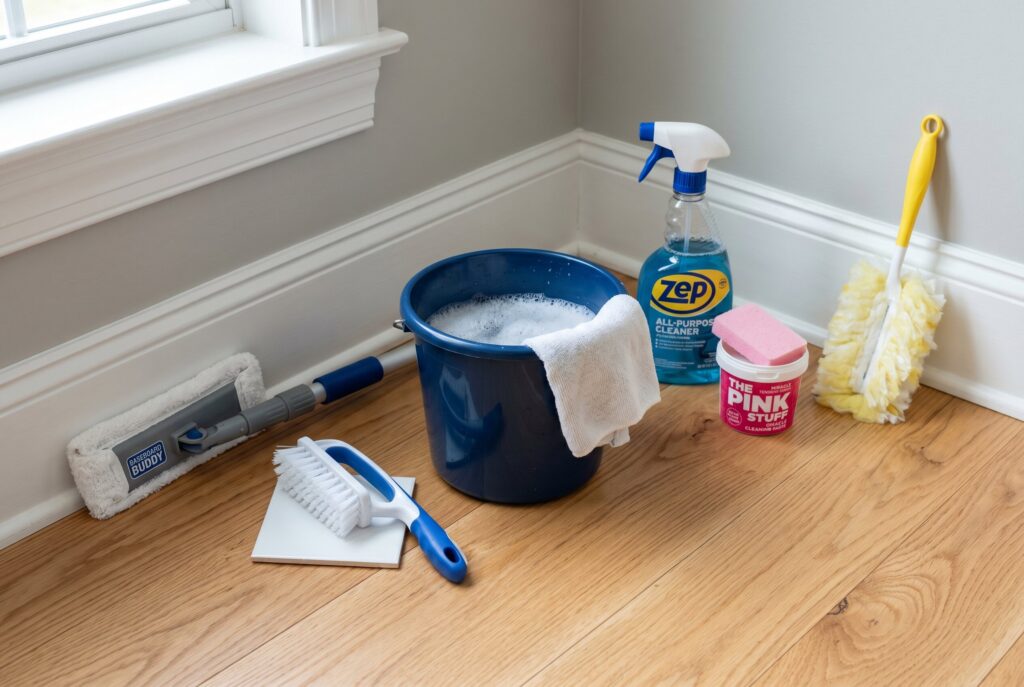
Achieving a grime-free home requires the right approach to transform a labor-intensive task into a manageable routine.
The Golden Rules: Why Your Process Matters More Than the Tool
The effectiveness of cleaning depends heavily on the order of operations rather than just the tools selected.
Rule #1: Always Vacuum or Dust First
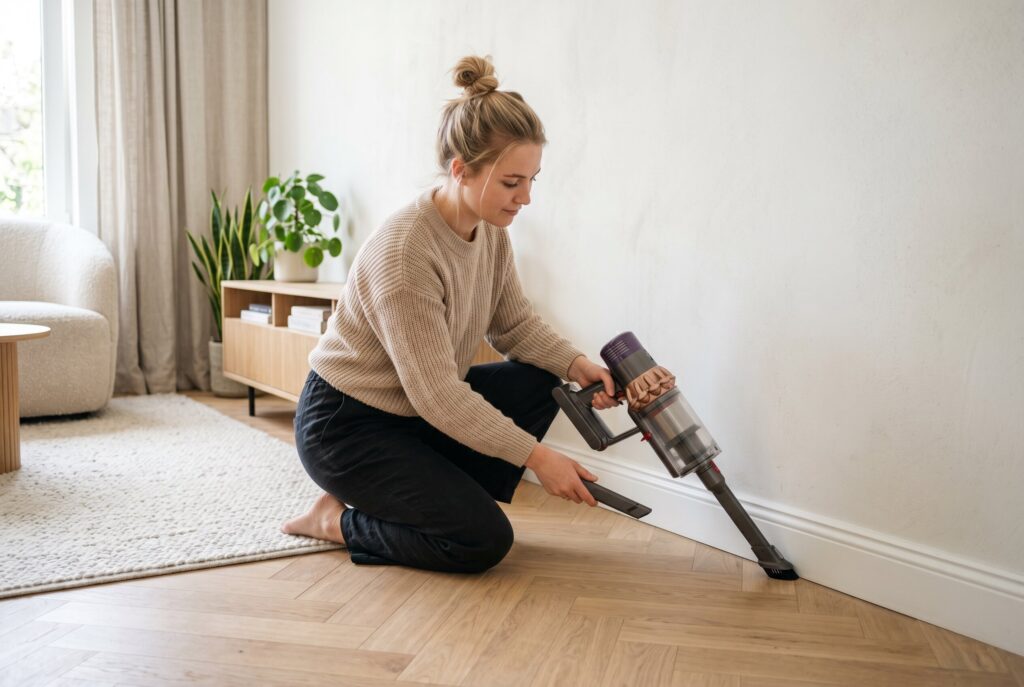
Applying a liquid cleaner directly to a layer of dust and pet hair creates a messy slurry that is difficult to remove. A thorough dry dusting or vacuuming ensures that only the bonded grime remains for the wet cleaning phase.
Rule #2: Moisture Control for MDF & Wood
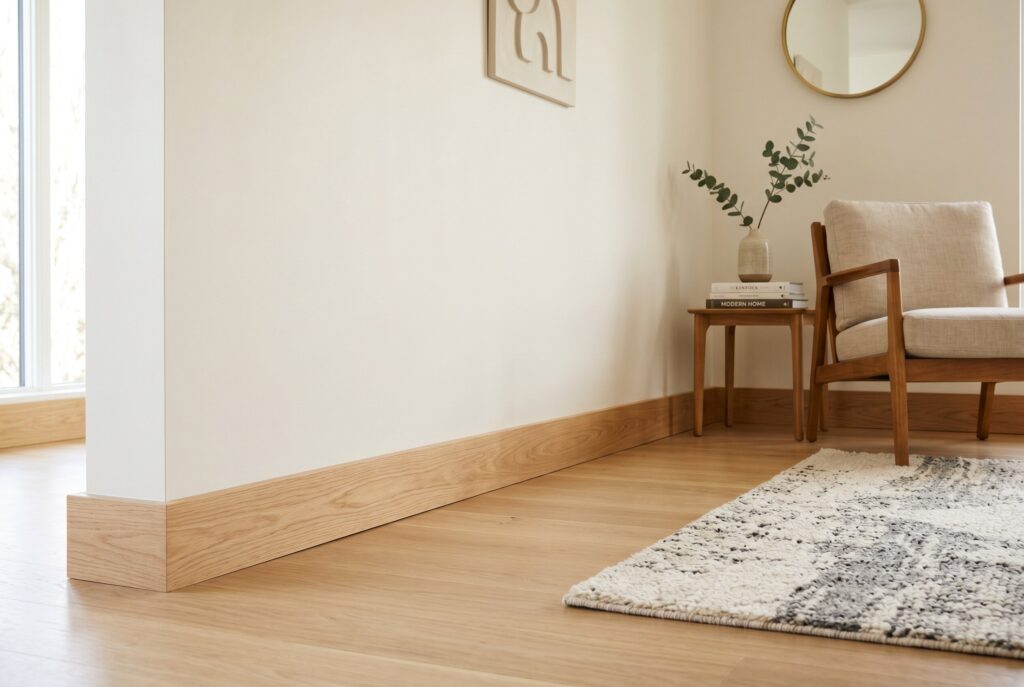
Baseboard trim made from MDF (Medium Density Fiberboard) or unsealed wood is highly susceptible to water damage. Excessive moisture can lead to swelling, warping, or permanent structural damage, so tools should be damp rather than dripping.
Top 5 Best Baseboard Cleaning Tools & Solutions
A variety of candidates exist for this task, each offering specific benefits based on the material and the level of grime.
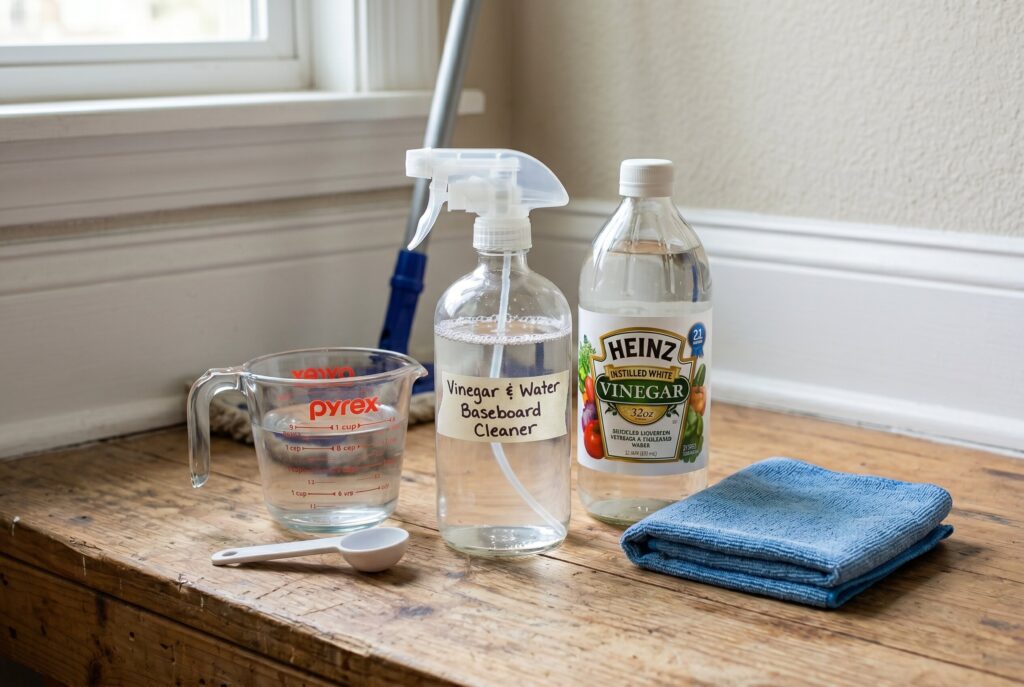
1. The DIY Champion: White Vinegar Solution
A mixture of 2 tablespoons of distilled white vinegar and 1 cup of warm water is a highly effective, non-toxic cleaning method. This solution cuts through buildup without leaving behind a soapy residue.
2. The Scuff Remover: Melamine Sponges (Magic Eraser)
Melamine sponges are recognized as a superior tool for removing stubborn scuffs. While effective for dark marks, caution is necessary as abrasive scrubbing can potentially damage the paint sheen or finish.
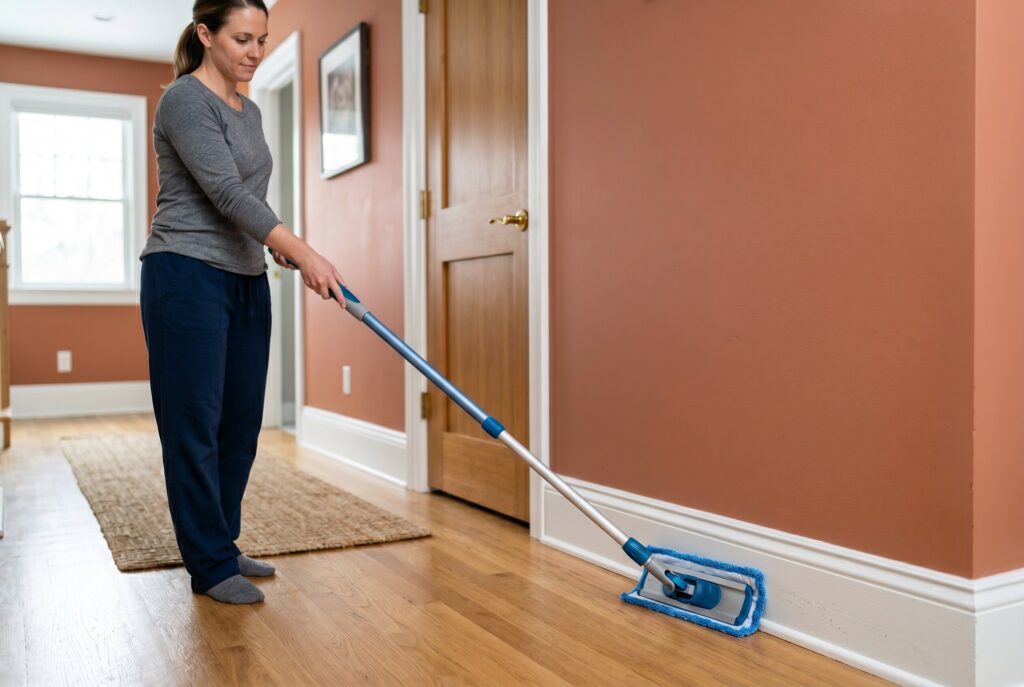
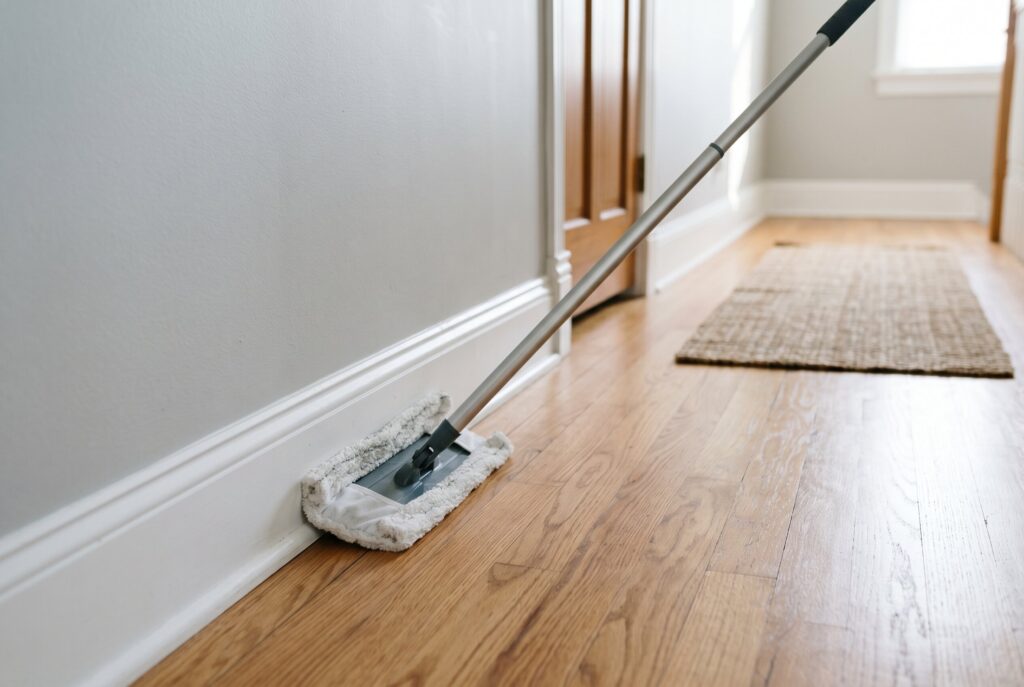
3. The Back-Saver: Telescopic Cleaning Tools
Specialized telescopic tools feature long handles and swiveling heads that reach tight corners and behind furniture. These gadgets are a primary choice for maintaining clean baseboards without the physical strain of kneeling or bending over.
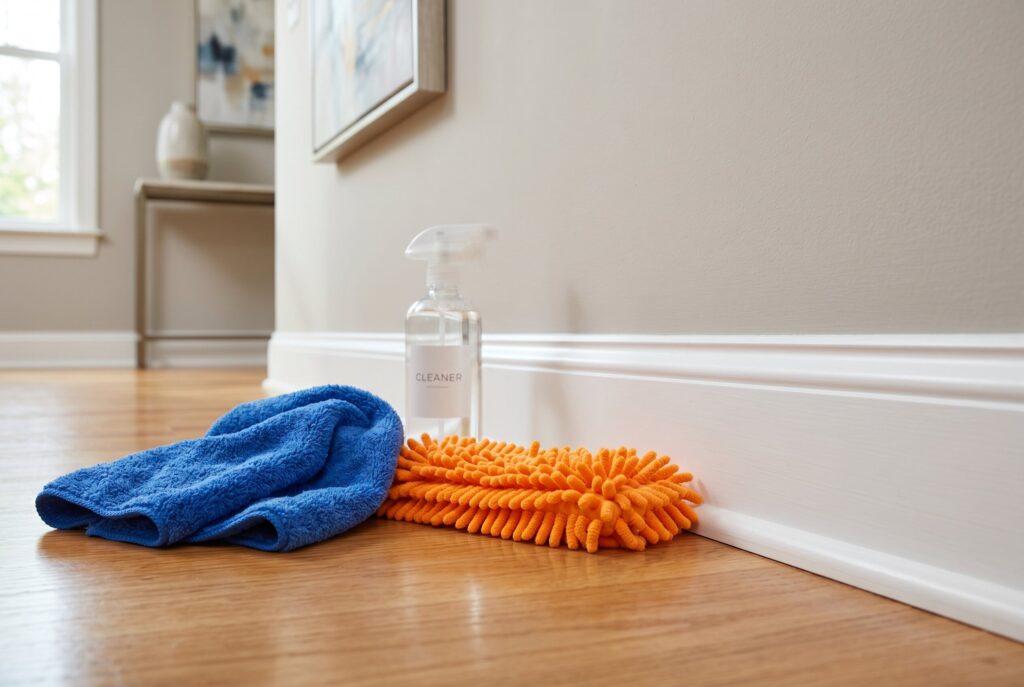
4. The Maintenance King: Microfiber Cloths & Chenille Pads
Microfiber cloths are excellent for damp wiping, while chenille pads excel at dry dusting by trapping loose hair and debris. These materials are gentle on all surfaces and provide a streak-free finish.
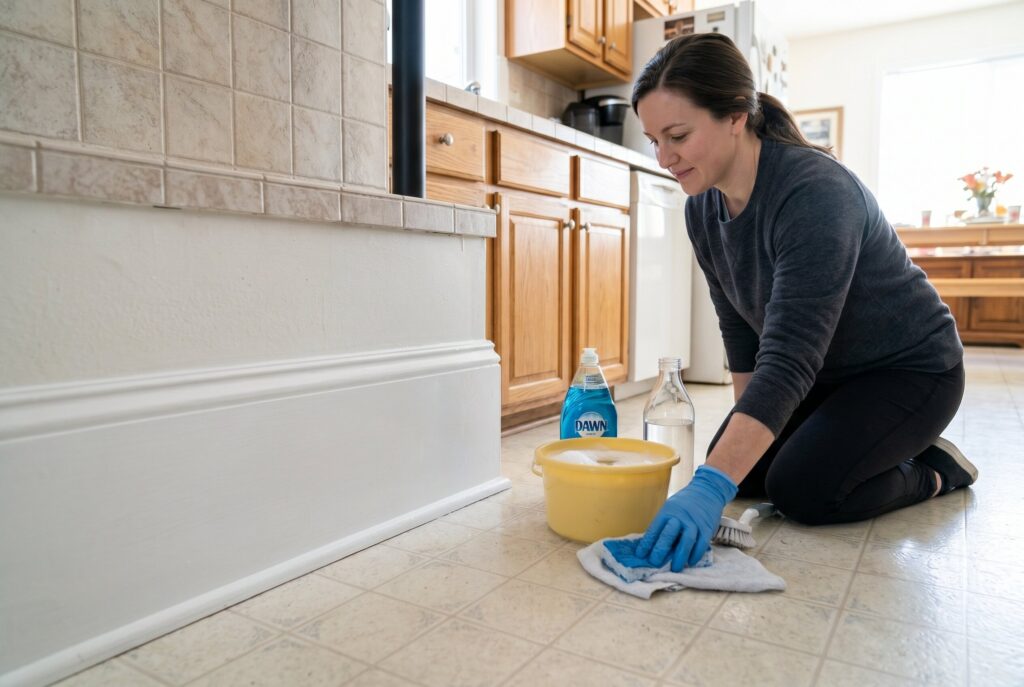
5. The Heavy-Duty Backup: Dish Soap & Warm Water
Mild dish soap mixed with warm water is effective for heavy-duty cleaning, particularly in kitchens where grease accumulates. This method requires thorough rinsing to prevent a film from forming on the surface.
Addressing Common Pain Points: Scuffs, MDF, and Grime
Specific issues like deep scuffs and the physical demands of cleaning require targeted solutions.
How to Remove Stubborn Scuff Marks
Stubborn streaks can often be lifted with a melamine sponge or a small amount of white toothpaste. These mild abrasives break the bond between the scuff and the paint without the need for harsh chemicals.

Cleaning Without Bending Down
Using long-handled tools or securing a cloth to a mop allows for effective cleaning while standing upright. This approach is particularly beneficial for those with limited mobility or chronic back pain.
The “Dryer Sheet” Myth: Does it Work?
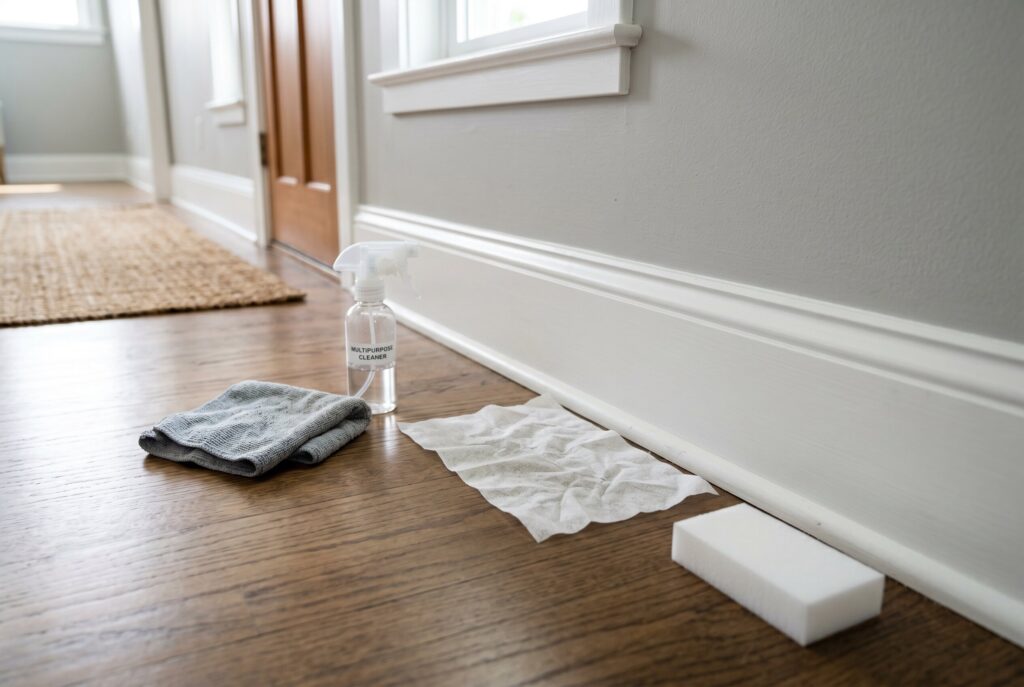
While some suggest using dryer sheets to repel dust through anti-static properties, they’re generally ineffective for deep cleaning compared to liquid solutions. Their best use is as a preventative measure after a surface is already clean.
Maintenance & Long-Term Prevention
Establishing a consistent schedule prevents a tedious task from becoming an overwhelming project.
Monthly vs. Deep Cleaning Schedule
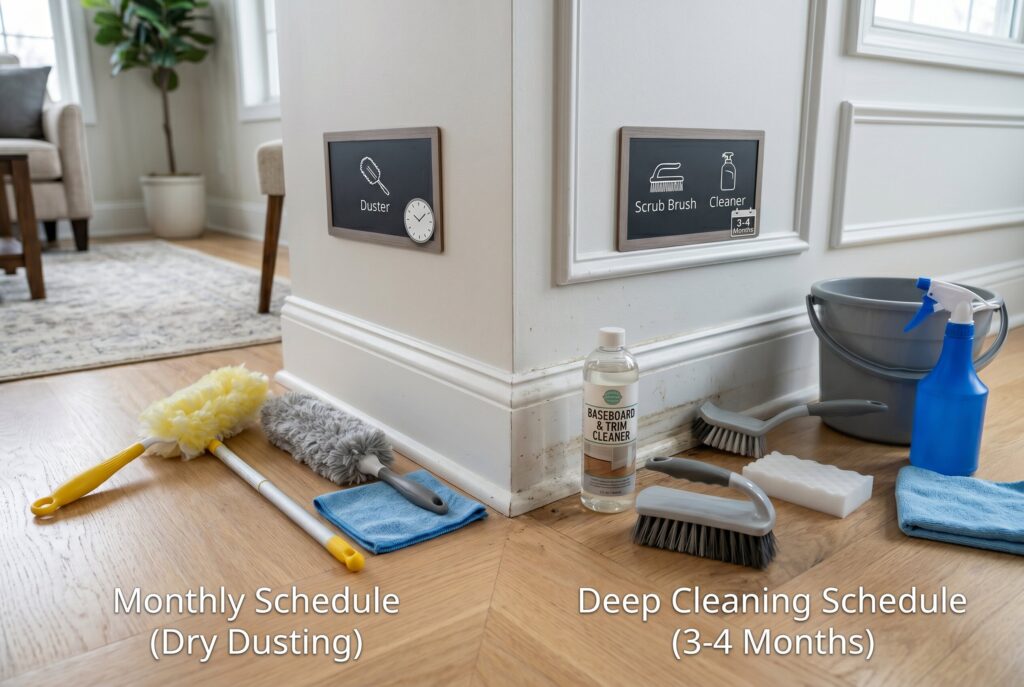
Dry dusting on a monthly basis keeps the home looking fresh. A more intensive deep clean with a baseboard cleaner should be performed every 3 to 4 months to remove bonded grime.
Protecting Your Paint
The choice of paint finish, such as semi-gloss, makes a significant difference in how easily dirt is removed. Applying specific waxes or protective coatings can also create a barrier that makes the trim more resistant to stains and scuffs.
FAQ: Everything You Need to Know for Spotless Baseboards
Can vinegar be used on natural wood?
While effective, vinegar is acidic and may damage some natural finishes; spot testing on an inconspicuous area is essential.
How can baseboards be cleaned without removing them?
Using telescopic tools, vacuum brush attachments, or specialized mops allows for thorough cleaning while the trim remains installed.
Conclusion: The Bottom Line for a Clean Home
The most effective strategy for maintaining spotless trim involves starting with a dry vacuum pass followed by a targeted solution like diluted vinegar or a telescopic tool. Investing time in the right tools and a consistent maintenance schedule ensures the home retains a high-end, professionally cleaned appearance.
Related Articles
How to Clean Baseboards (Without Bending Over!): The 2026 Guide