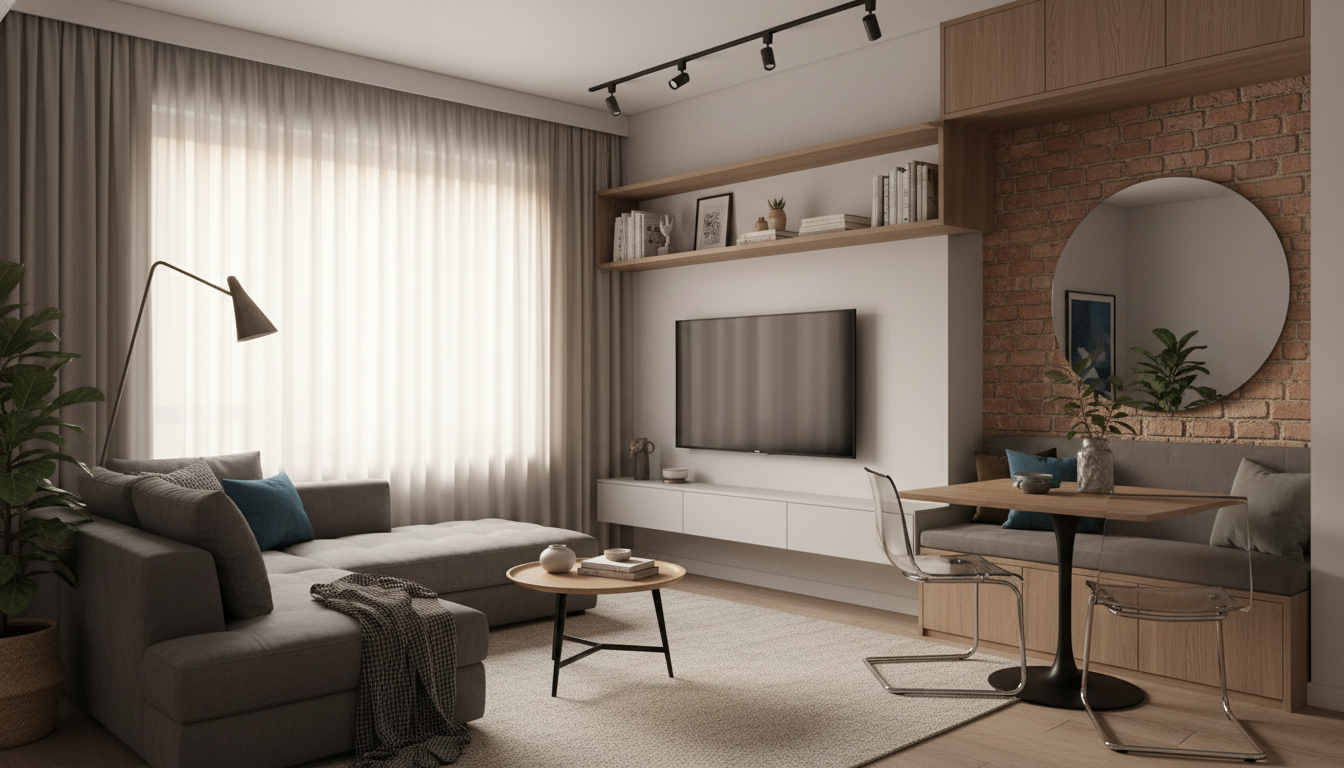
Small apartments can feel stylish, calm, and surprisingly spacious when the design is planned around how you actually live. The key is combining smart layout choices, functional furniture, and visual tricks that reduce clutter without stripping away personality. Whether you’re in a studio, a one-bedroom, or a compact city unit, these practical interior design tips can help you create a home that looks polished and works hard every day.
Start by Measuring Everything and Mapping Daily Flow
Limited space rewards precision. Before buying furniture or storage, measure the room dimensions, door swings, window placements, and the “pinch points” where you constantly bump into things. Then map the daily routes you take: from entry to kitchen, bed to bathroom, sofa to desk. When you design around movement, the apartment instantly feels easier to live in.
A simple habit helps: choose pathways first, then fill in furniture. Leave enough clearance for comfortable walking and for drawers or cabinet doors to open. If you’re working with an open studio layout, define zones for sleeping, lounging, eating, and working so the apartment doesn’t feel like one crowded room.
Choose Furniture That Fits Scale, Not Just Style
Oversized pieces are one of the fastest ways to make an apartment feel smaller. In compact rooms, furniture should match the scale of the space while still offering comfort.
Look for design features that make pieces feel lighter: slim arms on sofas, raised legs, and open bases on side tables. These choices allow more visible floor area, which creates a sense of airiness. If you love deep seating, consider a loveseat plus a chair rather than a bulky sectional that eats up the entire living area.
When you’re shopping, prioritize depth and footprint. Many sofas look similar online but vary widely in depth, which affects walking space. In a tight living room, saving even a few inches can be the difference between “cozy” and “cramped.”
Use Multifunctional Pieces Without Making the Space Feel Like a Dorm
Multifunctional furniture is essential in small apartments, but it should still feel intentional and adult. The best pieces look like real furniture while quietly doing double duty.
Good options include a storage ottoman that replaces a coffee table, a dining table that extends for guests, and a bed with built-in drawers. If you work from home, a wall-mounted desk or a narrow writing desk can create a dedicated workspace without taking over the living room.
Try not to overdo it. Too many transformer-style items can make the apartment feel temporary. Choose a few high-impact multifunctional pieces and keep the rest simple.
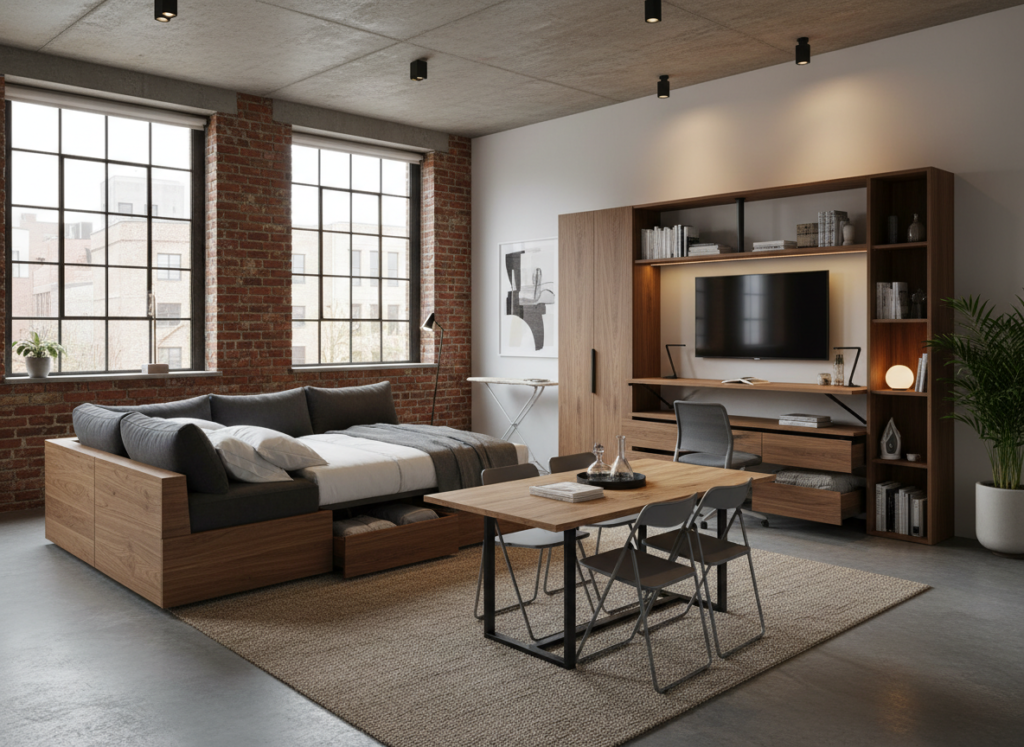
Create Vertical Storage That Looks Built In
When floor space is limited, vertical storage becomes your best friend. The goal is to use walls efficiently while keeping the room visually calm.
Install shelves above a sofa, desk, or bed to store books and display décor. Tall bookcases can hold a surprising amount, especially when you use matching baskets or bins to hide smaller items. In kitchens, consider adding wall-mounted rails, magnetic knife strips, or hanging pot racks if your lease allows it.
In closets, upgrade your system with stackable drawers, slim hangers, and shelf dividers. Even rental closets can be optimized with tension rods or modular organizers that don’t require permanent installation.
Make the Entryway Work Harder
Even a tiny entry can reduce clutter throughout the apartment if it’s designed well. Add a slim console table, wall hooks, or a narrow shoe cabinet. If space is extremely tight, a simple wall-mounted shelf with hooks underneath can hold keys, mail, and bags without taking up valuable floor space.
A mirror near the entry does double duty. It’s functional, and it reflects light to make a small apartment feel more open. Pair it with a small tray or bowl to create a consistent drop zone so daily essentials don’t end up scattered across countertops.
Use Light and Color to Expand the Space Visually
Color choices matter more in small apartments because every surface is close. A light, cohesive palette can make the space feel larger and calmer. Soft whites, warm neutrals, light grays, and muted earth tones are popular because they reflect light and work across different rooms.
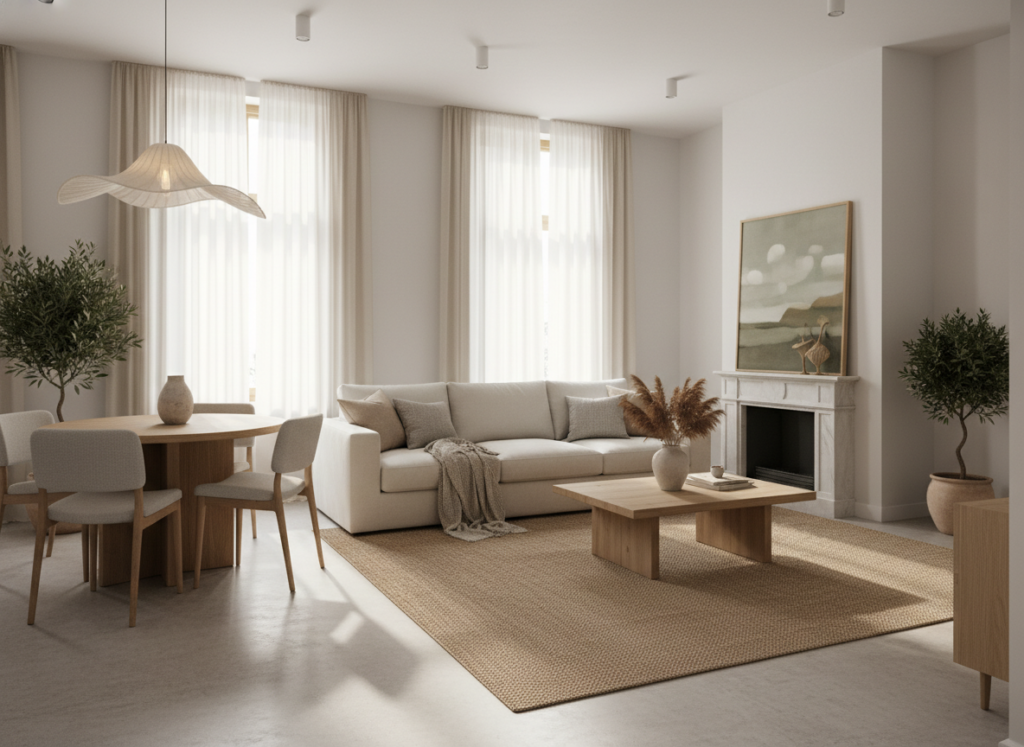
That said, you don’t need an all-neutral apartment. You can add personality through accents like artwork, textiles, and a single deeper color on a focal wall. If you use bold color, repeat it subtly elsewhere through pillows, a throw, or a piece of art so it feels intentional rather than random.
Lighting is equally important. One overhead fixture usually isn’t enough. Layer lighting with a floor lamp, a table lamp, and under-cabinet lights in the kitchen. Warm-toned bulbs typically feel more inviting in living areas and bedrooms, while cooler task lighting can be useful at a desk or vanity.
Choose Window Treatments That Don’t Block Light
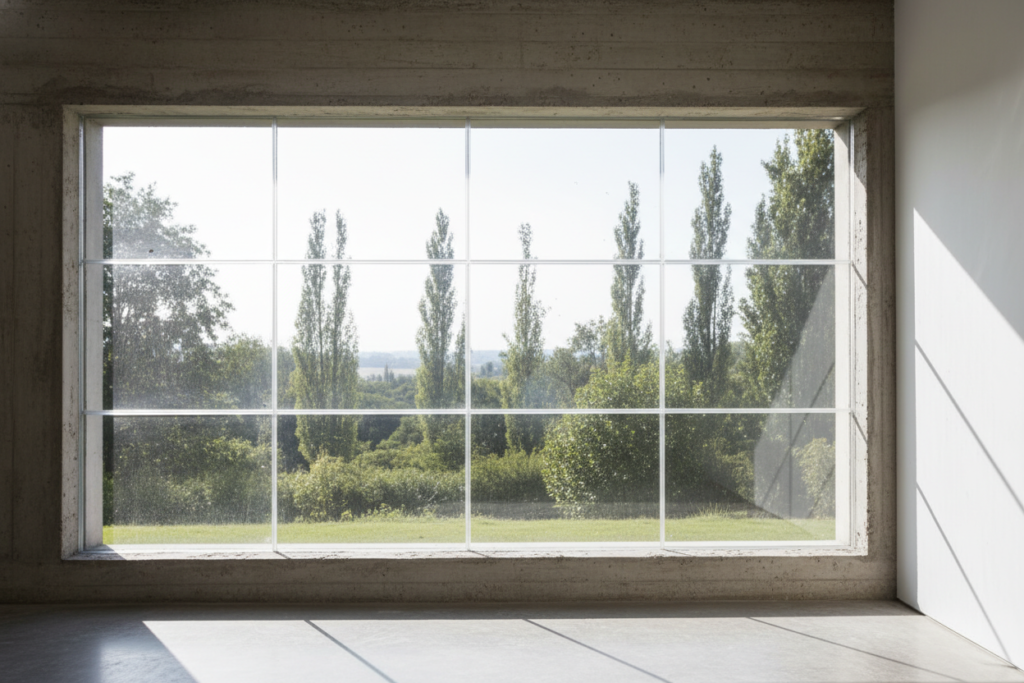
Natural light is a major asset in any small apartment. Heavy drapes can look beautiful, but they can also swallow light and make the room feel closed in.
If you want privacy without losing brightness, consider light-filtering shades or sheer curtains. Hanging curtains higher and wider than the window frame creates the illusion of larger windows and higher ceilings. Even in rentals, tension rods or no-drill curtain hardware can help you improve window styling without damage.
Use Mirrors and Reflective Surfaces Strategically
Mirrors are a classic trick, but placement matters. A mirror facing a window can bounce daylight deeper into the room. A large mirror leaning against a wall adds height and makes a narrow space feel wider.
Reflective surfaces can help too, especially in moderation. Glass tabletops, glossy tile, and metallic accents can brighten a room, but too many shiny finishes can feel busy. Aim for a mix of matte and reflective textures so the space feels balanced.
Keep Clutter Under Control With Simple Systems
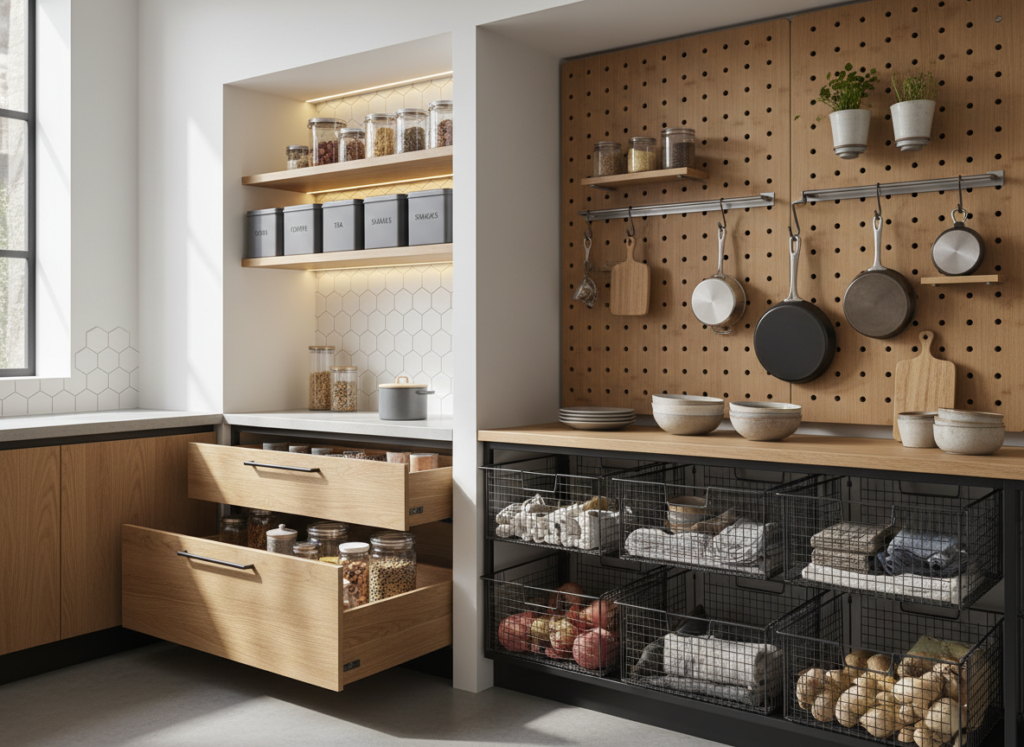
Small apartments can’t hide the mess the way larger homes can. A few easy systems help keep clutter from taking over.
Start with visible surfaces. Limit countertop items in the kitchen and bathroom by using drawers, bins, or wall storage. In living areas, use closed storage like cabinets or baskets to hide charging cords, remotes, and paperwork. A practical habit is the “one in, one out” rule for categories that pile up fast, such as shoes, mugs, and throw blankets. You don’t have to live like a minimalist, but you do need a steady way to keep volume manageable.
Make Each Zone Feel Distinct Without Adding Bulk
In studios and open layouts, zoning is crucial. You can create separation without walls by using rugs, lighting, and furniture orientation.
Place a rug under the bed area or seating zone to define boundaries. Use a bookshelf as a divider, but keep it open-backed when possible so light still flows. A curtain track can also separate a sleeping area if you want privacy, and it’s often more renter-friendly than building partitions.
If you need a home office, carve out a corner with a small desk and a focused light source. Adding a pinboard or a piece of art above the desk creates a mental shift into work mode without requiring a separate room.
Style With Intention so the Apartment Feels Personal
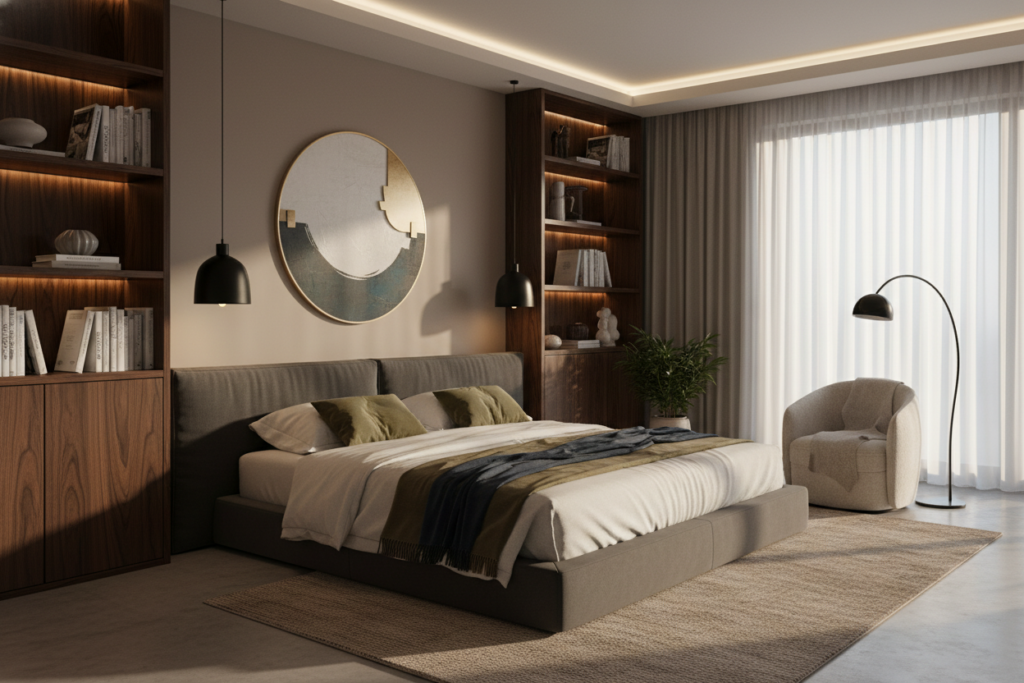
Small-space design doesn’t mean decorating less, it means decorating smarter. Choose a few statement pieces that bring character: a large artwork, a textured rug, or a standout light fixture. These items create a focal point and make the apartment feel designed rather than improvised.
Use smaller décor items in groups rather than scattered singles. For example, style a shelf with three to five coordinated objects instead of placing one item on every surface. This approach looks more curated and reduces visual noise.
Houseplants are another effective way to add life without taking up much space. A tall plant in a corner adds height, while a small plant on a shelf softens the room.
Conclusion
Designing an apartment with limited space is all about making deliberate choices that improve flow, storage, and comfort. By measuring carefully, selecting scaled furniture, building vertical storage, and using light and color strategically, you can make a compact home feel open and well organized. Add multifunctional pieces where they truly help, create zones that support your routines, and keep styling focused so the space feels calm and personal. With the right approach, a small apartment can look elevated and function beautifully day after day.
Related Articles
- Small Space Interior Design Ideas for Apartments That Maximize Comfort and Functionality
- 10 Smart Interior Design Ideas That Maximize Small Living Spaces
- 15 Multipurpose Room Ideas to Create Efficient, Space-Saving, and Highly Functional Living Areas in Your Home
- 10 Small Living Room Layout Ideas to Maximize Space and Enhance Your Home’s Functionality
- 5 Smart Ways to Organize Your Small Apartment and Maximize Space Efficiency
- Affordable Storage Ideas for Renters: Clever Solutions for Small Spaces