


Working from home can be a game-changer for flexibility, but it can also blur the line between your job and your personal life. When your kitchen table becomes your office and your phone never stops buzzing, productivity and well-being can suffer.
The key is building smart routines, a supportive home setup, and boundaries that protect your focus, health, and relationships. Below are practical lifestyle tips designed for at-home work culture in the United States, from video meetings and time zones to limited space and family schedules.
1. Create a Home Workspace That Supports Focus and Comfort
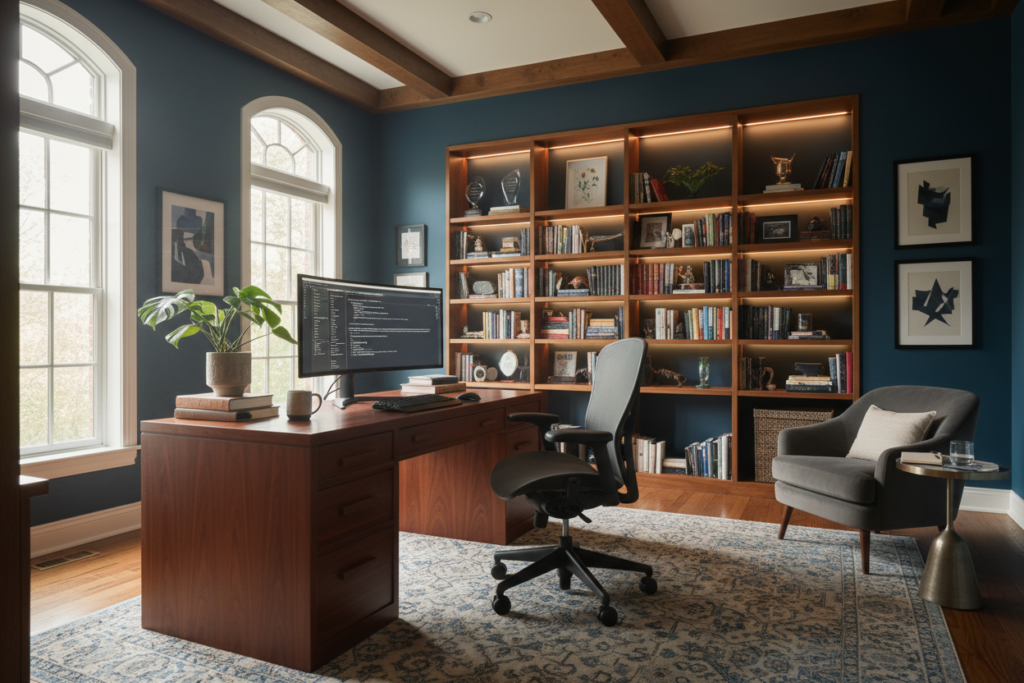
A dedicated workspace helps your brain switch into work mode. If you don’t have a separate room, choose a consistent spot and make it feel intentional. Even small upgrades can improve concentration and reduce physical strain.
Prioritize ergonomics. A supportive chair, a screen at eye level, and a keyboard position that doesn’t force your wrists to bend can prevent neck and back discomfort. If you’re using a laptop, consider a stand plus an external keyboard and mouse. Lighting matters too. Natural light is ideal, but a desk lamp can reduce eye strain when daylight fades.
Keep your workspace minimal but functional. Clutter can increase mental fatigue, especially when you’re already juggling tasks. Store cords, notebooks, and supplies in a basket or drawer. If you share space with others, a portable setup you can pack away after work can still create a strong mental boundary.
2. Set Clear Boundaries Between Work and Personal Life
One of the biggest challenges of remote work is feeling like you’re always on. Boundaries protect your time and reduce the risk of burnout.
Start with a consistent start and stop time, even if your schedule is flexible. A short “start ritual” helps you shift into work mode, such as making coffee, reviewing your top three priorities, and opening only the tools you need. A “shutdown routine” at the end of the day is just as important. Close tabs, make a quick list for tomorrow, and physically step away from your workspace.
If you’re expected to be reachable across time zones, set communication expectations with your team. You can be responsive without being available 24/7. Simple strategies like status messages, calendar blocks, and defined response windows can protect your personal time while keeping work relationships strong.
3. Use Time Blocking to Stay Productive Without Overworking
Working from home can include endless interruptions, from deliveries to family needs to constant notifications. Time blocking is a practical way to focus without requiring perfect silence.
Group similar tasks together. For example, handle emails in two short windows rather than checking all day. Reserve your most focused time for deep work like writing, analysis, or strategy. If meetings dominate your schedule, place admin tasks and quick wins between calls to keep momentum.
Build in short breaks on purpose. Without natural office transitions, you might sit for hours, which can drain energy and increase tension. Even a five-minute break to stretch, refill water, or step outside can improve focus and mood.
4. Protect Your Mental Health With Realistic Daily Routines
Remote work can increase isolation and blur structure, which impacts mental health. A simple routine can provide stability without feeling rigid.
Anchor your day with a consistent wake-up time, a first meal or hydration habit, and a wind-down routine. Getting morning light, even for 5 to 10 minutes, can help regulate sleep and energy. If you tend to work late, establish a clear cutoff for screens and work messages.
If you live alone, plan social connections into your week. Short calls, gym classes, volunteering, or coworking sessions can reduce loneliness. If your home is busy, routines can help everyone coexist. For example, use quiet hours for meetings and active breaks for times when kids or pets need attention.

5. Master Video Call Readiness Without Stress
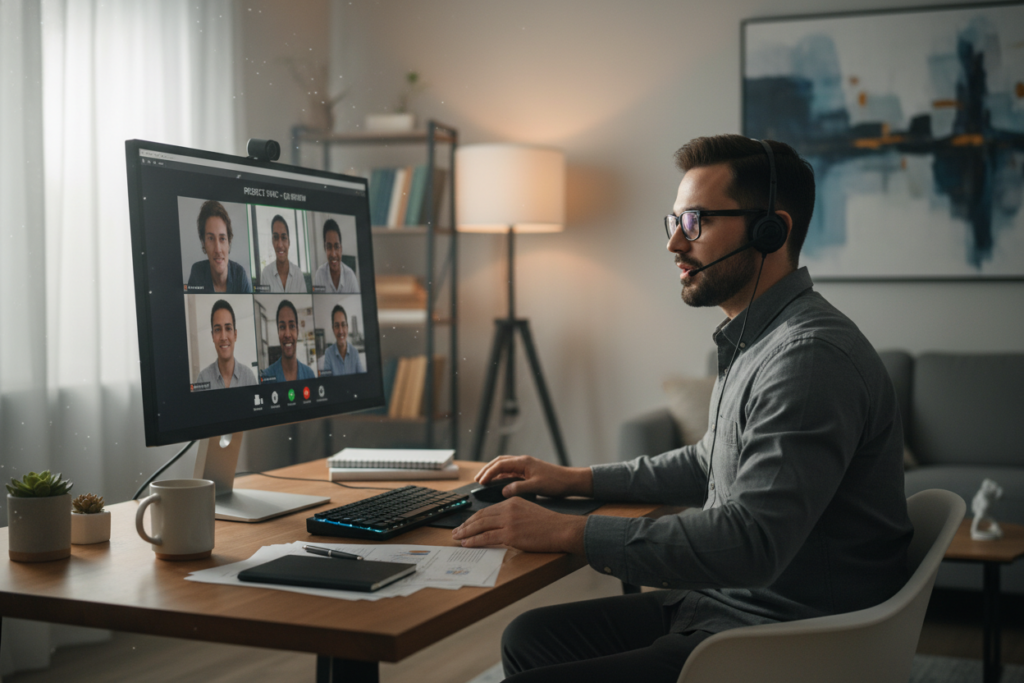
Video meetings are part of modern remote work, but they can also add pressure. You don’t need a perfect setup, just a reliable one.
Check your audio first. A simple headset or earbuds can improve clarity and reduce background noise. Keep your camera at eye level for a professional look without awkward angles. Choose a clean background or a subtle virtual background if needed. If you’re sharing space, use a small sign, a closed door, or noise cues to signal when you can’t be interrupted.
Reduce meeting fatigue by pushing for smarter schedules. If you can, suggest 25- or 50-minute meetings instead of full 30 or 60 minutes. That buffer gives everyone time to reset and reduces the feeling of being trapped on calls all day.
6. Support Better Health With Movement and Smart Nutrition
When you work from home, it’s easy to move less and snack more. The goal isn’t perfection, it’s consistency that fits your day.
Try “movement snacks” throughout the day. A quick walk, a few stretches, or climbing stairs for two minutes can reduce stiffness and improve mental clarity. If you can, take at least one longer walk daily, especially after lunch. It supports energy levels and can help with afternoon focus.
For nutrition, aim for balanced meals that keep energy steady. Include protein and fiber at breakfast and lunch to avoid mid-afternoon crashes. If you rely on coffee, keep an eye on timing. Late-day caffeine can disrupt sleep, which affects mood and productivity.
Keep easy, healthier snacks nearby, such as fruit, nuts, yogurt, or hummus and veggies. If your kitchen is close, portion snacks into a bowl instead of eating straight from a bag. Small changes reduce mindless eating without making you feel restricted.

7. Manage Notifications and Digital Distractions
Remote work can become a nonstop stream of pings. Notifications pull attention away from deep work and increase mental stress. You don’t have to disconnect completely, but you do need control.
Turn off nonessential notifications and use focus modes during your peak productivity hours. If you’re in a role that requires quick replies, set a clear system: check messages every 30 to 60 minutes instead of constantly reacting. You can also create separate browser profiles for work and personal use to reduce accidental scrolling.
If you’re struggling with nighttime screen use, set a firm boundary: no work apps after your shutdown routine and no social media in bed. Better sleep supports better remote work, and the cycle reinforces itself.
8. Keep Your Home Environment Calm and Work Friendly
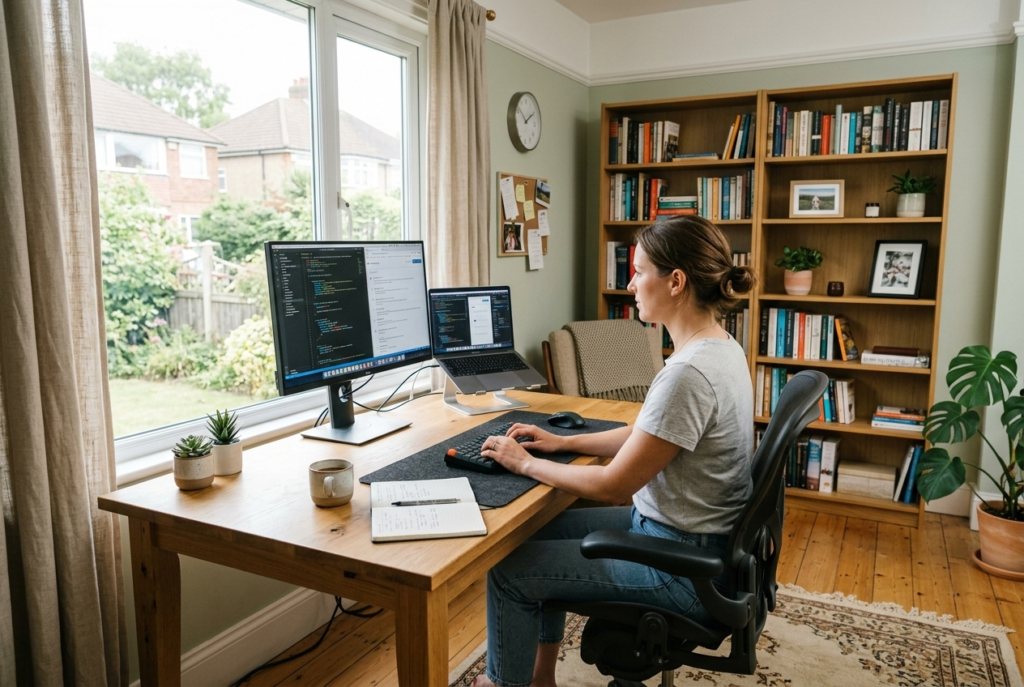
Your environment affects your stress levels more than you might think. Small adjustments can make your home feel more supportive while you work.
Control noise when possible. White noise, soft background music, or noise-canceling headphones can help. Maintain a comfortable temperature and keep water nearby so you aren’t constantly getting up. If clutter increases stress, set a five-minute reset timer at the end of the day to tidy your work area.
If you share your home, communicate routines openly. A shared calendar, meeting schedule, or agreed-upon quiet times can reduce friction. If you’ve got kids at home, build “connection breaks” into the day so they’re less likely to seek attention during your busiest moments.
9. Maintain Career Growth and Work Relationships Remotely
Remote work can make it harder to feel seen. Intentional communication helps you stay connected and grow professionally.
Send clear updates to your manager or team. Summarize progress, roadblocks, and next steps in a short message. Participate in meetings with a few prepared points so your contributions don’t get lost. Schedule occasional one-on-ones to maintain relationships, especially if you aren’t seeing colleagues in person.
Keep learning too. Even 20 minutes a few times a week toward a course, certification, or skill development can build momentum. Career growth reduces stress because it increases confidence and keeps your work life moving forward.
10. Build a Sustainable Remote Work Plan That Lasts
The most successful work-from-home lifestyle is the one you can maintain. Instead of copying someone else’s routine, design yours around your real responsibilities, energy patterns, and space.
Pick two or three habits to start: a defined work start time, a daily walk, and a shutdown routine. Once those feel natural, add upgrades like meal planning, improved ergonomics, or stronger meeting boundaries. Keep a “minimum version” for chaotic days so you don’t fall into all-or-nothing thinking.
If you notice ongoing anxiety, low mood, or burnout symptoms, it’s worth reaching out to a mental health professional. Remote work can be healthy and fulfilling, but it can also amplify stress if you’re isolated or overworking.
Conclusion
Living and working from home successfully comes down to smart structure and thoughtful boundaries. A supportive workspace, consistent routines, healthy movement, balanced meals, and control over digital distractions can improve productivity and protect your well-being. You don’t need a perfect schedule or a picture-perfect office. Start with a few realistic changes, refine what works, and build a home-work lifestyle that supports your health, relationships, and long-term success.