


A bathroom cabinet can become messy faster than almost any other storage area in the house. One day it holds toothpaste, skincare, and cotton pads. A few weeks later, it becomes a pile of half-empty shampoo bottles, expired medicine, tangled hair tools, razors, backup soap, and products you forgot you owned.
Learning how to organize bathroom cabinets isn’t about making them look perfect for a photo. It’s about creating a system that works every morning, even when you’re tired, rushed, or sharing the bathroom with other people. The best systems start before you buy bins: declutter first, group items by use, then choose the right organizer for each zone. Once that’s in place, everyday essentials stay easy to reach without constant clutter.
How to Organize Bathroom Cabinets in 6 Steps
- Empty and clean. Take everything out, wipe the shelves, and let them dry completely. Check under the sink for drips, water stains, soft wood, or a musty smell, since a slow leak will ruin anything you store there. A waterproof shelf liner makes future spills easier to clean.
- Declutter. Toss expired, dried-out, and unused products. For makeup and skincare, look for the small open-jar symbol with a number such as “12M,” which means the product should be used within 12 months of opening. Don’t throw expired medicine in the trash or down the toilet without checking the label; the FDA recommends drug take-back programs as the best way to dispose of most medicines.
- Sort into zones. Group what’s left into daily use, backstock, cleaning supplies, and first aid.
- Measure. Record the width, depth, and height of each shelf and drawer, and note where the pipes sit under the sink, before you buy any organizers.
- Contain and label. Put each group in a bin, tray, or divider, and label it so everyone knows where things go back.
- Maintain. Do a two-minute reset once a week and a quick purge every season to catch expired products and duplicates.
The sections below walk through each area of the bathroom in more detail.
Phase 1: The Brutal Declutter Before You Buy Organizers
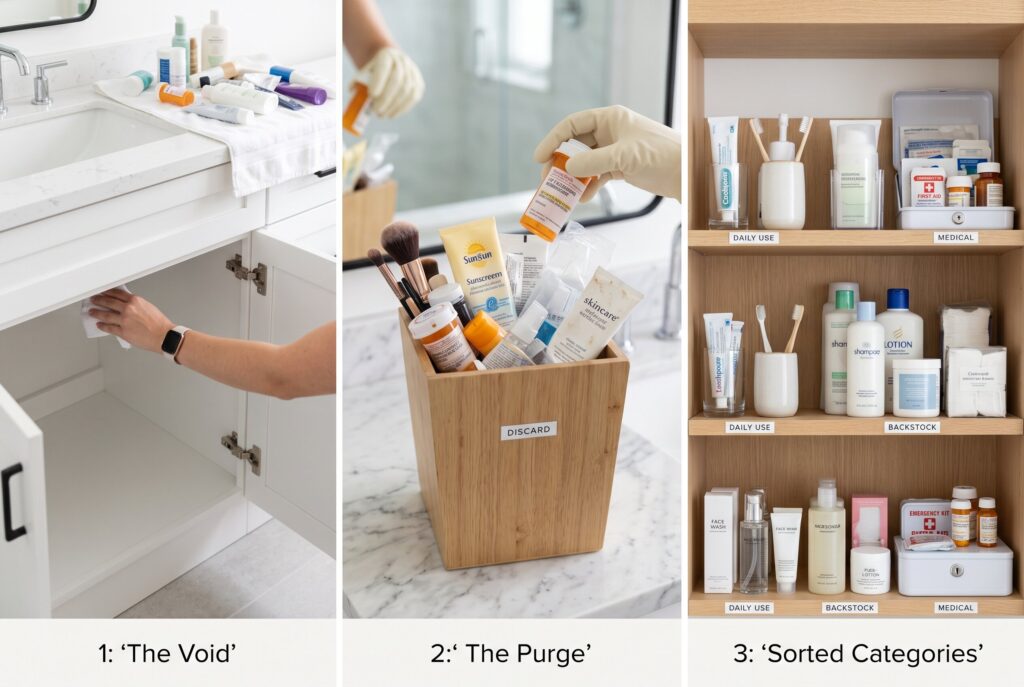
The biggest mistake is buying organizers before you know what you actually need to store. Empty every bathroom cabinet, drawer, and under-sink area first. Put everything on a towel or table so you can see the full mess at once.
Throw away expired sunscreen, old makeup, dried-out skincare, rusty razors, empty bottles, and products you tried once but won’t use again. Bathroom cabinets often stay messy because people organize clutter instead of removing it.
Then sort everything into three groups: daily use, backstock, and medical. Daily items should be easiest to reach. Backstock can go lower or farther back. Medical items need extra thought because bathrooms aren’t always the best place for medicine.
Phase 2: Under-Sink Bathroom Organization
Working Around the P-Trap Plumbing

The space under the sink is tricky because the plumbing cuts through the middle. A standard shelf often doesn’t fit, which is why this area turns into a pile of bottles and cleaning sprays.
Use U-shaped shelves, narrow bins, or pull-out drawers that sit on either side of the pipe. This lets you use the left and right zones without fighting the plumbing. If your cabinet is deep, pull-out organizers are especially helpful because you won’t need to crawl around searching in the back. For more layouts and product ideas, see our detailed under-sink organizing tips. If your bathroom has a pedestal sink with no cabinet at all, these pedestal sink storage solutions can help.
Storing Cleaning Products Safely
Under the sink is where most people keep bathroom cleaners, so set this zone up with safety in mind. Keep cleaners in their original, labeled containers and in their own bin, separate from toothpaste, skincare, and other personal items. Never store or mix bleach with ammonia-based or acidic cleaners, since the combinations can release toxic fumes. If young children live in or visit your home, add a child-safety latch to the cabinet door.
Using Clear Stackable Bins for Backstock

Clear stackable bins are perfect for extra shampoo, body wash, toothpaste, toilet paper, cotton rounds, and unopened skincare. The clear sides help you see what you already own, which prevents buying duplicates.
Label each bin simply: hair care, dental, skincare, cleaning, backstock, or travel. The label matters because it tells everyone where things go back, not just where they were placed on organizing day. This is one of the easiest ways to keep bathroom cabinets clean long-term.
Phase 3: Bathroom Drawer Organizer Hacks for Makeup and Skincare
The Tetris Method: Modular Acrylic Dividers

A bathroom drawer organizer works best when it fits your actual drawer, not someone else’s Pinterest photo. Instead of buying one large fixed tray, use modular acrylic dividers in different sizes.
This “Tetris method” lets you arrange compartments around makeup, toothpaste, floss, razors, lip balm, cotton swabs, and skincare bottles. Measure drawer width, depth, and height before buying anything. A beautiful organizer that blocks the drawer from closing isn’t useful.

Separating Everyday vs. Occasional Items

The top drawer should only hold what you use daily. Toothpaste, deodorant, contact lenses, everyday makeup, sunscreen, and your current skincare routine belong here. Occasional items should move lower. Hair tools, extra masks, travel products, special-event makeup, and backup products don’t need prime real estate. This one change makes your morning routine feel calmer because the drawer stops asking you to sort through everything every day.
Phase 4: Smart Small Bathroom Storage Ideas
Utilizing the Inside of Cabinet Doors
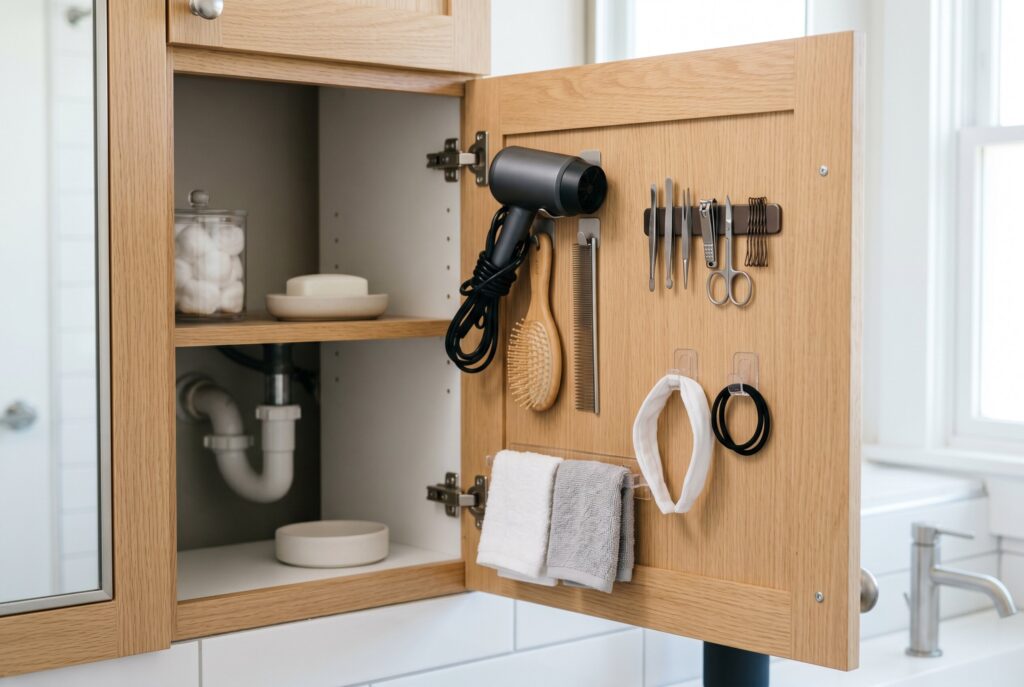
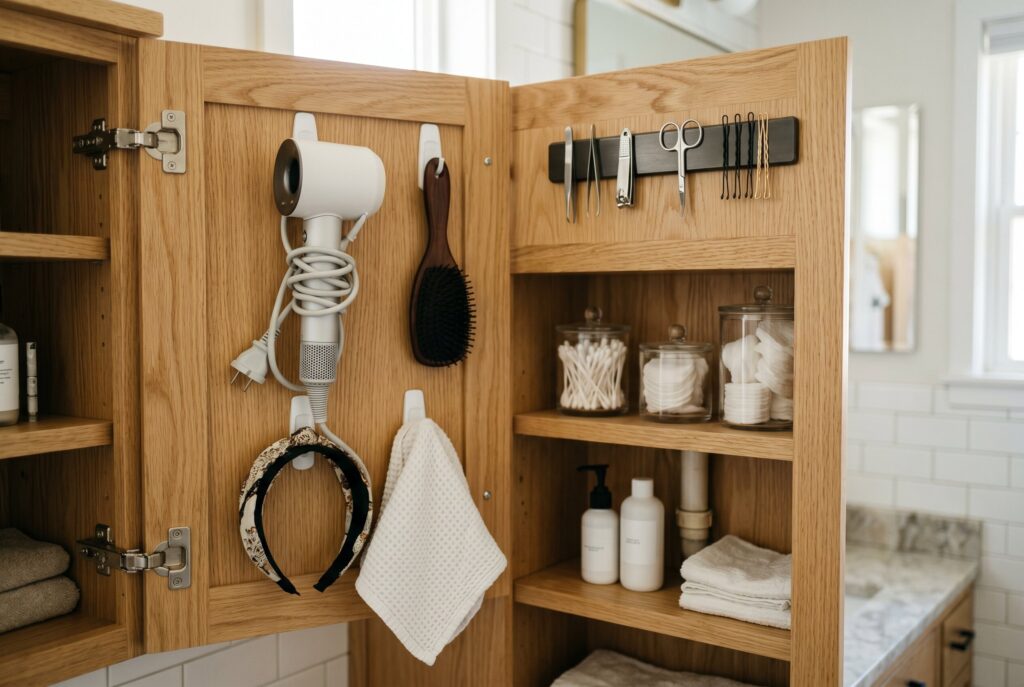
The inside of cabinet doors is hidden storage most people ignore. Use adhesive hooks for hair dryers, brushes, headbands, or small towels. Magnetic strips can hold tweezers, nail clippers, bobby pins, or small grooming tools.
This is especially useful for small bathroom storage because it creates space without adding furniture. Just make sure the items don’t hit shelves or plumbing when the door closes.
Bridging the Cabinet and the Countertop
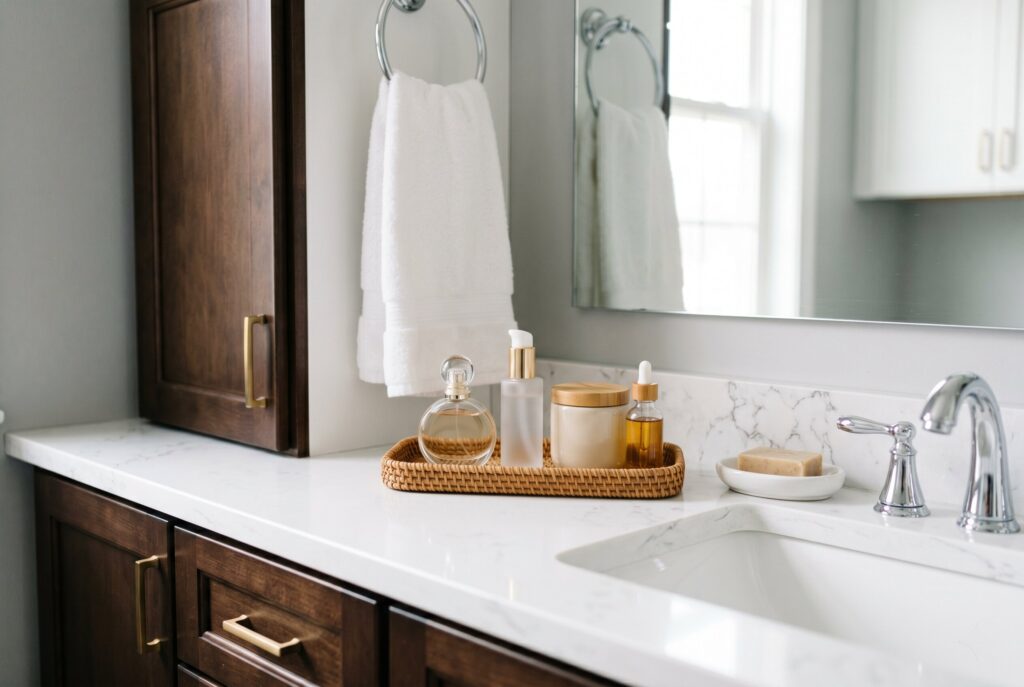
Sometimes the cabinet can’t hold everything without becoming overloaded. In that case, use a bathroom counter organizer for the few items that deserve to stay visible. A small tray can hold perfume, daily skincare, or hand lotion without making the counter look messy. The rule is simple: only display what you use often or what looks intentional. Everything else should live inside a cabinet, drawer, or bin.
>>> Low-Maintenance Front Yard Landscaping: 31 Easy-Care Ideas
Sharing a Bathroom
When several people use the same bathroom, give each person one bin, basket, or drawer section of their own, and color-code them if that helps. Keep shared items, such as toothpaste, hand soap, and backup toilet paper, in a clearly labeled central spot. Put kids’ items on lower shelves they can reach safely, and keep a small guest bin with spare toothbrushes and travel-size toiletries.
How to Organize a Medicine Cabinet
The mirrored cabinet above the sink is small, so every shelf needs a job. Put the items you use every day at eye level, backups and occasional items on the top shelf, and small everyday tools like floss and cotton swabs on the lowest shelf. If the shelves are adjustable, move them to fit your tallest bottles instead of laying bottles on their sides. Small clear containers keep loose items like hair ties and bandages together, and a tiered shelf riser lets you read labels at the back. If your bathroom has no medicine cabinet, a recessed model is one of the space-saving upgrades covered in our small bathroom remodel ideas.
Medicine Cabinet Safety: What Not to Store in the Bathroom
The name “medicine cabinet” is misleading. Bathrooms can be humid and warm, which may not be ideal for many medications. Steam from showers, temperature swings, and moisture can affect product quality over time. Keep prescription medicine, vitamins, and sensitive products in a dry, cool location when possible, as health guidance such as KidsHealth recommends. Use the bathroom medicine cabinet for basic first aid, bandages, cotton swabs, thermometer covers, and items that tolerate bathroom conditions better. If you have kids, sharp tools, razors, and medicine should be stored safely out of reach.
Frequently Asked Questions
How do you organize a bathroom cabinet with no drawers?
Add your own “drawers” with pull-out bins or sliding baskets, and use turntables for bottles so nothing gets lost at the back. Shelf risers double the usable space on a single shelf, and hooks or racks on the inside of the door hold hair tools and brushes.
What should be kept in a bathroom cabinet?
Daily toiletries, backstock like extra soap and toothpaste, basic first aid supplies, and bathroom cleaning products stored safely in their own bin. Medicines, vitamins, and anything sensitive to heat and humidity are better kept elsewhere.
How do you organize under a bathroom sink with pipes?
Measure the space around the pipes first, then use U-shaped shelves, narrow bins, or pull-out organizers on either side of the plumbing. Keep cleaning products in one bin and personal backstock in another so you can grab what you need without digging.
How often should you organize bathroom cabinets?
A two-minute reset once a week keeps things tidy, and a deeper purge every few months catches expired products, duplicates, and anything you’ve stopped using.
Where should medicine be stored instead of the bathroom?
A cool, dry place such as a bedroom dresser drawer, a linen closet shelf, or a kitchen cabinet away from the stove and sink works well. If children live in or visit your home, keep medicines locked or completely out of reach.
Conclusion
Knowing how to organize bathroom cabinets only helps if the system is easy to maintain. Once every item has a home, use the “one item in, one item out” rule. If you buy a new moisturizer, finish or remove the old one. If the backstock bin is full, stop buying backups. A clean bathroom cabinet should save time, reduce stress, and help you see what you own. When the system is simple enough to reset in two minutes, it will stay clean long after organizing day.