

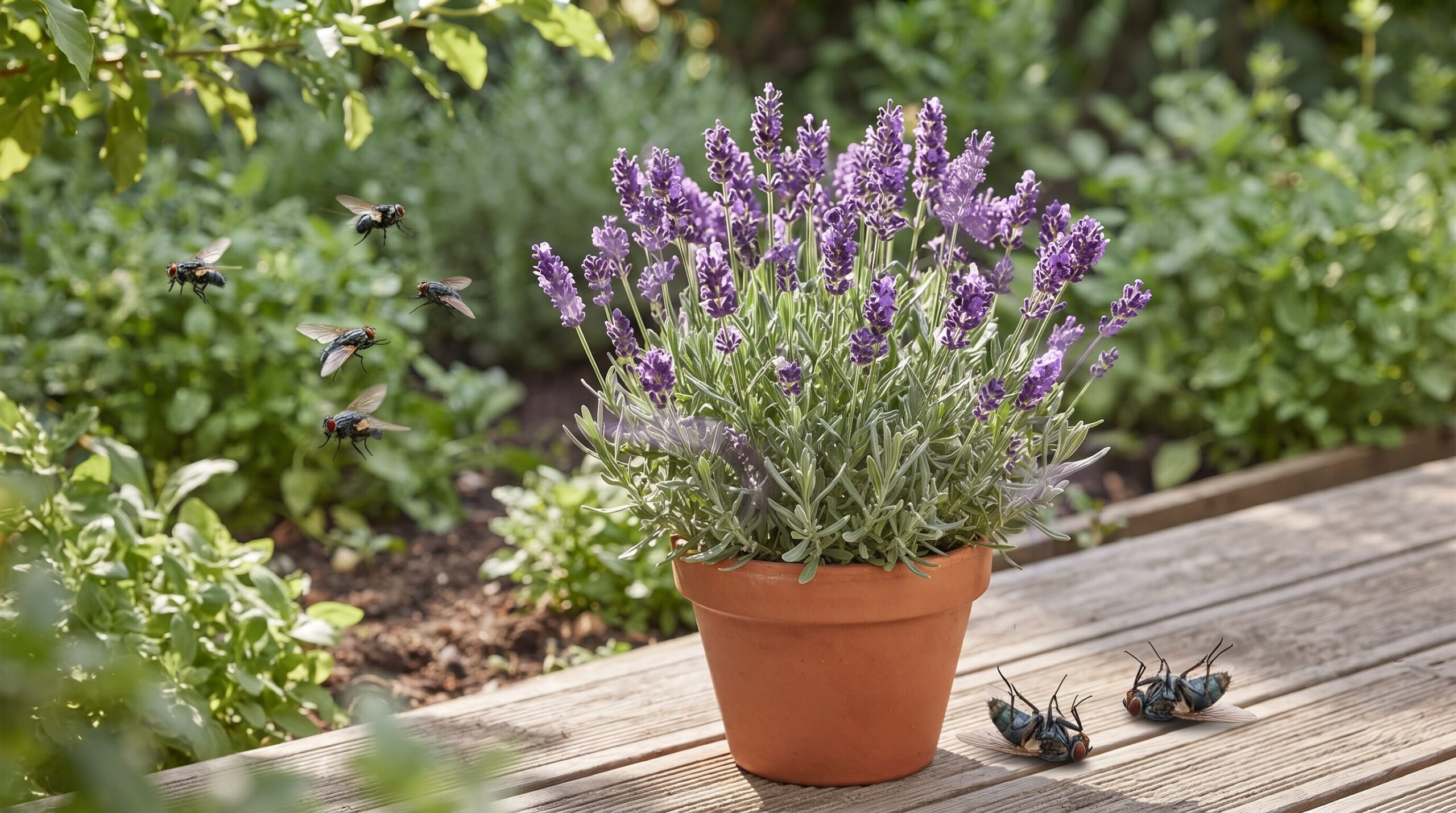
Flies rely almost entirely on smell to track down food, and that’s exactly the weakness that makes natural fly repellent strategies work. Strong, sharp scents like peppermint, lavender, and cloves overwhelm their sense of direction and send them looking elsewhere. Knowing what smell flies hate is only half the battle, though. The scent has to be extracted properly and placed in the right spot, or it ends up as little more than a nice-looking decoration. Certain essential oils and aromatic herbs naturally repel flies by disrupting their ability to detect food and breeding sites. That’s why strong scents like peppermint, cloves, and eucalyptus have become some of the most popular natural fly repellents.
Here’s a rundown of the nine scents that actually work, the viral hacks that mostly don’t, and the one habit no amount of essential oil can replace.
9 Scent Shields: A Natural Wall Against Flies

If you’re trying to figure out what repels flies, strong scents are a good place to start. What smell do flies hate? While there’s no single answer, herbs and essential oils like peppermint, basil, eucalyptus, and cloves release natural compounds that make it harder for flies to locate food. When it comes to how to keep flies away outside, they’re especially effective around patios, gardens, decks, and entryways. Combined with good sanitation, these natural repellents are one of the simplest answers to how to keep flies out of your house before they become a bigger problem.
- Peppermint: a few drops of peppermint oil mixed into a spray bottle works well around window frames and door seams, right where flies tend to sneak in. Peppermint is one of the best natural options for keeping flies away. A few drops of peppermint oil mixed with water can be sprayed around doors and windows where flies are most likely to enter.
- Cloves and lemon: an old classic worth reviving: slice a lemon in half and press whole cloves into the flesh, then set it on the outdoor dining table. The cloves and lemon flies remedy remains popular because the citrus aroma attracts attention while the concentrated clove scent is what actually discourages flies from lingering nearby.
- Basil: one of the better fly repellent plants for a kitchen windowsill, since it pulls double duty as a cooking herb. Basil earns its place among the best fly repellent plants because its aromatic oils help mask the food smells that attract flies into kitchens.
- Lavender: repels flies while doubling as a calming scent for a living room or bedroom.
- Eucalyptus: potent enough that a few drops on a ribbon or cloth strip hung near a porch entrance can carry the scent a fair distance.
- Lemongrass and citronella: pure essential oil extract tends to outperform a candle, since candle wax rarely releases enough concentrated scent to matter.
- Rosemary: tossing a few sprigs onto a hot grill does double duty, flavoring food while pushing flies away from the cooking area.
- Marigold: planting a border of these around a patio or yard creates a natural, decorative barrier.
- Cinnamon: the sharp, spicy smell flies tend to avoid; sprinkling some powder near trash cans helps keep them from lingering.
There’s a reason these scents come up so often. Many contain natural compounds that affect a fly’s sense of smell, which can make it more difficult for them to locate food and places to breed.
That said, not every scent suits every space equally. A kitchen windowsill calls for something practical like basil that’s also useful at dinnertime, while a porch railing benefits more from eucalyptus or citronella strong enough to hold up against an open breeze.
Fresh herbs and crushed leaves also tend to release more concentrated oil than a dried bundle sitting in a drawer for months, so swapping out basil or rosemary every couple of weeks keeps the scent potent instead of fading into the background. For anyone who’s tried a single sprig on a windowsill and wondered why flies still showed up, the issue is usually concentration and freshness rather than the plant itself failing to work.
“Do They Actually Work?” The Truth About Citronella Candles and Water Bags
Plenty of hacks circulate online with bold claims attached, and a couple deserve a closer look before anyone bothers trying them.
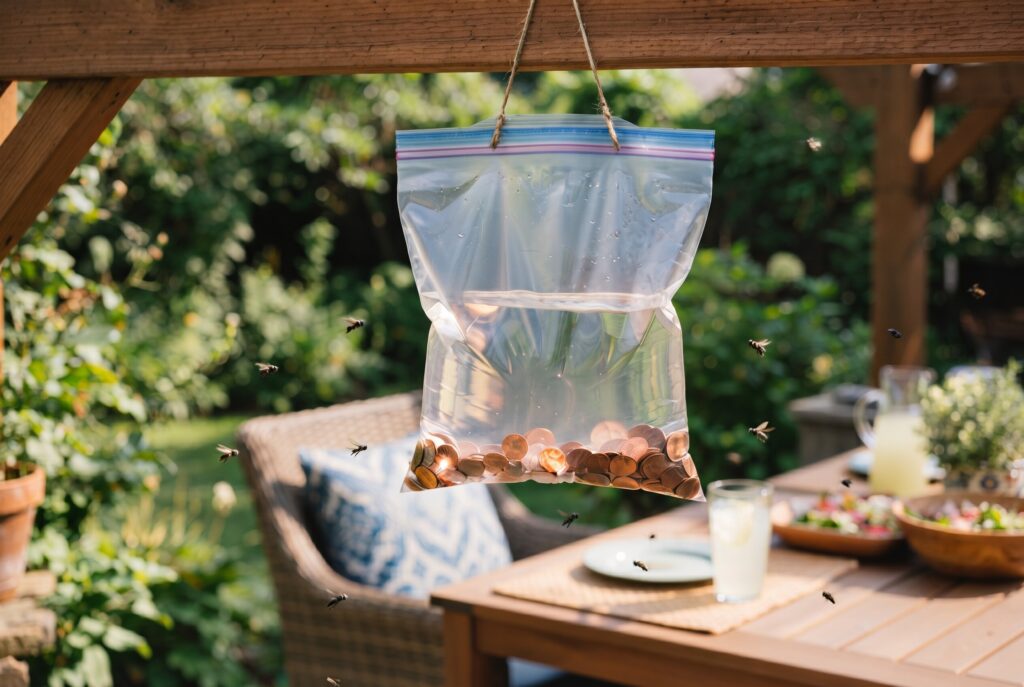
- Pennies in water fly trick: This one’s been everywhere on social media, complete with claims of a 90 percent reduction in flies after hanging a clear bag of water with pennies dropped inside. The theory usually involves light refraction confusing a fly’s compound eyes. In reality, that explanation has no solid scientific backing, and the claimed results tend to come from casual observation rather than anything resembling a controlled test. Bags of water repel flies in some anecdotal accounts, sure, but there’s no consistent evidence it works beyond a handful of flies near a single table.
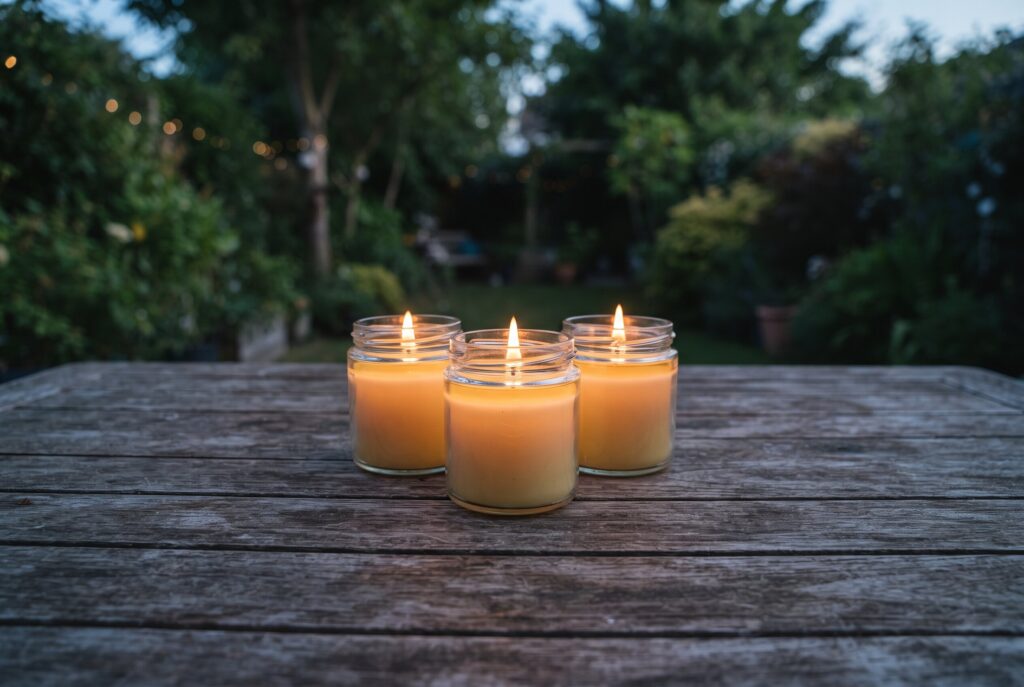
- Citronella candles: The scent genuinely does push flies away, but a burning candle releases far less concentrated oil than people assume. Citronella candles can repel flies, but only within a small area close to the flame because they release much less concentrated oil than pure citronella essential oil. Anyone expecting a candle at the edge of the yard to clear the whole area is bound to be disappointed.
Neither hack is worthless, exactly. They’re just weaker and more situational than the headlines suggest, and they shouldn’t be the centerpiece of a fly-control plan.
The bigger lesson is that viral popularity doesn’t always reflect real effectiveness. Many fly control hacks spread because they’re inexpensive, easy to try, and look convincing on social media, not because they’ve been thoroughly tested. That doesn’t mean they’re completely useless, but they shouldn’t replace proven methods if you’re dealing with a serious fly problem indoors or outside.
DIY Natural Fly Spray: A Quick Recipe Worth Keeping Around
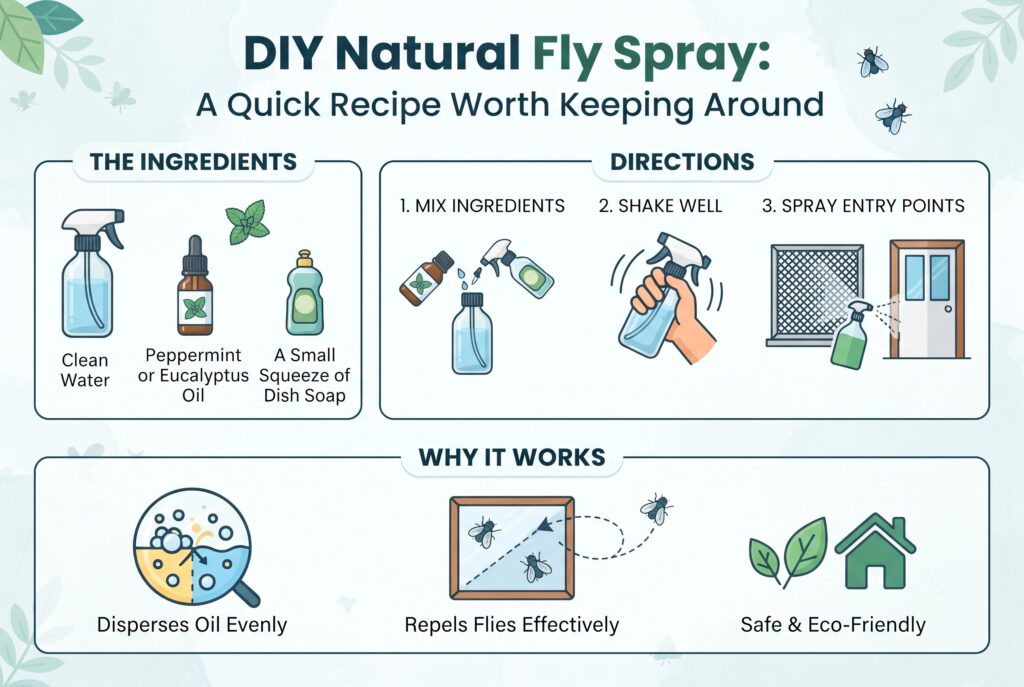
One of the simplest ways to create an outdoor fly repellent is with a homemade essential oil spray. Mix water with a few drops of peppermint or eucalyptus oil and a small amount of dish soap. For something fast and reusable, mix clean water with a few drops of peppermint or eucalyptus oil and a small squeeze of dish soap. The soap helps the oil disperse evenly through the water instead of clumping at the surface. Shake well, then spray directly onto common entry points: window screens, door frames, and any mesh that flies tend to crawl across before getting inside. It’s not a permanent fix, but it’s an easy habit to repeat every few days when fly activity picks up, especially heading into warmer months when both indoor and outdoor populations spike.
Scent Can’t Replace Sanitation
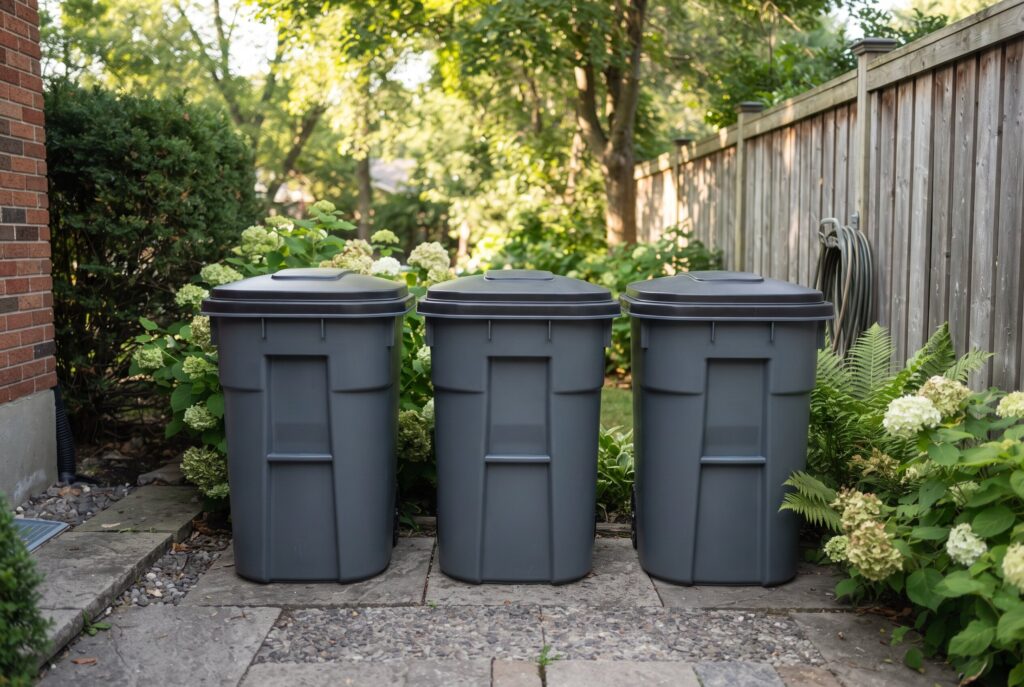
Here’s the part most hack-driven articles skip entirely. An overflowing trash can or a yard littered with pet waste creates an attractant strong enough to override every herb pot and oil diffuser in the house. No amount of basil on the windowsill cancels out an open garbage bin sitting a few feet from the back door.
Whether you’re trying to keep flies out of your house or reduce them around the yard, removing the food sources that attract them should always come first. Natural scents work best as an extra layer of protection, not as a substitute for good sanitation.
- Keep garbage cans sealed with a tight lid and rinsed out regularly, since lingering food residue is one of the strongest fly attractants around.
- Clean up pet waste from the yard promptly rather than letting it accumulate, since flies treat it as a breeding ground.
- Rinse food residue from dishes and recycling before it sits out, especially in warmer months when flies reproduce faster.
Scent-based methods work best as a second layer on top of consistent cleanup, not as a standalone fix for a yard or kitchen that’s already attracting flies in the first place.
Conclusion
Nature offers a genuinely useful toolkit for dealing with flies, from a windowsill basil plant to a spray bottle of peppermint oil. Wrapping a living space in these scents creates a barrier flies generally prefer to avoid. None of that matters much, though, if trash cans stay open or pet waste piles up in the yard. Pairing natural fly repellent habits with consistent sanitation is what actually keeps a home clear of flies through the warmer months, not chasing whichever hack happens to be trending this week.
Related Articles
Homemade Fly Trap: 3-Minute Setup (Indoor & Outdoor)
How to Keep Spiders Away: 4 Invisible Barriers to Seal Your Home (2026)