


You finally have the grill going, drinks on the patio, and everyone settled into their seats when the flies start to appear. What begins with a few quickly turns into a constant annoyance, making it hard to enjoy your meal or spend time outside.
The good news is that getting rid of flies outside doesn’t have to mean constantly spraying insecticide or trying every repellent on the shelf. Flies move fast through their life cycle, often going from egg to breeding adult in as little as seven to ten days during warm weather, which is exactly why a missed day of cleanup can undo a week of progress. Once you understand what’s attracting flies to your yard and where they’re breeding, you can address the problem at its source and keep your backyard and patio comfortable for the long term.
Know Your Outdoor Flies: Identification Matters
Not all outdoor flies are the same. Different species have different attractions, different behaviors, and different weaknesses, so understanding what you’re dealing with shapes which fixes actually apply.
- House flies: Gray or brown, about a quarter inch long. Attracted to trash, pet waste, food scraps, and outdoor dining areas. The most common outdoor fly by far.
- Black flies: Small, dark, and biting. Common near moving water and most active during cooler parts of the day.
- Horse flies and deer flies: Large, aggressive biting flies found around grassy or wooded areas. Strong fliers that can chase people.
Most outdoor fly problems involve house flies, so unless you’re actually being bitten, that’s the safe assumption. If bites are the issue, the sanitation and trapping advice in the rest of this guide won’t do much, since biting flies aren’t drawn to trash or waste the way house flies are. They’re after movement, body heat, and carbon dioxide instead.
For black flies, horse flies, and deer flies, the more useful steps are different: reduce standing water and dense brush near where you spend time outside, since both are common breeding and resting spots, and use an EPA registered repellent containing DEET or picaridin when they’re actively biting. Traps and food source cleanup, which make up most of the rest of this guide, are built around house flies and won’t have much effect on biting species.
The Location-Based Control Matrix: Your Real Solution
Here’s what separates people who solve their outdoor fly problem from people who just endure it. They stop treating outdoor flies as one problem and start treating them as five different problems that just happen to be flies.
Flies On Your Porch
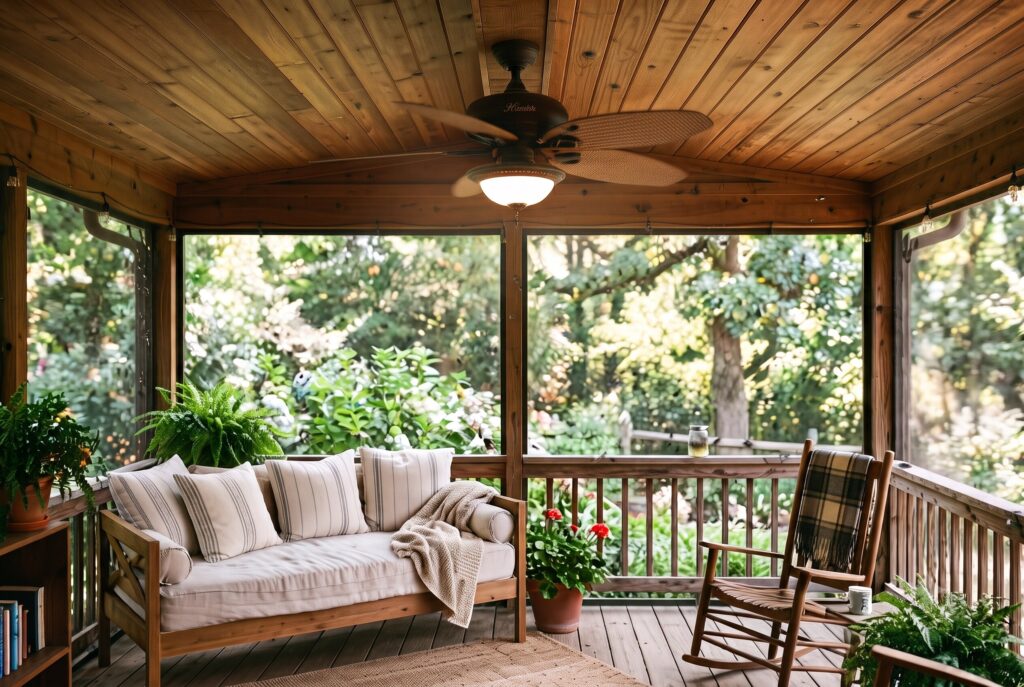
Porch flies are typically there because of food and drink residue, plus poor air circulation. The solution isn’t complicated, but it’s specific. First, you need to eliminate the attractants. That means not leaving drinks sitting out, cleaning food residue immediately, and not letting garbage or organic matter accumulate near seating areas.
Second, and this is surprisingly effective, you need airflow. A ceiling fan or portable fan creates wind that flies simply can’t navigate well. They’re weak fliers. Real air movement makes landing difficult and keeps them away. This is why flies become less problematic on breezy days. You can artificially create that effect.
Third, if flies are still showing up, place your outdoor fly trap away from the porch. Put it 15 to 20 feet away if possible. You’re creating a decoy that’s more attractive than your seating area. Flies will preferentially go to the trap instead of your porch.
Flies Around Trash Cans
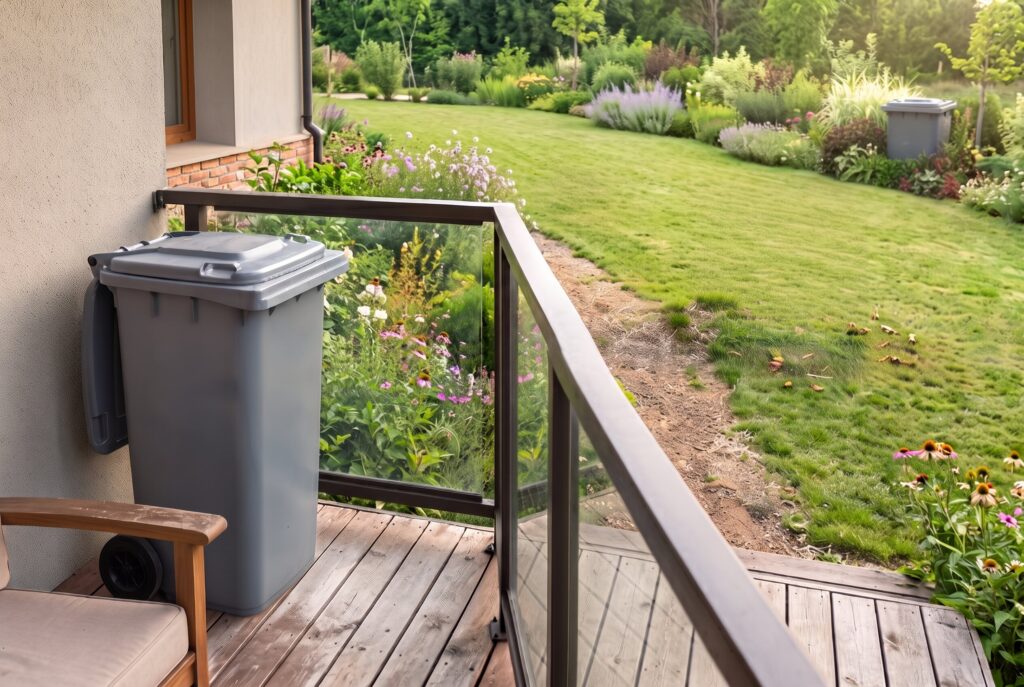
This is where a fly infestation often starts. Trash cans are the perfect breeding ground. The smell attracts flies from blocks away, and the inside of the can is a complete buffet for laying eggs and raising maggots.
The solution has three parts. First, use sealed lids. Open trash cans are invitations. Sealed cans eliminate the odor signal that draws flies from far away. Second, rinse the inside of your trash cans regularly, either with a hose or by taking them through a carwash. This removes the residue that smell comes from. Third, place an outdoor fly trap near the trash area. Even with sealed cans, some smell escapes, and flies will still be attracted to that location. Having a trap positioned to intercept them is crucial.

Flies Around Pet Waste
This is the fastest way to create a serious outdoor fly infestation, and it’s something pet owners often underestimate. Animal feces is incredibly attractive to flies because it’s a complete food source and an ideal breeding location. One pile of dog poop can produce hundreds of flies within days.
The only real solution here is daily cleanup. You can’t trap your way out of this problem. You can’t repel your way out of it. You have to remove the attractant. Pick up pet waste daily, ideally immediately after your dog goes outside. This alone can reduce your entire outdoor fly problem by 50% or more if that was the primary breeding source.
Flies Around Compost
Compost bins are deliberately creating conditions that flies love. You’re concentrating on decomposing organic matter in one place. Flies find this irresistible.
If you have a compost system, move it away from your main living areas, your porch, and your patio. 10 to 20 feet away makes a huge difference because it puts the attractant far from where you’re trying to enjoy your yard. Also manage moisture carefully. Dry compost attracts fewer flies than wet, decomposing compost. Keep it covered and turn it regularly to speed decomposition.
Flies In Your Backyard Generally

Backyard flies are typically coming from one of the sources above, plus general yard debris like fallen fruit, spilled pet food, or standing water that’s breeding mosquitoes and flies. Walk through your yard and look for these things. Remove fallen fruit from under trees. Don’t leave pet food outside. Fix areas that collect standing water. The most effective way to get rid of flies in backyard areas is to eliminate what attracts them. Simple cleanup measures remove the food sources and breeding sites that allow fly populations to grow quickly.
What Actually Works vs. What’s Overhyped
Plants like basil, lavender, and mint may offer mild fly-repelling effects, but they won’t stop an infestation. The same goes for essential oils and citronella candles. They can help a little, but they won’t keep flies away from food or breeding sites. Use them as a supplement, not your main fly control strategy.
What actually works is removing what’s attracting flies, placing outdoor fly traps strategically, and maintaining consistent sanitation. That’s not as romantic as the idea of repellent plants, but it’s what gets results. If your goal is figuring out how to get rid of flies outside for good, focus on eliminating breeding sources first and use traps to reduce the remaining adult flies.
Your Seven Day Outdoor Fly Control Plan
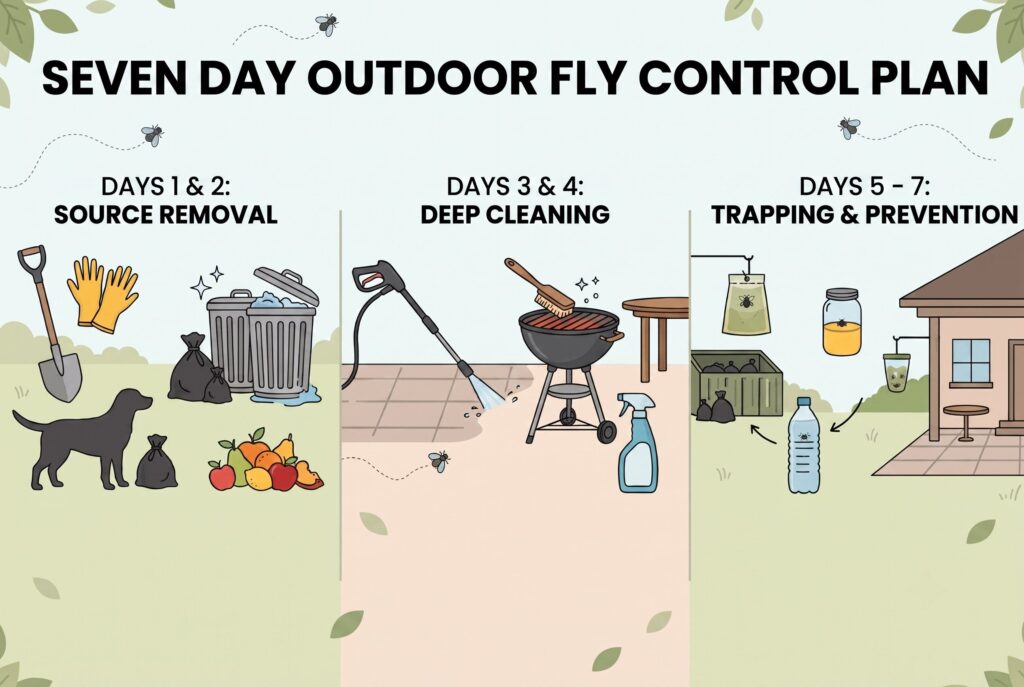
Days 1 and 2: Source Removal
This is the heavy lifting. Go through your entire outdoor space and remove everything that’s attracting flies. Pick up all pet waste, take out trash and rinse the cans, remove fallen fruit, look for standing water and drain it, and take in any pet food that’s outside. This is boring, but it’s where the actual problem gets solved.
Days 3 and 4: Deep Cleaning
Now that you’ve removed the obvious attractants, do targeted cleaning. Pressure to wash your patio if you’ve got dried spills. Clean the grill thoroughly and wipe down tables and outdoor furniture. This removes the residue that still smells like food to flies.
Days 5 Through 7: Trapping and Prevention
Place outdoor fly traps in strategic locations. Near the trash area, away from your porch, anywhere you noticed fly activity. The specific trap doesn’t matter as much as placement. Keep your yard clean going forward. This is the maintenance phase. One week of good work followed by neglect brings flies right back.
Frequently Asked Questions
Why are there suddenly so many flies in my backyard?
A sudden increase in flies is usually caused by a nearby breeding source, such as pet waste, uncovered trash, rotting organic matter, or a dead animal. Because flies can develop from eggs to adults in about a week during warm weather, populations can grow quickly if the source isn’t removed.
Does vinegar kill flies?
Not by itself. Vinegar attracts many flies, but adding a few drops of dish soap breaks the liquid’s surface tension, trapping flies when they land. This makes it an effective DIY fly trap, not a fly repellent.
Do bug zappers work for outdoor flies?
Not particularly well. While bug zappers kill some flying insects, they are generally less effective against house flies and often attract beneficial insects instead. For most outdoor fly problems, proper sanitation and well-placed fly traps are much more effective.
Conclusion
You can’t eliminate outdoor flies completely, but you can keep them away from the areas where you relax and entertain. The key is removing breeding sources and placing traps where they work best. Start with the biggest source of flies in your yard and tackle one problem area at a time. With a consistent approach, you’ll notice fewer flies within days and enjoy a cleaner, more comfortable backyard all season long.