

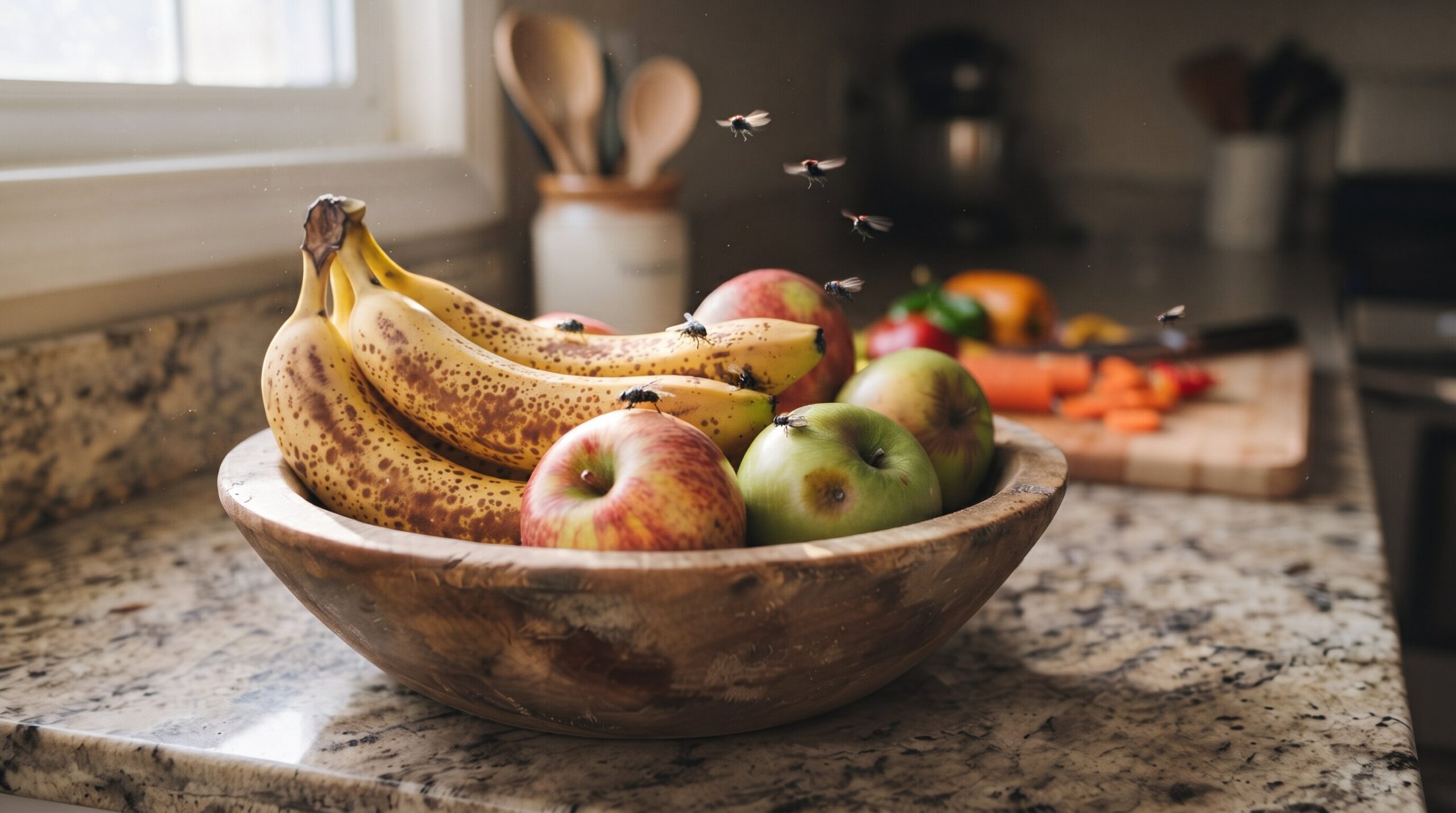
You spot a fly in your kitchen, then another. Before long, they’re circling your fruit bowl, landing on the counter, and buzzing around while you cook. If you’re wondering why there are so many flies in your house all of a sudden, the answer is simple: they’ve found food, a breeding site, or both.
The problem grows fast because flies reproduce quickly. The adults you see today may have already laid eggs that will hatch within days, turning a few flies into a much bigger infestation. That’s why acting early with the right approach is the fastest way to get rid of flies in your house and keep them from coming back.
Why Are There So Many Flies in My House?
A sudden increase in flies almost always means something inside your home is attracting them. Adult flies don’t stick around where they can’t find food or a place to reproduce, so seeing several at once usually points to a specific source.
Some of the most common causes include:
- Overripe fruit left on the counter
- Full trash or recycling bins
- Food residue inside garbage disposals
- Dirty sink or shower drains
- Pet food left out for long periods
- Pet waste or indoor litter boxes
- Compost containers
- Overwatered houseplants with consistently damp soil
- Open doors, damaged window screens, or gaps around windows
- A dead rodent or bird inside a wall, attic, or crawl space, which is less common but possible
Finding what’s attracting them is the first step. Insect spray treats the symptom, not the source, so it’s worth locating where flies are feeding or breeding before reaching for it. Once that source is removed, the number of flies usually starts dropping within a few days. Understanding this is essential if you want to know how to get rid of flies inside without the problem returning.
How to Get Rid of Flies in House
Step 1: Identify the Type of Fly
Not every fly should be treated the same way. Different species breed in different places, which means the solution depends on identifying the pest correctly.
Fruit Flies
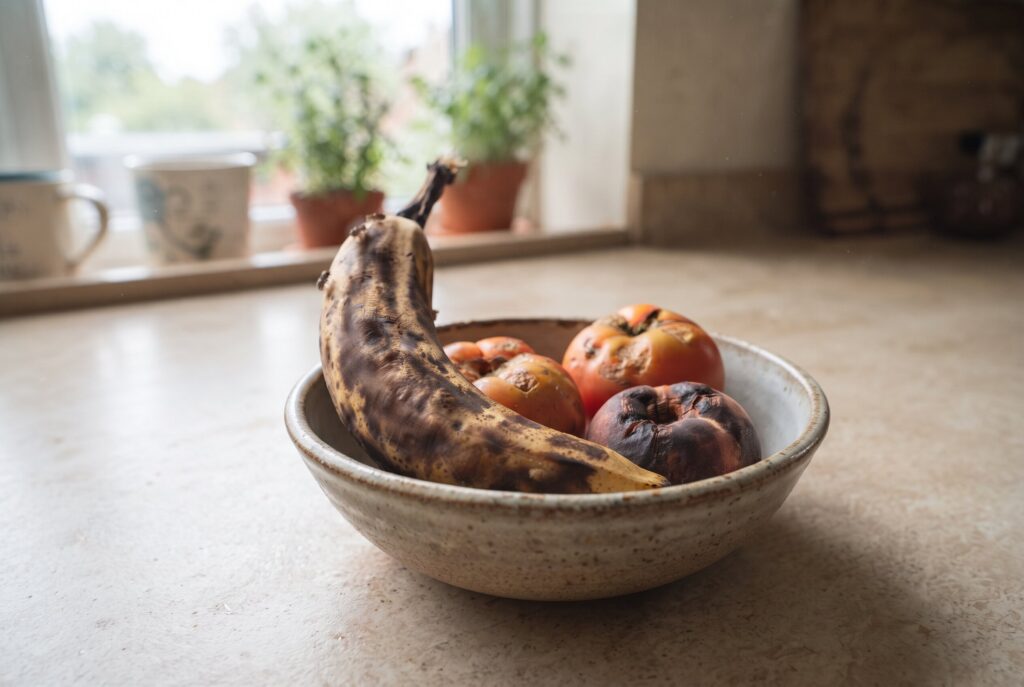
Fruit flies are tiny, usually less than a quarter inch long, with distinctive red eyes. They’re attracted to fermenting sugars found in overripe fruit, vegetable waste, spilled drinks, and compost. These conditions provide both food and breeding sites, allowing populations to grow surprisingly fast. What starts as a handful of flies around a fruit bowl can become a persistent nuisance within days if the source isn’t removed.
House Flies
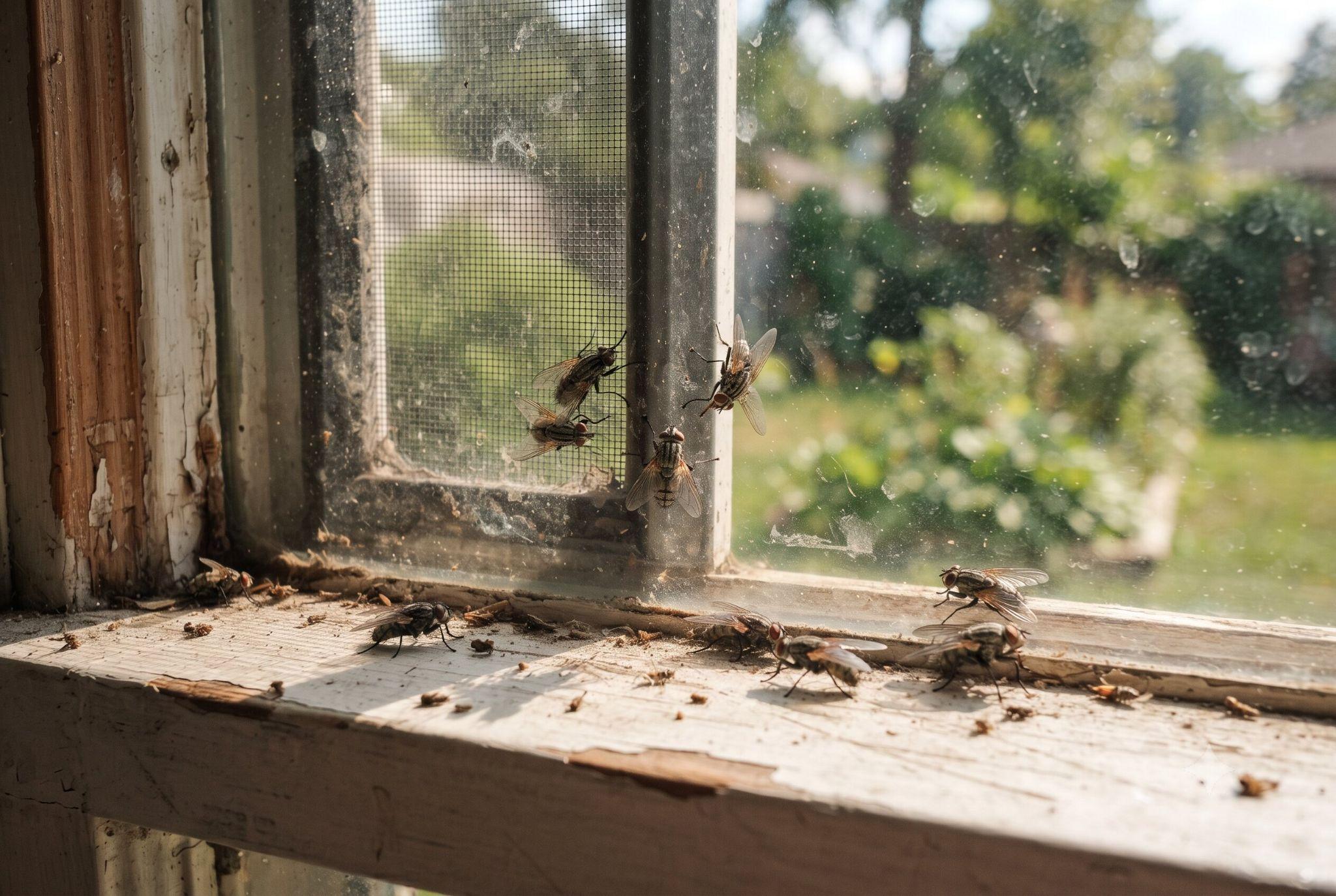
House flies are noticeably larger, about a quarter inch, and they’re gray or brown rather than the almost translucent look of fruit flies. They’ll cluster around trash cans, pet food, and garbage disposal areas. They’re attracted to broader sources of decay and organic matter. You’ll often see them congregating around window sills and screens, which tells you they’re trying to find their way outside or they’ve already been outside and found a way in through screens or doors.
Drain Flies
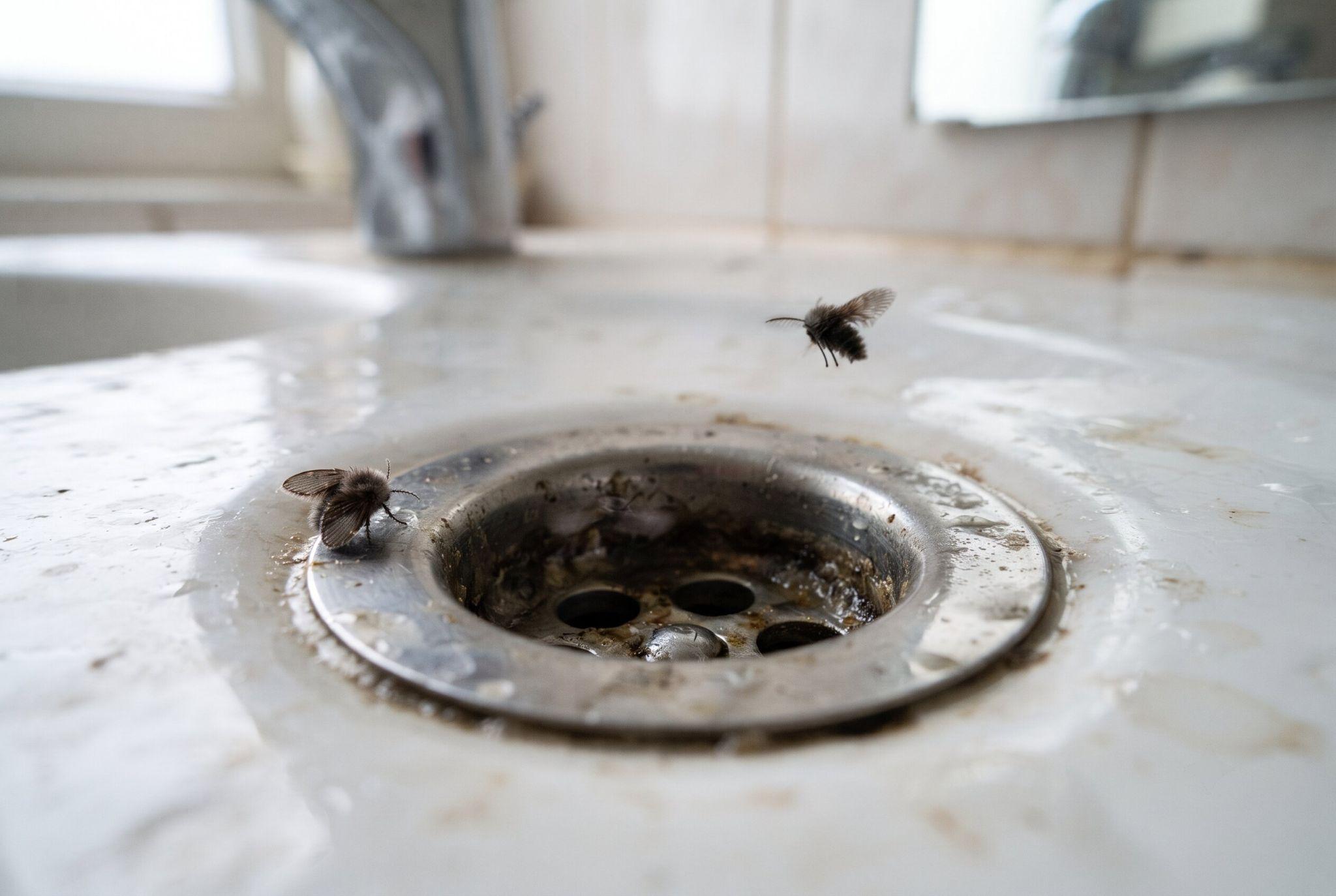
Drain flies are even smaller than fruit flies and have dark, fuzzy looking wings that look almost like tiny moths. These are the ones that come up through your sink, shower, or bathroom drains. They breed in the slimy organic matter that accumulates in drain pipes. If you’re seeing these flies, the issue usually isn’t how clean your home is. More often, it’s what’s breeding inside your drains and plumbing.
Understanding which type you’re dealing with completely changes your action plan. It tells you where to look, what’s attracting them, and how to get rid of flies in the house with actual effectiveness rather than just spending money on traps that don’t address the real problem.
Step 2: Remove the Breeding Source
This is the most important step. Adult flies are only the visible part of the problem. If eggs and larvae remain, new flies will continue appearing no matter how many you kill.
For Fruit Flies
Throw away overripe fruit and vegetables, refrigerate fresh produce whenever possible, empty compost regularly, wipe up sugary spills, and rinse bottles or cans before placing them in the recycling bin.
For House Flies
Keep trash cans tightly sealed, empty garbage frequently, clean food residue from garbage disposals, avoid leaving pet food out all day, and clean up pet waste promptly. If house flies suddenly appear in large numbers without an obvious source, inspect your attic, crawl space, or garage for a dead animal.
For Drain Flies
Scrub the inside of drains with a stiff brush to remove slime, flush with boiling water, and use an enzyme drain cleaner for several consecutive days. The larvae live in the organic film inside pipes, so simply pouring bleach down the drain usually isn’t enough.
Removing the breeding source is the only reliable way to get rid of flies inside your home permanently.
Step 3: Reduce the Adult Fly Population
After eliminating the source, focus on catching the adult flies that are still flying around your home.
For fruit flies, one of the most effective homemade traps uses apple cider vinegar. Fill a small bowl or glass with apple cider vinegar, add a few drops of dish soap, and cover it with plastic wrap punctured with several small holes. The vinegar attracts the flies, while the soap breaks the liquid’s surface tension so they sink instead of escaping.
House flies respond better to sticky fly ribbons or UV light traps placed near windows, doors, or other bright areas where adults naturally gather.
For drain flies, continue treating the drains while placing sticky traps near sinks, showers, or floor drains to catch newly emerging adults.
Remember that traps remove adult flies, not eggs or larvae. If you’re looking for how to get rid of flies in the house quickly, combining traps with source removal is far more effective than relying on traps alone.
Step 4: Keep Flies From Coming Back
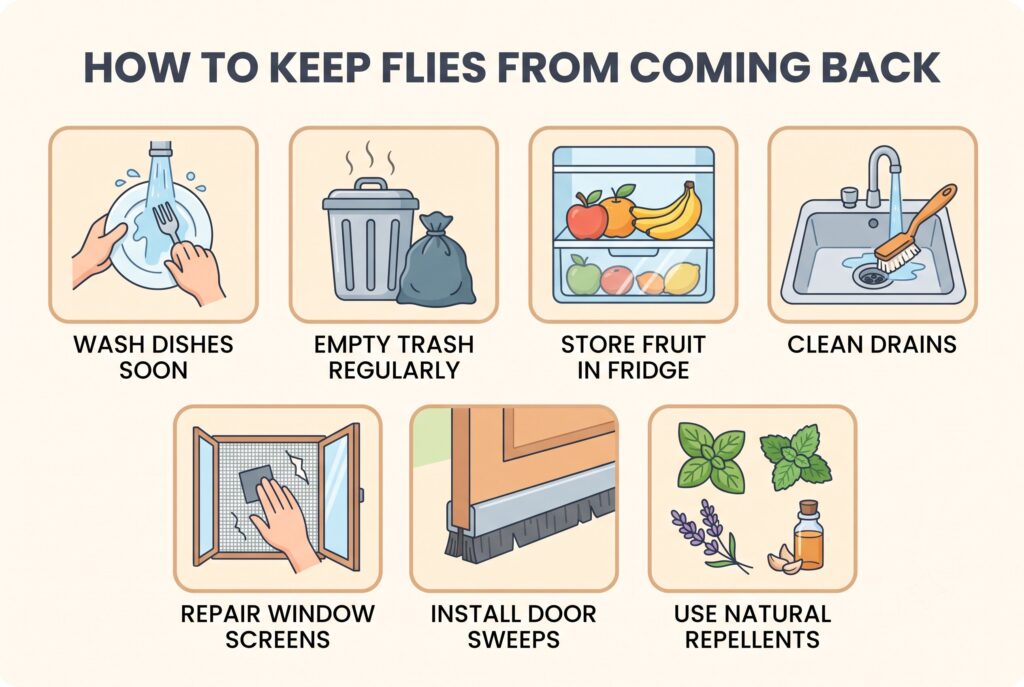
Once the infestation is under control, a few simple habits can prevent another one from developing.
- Wash dishes soon after meals.
- Empty kitchen trash before odors build up.
- Store ripe fruit in the refrigerator.
- Keep compost bins covered.
- Clean drains regularly.
- Repair damaged window screens.
- Install door sweeps if flies are entering under exterior doors.
- Seal gaps around windows, doors, and plumbing.
Natural repellents such as basil, mint, lavender, and clove oil may discourage flies from entering certain areas, but they won’t eliminate an active infestation. Think of them as a supplement to good sanitation and exclusion, not a replacement for either.
If your goal is to learn how to get rid of flies in your house for good, prevention matters just as much as treatment. A clean kitchen, sealed entry points, and routine maintenance make your home far less attractive to flies year-round.
Frequently Asked Questions
How long does it take to get rid of fruit flies?
Most homes see a noticeable reduction in fruit flies within a few days after removing the breeding source and setting traps. With consistent cleaning and prevention, the infestation is usually gone within one to two weeks.
Do fruit flies or drain flies bite?
No. Fruit flies and drain flies don’t bite people or pets. They are nuisance pests that feed on decaying organic matter, so any bites you’re experiencing are likely caused by a different insect.
Why do I keep seeing flies in my bathroom?
Flies in the bathroom are often drain flies breeding inside the organic buildup in sink, shower, or floor drains. Covering the drain with clear tape overnight is a simple way to confirm whether the drain is the source.
Will fruit flies go away on their own?
Usually not. Fruit flies will continue breeding as long as food, moisture, or another breeding site is available. Eliminating the source is the most effective way to stop the infestation for good.
Conclusion
Flies multiply quickly, so early action makes the biggest difference. The most effective approach is to identify which type you’re dealing with, remove the breeding source it depends on, use traps to clear out the adults still flying around, and keep up with the habits that prevent a repeat. Handled that way, most indoor fly problems clear up within a week or two and stay gone.
Related Articles
How to Get Rid of Flies Outside (Keep Your Backyard & Patio Bug-Free)
Homemade Fly Trap: 3-Minute Setup (Indoor & Outdoor)