

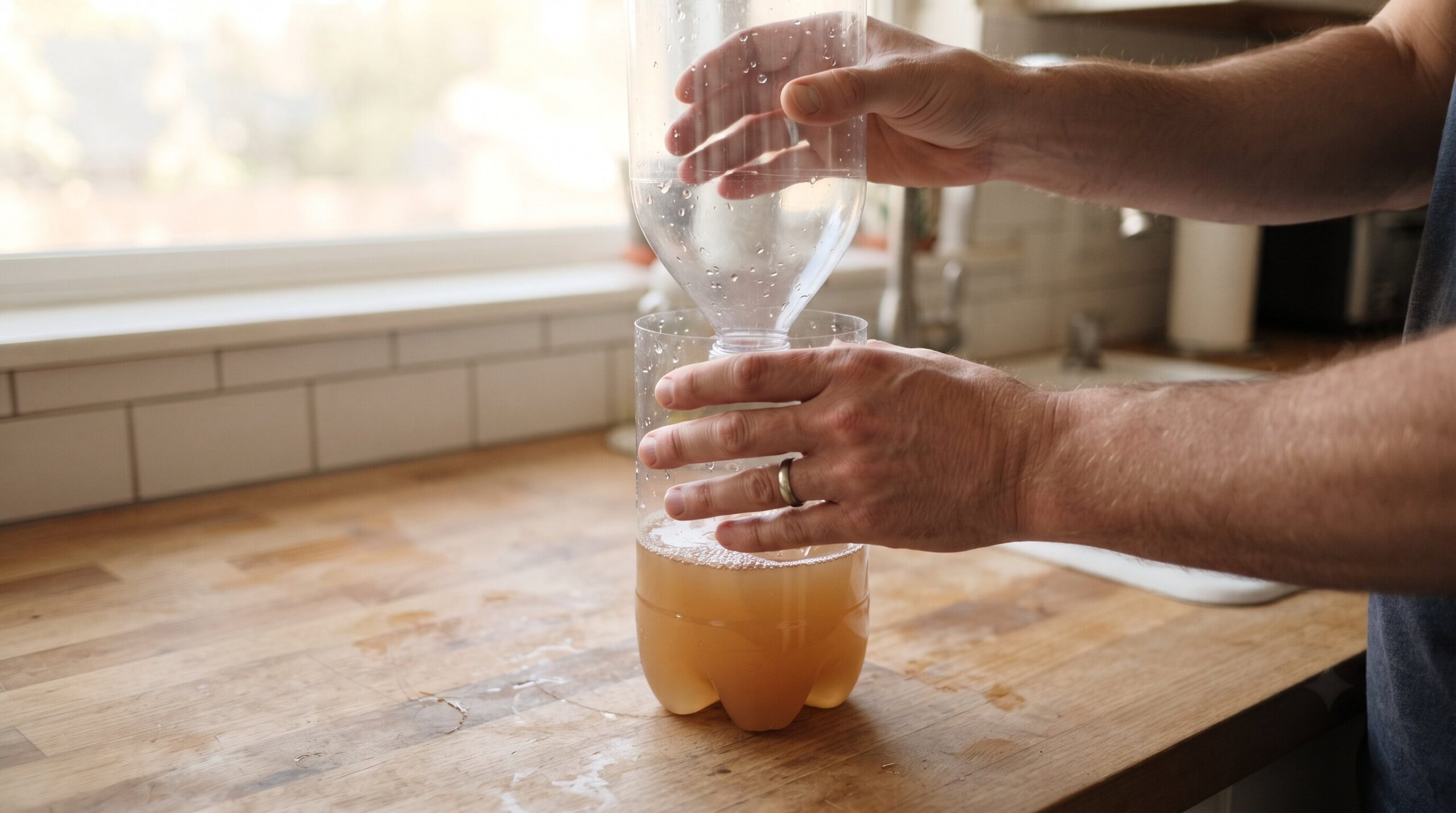
Homemade fly traps that work wonders on the patio can sit empty in a kitchen, and a trap built for fruit flies won’t do much against a swarm of blowflies near the trash cans. Before copying another Pinterest style recipe, it’s worth understanding what’s actually flying around the house, because the bait makes all the difference. Fortunately, getting the basics in place only takes a few minutes. After that, it’s simply a matter of choosing the right treatment for the pest you’re dealing with.
Building a Simple DIY Fly Trap
Every reliable homemade fly trap, whether it’s meant for the counter or the yard, starts with the same basic shape: an inverted funnel. Most effective homemade fly traps use this simple funnel design because it allows flies to enter easily while making escape surprisingly difficult.
This design lets flies wander in toward the smell but makes it nearly impossible for them to find their way back out. Building it doesn’t require any special skills or tools, just a few household items and a couple of minutes.
To build a basic fly trap DIY style:
- Grab an empty plastic soda bottle (1.5 or 2 liters works well) or a mason jar if a sturdier option is preferred.
- Cut off the top third of the bottle with a utility knife.
- Pour the bait into the bottom section.
- Flip the cut top upside down, remove the cap, and slide it into the bottom half like a funnel. Secure the seam with tape.
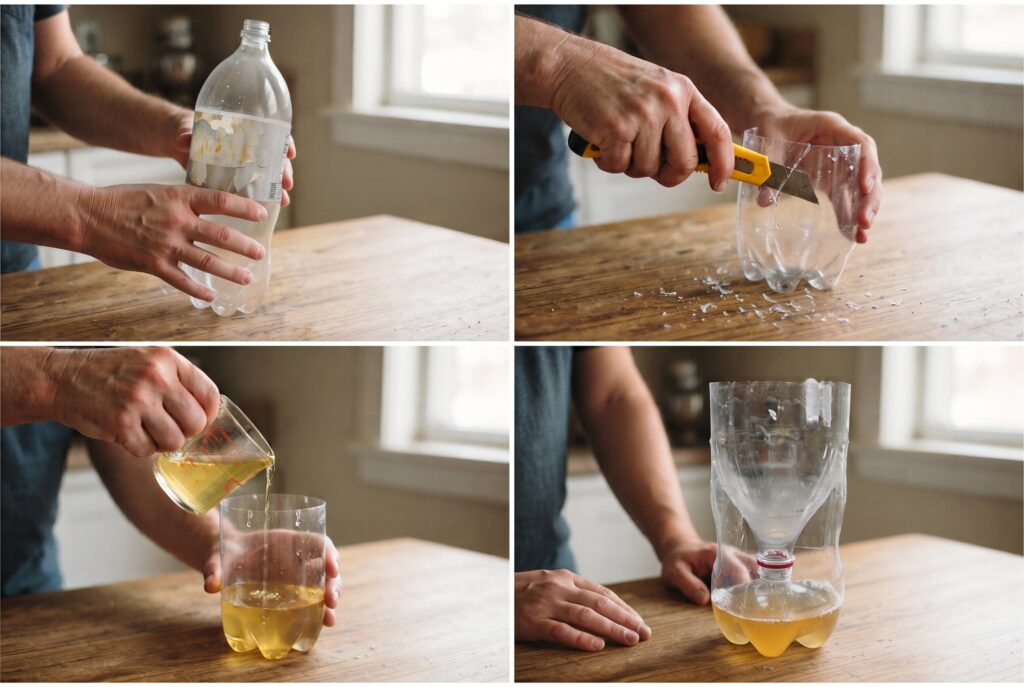
That’s the entire structure. This simple design is the foundation behind most homemade fly traps, whether they’re used as an indoor fly trap for kitchens or a larger outdoor trap for backyard pests. It’s the same core concept used by mason jar fly trap and soda bottle fly trap variations found across countless blogs, and it forms the foundation for everything else in this guide. What actually determines whether it catches anything, though, is the bait sitting inside it, and that’s where indoor and outdoor traps start to look very different.
Indoor Bait Formula: A Simple Trap That Actually Works
A homemade fly trap doesn’t need complicated ingredients to be effective. Most recipes combine a sweet or fermented bait with a few drops of dish soap. The bait attracts flies, while the soap breaks the surface tension of the liquid, causing them to sink instead of escaping.
A reliable option is half a cup of apple cider vinegar, one tablespoon of sugar, and three to five drops of dish soap. Cover the container with plastic wrap, poke several small holes, and place it wherever fly activity is highest, such as near a trash can, kitchen sink, or food preparation area. If apple cider vinegar isn’t available, sugar water, diluted honey, or overripe fruit can serve as alternative baits. Refresh the mixture every few days for the best results.
Outdoor Bait Formula: Strong Bait for Blowflies and Backyard Swarms
Outdoor flies play by a different set of rules. A fly trap outdoor needs bait that’s genuinely unpleasant, since that’s exactly what draws in green bottle flies and other blowflies from across the yard. The same delicate, fermented sweetness that works so well indoors barely registers with these pests outside.
For an outdoor fly trap, the bait needs to lean into rot rather than avoid it. Spoiled meat, old shrimp shells, or decomposing food scraps, mixed with a little water to encourage a stronger smell, tend to outperform anything sweet. It’s an approach inspired by the kind of real backyard testing that separates a genuinely effective trap from a trap that just looks good in a photo.
A few placement notes matter here:
- Keep the trap tucked in a corner of the yard, well away from any area used for eating or entertaining.
- Never place it near where kids or pets play, since the bacteria in rotting bait isn’t something anyone wants to touch.
- Refresh the bait every few days, since old bait eventually loses its potency and starts to smell without actually attracting anything new.
This is also where a natural fly trap approach really shines, since there’s no need for chemical sprays or pesticides. The smell alone does the heavy lifting.
Troubleshooting: Why the Trap Isn’t Catching Anything
Even a correctly built trap can underperform, and it usually comes down to one of a few common mistakes.
- Flies land on the rim but never go in. This almost always means the dish soap step got skipped. Without it, flies can sit on the surface of the liquid instead of sinking, and they eventually fly right back out.
- No flies at all, even after a full day. The trap is probably in the wrong spot or using the wrong bait for the pest in question. Apple cider vinegar, for instance, does very little against blowflies outdoors, since they’re chasing rot, not fermented sweetness.
- The smell is unbearable and still nothing’s caught. Time to dump it and start fresh. Bait loses effectiveness after three or four days, and by that point it’s often just producing odor without any real pulling power.
Cost, Time, and What to Expect
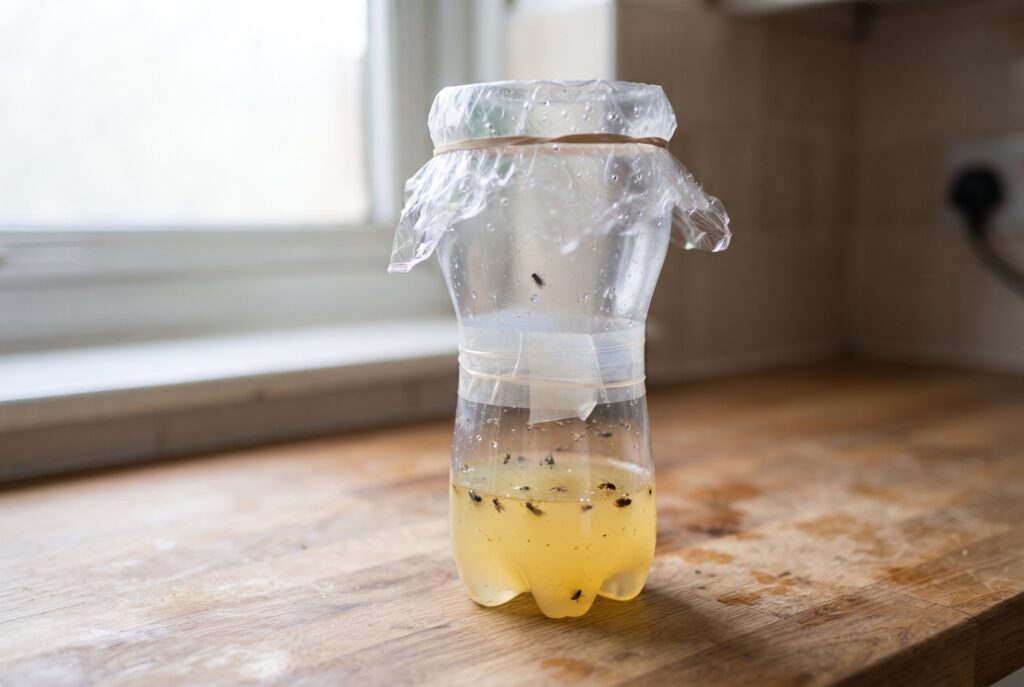
One advantage of a homemade trap is how little it demands. There’s no special trip needed, since the materials, a bottle or jar, some vinegar, a splash of dish soap, and a bit of tape, are usually already in the house. The build takes a few minutes from start to finish, and results tend to show up within a few hours for a fresh fruit fly problem, though a heavier outdoor infestation might take a full day or two before the numbers noticeably drop.
It helps to set realistic expectations from the start. A trap won’t clear out an infestation on its own if there’s still an open source feeding it, such as a forgotten piece of fruit in the pantry or standing water somewhere nearby. Pairing the trap with a quick cleanup of likely breeding spots, wiping down counters, taking out trash regularly, and covering ripe produce, gives it a much better chance of actually solving the problem rather than just managing the symptom.
Frequently Asked Questions
Can you use red wine vinegar instead of apple cider winegar?
Yes. Red wine vinegar can work in a fruit fly trap, although apple cider vinegar is usually more effective because its stronger fermented scent attracts more fruit flies.
How often should you replace fruit fly trap bait?
Replace the fruit fly trap bait every three to four days for both indoor and outdoor traps. Fresh bait is more attractive, while older bait gradually loses its effectiveness.
Will an outdoor fruit fly trap attract more flies?
It may attract flies from the surrounding area, but that’s the purpose of the trap. Placing it away from patios, doors, and outdoor seating helps draw flies away from the spaces you use most.
Is fruit fly trap bait safe around pets and kids?
The standard indoor mixture of apple cider vinegar and dish soap is generally low risk but should still be kept out of reach of children and pets. Outdoor bait made with rotting food or meat should also be placed where it cannot be accessed because it can harbor bacteria.
Conclusion
A homemade fly trap costs next to nothing and takes only a few minutes to put together, but the container matters far less than what’s inside it. Something light and fermented, like apple cider vinegar, works well in the kitchen, while something bold and unmistakably foul is what actually pulls flies in outside. Matching the right bait to the right target, and pairing the trap with a bit of cleanup at the source, turns a simple jar or bottle into a genuinely effective tool for keeping flies where they belong: outside, or gone entirely.
Related Articles
How to Get Rid of Flies Outside (Keep Your Backyard & Patio Bug-Free)
How to Get Rid of Flies in House: Fast & Permanent Solutions