


Many homemade weed killer recipes use vinegar, salt, and dish soap, but salt can damage soil and nearby plants. A safer DIY weed killer combines 1 gallon of white vinegar with 2 tablespoons of liquid dish soap. Spray it directly on weed leaves during a hot, sunny day.
This vinegar weed killer quickly dries out leaf growth, especially on young annual weeds. However, it mainly kills the top growth rather than the roots, so perennial weeds often require repeated treatments or manual removal for lasting control. If you’re wondering how to get rid of weeds naturally, this salt-free approach is one of the safest places to start.
Why You Should Avoid Salt
Many online recipes tell you to mix vinegar, salt, and dish soap. It sounds powerful because salt does help dry out plants. The problem is what happens after the weeds die. Salt doesn’t simply disappear. It can stay in the soil, change soil structure, reduce water movement, and make the area hostile to future planting.
That may be fine for cracks in concrete where you never want anything to grow. It isn’t fine near lawns, flower beds, vegetable gardens, shrubs, or trees. Rain can move salt into nearby soil, and runoff can harm plants you wanted to keep.

So the safest rule is simple: don’t use salt where healthy soil matters. A salt-free weed killer with vinegar and dish soap is less harsh on the ground and easier to control, making it an effective all natural weed killer for many common garden weeds.
The Core Recipe: Vinegar Weed Killer Without Salt
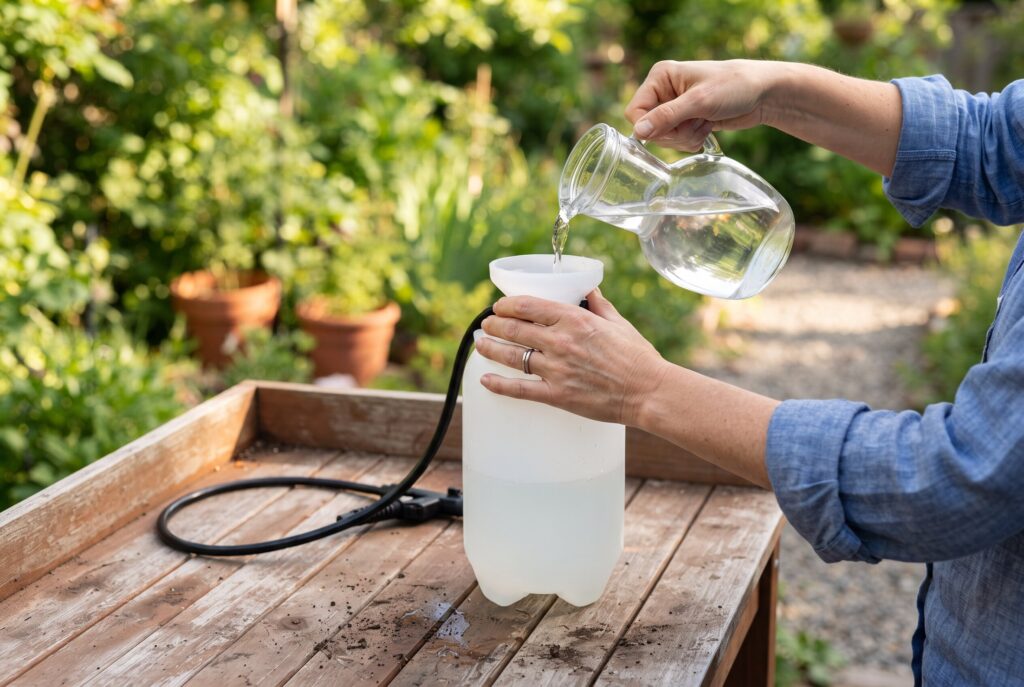
You only need two ingredients for this weed killer with vinegar. Use 1 gallon of white vinegar, usually 5% acetic acid, and 2 tablespoons of liquid dish soap. Mix gently so it doesn’t foam too much. Pour the solution into a pump sprayer or spray bottle.
The vinegar attacks the plant tissue and pulls moisture from the leaves. The dish soap works as a surfactant, which means it helps the vinegar spread and cling to waxy leaves. Without soap, much of the vinegar may bead up and fall onto the ground before it does enough damage.
Spray the leaves until they’re wet but not dripping heavily. Target the weed, not the soil. Use this method on patio cracks, walkway seams, gravel edges, and small weeds in open areas where overspray won’t hit valued plants. This simple natural weed killer recipe is inexpensive, easy to mix, and uses ingredients that many homeowners already have on hand.
The Success Rule: Sunlight Matters
Timing decides whether this natural weed killer works well or barely works at all. Spray on a dry, sunny day when no rain is expected for at least 24 hours. Midday is best because heat and sunlight intensify the drying effect.
Don’t spray in the evening, during cool weather, or right before rain. Moisture weakens the result. Wind is also a problem because it can push vinegar onto grass, flowers, or garden plants. You should see tender weeds droop, brown, or curl by the next day. Tougher weeds may need a second treatment after several days.
What Kills Weeds Permanently?
What kills weeds permanently? In most cases, the answer is complete root removal or long-term prevention. Vinegar is a contact herbicide. It attacks what it touches, mostly leaves and stems. It isn’t systemic, so it doesn’t travel deeply through the plant into the roots.
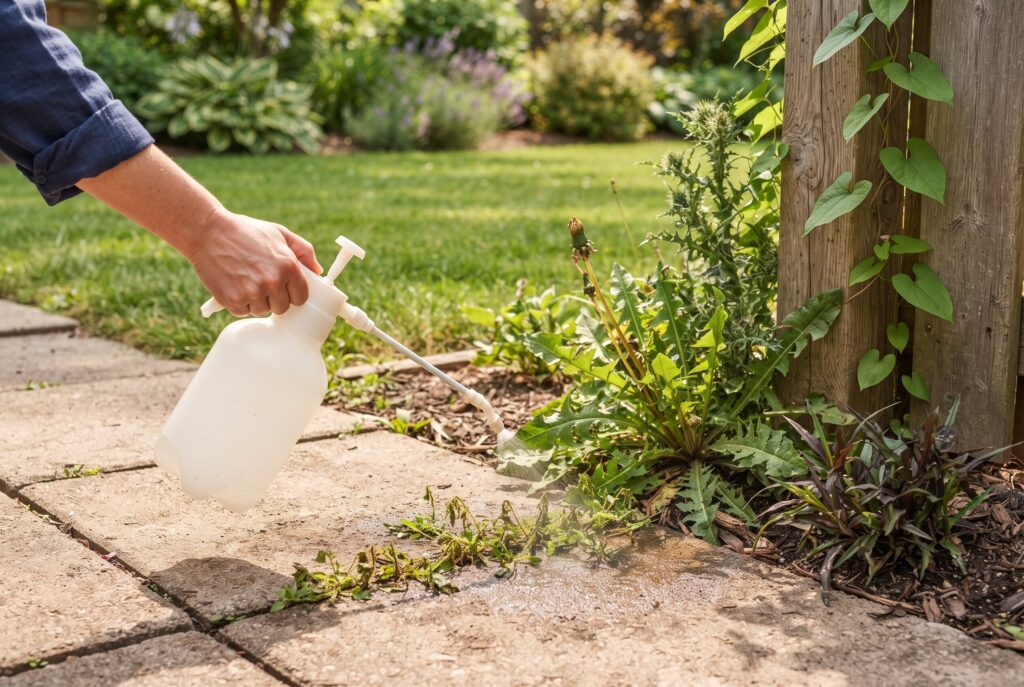
For young annual weeds, top growth damage may be enough. For dandelions, thistle, bindweed, nutsedge, poison ivy, and other stubborn perennial weeds, the roots can regrow.
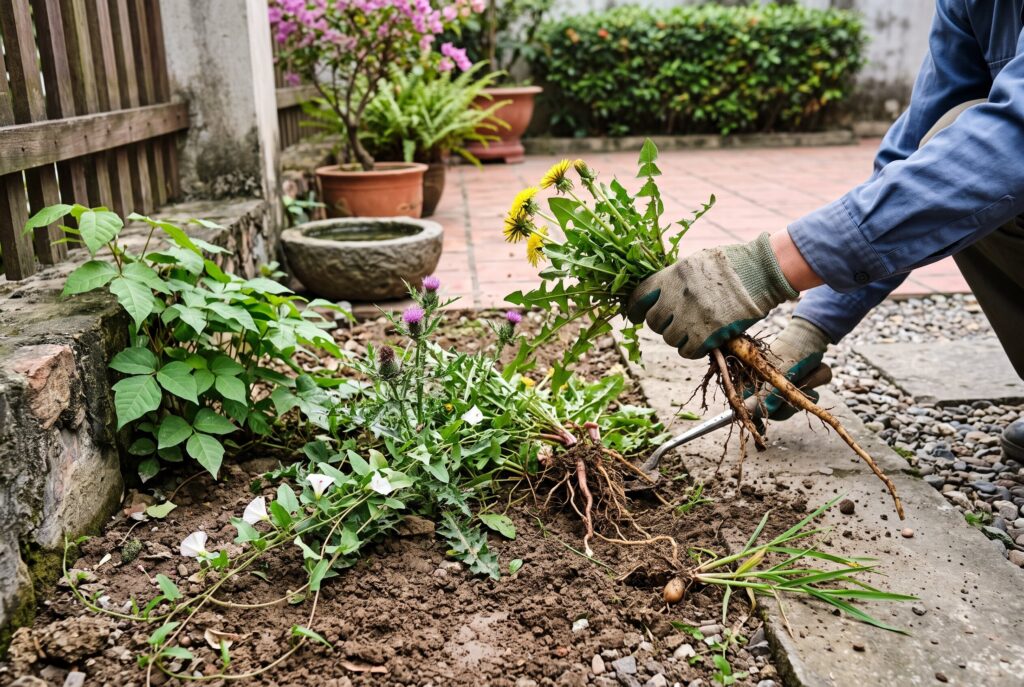
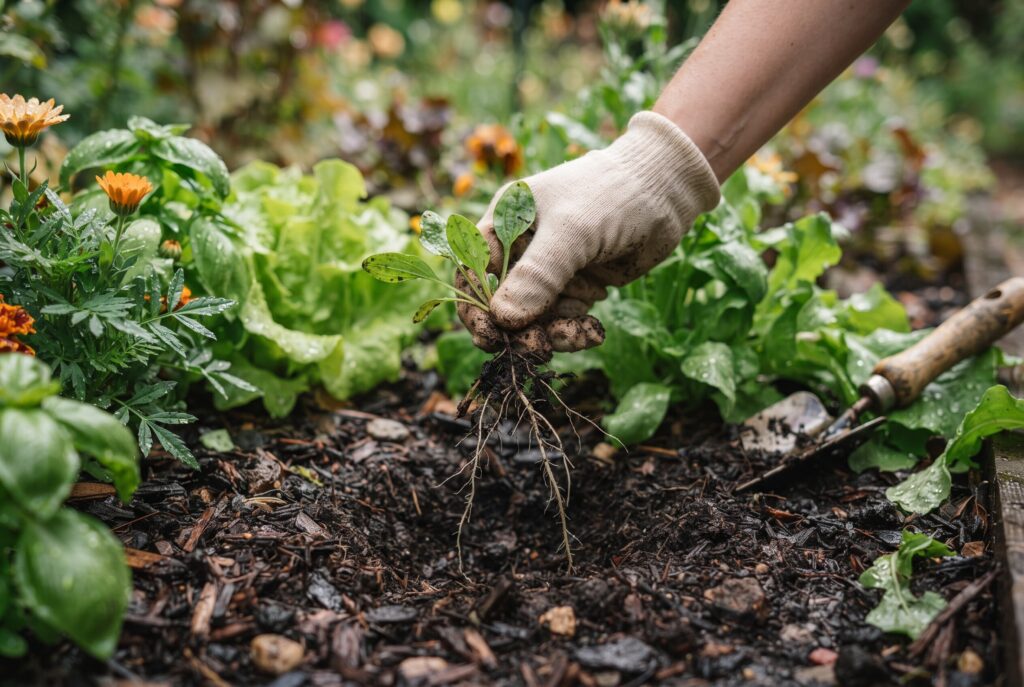
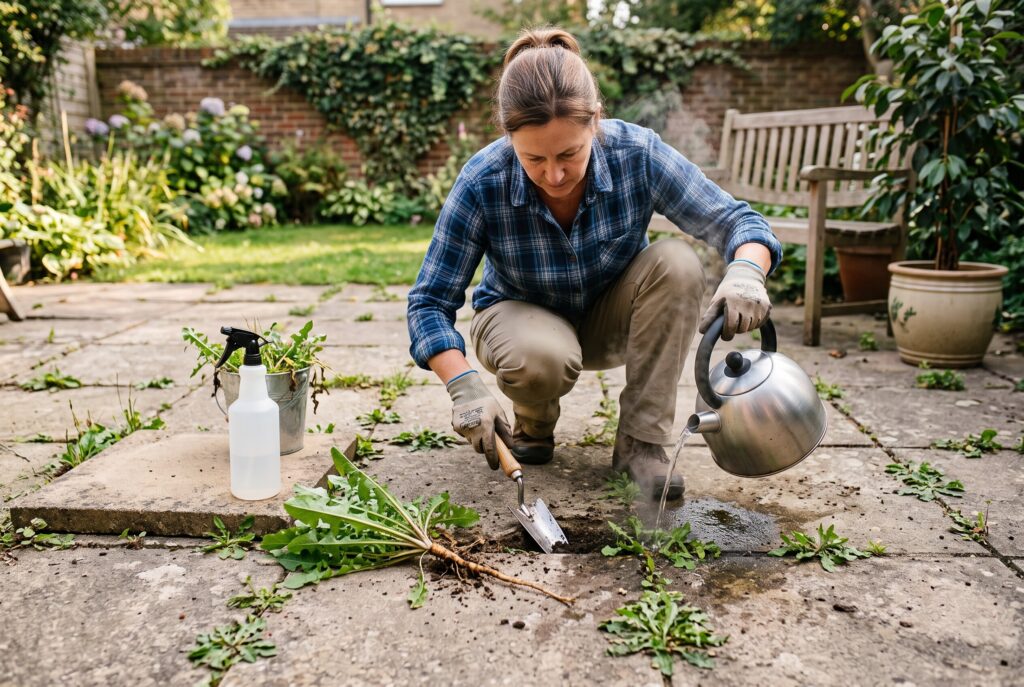
For deeper control, pour boiling water directly into cracks, use a weeding tool to remove the root, or repeat vinegar treatments until the plant runs out of energy. In garden beds, hand pulling after rain is often more effective than spraying.
Conclusion
A homemade weed killer can help you win a quick battle, but mulch wins the war. After removing weeds from beds, apply about 2 inches of organic mulch. Mulch blocks sunlight, keeps weed seeds from sprouting, holds soil moisture, and improves the garden as it breaks down.
Use vinegar and dish soap for fast spot treatment. Use boiling water for cracks. Use hand pulling for roots. Use mulch for prevention. The safest weed killer homemade solution isn’t about spraying more. It’s about choosing the right method for the right place, protecting the soil, and stopping weeds before they get the light they need to grow.
Related Articles
Does Vinegar Kill Grass? The Truth & How to Protect Your Lawn
Weed Killer Safe for Pets: 0% Chemicals, 100% Peace of Mind