

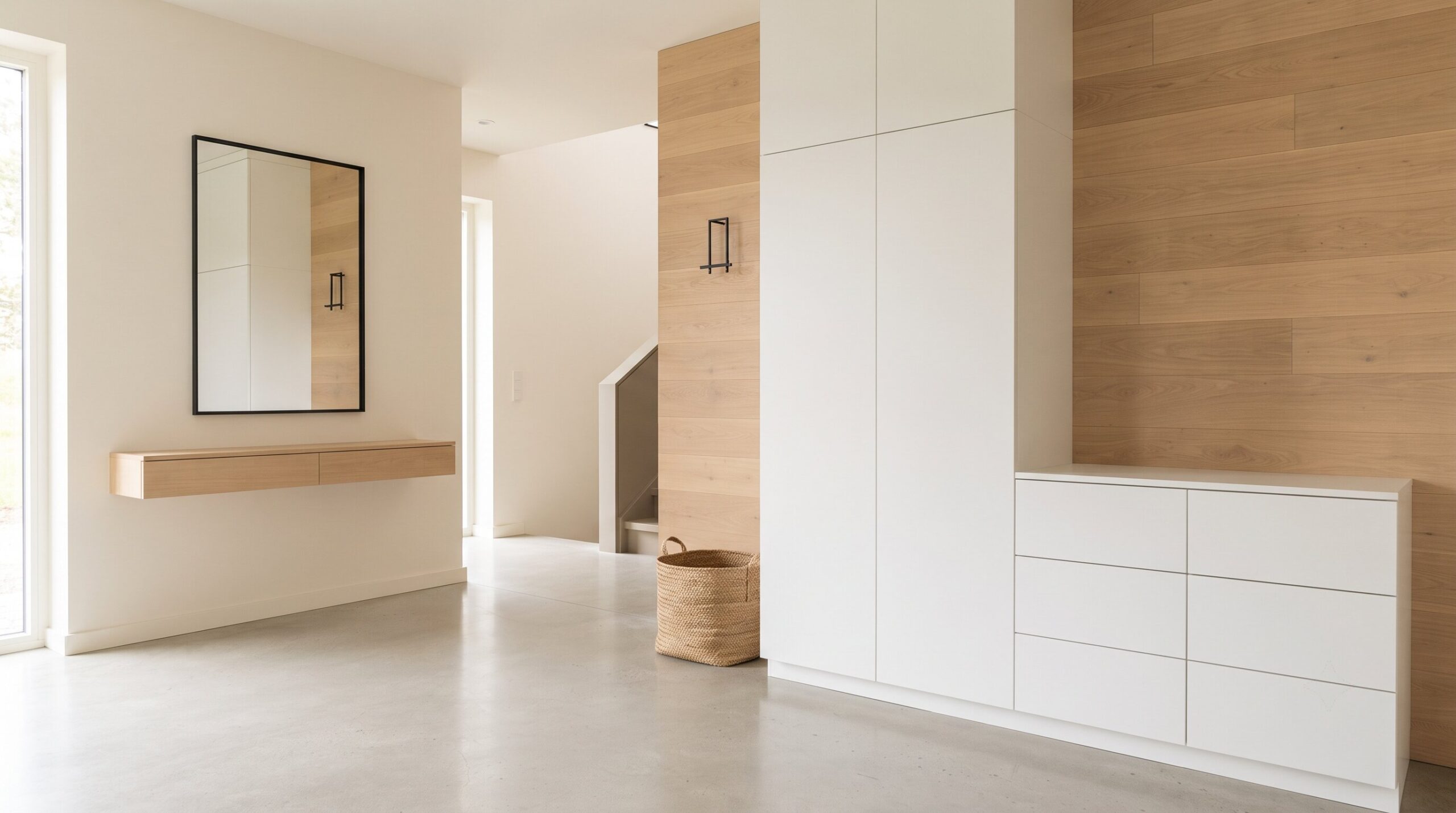
Adding more baskets won’t solve entryway clutter if everything still lacks a designated place. The golden rule behind good entryway storage is simple: closed beats open every time. Once shoes, coats, and mail have a designated home behind a door or drawer, the mess doesn’t disappear, it just stops being visible. Here are 17 ways to build that system, no matter how tight the space.
System 1: The Shoe Dilemma, Solved
Shoes piled by the door are usually the first thing anyone notices, and the first thing anyone trips over. Solving entryway shoe storage starts with picking furniture that’s built for the job rather than repurposed from somewhere else. These entryway storage ideas focus on cabinets designed specifically to hide shoes without eating up hallway space. For more budget friendly, DIY specific approaches to the same problem, 9 minimalist shoe storage solutions covers builds anyone can put together without buying furniture outright.
1. Ultra-Slim Tilt-Out Cabinets
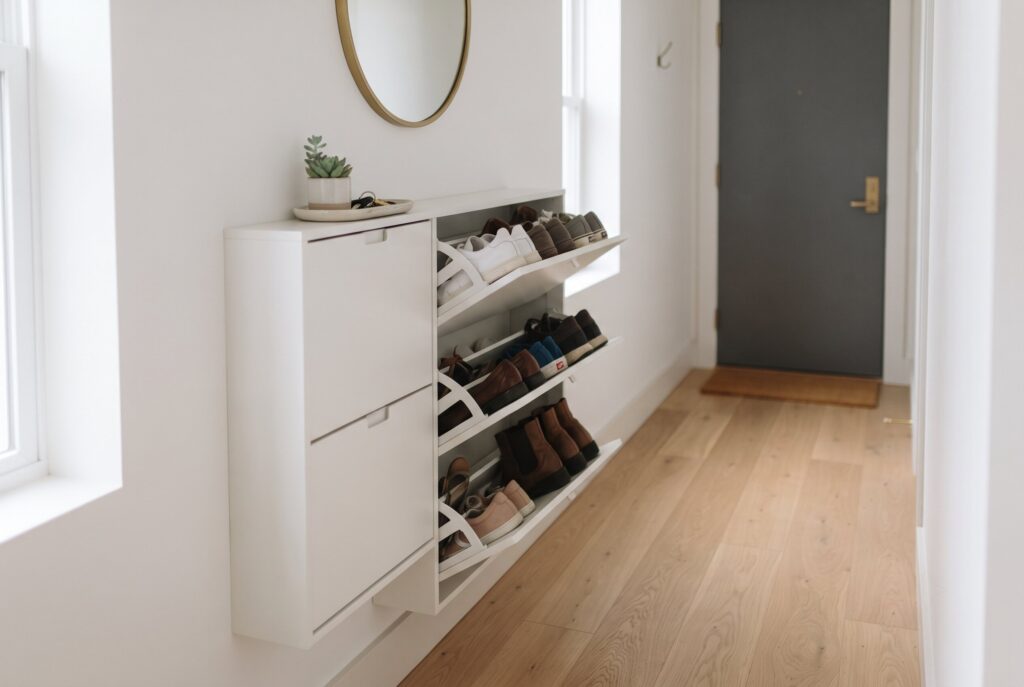
In a hallway under three feet wide, open shelving quickly turns into chaos. A tilt-out cabinet that’s only six to eight inches deep hugs the wall while still holding eight to twelve pairs, which makes it one of the most practical entryway shoe storage picks for a narrow footprint. The tilt-out mechanism is the detail that makes the depth work: because the panel angles outward instead of swinging on a hinge, it needs almost no floor clearance to open, which is exactly what a tight hallway can’t spare.
2. The Hidden Baseboard Drawer
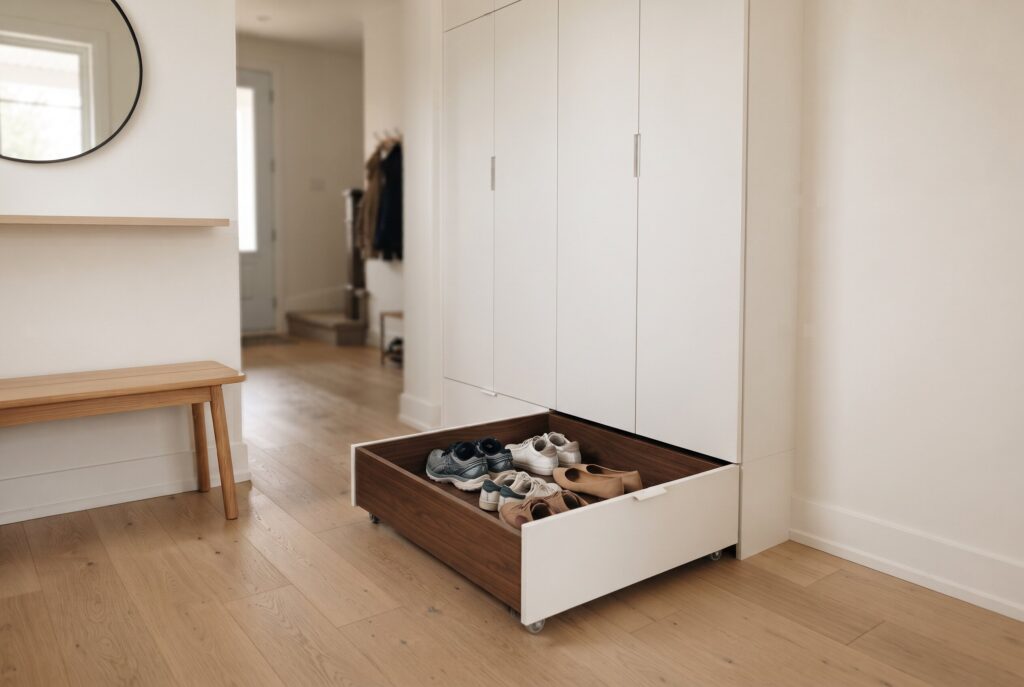
The space right at floor level often goes to waste. A shallow, wheeled drawer built into the base of a cabinet keeps everyday shoes out of sight without adding bulk, so the hallway still feels open even when it’s fully loaded. This spot is also the warmest and driest part of most entryways, since it sits below the draft line of the front door, making it a better home for shoes than a floor pile drenched by wind and rain every time the door opens.
3. Floor-to-Ceiling Closed Cabinetry
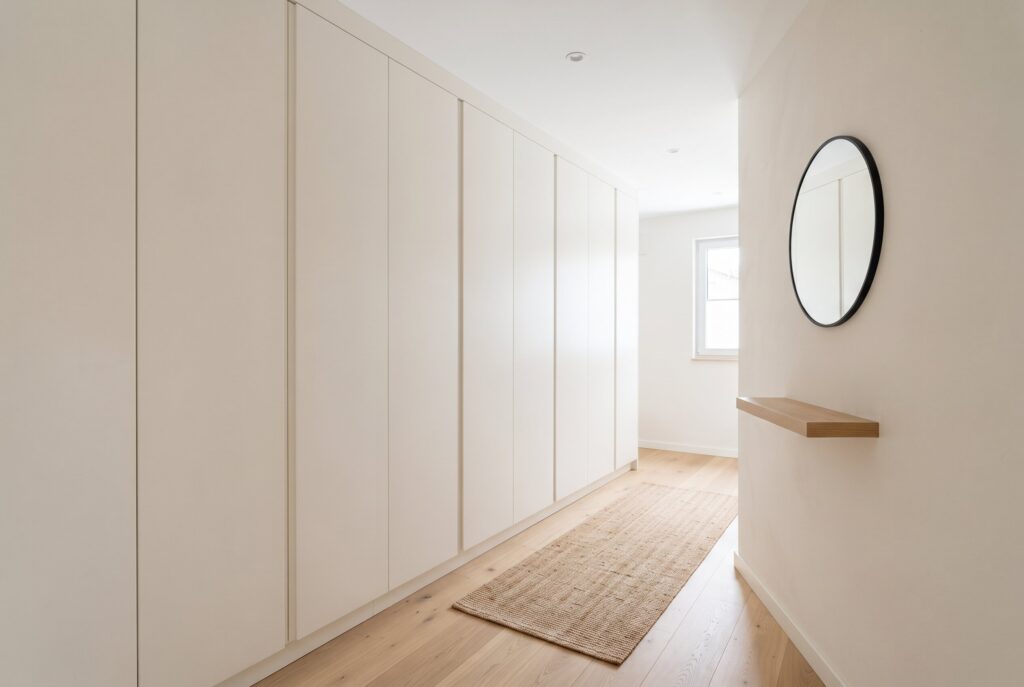
A tall, flat-front entryway storage cabinet painted to match the wall reads more like architecture than furniture, and it swallows an entire family’s shoe collection without drawing attention to itself.
4. Tambour Door Slatted Consoles
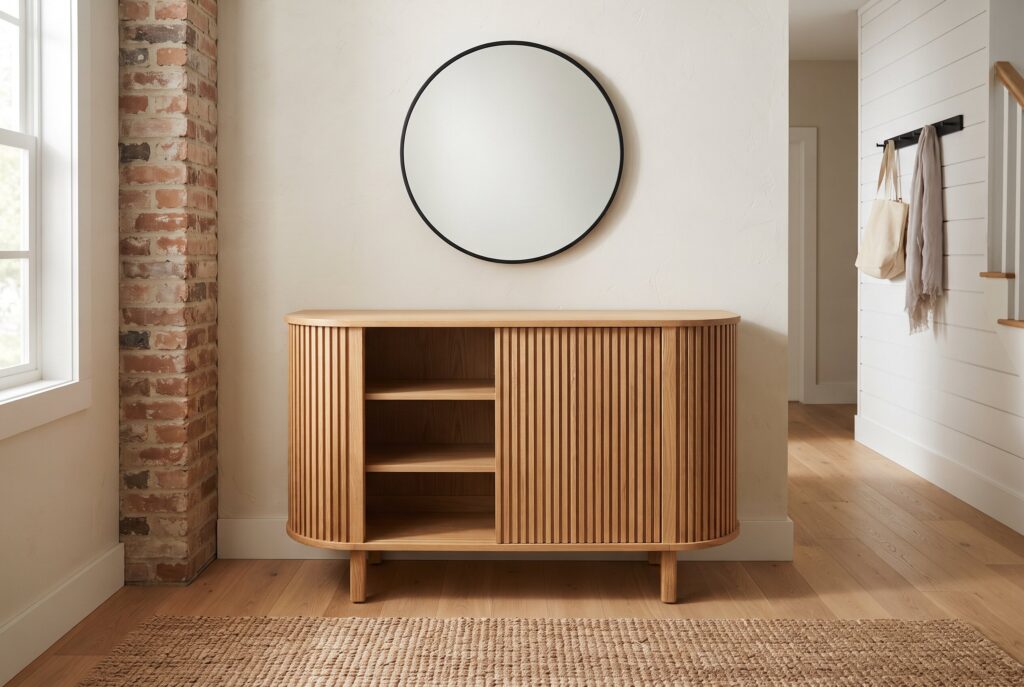
Slatted wood doors that slide open on a curved track hide the clutter while still letting air circulate, which keeps odor from building up behind closed doors. It’s a detail that separates a well-planned console from a plain cabinet. This ventilation matters more for shoe storage than for almost any other closed system in the house – trapped moisture from damp shoes is what breeds odor and mildew, so airflow isn’t a nice-to-have here, it’s the feature that keeps the whole cabinet usable long-term.
5. Under-Stairs Pull-Out Racks
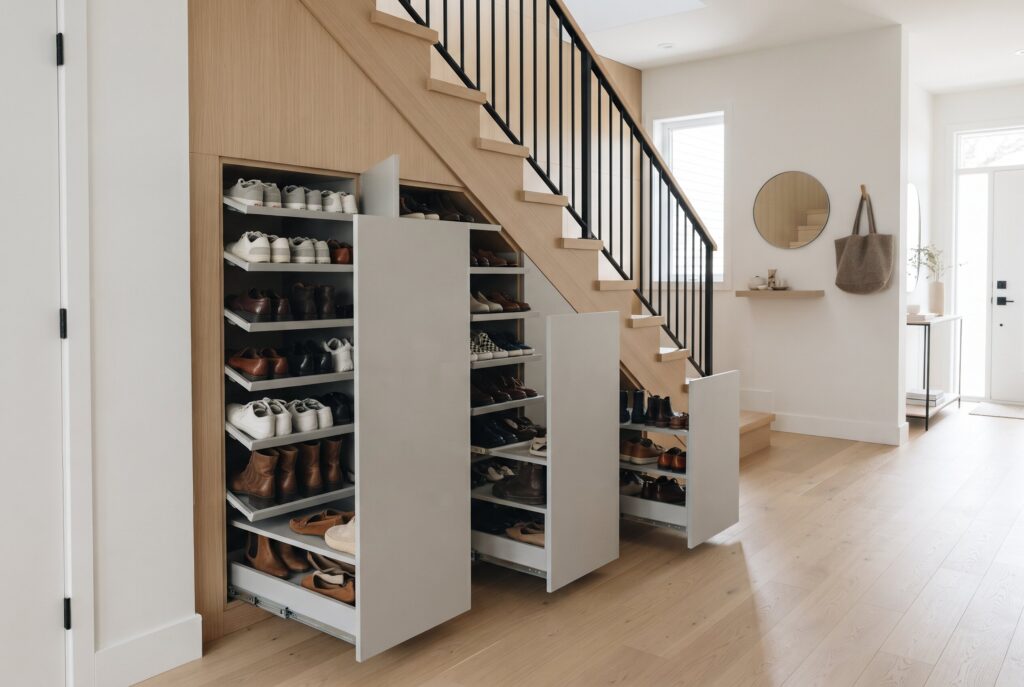
For townhouses with a staircase right at the entrance, deep vertical drawers tucked beneath the treads solve shoe storage entryway headaches for even the largest household, turning wasted triangular space into genuine capacity.
System 2: Multi-Functional Seating
This is the cluster that gets searched the most, and for good reason. Combining a place to sit with a place to stash gear turns a narrow hallway into something that actually functions like a mudroom.
6. The Deep-Drawer Wood Bench
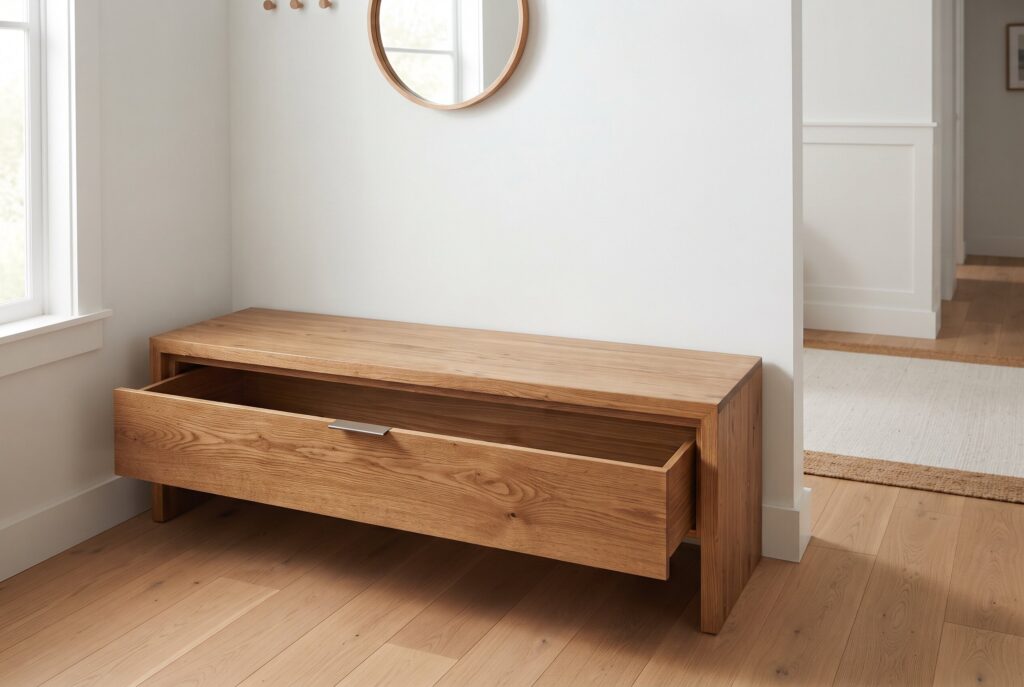
A solid wood entryway bench with storage and a smooth-gliding drawer underneath is the kind of piece that lasts decades, holding hats, gloves, and umbrellas without ever looking cramped or overstuffed.
7. Trunk-Style Seating for Bulky Items
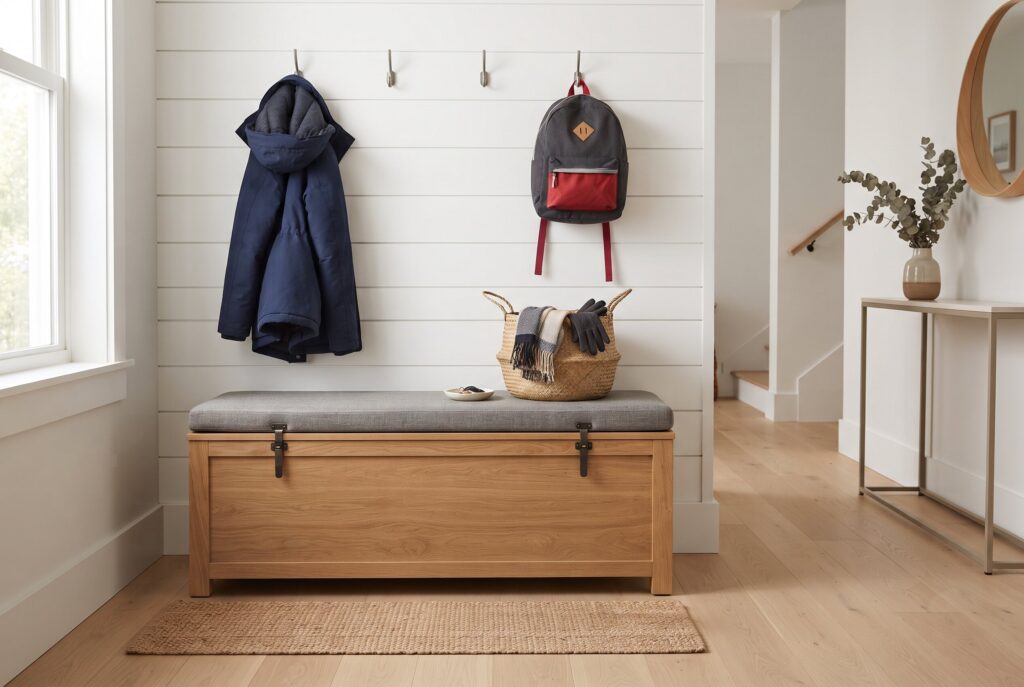
A bench that opens from the top rather than the front works well for bulky items like sports gear, kids’ backpacks, or a winter coat too thick to hang, since the full cavity underneath can flex to fit whatever season demands.
8. The Mudroom Illusion Cubby Bench
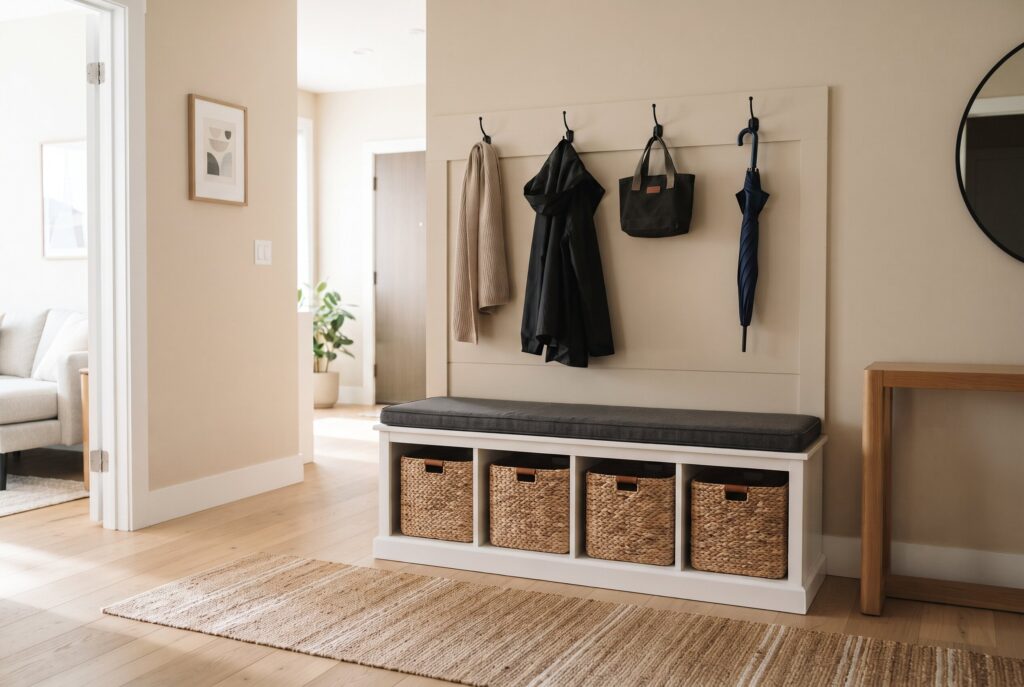
A sectioned entryway storage bench mimics the look of a built-in mudroom even in a standard apartment hallway. Filling each cubby with a matching woven basket instead of leaving them empty keeps the whole arrangement looking intentional rather than half finished.
9. Cushioned Bench with Boot Trays
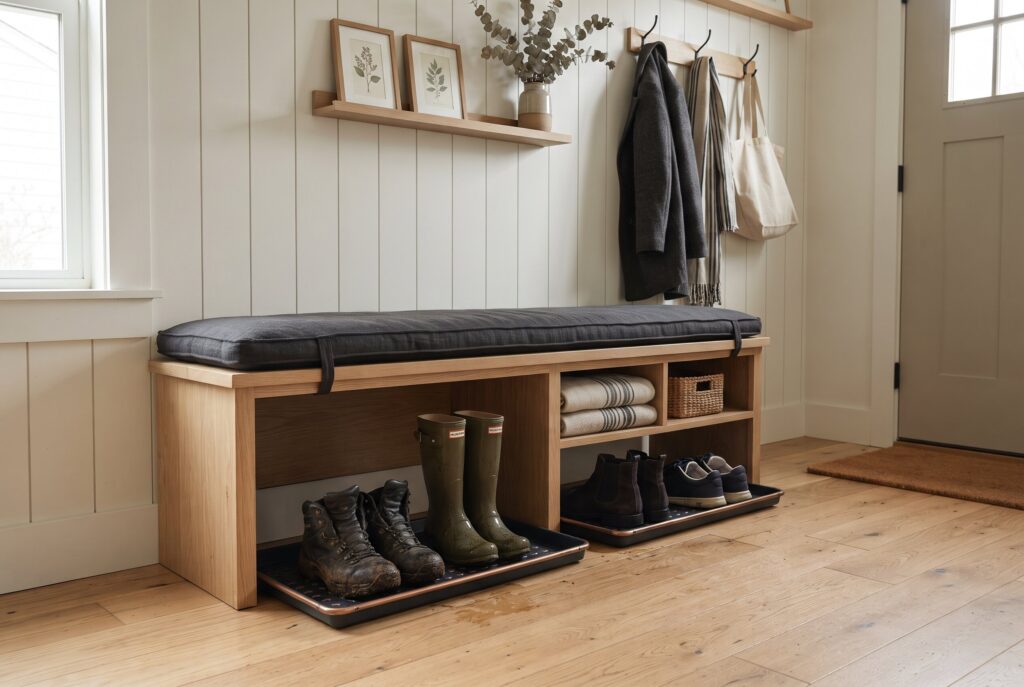
A proper entryway bench with shoe storage setup includes a plastic or copper tray underneath to catch rain and mud from boots, protecting hardwood floors in the process and saving a weekly mopping session. Copper trays cost more than plastic ones but develop a patina rather than staining or cracking under repeated wet-dry cycles, which makes them worth the upgrade in a household with kids or pets tracking in moisture daily.
10. Upholstered Storage Ottomans
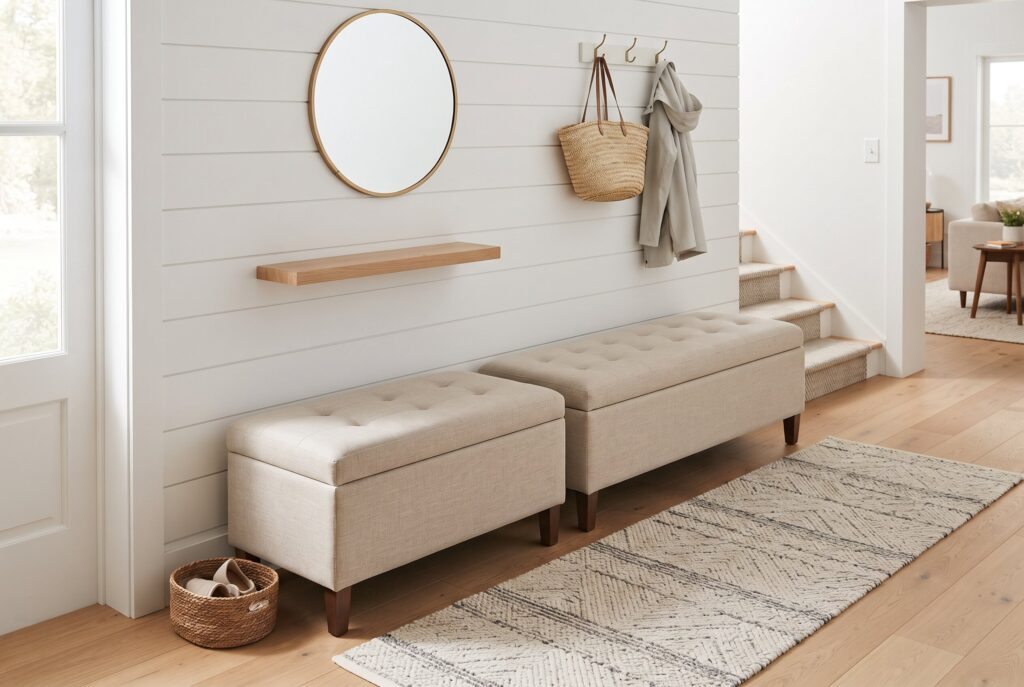
A pair of linen ottomans with lift-off tops offers flexible seating and hidden storage that can be rearranged whenever the layout needs to shift, which suits smaller entryways where a fixed bench simply won’t fit.
System 3: Micro-Clutter Control
Keys, mail, sunglasses, and loose change need somewhere specific to land, or they end up scattered across every surface in the house. Among all the entryway storage ideas in this list, this section deals with the smallest items, the ones most likely to go missing.
11. The Floating Drawer Console
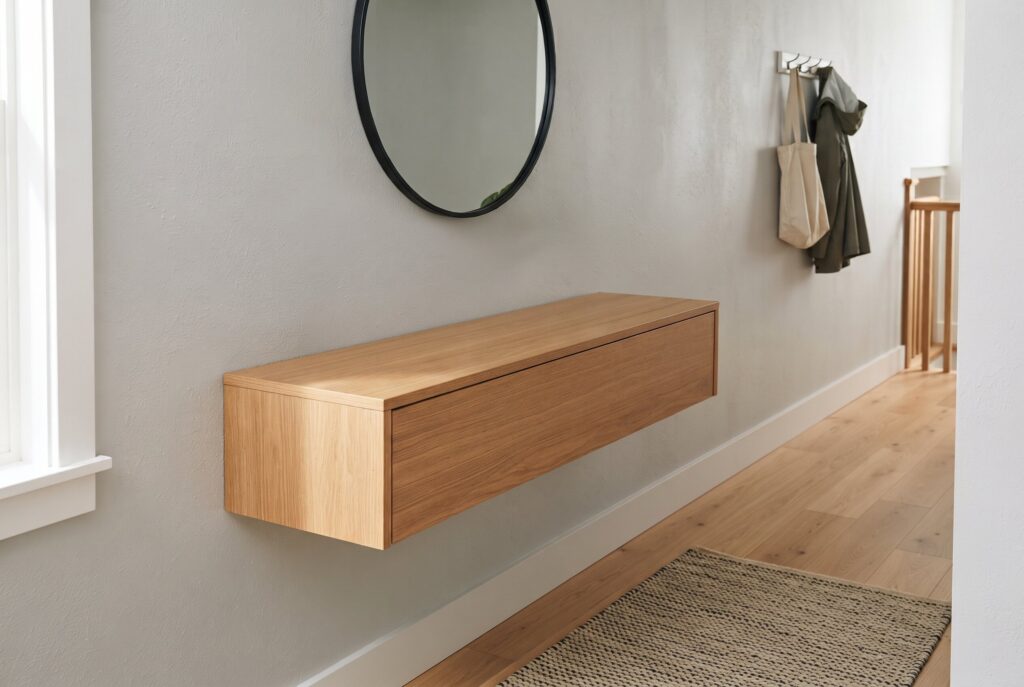
An entryway table with storage that mounts to the wall, rather than standing on legs, frees up floor space and makes a narrow hallway feel wider than it actually is, all while keeping keys and bills tucked into a single shallow drawer.
12. Curated Catch-All Trays
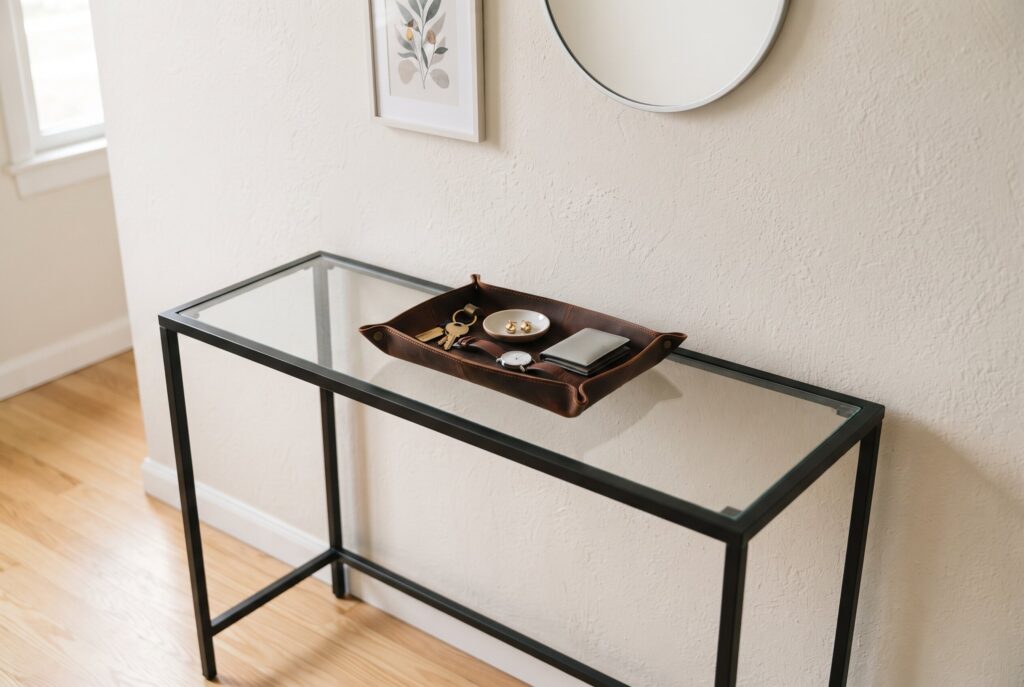
For a glass-top console with no drawer, one leather or ceramic tray sets a limit on how much clutter is allowed to accumulate on the surface, which keeps controlled mess from turning into an actual pile. The size of the tray is doing the real work here, a small tray creates a natural cap on how much can pile up before it has to be sorted, while an oversized one just gives clutter more room to spread.
13. Woven Basket Integration
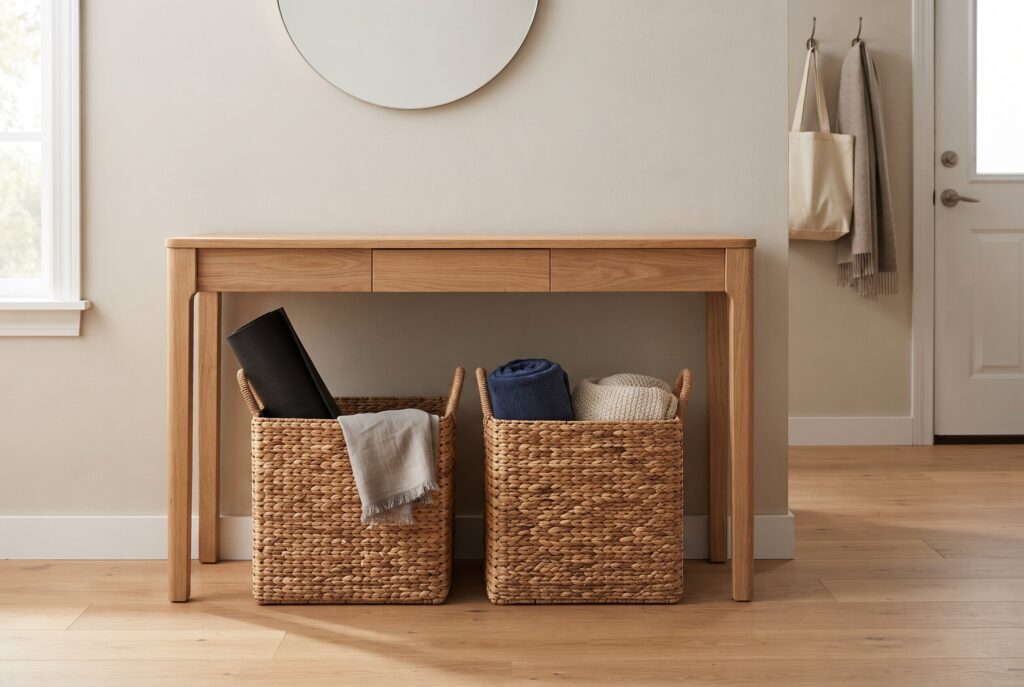
Two large square baskets tucked beneath the console handle bulkier items, like a rolled yoga mat or a spare throw blanket, that don’t belong in a drawer but still need a home close to the door.
14. Tiered Entryway Tables
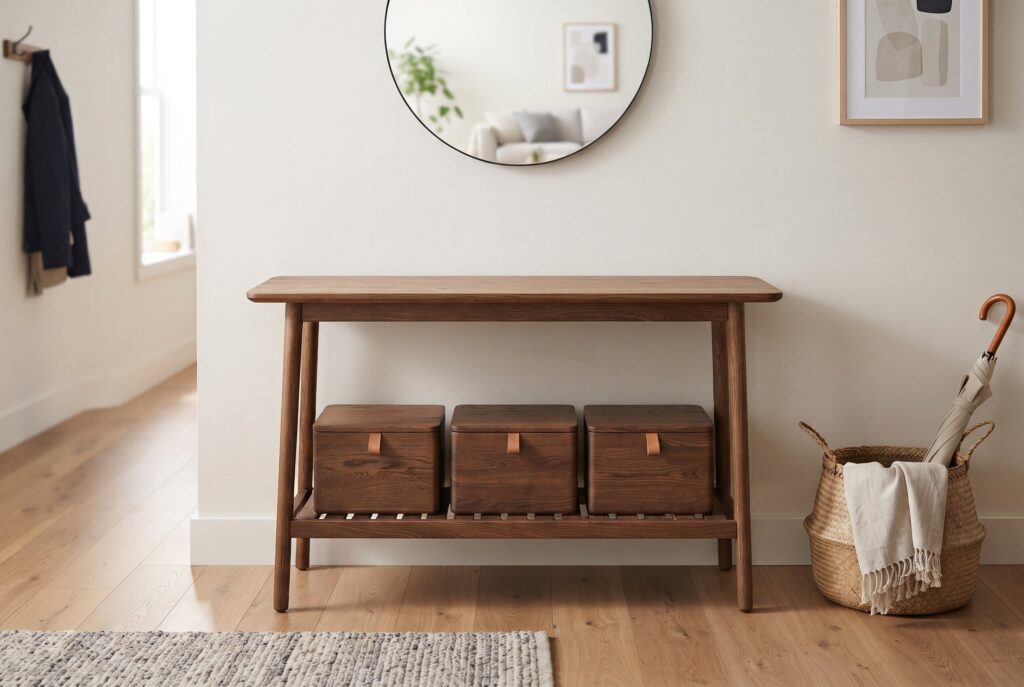
A table with a lower shelf keeps decorative items, like a vase or a stack of books, on top while wooden lidded boxes on the bottom shelf handle everything else, splitting the piece cleanly between display and storage.
System 4: Vertical Utilization
When floor space runs out, the wall becomes the most valuable real estate in the entryway.
15. The Minimalist Pegboard Wall
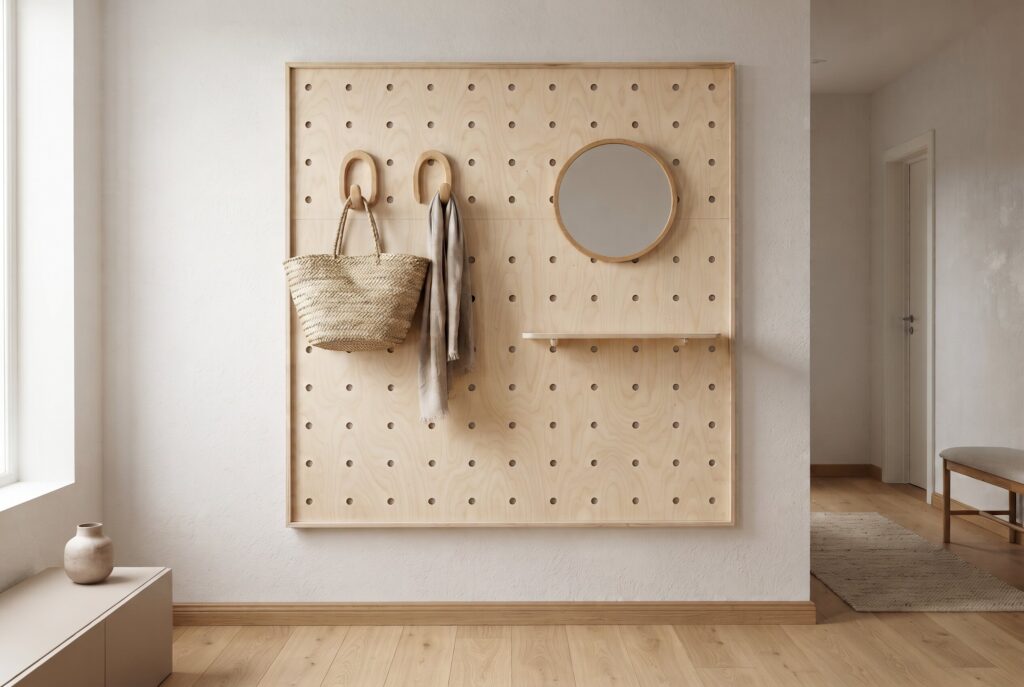
A pegboard made from light, polished wood, rather than the utilitarian version found in a garage, lets hooks, a small mirror, and a floating shelf move around as needs change from one season to the next.
16. Hidden Coat Hooks Behind Wood Slats
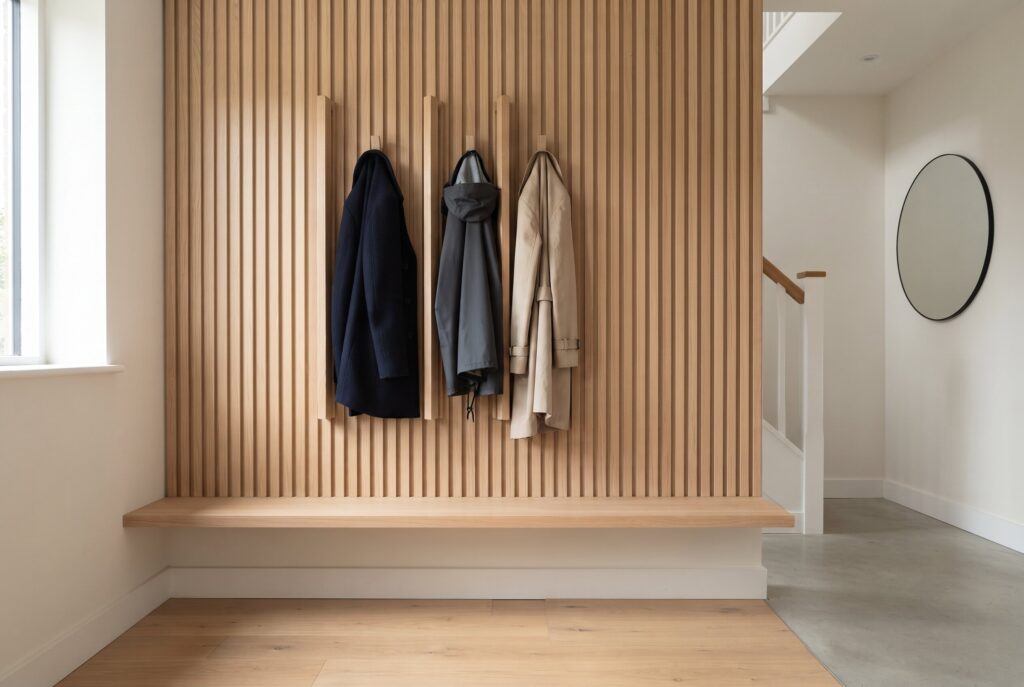
Vertical wood paneling with a few slats that flip out into hooks stays flush against the wall when not in use, keeping the entryway looking uncluttered even when several coats are hanging behind it.
17. Over-the-Door Renter-Friendly Systems
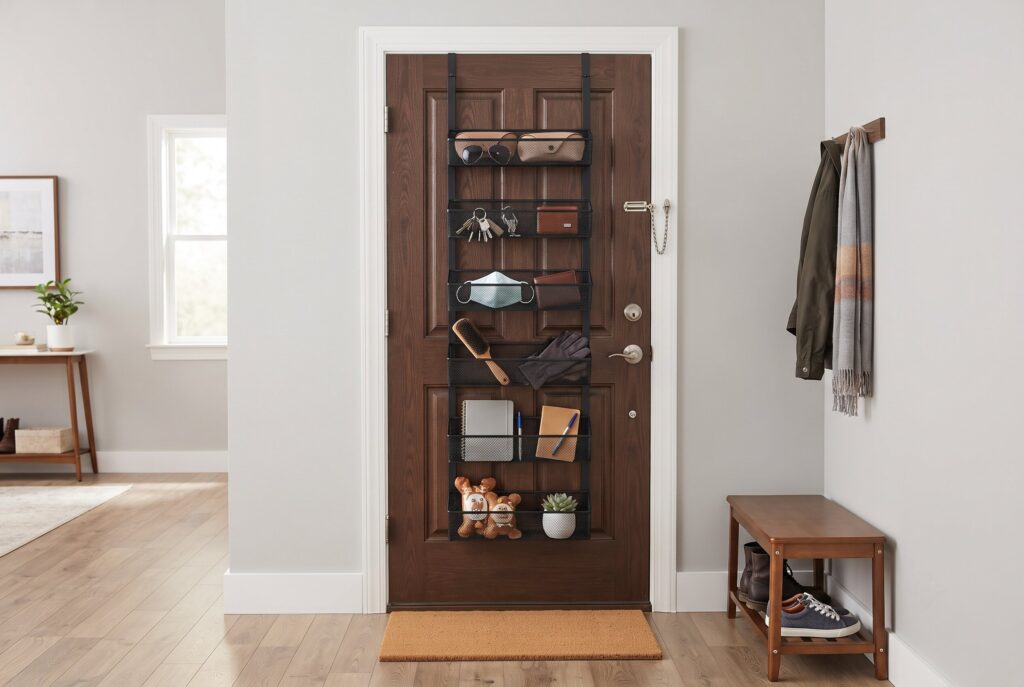
For rentals where drilling isn’t an option, a rack that hangs over the back of the front door with slim mesh trays handles small accessories without leaving a single mark on the wall, which makes it one of the easiest upgrades to undo when moving out.
Conclusion
Even the best system fails if it’s asked to hold onto things that shouldn’t be there in the first place. Before investing in a new storage bench entryway piece or a floor-to-ceiling cabinet, it’s worth taking one simple step: declutter. Keep only what gets used within the week near the front door. Whichever of these entryway storage ideas you choose, an entryway is the first impression a home makes, and the last one before heading out the door, so it deserves to stay calm, minimal, and genuinely peaceful.
Related articles: How to Clean Your Entryway Quickly: Simple Tips for a Welcoming, Organized Space