

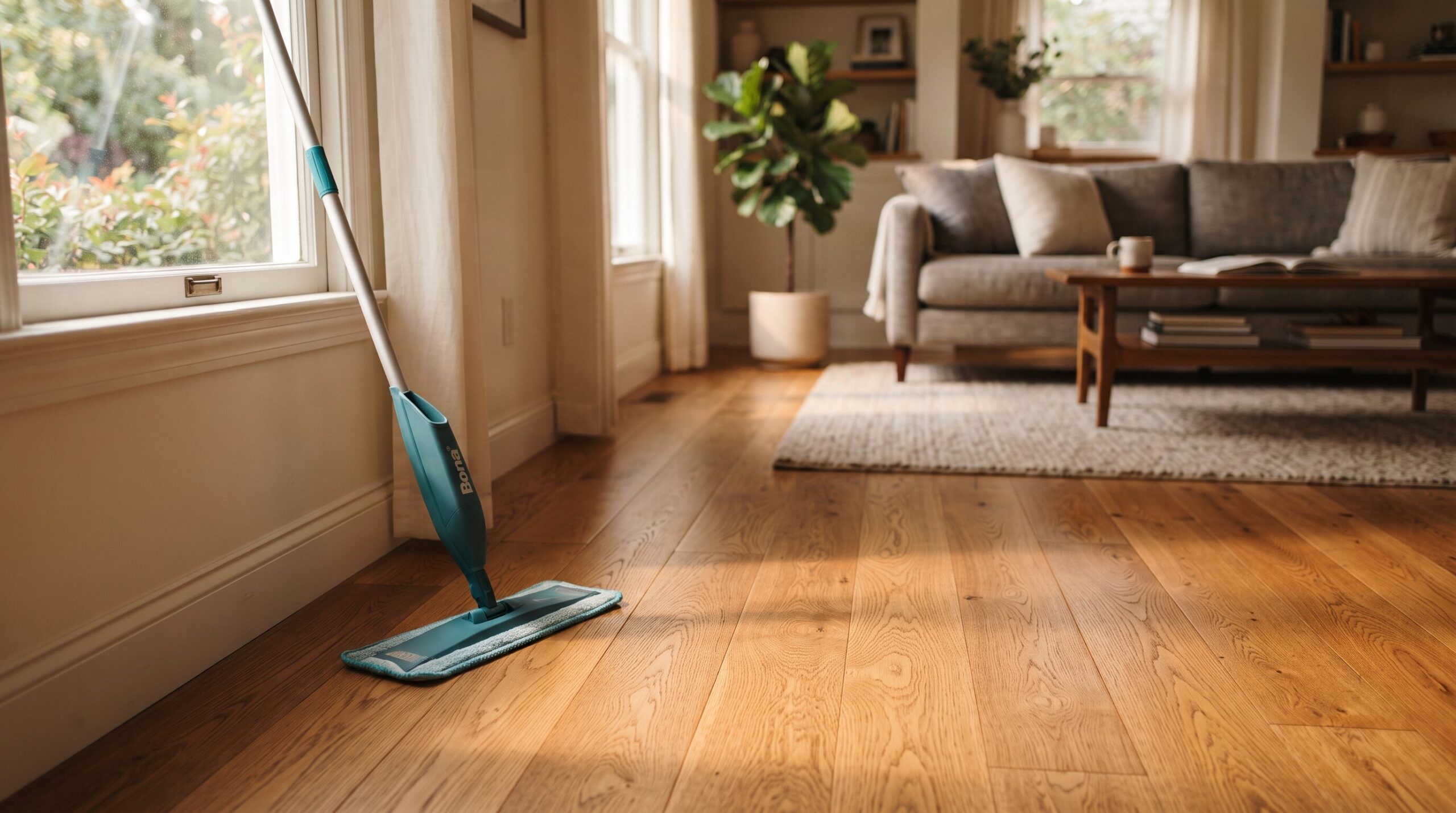
Water, not dirt, is the biggest threat to hardwood flooring. The most important rule for how to clean hardwood floors is simple: use a damp mop, never a wet one. Excess moisture can seep into the wood, causing swelling, warping, and other damage that is difficult to reverse.
Choosing the right hardwood floor cleaner starts with knowing what type of finish protects your floor. A product that’s perfectly safe for one finish may leave another looking dull or cloudy. Once you’ve identified the finish, it’s much easier to choose the best hardwood floor cleaner, the best mop for hardwood floors, and the right cleaning routine. This guide covers how to clean hardwood floors without damaging the surface over time.
The Water Drop Test: Finding Out What Finish Is on the Floor
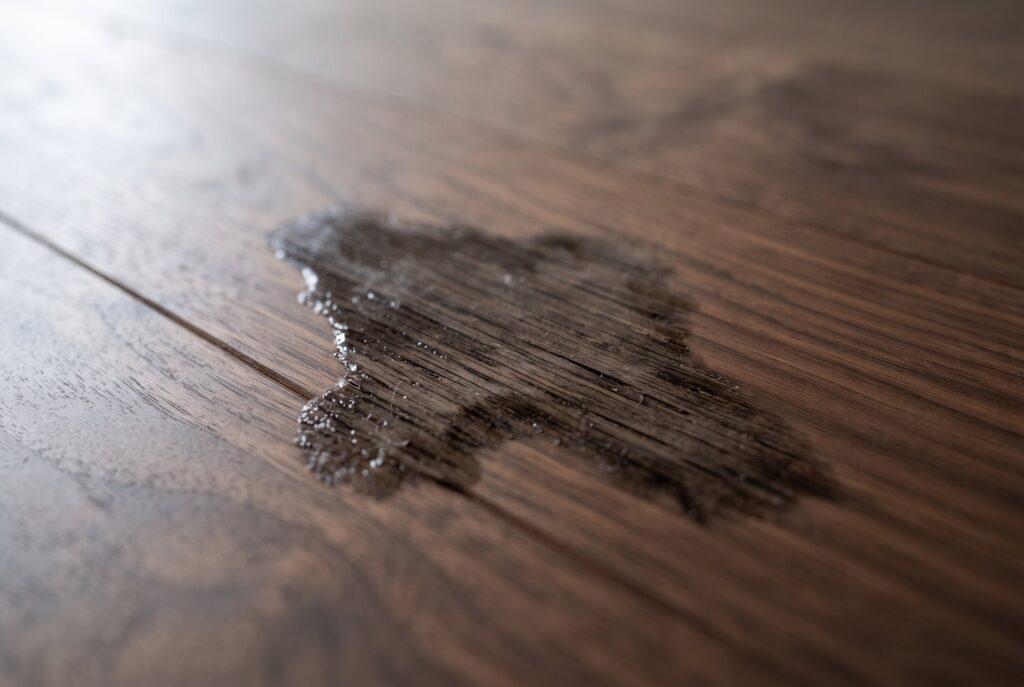
Before grabbing a mop, it helps to know exactly what’s being cleaned. Not every hardwood floor has the same protective layer, and treating them all the same way is where most damage starts.
A simple test settles the question in seconds: drop a small amount of water onto the floor and watch what happens.
- If the water beads up and sits on the surface, the floor has a surface seal, most commonly polyurethane.
- If the water soaks into the wood within a minute or two, the floor has a penetrating seal, like wax or oil, and it needs gentler, more targeted care.
This one step changes everything about which cleaner is safe to use next, so it’s worth doing before starting any routine, especially if you’re planning to deep clean hardwood floors after a move-in or a long stretch without proper maintenance.
The Truth About Popular Hardwood Floor Cleaners
Plenty of cleaning advice floating around online sounds harmless but slowly wears down a polyurethane finish over months of use. A few common culprits deserve a closer look before they end up in a mop bucket.
- Vinegar: Often praised as a natural, eco-friendly cleaner, vinegar’s acidity is exactly the problem. Used regularly on a polyurethane floor, it eats away at the finish over time, leaving the surface duller and more vulnerable to scratches.
- Oil-based or heavy-duty soaps: These cut through grease well, but they tend to leave behind a hazy film that builds up layer after layer on sealed floors, making the finish look cloudy instead of clean.
The safer route is a pH-neutral, low-VOC hardwood floor cleaner formulated specifically for the type of finish identified in the water drop test. When you’re comparing bottles at the store, the best hardwood floor cleaner for your home is almost never the strongest-smelling or the most concentrated one.
It’s the one that matches your finish and won’t leave residue behind. These solutions clean without stripping the protective layer, and they’re a better fit for households with kids or pets crawling around on the floor. When using a concentrated solution, measuring the dilution ratio accurately matters more than most people assume; too strong and it leaves residue, too weak and it barely lifts dirt.
How to Clean Hardwood Floors: Damp Mopping Done Right
Getting the technique right matters just as much as picking the right product. This is the routine that keeps a floor clean without ever leaving it wet, and it’s the closest thing to a single best way to clean hardwood floors that works across almost every finish.
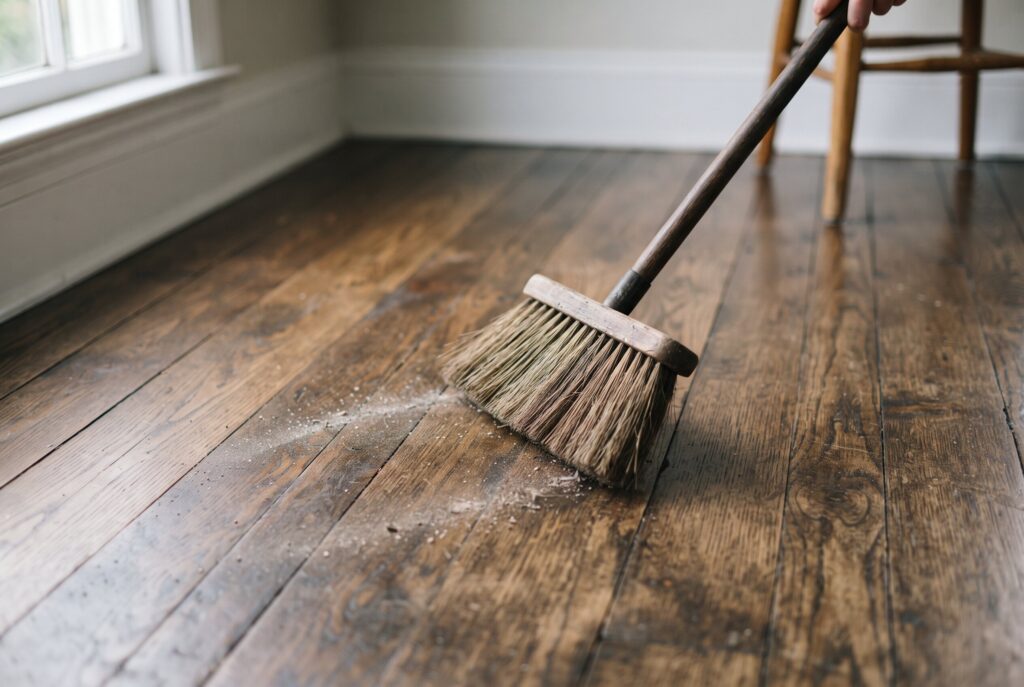
1. Sweep or vacuum first. Loose grit and sand are the main cause of surface scratches, since they act like sandpaper the moment a mop drags across them. Skipping this step is the fastest way to grind fine scratches into an otherwise healthy floor.
2. Choose the right mop. A spin mop or a microfiber mop is generally considered the best mop for hardwood floors, since both offer far more control over how much water actually touches the floor, and that control matters far more with hardwood than with tile or vinyl.
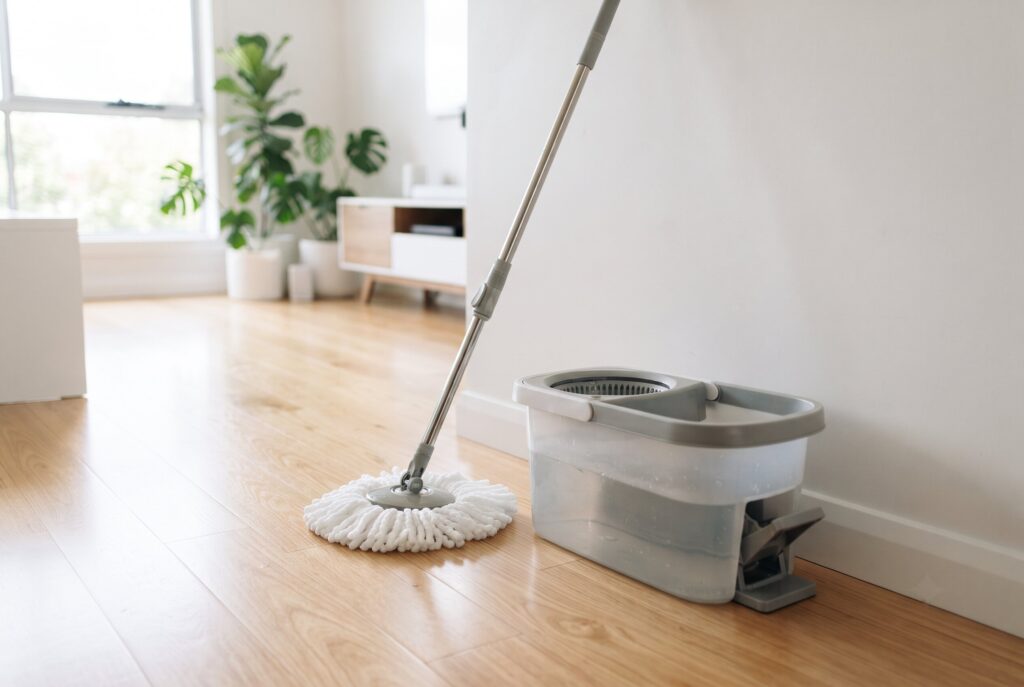
3. Mop with the grain, and keep it damp, not wet. Wring the mop out thoroughly so it feels barely moist, then follow the direction of the wood grain. Any standing water should be dried immediately with a clean towel; letting it sit, even briefly, is enough to seep into seams and cause swelling.
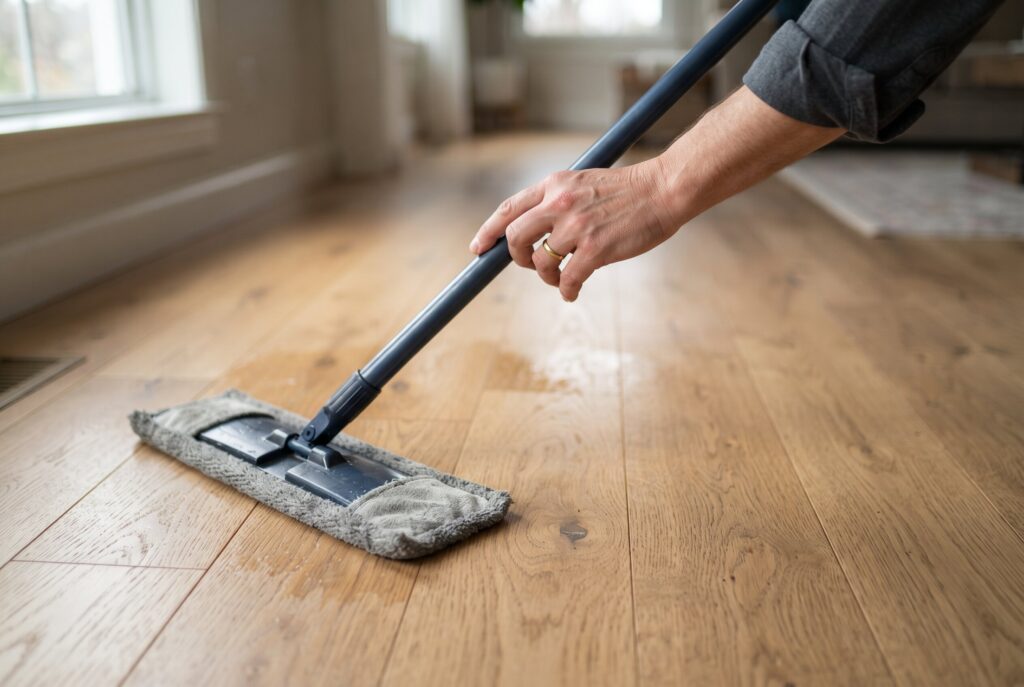
For anyone tackling how to deep clean hardwood floors, whether it’s after a move-in or a long stretch without proper maintenance, the same principles apply, just with more attention to corners, baseboards, and high-traffic paths where grime tends to build up unnoticed.
Common Mistakes That Damage Hardwood Floors Without You Noticing
Most damage to hardwood floors doesn’t come from one dramatic accident, it comes from small habits repeated week after week until the finish or the wood itself starts to show it. Knowing what to avoid is just as important as knowing the right cleaning routine.
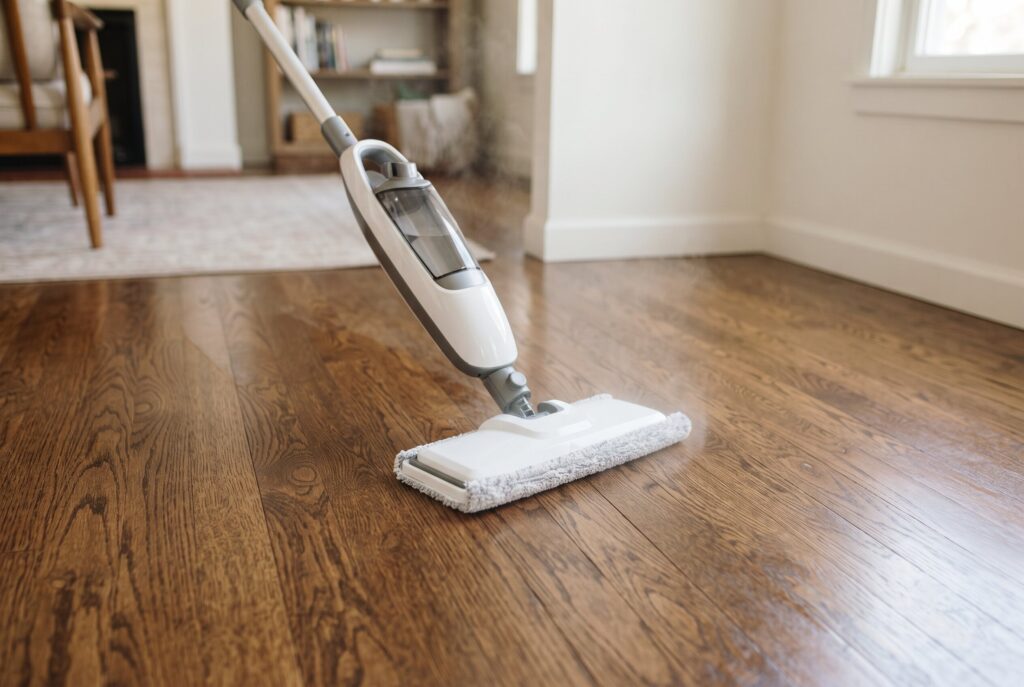
- Using a steam mop: Steam mops feel like a shortcut to a deeper clean, but they force hot moisture directly into the seams between boards. On hardwood, this is one of the fastest ways to cause warping, cupping, or a cloudy finish, regardless of how well-sealed the floor is. Steam mops are made for tile and vinyl, not wood.
- Cleaning too often with too much product: More cleaner does not mean cleaner floors. Overusing even a pH-neutral hardwood cleaner leaves a residue that builds up invisibly with each pass, eventually creating a hazy or sticky film that dulls the finish. A light, even mist is almost always enough; the mop should do the work, not the amount of product.
- Vacuuming with a beater bar attachment: Vacuums designed for carpet often have a rotating brush bar that’s too aggressive for wood, and it can scratch the finish with every pass. The hard-floor setting, or a vacuum with a soft-bristle or bare-floor attachment, avoids this entirely.
Final Thoughts
Keeping hardwood floors looking their best doesn’t take a complicated routine, just the right order of operations. Identify the finish first, skip the acidic cleaners like vinegar, and stick to a damp mopping technique that never leaves standing water behind. Pair that with doormats, furniture pads, and steady humidity control, and both solid and engineered hardwood floors stay protected from the two things that damage them most: excess moisture and everyday grit.
Related articles: How to Clean Any Floor Type: Simple, Effective Tips for a Fresh, Sparkling Floor