

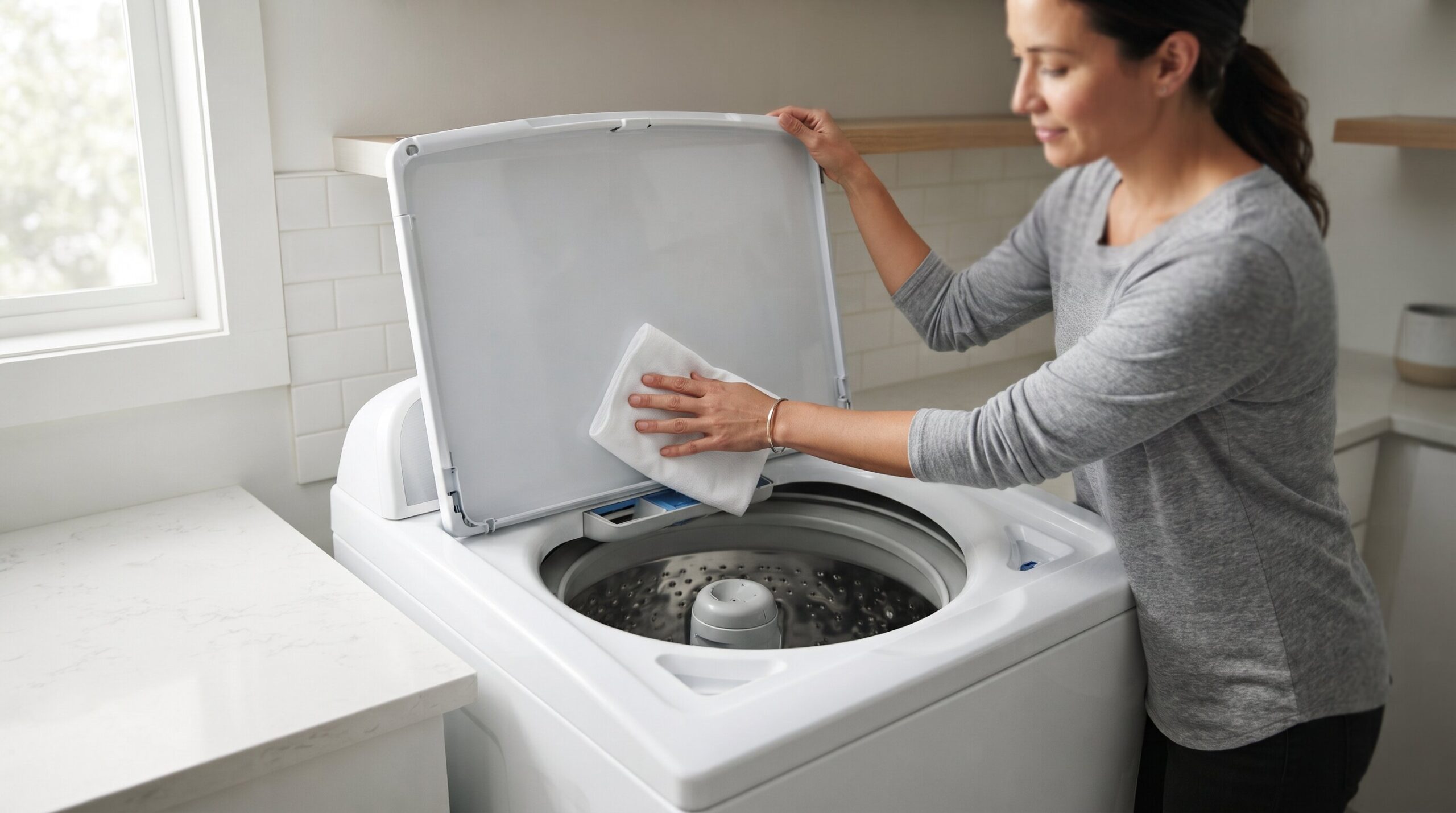
You don’t need to take your washer apart to get it clean. The easiest way to clean a top load washing machine is to let hot water and the right cleaner do most of the work. A long soak helps break down residue before you wipe away what’s left behind. Fill the tub with the hottest water, add the cleaner, pause the cycle for 2 to 4 hours, then let it finish. Once the cycle ends, wipe the tub, agitator, dispensers, and lid to remove any remaining residue.
One important safety rule is never mix bleach and vinegar. Clean with one product at a time, rinse thoroughly, and always check your owner’s manual before using bleach, vinegar, or washing machine cleaning tablets.
Why Top Load Washers Still Get Dirty
A top load washer looks open and airy, so many people assume it stays cleaner than a front load washer. It doesn’t. Every load leaves something behind. Detergent residue washer buildup, lint, body oils, pet hair, soil, fabric softener, and minerals from hard water can collect above the normal waterline and under the agitator or impeller.
If you use too much detergent, the problem gets worse. Extra soap doesn’t make clothes cleaner. It creates sticky residue that traps dirt and odor. Fabric softener can also coat the tub and dispensers with a waxy film. That is why clean clothes can still smell musty. The washer is washing them in water that passes through hidden buildup.
The Core Secret: The Long Soak
The long soak is what makes this method work. Years of detergent residue and grime don’t disappear in a single wash cycle. They need time to soften before the washer can flush them away.
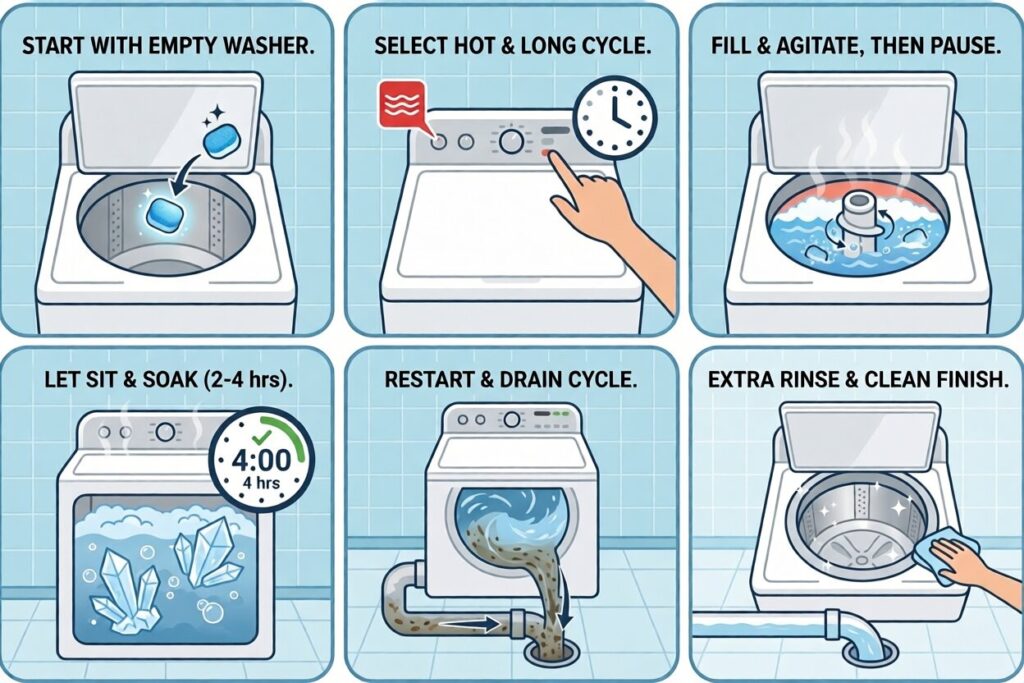
Start with an empty washer. Select the hottest water setting and the longest cycle. If your washer has a Clean Washer, Tub Clean, or Sanitize cycle, use that. Add a washing machine cleaner tablet directly into the drum, or use a cleaner approved by your manual.
Let the washer fill and agitate for a few minutes. Then pause it. Let the hot cleaning solution sit for 2 to 4 hours. During this time, the heat softens soap scum, the cleaner attacks minerals and residue, and the soak reaches areas you can’t scrub by hand.
After soaking, restart the washer and let the cycle finish completely. If you see loosened dirt afterward, run one extra rinse cycle.
The Agitator Cap Trick
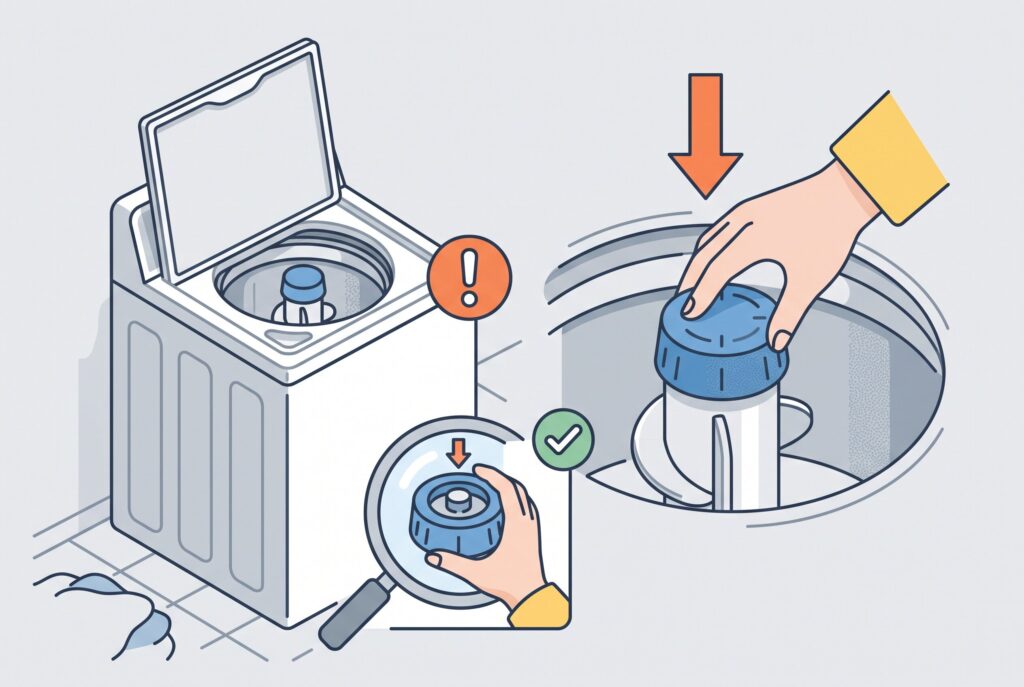
If your top load washer has a center agitator, one of the dirtiest places may be hiding in plain sight.
Many models have a removable fabric softener cup or plastic cap on top of the agitator. Because liquid fabric softener, detergent, and water collect there after almost every load, the inside can become coated with sticky residue, mildew, and lint. Even if the drum looks spotless, this small compartment can continue producing unpleasant odors.
If your owner’s manual shows that the cap or dispenser is removable, lift it out carefully by hand. Avoid forcing it if it doesn’t come loose easily, as some models are secured differently.
Wash the cap in warm water with a little dish soap, then use a bottle brush, old toothbrush, or other small soft brush to scrub inside the cup and around the opening. If the residue is stubborn, let the part soak in warm soapy water for 15 to 20 minutes before scrubbing.
While the cap is removed, wipe around the top of the agitator with a damp microfiber cloth. Dirt often collects where the cap meets the agitator. This simple five-minute step is one of the easiest ways to eliminate hidden odors without taking the washer apart.
Clean Washer Dispenser Areas
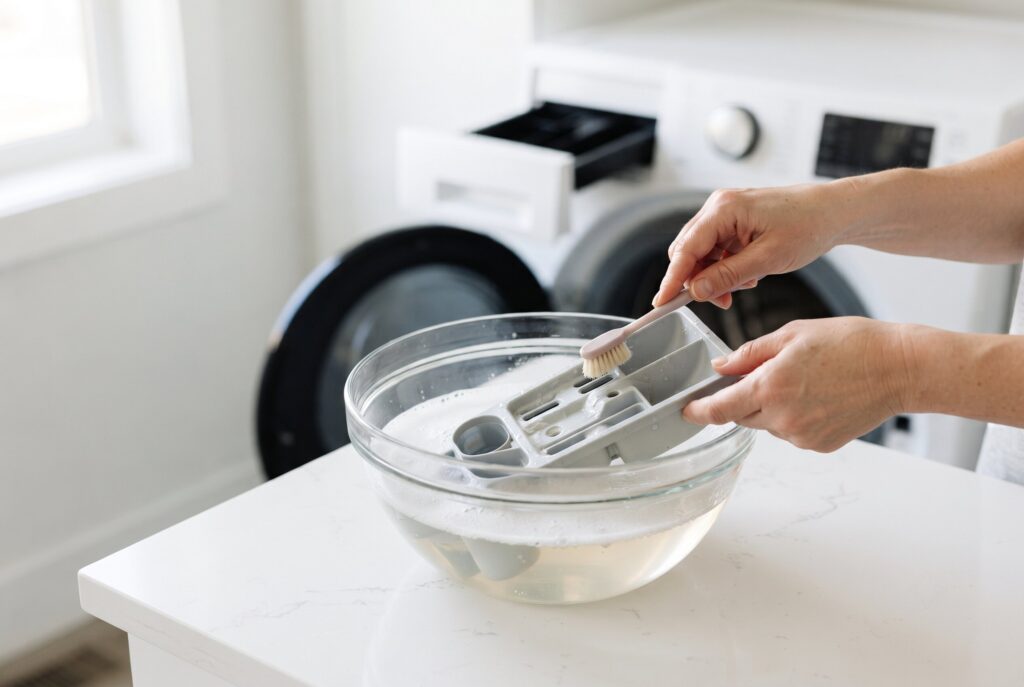
The dispensers deserve just as much attention as the drum.
Every time detergent or fabric softener flows through them, a small amount remains behind. Over weeks and months, that residue hardens into a sticky film that traps lint and bacteria.
If your dispenser trays or cups are removable, take them out and soak them in hot water with a few drops of dish soap. Use a soft brush to clean corners, small openings, and narrow channels where residue tends to build up.
Don’t forget the dispenser housing itself. Wipe inside the compartment with a damp cloth or small brush before reinstalling the clean dispenser. Keeping these areas clean helps prevent old detergent from washing back into future loads.
The Forgotten Lint Filter
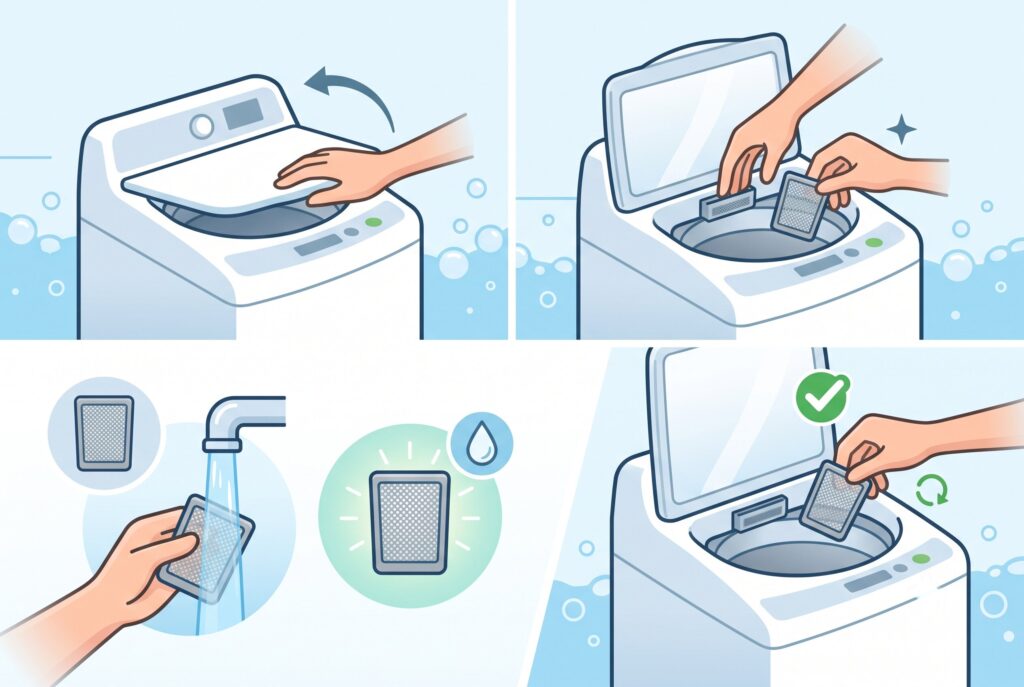
Some top load washers have a clean washer lint filter, lint trap, or small removable screen. Others have self cleaning filter systems. Check your manual because every model is different.
If your washer has a removable lint filter, take it out and soak it in warm soapy water. Brush away lint, softener film, and debris. A dirty lint filter can redeposit residue onto clothes and make the washer smell stale. Don’t skip this just because the tub looks clean. The filter may be holding the odor.
How Often Should You Clean It?
There isn’t one cleaning schedule that fits every household. The right frequency depends on how often you use the washer, the type of laundry you wash, and whether hard water or fabric softener contributes to residue buildup.
Every Month
Clean your washer about once a month if you:
- Wash 4 or more loads per week
- Frequently wash gym clothes, work uniforms, pet bedding, or muddy laundry
- Use fabric softener or scented laundry boosters regularly
- Have hard water that leaves visible mineral deposits
- Notice a musty smell or see residue inside the drum
Monthly cleaning helps prevent detergent residue and biofilm from building up before they become difficult to remove.
Every 2 Months
A cleaning every two months is usually enough if you:
- Wash 2 to 4 loads per week
- Use the recommended amount of HE detergent
- Rarely use fabric softener
- Don’t notice odors or visible residue
This schedule keeps the washer clean without unnecessary maintenance.
Every 3 Months
Cleaning every three months is generally suitable if you:
- Wash only 1 or 2 loads per week
- Mostly wash lightly soiled clothing
- Have soft water
- Leave the lid open after each load so the drum dries completely
Even with light use, residue slowly accumulates, so an occasional deep clean is still worthwhile.
Conclusion
How to clean top loading washing machine without taking it apart comes down to three things: heat, time, and the right cleaning routine. The most effective way to clean a washing machine top loader is to let heat and time loosen hidden buildup before cleaning the agitator cap, dispensers, and lint filter by hand.
The habit that keeps everything fresh is even simpler. Leave the washer lid open after every load so moisture can escape. A dry washer is a cleaner washer, and preventing buildup is much easier than removing it once odors and residue take hold.
Related Articles
DIY Washing Machine Cleaner: A Natural Recipe That Outperforms Bleach
How to Clean a Front Load Washer (Don’t Forget the Hidden Filter!)