

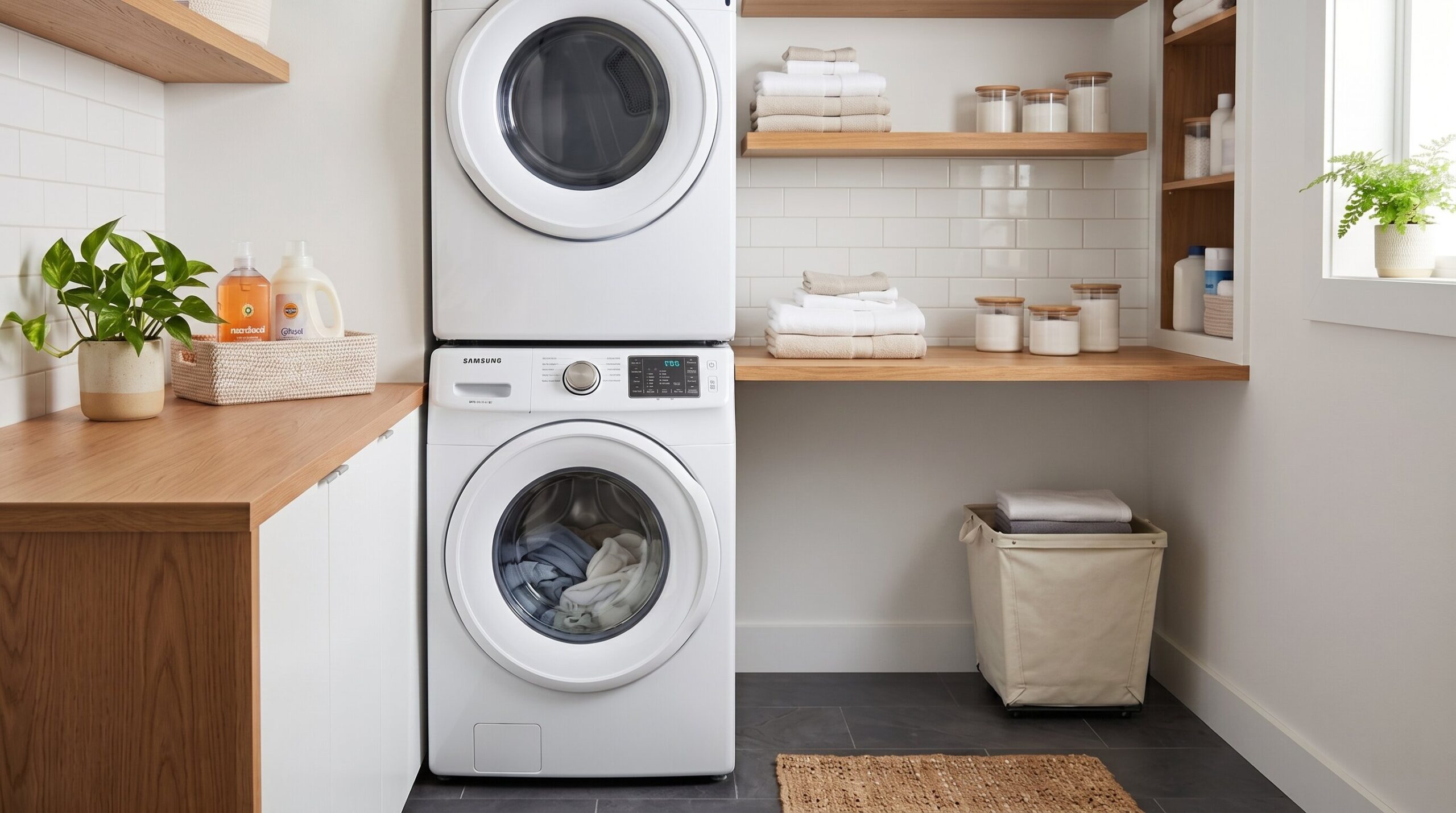
Front load washers are great at saving water, but they’re also more likely to trap moisture, detergent residue, and lint. Over time, that buildup can cause musty odors, mold, poor cleaning performance, and even drainage problems if hidden areas are ignored.
The best way to clean a front load washer is to clean more than just the drum. Wipe the rubber door gasket, wash the detergent drawer, and don’t forget the hidden drain pump filter, where lint, hair, coins, and other debris often collect. A complete cleaning routine takes less than an hour and helps keep your washer fresh, efficient, and odor-free.
Where Dirt Hides in a Front Load Washer
A front load washer can look clean while hiding mold, detergent residue, and lint in places you rarely see. The rubber door gasket, detergent drawer, and especially the hidden drain pump filter trap moisture and debris after every wash. Over time, that buildup can cause musty odors, poor drainage, and even leave freshly washed clothes smelling unpleasant.
That’s why cleaning the drum alone isn’t enough. To keep a front load washer fresh and working properly, you need to clean every area where residue collects, including the hidden filter that many owners forget.
How to Clean a Front Washer
Step 1: Clean Washer Gasket
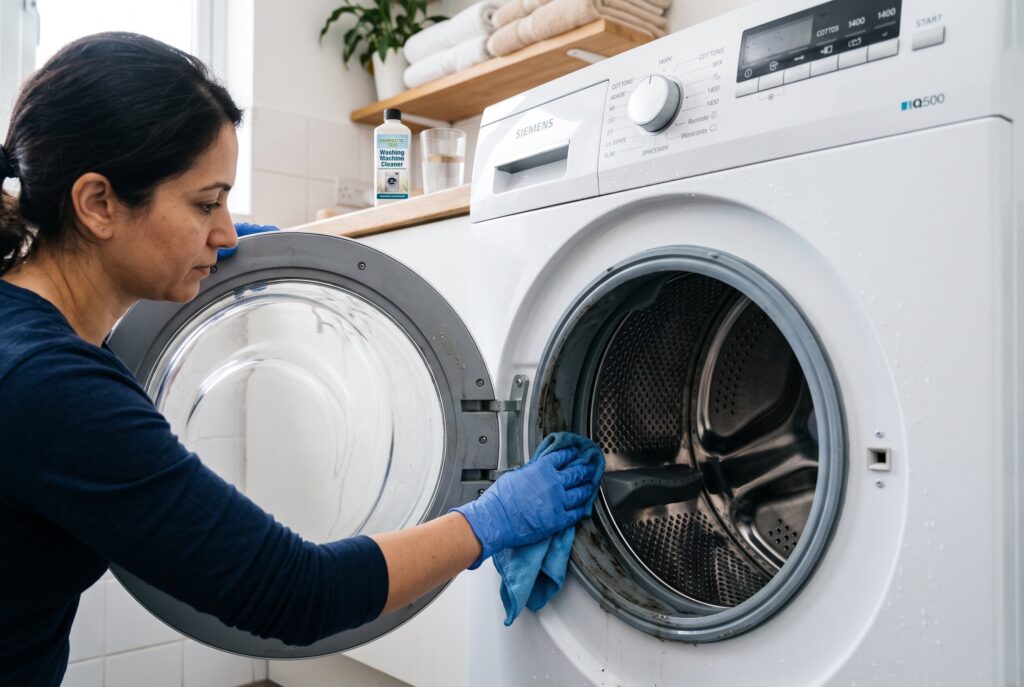
The rubber gasket is the mold trap. Open the washer door and gently pull back the folds of the seal. You may find black spots, gray slime, hair, lint, or standing droplets.
Put on gloves. Use a microfiber cloth with warm soapy water to wipe every fold. For stubborn mold in front-load washer gaskets, use a manufacturer approved cleaner. Some manuals allow diluted bleach for mold, but don’t use it unless your machine instructions allow it. If you use bleach, rinse the gasket afterward and run an empty cycle before washing clothes.
Pay special attention to the bottom of the gasket because water sits there longest. Dry it completely with a clean towel when finished.
Step 2: Clean Washer Filter Without Flooding the Floor
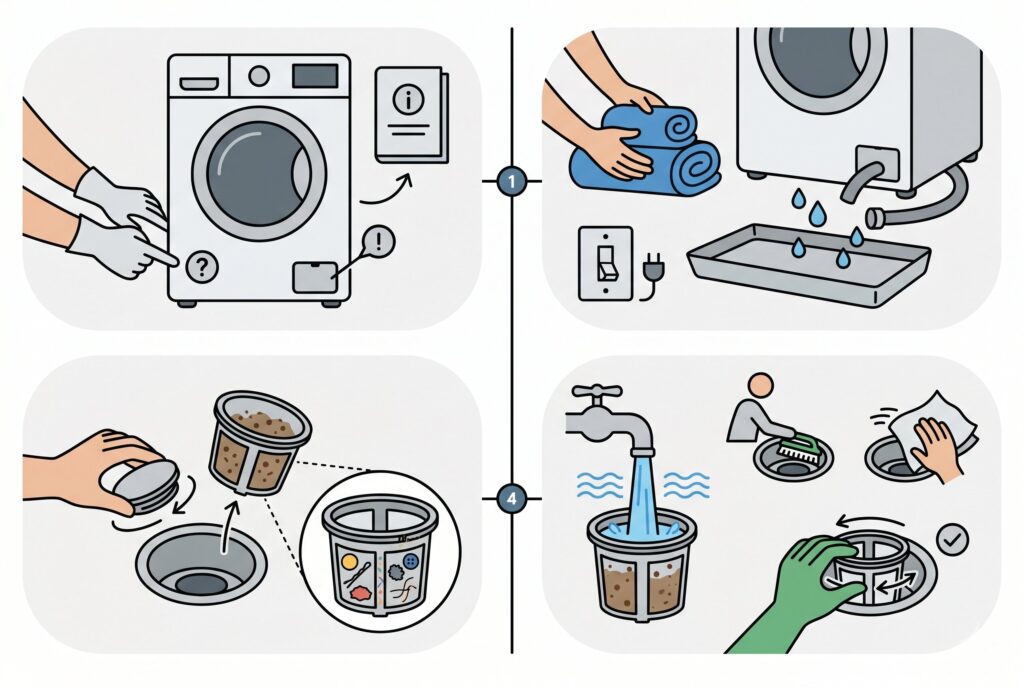
The drain pump filter is the hidden part many people forget. It may also be called a coin trap. In many front load machines, it sits behind a small panel near the bottom front of the washer. Some models hide it behind a lower kickplate, and some designs don’t give easy user access, so check your manual first.
Before opening anything, unplug the washer if your manual recommends it. Place towels and a shallow tray under the filter area. If there is a small drain hose, pull it out first and let the water drain slowly into the tray. Only after that should you twist open the filter cap.
Expect dirty water. You may also find coins, hair pins, lint, buttons, pet hair, and small fabric pieces. Rinse the filter under warm water, brush away debris, wipe the filter cavity carefully, then reinstall everything tightly. This one step can make a huge difference when front-load washer smells keep coming back.
Step 3: Clean the Detergent Drawer
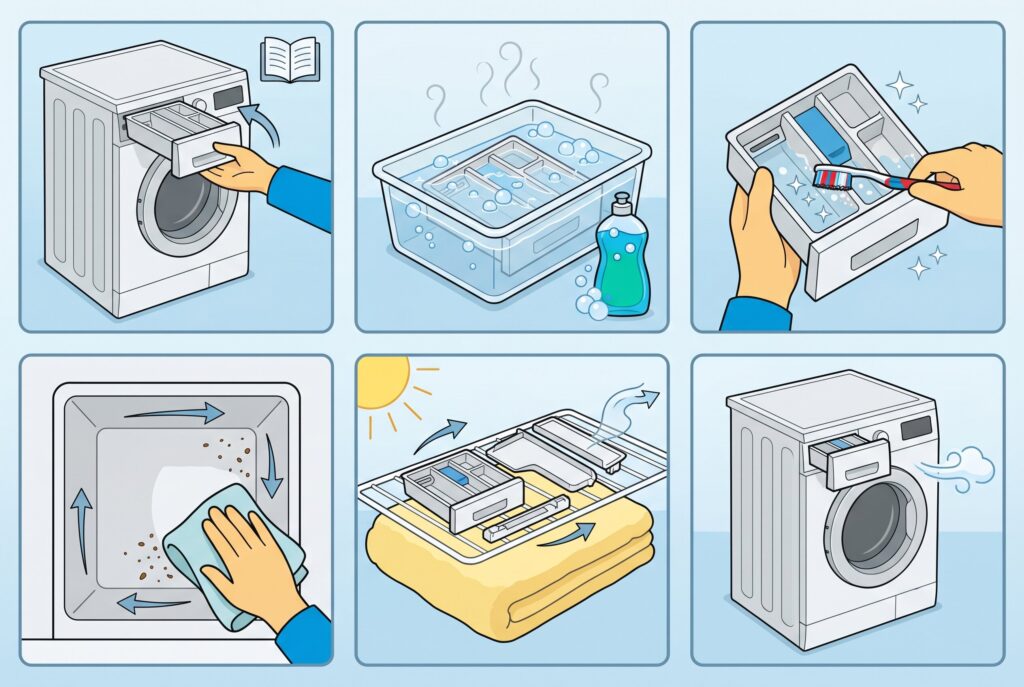
The detergent drawer can grow mold because it holds wet soap residue after every load. Pull the drawer out according to your manual. Soak it in warm water with dish soap, then scrub corners, softener compartments, and any removable inserts with an old toothbrush.
Don’t forget the drawer cavity inside the machine. Wipe the top, sides, and back where detergent splashes and dries into sticky buildup. Let the drawer dry before reinstalling it. After future loads, pull the drawer slightly open so air can move through it.
Step 4: Run the Cleaning Cycle
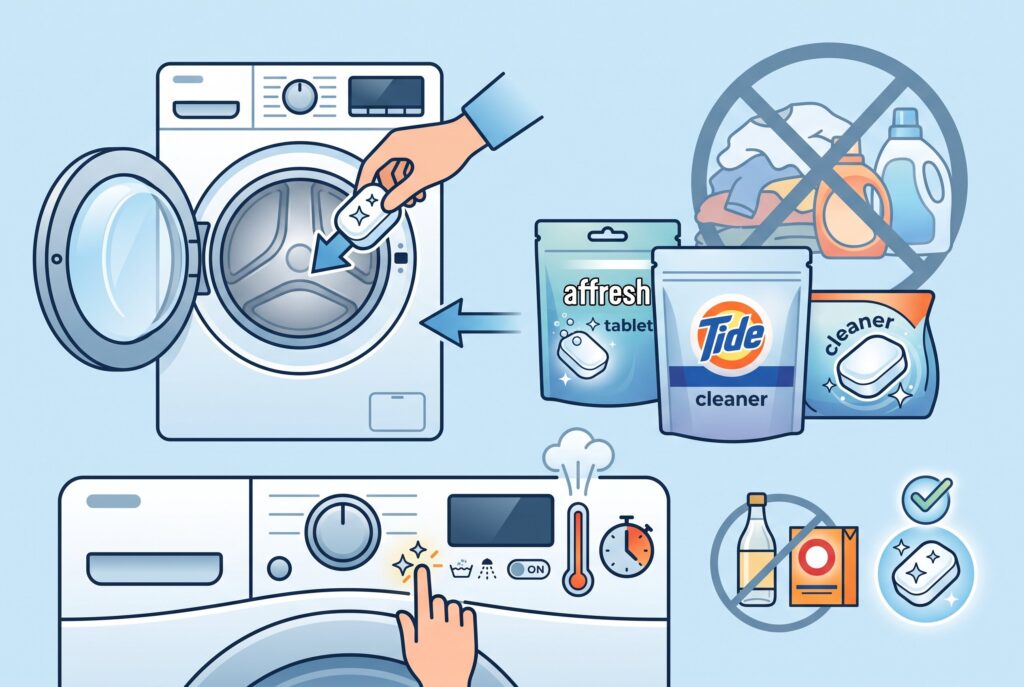
Now that the visible grime is gone, run the drum cleaning phase. Add a washing machine cleaner tablet directly into the empty drum. Affresh washing machine cleaner, Tide washing machine cleaner, or similar washer cleaning tablets are designed to break down detergent residue, hard water minerals washer buildup, and odor causing film.
Select the clean washer cycle if your machine has one. If not, choose the hottest long cycle your manual recommends. Don’t add clothes, detergent, or fabric softener.
A washer tablet is often better than a random DIY mix because it is made for appliance residue and rinsing. Vinegar and baking soda washing machine tips are common, but they aren’t always best for every washer, and they should never be mixed with bleach or peroxide.
Step 5: Wipe the Door and Exterior
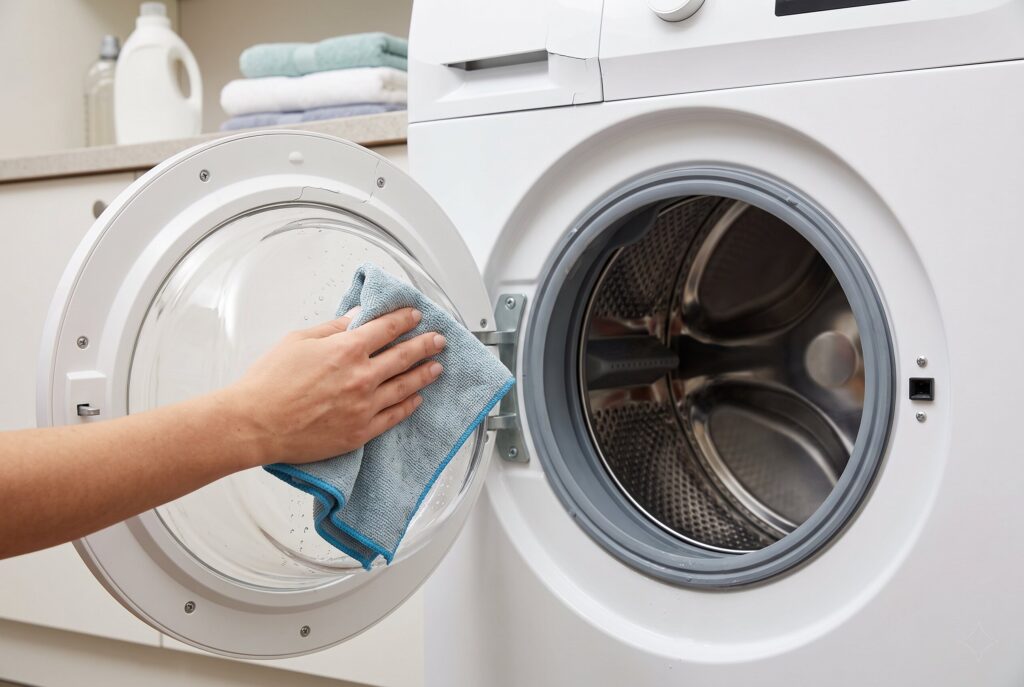
After the cycle finishes, wipe the inside of the door glass, the gasket, the drum lip, and the outer frame. Moisture often hides along the lower edge of the door and creates that mildew smell washer owners hate. Dry the area fully. Leave the door open and keep the detergent drawer cracked. This isn’t optional if you want the smell to stay gone.
The Prevention Schedule
After every load, remove wet clothes quickly. Wipe the gasket if water is sitting in the folds. Leave washer door open and pull the detergent drawer out slightly.
Weekly, wipe the gasket and door glass. Check for lint, hair, or detergent buildup. Monthly, clean front-load washer parts more deeply. Clean the gasket, inspect the filter if your model allows, wash the drawer, and run a cleaning cycle. Many manufacturers recommend cleaning every 30 cycles or about once a month for average use.
Use less detergent than you think. High efficiency washers need high efficiency detergent, and the correct amount is often lower than the cap suggests.
Conclusion
How to clean a front load washer isn’t just about dropping in a tablet. The real solution is hidden part maintenance. Clean washer gasket folds, drain the filter carefully, scrub the detergent drawer, run a hot cycle with washing machine cleaner, and leave everything open to dry.
Fresh laundry starts with a dry, clean machine. Once air can circulate and residue is gone, your washer stops smelling like mildew and starts doing its actual job again.
Related Articles
DIY Washing Machine Cleaner: A Natural Recipe That Outperforms Bleach
How To Clean Top Loading Washing Machine Without Taking It Apart