

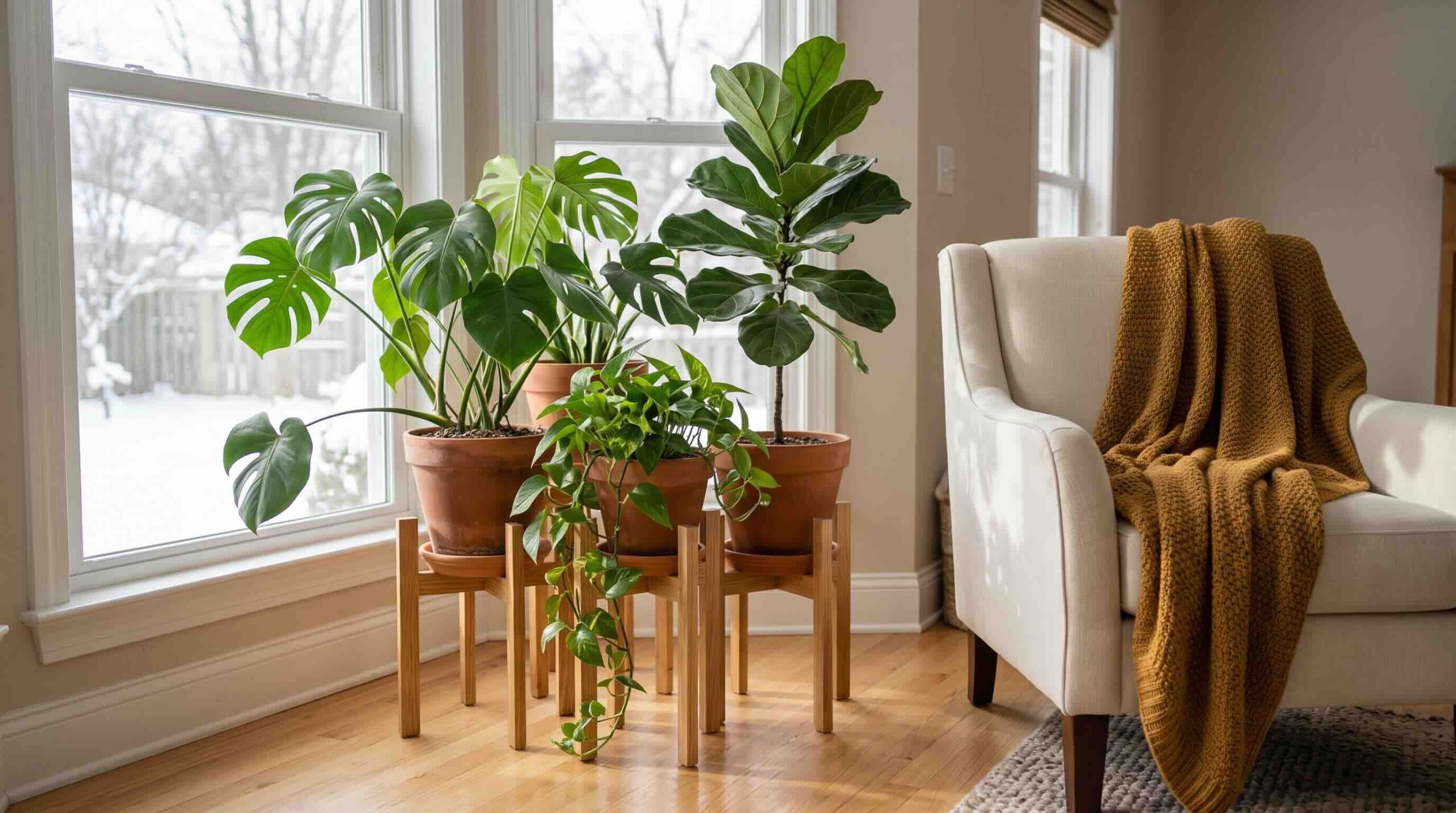
A single cold snap can destroy a healthy plant overnight. Knowing exactly how to keep plants warm in the winter comes down to two distinct jobs: shielding your outdoor garden from frost, and protecting indoor houseplants from dry heat and cold drafts. To prevent irreversible damage, you must act before the first hard freeze hits. Read on to learn which plants are most vulnerable and the precise steps to protect them.
Know Which Plants Need Protection (and at What Temperature)
Not every plant requires winter cover. Start by sorting your collection by cold tolerance:
- Hardy plants: Perennials, shrubs, and cold-season vegetables handle freezes well and typically only need mulch.
- Tender plants: Most annuals and succulents begin struggling as temperatures drop into the 40s or high 30s Fahrenheit.
- Tropicals and houseplants: These are highly sensitive and often sustain damage below 50 degrees. (Note: Tropicals like pothos, monstera, and peace lilies will quickly sulk in a cold room, whereas some ferns and ivies tolerate a chill better).
Once sorted, learn your hardiness zone and average first-frost date. A frost warning near 32 degrees is your definitive signal to act.
- Check the tags: If you are unsure about a specific plant, check its tag or quickly look up its cold-hardiness range.
- Monitor new arrivals: Pay the closest attention during a plant’s first winter in your climate, as it has not yet adapted to your local cold.
Getting this sorting right is the essential first step in how to keep plants warm in the winter, as all subsequent care depends on knowing which plants are at risk.
How to Keep Outdoor Plants Warm in the Winter
Outdoor plants cannot move, so the work is to bring protection to them before the cold arrives. This is the outdoor side of how to keep plants warm in the winter, and it comes down to five moves:
- Mulch around the base to hold warmth in the soil and steady the root zone.
- Cover with frost cloth or blankets before dusk to trap the day’s heat, then uncover in the morning.
- Move potted plants to shelter, since a pot’s roots chill far faster than ground soil.
- Group pots or wrap the containers to share warmth and stop a bare pot from losing heat through its sides.
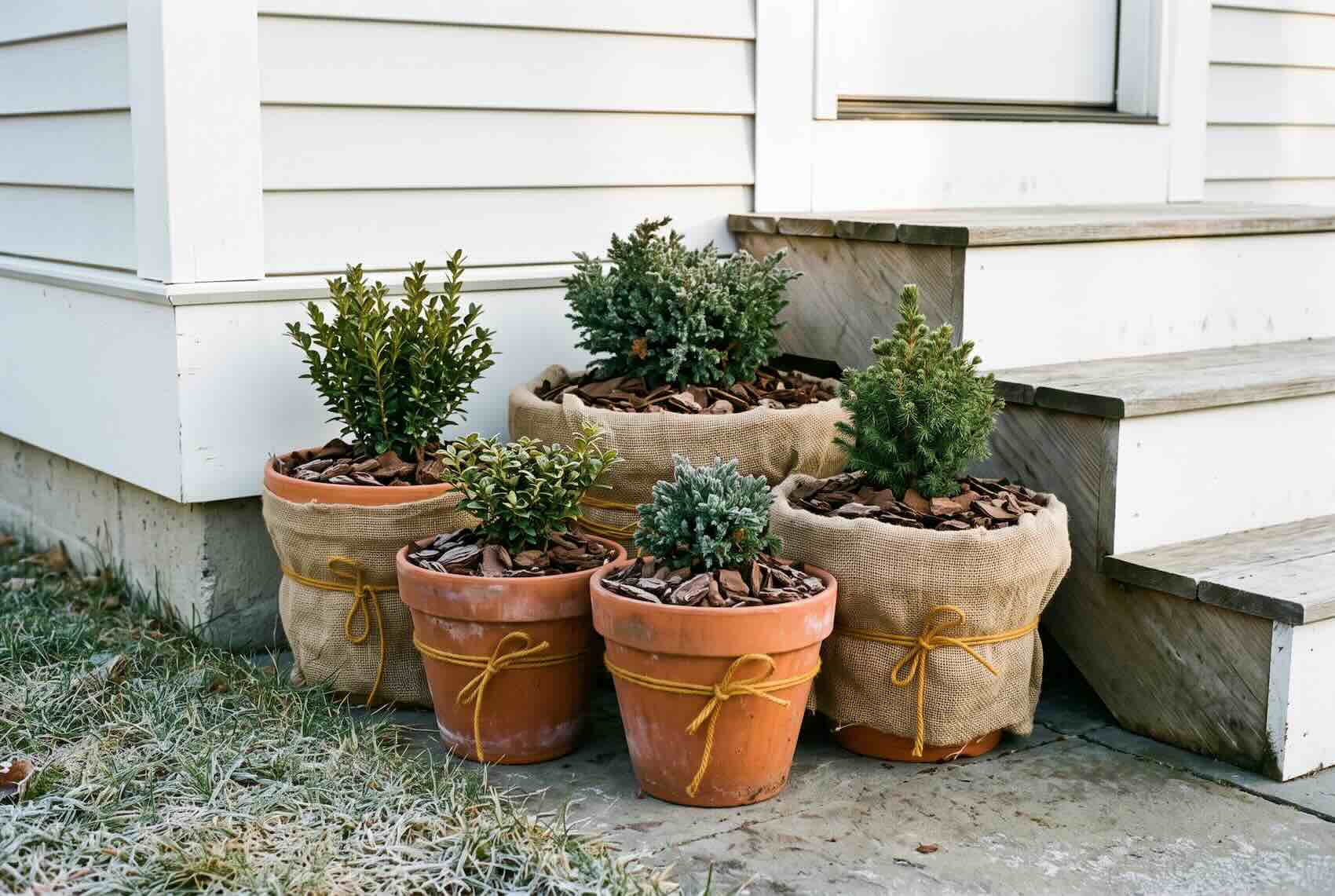
- Water before a freeze, since moist soil holds more heat overnight than dry soil.
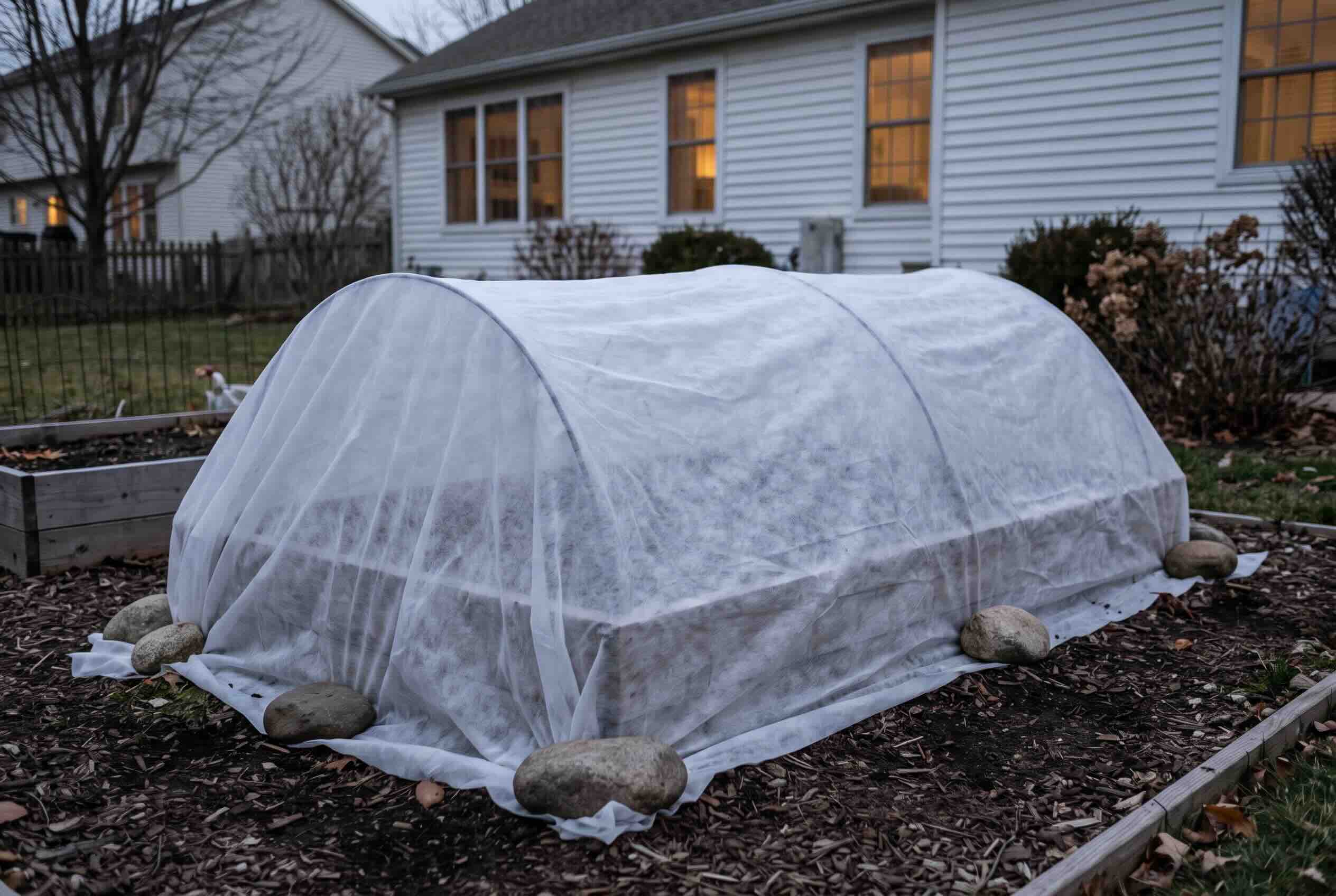
Each of these has its own timing and technique, from how deep to mulch to when to pull a cover off. The full step-by-step is on how to keep plants alive in winter outside, so use the list above to decide what your yard needs, then follow that guide to do it.
When a hard freeze is in the forecast, the order you do things matters as much as the method. Run it like this:
- In the afternoon, water the soil around plants that need it while the sun is still up.
- Top up the mulch over any bare root zones.
- Move potted plants to shelter, or group and wrap the ones that have to stay out.
- Cover the plants with frost cloth before dusk, while the ground still holds the day’s heat.
- In the morning, uncover them once the air warms so they get light and air.
How to Keep Plants Warm in Winter Indoors
Indoors, the plant is already out of the frost, so the job shifts to steady warmth, light, and moisture. The same house that is comfortable for you can be hard on a plant pressed against a cold window. For hardier options to start with, see house plants that tolerate cold. This is the indoor side of how to keep plants warm in the winter, where the cold is milder but dry heat and low light take its place.
Keep Them Away From Cold Windows and Drafts

A plant sitting against a winter window is trapped in a cold pocket. Leaves touching the glass can freeze even with the indoor heat on. Move your pots away from the glass and completely out of the direct path of drafty doors. Stopping cold air at the source is your best defense. Taking a few minutes to learn how to fix drafty windows without replacing them will instantly protect your plants and lower your heating bill. Finally, closing a thin curtain at night creates a simple insulating layer between your plants and the cold pane.
Maintain a Steady Room Temperature
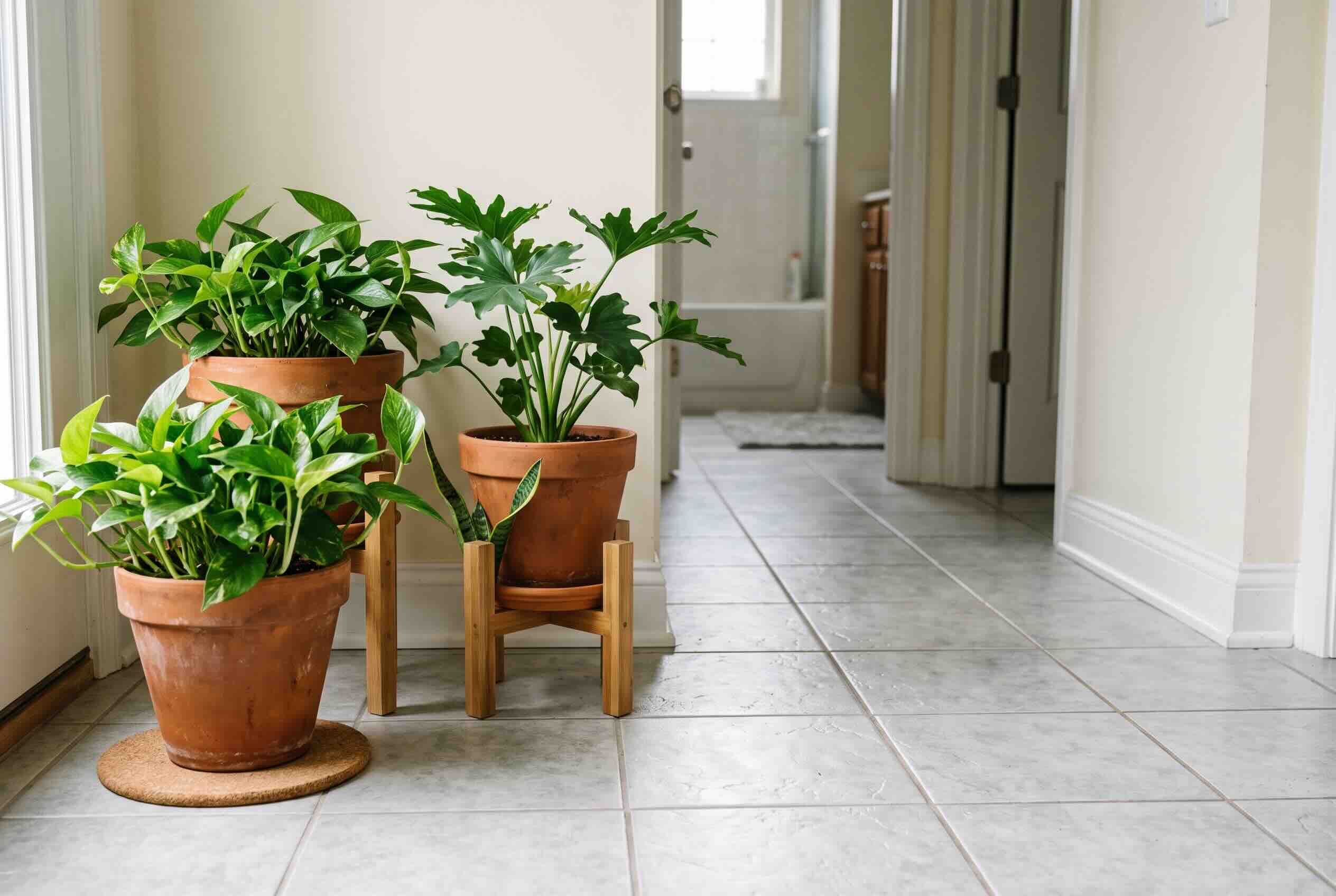
Plants handle a cool room better than a swinging one. Keep the space from dropping too far at night, and keep plants clear of sources that cycle hot and cold. Most houseplants are content in the same range you are, roughly the 60s to low 70s Fahrenheit, as long as it holds steady. A sharp overnight drop does more damage than a steady cool. Basements and spare rooms you barely heat are common cold traps, so check a thermometer there before you leave a plant in one. Keep pots off cold tile and stone floors as well, since the chill rises straight into the roots, so a mat or a stand that lifts them clear helps.
Boost Humidity Around Plants
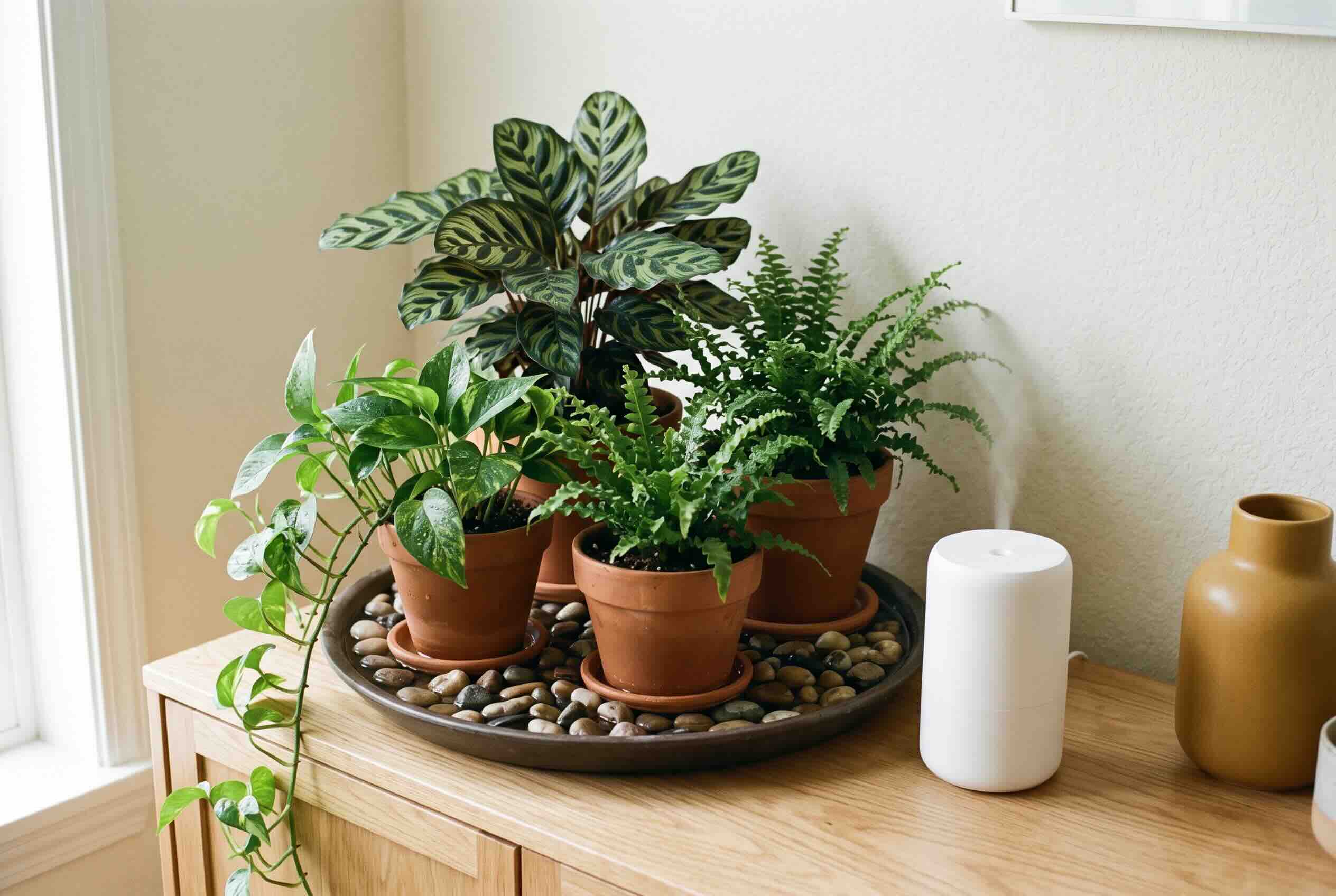
Winter heating dries the indoor air, and tropical plants show it first in crisping leaf tips. Group plants together so they share the moisture they give off, set them on a tray of pebbles and water, or run a small humidifier nearby. Misting helps for a moment but fades fast, so the tray or humidifier does more. A kitchen or bathroom, where the air stays damper, suits a thirsty plant through winter. Around 40 to 50 percent humidity suits most, though you do not need a gauge to read dry air, since crisp leaf edges and faster drying give it away. Steam from a shower or a pot on the stove gives nearby plants a brief lift too.
Give Them Enough Winter Light
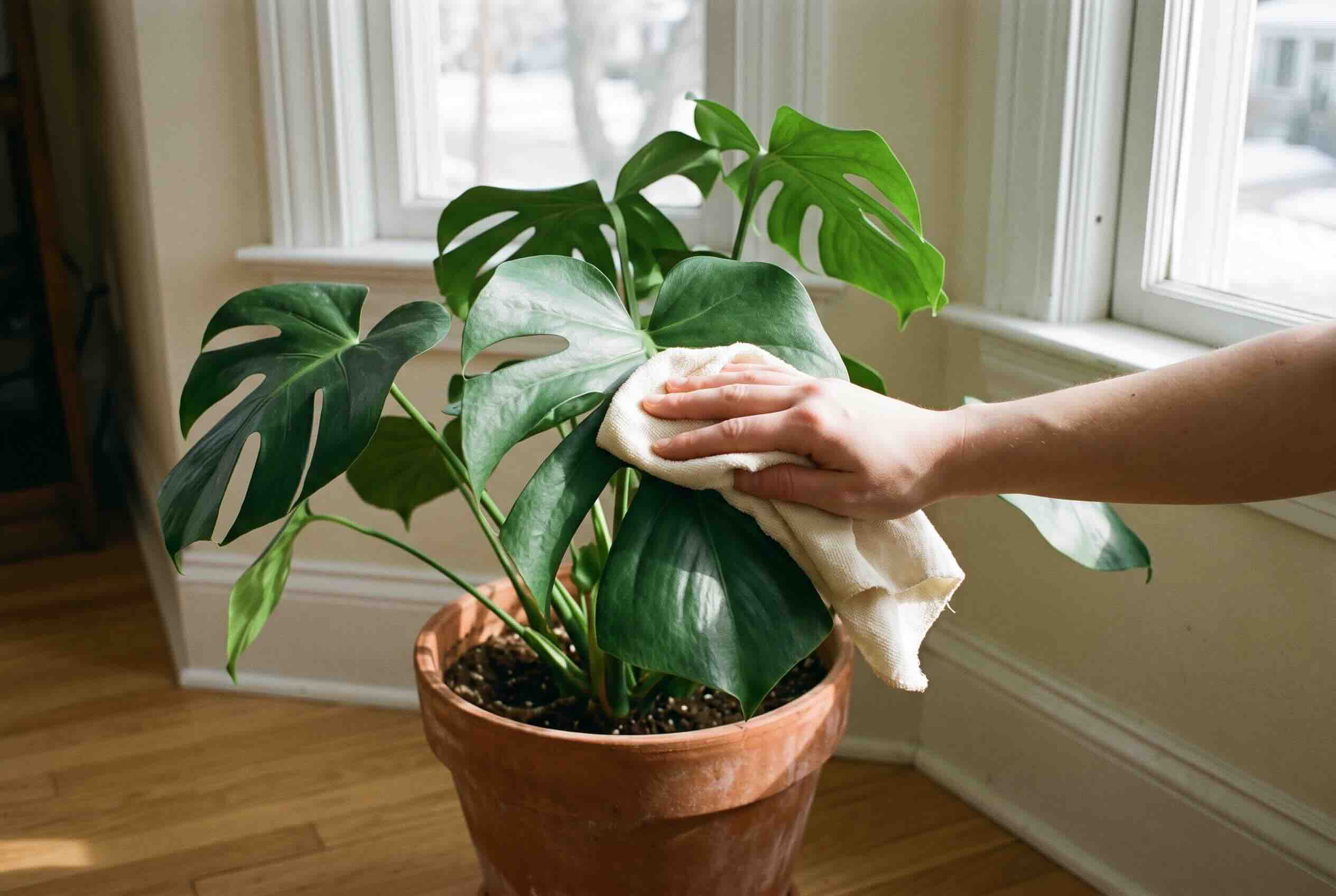
The days are shorter and the sun sits lower, so a plant that had plenty of light in summer may run short now. Move plants to your brightest window, usually a south-facing one, and wipe the dust off the leaves so they use what light there is. Turn the pot now and then for even growth. When a window cannot give enough, a grow light fills the gap through the darkest weeks. Move a plant into brighter light over a few days rather than all at once, since a sudden change can scorch leaves used to shade.
Winter Plant Care Mistakes to Avoid
A few common habits do more harm than the cold itself. They quietly undo the rest of how to keep plants warm in the winter. Watch for these as the season sets in:
- Overwatering. Plants grow slower and drink less in winter, so the summer schedule drowns the roots now. Let the soil dry further between waterings.
- Placing plants by a heater. A spot next to a vent or radiator bakes a plant in dry, hot air and swings its temperature. Keep plants clear of direct heat.
- Bringing plants in too late. Move tender plants indoors before the first cold nights, not after, since cold damage done outside does not undo once they are warm again.
- Sealing with no airflow. Wrapping or enclosing a plant with no ventilation traps damp and invites mold and rot. Leave any cover loose enough to breathe, and open it on milder days.
FAQ
Can you use a heat mat or grow light for winter plants?
Yes, and both help in the right spot. A seedling heat mat warms the root zone, which matters more to many plants than warming the air. A grow light makes up for short, weak winter daylight, especially for a plant far from a window. Use them as a supplement to good placement, not a reason to leave a plant in a cold draft.
How do you keep plants warm during a power outage?
Fall back on stored heat and insulation, since the furnace is off. Group plants in the warmest interior room, away from windows, and cover them loosely with sheets or blankets to hold their own warmth. A jug of hot water set nearby adds a little heat as it cools. Move the most tender plants to the most sheltered spot and ride it out. Open the blinds by day to catch any sun, and close them at night to hold the heat in.
How do you know if a plant has frost or cold damage?
The signs show within a day or two: leaves that look water-soaked, then turn black, brown, or mushy, and soft, limp stems. Cold-damaged growth often wilts without drying out first. On a houseplant, cold near a window shows as yellowing or dropping leaves on the side facing the glass.
Can plants recover after getting too cold?
Often, if the roots and the main stem came through. Wait before you cut anything, since the damaged top can shelter the rest from the next cold, and new growth in spring tells you what lived. Trim the dead parts once the weather warms, water lightly, and give it time. A plant frozen down to the roots will not come back.
Do indoor plants go dormant in winter?
Many slow down rather than stop fully, putting on little growth in the short, dim days. That is normal, and it changes their care: less water, no feeding, and patience until the light returns. Pushing a resting plant with extra water or fertilizer does more harm than good. Resume feeding and a normal watering rhythm once you see fresh growth, which is the sign the plant is active again.
Conclusion
Ultimately, knowing how to keep plants warm in the winter always starts with understanding your plants’ specific temperature limits. Once you identify the vulnerable ones, immediately apply outdoor mulch, utilize frost covers, and stabilize your indoor humidity and light. Act decisively before the first hard freeze, and your plants will survive the season beautifully. For more practical seasonal care advice, explore the latest guides on Home Tips Daily.