

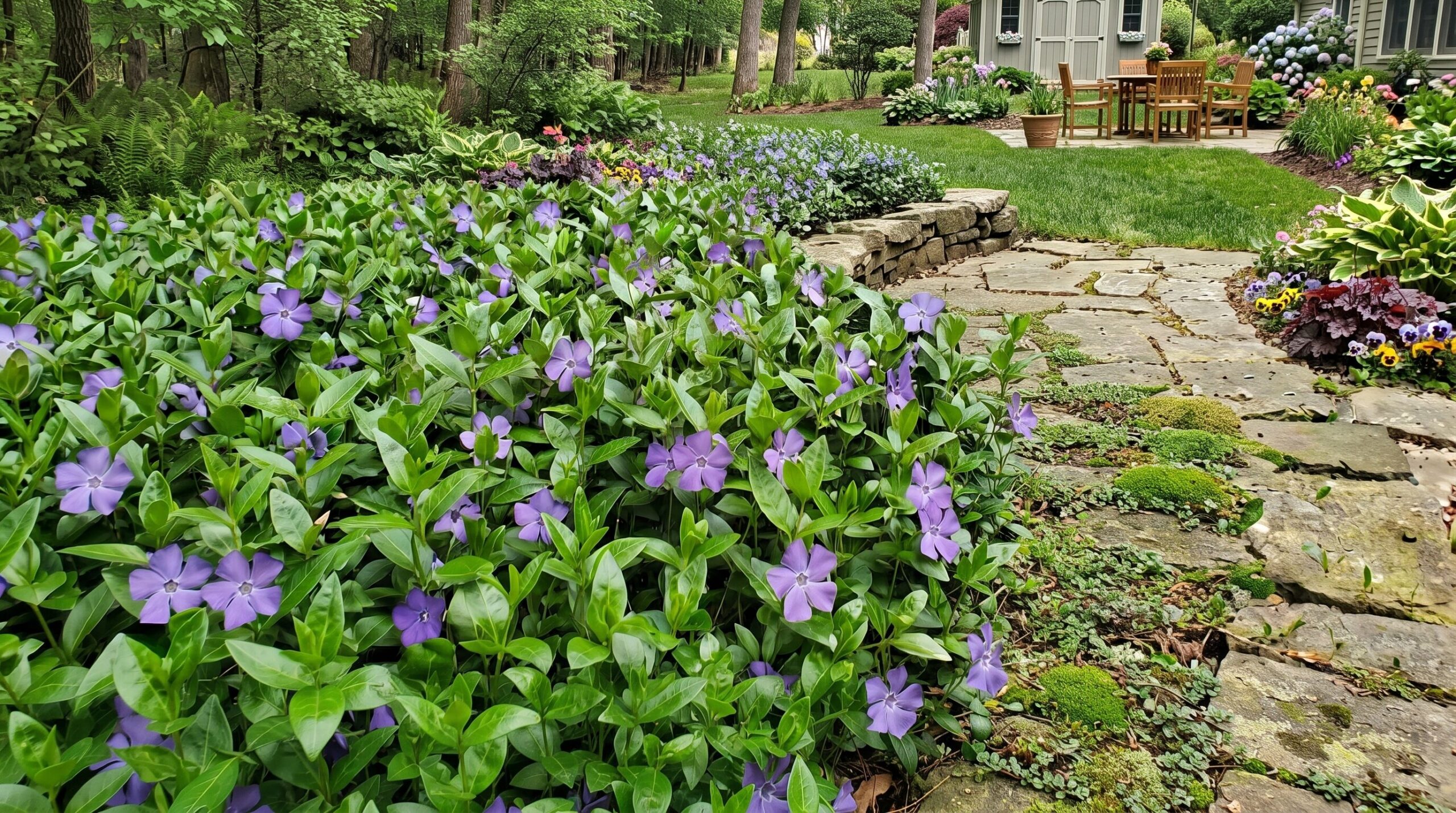
A plain green lawn is no longer the only way to make a yard feel finished. If you want stronger curb appeal, richer color, and a landscape that looks designed instead of simply maintained, purple ground cover is one of the fastest upgrades you can make. These low growing plants spread across bare soil, soften hard edges, suppress weeds, reduce erosion, and create a dramatic carpet of color around patios, walkways, slopes, and garden borders.
Purple flowering ground covers work especially well because they combine beauty with function. Some choices, like creeping thyme ground cover, can handle light foot traffic and smell wonderful when brushed underfoot. Others, like creeping phlox, create a spring waterfall of color from tiny creeping phlox seeds or young plugs. Shade lovers such as purple lamium and bugleweed can brighten dark spaces where grass simply won’t survive.
The key is choosing the right plant for your light, soil, water, and maintenance level. Some purple ground cover plants are gentle and easy to manage. Others spread aggressively and need clear boundaries. Below are 13 dramatic picks for lasting color, plus the red flags you should understand before planting.
13 Dramatic Purple Ground Covers Categorized by Light Needs
1. Creeping Thyme

Creeping thyme is one of the best purple ground cover choices for full sun, dry soil, and walkable garden paths. It forms a dense, fragrant mat that blooms with tiny purple flowers in summer. As a drought tolerant ground cover, it’s ideal for homeowners who want beauty without constant watering. Plant it between stepping stones, along patio edges, or in small lawn replacement areas where foot traffic is light but regular.
2. Creeping Phlox
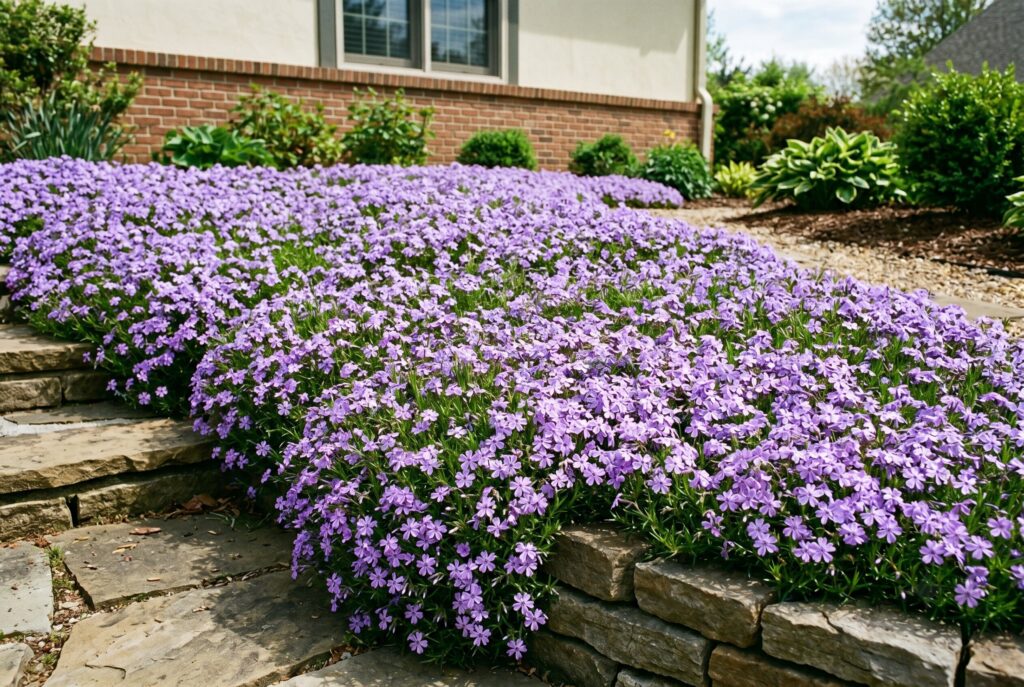
Creeping phlox is a spring showstopper. It spreads low across slopes, walls, and front yard beds, creating a sheet of purple, lavender, pink, or white flowers. If you’re starting from creeping phlox seeds, patience matters because plugs usually establish faster. Once mature, this flowering ground cover helps stabilize soil and makes a bare bank look intentional instead of neglected.
3. Ice Plant
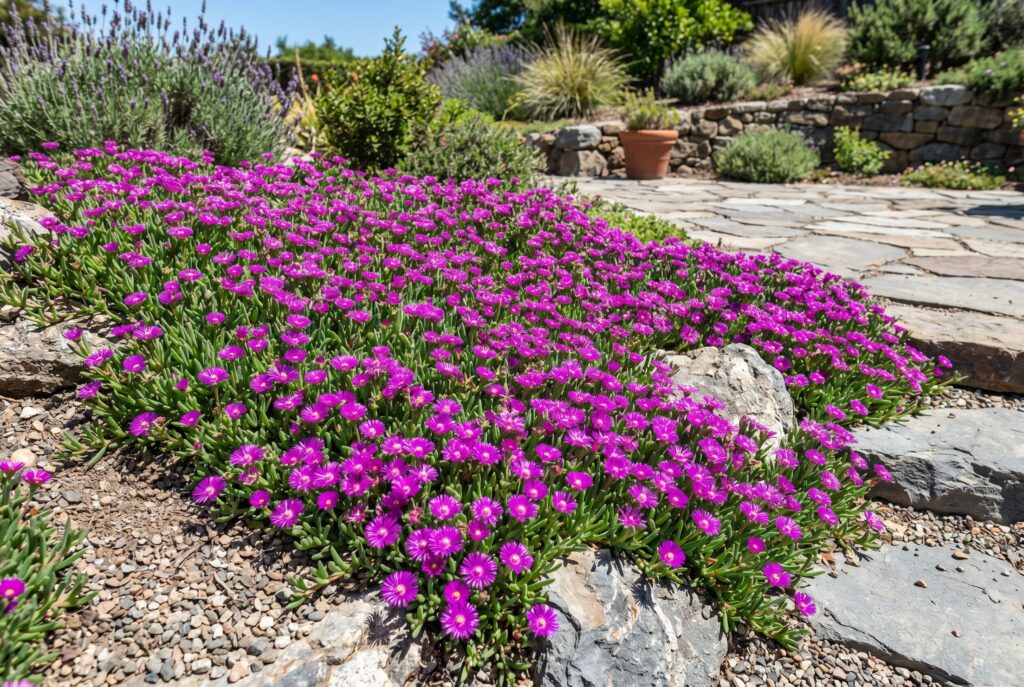
Ice plant, also called Delosperma, is built for sun, heat, and dry ground. Its succulent leaves store water, while its bright purple flowers glow in harsh summer light. This is a strong choice for rock gardens, gravel edges, and slopes where other plants burn out. It isn’t meant for heavy walking, but it delivers serious color with very little irrigation after establishment.
4. Lithodora
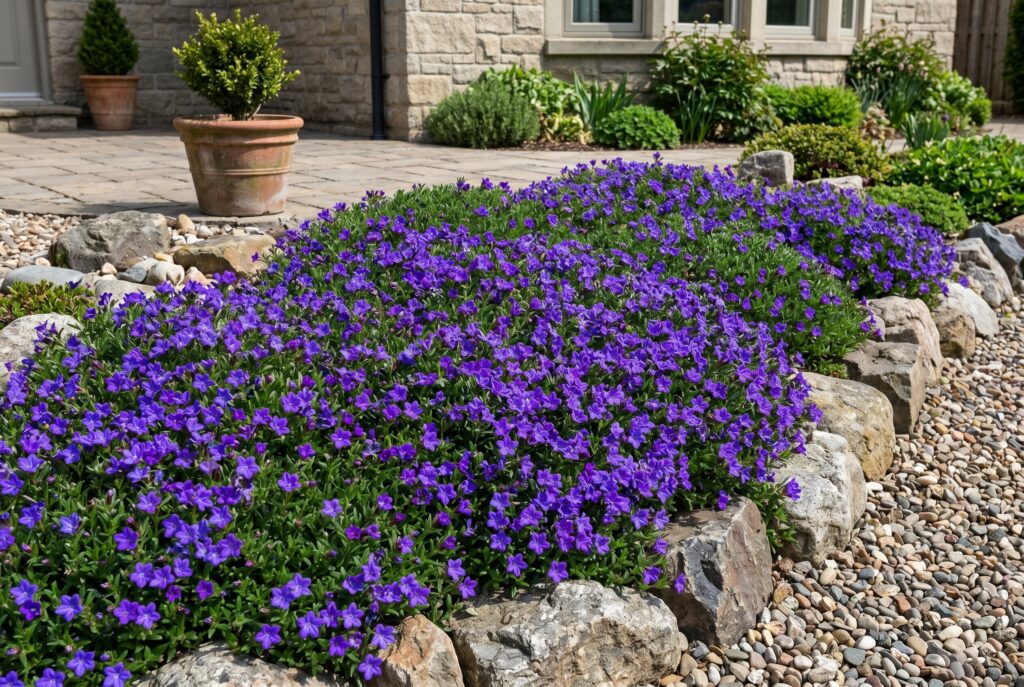
Lithodora ground cover produces intense blue purple star shaped flowers over fine evergreen foliage. It prefers full sun to partial shade and well drained acidic soil. It’s excellent for rock gardens, border fronts, and edges where you want vivid color without tall growth. Give it drainage and don’t let the roots sit in heavy wet clay.
5. Royal Candles
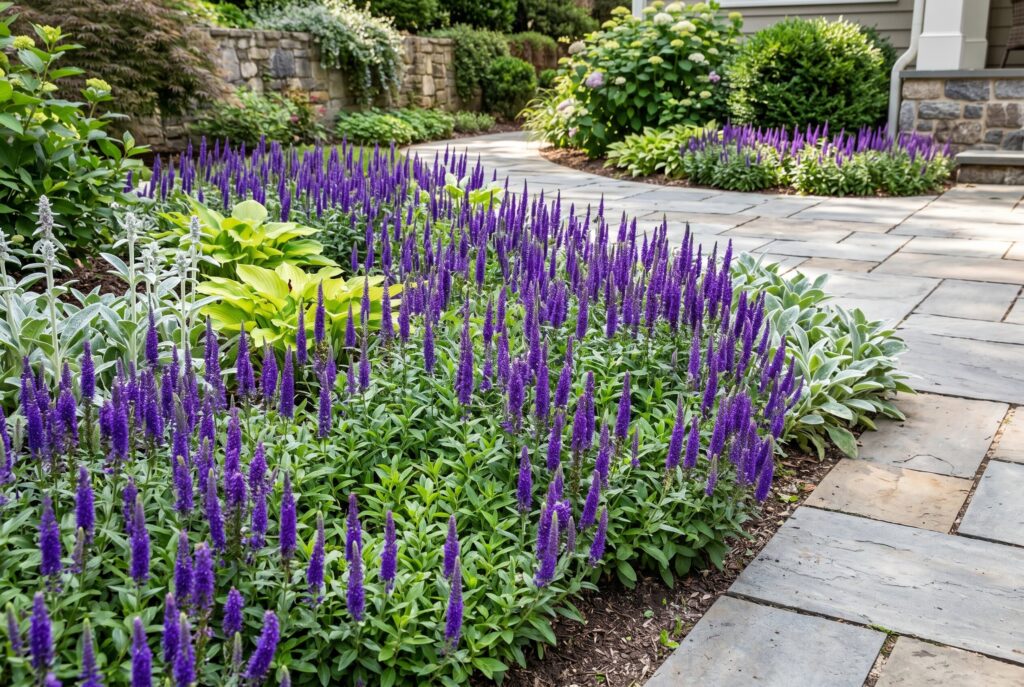
Royal Candles Veronica isn’t a flat mat, but it works beautifully as a low growing ground cover accent. Its upright purple flower spikes add height and texture above surrounding foliage. Use it along sunny borders where you want a layered look instead of a completely flat carpet. It attracts pollinators and looks especially good mixed with silver or lime green foliage.
6. Dalmatian Bellflower
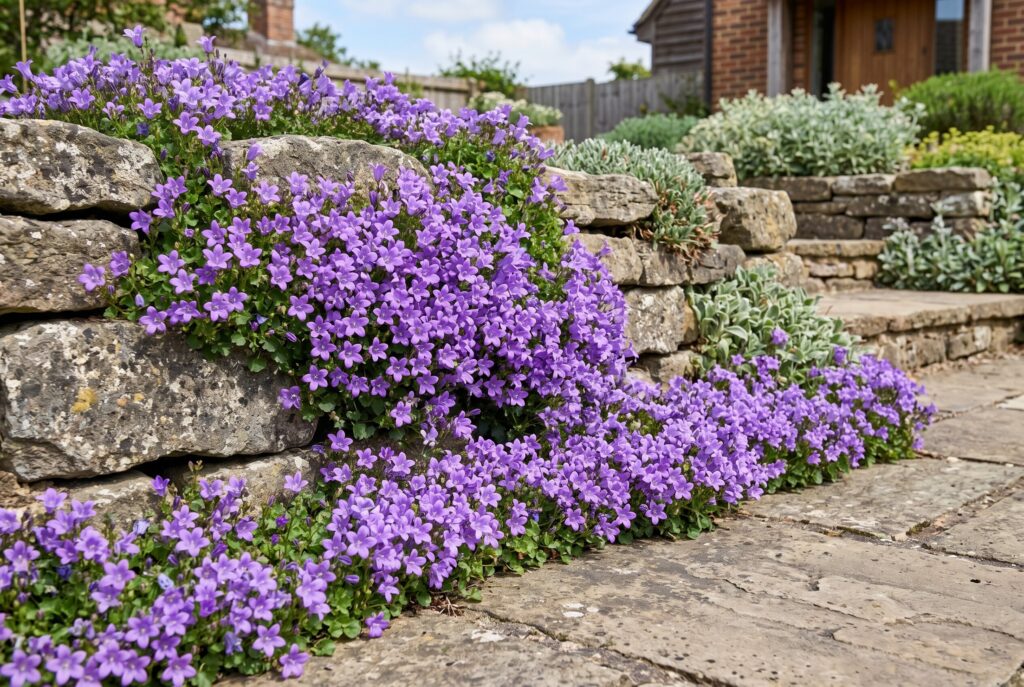
Dalmatian bellflower is tough, charming, and ideal for stonework. It can settle into wall cracks, path edges, and rock garden pockets, spilling purple bell shaped flowers over hard surfaces. It prefers sun to partial shade and moderate moisture. It’s a strong choice when you want a romantic cottage garden look without tall plants blocking the design.
7. Creeping Mazus
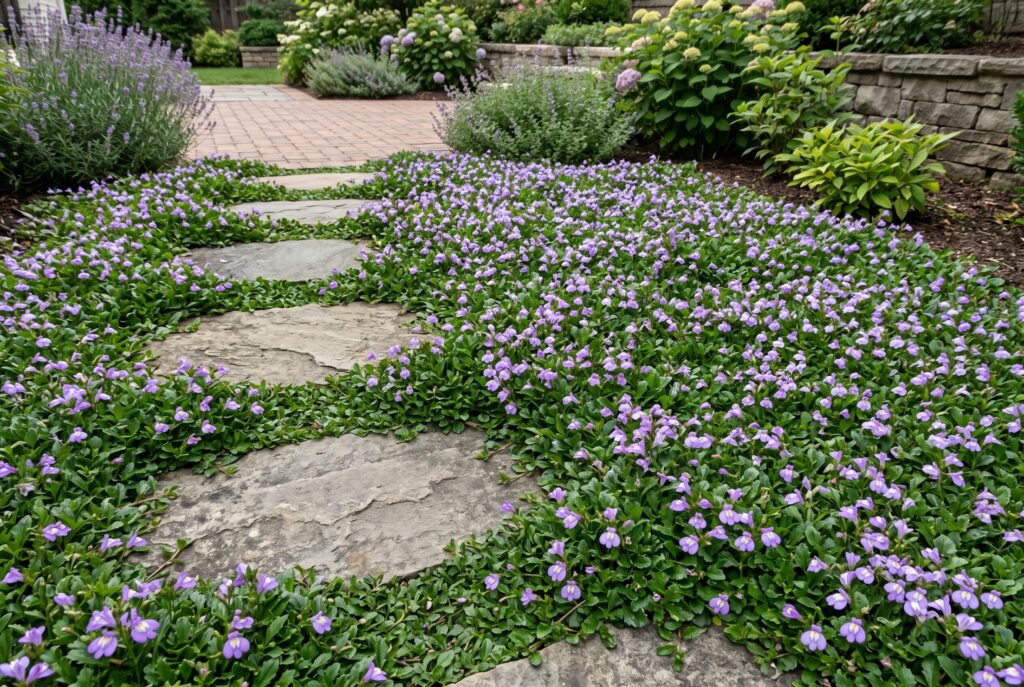
Creeping mazus forms a fresh green mat dotted with small purple flowers. It tolerates light foot traffic, making it useful between pavers and around walkways. It grows best in moist but well drained soil and can spread quickly when happy. For bare spots that need soft coverage, this is one of the most practical purple flowering ground covers.
8. Horned Pansy
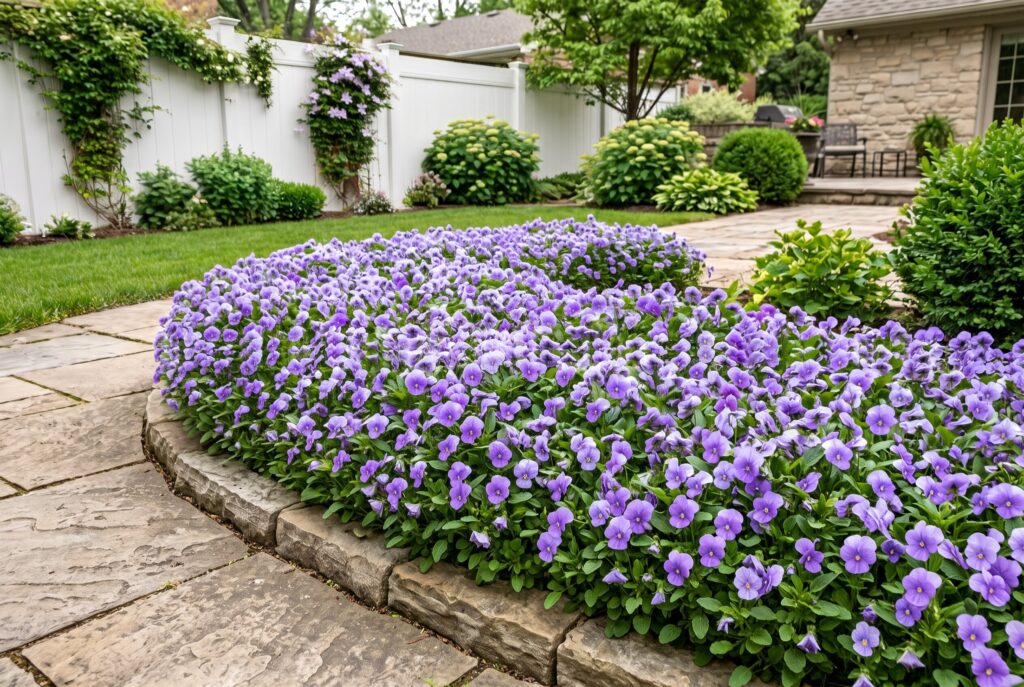
Horned pansy brings delicate purple blooms during cool weather, especially in spring and fall. It’s best for partial shade, borders, and seasonal ground cover displays. While it isn’t the toughest long-term lawn alternative, it’s wonderful for adding soft color to containers, bed edges, and small garden spaces where you want a cheerful seasonal carpet.
9. Spotted Dead Nettle

Spotted dead nettle, often sold as purple lamium, is a secret weapon for shade. Its silver marked leaves brighten dark corners even when the flowers aren’t open, while purple blooms add soft color through the growing season. It’s a low-maintenance ground cover for under shrubs, along fences, and beneath trees where grass doesn’t have a chance.
10. Bugleweed

Bugleweed, or Ajuga, offers deep purple bronze foliage and upright purple flower spikes. It works in partial to full shade and covers soil fast. That speed is useful for weed suppression, but it can become a problem if you let it run into lawns or delicate beds. Plant it inside hard edging, stone borders, or contained shade gardens.
11. Creeping Lilyturf
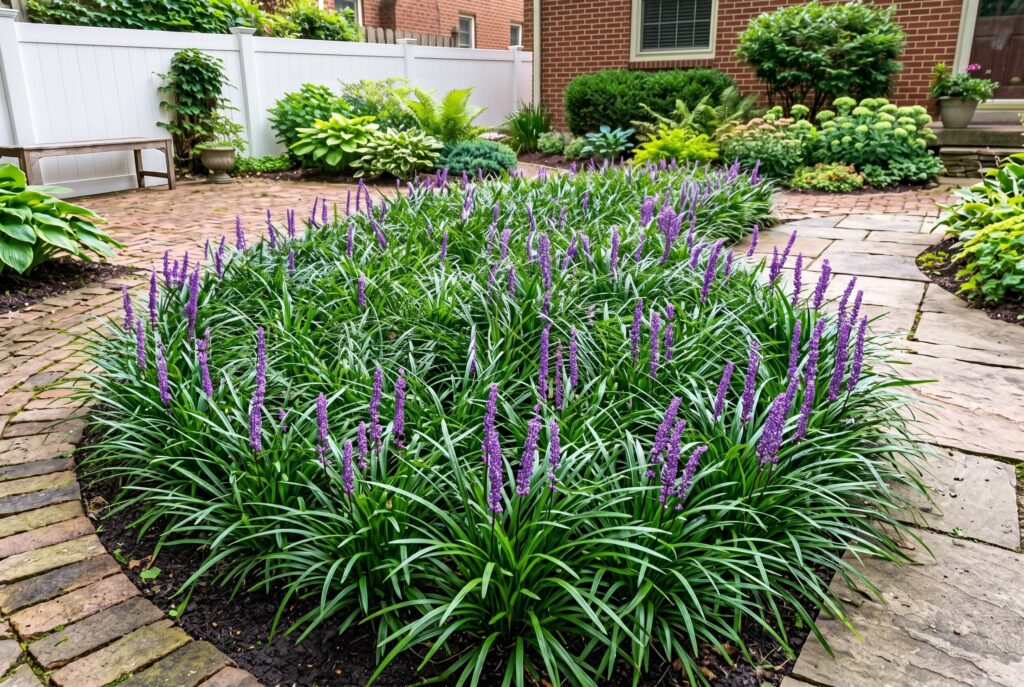
Creeping lilyturf, also called Liriope spicata, looks like a grassy ground cover but produces purple flower spikes in late summer. It handles sun, shade, slopes, and difficult soil better than many plants. It’s excellent for erosion control, but it spreads by underground runners, so give it space or use barriers if you want strict control.
12. Cranesbill Geranium Rozanne
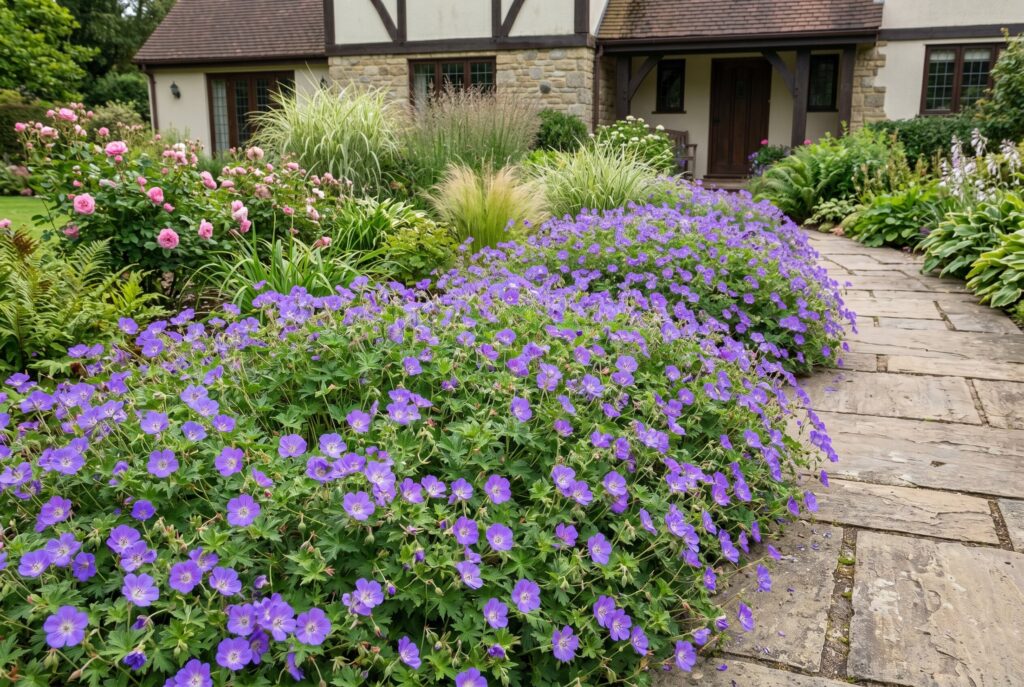
Rozanne geranium is famous for long blooming purple blue flowers. It isn’t the lowest carpet, but it creates a soft mound that can cover bare soil beautifully from early summer until frost. It works in sun to partial shade and pairs well with roses, ornamental grasses, and pathway edges. It’s a great choice when you want color for months, not weeks.
13. Periwinkle
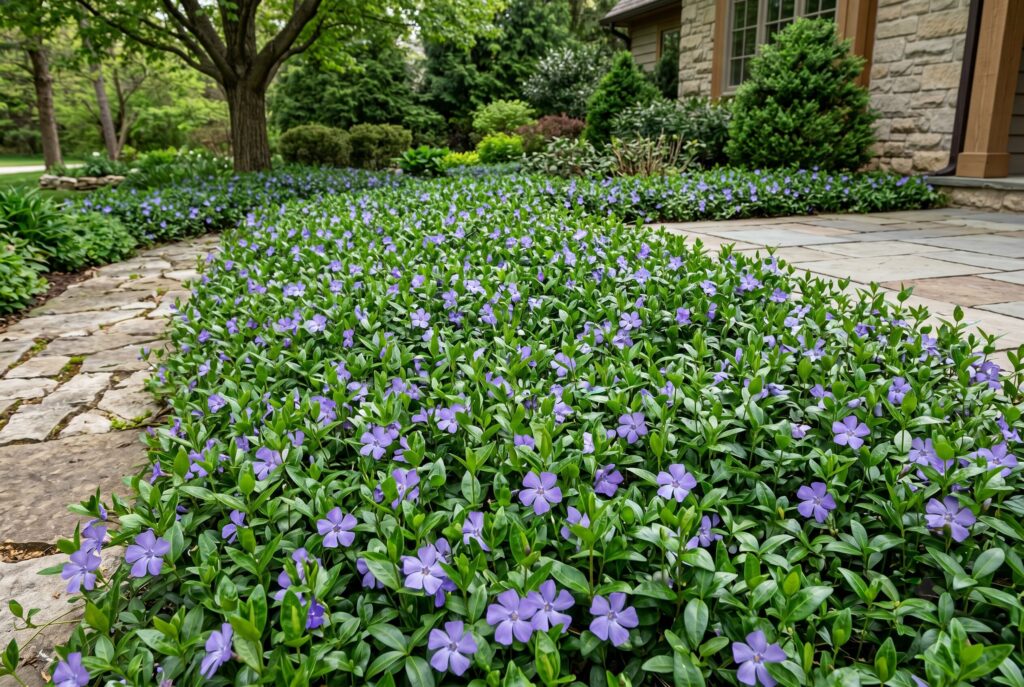
Periwinkle ground cover has glossy leaves and dreamy purple flowers, but it comes with a serious warning. Vinca minor can become invasive in many regions, especially near woodland edges. It survives deep shade and tough conditions, but that toughness can let it escape and crowd out native plants. Use it only in fully contained areas, or choose safer shade ground cover alternatives.
Pro Tips: Soil Prep and Maintenance for Purple Covers
Don’t spend hundreds of USD ($) on plants before preparing the ground. First, remove existing weeds and cover the area with cardboard and mulch for about four weeks. This blocks light and weakens weed roots without harsh chemicals. After that, loosen the topsoil, add compost, and plant plugs at the recommended spacing.
Fast spreaders like bugleweed, creeping lilyturf, and periwinkle need boundaries. Use deep edging, stone borders, or isolated beds. For softer plants like creeping thyme and creeping mazus, keep them watered during the first few weeks so roots can settle before drought stress begins.
Conclusion
Adding purple ground cover isn’t just a style choice. It’s a practical way to replace dull lawn patches, cover bare spots, reduce weeds, support pollinators, and create a richer landscape. Choose creeping thyme for sunny paths, ice plant for dry heat, purple lamium for shade, lithodora ground cover for vivid blue purple color, and creeping phlox for spring drama. The best garden doesn’t fight the site. It uses the right plant in the right place, then lets color do the work.
Related Articles
Ground Cover Plants: 35 No Mow Grass Alternatives
Flowering Ground Cover: 17 Combos for a Carpet of Color