

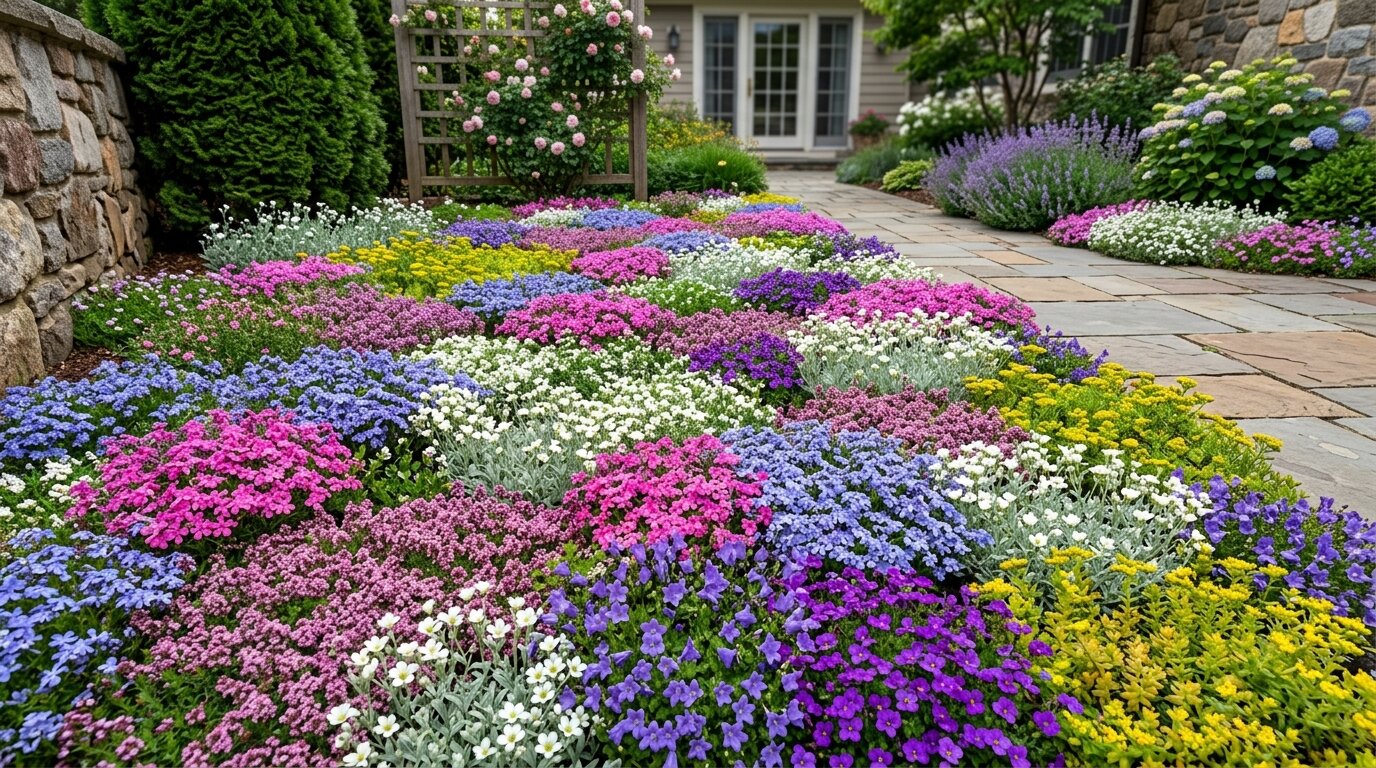
Grass isn’t the only way to create a soft, finished landscape. A flowering ground cover can turn bare soil, awkward slopes, hot edges, shaded corners, and tired lawn patches into a living carpet of color. Instead of mowing every weekend, you can plant low-growing ground cover that spreads outward, shades the soil, helps suppress weeds, and brings seasonal blooms to places where turf often struggles.
The best choice depends on your yard. For full sun ground cover, choose tough bloomers like creeping thyme, ice plant, creeping phlox, sedum, and lantana. For ground cover for shade, look at ajuga, sweet woodruff, lamium, foamflower, astilbe, and wild ginger. If your goal is fast spreading ground cover for weed control, microclover, mazus reptans, blue star creeper, and ground cover roses can help fill space quickly.
The secret isn’t simply choosing the prettiest flower. It’s matching light, soil, moisture, foot traffic, and spread rate before planting. Do that well, and ground cover flowers can become one of the easiest ways to add curb appeal without building a high maintenance garden.
Group 1: Full Sun and Drought Tolerant Flower Carpets
1. Creeping Thyme
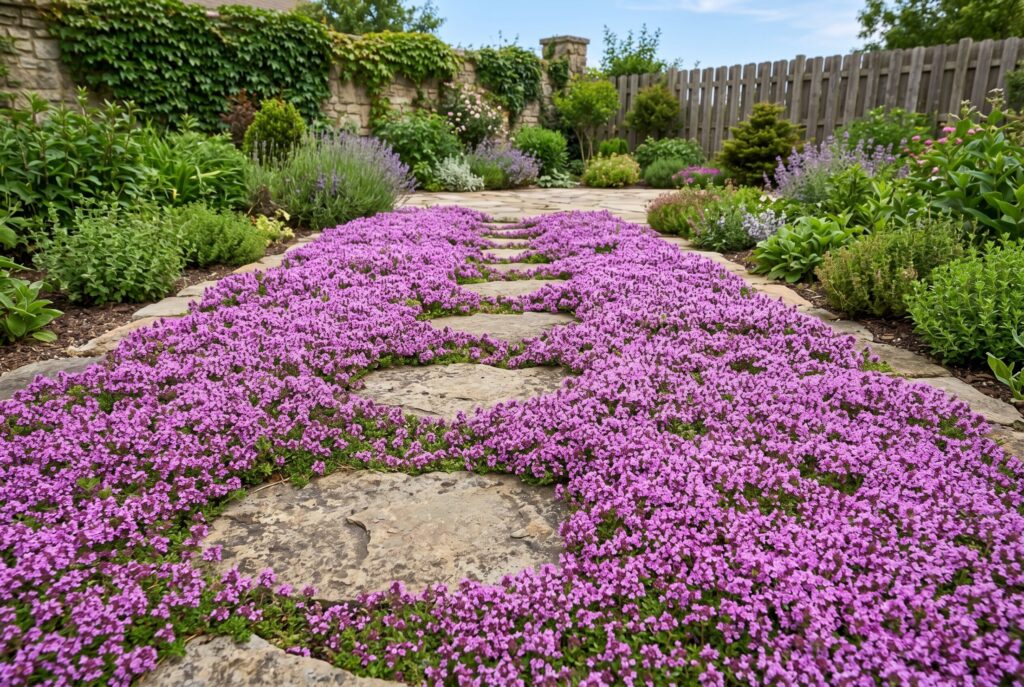
Creeping Thyme is one of the best flowering ground covers for sunny pathways, stepping stones, and lawn replacement projects. It tolerates light foot traffic, releases a pleasant herbal fragrance when walked on, and produces a stunning carpet of purple blooms that adds color and texture to the landscape.
Once established, it requires very little water, making it an excellent choice for drought-tolerant gardens. It performs best in full sun and well-draining soil, where it can thrive in rock gardens, between pavers, and other low-maintenance landscape designs.
2. Ice Plant
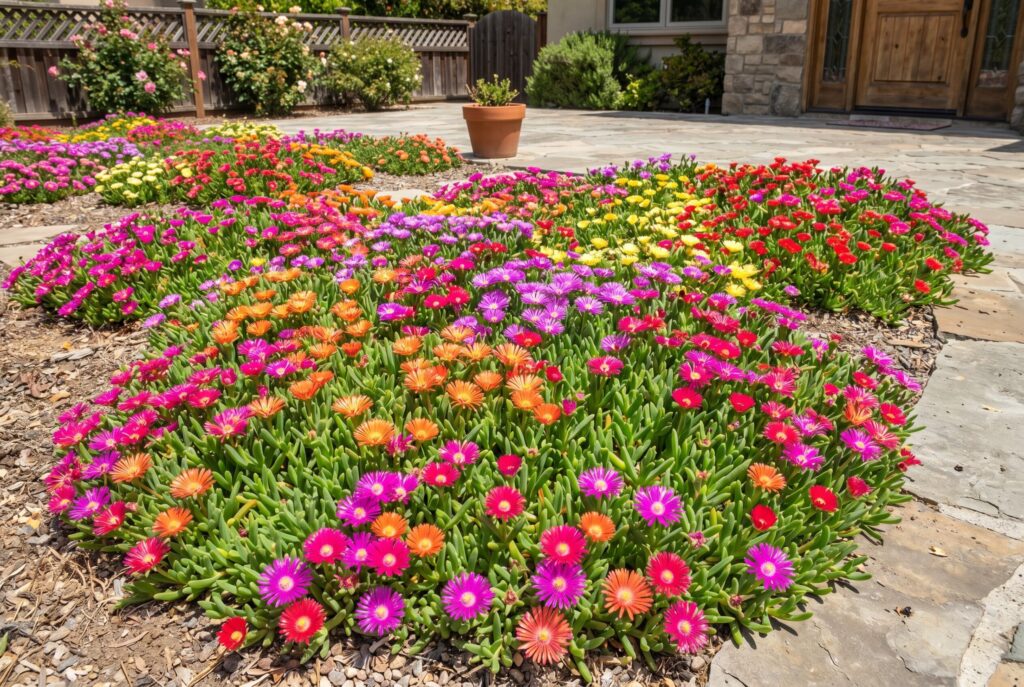
Ice Plant is a bold, drought-tolerant ground cover that thrives in hot, sunny locations where many other plants struggle to survive. Its succulent leaves store water efficiently, allowing it to withstand long periods of heat and dryness with minimal maintenance.
During the blooming season, Ice Plant produces vibrant flowers that create a striking display of color, making it a popular choice for adding curb appeal to low-water landscapes. It performs especially well on dry slopes, curb strips, and gravel gardens, where its spreading habit helps cover bare ground while reducing the need for irrigation. For best results, plant it in full sun and well-draining soil, as excessive moisture can lead to poor performance or root problems.
3. Creeping Phlox
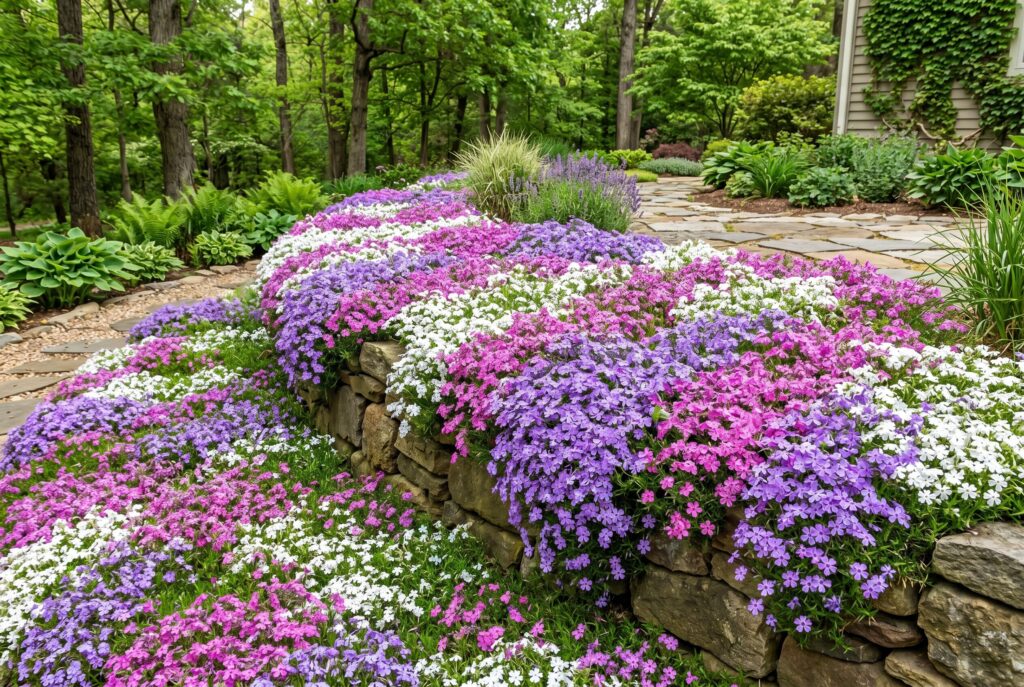
Creeping Phlox is one of the most popular flowering ground covers for adding spectacular spring color to the landscape. It spills gracefully over retaining walls, spreads across slopes, and creates a vibrant carpet of pink, white, blue, or purple blooms that can transform a garden for several weeks each year.
Beyond its visual appeal, it helps stabilize soil on hillsides and provides dense ground coverage with minimal maintenance. After flowering, a light trim encourages a thicker, neater mat and helps maintain its attractive appearance throughout the season. For best results, plant Creeping Phlox in full sun and well-draining soil, as it performs poorly in areas that remain consistently wet or poorly drained.
4. Sedum Dragon’s Blood
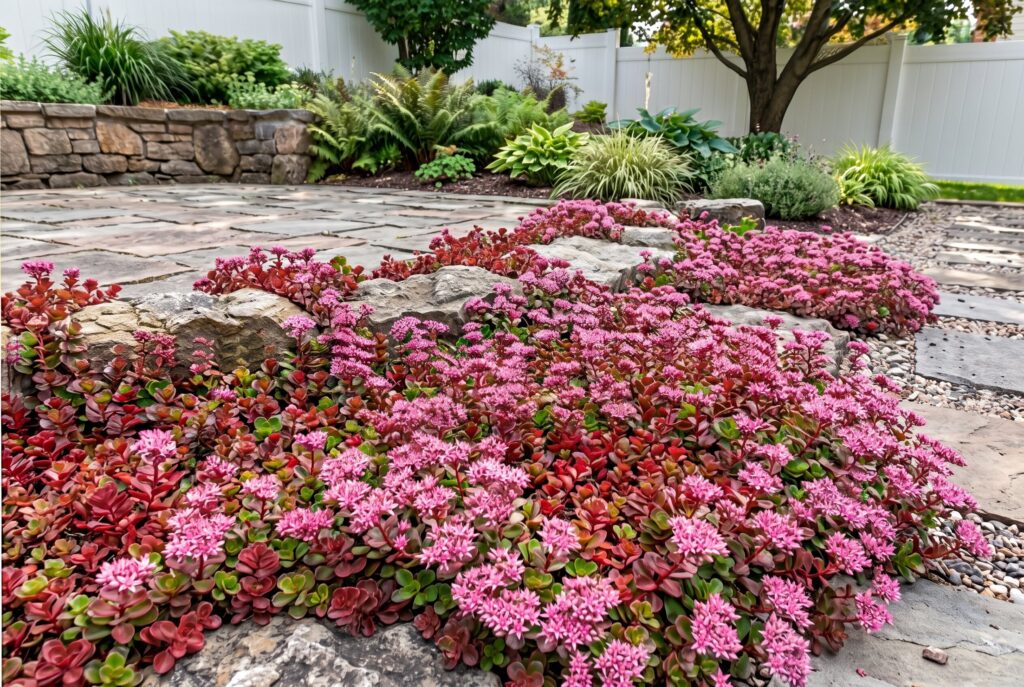
Sedum “Dragon’s Blood” is a resilient succulent ground cover that brings year-round color and texture to dry, challenging landscapes. Its foliage develops rich red and burgundy tones, especially during cooler seasons, while clusters of pinkish-red flowers add extra visual interest in summer. This hardy plant thrives in poor soil, full sun, and drought-prone conditions, making it an excellent choice for rock gardens, borders, slopes, and other low-maintenance areas.
While it doesn’t create a soft, walkable lawn surface, it excels as a decorative ground cover that requires very little water or care once established. For homeowners looking for a plant that combines striking color with exceptional toughness, Sedum ‘Dragon’s Blood’ is one of the most reliable options available.
5. Snow in Summer
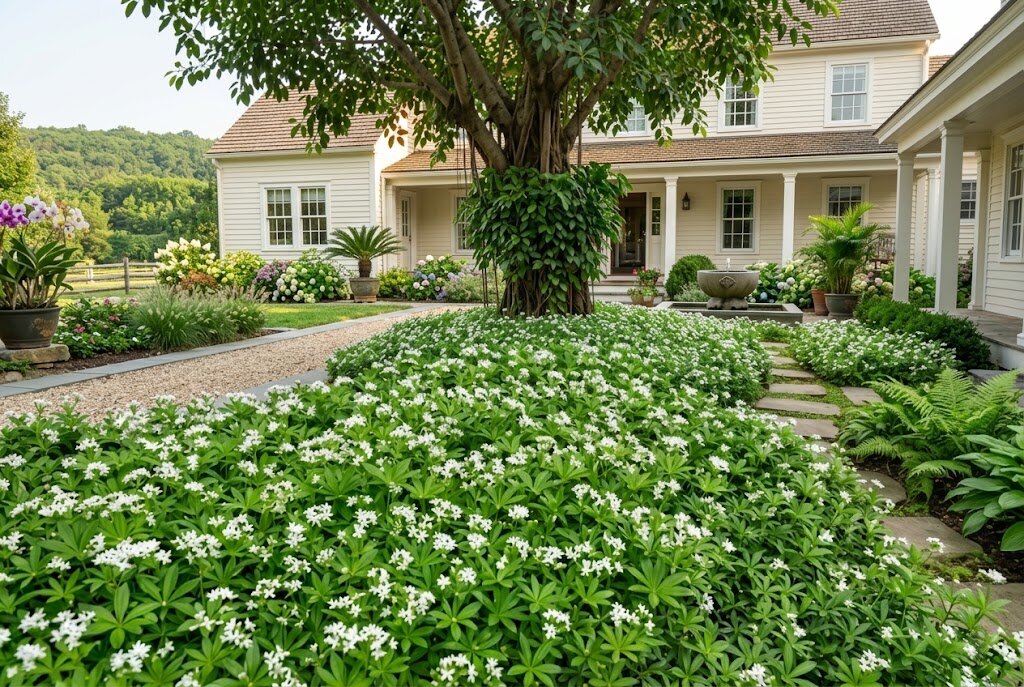
Snow in Summer is a fast-spreading ground cover that brightens dry, sandy landscapes with its silvery foliage and masses of crisp white flowers. Its ability to thrive in poor soil and sunny conditions makes it an excellent choice for covering bare ground quickly, especially on slopes, rock gardens, and along stone borders where its bright color creates a clean, elegant contrast.
Because it grows vigorously, it’s best planted in areas where its spread can be easily managed or where rapid coverage is desired. Once established, Snow in Summer requires little maintenance and tolerates drought well, making it a practical option for low-water landscapes.
6. Lantana
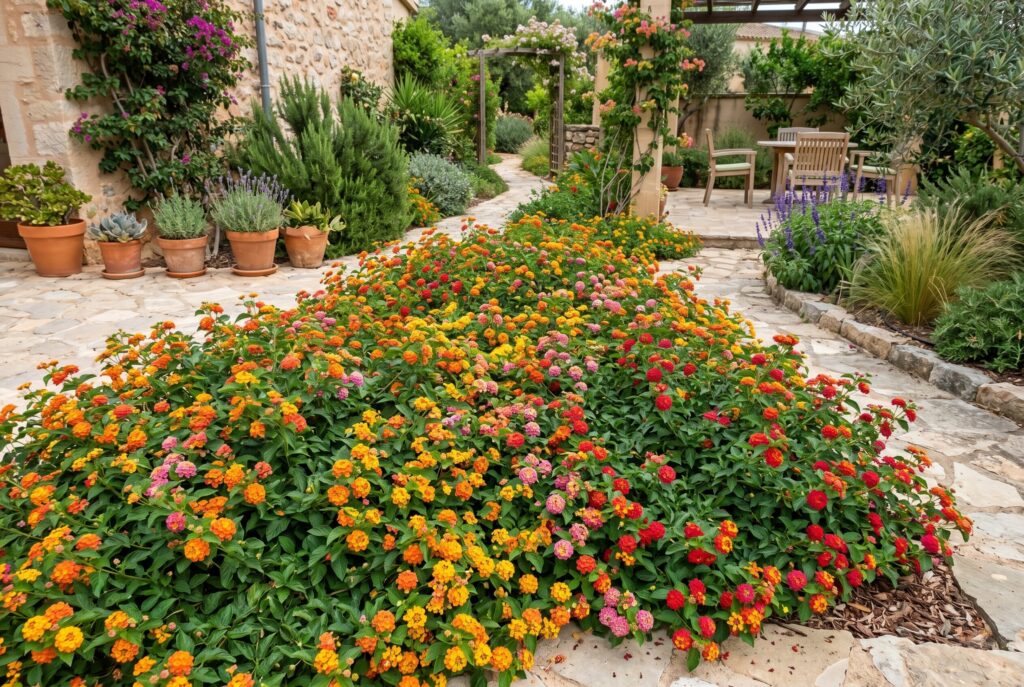
Lantana is a heat-loving ground cover that thrives in sunny, drought-prone landscapes while producing clusters of vibrant flowers that attract butterflies and other pollinators throughout the growing season. In warm climates, it can bloom for months with very little maintenance, making it an excellent choice for adding long-lasting color to slopes, borders, and low-water gardens.
Once established, Lantana tolerates heat and drought exceptionally well, reducing the need for frequent watering. However, homeowners with pets should be aware that its leaves and berries can be toxic if ingested, making it a less suitable option for yards where dogs or other animals are known to chew on plants.
Group 2: Shade Loving Beauties
7. Ajuga Burgundy Glow
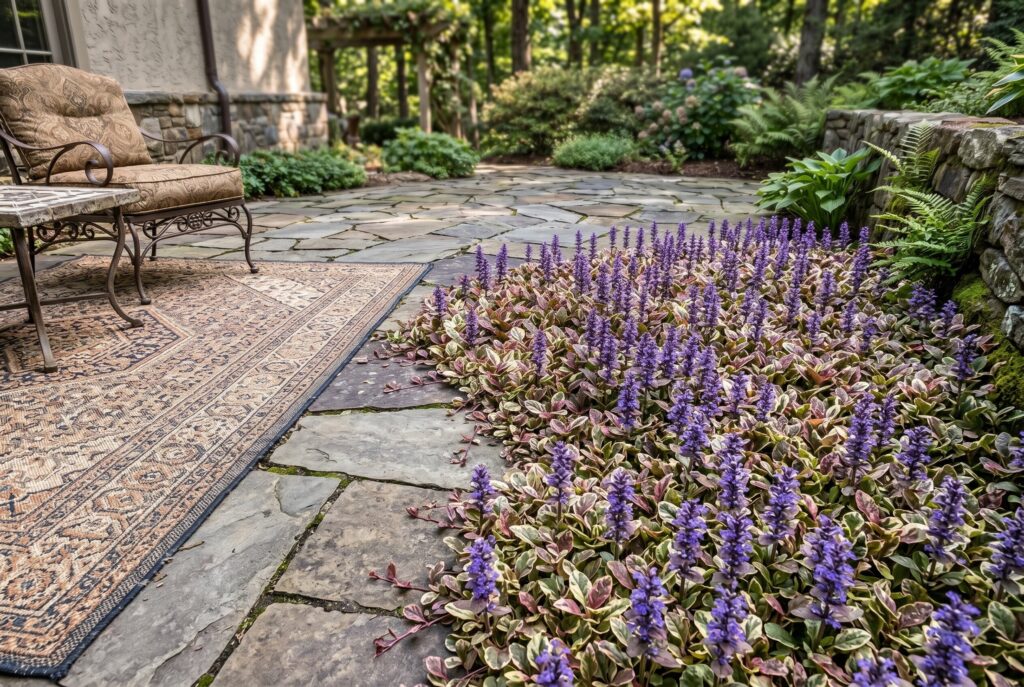
Ajuga is a versatile ground cover that brings both colorful foliage and vibrant spring flowers to shady areas where many plants struggle to thrive. The popular variety “Burgundy Glow” is especially valued for its striking leaves, which can display a blend of cream, pink, green, and purple tones, creating year-round visual interest even when not in bloom.
In spring, spikes of purple flowers rise above the foliage, attracting pollinators and adding another layer of color to the landscape. Because Ajuga spreads quickly to form a dense, weed-suppressing mat, it works best in contained garden beds, under trees, or other areas where vigorous growth is an advantage rather than a concern.
8. Sweet Woodruff
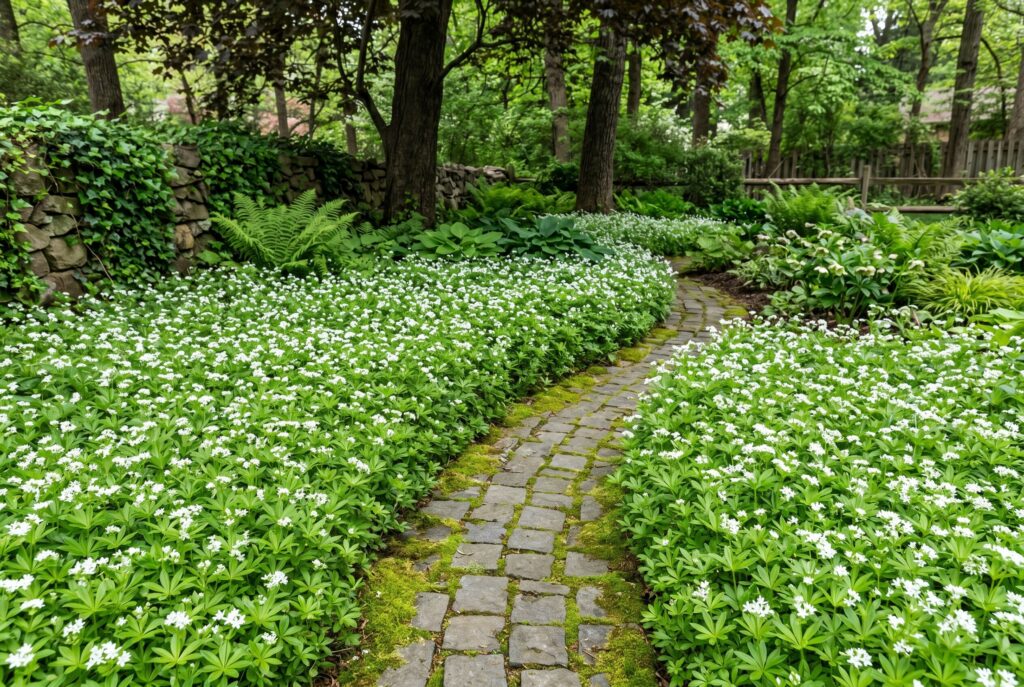
Sweet Woodruff is an elegant ground cover that thrives in shady, sheltered areas where many sun-loving plants can’t grow. Its delicate green foliage forms a soft, natural-looking carpet, while clusters of small, star-shaped white flowers brighten the garden in spring. This plant is especially well-suited for planting beneath trees, along woodland paths, and in cool, shaded corners where a relaxed, woodland-inspired aesthetic is desired.
Once established, Sweet Woodruff spreads gradually to create a refined ground layer that blends seamlessly into the landscape, making it an excellent choice for gardeners who prefer a natural rather than highly manicured look.
9. Lamium
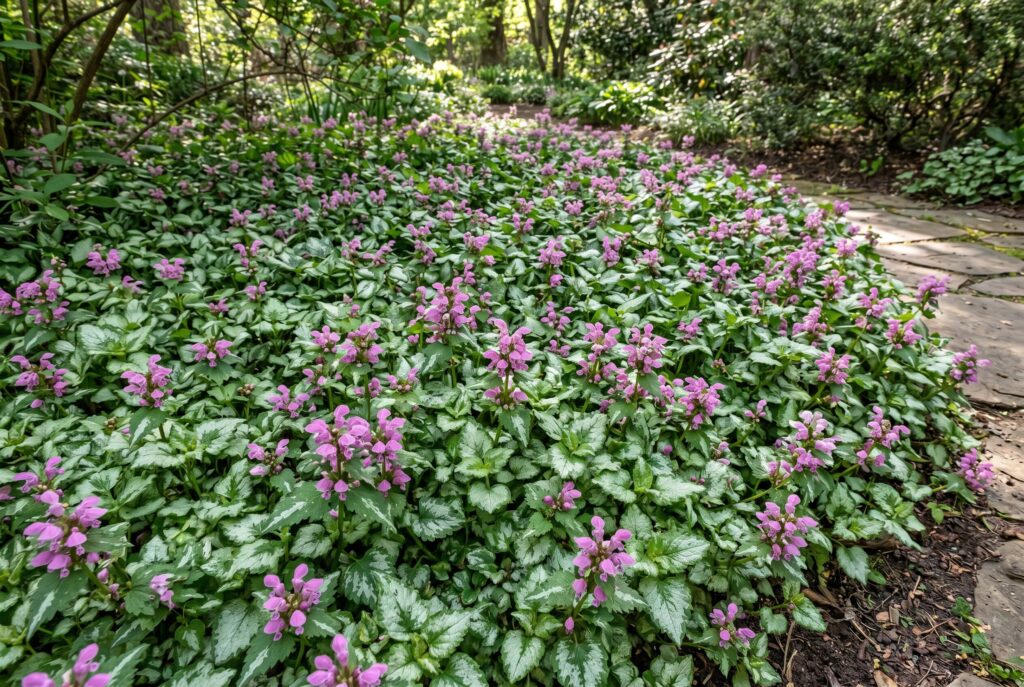
Lamium, commonly known as Spotted Dead Nettle, is one of the best ground covers for brightening shady areas of the garden. Its attractive silver-marked foliage reflects light and adds contrast to dark corners, while clusters of pink, white, or purple flowers provide seasonal color and a softer, more natural look.
Lamium spreads to form a dense, low-maintenance carpet that helps suppress weeds and cover bare soil, making it especially useful beneath shrubs, along shaded borders, and in areas where grass struggles to grow. Once established, it requires very little care and brings year-round interest to spaces that might otherwise feel dull or difficult to landscape.
10. Foamflower
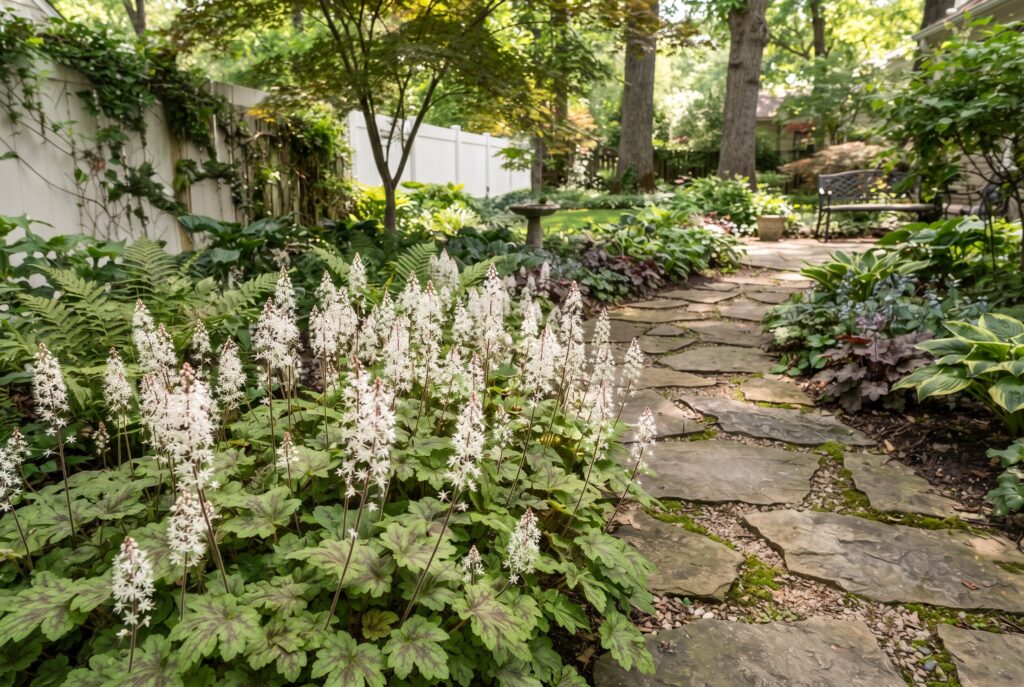
Foamflower (Tiarella) is a charming woodland ground cover prized for its airy spikes of white blooms that appear to float above its attractive foliage in spring. Its delicate flowers bring brightness and movement to shaded gardens, while the textured leaves provide season-long interest even after blooming has finished.
Foamflower is particularly well-suited to native-inspired landscapes, woodland gardens, and shaded borders where a natural, relaxed appearance is desired. Over time, it spreads into a soft, low-maintenance carpet that helps suppress weeds and fill difficult shady spaces, making it an excellent choice for gardeners seeking ground cover flowers that feel both elegant and naturally at home in the landscape.
11. Astilbe
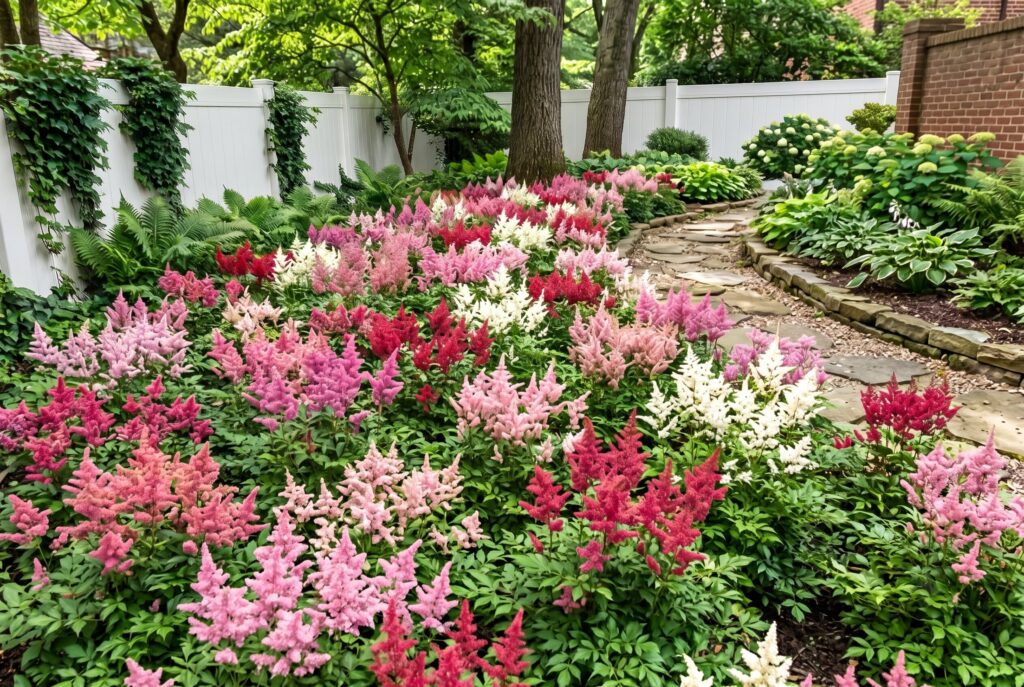
Astilbe may not form the lowest-growing ground cover, but it is an excellent choice for adding color and texture to moist, shaded landscapes.
Its feathery flower plumes rise above lush foliage, creating a soft, elegant look that brightens areas beneath trees, along shaded borders, and in woodland-style gardens. The dense leaves help fill bare spaces and provide season-long interest even after the flowers fade.
However, Astilbe performs best in consistently moist soil and can struggle during dry periods, making regular moisture essential for healthy growth and abundant blooms.
Group 3: Fast Spreading Weed Fighters
12. Microclover
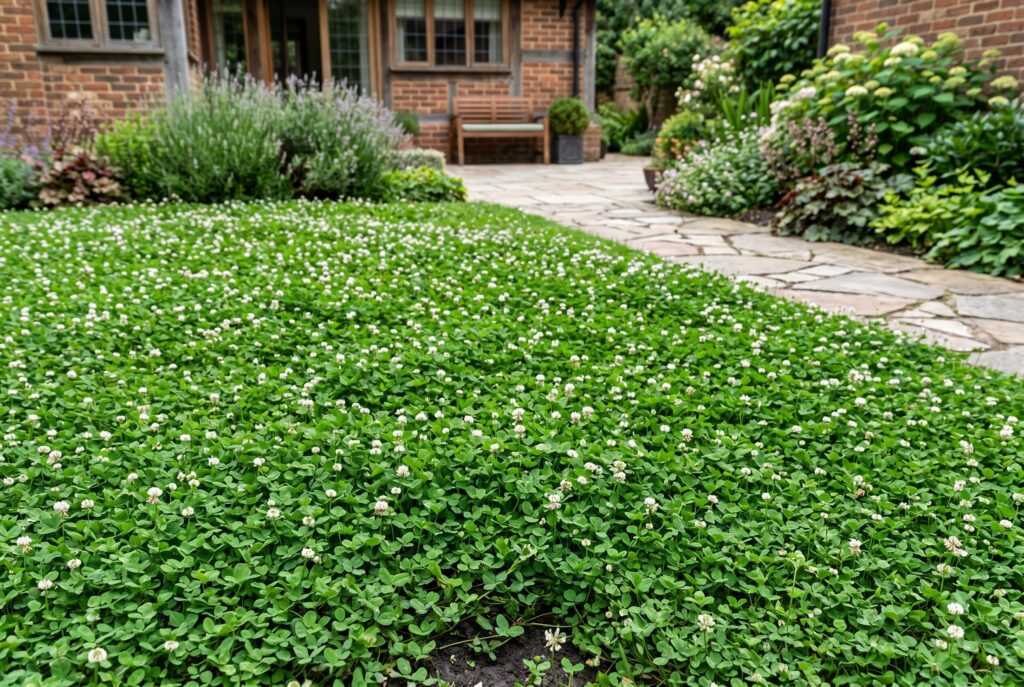
Microclover is a practical and eco-friendly lawn alternative that creates a soft, green surface with far less maintenance than traditional turf grass. One of its biggest advantages is its ability to naturally fix nitrogen, improving soil health and reducing the need for fertilizer.
While it doesn’t produce the dramatic floral displays of plants like Creeping Phlox or Creeping Thyme, its small white flowers provide valuable support for bees and other pollinators. Its dense growth habit also helps suppress weeds, making it an excellent choice for homeowners seeking a greener, lower-maintenance lawn that remains attractive throughout the growing season.
13. Vinca Minor
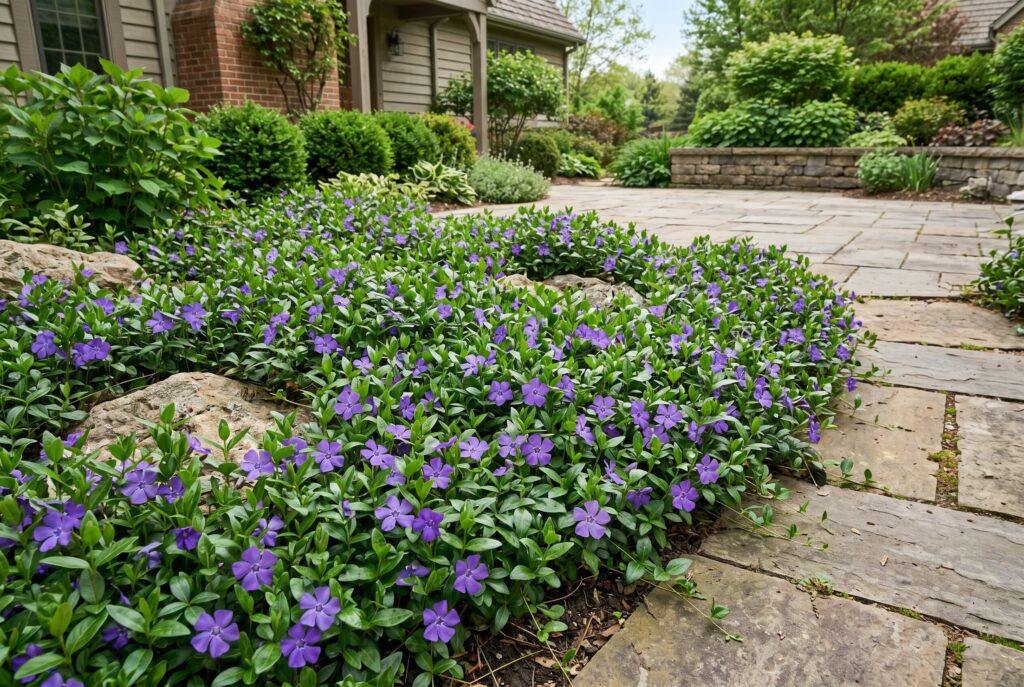
Vinca minor, commonly known as Periwinkle, is a popular ground cover valued for its glossy evergreen foliage and charming purple-blue flowers that appear throughout spring and often beyond. It spreads quickly to form a dense carpet, making it effective for covering bare ground, stabilizing slopes, and suppressing weeds in shaded or partially shaded areas.
However, its vigorous growth can become a drawback, as it is considered invasive in some regions and may outcompete native plants if left unchecked. For this reason, Vinca minor is best reserved for contained or isolated spaces where its spread can be managed. In naturalized landscapes and woodland gardens, native ground cover alternatives are often a more environmentally responsible choice.
14. Mazus Reptans
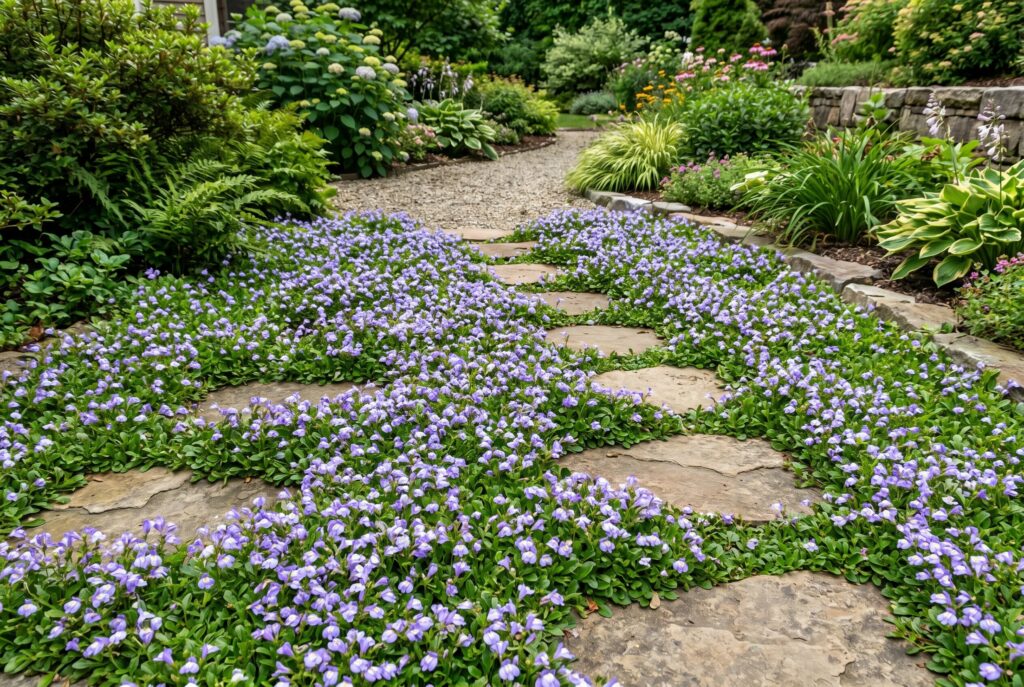
Mazus reptans is a fast-spreading ground cover that combines attractive blooms with practical landscape performance. Its low-growing habit and small, colorful flowers make it an excellent choice for filling gaps between pavers, edging pathways, and softening garden borders.
Unlike many ornamental ground covers, Mazus can tolerate light foot traffic, making it a useful option in areas where beauty and functionality need to coexist. It performs best in full sun to partial shade with consistently moist, well-draining soil, where it quickly forms a dense carpet that helps suppress weeds and cover bare ground with minimal maintenance.
15. Blue Star Creeper
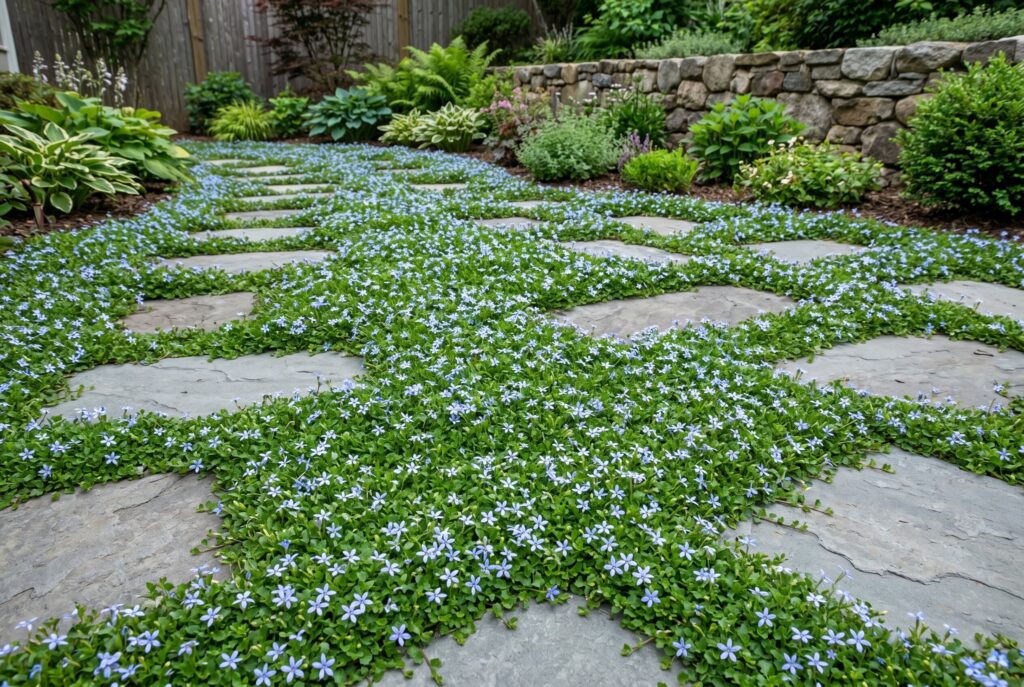
Blue Star Creeper is a charming, low-growing ground cover that forms a dense green carpet accented by delicate pale blue flowers throughout the growing season.
Its soft texture and spreading habit make it an excellent choice for planting between stepping stones, along pathways, or in small lawn-replacement areas where a traditional turf look is desired with less maintenance. It can tolerate light foot traffic and quickly fills gaps to create a seamless, attractive surface.
However, because it spreads readily, it’s important to establish clear boundaries before planting to prevent it from creeping into nearby garden beds or unwanted areas.
16. Wild Ginger
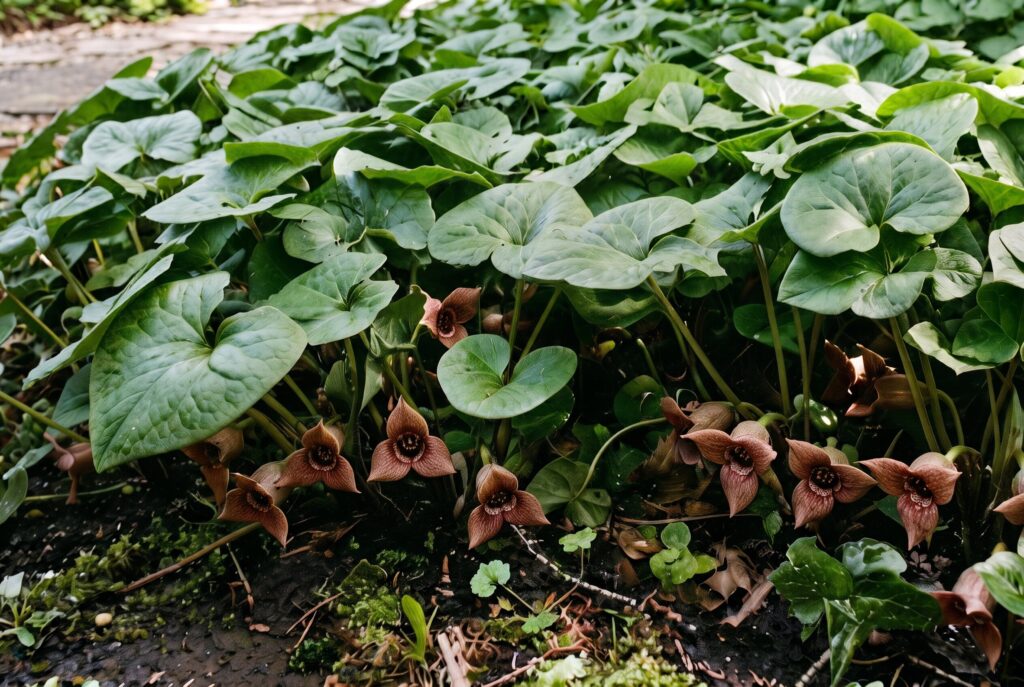
Wild Ginger is a beautiful shade-loving ground cover prized for its lush, heart-shaped leaves that create a dense, elegant carpet beneath trees and shrubs. While its small flowers are often hidden beneath the foliage and go largely unnoticed, its rich green leaves provide lasting visual interest and a refined woodland character throughout the growing season.
Wild Ginger thrives in shaded gardens with moist, well-draining soil, making it an excellent choice for naturalistic landscapes, woodland paths, and other areas where subtle texture is more important than bold floral displays. For gardeners seeking a low-maintenance ground cover that blends seamlessly into a natural setting, Wild Ginger is one of the most attractive and dependable options available.
17. Ground Cover Roses
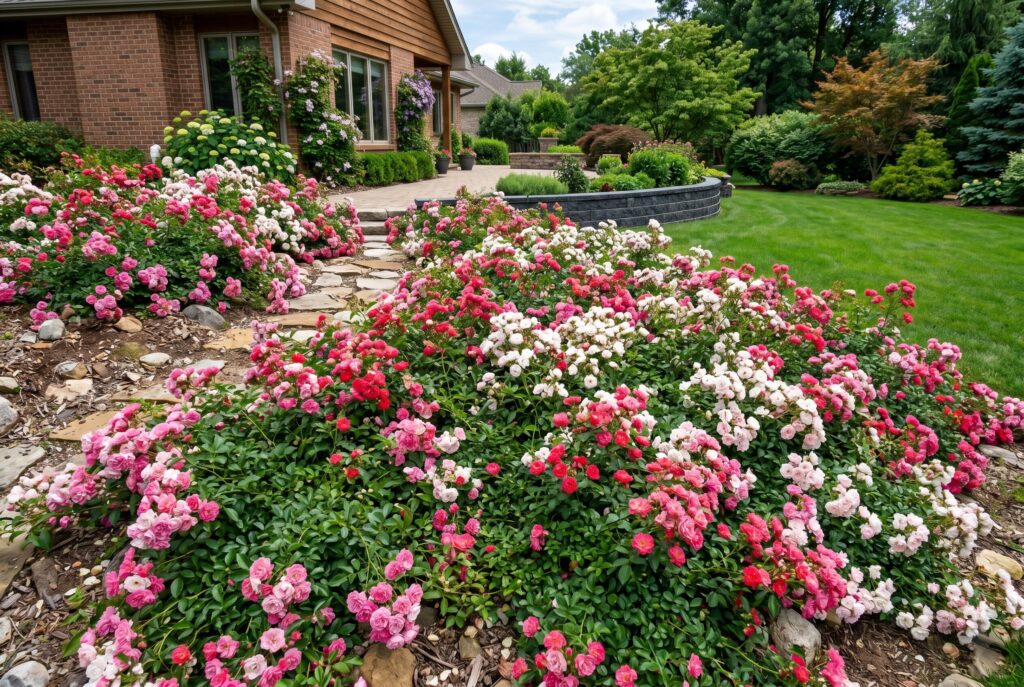
Ground Cover Roses are an excellent choice for homeowners who want the beauty of traditional roses with the practicality of a spreading landscape plant. They are particularly effective on slopes, banks, and large sunny garden beds, where their extensive growth helps reduce soil erosion while providing months of colorful blooms.
Unlike many low-growing ground covers that focus on foliage, these roses deliver an impressive display of flowers throughout the growing season, creating strong visual impact with relatively modest maintenance. For best performance, they require full sun, good air circulation, and occasional pruning to maintain shape and encourage healthy growth. If you’re looking for a ground cover that combines erosion control with exceptional flowering power, Ground Cover Roses are among the most rewarding options available.
How To Clear Weeds and Plant a Flower Carpet
Don’t plant flowering ground cover directly into a weedy patch and expect miracles. Start by cutting existing weeds low. Then use sheet mulching with plain cardboard for 4 to 6 weeks to block sunlight and weaken the roots without chemical herbicides.
After that, add compost to improve root contact. Plant plugs closer together if you want faster coverage. Seeds are cheaper, often around $30 to $50 for large areas, but plugs establish faster and may cost around $200 to $400 per 100 square feet depending on spacing and variety.
Conclusion
A flowering ground cover isn’t just decoration. It’s a smarter way to cover soil, reduce mowing, support pollinators, and make your yard feel intentional. Choose sun lovers for exposed spaces, shade ground cover for tree canopies, and fast spreading ground cover where weeds are winning. When you match the plant to the place, your garden doesn’t just bloom. It starts working for you.
Related Articles
Purple Ground Cover Plants: 13 Dramatic Picks for Curb Appeal