

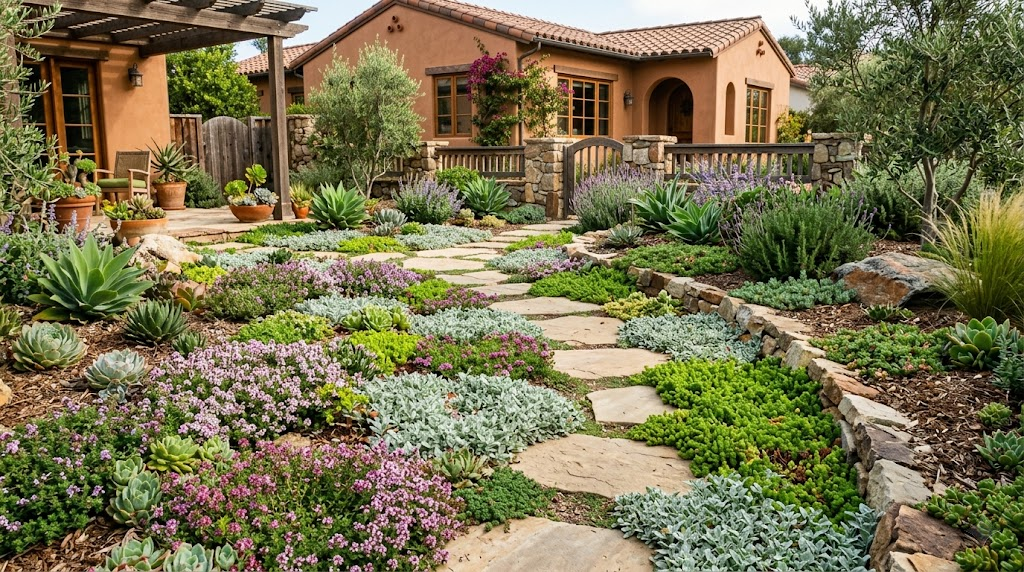
Rising water bills, summer watering bans, and burned out lawns are pushing more homeowners toward drought-tolerant ground covers. These low-growing plants replace thirsty turf with living carpets that survive heat, dry soil, and long gaps between watering. Unlike artificial turf, they don’t trap extreme surface heat, don’t shed plastic particles into the soil, and don’t leave your yard lifeless.
The best drought-tolerant ground cover plants use deep roots, small leaves, silver foliage, or water storing tissue to stay alive when rain disappears. Some, like creeping thyme ground cover, are soft enough for light foot traffic. Others, like sedum ground cover and ice plant ground cover, behave like living armor for hot slopes, gravel gardens, and full sun borders.
The key is choosing the right plant for your site. A sunny driveway strip needs a different solution than dry shade under a tree. Below are 17 low maintenance lawn alternatives that can help you cut watering, reduce mowing, and create a cooler, more resilient yard.
The Artificial Turf Myth: Why Live Plants Win
Artificial turf is often sold as the easiest drought solution, but it comes with hidden problems. In harsh sun, fake grass can become painfully hot for bare feet, children, and pets. It also doesn’t feed pollinators, cool the soil, absorb rain, or improve the living ecosystem around your home.
Live full sun ground cover plants do something better. They shade the ground, slow evaporation, soften hardscape, support insects, and create a yard that feels alive rather than sealed. A drought-tolerant ground cover may need water during establishment, but once rooted, many varieties survive with very little help.
For homeowners who want low-water landscaping without turning the yard into plastic, living ground covers are the smarter long term choice.
17 Drought Tolerant Warriors
1. Creeping Thyme Ground Cover
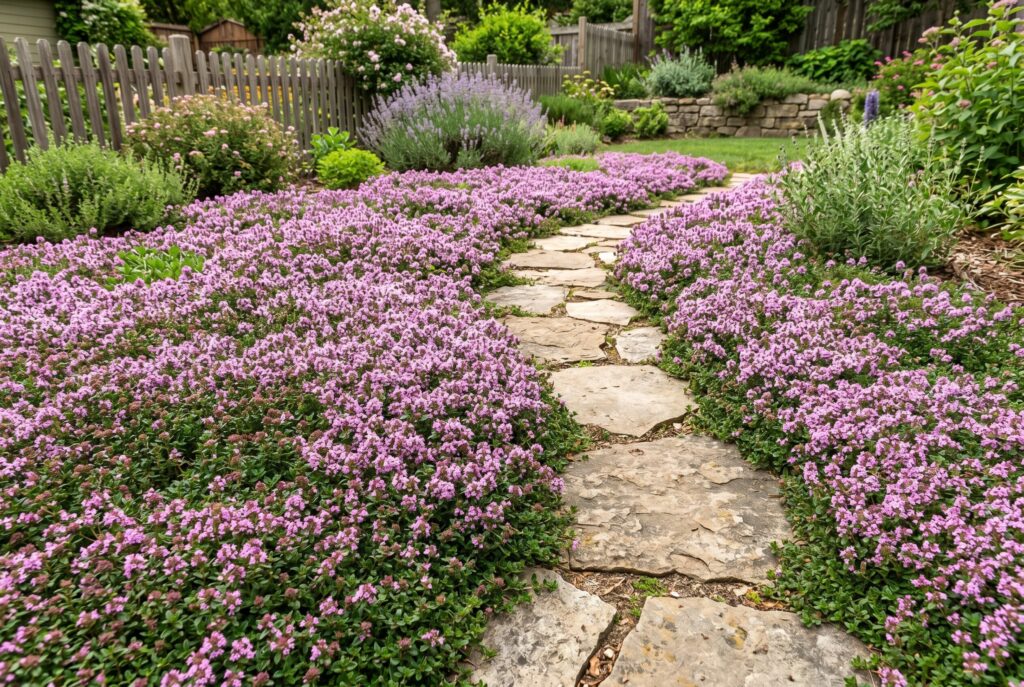
Creeping thyme is one of the best ground cover options for homeowners looking to replace a traditional lawn or add greenery along sunny pathways. It thrives in full sun and well-draining soil, making it ideal for dry areas where grass often struggles.
While it can tolerate light foot traffic and releases a pleasant herbal fragrance when stepped on, it’s not the best choice for areas with heavy daily use. Once established, creeping thyme requires very little watering, helping reduce both maintenance and water costs. Under favorable conditions, it can spread quickly and create a dense, attractive carpet of foliage within a single growing season, making it a practical and beautiful low-maintenance alternative to grass.
2. Snow in Summer
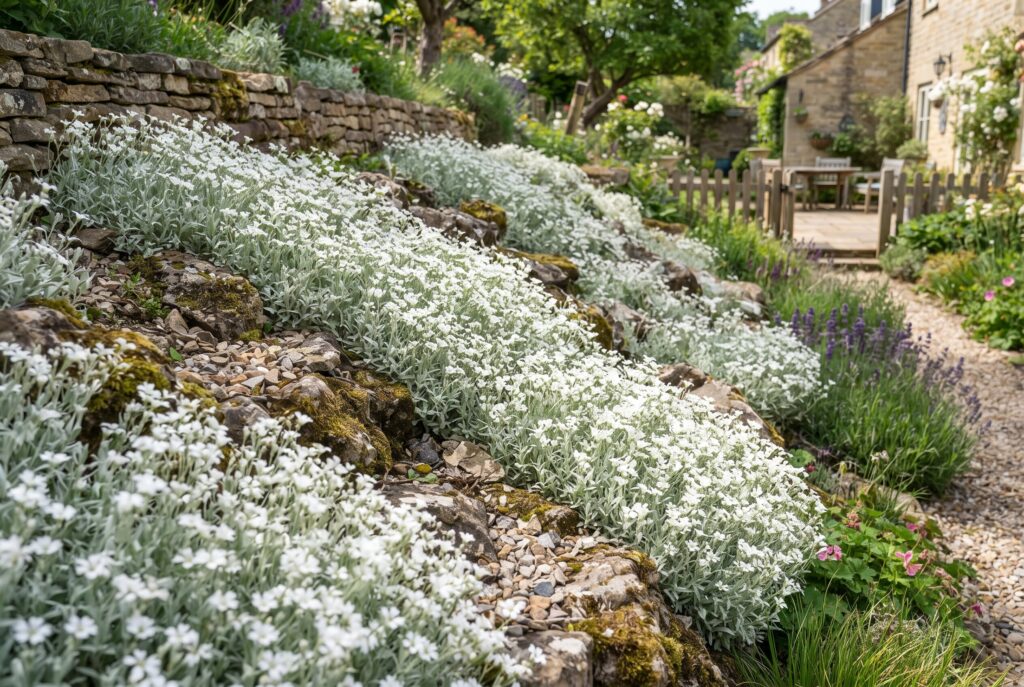
Snow in Summer is a striking ground cover for gardeners who want fast coverage and strong visual contrast in sunny, dry areas. Its silvery foliage and bright white flowers can make slopes, rock gardens, and border edges look softer and more dramatic, especially in hot spaces where many plants struggle.
However, this plant grows quickly and can spread wider than expected, so it is best for areas where its vigorous growth is useful rather than problematic. It is a good choice if you need quick coverage on poor, dry soil, but it may not be ideal for small, tightly managed garden beds unless you are willing to trim it back. For best results, plant it in full sun with well-draining soil, use it in contained spaces, and monitor its spread during the growing season.
3. Silver Carpet
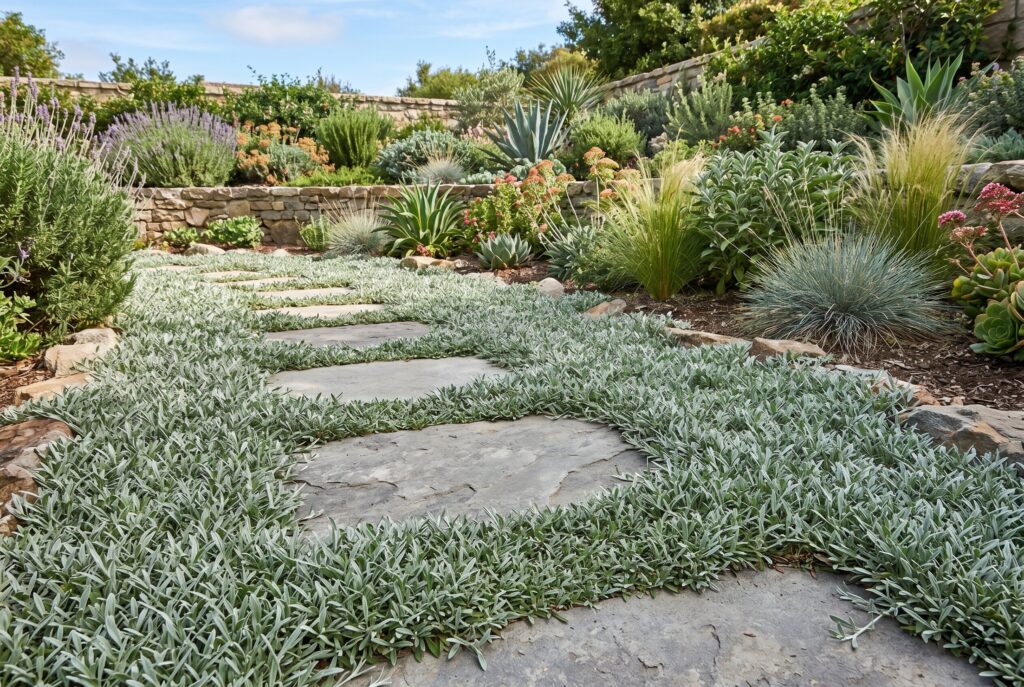
Silver Carpet (Dymondia margaretae) is an excellent choice for homeowners looking for a durable, low-growing ground cover that can handle sunny pathways and the spaces between stepping stones. Its narrow silver-green leaves form a dense, elegant carpet that adds a clean, modern look to landscapes while thriving in hot, dry conditions with minimal watering.
Although Dymondia is slower to establish than many other ground covers, its long-term benefits often outweigh the wait. Once mature, it creates a tidy, weed-suppressing surface that can tolerate light foot traffic, making it ideal for walkways, patios, and contemporary garden designs. For best results, plant it in full sun and well-draining soil, and be prepared for a slower first season before it develops into the refined, low-maintenance ground cover it is known for.
4. Sedum Ground Cover
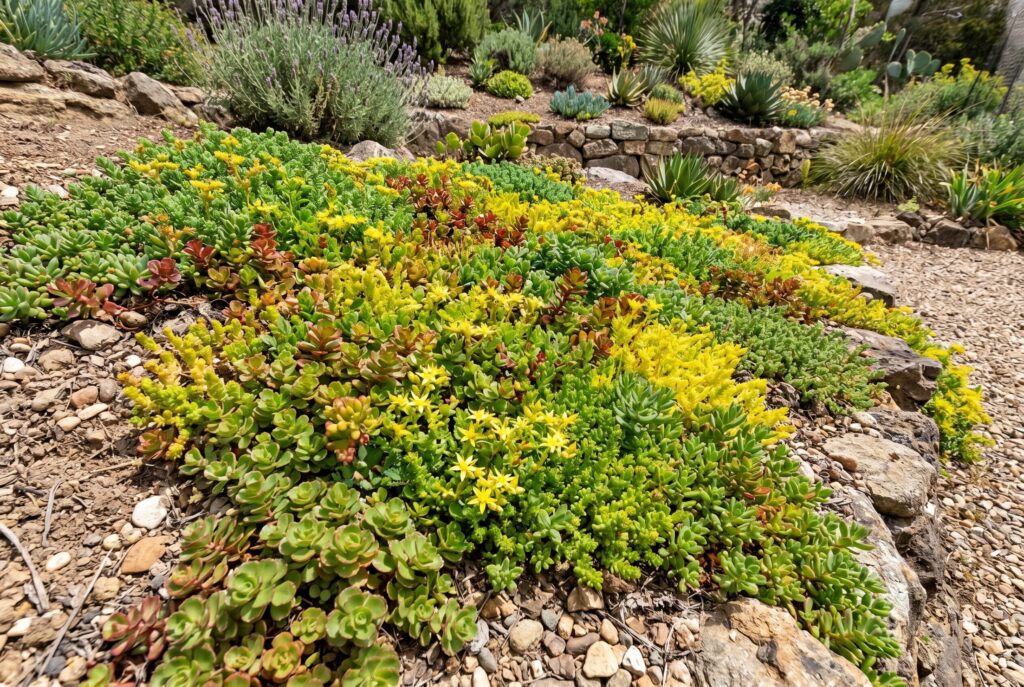
Sedum is one of the most reliable ground covers for hot, dry landscapes thanks to its succulent leaves, which store water and help the plant thrive with minimal irrigation. It performs exceptionally well in full sun and can grow in poor soil, gravel, rocky terrain, and other challenging conditions where many plants struggle.
This makes it an excellent choice for slopes, rock gardens, and low-maintenance landscapes that need year-round texture and color. Most sedum varieties spread steadily to create attractive ground coverage while requiring very little upkeep once established.
However, if you have pets that like to chew on plants, it’s worth researching the specific variety before planting, as some sedums may cause mild digestive discomfort if ingested. For homeowners seeking a drought-tolerant, easy-care ground cover, sedum is often one of the most practical and resilient options available.
5. Ice Plant Ground Cover
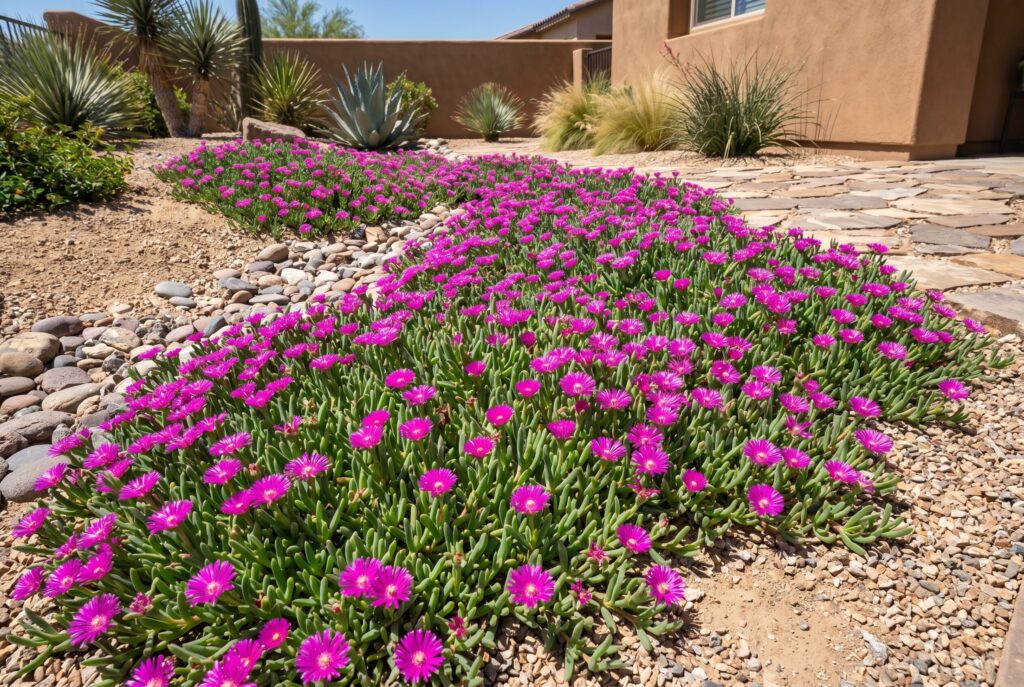
Ice Plant is a standout ground cover for homeowners who want bold color without the high water demands of traditional landscaping. Its vibrant, daisy-like flowers create eye-catching curb appeal throughout the blooming season, while its fleshy, succulent leaves help it thrive in hot, dry conditions with minimal maintenance.
Ice Plant performs best in full sun and well-draining sandy or rocky soil, making it an excellent choice for drought-prone regions, slopes, coastal gardens, and modern desert-inspired landscapes. Once established, it requires very little watering and spreads to form a dense mat that helps suppress weeds and protect soil from erosion.
However, because it dislikes wet or poorly drained soil, it’s not the best option for areas that stay consistently moist. For gardeners seeking a colorful, drought-tolerant ground cover that delivers both beauty and practicality, Ice Plant is one of the most rewarding choices available.
6. Hens and Chicks
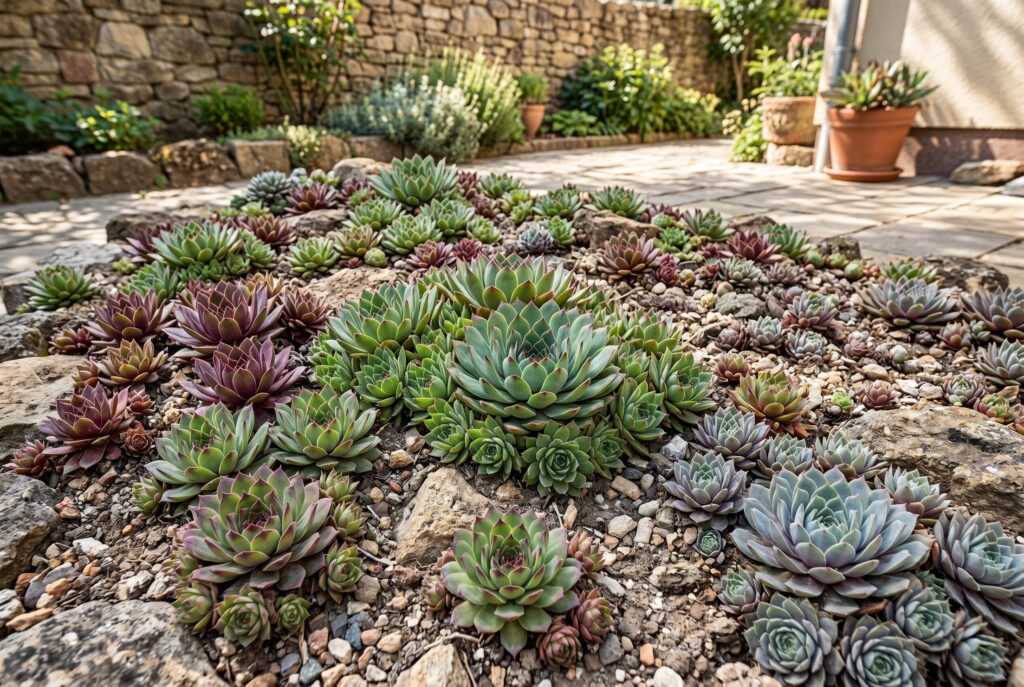
Hens and Chicks (Sempervivum) are among the toughest ground-cover succulents available, making them an excellent solution for areas where many other plants fail to thrive. Their distinctive rosette-shaped foliage adds year-round texture and visual interest, while their ability to grow in rocky, sandy, and nutrient-poor soil makes them ideal for dry slopes, stone walls, gravel gardens, and other challenging locations.
Unlike traditional ground covers, they don’t create a soft, walkable surface or spread into a dense carpet, but they excel as low-maintenance accent plants that require very little water once established. They are particularly well-suited for homeowners who want a drought-tolerant landscape with unique architectural appeal. For best results, plant them in full sun and well-draining soil, as excessive moisture can be more damaging than drought.
7. Sweet Woodruff
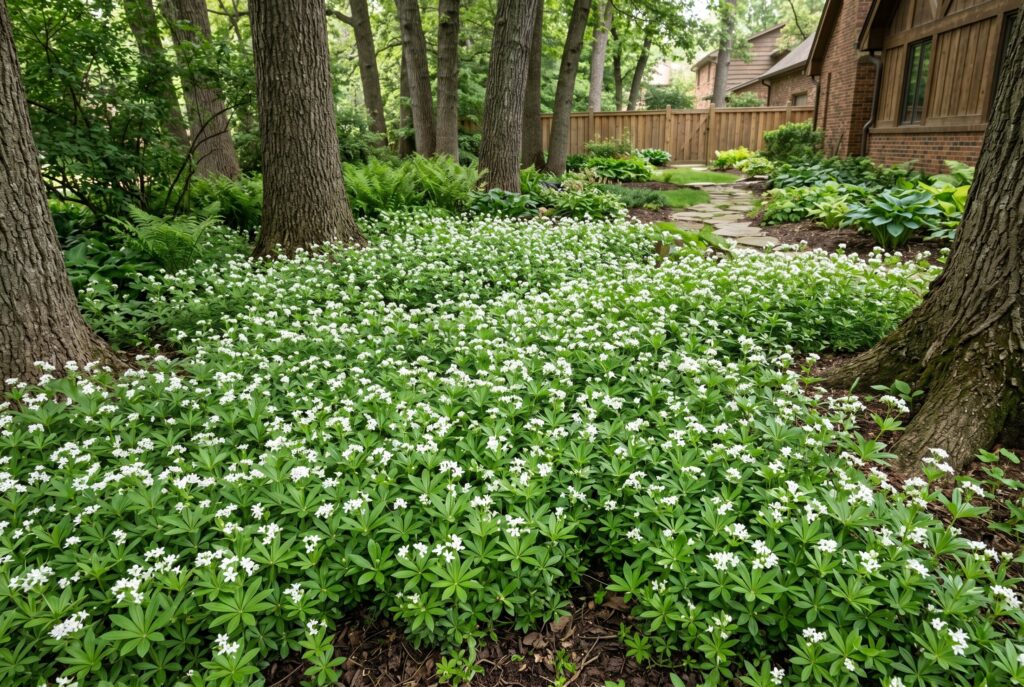
Sweet Woodruff is one of the few ground covers that performs well in dry shade, making it a valuable solution for difficult areas beneath mature trees where grass and many other plants struggle to survive.
While it benefits from consistent moisture during its establishment period, it becomes surprisingly resilient over time and can compete effectively with tree roots for space and resources. Its delicate green foliage forms a soft, attractive carpet, and clusters of small white flowers appear in spring, helping brighten shady corners of the landscape.
This plant is an excellent choice for woodland gardens, shaded borders, and under-tree plantings where a lush appearance is desired without intensive maintenance. However, it performs best in partial to full shade and may struggle in hot, exposed locations. For homeowners looking to transform bare, shaded areas into a more inviting and visually appealing space, Sweet Woodruff is one of the most dependable options available.
8. Ajuga Ground Cover
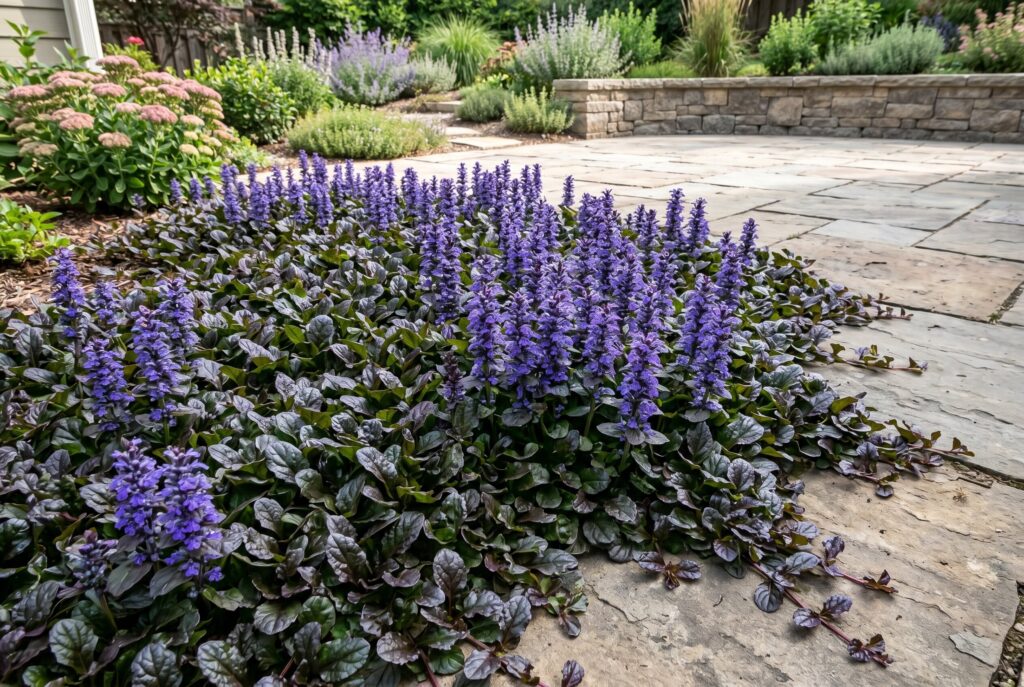
Ajuga, also known as Bugleweed, is a versatile ground cover that thrives in conditions where many plants struggle, including shade, poor soil, and areas that experience occasional drought once established.
Its glossy foliage provides year-round interest, while spikes of vibrant purple flowers add a burst of color in spring, making it a popular choice for under trees, shaded borders, and difficult landscape areas. Ajuga spreads quickly to form a dense mat that helps suppress weeds and reduce maintenance, which can be a major advantage for homeowners seeking fast coverage.
However, its vigorous growth can also be a drawback. In some climates and garden settings, it may spread beyond its intended area and become difficult to contain. For this reason, it is best planted in spaces with clear boundaries, such as garden beds, edging, or areas where its growth can be easily managed. If you’re looking for an attractive, low-maintenance solution for shady spots, Ajuga can be an excellent choice, as long as you’re prepared to keep its spread under control.
9. Creeping Phlox
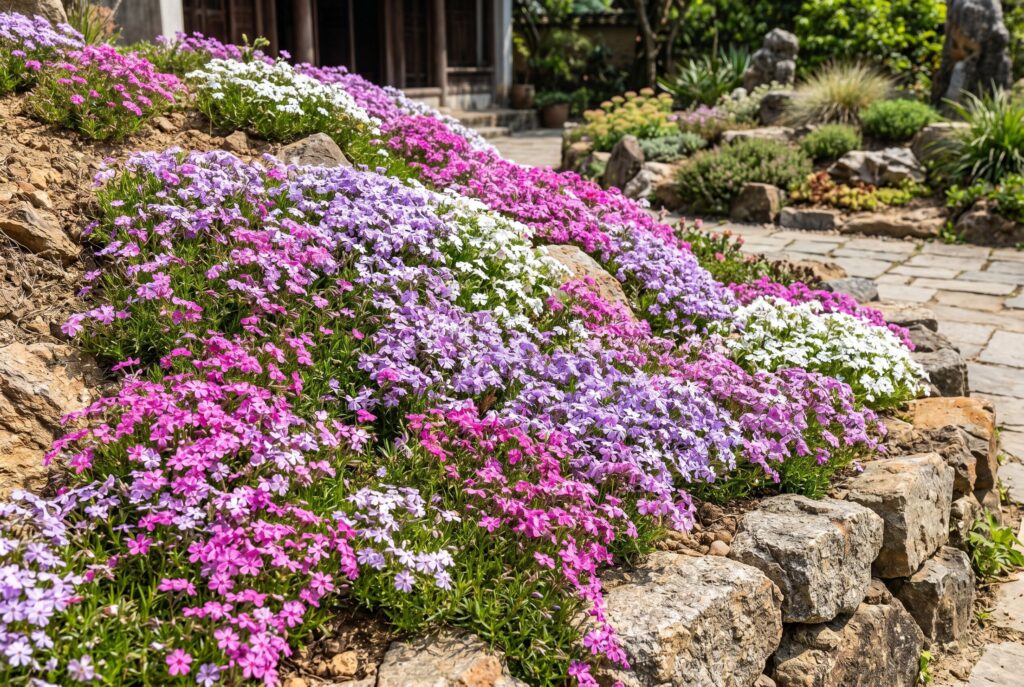
Creeping Phlox is one of the best flowering ground covers for adding early-season color to sunny landscapes. In spring, it produces a stunning blanket of vibrant blooms that can transform slopes, retaining walls, and garden borders into a carpet of color before many summer perennials begin flowering.
Beyond its visual appeal, Creeping Phlox is also a practical choice for erosion control, as its spreading root system helps stabilize soil on hillsides and other sloped areas. Once established, it tolerates dry conditions well and requires relatively little maintenance, making it ideal for homeowners seeking both beauty and functionality. It performs best in full sun and well-draining soil, and while its spectacular bloom display is seasonal, its evergreen or semi-evergreen foliage continues to provide attractive ground coverage throughout much of the year.
10. Lantana
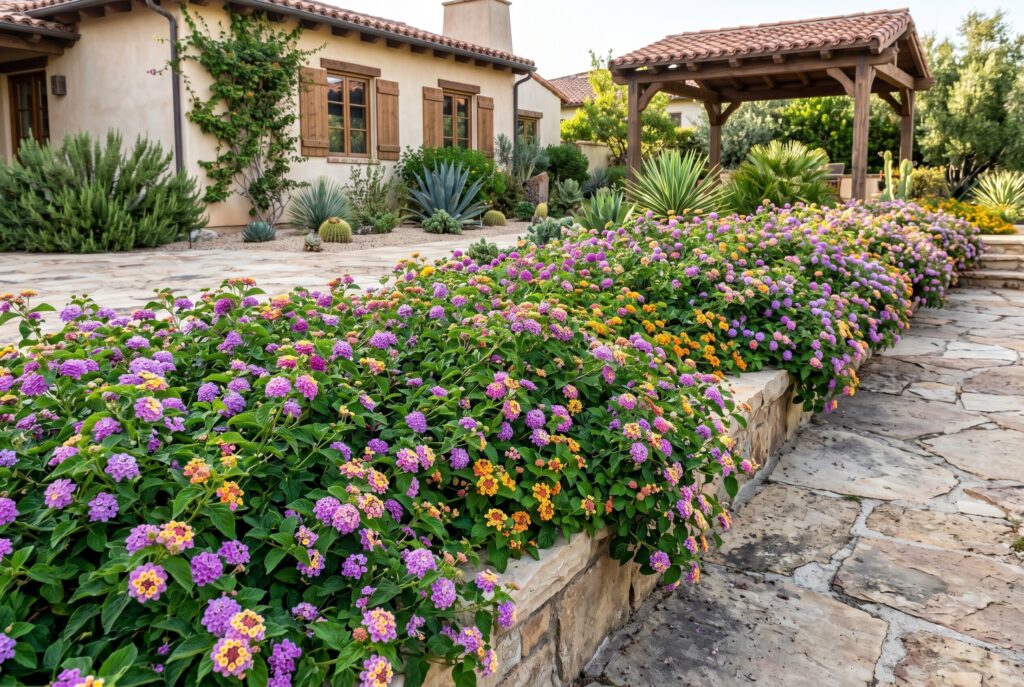
Lantana is a tough, heat-loving ground cover that thrives in warm climates where many other plants struggle. It flourishes in full sun, tolerates poor soil, and remains attractive even during extended dry periods, making it an excellent choice for low-maintenance landscapes, slopes, and drought-prone gardens.
One of its biggest advantages is its long flowering season, producing abundant clusters of colorful blooms that attract butterflies and other pollinators while adding vibrant curb appeal. Once established, Lantana requires very little watering and can spread quickly to cover large areas.
However, it is not the right choice for every landscape. The leaves and berries can be toxic if consumed by pets, livestock, or small children, so it should be planted with caution in households where animals or curious children may have access to it. For gardeners in hot regions seeking a colorful, drought-tolerant ground cover, Lantana can be an outstanding option when safety considerations are taken into account.
11. Liriope

Liriope, often called Lilyturf, is an excellent low-maintenance alternative to traditional grass, particularly in areas where turf struggles to thrive.
While it doesn’t form a flat, walkable carpet like some ground covers, it creates attractive grass-like clumps that add texture and structure to landscape borders, pathways, and partially shaded spaces. Liriope is highly adaptable, tolerating dry conditions once established and requiring very little care beyond occasional trimming. In late summer, it produces spikes of purple flowers that add seasonal color and visual interest, followed by decorative berries in some varieties.
Its ability to handle poor soil, drought, and partial shade makes it a reliable choice for homeowners looking to reduce lawn maintenance without sacrificing year-round appeal. If you’re seeking a durable, tidy, and easy-to-grow solution for dry edges, under trees, or challenging landscape areas, Liriope is one of the most dependable options available.
12. Blue Fescue

Blue Fescue is a compact ornamental grass that adds year-round color and texture to dry landscapes without the maintenance demands of a traditional lawn. Its distinctive blue-gray foliage forms neat, rounded mounds that stand out beautifully in gravel gardens, rock gardens, borders, and modern landscape designs.
Highly drought-tolerant once established, Blue Fescue thrives in full sun and well-draining soil, making it an excellent choice for water-wise gardening. Unlike turf grass, it requires little to no mowing, helping homeowners reduce maintenance while still achieving a polished, structured look. Although it doesn’t spread to create a dense ground-covering carpet, it excels as a low-maintenance accent plant that brings contrast, texture, and visual interest to dry garden spaces throughout the year.
13. Trailing Rosemary
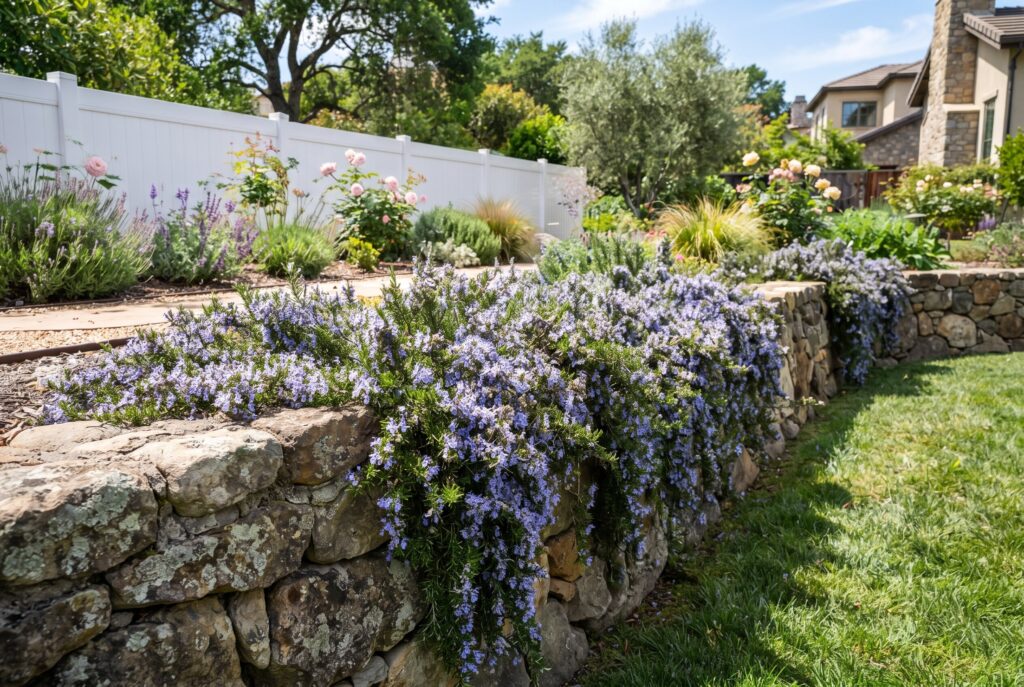
Trailing Rosemary is a beautiful and practical ground cover for sunny, drought-prone landscapes, offering both ornamental appeal and culinary value. Its aromatic evergreen foliage cascades gracefully over retaining walls, containers, and slopes, creating a soft, flowing appearance while helping stabilize soil in erosion-prone areas.
Once established, it is highly drought-tolerant and requires very little maintenance, making it an excellent choice for water-wise gardens. In addition to its attractive texture, Trailing Rosemary produces delicate flowers that attract bees, butterflies, and other beneficial pollinators throughout the growing season. It performs best in full sun and well-draining soil, as excessive moisture can lead to root problems.
While it thrives in warm climates and coastal regions, gardeners in colder areas may need to provide winter protection or choose a more cold-hardy alternative. For homeowners seeking a fragrant, edible, and low-maintenance ground cover, Trailing Rosemary is one of the most versatile options available.
14. Bearberry
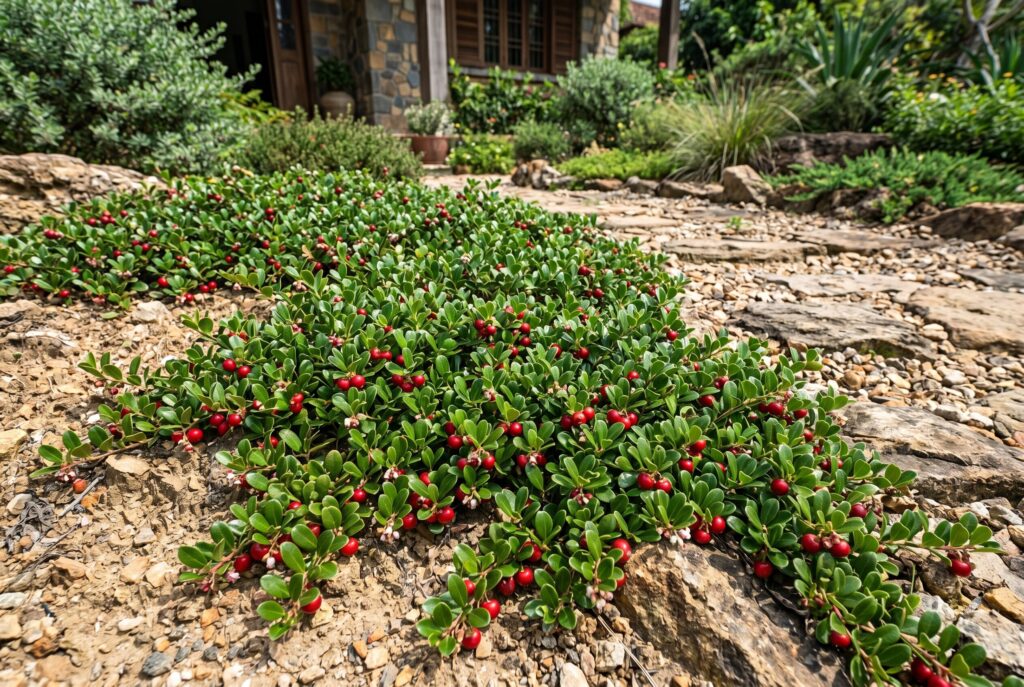
Bearberry (Arctostaphylos uva-ursi) is a rugged evergreen ground cover that excels in challenging conditions where many landscape plants struggle to survive. It thrives in poor, sandy, rocky, and acidic soils, making it an excellent choice for naturalized gardens, woodland edges, coastal landscapes, and erosion-prone slopes.
Once established, Bearberry is highly tolerant of both cold winters and dry periods, providing reliable year-round coverage with its glossy green foliage. In spring, it produces delicate pinkish-white flowers that are followed by attractive red berries, adding seasonal interest and supporting local wildlife.
Because it spreads gradually rather than aggressively, Bearberry is ideal for homeowners who want a low-maintenance, long-lasting ground cover that blends naturally into the landscape. For best results, plant it in full sun to partial shade with well-draining soil, and be patient during establishment, as it typically grows more slowly than many other ground cover options.
15. Microclover
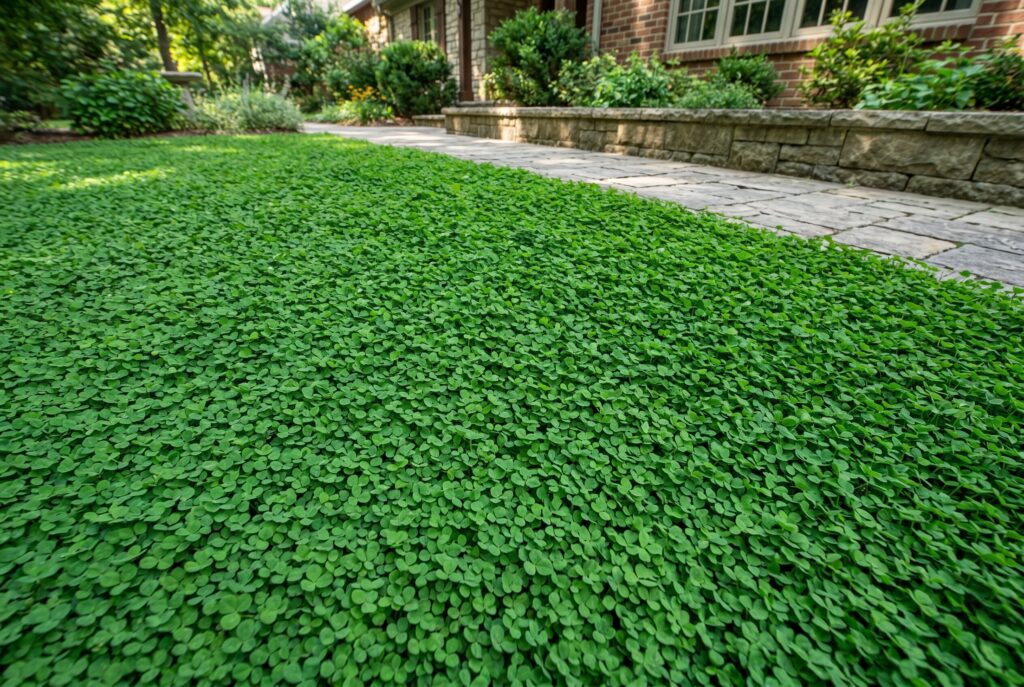
Microclover is an excellent choice for homeowners who want a lawn-like appearance with significantly less maintenance and water usage than traditional turf grass. Softer and greener than many drought-tolerant ground covers, it creates a lush surface that can be used on its own or mixed with grass to reduce overall lawn care needs.
One of its biggest advantages is its ability to naturally fix nitrogen from the air, enriching the soil and reducing the need for fertilizer. Microclover also stays greener during dry periods than many conventional lawns and requires less frequent mowing. While it can tolerate moderate drought once established, it may still benefit from occasional watering during prolonged heat waves or extreme summer conditions.
For homeowners seeking a more sustainable, eco-friendly lawn alternative that balances appearance, comfort, and water savings, Microclover is one of the most practical options available.
16. Silver Falls
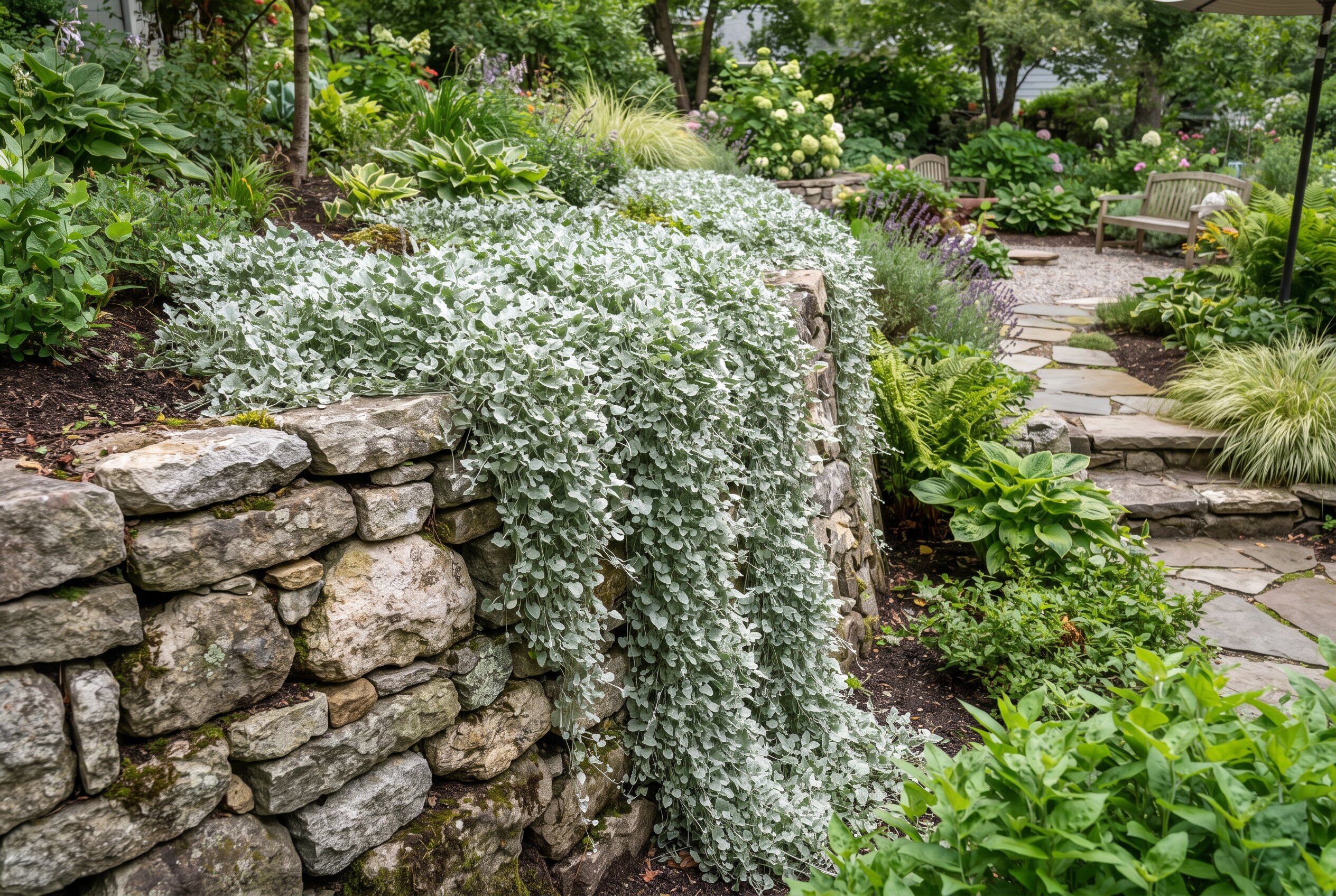
Silver Falls (Dichondra argentea ‘Silver Falls’) is a striking ornamental ground cover prized for its cascading silver foliage that brings dramatic contrast and texture to dry, sunny landscapes.
Its long, trailing stems spill gracefully over retaining walls, containers, hanging baskets, and slopes, creating the appearance of a shimmering metallic waterfall. Highly tolerant of heat and drought once established, Silver Falls is an excellent choice for water-wise gardens, modern landscape designs, and areas where bold foliage is preferred over flowers.
While it can spread to provide attractive ground coverage, it is not suitable for areas that receive regular foot traffic, as its delicate stems can be easily damaged. For homeowners looking to add year-round visual interest and a unique architectural element to their landscape, Silver Falls offers a low-maintenance solution that stands out in even the harshest growing conditions.
17. Yarrow

A low-growing, drought-tolerant ground cover with soft silver foliage cascading gracefully over a stone wall in a sunny, wild-style garden. Low-growing Yarrow varieties are an excellent choice for homeowners seeking a drought-tolerant, environmentally friendly alternative to traditional turf grass.
Known for their ability to thrive in heat, poor soil, and dry conditions, these resilient plants require far less water and maintenance than conventional lawns once established. Their soft, fern-like foliage creates a natural, meadow-inspired appearance, while clusters of colorful flowers attract bees, butterflies, and other beneficial pollinators throughout the growing season.
For homeowners who value biodiversity, pollinator support, and a relaxed, ecological aesthetic, low-growing Yarrow is one of the most rewarding ground cover options available.
Execution: The Financial Reality of Grass Replacement
You have two main ways to install drought tolerant ground covers. Seeds are cheaper, especially for microclover, thyme, or yarrow. A typical seed project may cost around $30 to $50 per 1,000 square feet, but you’ll need steady watering during germination.
Plugs cost more but establish faster. Sedum, phlox, thyme, and ice plant plugs may cost around $200 to $400 per 100 square feet depending on spacing and variety. This feels expensive upfront, but it can save money later through reduced watering, mowing, fertilizer, and lawn repair.
Conclusion
The age of thirsty lawns is fading. A drought tolerant ground cover gives you a yard that stays beautiful through heat, uses less water, and asks for less weekend labor. Choose creeping thyme for walkable sun, sedum for brutal heat, ice plant for color, sweet woodruff for dry shade, and microclover for a softer lawn feel.
A resilient yard doesn’t come from ignoring nature. It comes from planting with nature so your landscape can thrive even when you don’t have time to babysit it.