

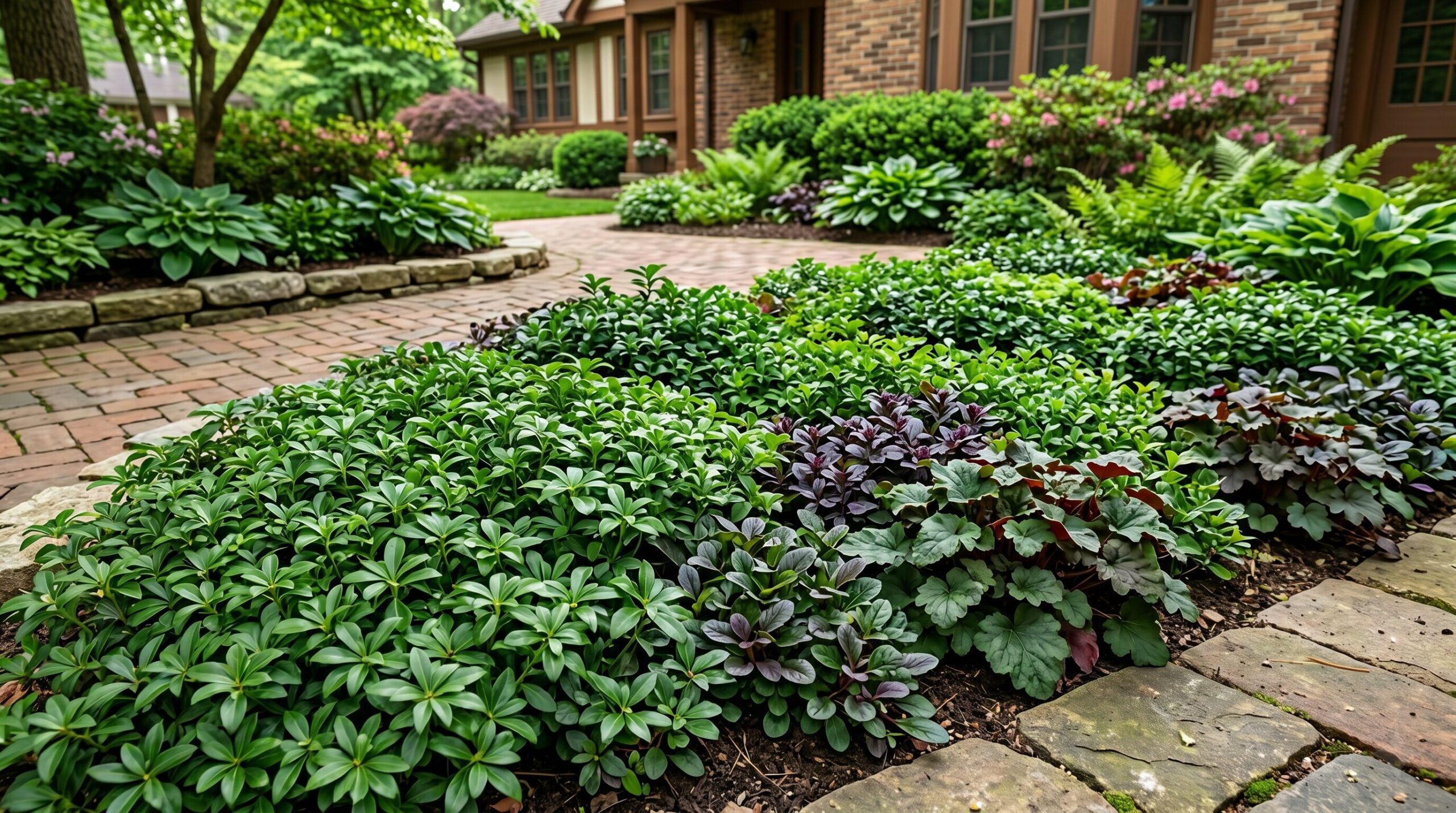
Shaded corners under mature trees, north facing beds, covered patios, and sloped side yards are often the hardest places to landscape. Grass thins out, soil stays bare, weeds move in, and rain can wash loose dirt away. The best solution is evergreen ground cover, especially plants that can tolerate shade while keeping their leaves through winter.
Evergreen ground cover plants act like a living blanket. They protect soil, reduce erosion, suppress weed seedlings, soften hard edges, and keep the garden looking finished even when flowers are gone. Some choices offer glossy leaves, some bring ground cover flowers, and some are tough enough for dry shade where tree roots steal most of the moisture.
The smartest approach is to choose by function. Use native evergreen ground covers where ecology matters, flowering ground cover where you want curb appeal, and drought-tolerant ground covers where the soil stays dry. Just be careful with aggressive plants like English ivy and periwinkle ground cover. Easy isn’t always safe.
Stop Planting Invasive Ivy
Many old planting lists still recommend English ivy, Japanese pachysandra, and periwinkle ground cover as simple shade ground cover options. They grow fast, but that’s exactly the danger. A plant that covers your bare soil quickly can also climb trees, smother native plants, and escape into natural areas.
That doesn’t mean every strong spreader is bad. It means you need to know the difference between helpful coverage and invasive pressure. A contained bed beside a patio is very different from a woodland edge. For modern landscaping, the better choice is to prioritize native, non-invasive, low maintenance ground cover whenever possible, then use aggressive plants only with strict containment.
21 Best Evergreen Ground Covers for Shade
1. Allegheny Spurge
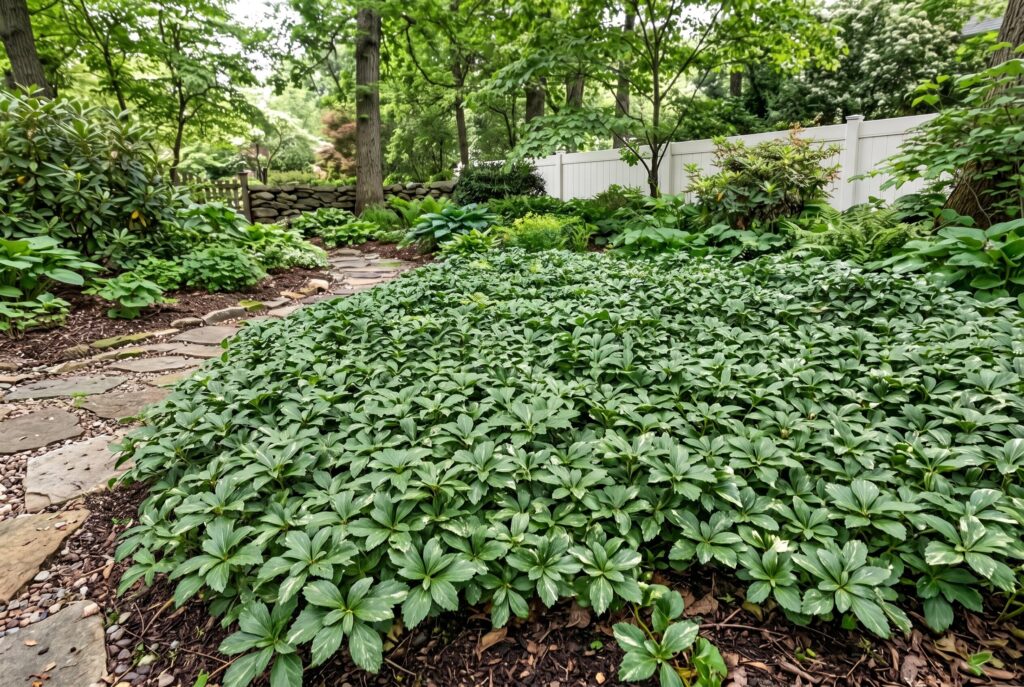
Allegheny spurge is a native groundcover that performs well in partial to deep shade. Its attractive foliage creates a lush woodland look while helping control weeds and stabilize soil. Compared with Japanese pachysandra, it provides a more environmentally friendly option for naturalized garden spaces.
2. Christmas Fern
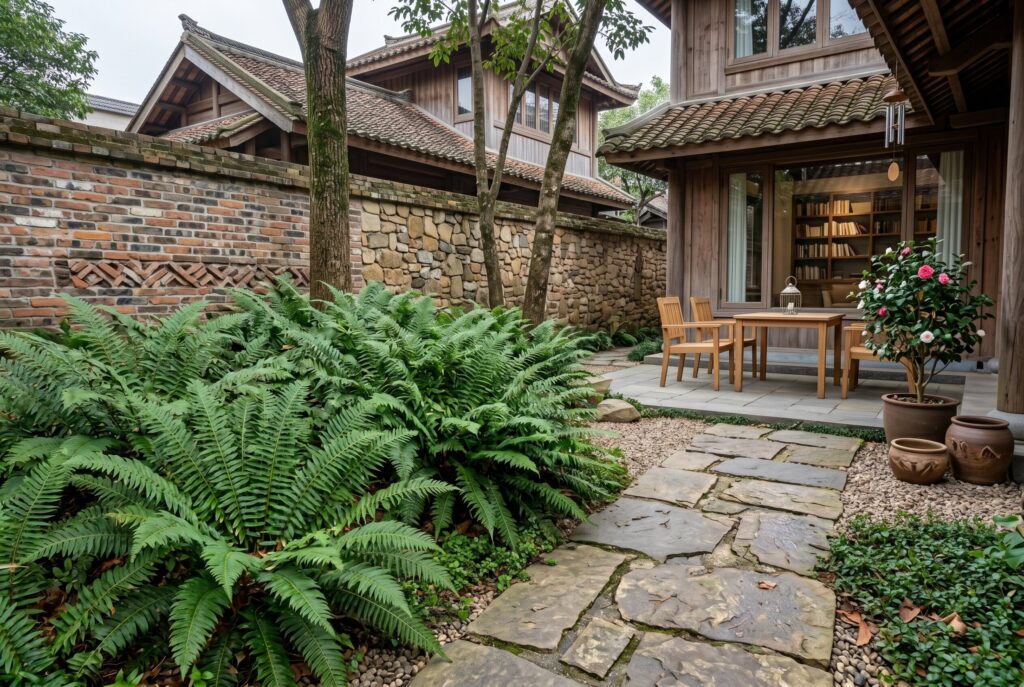
Christmas fern remains green through much of winter, bringing lasting color and texture to shaded landscapes. Its natural woodland appearance makes it ideal for planting under trees, on slopes, and along stone paths where a soft, graceful look is desired.
3. Fetterbush
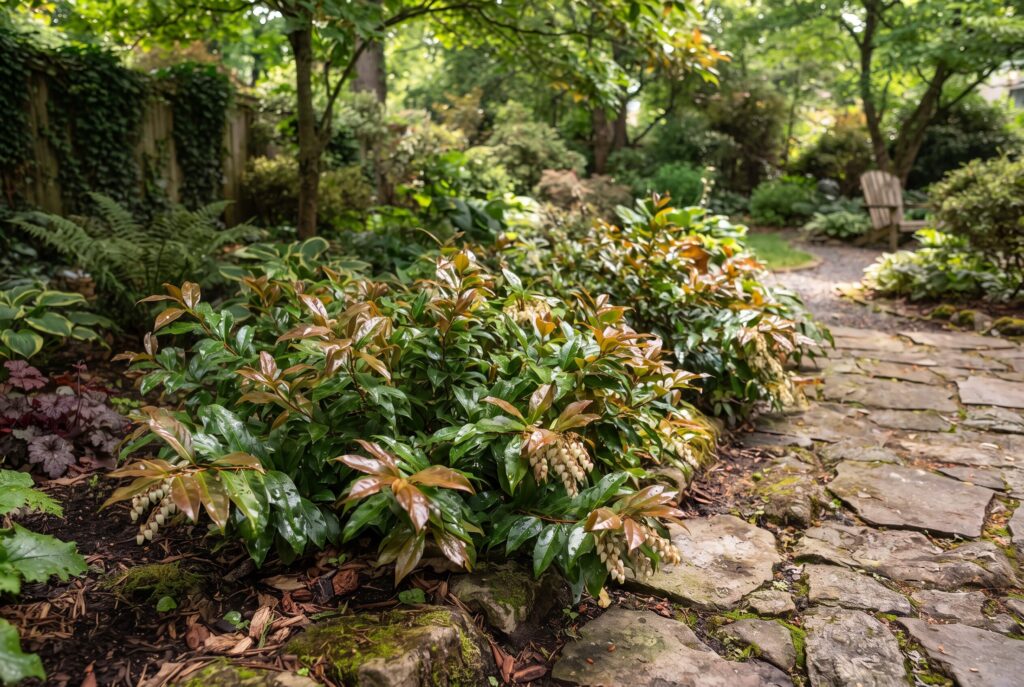
Fetterbush is an evergreen native shrub that brings year-round color and texture to shaded landscapes. Its glossy leaves often develop attractive bronze or reddish tones during colder months, adding seasonal interest when many other plants fade. While more upright and shrub-like than traditional ground covers, it can spread to create a low-growing layer in moist, acidic soils. Fetterbush works especially well in woodland gardens, shaded borders, and naturalized plantings where a soft, natural look is desired.
4. Creeping Phlox

Although creeping phlox is best known as a sun-loving ground cover, some woodland phlox varieties perform well in partial shade. They create a lush green mat and bring vibrant spring flowers to pathways, borders, and woodland-inspired gardens.
5. Oregon Stonecrop
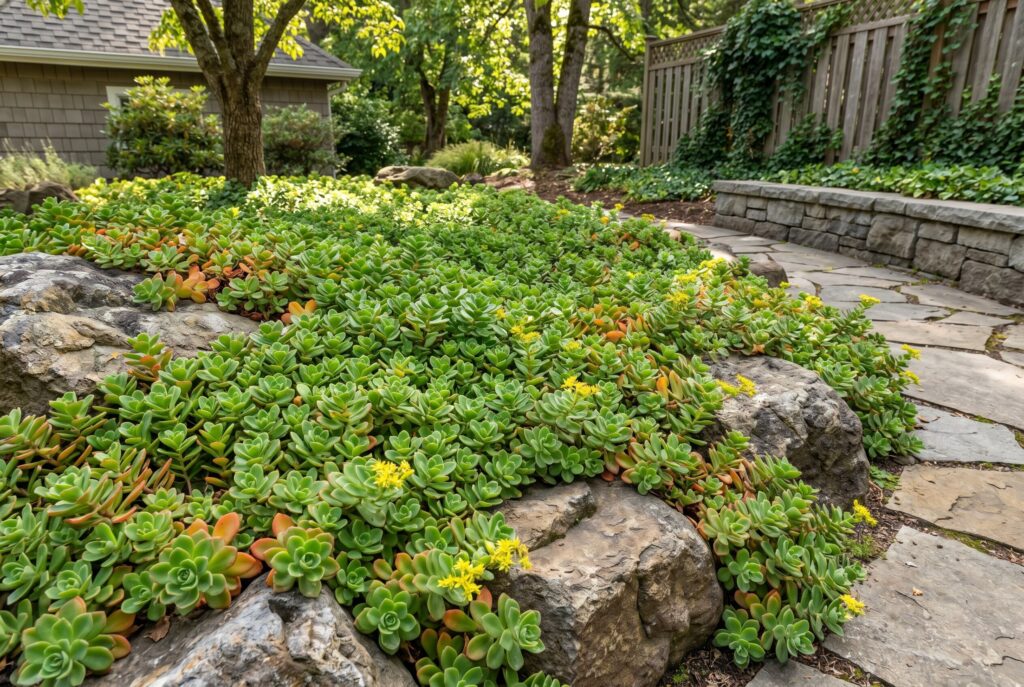
Oregon stonecrop is a hardy sedum ground cover that adapts to partial shade more readily than many other succulents. Its low-growing habit creates a dense layer of attractive foliage, making it a practical choice for rocky soils, dry garden areas, and mild climates. Because of its drought-tolerance and ability to handle less sunlight, it works well in challenging spots where many traditional shade-loving plants may struggle to thrive.
6. European Wild Ginger
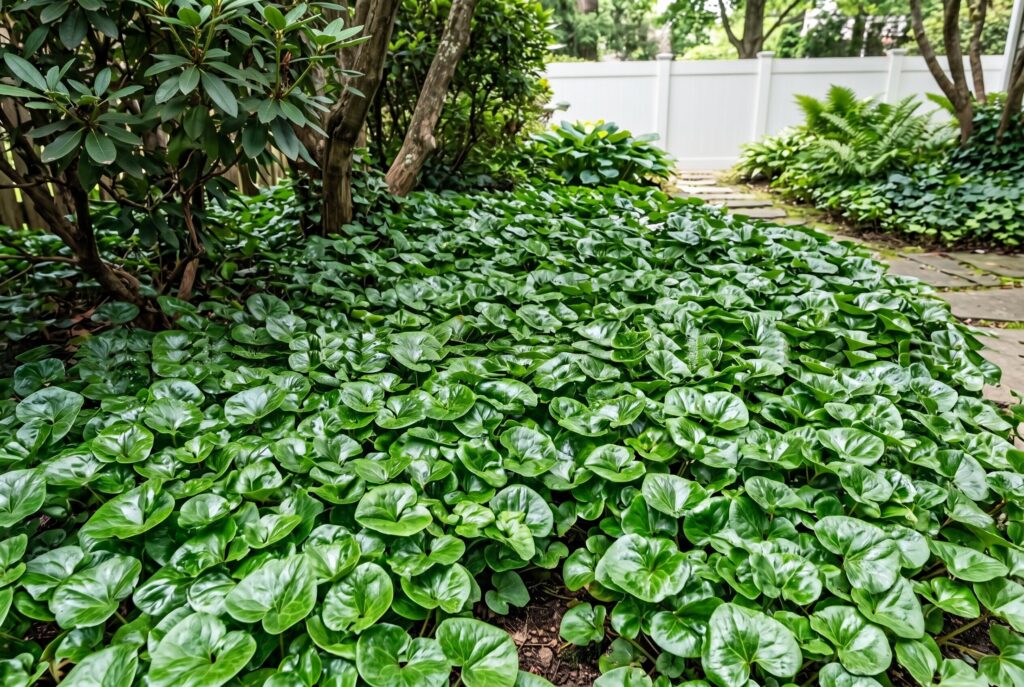
European wild ginger is prized for its glossy, heart-shaped leaves that provide a polished appearance throughout the year. Although it spreads slowly, it gradually forms a dense evergreen ground cover that adds rich texture and visual appeal to shaded landscapes. It performs especially well beneath shrubs, small trees, and woodland plantings, where its lush foliage helps create a refined, low-maintenance garden floor.
7. Golden Groundsel
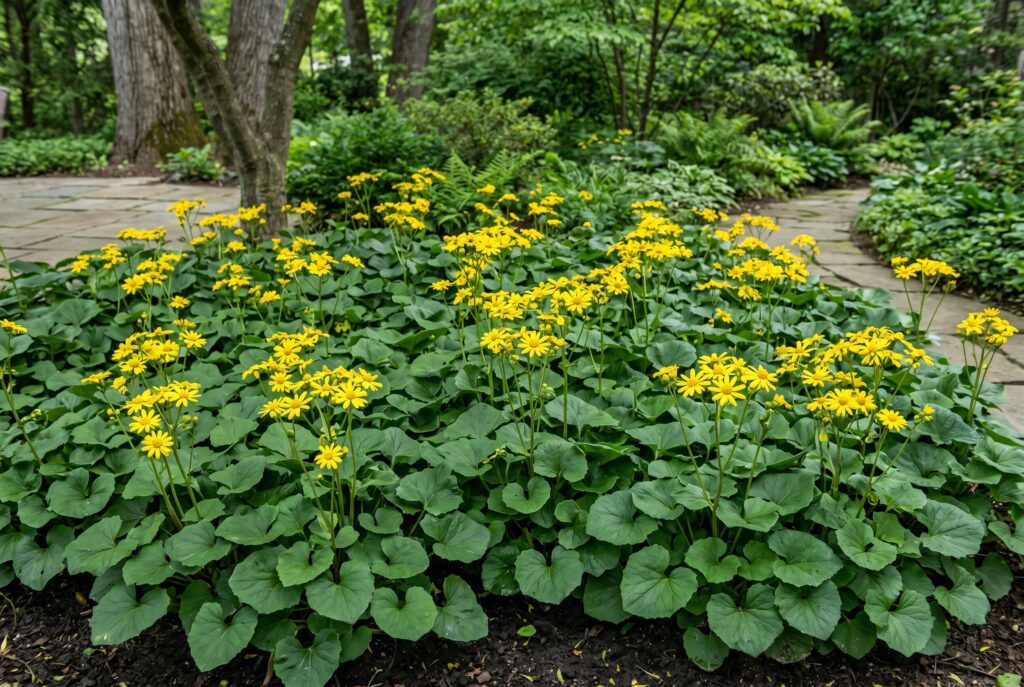
Golden groundsel is a native perennial that thrives in moist, shaded areas where many flowering ground covers struggle. It forms attractive clusters of green foliage and produces bright yellow blooms in spring, bringing both color and texture to woodland gardens and shaded borders. Beyond its ornamental appeal, Golden groundsel supports pollinators and contributes ecological value, making it an excellent choice for gardeners seeking a beautiful and environmentally beneficial ground cover.
8. Lenten Rose
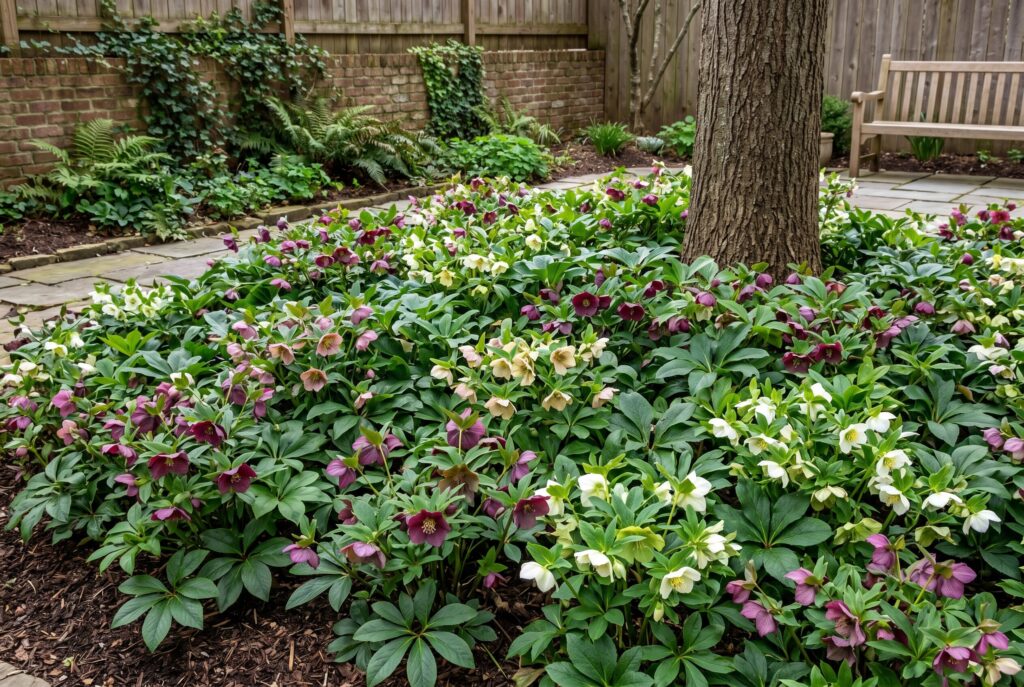
Lenten rose, commonly known as hellebore, is one of the most reliable ground cover plants for winter and early spring color. Thriving in partial to full shade, it produces elegant, long-lasting blooms at a time when most garden plants remain dormant. Its evergreen foliage provides year-round interest, while its natural resistance to deer and rabbits makes it a low-maintenance choice for woodland gardens, shaded borders, and foundation plantings.
9. Spotted Deadnettle
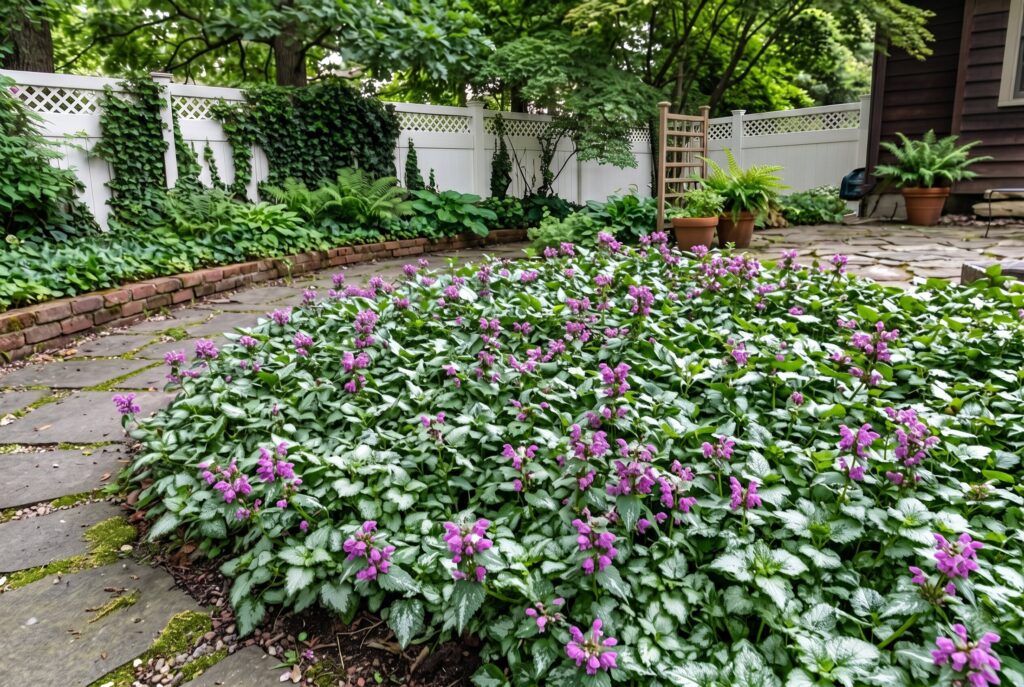
Spotted deadnettle is a versatile shade-loving ground cover that brightens darker areas of the landscape with its distinctive silver-patterned foliage. In spring and early summer, it produces clusters of pink, purple, or lavender flowers that add extra color and visual interest. Its spreading habit makes it an excellent choice for planting beneath shrubs, along fences, around trees, and beside woodland paths where a low-maintenance, decorative ground cover is needed.
10. Candytuft
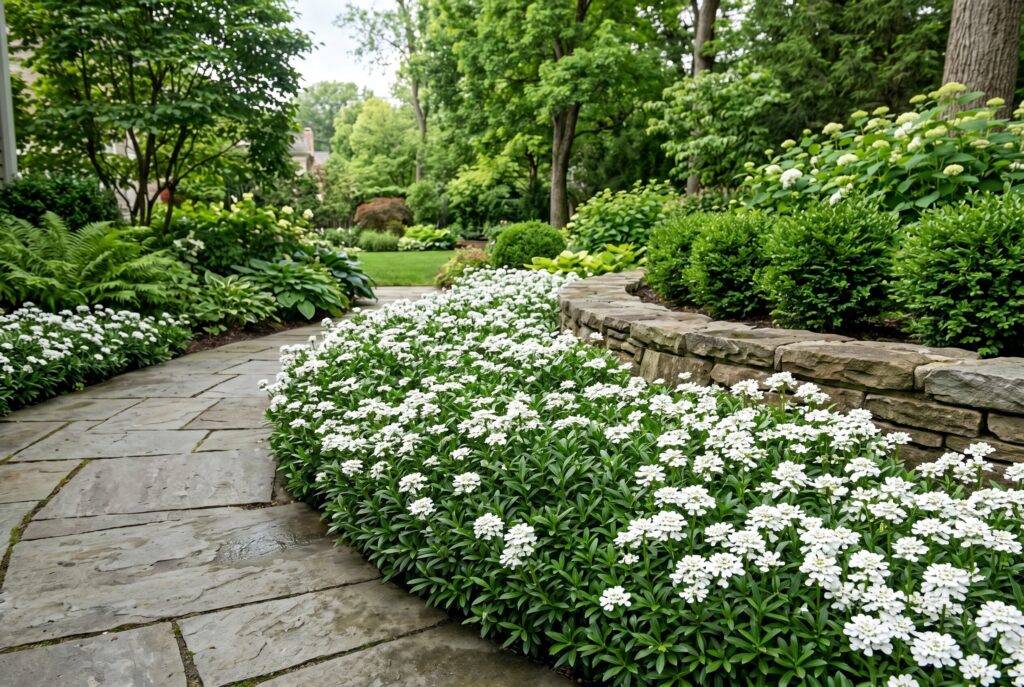
Candytuft performs best in full sun to partial shade, but it can still thrive in areas with bright, filtered light. Its evergreen foliage provides year-round texture, while clusters of crisp white flowers blanket the plant in spring, creating a clean and elegant appearance. This low-growing perennial works especially well along walkways, garden borders, and low retaining walls where its neat form and abundant blooms can be fully appreciated.
11. Sweet Woodruff

Sweet woodruff creates a soft green carpet accented by delicate white spring flowers. It thrives beneath deciduous trees, benefiting from early-season sunlight before deeper summer shade arrives. Its graceful growth habit makes it a popular choice for woodland gardens and shaded landscape beds.
12. Wall Germander
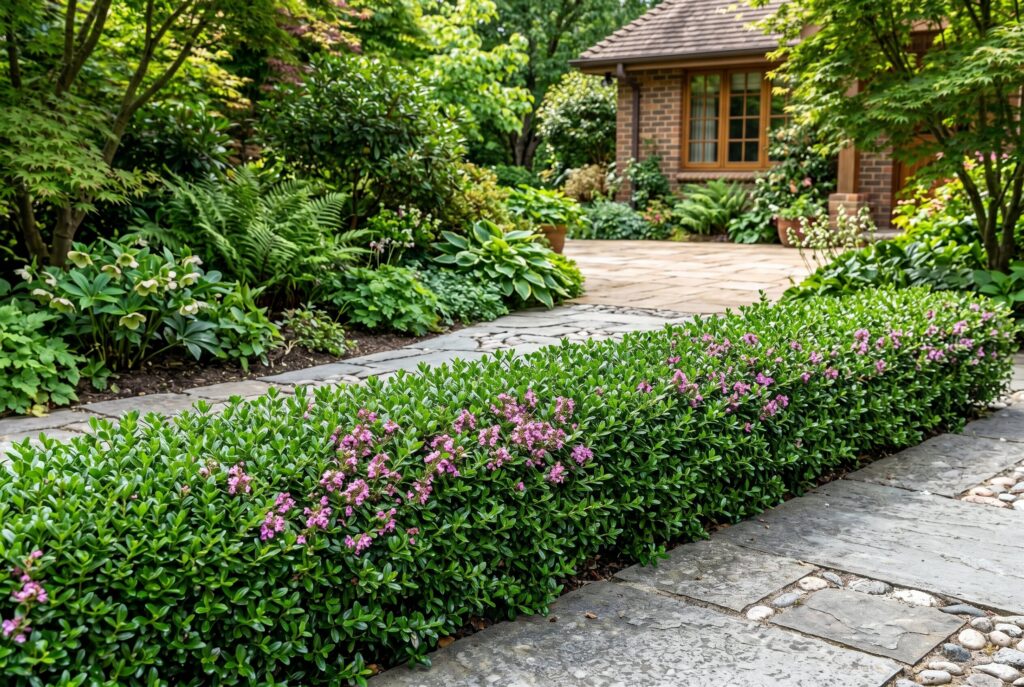
Wall germander is a tidy, low-growing ground cover that can be clipped into clean, formal borders. Although it prefers more light than deep shade, it adapts well to partial shade with good drainage. Its evergreen foliage and compact habit make it an attractive option for edging walkways, garden beds, and pathways.
13. Ajuga Ground Cover
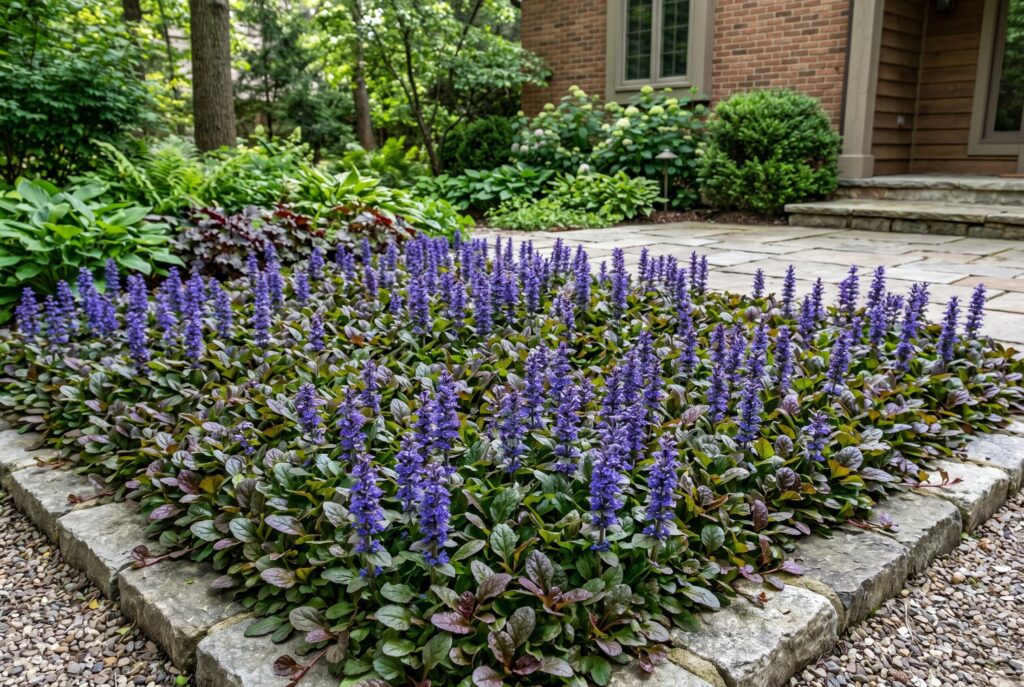
Ajuga is a popular ground cover valued for its colorful foliage and spikes of blue-purple flowers that appear in spring. It spreads quickly to form a dense carpet, making it an effective choice for filling bare areas, suppressing weeds, and adding year-round interest to shaded or partially shaded gardens. Because of its vigorous growth habit, Ajuga is best planted within defined borders, raised beds, or other contained spaces where its spread can be easily managed.
14. Periwinkle Ground Cover
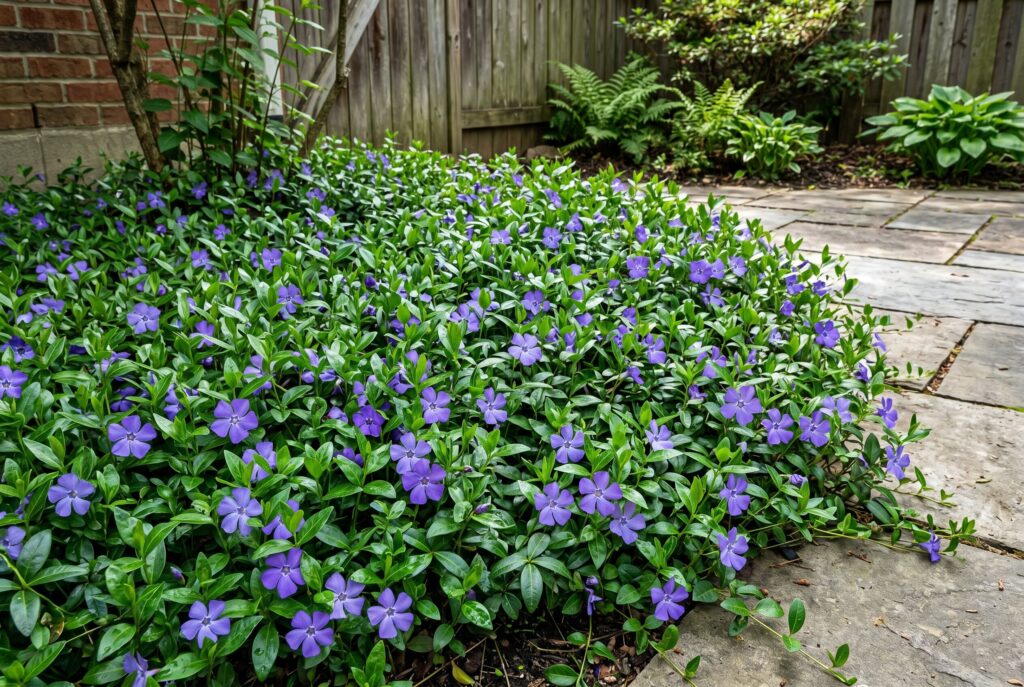
Periwinkle ground cover features glossy foliage and colorful purple flowers, but its aggressive growth habit makes it invasive in many areas. If used at all, it should be confined to containers or well-contained beds. Many gardeners choose native alternatives that provide similar coverage without the ecological risks.
15. Liriope
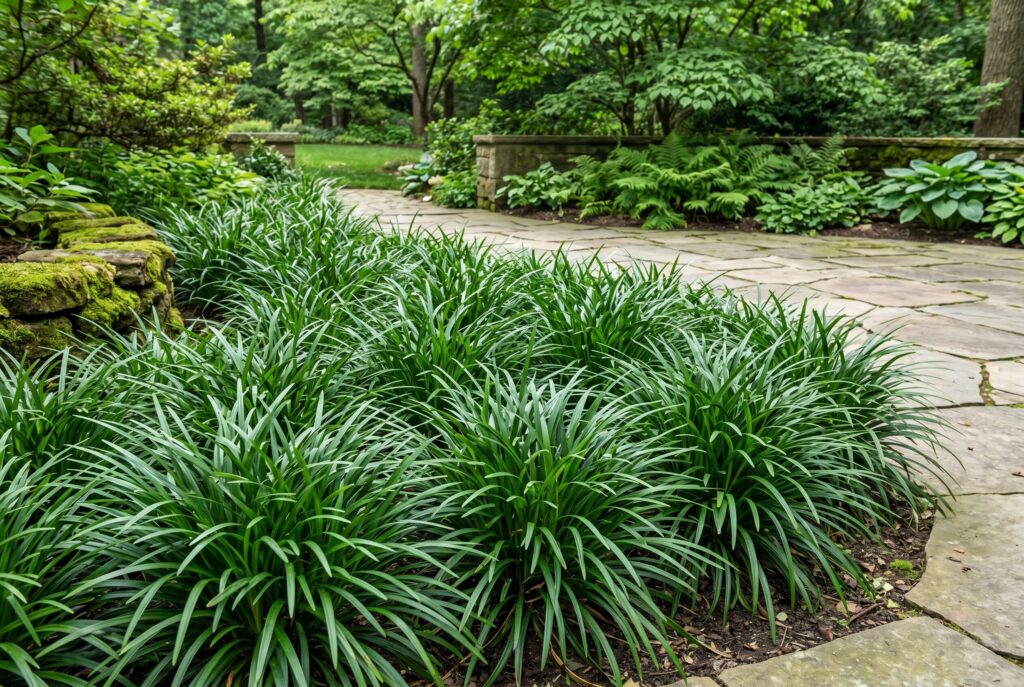
Liriope, often called monkey grass, forms attractive evergreen clumps that tolerate shade, drought, and minimal maintenance. Its durable nature makes it an excellent choice for borders, slopes, and foundation plantings where lawn grass is difficult to establish. Seasonal flower spikes add extra color and texture to the landscape.
16. Black Mondo Grass

Black mondo grass is prized for its dramatic, nearly black foliage that adds bold contrast to shaded landscapes. This slow-growing ornamental grass stays compact and low to the ground, making it ideal for borders, pathways, rock gardens, and accent plantings. Its unique dark color stands out beautifully against pale stone, silver-leaved plants, and vibrant green ground covers, creating a sophisticated and eye-catching garden design.
17. Siberian Cypress
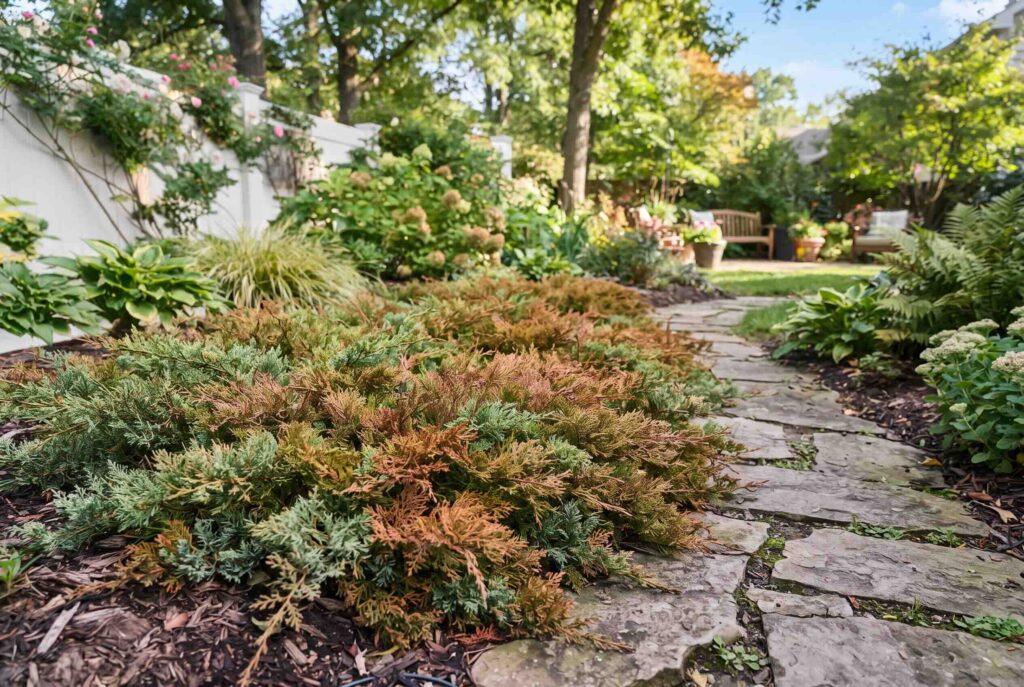
Siberian cypress is a low-growing evergreen that spreads gradually to create a soft, feathery ground cover. Its fine-textured foliage provides year-round interest and often develops attractive bronze tones during the winter months. Known for its exceptional cold hardiness, this resilient plant performs well on slopes, embankments, and other difficult sites. It is especially useful in partially shaded areas with well-drained soil, where it helps control erosion while adding texture and seasonal color to the landscape.
18. Bearberry
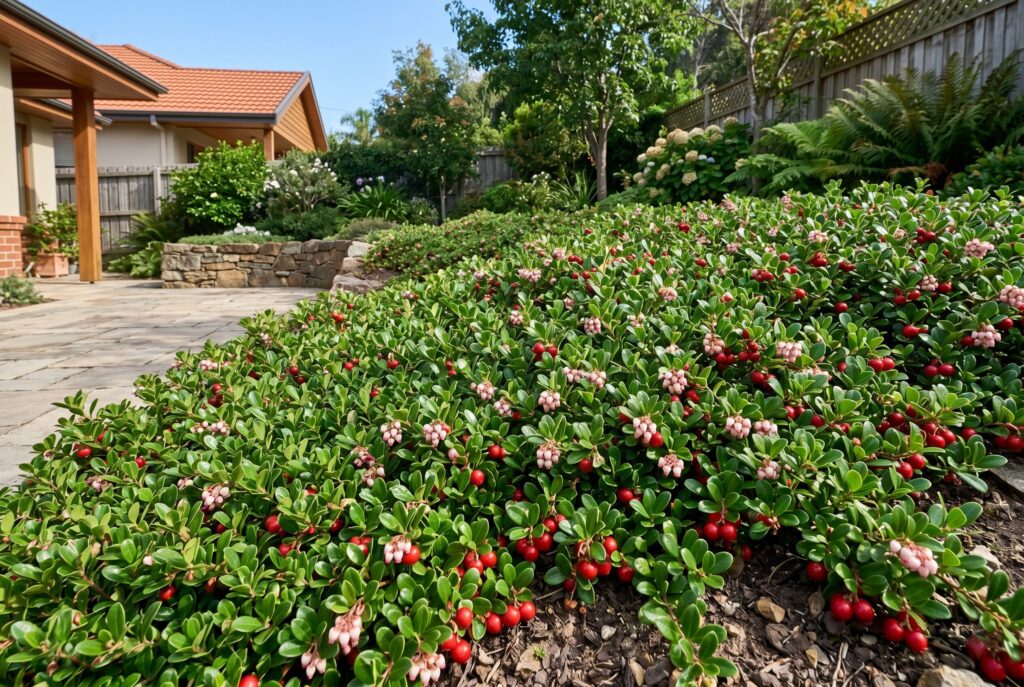
Bearberry is one of the most dependable drought-tolerant ground covers for challenging sites with poor, sandy, or rocky soil. This low-growing evergreen spreads gradually to form a dense mat of glossy foliage that provides year-round interest. In spring, it produces delicate pinkish-white flowers followed by bright red berries that attract wildlife and add seasonal color. Its ability to thrive on slopes, resist erosion, and tolerate harsh conditions makes it an excellent choice for naturalistic landscapes, woodland edges, and low-maintenance gardens.
19. Creeping Raspberry
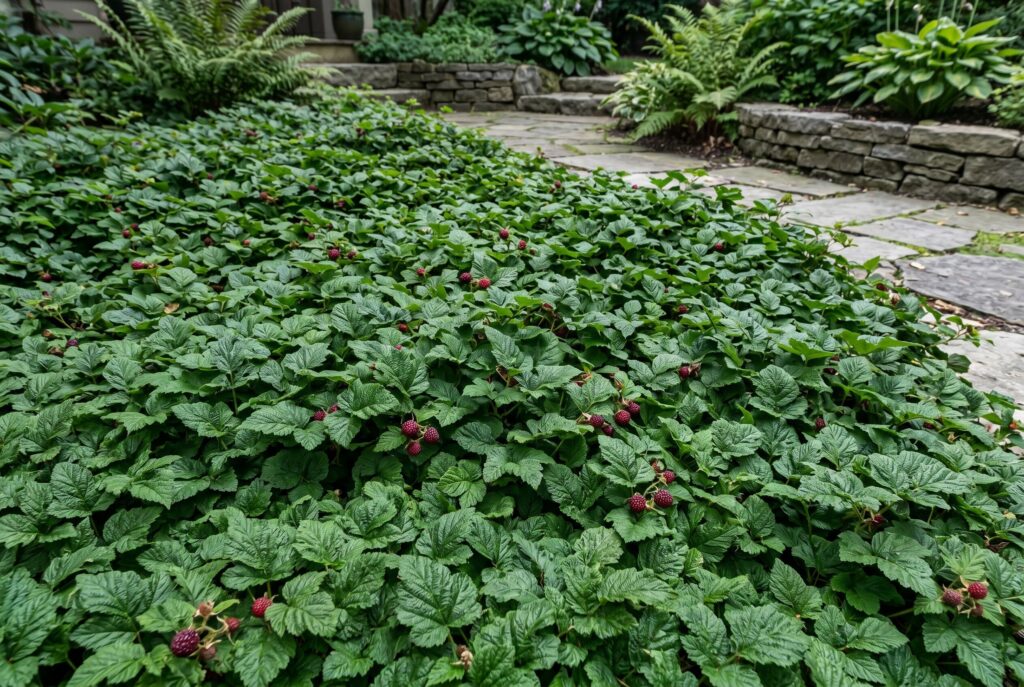
Creeping raspberry is a durable ground cover that forms a dense, textured carpet of attractive foliage. Its vigorous growth helps suppress weeds, stabilize soil, and reduce erosion, making it particularly valuable on slopes and embankments. This adaptable plant performs well along shaded borders, beneath shrubs, and in other hard-to-maintain areas where traditional turf grass is difficult to grow or mowing is impractical. Its rugged nature and low-maintenance requirements make it a practical solution for challenging landscape sites.
20. Japanese Spurge
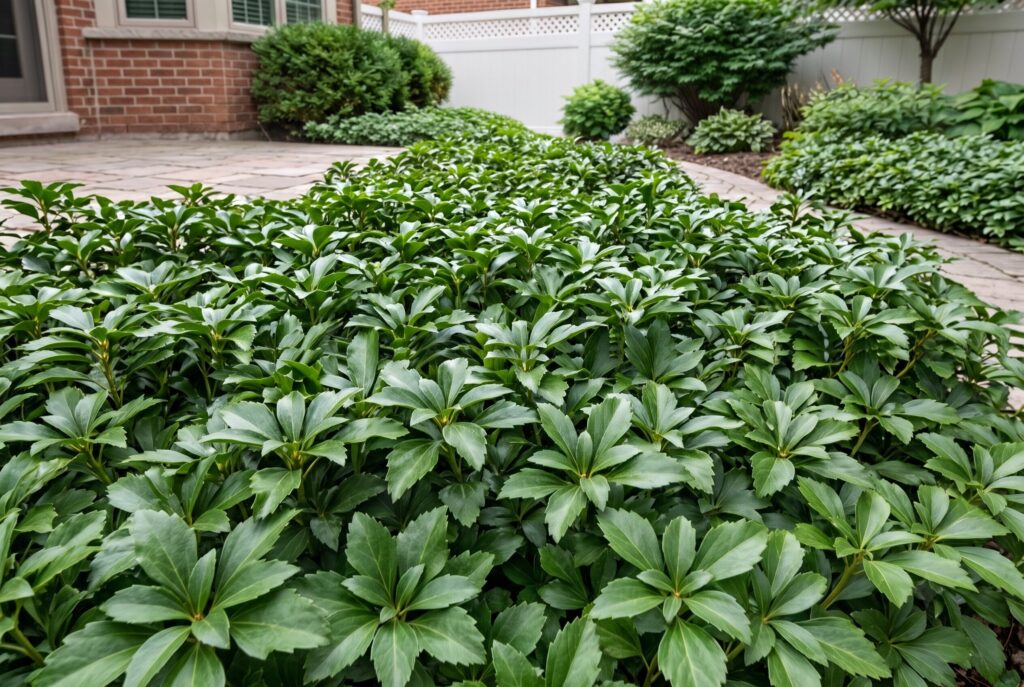
Japanese spurge is a popular evergreen ground cover valued for its ability to create a dense carpet of foliage in shaded areas. It performs well beneath trees, along foundations, and in woodland-style gardens where grass struggles to grow. However, its spreading habit can make it difficult to contain over time. If planted, it should be monitored regularly and kept away from natural areas to prevent it from spreading beyond its intended space and competing with native vegetation.
21. Asiatic Jasmine
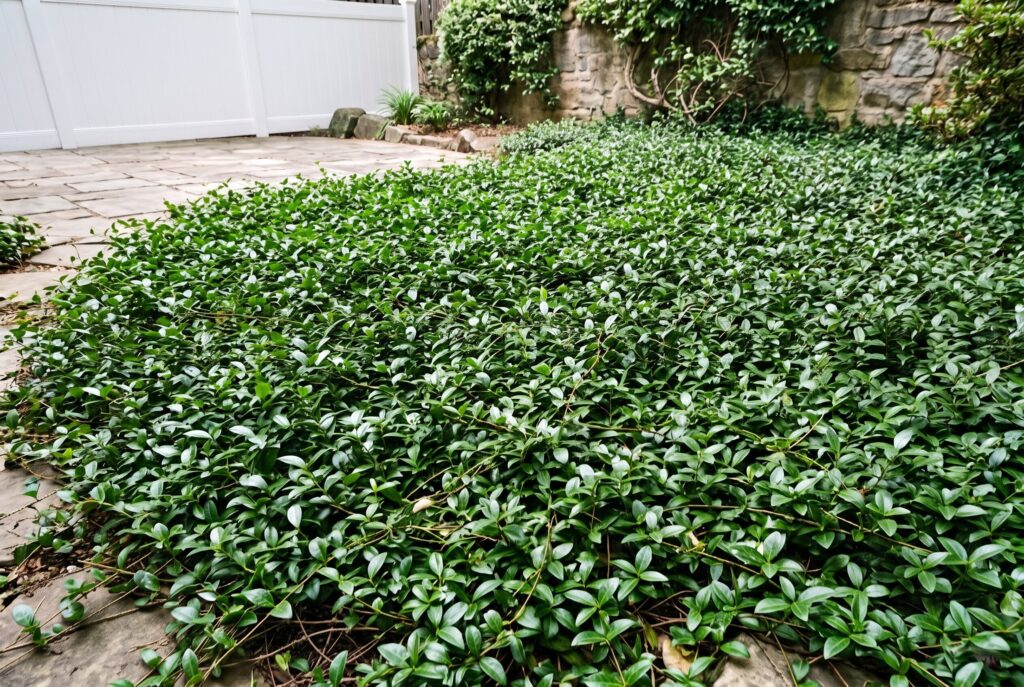
Asiatic jasmine is a vigorous evergreen ground cover that forms a dense carpet of glossy foliage, making it highly effective at suppressing weeds and covering large areas. It adapts well to partial shade and tolerates periods of drought once established, making it a dependable choice for low-maintenance landscapes. Because of its spreading, vine-like growth habit, occasional trimming is recommended to keep it neat and prevent it from extending into nearby planting beds or pathways.
Conclusion
Evergreen groundcovers can turn the hardest parts of your yard into the most peaceful spaces. The best choices keep soil covered, reduce weeds, protect slopes, and provide year round color without constant maintenance.
For ecological planting, start with native evergreen groundcovers like Allegheny spurge, Christmas fern, golden groundsel, and bearberry. For flowering shade, choose lenten rose, sweet woodruff, spotted deadnettle, and ajuga ground cover with caution. For dry shade and slopes, use liriope, creeping raspberry, Siberian cypress, and bearberry.
A beautiful shade garden isn’t about forcing grass to survive where it doesn’t belong. It’s about choosing plants that already understand the darkness and know how to make it green.