

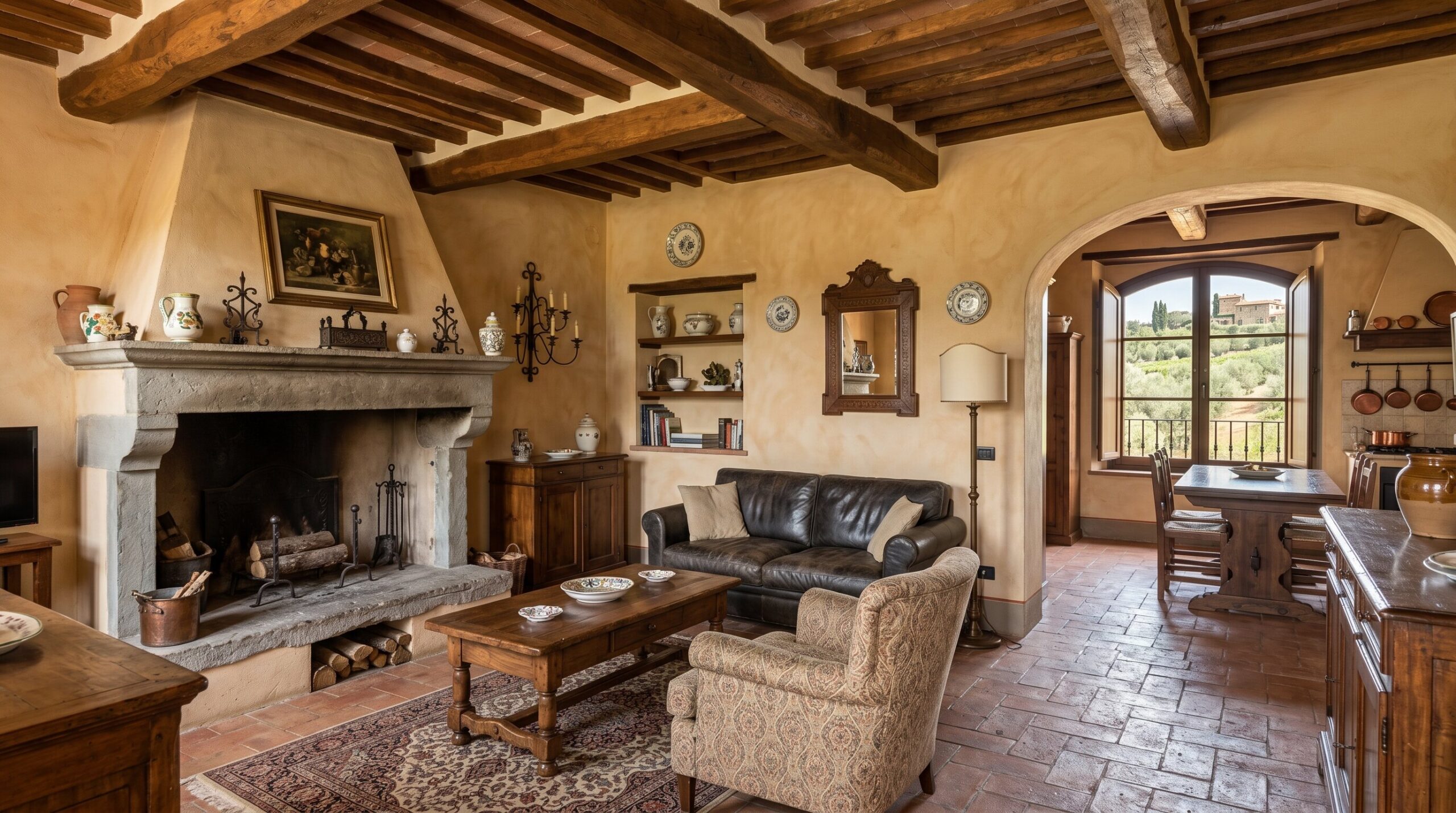
If you recently bought a home from the McMansion era, there’s a good chance you’re living with a classic 2000s Tuscan house. You know the look: mustard sponge-painted walls, dark cherry cabinets, heavy travertine floors, ornate wrought iron, bulky leather furniture, grape-themed decor, and a Tuscan kitchen that feels more like a themed restaurant than a relaxed home.
The good news is that you don’t need to erase every arch, stone wall, or terracotta roof. The problem isn’t Tuscan architecture itself. The problem is the overly heavy 2000s version of Tuscan style that copied Italian warmth but buried it under faux textures and visual clutter.
Modern Tuscan style is lighter, calmer, and more natural. It keeps the soul of a Tuscan house while removing the fake finishes. Think limewash, plaster, warm neutrals, linen, natural wood, handmade tile, soft Mediterranean textures, and sunlight. These 17 fixes cover the updates that matter most in 2000s Tuscan house makeovers, and they’ll help you turn a dated Tuscan home into a modern Mediterranean space that feels warm, current, and timeless.
Where to Start: Planning a 2000s Tuscan House Makeover
Decide what to keep first. Real arches, terracotta roof tiles, genuine stone, solid wood beams, and terracotta or stone floors are the bones of the style, and they are usually worth saving. For more on the elements that age well, see our guide to Tuscan house design elements that never look dated. Focus your budget on the finishes that date the house: faux paint, heavy decor, dark cabinets, and ornate fixtures.
Start with high-impact, low-cost changes. Paint, lighting, hardware, window treatments, and decor edits change a room quickly and cost far less than new countertops, floors, or exterior work. Use the table below to plan the order. Costs are relative estimates, not quotes.
| Fix | Cost | Impact | DIY-Friendly? |
|---|---|---|---|
| 1. Repaint faux-finished walls | $ | High | Yes |
| 2. Lighten ceiling beams | $–$$ | Medium | Partly |
| 3. Simplify archways | $$ | Medium | Partly |
| 4. Swap ornate wrought iron | $$ | Medium | No |
| 5. Tone down travertine | $–$$ | Medium | Rugs yes; honing no |
| 6. Paint cherry cabinets | $$ | High | Partly |
| 7. Replace the backsplash | $$ | High | Partly |
| 8. Streamline the range hood | $$ | Medium | No |
| 9. Replace busy granite | $$$ | High | No |
| 10. Update lighting fixtures | $–$$ | High | Partly (electrician) |
| 11. Replace oversized leather furniture | $$–$$$ | High | Yes |
| 12. Remove vineyard decor | $ | Medium | Yes |
| 13. Lighten window treatments | $ | High | Yes |
| 14. Update hardware | $ | Medium | Yes |
| 15. Paint the stucco exterior | $$$ | High | No |
| 16. Remove faux stone | $$–$$$ | Medium | No |
| 17. Simplify the landscaping | $–$$ | Medium | Yes |
Phase 1: Walls, Beams, and Architecture
1. Ditch the Faux Sponge Paint
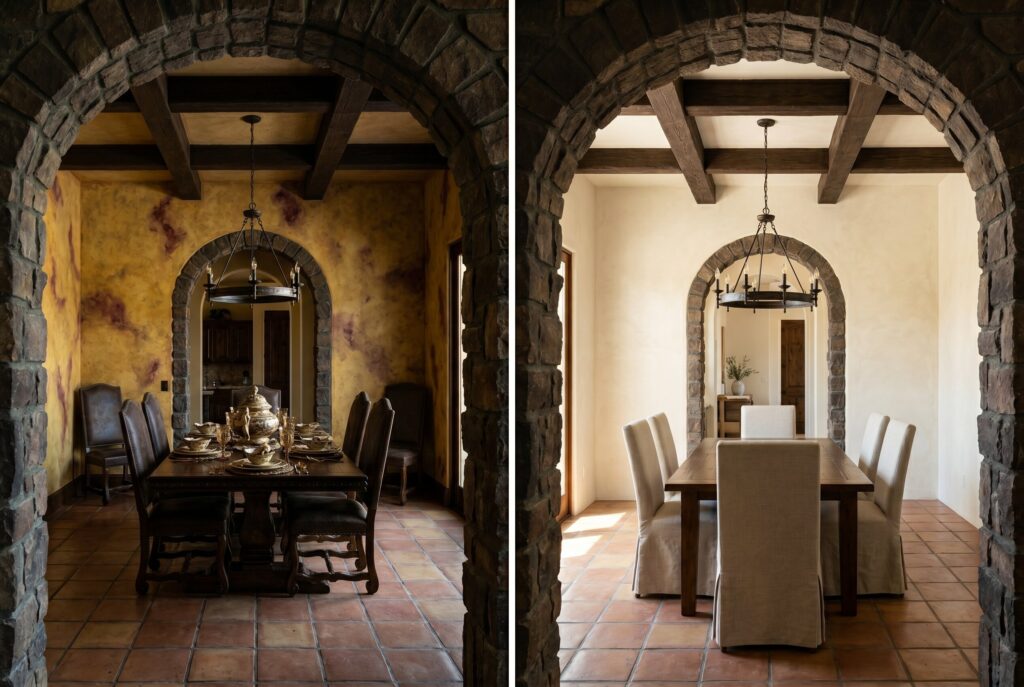
The fastest way to modernize a 2000s Tuscan house is to remove the faux wall finish. Mustard yellow, burgundy glaze, and sponge-painted texture make rooms feel dim and staged. Replace them with warm white, ivory, plaster beige, or limewash. Limewash is especially powerful because it still gives movement and depth, but it feels natural instead of fake. This one change can make heavy arches, stone, and wood suddenly feel intentional again. If you’re unsure how a new color will shift the mood, our guide to color psychology in interior design can help.
2. Lighten Heavy Ceiling Beams
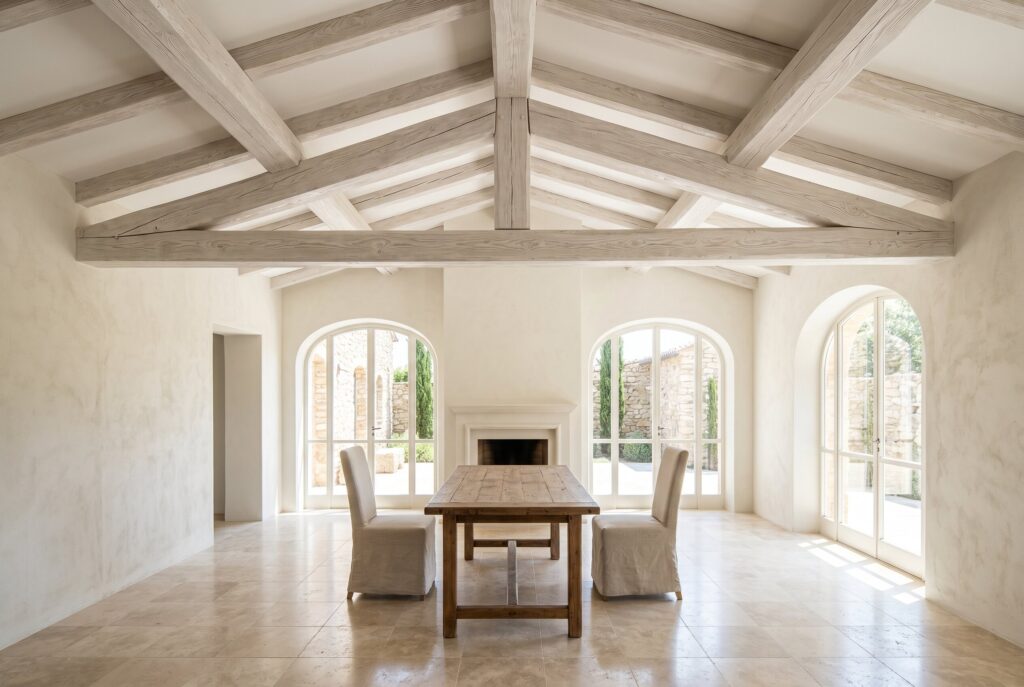
Dark ceiling beams were meant to feel rustic, but when they’re glossy espresso or nearly black, they lower the ceiling visually. Keep the beams if they’re real wood because they’re part of the home’s character. Sand them back, use a matte finish, or apply a soft whitewash. The goal isn’t to hide the wood. It’s to let the grain breathe so the room feels airy instead of compressed. Many 2000s homes used faux beams made of polyurethane foam, which can’t be sanded. Tap the beam or check a cut end: if it sounds hollow or feels light, repaint it in a softer, matte wood tone or a color close to the ceiling instead.
3. Simplify the Archways
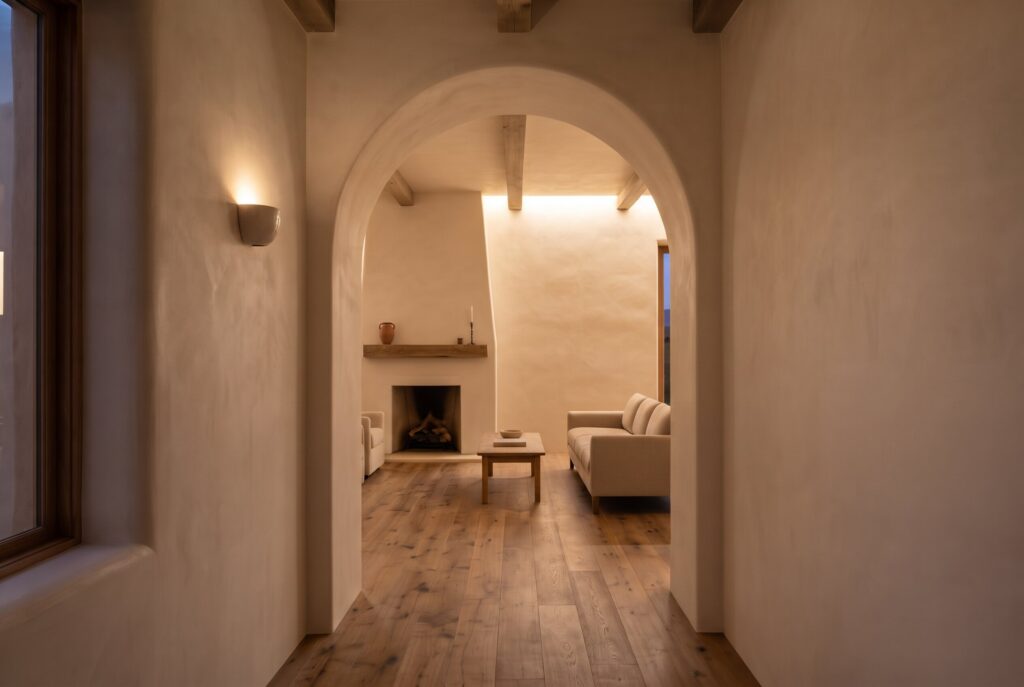
Arches are one of the best features of Tuscan-style homes, but many early 2000s versions were buried under thick trim, faux columns, and decorative molding. Remove the excess. A clean arch feels elegant, sculptural, and modern. When paired with smooth plaster walls and simple flooring, it becomes architectural rather than theatrical.
>>> 10 Thrift Store Finds for Home Organization on a Budget
4. Swap Out Ornate Wrought Iron

Wrought iron can still work in a Tuscan-style house, but the old vine scrolls, grape details, and heavy rails need editing. Replace ornate panels with slim matte black metal, simple vertical railings, or minimal lanterns. Keep the contrast, lose the fuss. This makes the home feel Mediterranean rather than medieval.
5. Tone Down the Travertine

Travertine floors are expensive to replace, and sometimes they’re worth keeping. If the stone is too orange or busy, soften it with oversized jute rugs, wool rugs, linen upholstery, and lighter wall colors. Avoid adding more yellow or red tones. Let the floor become a warm base, not the loudest feature in the room. If the shiny polished finish is part of the problem, a stone professional can hone it to a matte surface, fill open holes, and reseal it, which often looks far more current without replacing a single tile.
Phase 2: Update the Tuscan Kitchen
6. Paint the Dark Cherry Cabinets
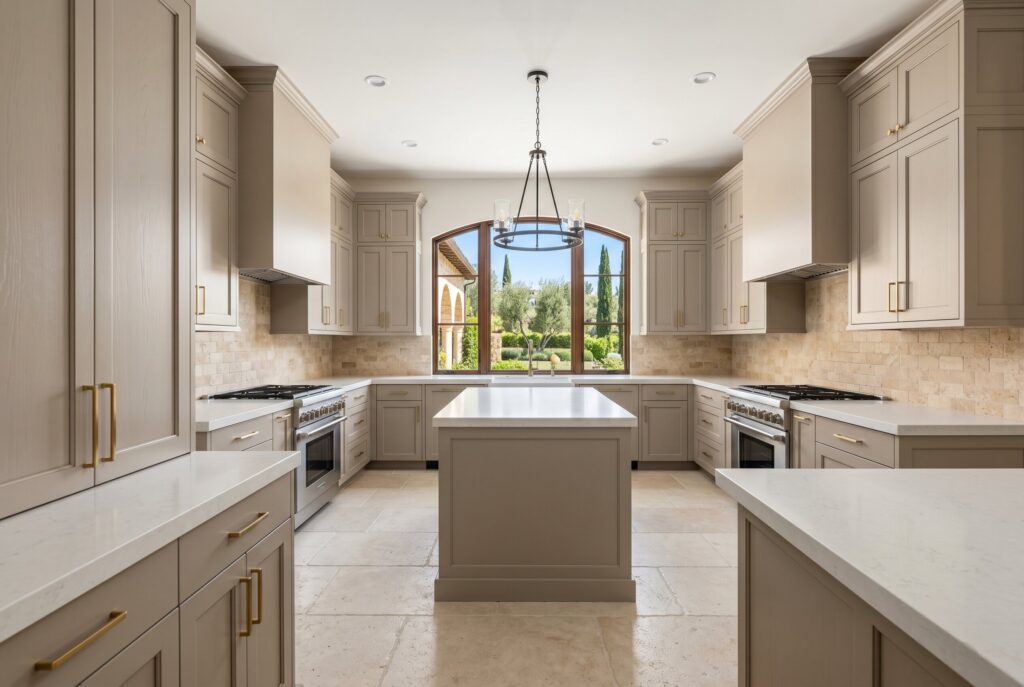
Dark cherry cabinets are one of the clearest signs of early 2000s home design. They absorb light and make a Tuscan kitchen feel smaller. Paint them warm cream, mushroom, greige, soft taupe, or muted olive. These colors keep warmth while removing heaviness. If the cabinet shape is simple, paint alone can save thousands of dollars compared with new cabinets. Prep is what makes the paint last: degrease every surface, scuff-sand or use a liquid deglosser, and apply a bonding primer before a durable cabinet paint. Doors wrapped in thermofoil, a smooth plastic coating, don’t take paint well, so check what you have before you start.
7. Rip Out the Tumbled Marble Backsplash
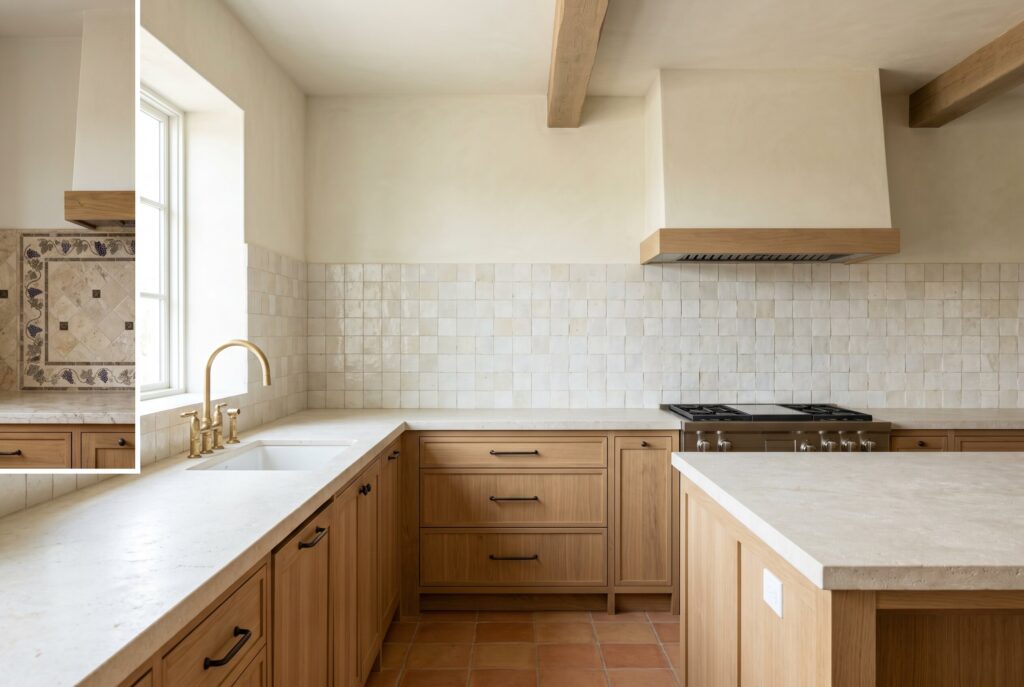
Tumbled marble with grape tiles, bronze inserts, and busy borders instantly dates a kitchen. Replace it with handmade zellige tile, simple limestone, plaster, or a quiet slab backsplash. A modern Tuscan kitchen should feel crafted, not crowded. Texture matters, but pattern should be restrained.
8. Streamline the Range Hood
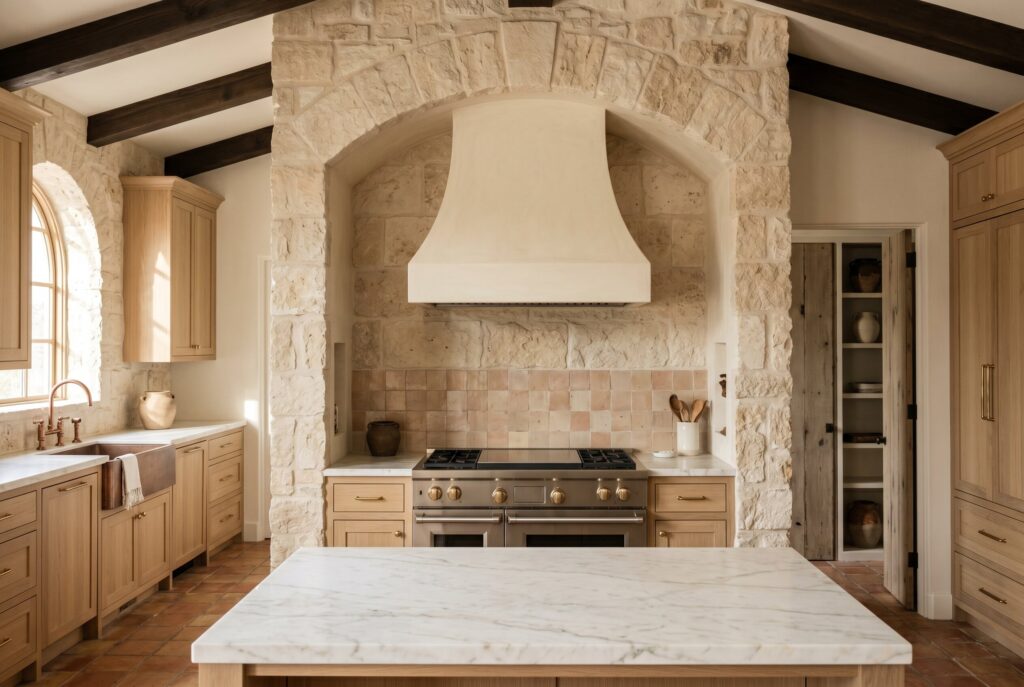
Huge carved wood range hoods were once a luxury signal. Today, they usually feel bulky. A plaster hood, a simple stone surround, or a clean metal hood will make the kitchen calmer. Keep the hearth-like feeling, but remove the decorative weight.
9. Say Goodbye to Busy Granite

Gold, black, and burgundy granite can fight with every other material in the room. If replacement fits your budget, choose quiet quartz, honed marble, limestone, or soapstone. If not, reduce the surrounding noise first. New paint, simple hardware, and a calm backsplash can make old granite less dominant.
10. Modernize the Lighting Fixtures
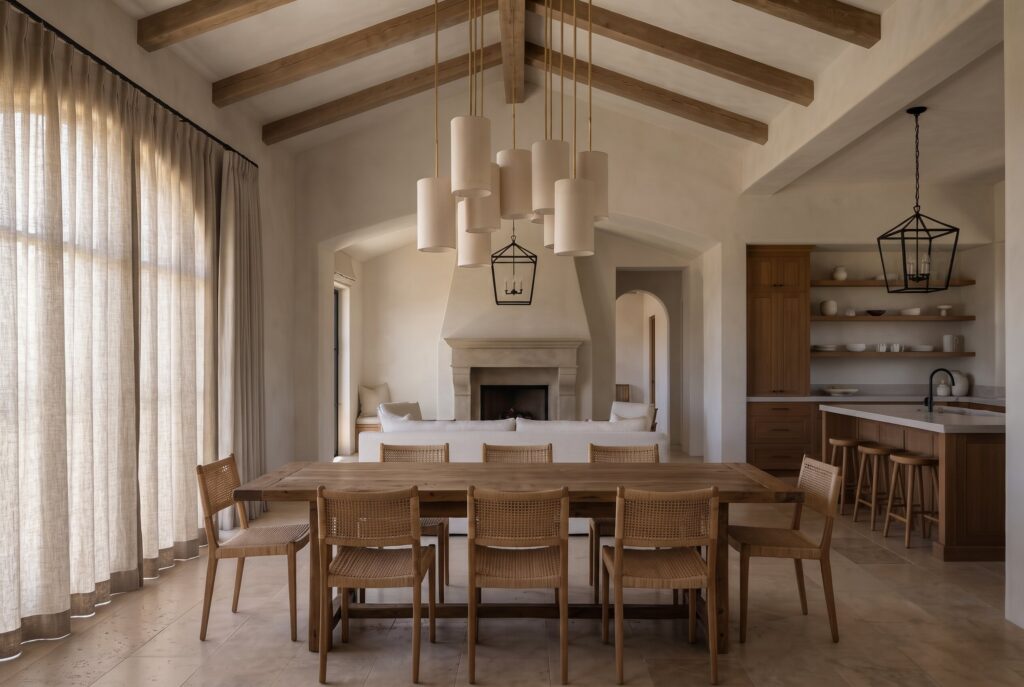
Heavy chandeliers with chains and amber glass make a Tuscan home feel stuck in 2005. Try linen shades, unlacquered brass pendants, black iron lanterns with clean lines, or woven fixtures. Lighting should add glow, not drama overload. For help layering light, see our guides to lighting in design and choosing and placing wall sconces.
Phase 3: Furniture and Decor Detox
11. Remove Oversized Leather Sets
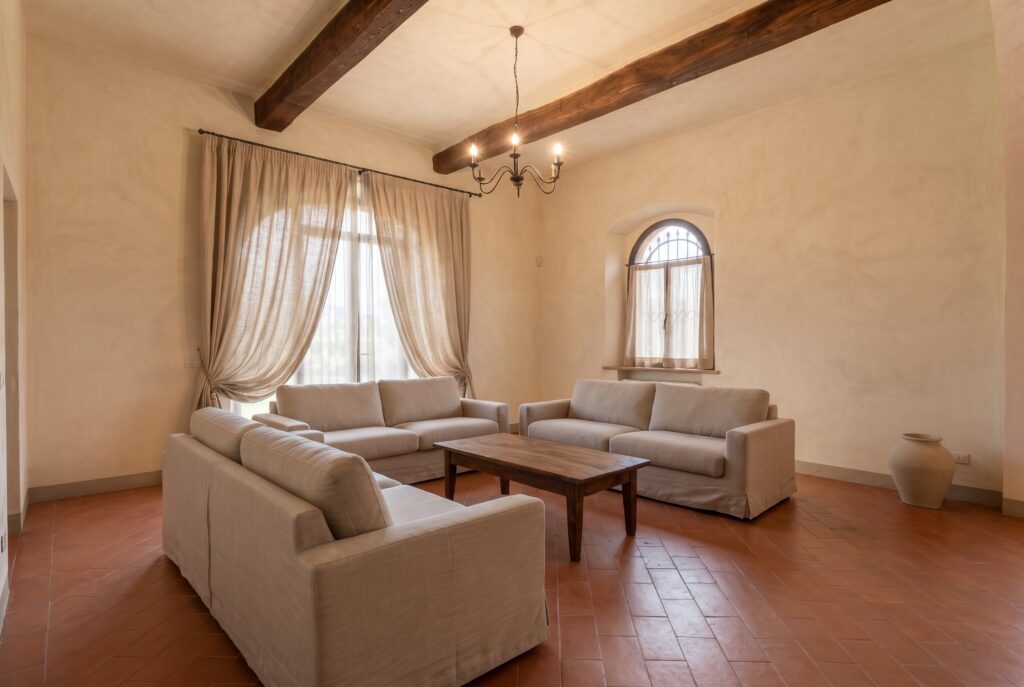
Bulky leather sofas with nailheads can make a room feel closed-in and heavy. Replace them with low linen sofas, slipcovered sectionals, or warm neutral upholstery. A modern Mediterranean room should invite lounging without swallowing the space.
12. Ditch the Vineyard Themes
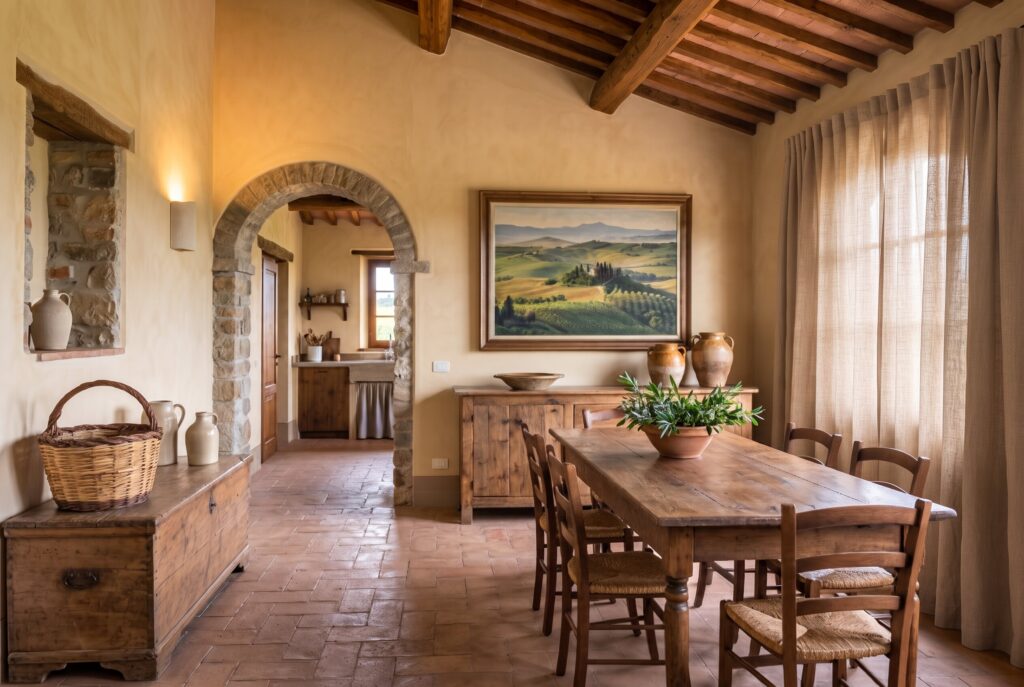
Wine bottle clocks, grape art, fake vines, and wall plaques don’t make a home Tuscan. They make it themed. Replace them with handmade ceramics, olive branches, landscape art, woven baskets, and aged wood. Real texture always beats literal decoration, and our texture layering ideas show how to build it.
13. Take Down Heavy Window Treatments

Dark drapes, swags, tassels, and layered valances block the best thing a Tuscan house has: light. Use bare windows, linen curtains, or woven shades. The more sunlight touches plaster, stone, and terracotta, the more authentic the home feels. Natural fibers like linen, jute, and wool reinforce that look, as we explain in our guide to natural materials in interior design.
14. Update Hardware to Unlacquered Brass
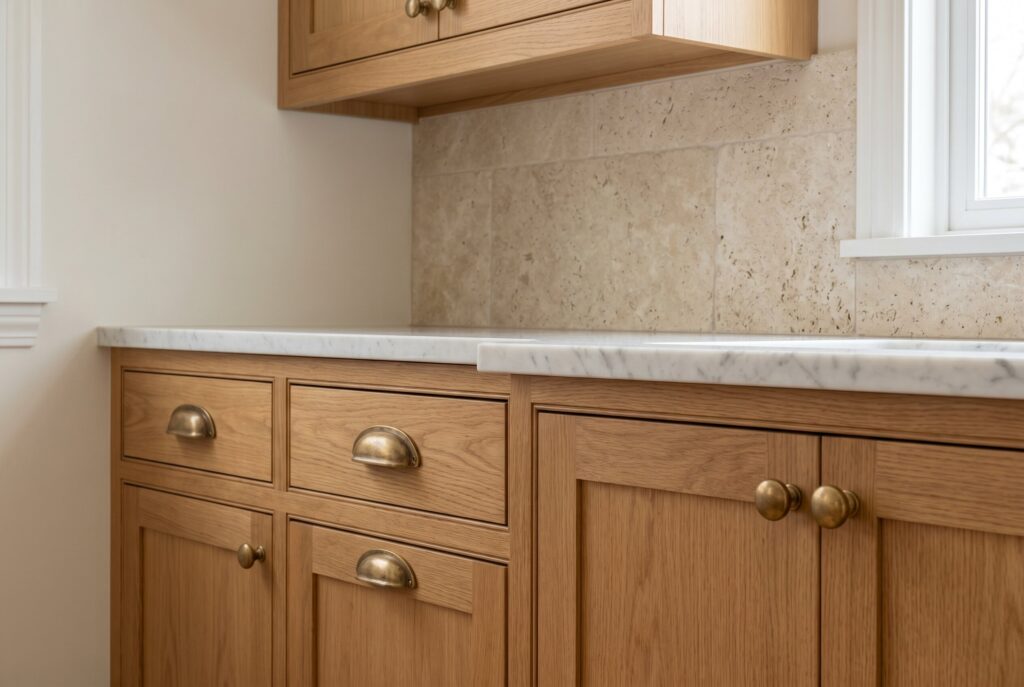
Oil-rubbed bronze was everywhere in the 2000s. It can look heavy when used on every knob, faucet, and hinge. Unlacquered brass, aged nickel, or matte black feels fresher. Brass works especially well because it develops natural patina over time instead of pretending to be old. Just know that unlacquered brass darkens and spots with handling; if you prefer a bright, even finish, choose lacquered or PVD-coated brass instead.
Phase 4: The Exterior Face Lift
15. Paint the Stucco Exterior
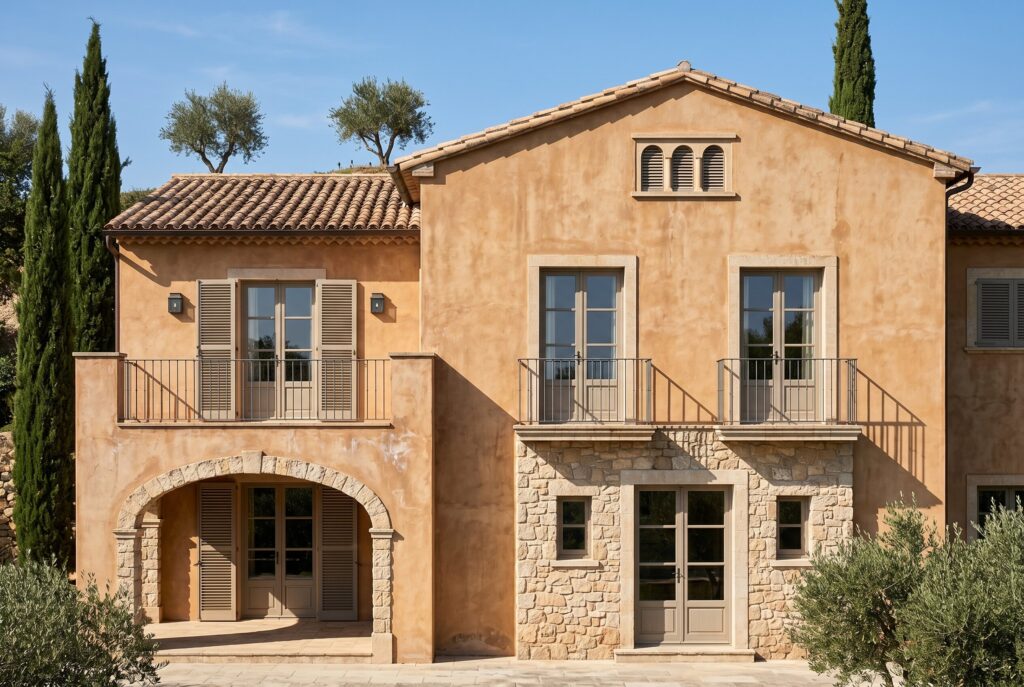
A Tuscan-style home with orange-beige stucco can look tired fast. Repainting the exterior in alabaster, warm white, limestone, or soft sand can transform the whole house. The terracotta roof suddenly looks intentional, and the architecture feels cleaner. Stucco needs the right prep and paint: repair cracks, wash the surface, and use a masonry or elastomeric paint made for stucco. If you live in a planned community, check your HOA’s approved color list before you buy paint.
16. Remove Faux Stone Accents

Random fake stone around windows or garage doors weakens curb appeal. If the stone isn’t structural or believable, simplify it. Smooth stucco often looks more expensive than bad stone veneer. Authenticity is the secret. Removing veneer can damage the stucco and the water-resistant barrier behind it, and sometimes reveals hidden moisture damage, so this is usually a job for a contractor who can patch and seal the wall properly.
17. Simplify the Landscaping
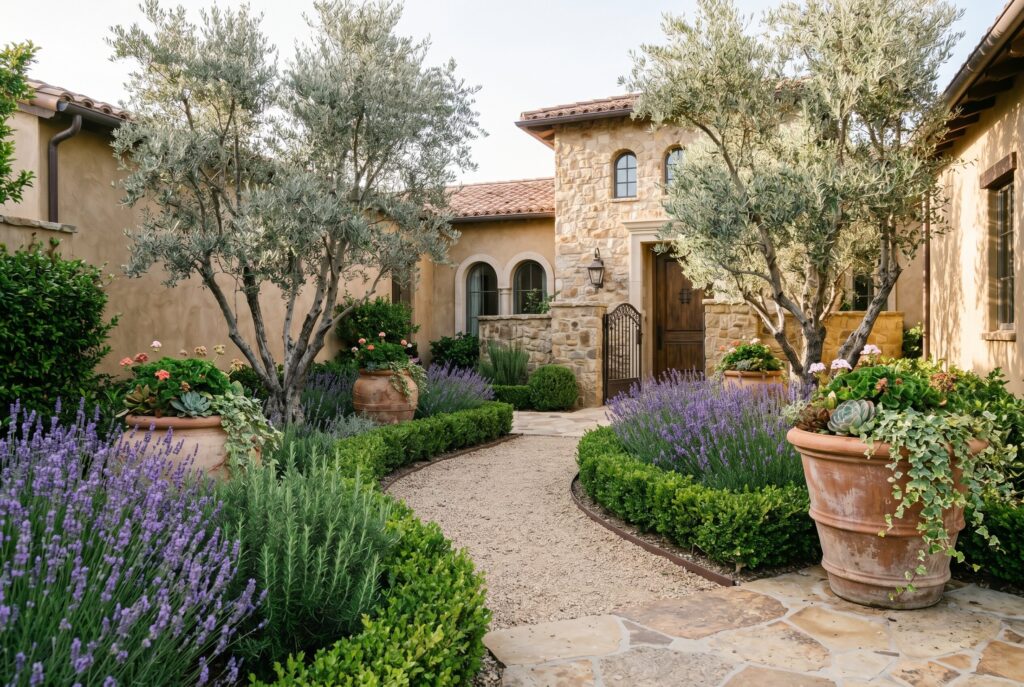
Old Tuscan landscaping often used too many shrubs, palms, and decorative pots. Modernize with olive trees, rosemary, lavender, gravel paths, large terracotta planters, and clipped greenery. The yard should feel sun-baked, simple, and calm. For more easy-care ideas, see our guide to low-maintenance front yard landscaping.
Frequently Asked Questions
Is Tuscan style outdated?
The heavy 2000s version, with faux finishes, dark wood, and vineyard decor, does feel dated. But the core of the style, including arches, plaster, stone, terracotta, and natural textures, still looks current when it’s lightened and simplified.
What is modern Tuscan style?
Modern Tuscan style keeps the warmth and architecture of a Tuscan home but uses a lighter palette, limewash or plaster walls, natural wood, linen, handmade tile, and restrained ironwork instead of heavy, themed decor.
How do you update a Tuscan kitchen without remodeling?
Paint the cabinets, swap the hardware, replace heavy light fixtures, and remove themed decor. A new backsplash is the next step up and can change the look of the kitchen without touching the layout or countertops.
What paint colors work in a Tuscan house?
Warm whites, ivory, plaster beige, mushroom, greige, soft taupe, and muted olive all work well. They keep the warmth the style is known for while replacing the mustard, burgundy, and sponge-painted finishes that date it.
How much does a Tuscan house makeover cost?
It depends on scope. Cosmetic updates like paint, hardware, lighting, and decor cost far less than a remodel, while replacing countertops or floors, painting a stucco exterior, or removing stone veneer are the biggest expenses. Starting with low-cost, high-impact changes lets you see how far you need to go.
Conclusion
A 2000s Tuscan house makeover isn’t about making your home cold or generic. It’s about removing the fake heaviness and keeping the real warmth. Save the arches, sunlight, stone, texture, and indoor-outdoor feeling. Remove the sponge paint, grape decor, dark cabinets, and oversized furniture. When you edit with restraint, a dated Tuscan house can become a bright, modern Tuscan-style home that feels relaxed, grounded, and deeply livable.