

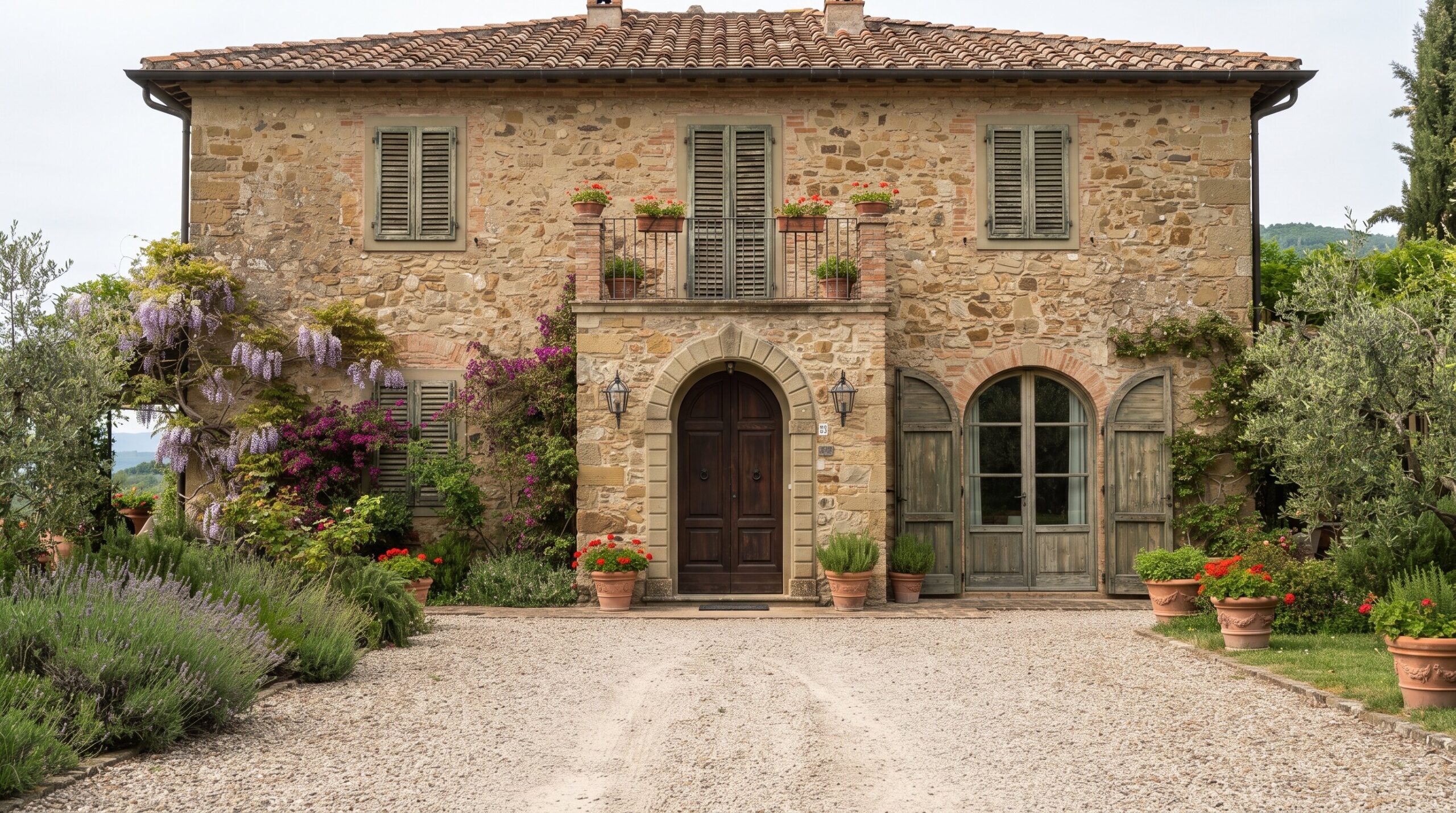
A true Tuscan house isn’t dark, heavy, or overloaded with fake old world decoration. The best Tuscan house design feels warm, grounded, sunlit, and deeply connected to nature. It blends Mediterranean architecture with honest materials such as limewashed stone, textured stucco, terracotta roof tiles, aged wood, wrought iron, and handmade flooring.
The reason Tuscan houses still feel timeless is simple: the style was built around function before decoration. Thick stone walls help moderate heat. Clay roof tiles handle strong sun. Courtyards create private outdoor rooms. Arched openings soften the architecture and invite light through the home.
If you’re building or refreshing a Tuscan style house in 2026, the goal isn’t to copy the dark 2000s version. It’s to keep the soul of Tuscany while making the home brighter, simpler, and more livable. That means real texture, natural color, indoor outdoor living, and fewer fake finishes. A Tuscan home should feel collected over time, not staged in one shopping trip.
The 2000s Tuscan House Trap
The phrase 2000s Tuscan house often brings up a very specific image: dark cabinets, heavy brown granite, faux painted walls, oversized iron scrollwork, tiny windows, and rooms that feel more like a themed restaurant than an Italian countryside home. That version became popular because it borrowed Tuscan symbols without understanding why they worked.
Authentic Tuscan style homes don’t depend on darkness. In Tuscany, sunlight is part of the architecture. Walls are pale because they reflect heat and light. Floors are earthy because they connect the interior to the land. Wood beams are rustic, but they aren’t glossy or red toned. Iron details are present, but they’re functional and restrained.
To escape the Tuscan house 2000s trap, edit before you add. Remove fake distressing, reduce overly ornate metalwork, brighten walls with cream or limewash, and let stone, clay, plaster, and wood do the work. The new Tuscan revival isn’t about more decoration. It’s about more authenticity.
The Exterior: 7 Elements of Italian Countryside Charm
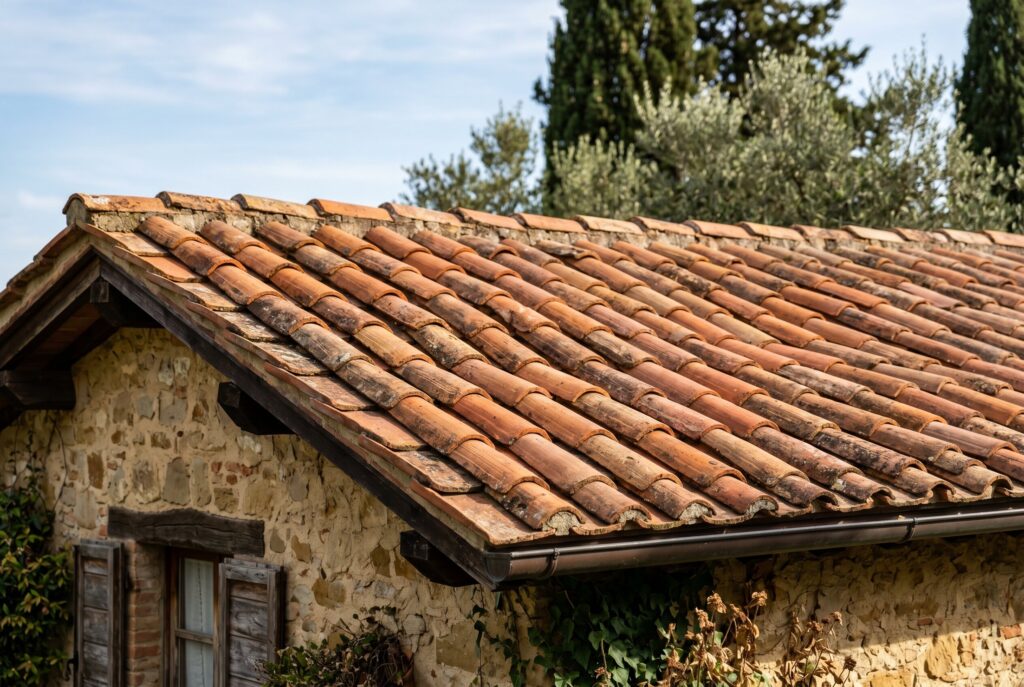
1. Barrel Tiled Terracotta Roofs

A terracotta barrel tile roof is one of the clearest signs of a Tuscan house. The warm clay color instantly creates Mediterranean character, but it also has practical value. The curved shape helps shed rain, manage heat, and create depth across the roofline. Avoid synthetic orange tiles that look too flat. Natural variation is what makes the roof age beautifully.
2. Limewashed Stone and Stucco Facades
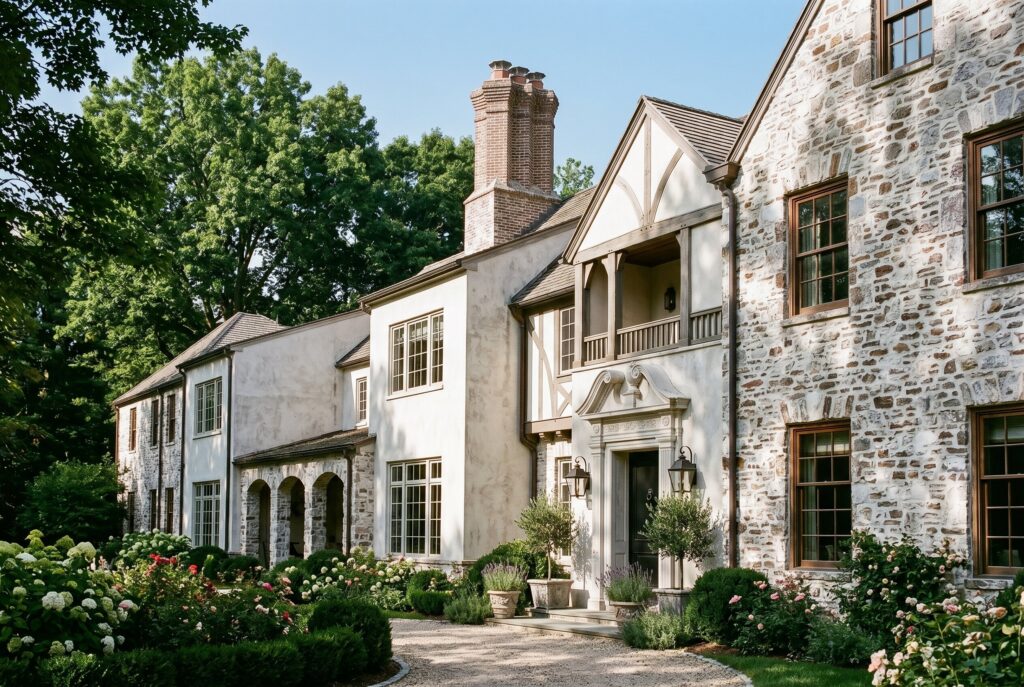
The exterior of a Tuscan style house should never feel plastic. Limewashed stone and textured stucco create a soft, breathable surface that changes with sunlight. Instead of a flat painted wall, you get movement, shadow, and quiet imperfection. Warm whites, soft beige, sand, cream, and pale ochre all work better than harsh white.
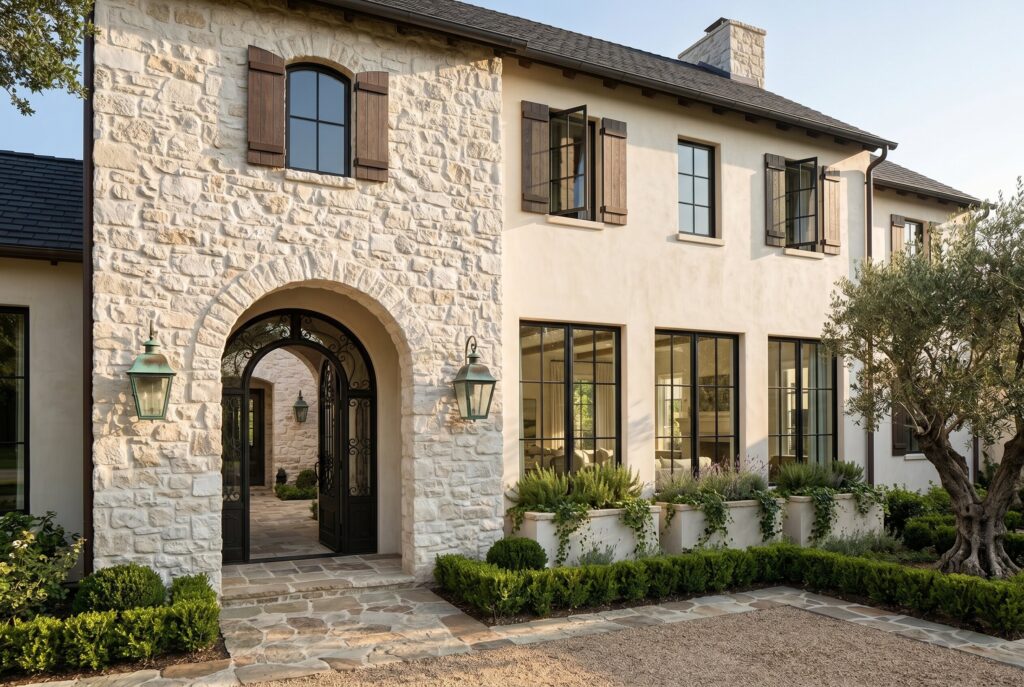
3. The Central Courtyard
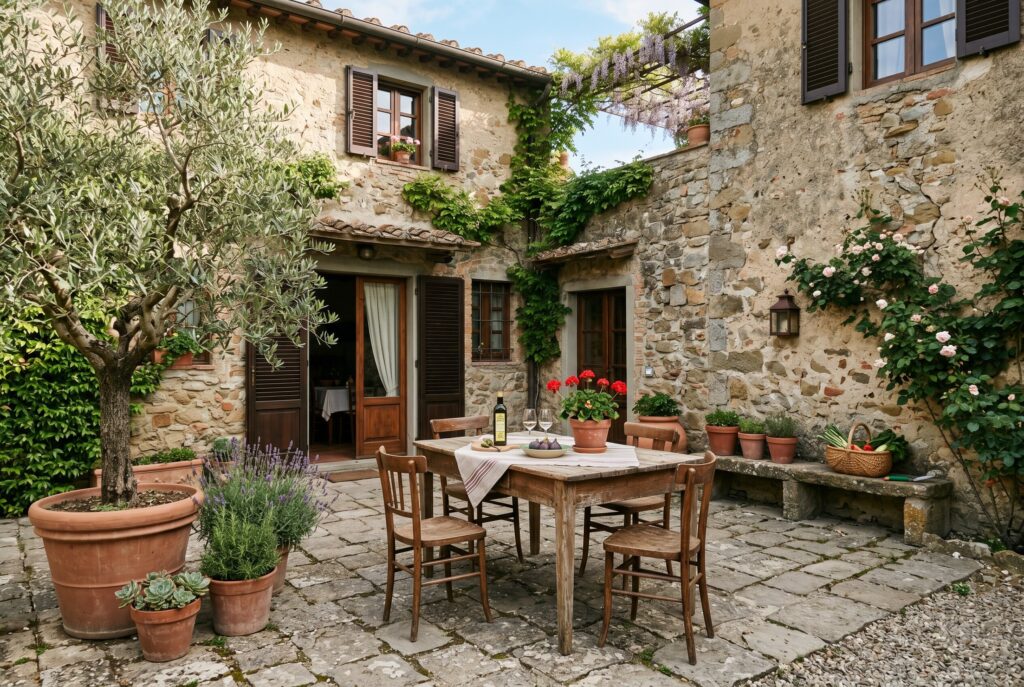
A courtyard is the emotional center of many Tuscan houses. It creates privacy, pulls light into the home, and turns outdoor space into a daily living area. Even a small courtyard with stone pavers, olive trees, lavender, and a simple table can bring the Tuscan house aesthetic to life.
4. Arched Windows and Doorways
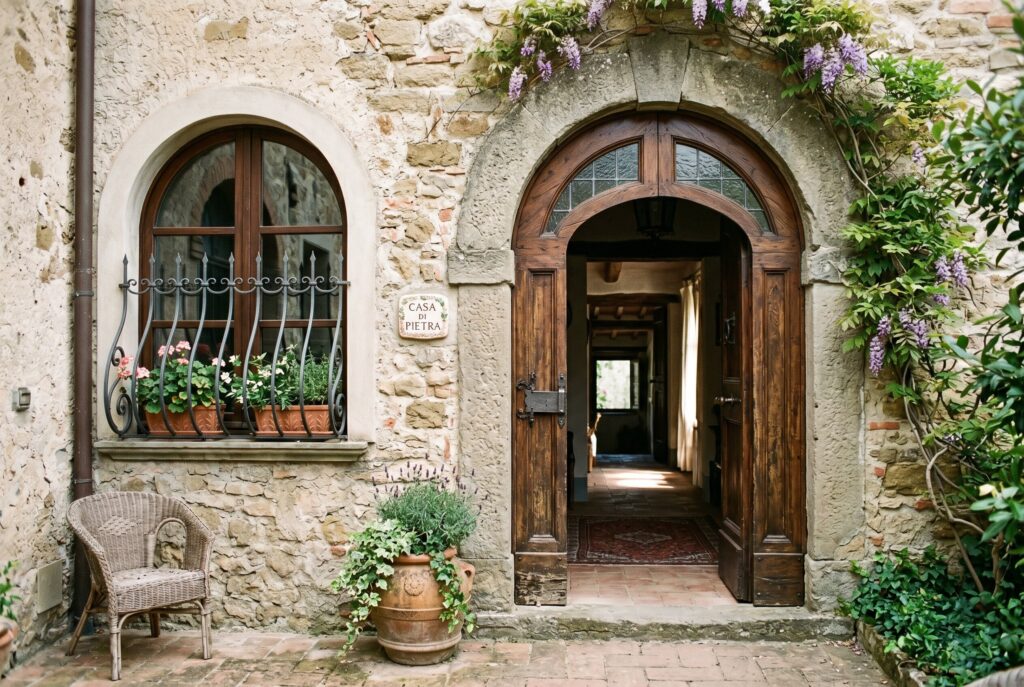
Arches are essential because they soften the strong mass of stone and stucco. Arched windows, doorways, niches, and garden gates add rhythm without feeling decorative for decoration’s sake. In modern Tuscan house design, larger arched openings also help solve the old problem of dark interiors.
5. Breezy Loggias
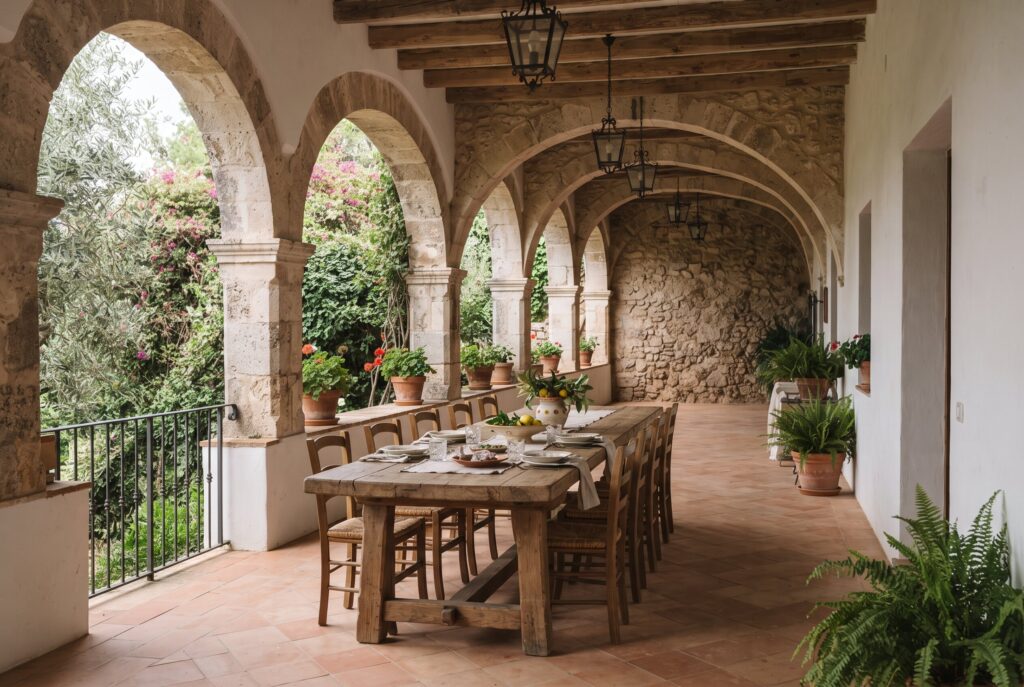
A loggia is a covered outdoor passage or room that opens to the air. It’s one of the most elegant ways to support indoor outdoor living. Use it as a shaded dining area, reading space, or transitional zone between kitchen and garden. It gives the home depth and makes warm weather living feel natural.
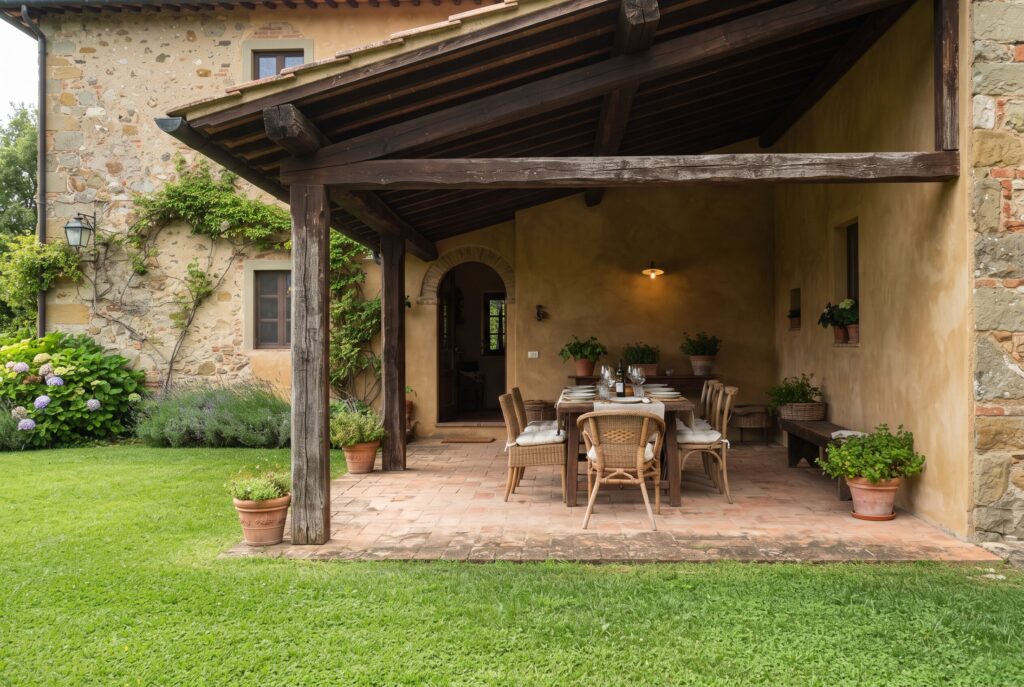
6. Rustic Wooden Pergolas
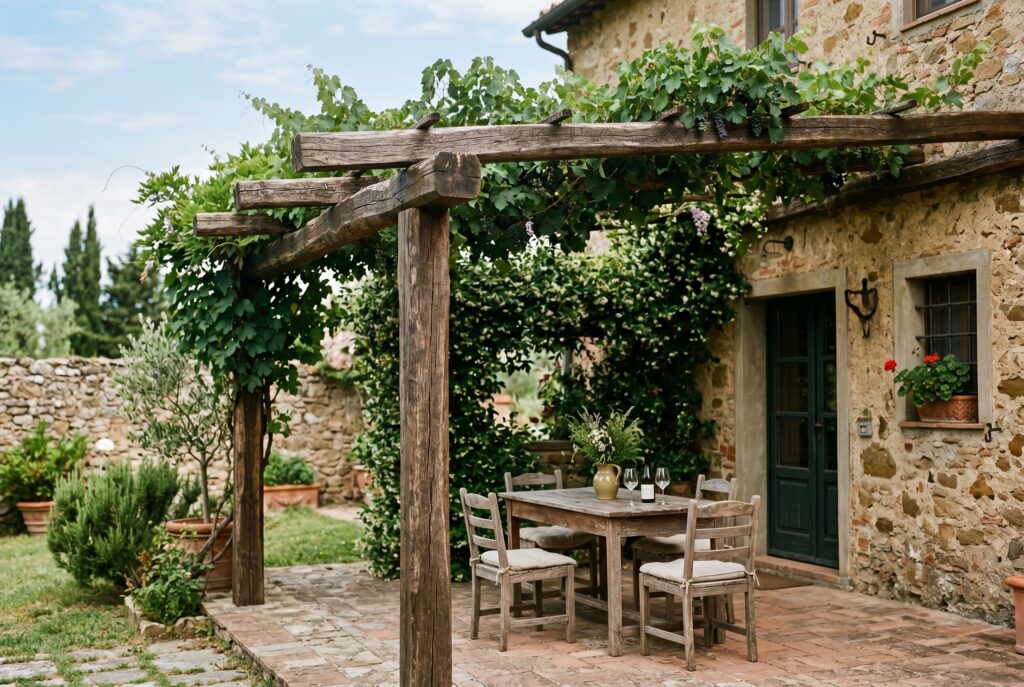
Pergolas bring structure to outdoor spaces without closing them in. In a Tuscan home, they should feel sturdy and simple, often made from thick timber and covered with vines, jasmine, wisteria, or bougainvillea. The goal is shade, texture, and romance, not a perfect showroom patio.
7. Classic Stone Water Features

A stone fountain gives the exterior a quiet sense of sanctuary. The sound of moving water softens a courtyard, cools the air slightly, and creates a slow living mood. Keep the design simple. A weathered basin or wall fountain often feels more authentic than a grand decorative feature.
The Interior: 8 Elements of Warmth and Slow Living
8. Handmade Terracotta Flooring
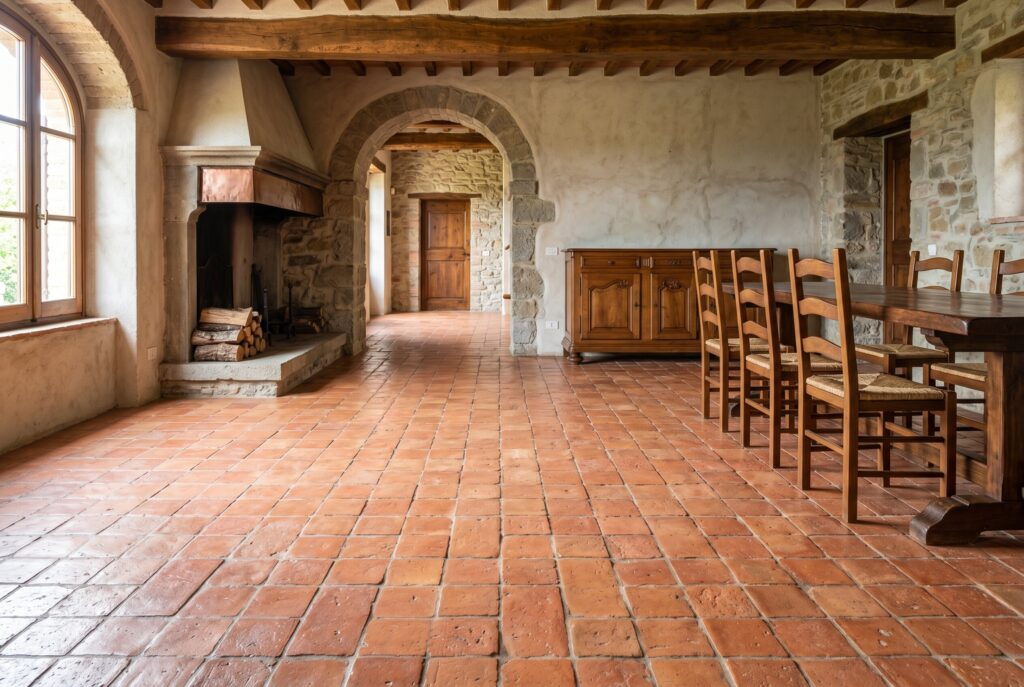
Terracotta flooring is the foundation of a timeless Tuscan house interior. Its color brings warmth without needing heavy decor. Handmade tiles with slight variation feel more natural than perfectly identical pieces. They work beautifully in kitchens, halls, courtyards, and sunrooms.
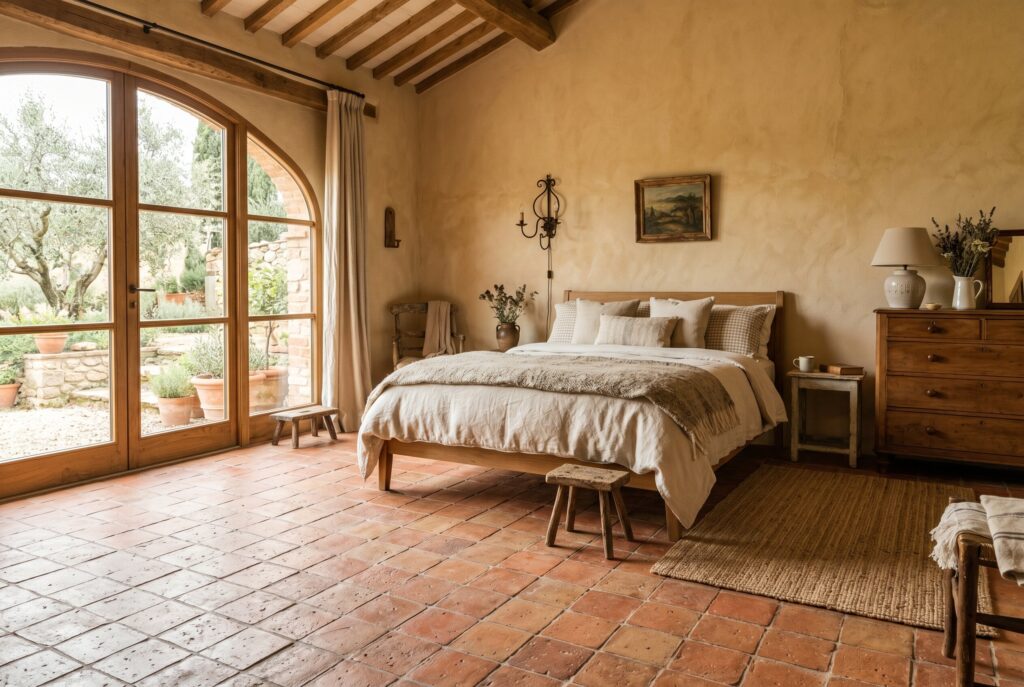
9. Exposed Rustic Wood Beams
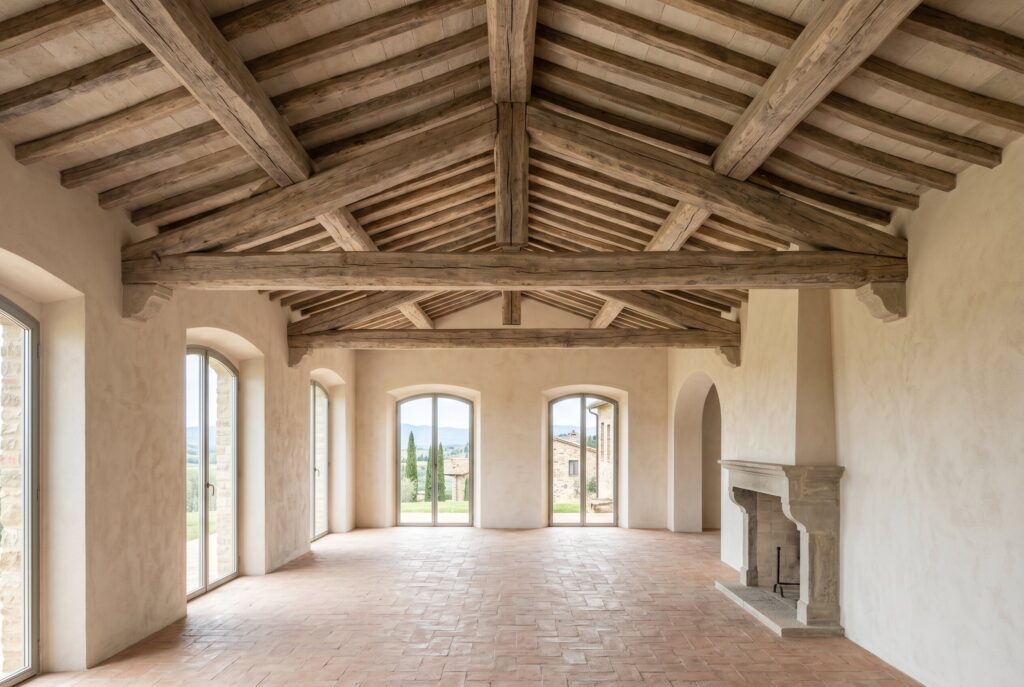
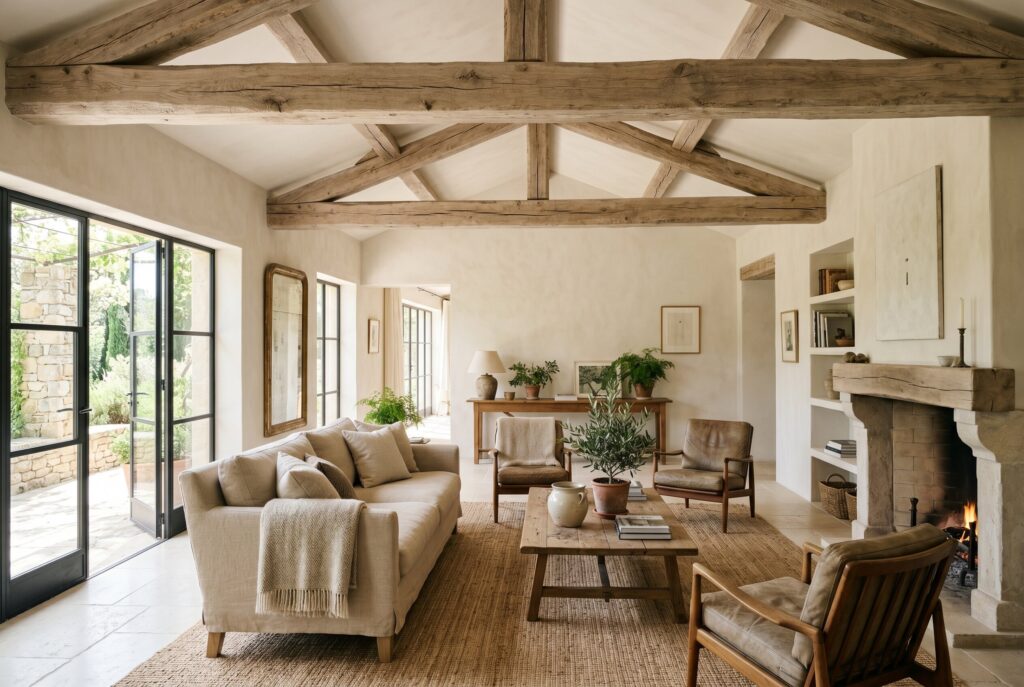
Wood beams add age, structure, and comfort. The key is restraint. Choose raw, weathered, or lightly finished wood instead of glossy dark stain. In a modern Tuscan house, beams should contrast gently with pale walls and natural light, not make the ceiling feel low and heavy.
10. Earth Tones and Ochre Walls
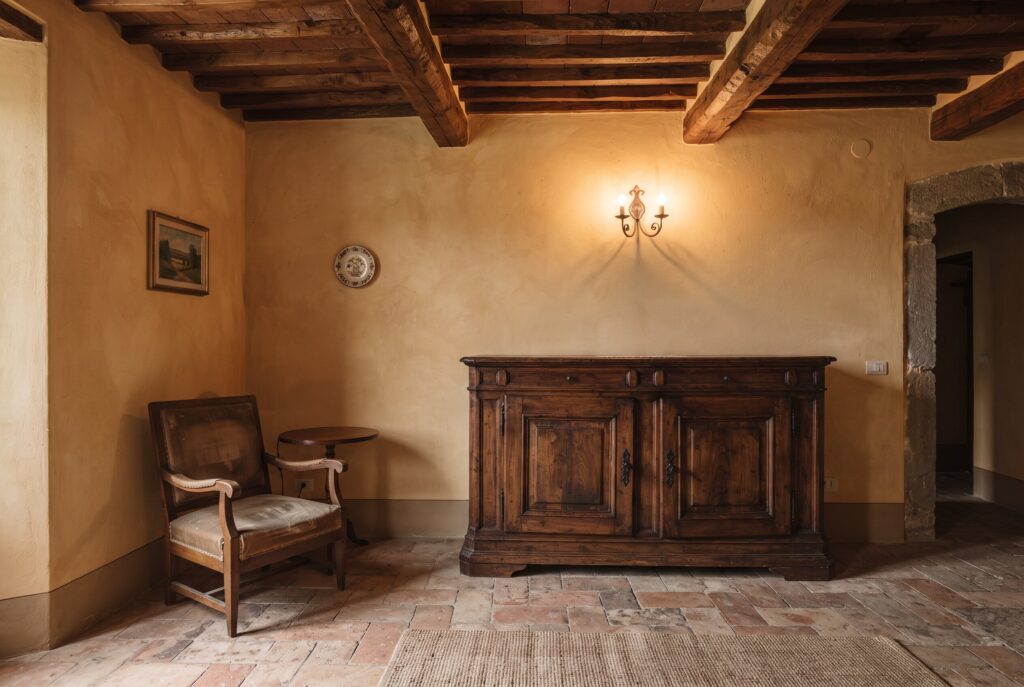
Tuscan house decor depends on colors pulled from the landscape. Think ivory, sand, clay, olive, wheat, ochre, walnut, and soft rust. These shades feel warm because they belong to stone, soil, fields, and sunlight. Avoid overly red or orange walls unless the room has enough natural light to balance them.
11. Minimalist Wrought Iron Accents
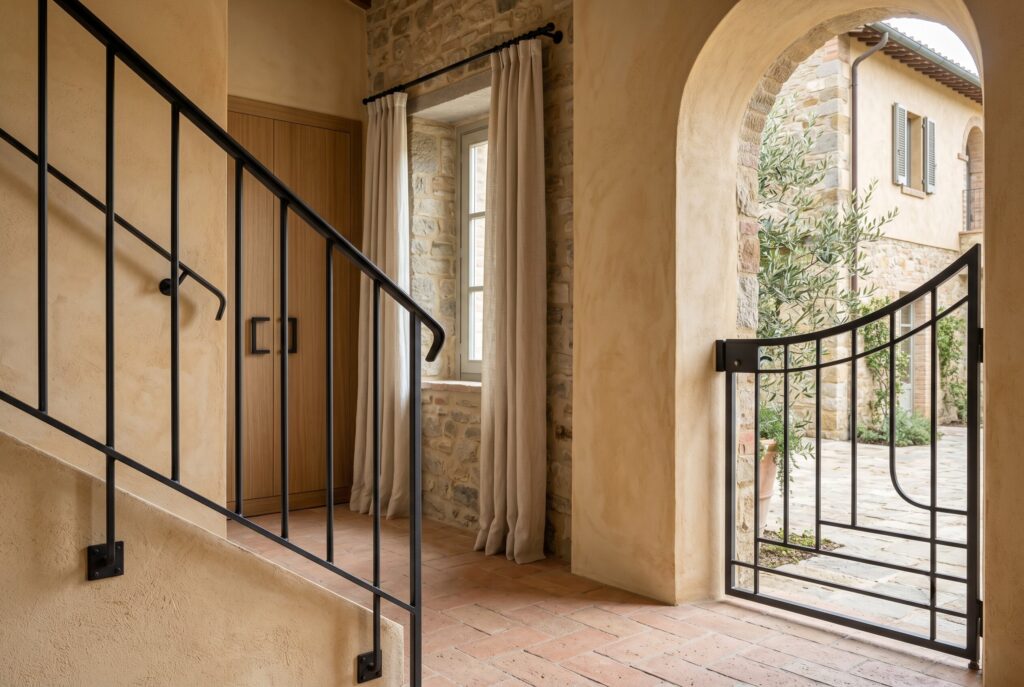
Wrought iron belongs in Tuscan design, but too much of it quickly looks dated. Use it for stair rails, curtain rods, gate details, cabinet pulls, or simple lighting. Matte black or aged bronze works best when the shapes are clean and architectural.
12. Old World Kitchen Layouts
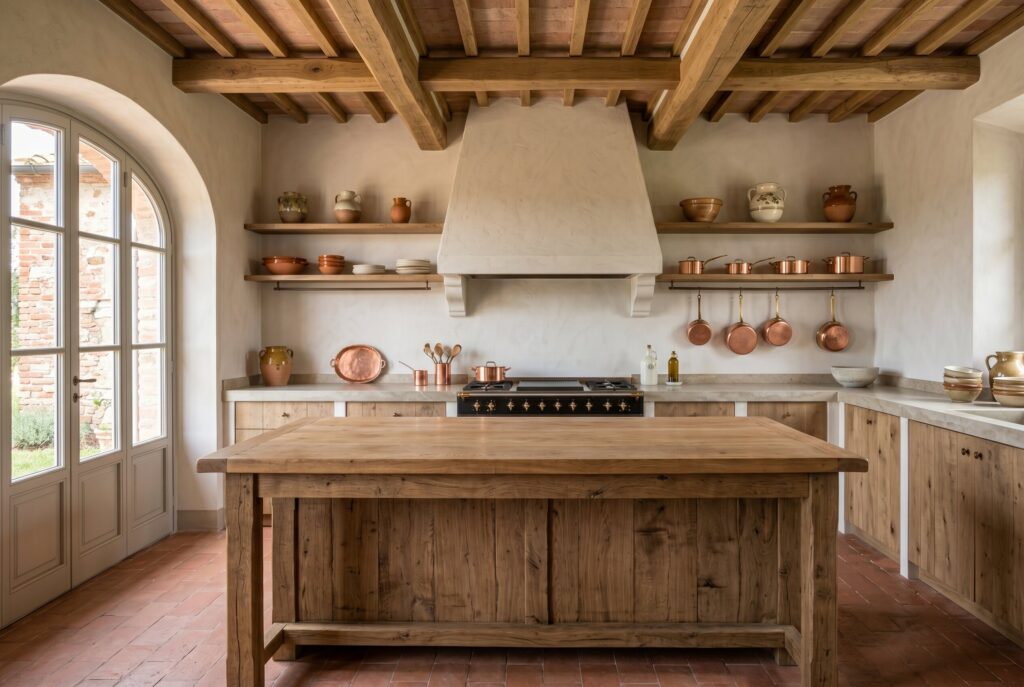
A Tuscan kitchen should feel generous and useful. A large wood island, plaster range hood, stone counters, open shelving, ceramic dishes, copper pots, and warm lighting create character. Avoid cluttering every surface. The best Italian inspired interiors feel lived in, not crowded.
13. Wine Cellar Details

You don’t need a full wine cellar to borrow the feeling. A small arched niche, brick wall, stone framed pantry, or built in bottle storage can add depth. The goal is to suggest old world hospitality, where food, wine, and conversation shape the home.
14. Oversized Stone Fireplaces

A stone fireplace creates a natural focal point. In a Tuscan style house, it should feel grounded and substantial. Rough limestone, travertine, or plaster surrounds work well. Keep the mantel simple so the material remains the star.
15. Maximized Natural Light

The most important update for 2026 is light. Remove heavy drapes, brighten walls, open sightlines, and let arched windows do their work. Natural light keeps Tuscan house design from feeling dated. It turns rustic materials into something fresh, warm, and alive.
Conclusion
A timeless Tuscan house isn’t created by copying every old world detail. It’s created by understanding why those details exist. Terracotta cools and warms. Stone protects. Courtyards breathe. Arches soften. Wood grounds the room. Light brings everything together.
The best Tuscan style homes don’t chase trends. They rely on natural materials, honest texture, warm color, and spaces designed for slow living. When form follows function, the result doesn’t look dated. It looks like it has always belonged.