

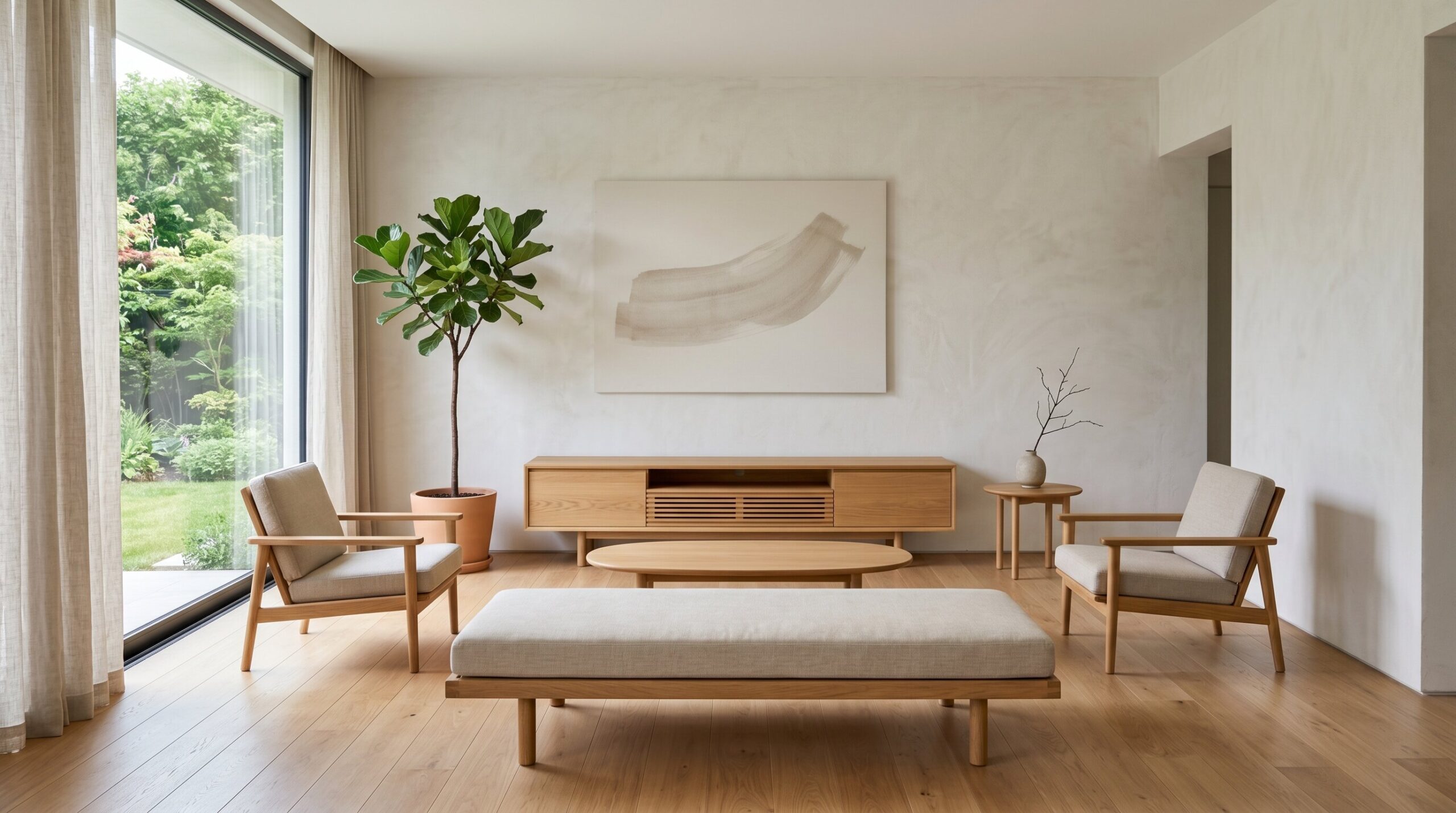
A beautiful Japandi living room isn’t empty, cold, or overly staged. It’s a balanced space where Japanese interior design meets Scandinavian comfort. The Japanese side brings restraint, quietness, natural imperfection, and respect for negative space. The Scandinavian side brings warmth, softness, functionality, and everyday comfort. Together, Japandi interior design creates a room that feels calm without feeling lifeless.
The heart of Japandi style is editing. You keep fewer pieces, but every piece has a purpose. A low sofa grounds the room. Warm wood gives the space depth. Linen curtains soften the light. Handmade ceramics add Wabi Sabi character. Hidden storage keeps visual noise under control.
The best Japandi living room ideas don’t ask you to buy everything new. They ask you to notice what disrupts peace, remove what isn’t useful, and build a room around natural materials, gentle contrast, warm light, and human comfort.
8 Ideas to Elevate Your Japandi Living Room
1. Anchor the Room with a Low Profile Sofa
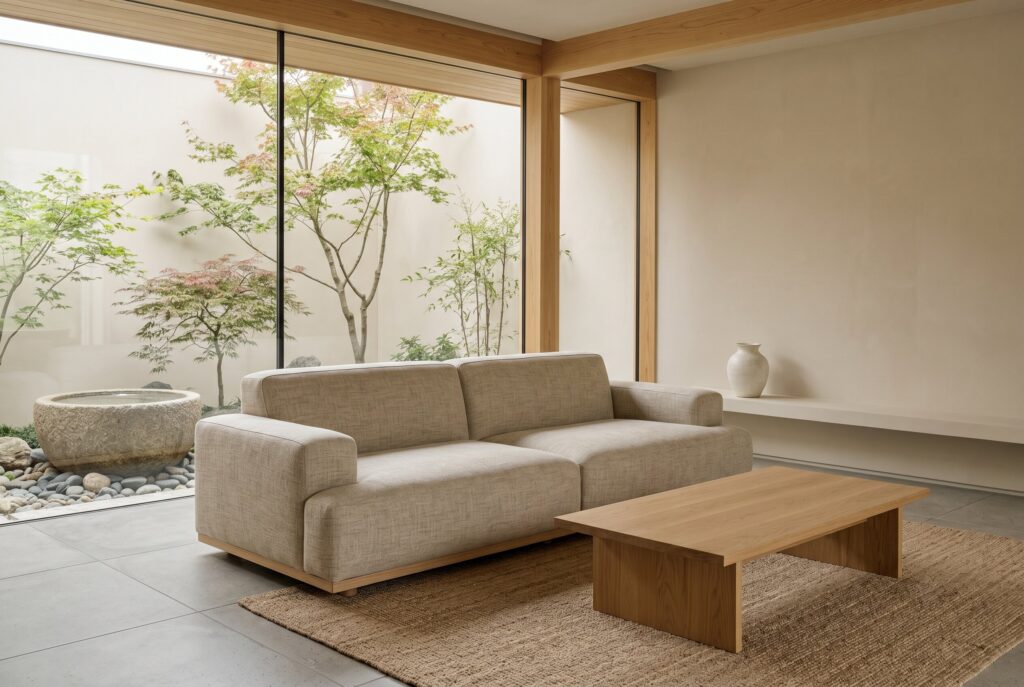
A low profile sofa is the visual anchor of a Japandi living room. Because it sits closer to the floor, it makes the ceiling feel taller and gives the room a quieter, more grounded mood. Choose a modular sofa with clean lines, deep seats, and soft fabric such as linen, cotton, or bouclé. Avoid tall arms, shiny legs, and bulky cushions that make the room feel heavy. The sofa should invite rest, not dominate the space. Pair it with a low wood coffee table so the whole seating area feels balanced and intentional.
2. Embrace Dark Japandi with Walnut Tones
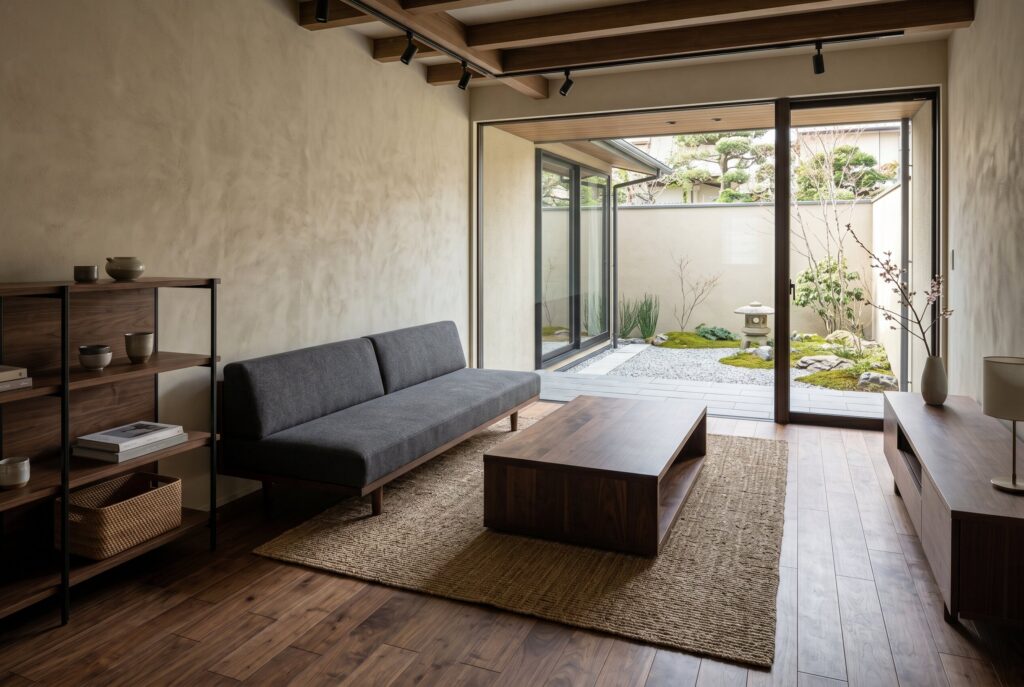
Dark Japandi living room design is a richer version of classic beige Japandi. Instead of relying only on pale oak and cream walls, bring in walnut, smoked oak, charcoal, and deep brown accents. This creates moody minimalism without making the room gloomy. The trick is contrast. Use dark wood for one major piece, such as a coffee table, media console, or shelving unit, then surround it with warm neutrals and soft light. Dark Japandi works best when it feels edited, not dramatic for the sake of drama.
3. Layer Warm Neutral Earth Tones
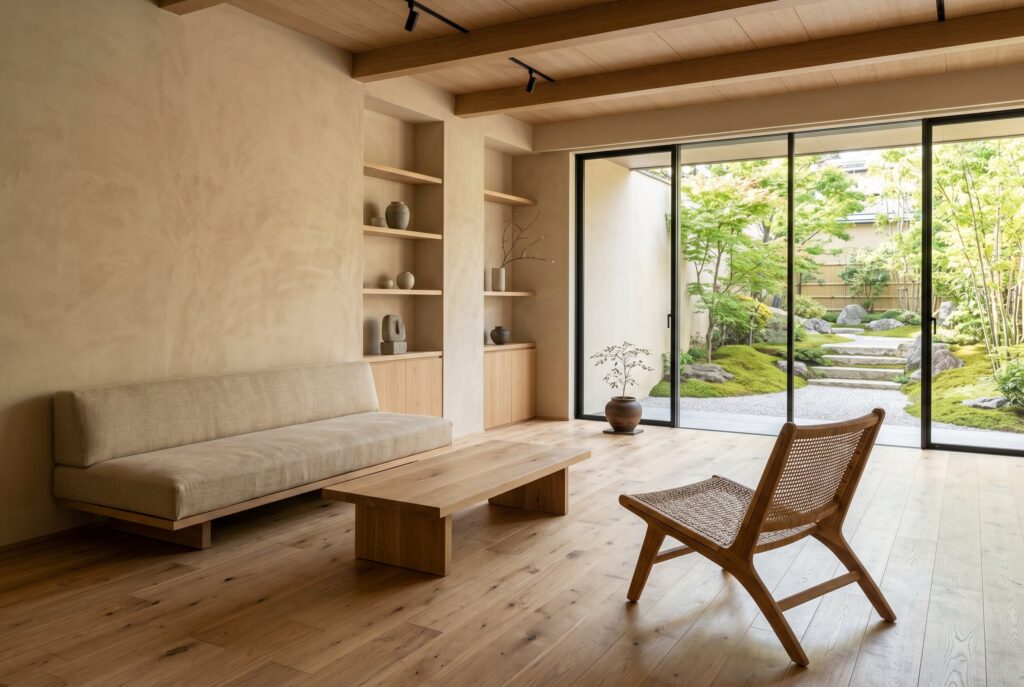
A neutral palette is essential, but pure white can make the room feel sterile. Use oatmeal, sand beige, stone gray, mushroom, clay, soft taupe, and muted olive. These colors calm the eye and make natural materials feel richer. Layering is more important than matching. A beige rug, warm white walls, oak floors, and a charcoal cushion can create quiet depth. Japandi style should feel like nature in soft focus, not a showroom arranged by color code.
4. Maximize Natural Light with Linen or Shoji
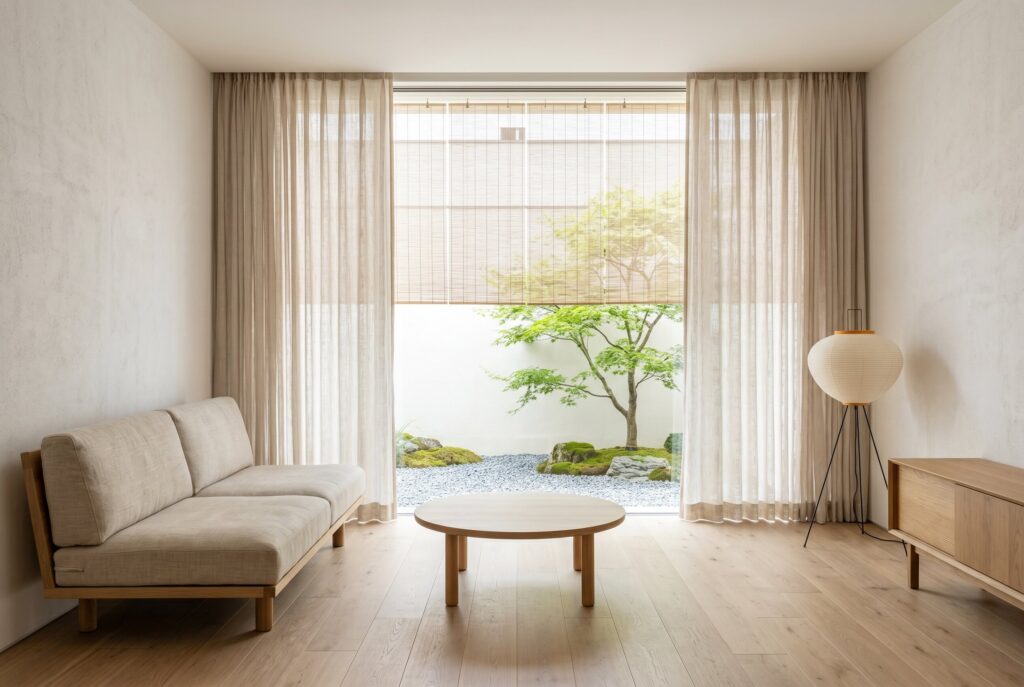
Natural light is the most valuable element in japandi interior design. Don’t block windows with tall cabinets, oversized decor, or heavy curtains. Use sheer linen panels, woven shades, or Shoji inspired screens to diffuse sunlight gently. This filtered light creates shadow, softness, and movement across wood, clay, and fabric. In a small room, good light can do more than extra furniture. It makes the room breathe.
5. Add Slatted Wood Panels for Texture
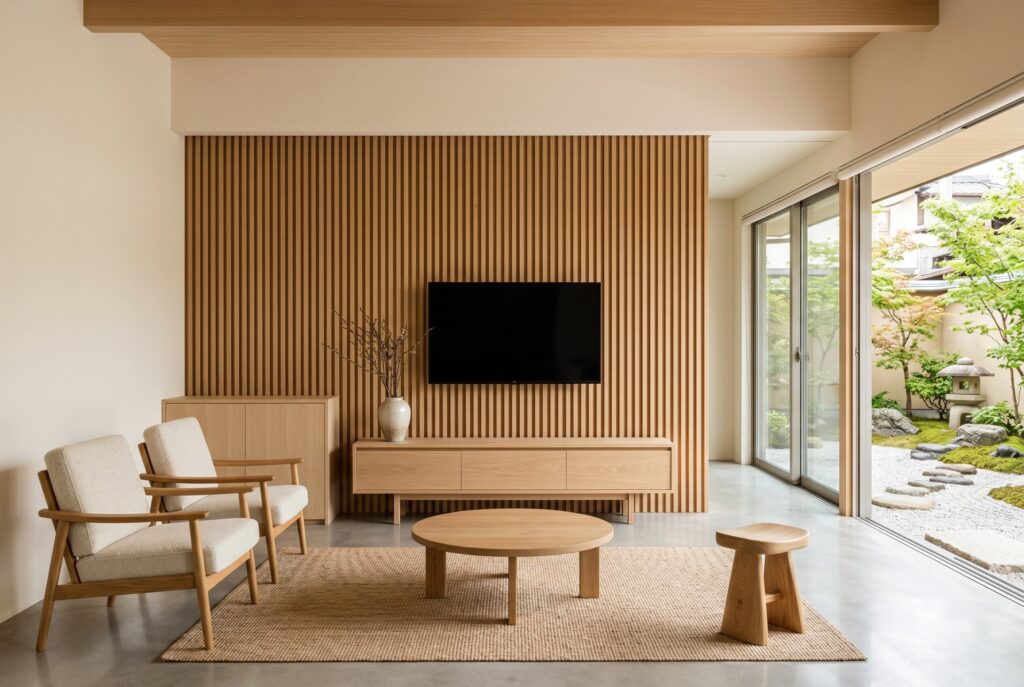
Slatted wood panels add rhythm, texture, and architectural discipline. They can frame a TV wall, divide an open space, soften an entryway, or hide storage. Vertical slats also draw the eye upward, making the room feel taller. Choose oak, ash, walnut, or black stained wood depending on your palette. Use them carefully. One feature wall is elegant. Too many slatted surfaces can make the space feel like a hotel lobby rather than a home.
6. Introduce Organic Imperfection

Japandi isn’t about perfection. It needs Wabi Sabi details that show the hand of the maker. A rough ceramic vase, a branch arrangement, a stone bowl, a handmade lamp, or a slightly uneven wood stool can bring soul into the room. Keep the display simple. One Ikebana arrangement on a low table is stronger than ten small decorative objects scattered across shelves. Imperfection works when it has space around it.
7. Conceal Clutter with Seamless Storage
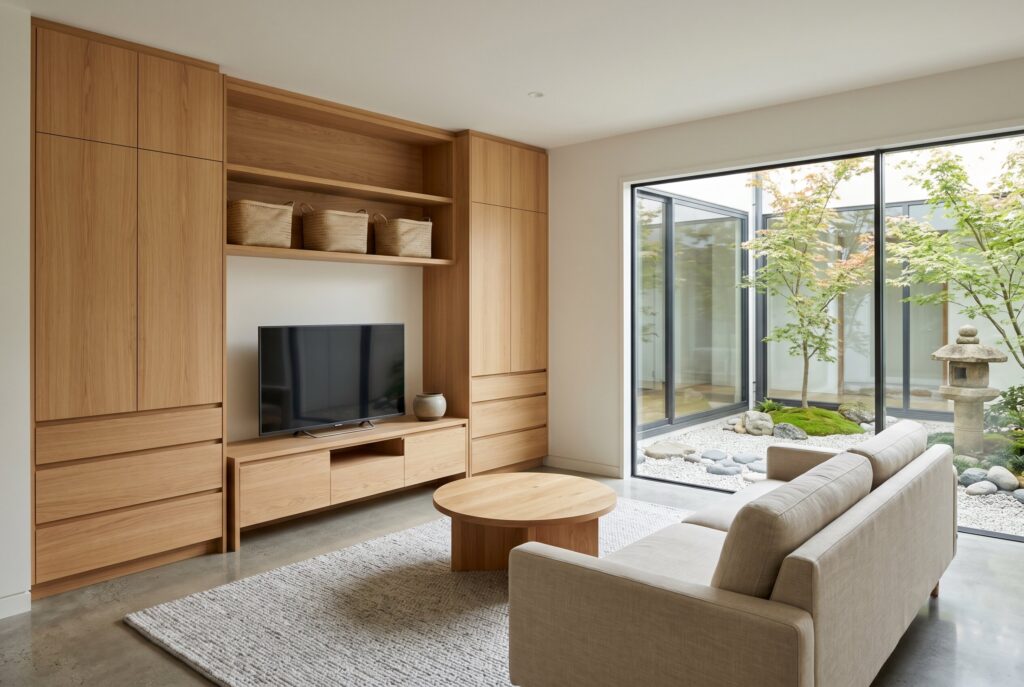
Clutter is the fastest way to ruin a minimalist living room. In Japandi design, storage should feel quiet. Choose flat front cabinets, low media consoles, hidden handles, woven baskets, and built in shelves with closed sections. Hide cables, remotes, paperwork, toys, and extra blankets. This doesn’t mean the room can’t support real life. It means real life needs a place to rest when not in use.
8. Select Statement Sculptural Lighting
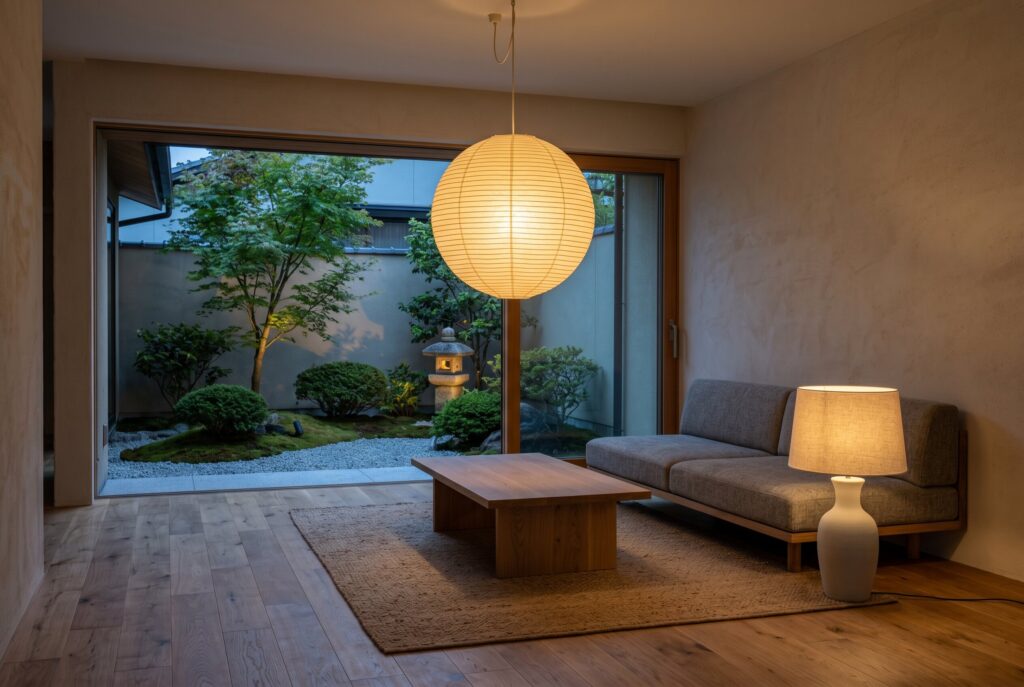
Lighting should feel warm, low, and layered. Use paper lanterns, ceramic table lamps, woven pendants, or simple floor lamps with soft bulbs around 2700K. A sculptural light can become art without adding clutter. Avoid cold white LEDs and glittery chandeliers. Japandi lighting should create atmosphere, not harsh brightness. In the evening, the room should feel like a quiet retreat.
9. Create a Calm Focal Point with a Minimalist Fireplace
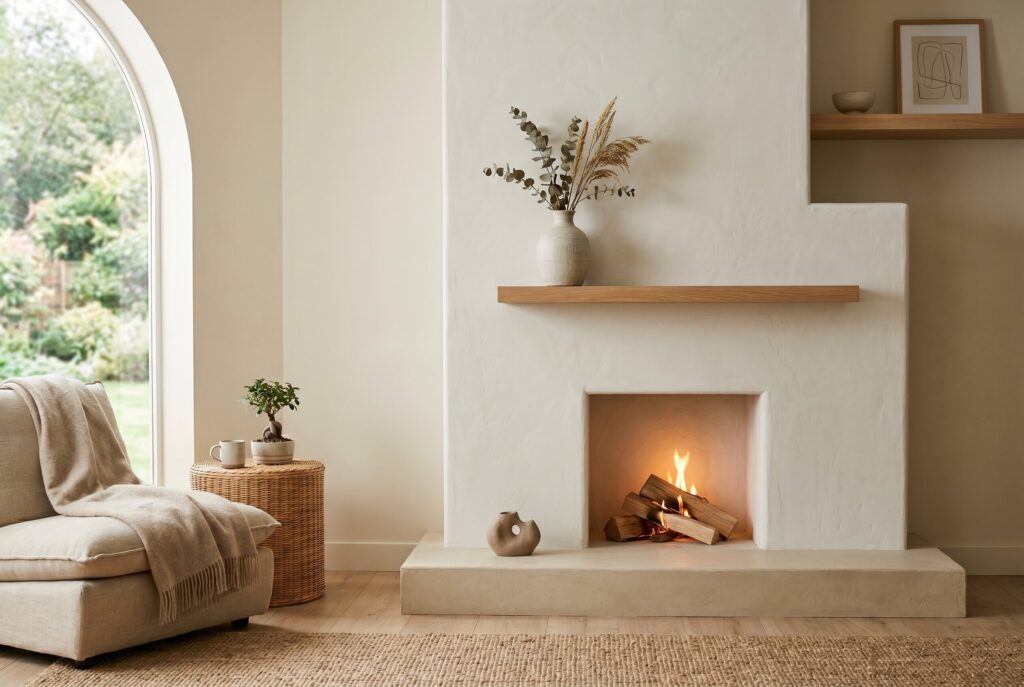
A fireplace naturally draws attention and can become the heart of a Japandi living room. Keep the design simple with smooth plaster, natural stone, or textured concrete finishes. Avoid ornate mantels or excessive decoration. Style the hearth with a single ceramic vase, a stack of books, or a sculptural object. Whether it’s a real fireplace or an electric version, the goal is to create warmth and quiet presence rather than a dramatic centerpiece.
10. Ground the Space with a Large Textured Rug

A well-chosen rug adds softness and helps define the living area. Look for natural fibers such as wool, jute, or a wool-jute blend in muted tones. Subtle textures and organic patterns work better than bold prints. A large rug that extends beneath the sofa and coffee table creates a cohesive foundation, making the room feel larger and more connected. The texture should be felt more than noticed.
11. Incorporate Indoor Greenery with Restraint
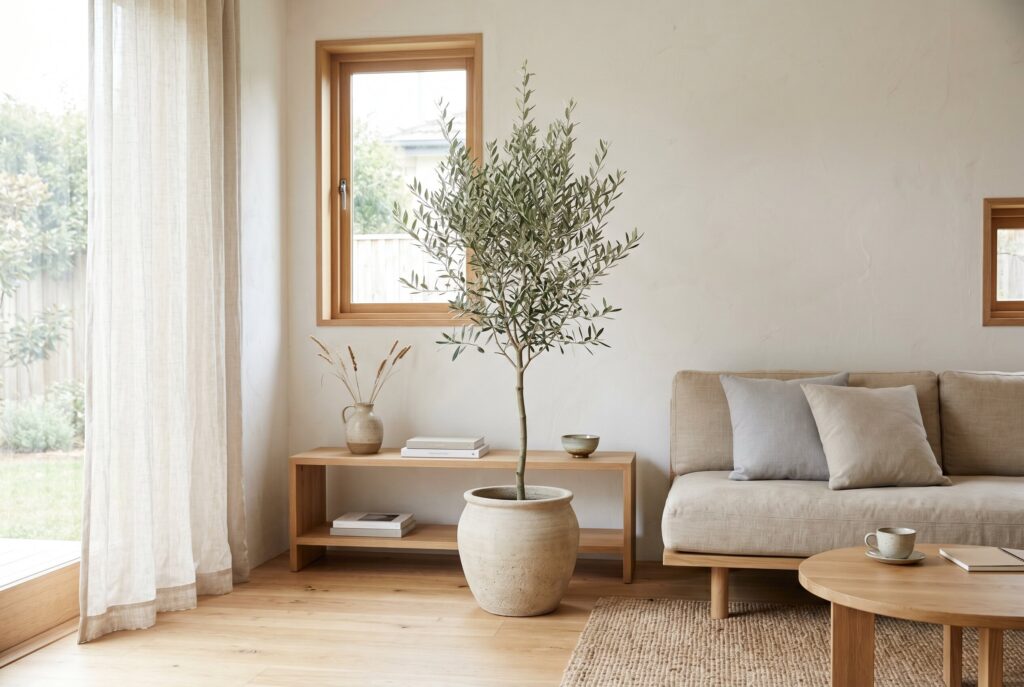
Plants bring life into a Japandi interior, but less is often more. Instead of filling every corner with greenery, choose one or two statement plants such as an olive tree, fiddle leaf fig, or bonsai. Display them in simple ceramic or stone planters that complement the room’s palette. The goal is to strengthen the connection to nature without creating visual clutter.
12. Mix Soft Textiles for Comfort and Depth
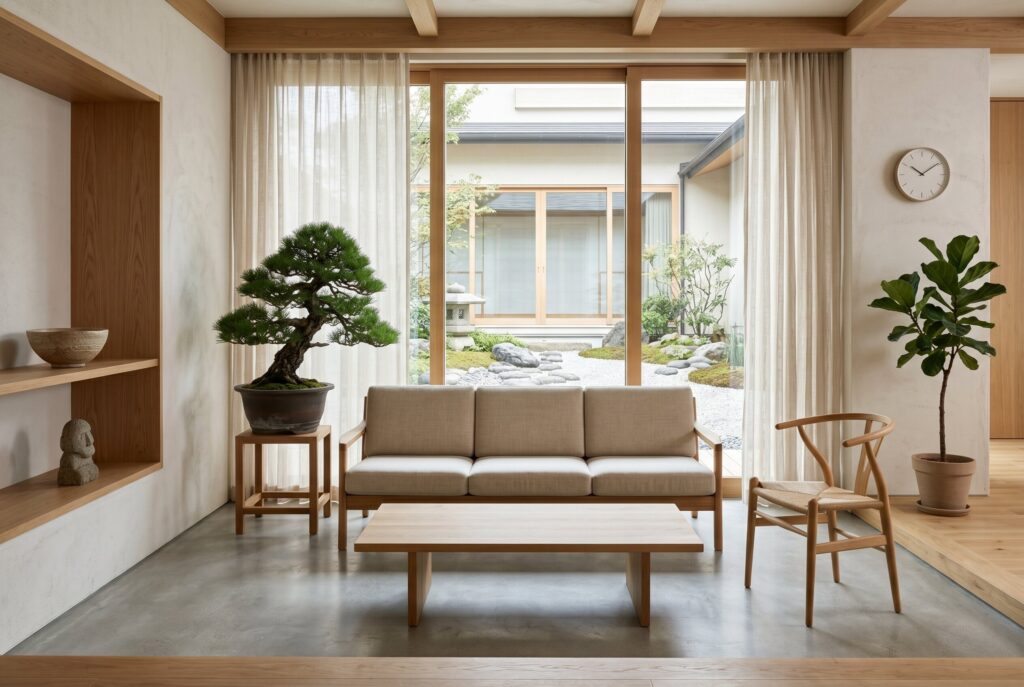
Minimalism should never feel cold. Introduce comfort through carefully layered textiles such as linen throws, wool blankets, cotton cushions, and bouclé accents. Stick to a restrained color palette and vary the textures instead of the colors. This creates warmth and visual interest while preserving the calm, uncluttered atmosphere that defines Japandi style.
13. Curate an Artful Yet Minimal Wall Display
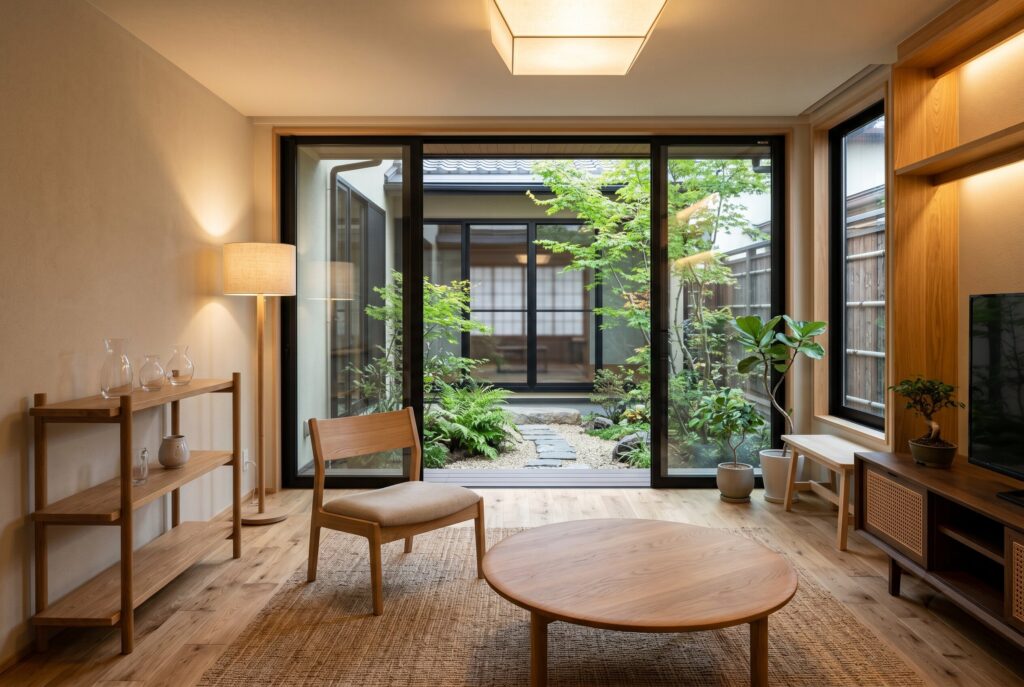
Wall decor in a Japandi living room should feel intentional and understated. Choose one oversized artwork, a pair of balanced prints, or a handcrafted textile piece rather than filling the wall with many small frames. Abstract landscapes, ink-inspired art, and nature photography work particularly well. Leave generous empty space around the artwork so it can breathe and contribute to the room’s sense of tranquility.
14. Blend Open and Closed Shelving Thoughtfully
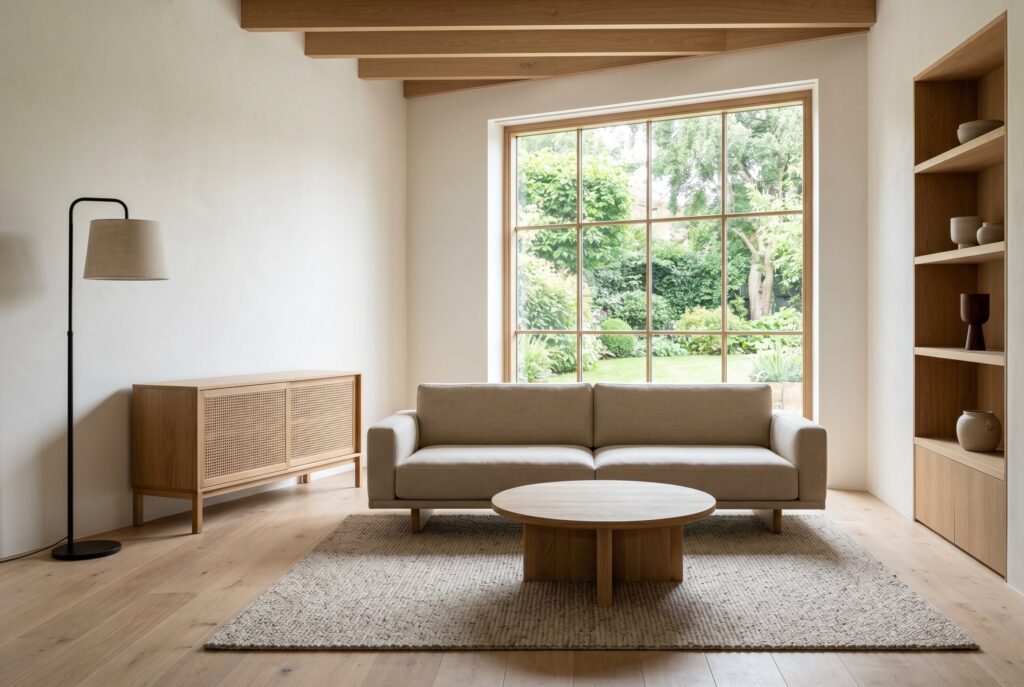
The best Japandi interiors balance display and concealment. Use a combination of open shelves for a few meaningful objects and closed cabinets for everyday necessities. Display only items that add beauty or personal significance, such as ceramics, books, or handcrafted pieces. This approach maintains visual calm while ensuring the room remains functional and lived-in.
15. Introduce Natural Stone Accents

Natural stone adds subtle luxury without disrupting Japandi simplicity. Travertine, limestone, marble, or slate can be incorporated through coffee tables, side tables, trays, or decorative bowls. Their organic textures pair beautifully with wood and soft textiles, adding depth and timeless character. Choose stone pieces with visible natural variations to reinforce the Wabi-Sabi appreciation for imperfect beauty.
5 Common Mistakes That Ruin the Japandi Style
1. Over Minimalizing the Room
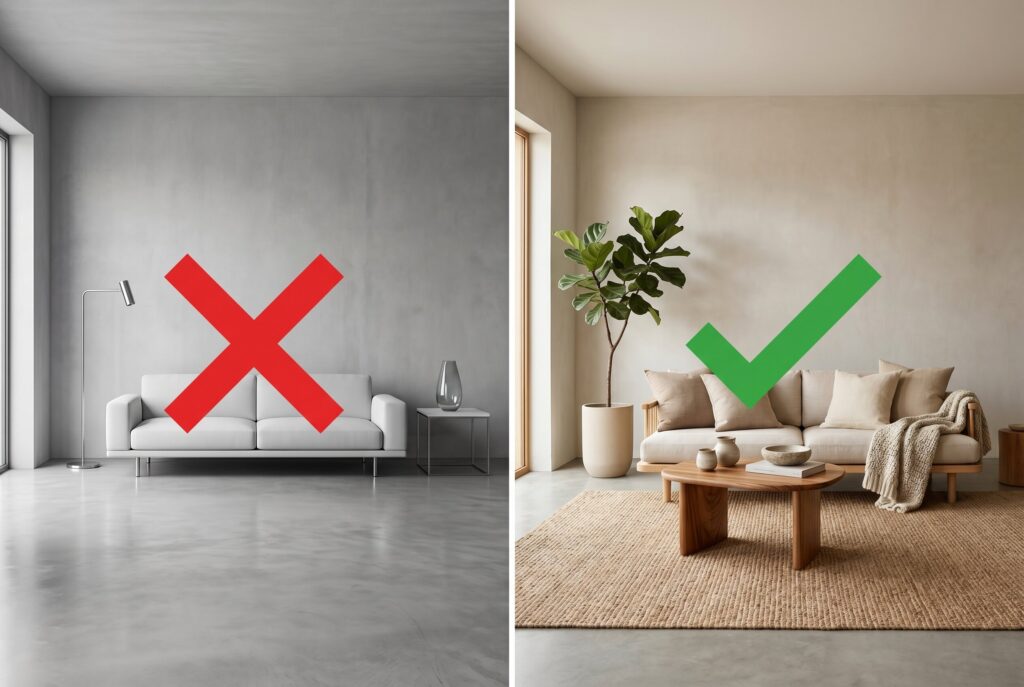
The biggest mistake is removing so much that the room feels like a cold clinic. Japandi needs texture to feel alive. Add a jute rug, linen cushions, wool throws, wood grain, handmade ceramics, and plants with sculptural shapes. Minimalism should reduce stress, not remove comfort.
2. Clashing Proportions and Styles
Japandi depends on visual harmony. A tall glossy coffee table beside a low sofa will feel wrong. A heavy farmhouse cabinet beside a delicate Shoji screen will also clash. Keep furniture heights, shapes, and materials in conversation with each other. The room should feel composed, not collected randomly.
3. Using Harsh Cool Lighting

Cool lighting destroys warmth. It makes wood look flat, fabric look cheap, and neutral walls feel gray. Use warm bulbs, dimmers, and several light sources instead of one bright ceiling fixture. A Japandi living room should glow softly at night.
4. Ignoring Everyday Functionality
A room can look peaceful in a photo and still fail in real life. If the sofa isn’t comfortable, the table is too low for tea, or there’s nowhere to store blankets, the design isn’t working. Japandi style values beauty, but function always comes first.
5. Buying Mass Produced Zen Props
Plastic Buddha statues, fake bamboo, artificial bonsai, and cheap themed decor make a room feel forced. Authenticity matters. Choose fewer objects made from real wood, clay, stone, paper, cotton, linen, bamboo, or rattan. A $60 handmade bowl can feel more powerful than a shelf full of fake Zen accessories.
Conclusion
A Japandi living room isn’t defined by how much you add. It’s defined by what you choose to keep. The foundation starts with a low-profile sofa, warm earthy tones, abundant natural light, concealed storage, handcrafted textures, and soft, layered lighting. Each element serves a purpose, creating a space that feels calm, intentional, and effortlessly balanced.
Just as important is knowing what to avoid: sterile minimalism that feels cold, furniture that overwhelms the room, harsh white lighting, and decorative pieces that imitate a trend rather than reflect authenticity.
When thoughtfully designed, Japandi goes beyond aesthetics. It transforms the atmosphere of your home. It’s the feeling of returning after a long day, slipping off your shoes at the door, stepping barefoot onto a natural fiber rug, and feeling the tension of the day gradually fade away. The room feels quieter, softer, and more restorative because every element has a purpose and every detail contributes to a sense of balance.
Related Articles
Living Room Color Ideas: 25 Seamless Open Plan Palettes
White Living Room Ideas: 27 Ultra Cozy Layered Spaces
Dark Academia Living Room Ideas: 21 Grand Library Layouts
9 Multi-Use Living Room Ideas That Help You Work, Relax, and Make the Most of Your Space Every Day
17 Art Deco Living Room Ideas to Make Your Home Look Expensive in 2026