

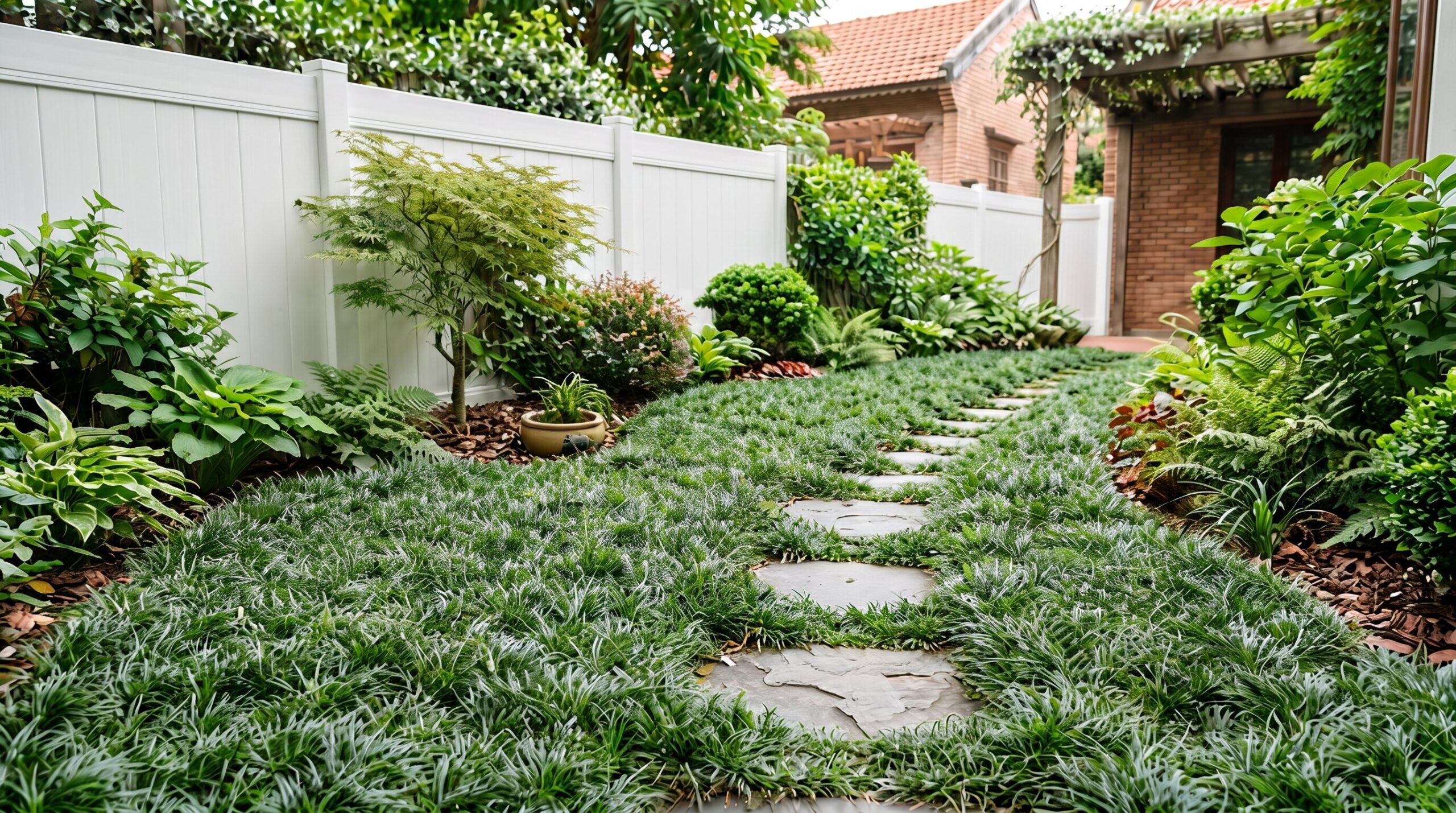
A traditional lawn can look beautiful, but it often demands too much water, fertilizer, mowing, edging, and weekend labor. That is why more homeowners are replacing grass with ground cover plants. These low growing plants spread across bare soil, knit their roots together, and create a living mulch that helps block sunlight before weed seeds can germinate.
The best ground cover plants don’t only stop weeds. They can soften pathways, cover slopes, fill dry spaces, add flowers, attract pollinators, reduce erosion, and create a garden that feels more natural than a clipped lawn. Options like creeping thyme ground cover, clover ground cover, Irish moss ground cover, sedum ground cover, phlox ground cover, and ground cover roses can transform difficult areas into beautiful, low maintenance garden spaces.
However, not every fast spreading plant is a good idea. Some classic ground covers spread so aggressively that they can escape into nearby beds, lawns, woodlands, or neighboring yards. Before planting, you need to choose based on climate, sunlight, moisture, foot traffic, and ecological safety.
35 No-Mow Replacements
1. Microclover
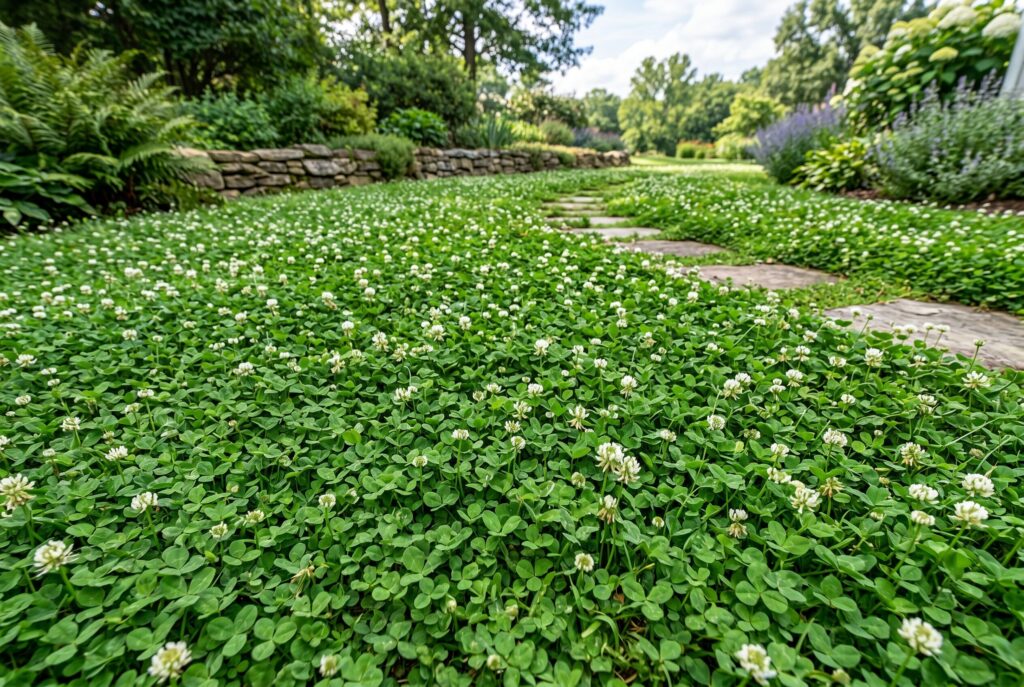
Microclover is one of the best ground cover plants for replacing a traditional lawn because it stays low, looks soft, and helps feed the soil naturally with nitrogen. It tolerates light foot traffic, needs far less mowing than grass, and creates a green living mulch that helps crowd out weeds.
2. Creeping Thyme Ground Cover

Creeping thyme ground cover is perfect for sunny paths, dry borders, and stepping stone gaps. It forms a fragrant mat that releases a fresh herbal scent when stepped on, and its tiny flowers attract bees while creating a beautiful low maintenance garden surface.
3. Irish Moss Ground Cover

Irish moss ground cover creates a velvety, emerald carpet between pavers and stones. It prefers moisture, cool conditions, and light foot traffic, making it ideal for shaded paths or small decorative spaces where grass struggles.
4. Corsican Mint
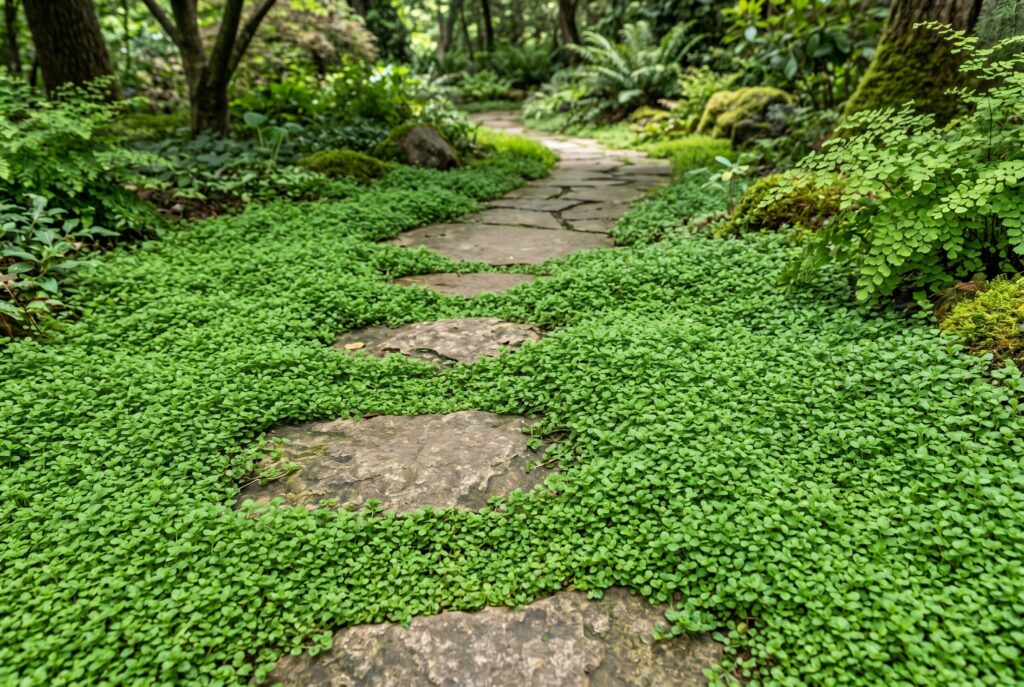
Corsican mint is a tiny, aromatic ground cover that releases a cool mint scent underfoot. It works best in damp, partially shaded areas and can soften the edges of pathways, patios, and garden seating zones.
5. Blue Star Creeper
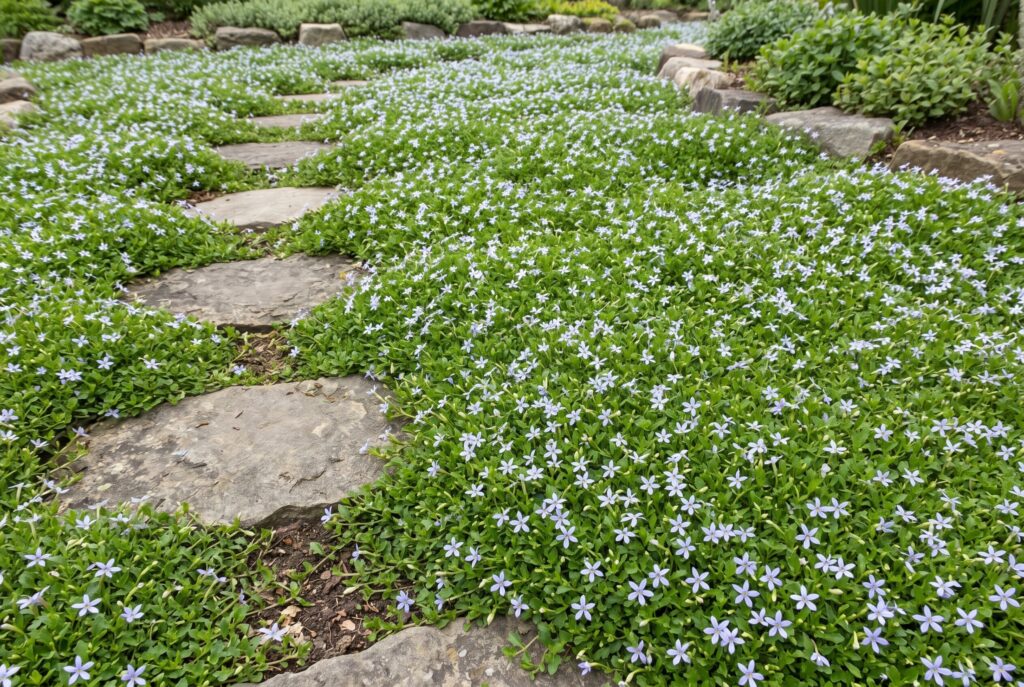
Blue star creeper spreads quickly and produces delicate star shaped flowers. It’s useful for filling gaps between stones, replacing small lawn areas, and adding soft color without requiring constant mowing.
6. Sedum Ground Cover
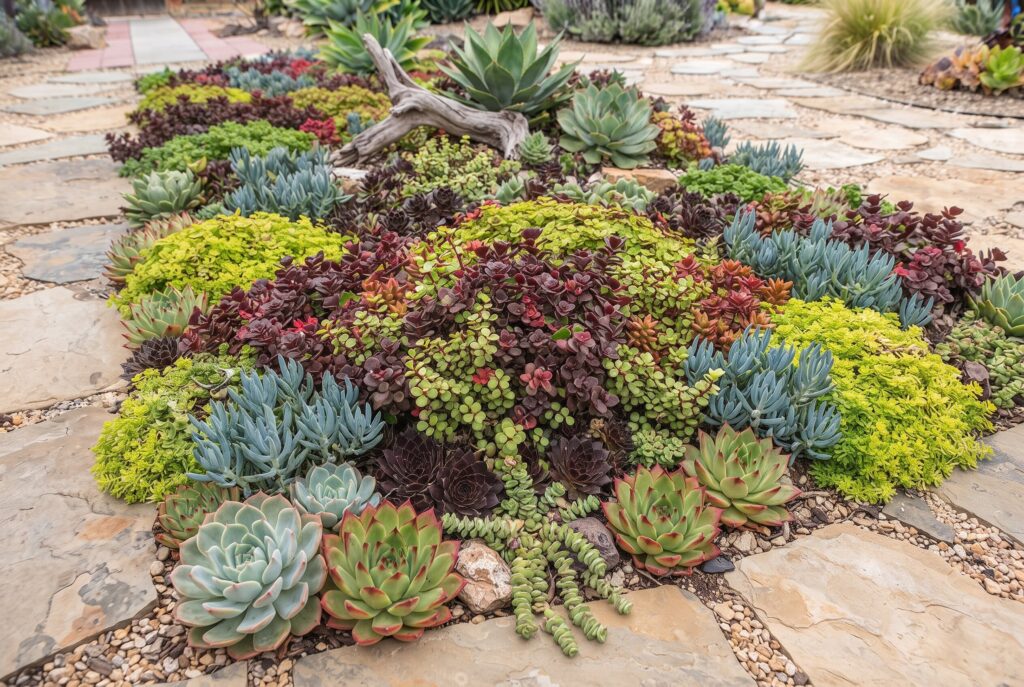
Sedum ground cover is one of the toughest drought tolerant ground covers for hot, dry, poor soil. As a succulent ground cover, it stores water in its leaves and can thrive where traditional grass burns out.
7. Ice Plant Ground Cover
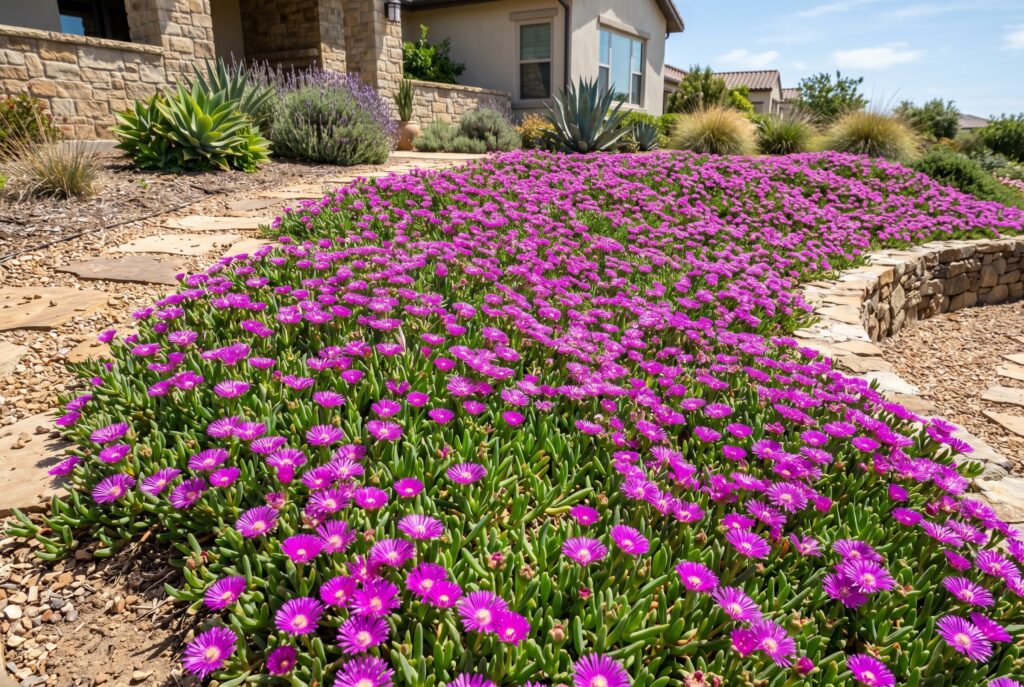
Ice plant ground cover is built for full sun, heat, and dry slopes. Its bright flowers can turn a bare patch into a colorful carpet, making it a strong choice for curb appeal in water conscious landscapes.
8. Phlox Ground Cover
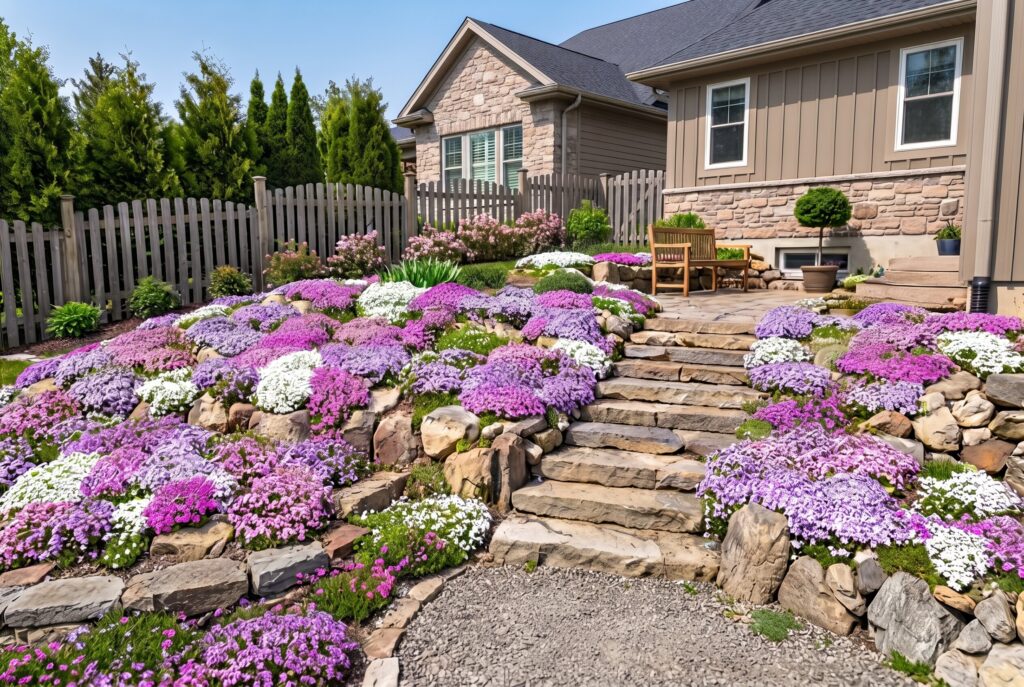
Phlox ground cover, especially creeping phlox, creates a spring blanket of pink, white, lavender, or purple ground cover flowers. It’s excellent for slopes, rock gardens, and front yard borders where you want flowers and weed suppression together.
9. Ground Cover Roses
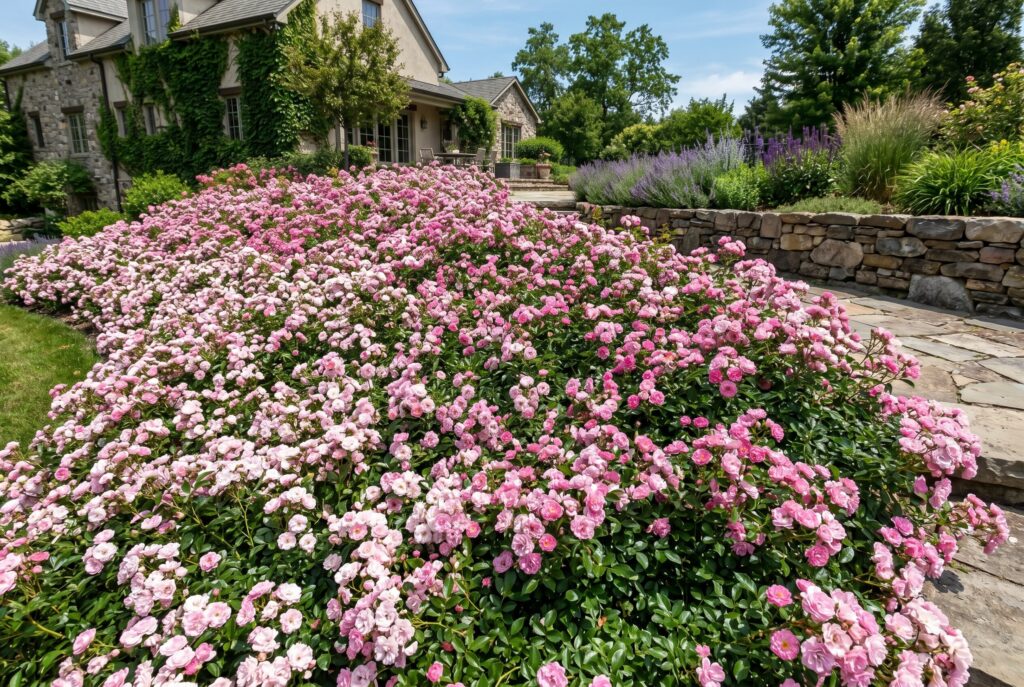
Ground cover roses spread outward instead of growing tall, creating a flowering carpet that can stabilize slopes and cover large bare areas. They need sun and airflow, but their long bloom season makes them worth the care.
10. Sweet Alyssum
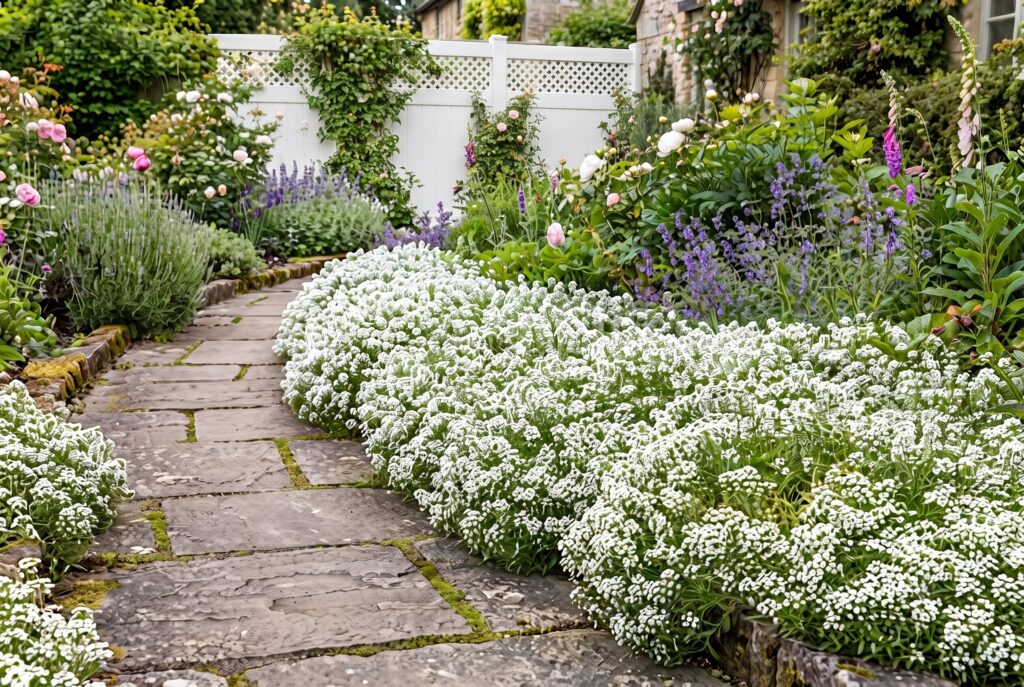
Sweet alyssum is a delicate flowering ground cover that brings fragrance, pollinator value, and soft texture to sunny beds. It’s especially useful along borders, walkways, and cottage style garden edges.
11. Thrift

Thrift forms compact grassy mounds topped with small round blooms. It handles poor soil, wind, and drought well, making it a reliable choice for coastal gardens, rock gardens, and sunny edging.
12. Lamb’s Ear
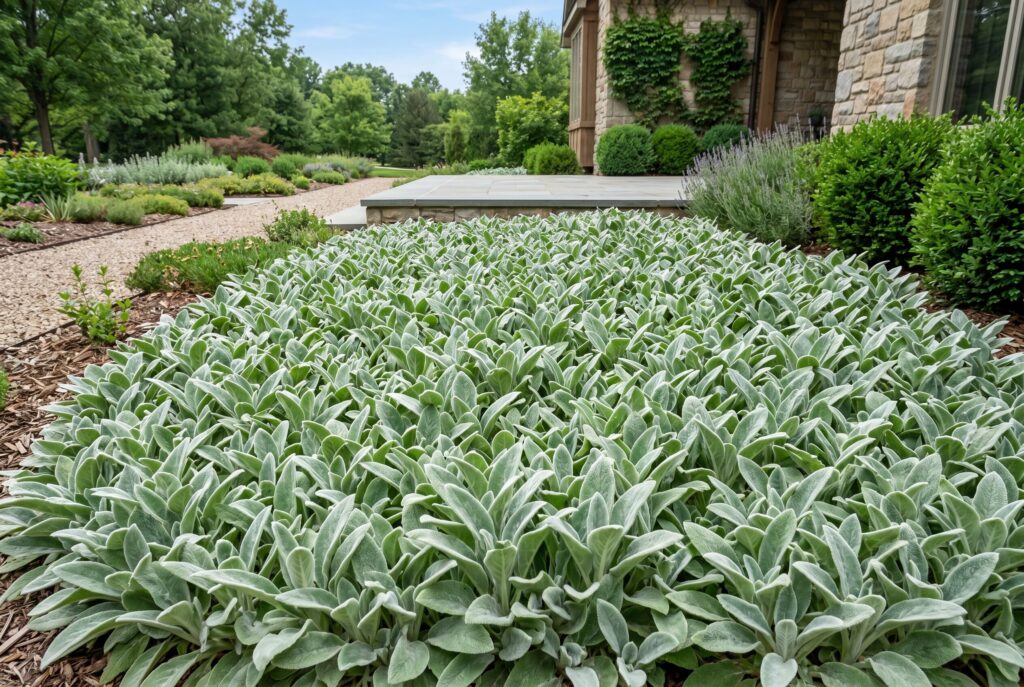
Lamb’s ear has soft silver leaves that form a dense mat over the soil. Its fuzzy texture adds visual interest while shading weed seeds and reducing open ground where unwanted plants can grow.
13. Phlomis
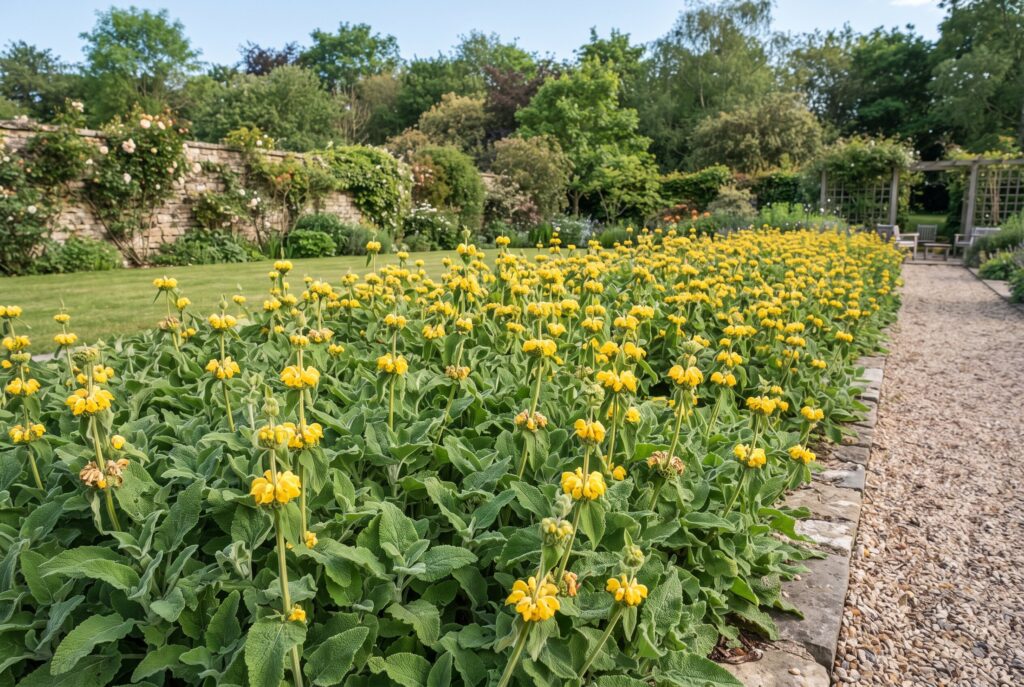
Phlomis works as a bold living mulch because of its dense foliage and strong architectural shape. It’s ideal for dry, sunny borders where you want weed suppression with a more structured look.
14. Pittosporum

Low growing pittosporum varieties can act as evergreen ground cover plants in mild climates. They provide year round structure, glossy foliage, and a polished look for formal or modern landscapes.
15. Mind Your Own Business

Mind your own business forms a tiny, soft green mat in moist shade. It’s best for sheltered areas, container edges, damp corners, and small spaces where you want a moss like effect.
16. Bunchberry Dogwood

Bunchberry dogwood is a beautiful ground cover for cool climates and woodland gardens. It offers flowers, berries, and autumn color, making it more seasonal and interesting than plain green ground cover.
17. Ajuga Ground Cover
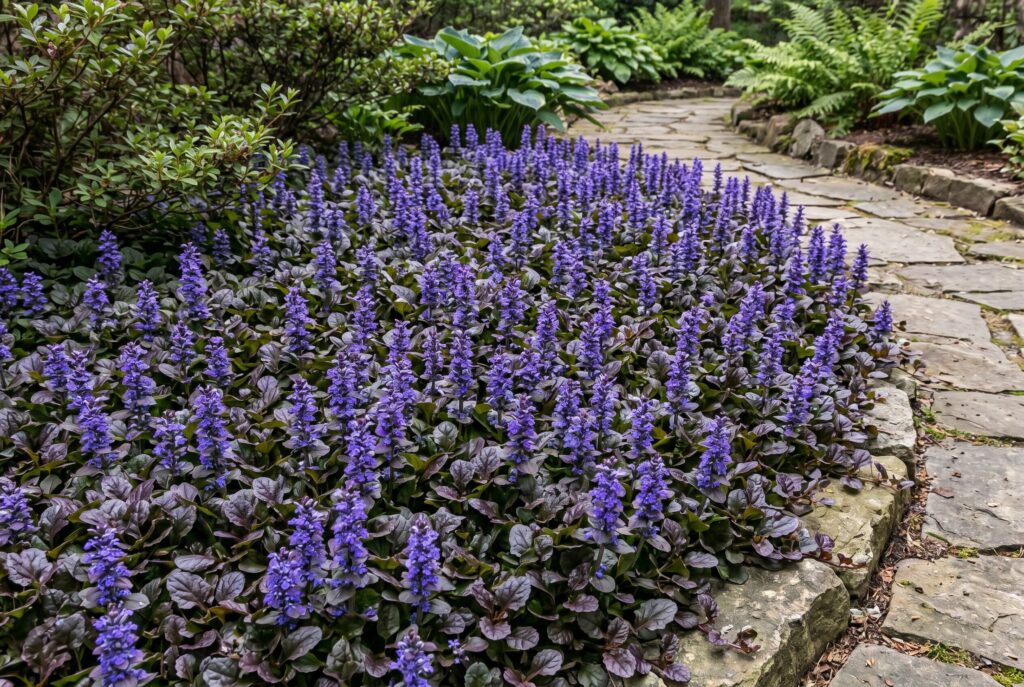
Ajuga ground cover is useful for shade and difficult corners where grass won’t grow. Its purple flower spikes add spring color, but it can spread quickly, so plant it where you can control its edges.
18. Sweet Woodruff
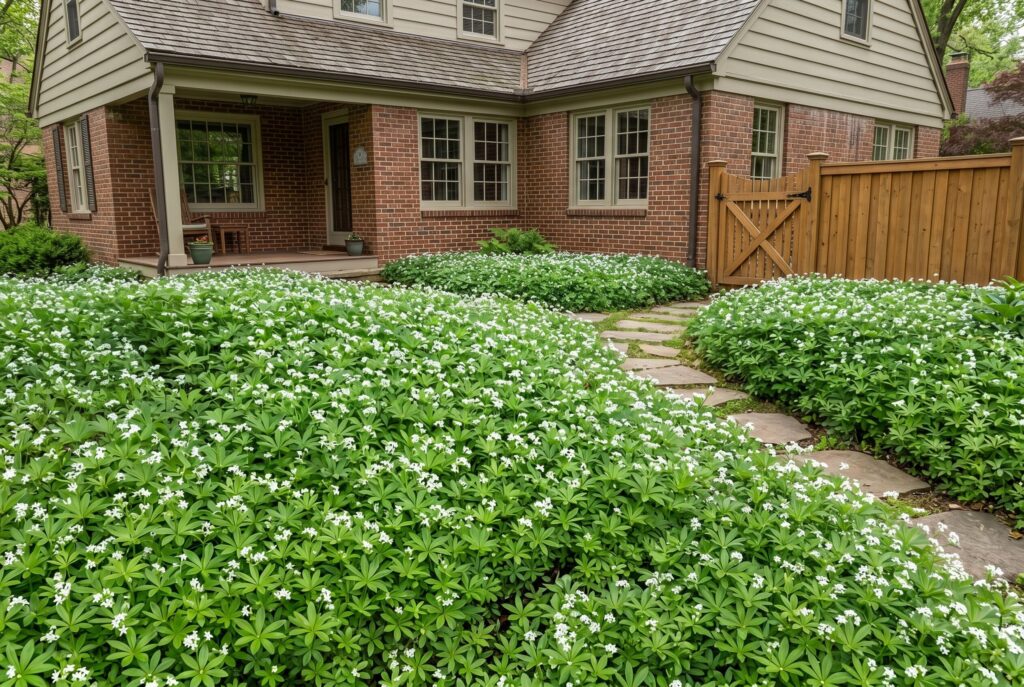
Sweet woodruff is a graceful ground cover for shade with delicate white flowers and soft green leaves. It’s especially useful under trees, along woodland paths, and in cool, moist garden beds.
19. Pachysandra
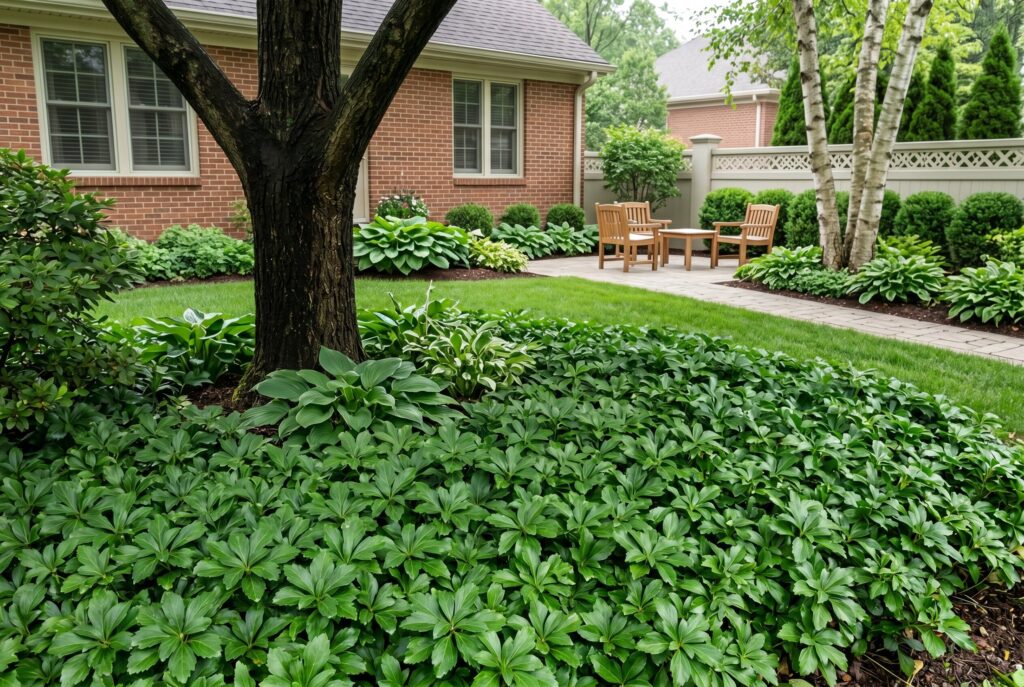
Pachysandra is a classic ground cover for shade, especially beneath large trees where lawns fail. It forms a dense evergreen mat, but gardeners should check whether it’s appropriate for their local ecosystem before planting widely.
20. Wild Ginger
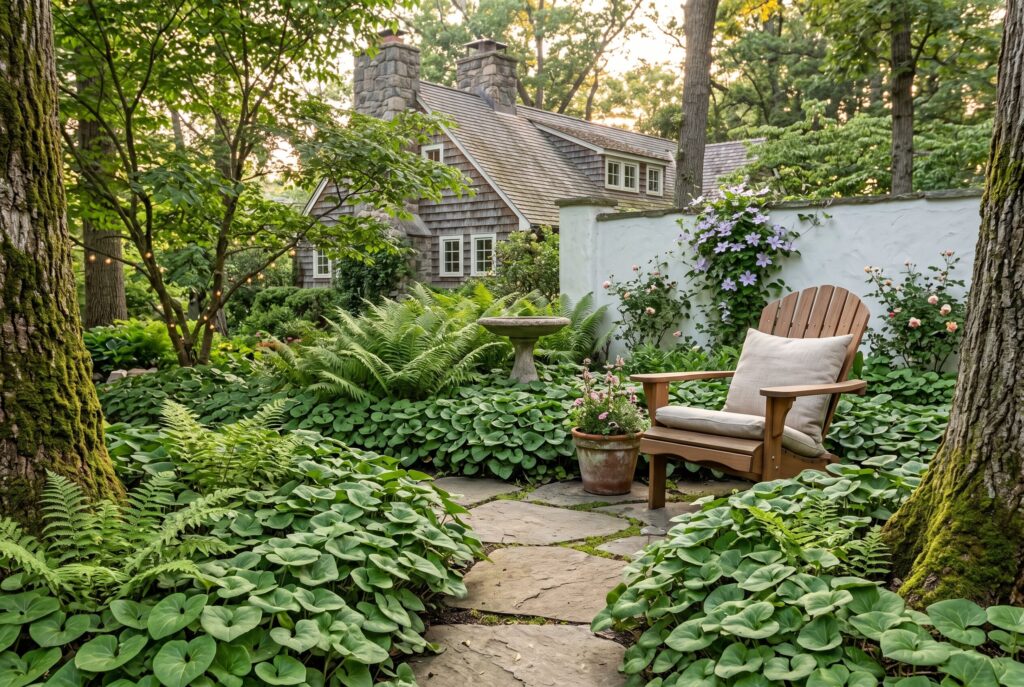
Wild ginger is a native friendly shade option with broad heart shaped leaves. It grows slowly but steadily, creating a refined woodland carpet that blocks weeds without looking aggressive.
21. Hostas
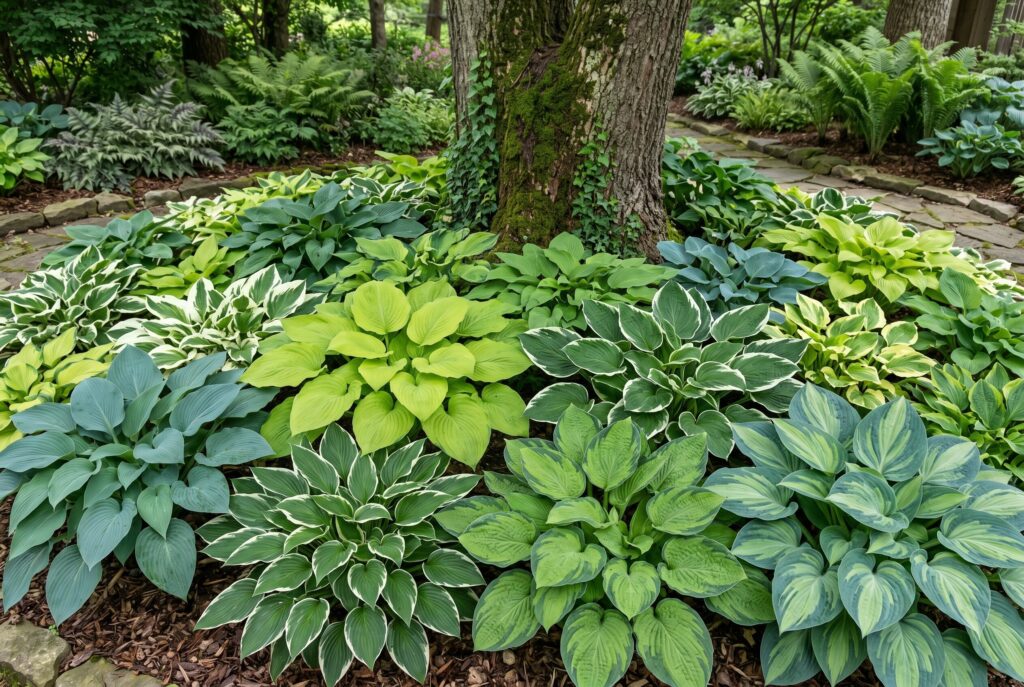
Hostas aren’t creeping plants, but when planted closely, their broad leaves block sunlight from reaching weed seeds. They’re excellent for shady borders, foundation beds, and under trees.
22. Creeping Jenny
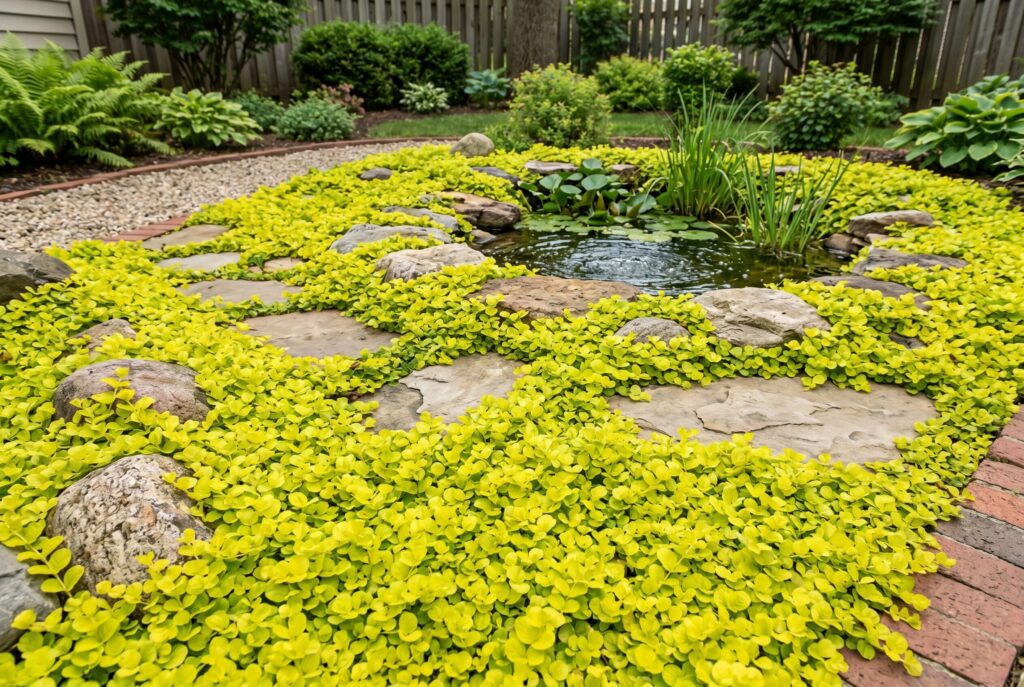
Creeping Jenny creates a bright chartreuse carpet that looks stunning around stones and water features. It spreads very fast in moist soil, so it’s best used in contained areas.
23. Bishop’s Weed
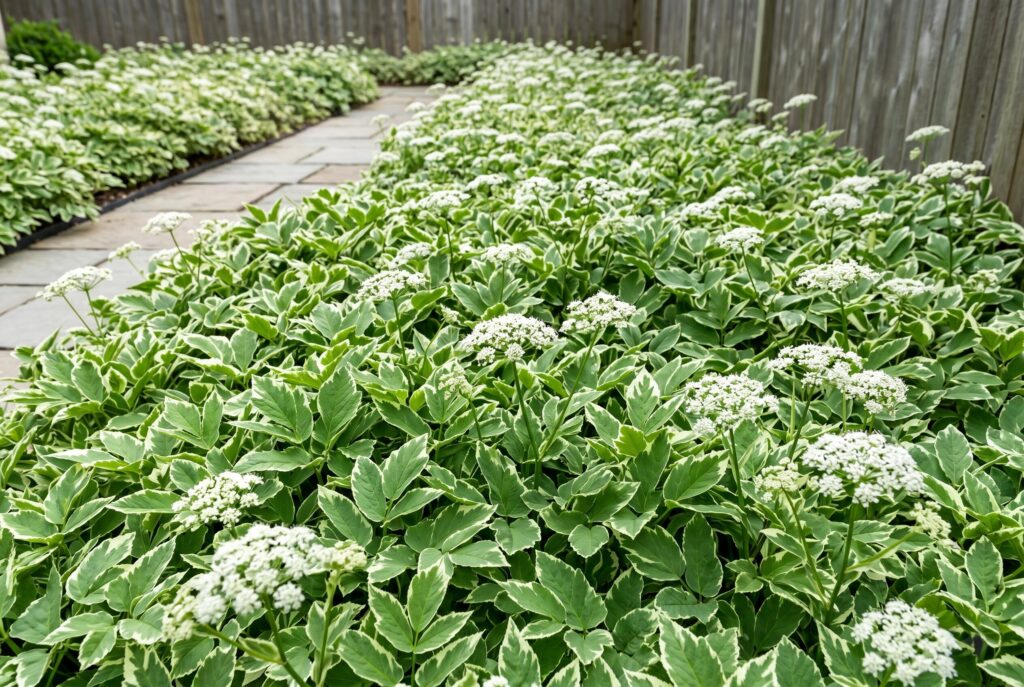
Bishop’s weed is extremely tough and almost impossible to kill once established. Because it can become invasive, it should only be planted in isolated or contained spaces where spreading won’t create problems.
24. Periwinkle Ground Cover
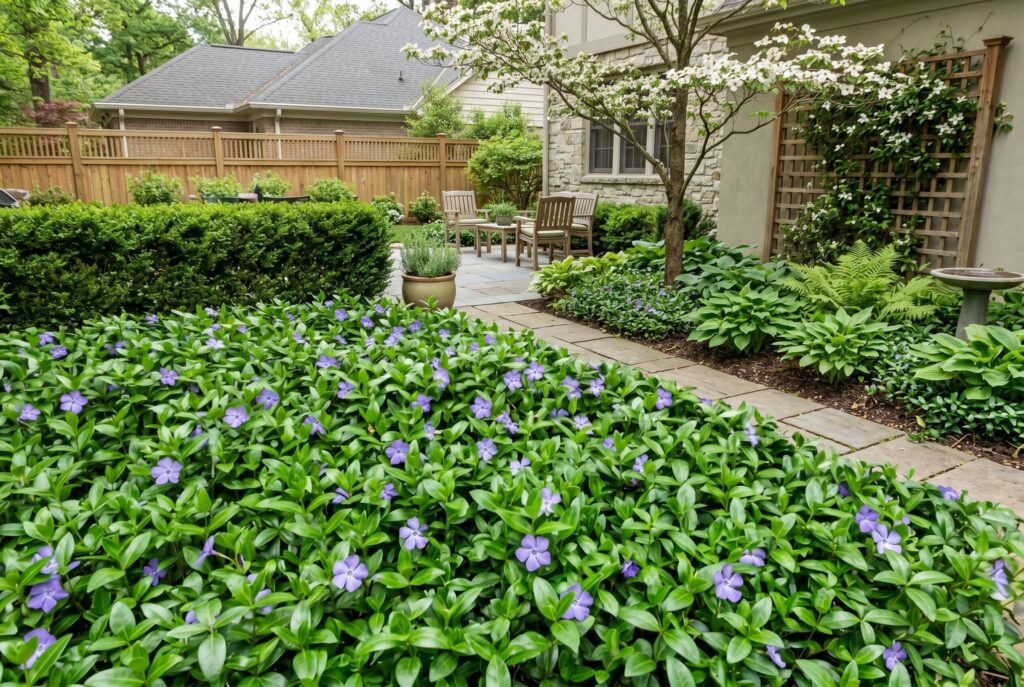
Periwinkle ground cover has glossy leaves and purple flowers, but it can escape into natural areas. Use caution and consider safer native alternatives before planting it near woodland edges.
25. English Ivy
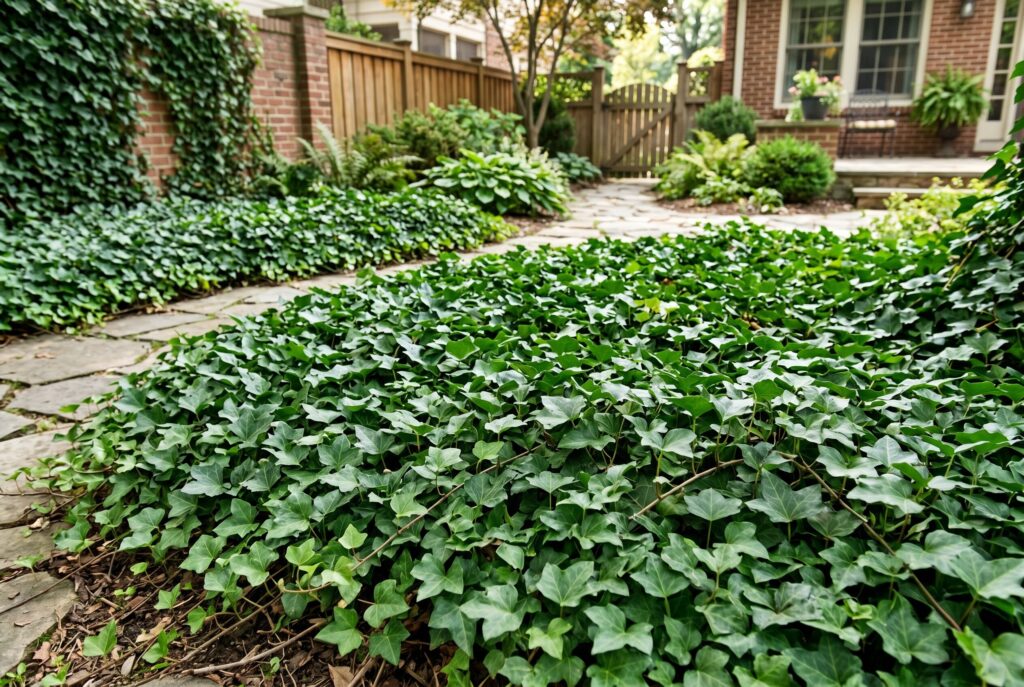
English ivy was once a popular easy ground cover, but it’s now widely avoided because it can climb trees, smother native plants, and become very difficult to remove. For most gardens, it’s better skipped entirely.
26. Dichondra Repens
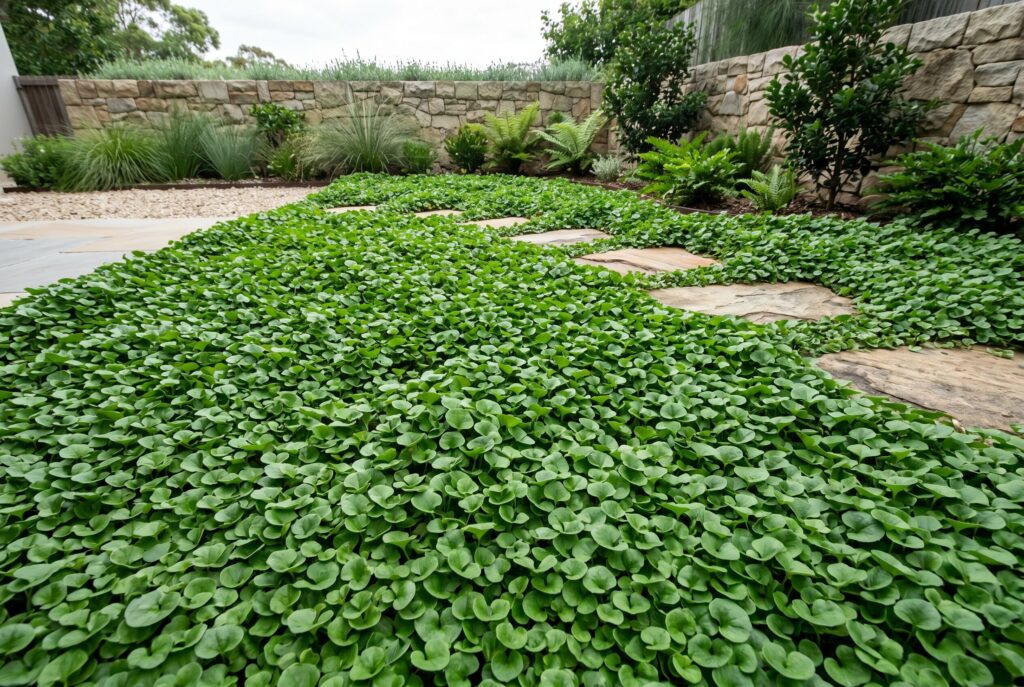
Dichondra repens forms a soft green mat of round leaves and works well in modern, naturalistic, or Zen inspired landscapes. It’s best for mild climates and light traffic areas.
27. Dwarf Mondo Grass
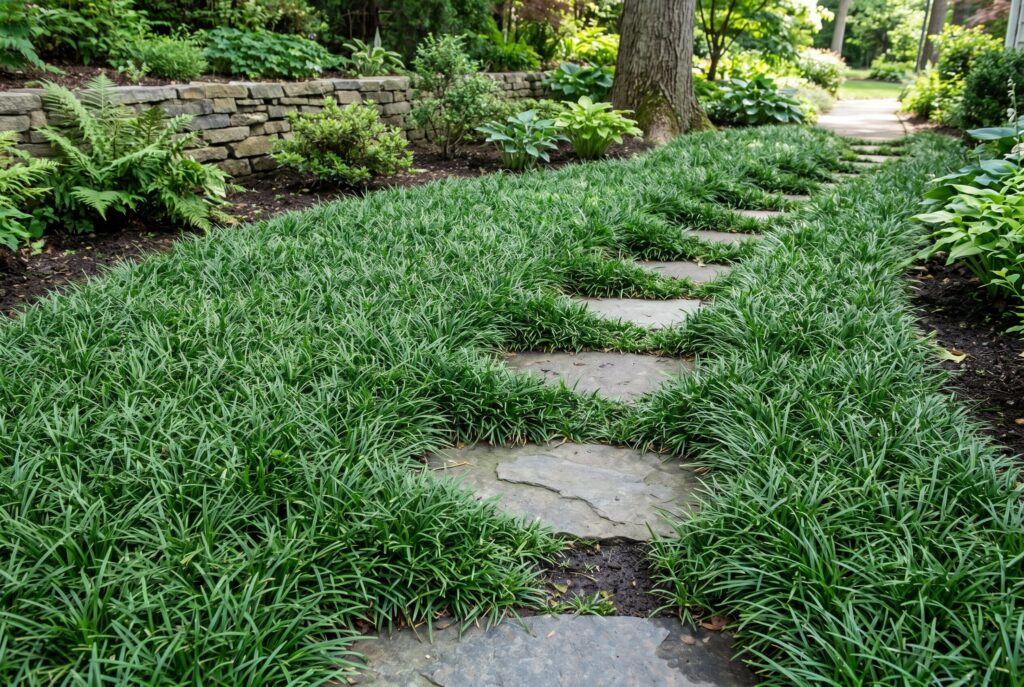
Dwarf mondo grass gives the look of a tiny lawn without mowing. It grows slowly, stays neat, and works well in shade, between stepping stones, and as a refined border plant.
28. Liriope
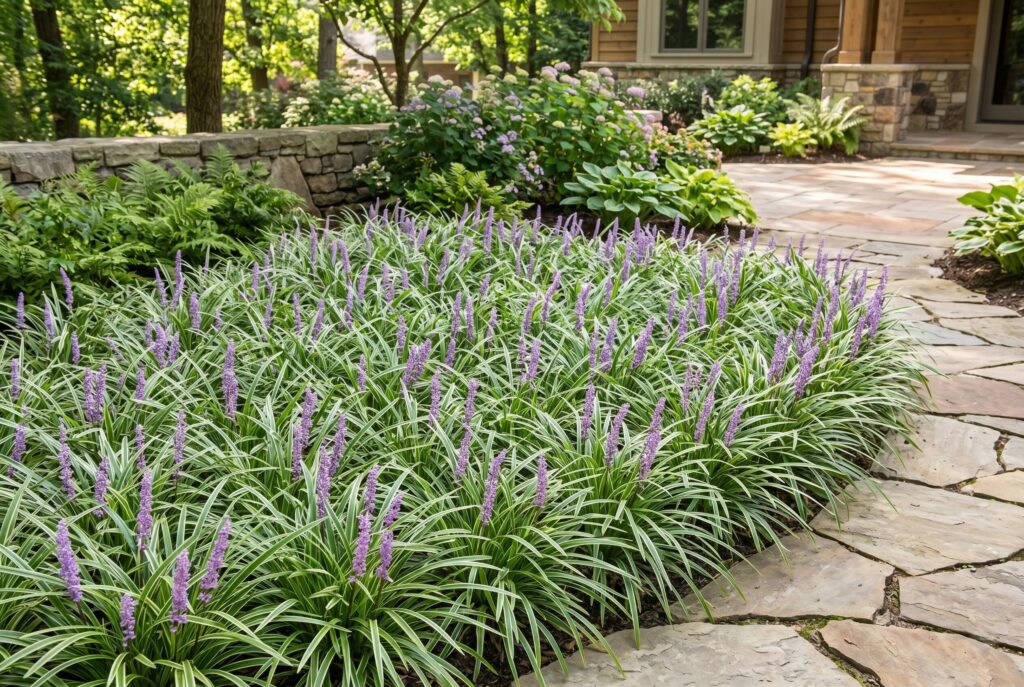
Liriope looks like ornamental grass but requires far less upkeep. It produces purple flower spikes in late summer and is useful for edging, slopes, and semi shaded garden beds.
29. Blue Fescue
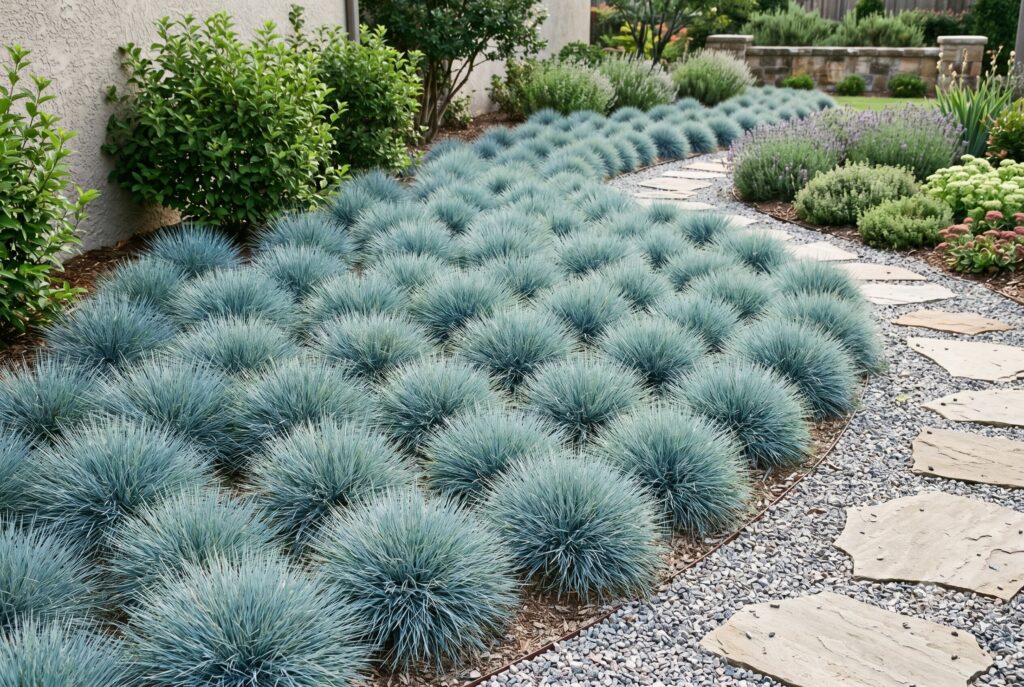
Blue fescue creates compact blue gray mounds that bring color and texture to dry landscapes. It’s drought tolerant, tidy, and excellent for modern gardens or gravel borders.
30. Creeping Wire Vine
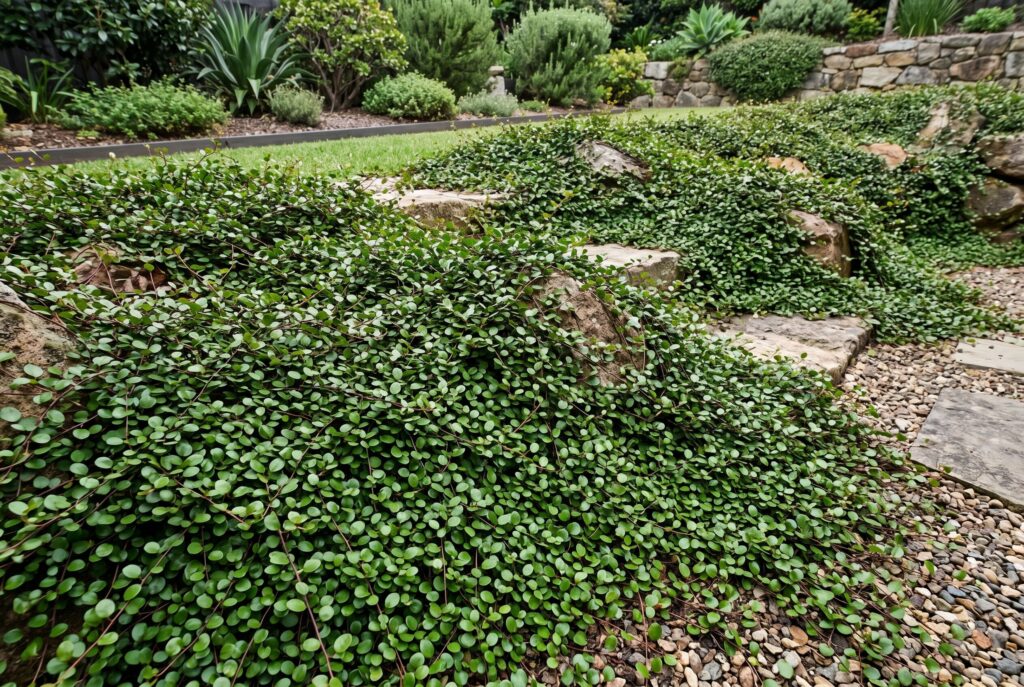
Creeping wire vine spreads quickly with tiny rounded leaves and wiry stems. It can cover poor soil and rocky slopes, but it should be monitored so it doesn’t overrun smaller plants.
31. Brass Buttons
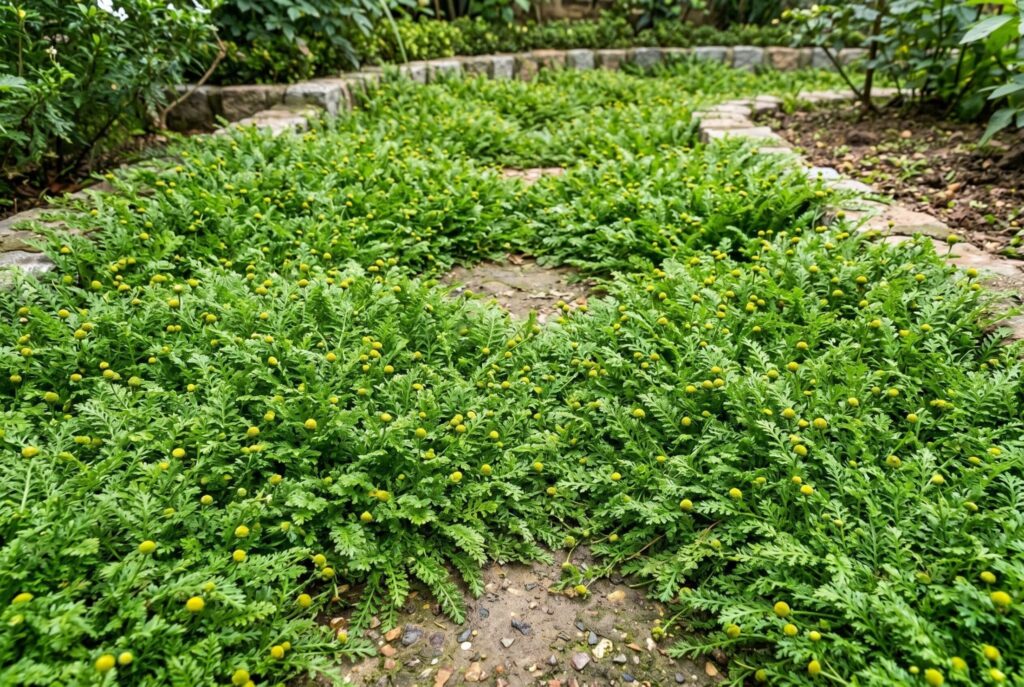
Brass buttons has fern like foliage and a low spreading habit. It’s a strong choice for damp paths, small lawns, and quirky garden details where texture matters.
32. Silver Falls
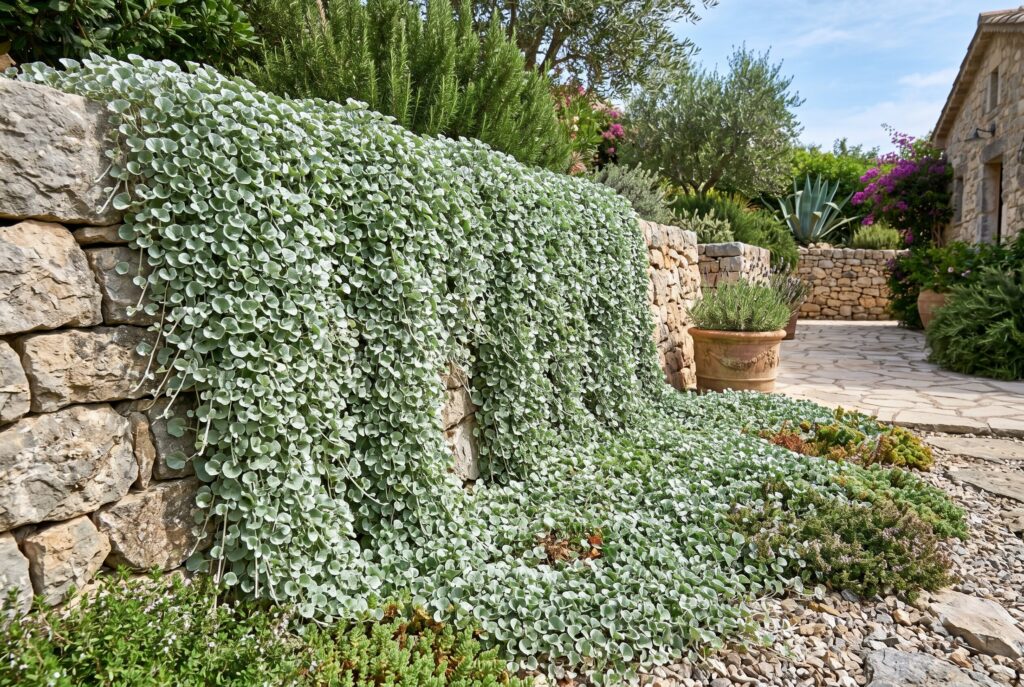
Silver Falls, a trailing form of dichondra, creates a shimmering silver carpet when allowed to spill over slopes or walls. It’s dramatic, drought tolerant, and ideal for sunny designs.
33. Trailing Rosemary
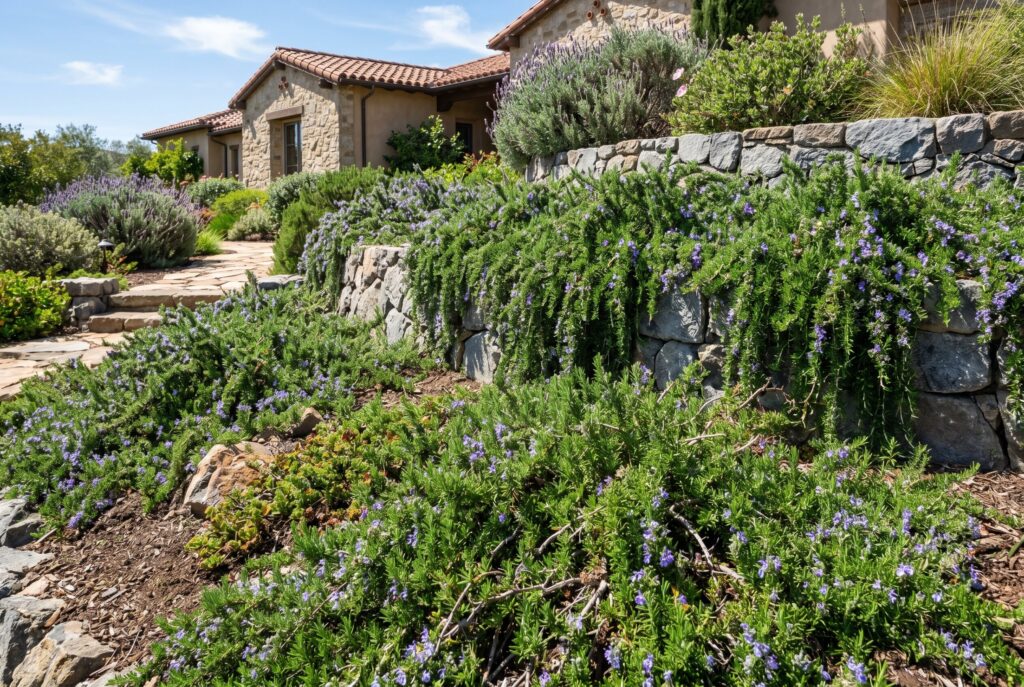
Trailing rosemary is a practical full sun ground cover plant because it’s drought tolerant, fragrant, evergreen in warm climates, and edible. It works beautifully on slopes and retaining walls.
34. Bearberry
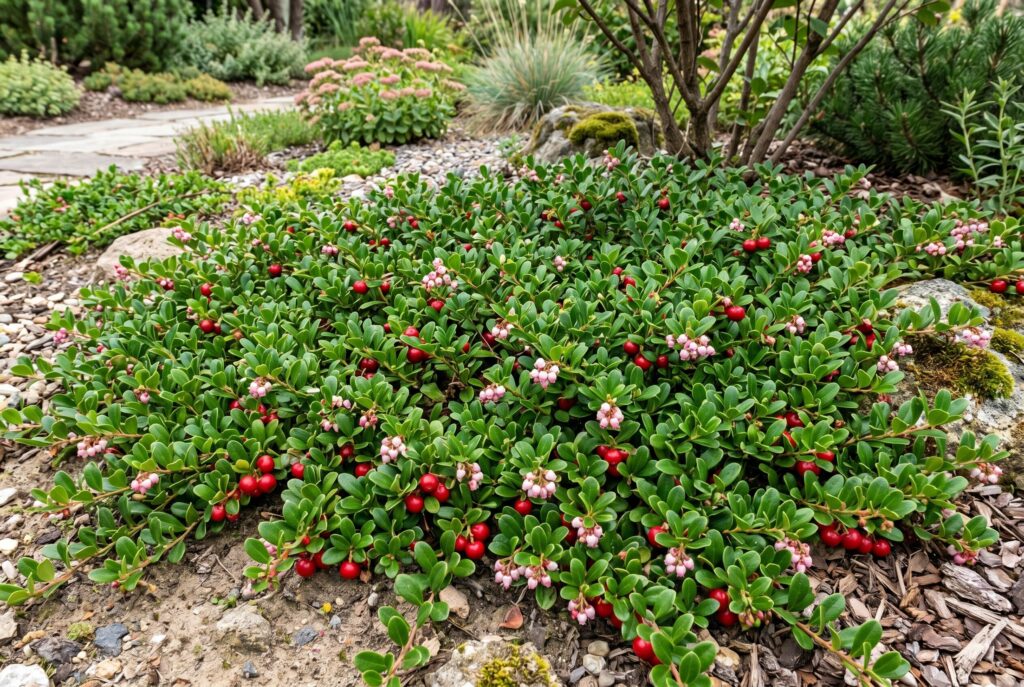
Bearberry is a tough low growing shrub that handles sandy, poor soil and cold climates. It offers small flowers, red berries, and evergreen leaves, making it valuable for naturalistic landscapes.
35. Spotted Dead Nettle
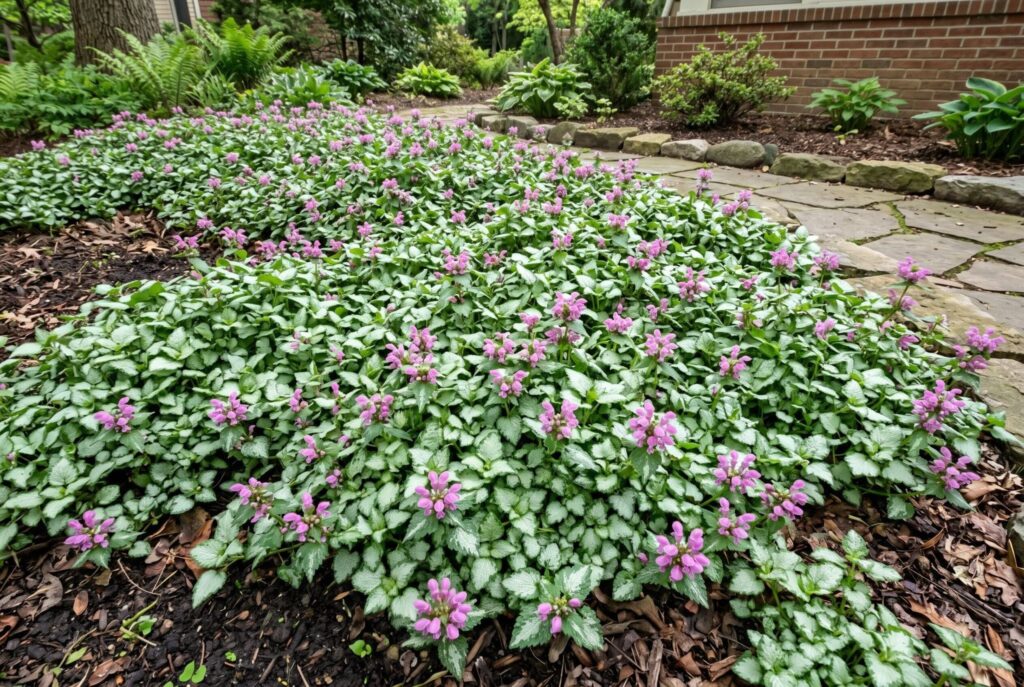
Spotted dead nettle is excellent for shade, offering silver marked leaves and colorful flowers. It spreads steadily, helps suppress weeds, and is often ignored by deer.
Conclusion
Ground cover plants are more than decorative fillers. They’re a practical way to reduce mowing, suppress weeds, protect soil, and create a softer, more ecological landscape. The key is choosing the right plant for the right place.
Use creeping thyme for sunny paths, sedum for dry heat, Irish moss for moist stonework, phlox ground cover for spring color, clover ground cover for soft lawn replacement, and shade lovers like wild ginger, sweet woodruff, and spotted dead nettle under trees.
A no-mow garden isn’t about doing nothing. It’s about planting intelligently once so your landscape works harder for you every year after that.