


A reset day can make the entire week feel easier. When the house feels off, laundry is piling up, meals haven’t been planned, and your mind is carrying too many loose ends, everything can start to feel heavier than it needs to.
A simple weekly reset helps bring life back into order. It creates a cleaner, calmer home, clears mental clutter, and sets up the next few days with more intention. The goal isn’t to do everything perfectly. It’s to create a rhythm that helps your home and your schedule feel more manageable.
Why a Weekly Reset Day Helps Your Home and Mind
Most people don’t need a full day of deep cleaning every week. What they need is a practical routine that helps them catch up, clear out, and prepare for what’s ahead. That’s where a reset day can be so useful. It creates a natural pause point between one busy stretch and the next.
For many households in the United States, weekdays move fast. Work, commuting, school schedules, errands, family obligations, and everyday household tasks can leave very little room to regroup. A weekly reset gives you time to restore order before the week starts pulling your attention in every direction again. It can also reduce decision fatigue by helping you handle the basics in advance.
1. Start With a Quick Whole-Home Walkthrough

Before you begin cleaning or organizing, take a few minutes to walk through your home and notice what feels off. This helps you focus on what will make the biggest difference instead of jumping into random tasks. You may notice clutter on the kitchen counters, piles of clothes in the bedroom, paper buildup near the entryway, or a bathroom that needs a fast refresh.
This walkthrough acts like a reset map. It helps you see the current state of the house clearly so you can work with purpose. It also keeps you from wasting energy on tasks that won’t improve your week in a meaningful way.
2. Clear the Surfaces That Affect Your Mood Most
Few things change the feel of a home faster than clearing visible surfaces. Kitchen counters, bathroom sinks, dining tables, coffee tables, and nightstands all influence how clean and calm a room feels. When those spaces are crowded, the whole house can feel more mentally noisy.
Start by removing anything that doesn’t belong. Put away the obvious clutter, throw out trash, recycle papers, and return stray items to the rooms where they belong. You don’t need to style every surface afterward. Just giving the room visual breathing space can make the home feel refreshed almost immediately.
3. Reset Laundry Before It Becomes Next Week’s Problem

Laundry has a way of carrying stress from one week into the next. Clean clothes waiting to be folded, a full hamper in the bathroom, and random socks showing up in every room can quietly make the home feel unfinished. A reset day is a good time to get ahead of it.
It’s less about doing it all and more about doing enough to set yourself up for a smoother week. Wash what’s essential, fold what’s already clean, and put it away instead of letting it sit in baskets. Even partial progress can make bedrooms and bathrooms feel much more under control.
4. Refresh the Kitchen for a Smoother Week
The kitchen often sets the tone for the rest of the home. When it’s messy, meals feel harder, mornings feel rushed, and cleanup becomes more annoying than it should be. A weekly reset should include some kind of kitchen refresh, even if it’s simple.
Empty the dishwasher, load any dishes in the sink, wipe the counters, toss expired leftovers, and check what’s in the refrigerator. These basic tasks can make cooking feel more manageable in the days ahead. A clean kitchen doesn’t just look better. It removes friction from daily life.
5. Do a Light Fridge and Pantry Check
One of the smartest reset day habits is checking what food you already have before the week begins. This helps reduce waste, makes meal planning easier, and keeps you from buying duplicates at the store. It also helps you spot what needs to be used soon.
Scan the fridge for produce, leftovers, and ingredients that are close to being forgotten. Look through the pantry for staples, snacks, and items that could help shape meals for the week. This doesn’t need to turn into a full inventory. You’re simply creating awareness so the kitchen works better and food doesn’t get lost in the shuffle.
6. Create a Short List of Weekly Priorities
A home reset works best when it includes your mind, not just your rooms. One helpful step is to write down a short list of priorities for the week ahead. Focus on what actually matters, not every possible task you could do.
This may include appointments, errands, school events, work deadlines, meals to make, or household tasks that can’t be ignored. Seeing them on paper can make the week feel more structured and less overwhelming. It also keeps mental clutter from following you from one day to the next.
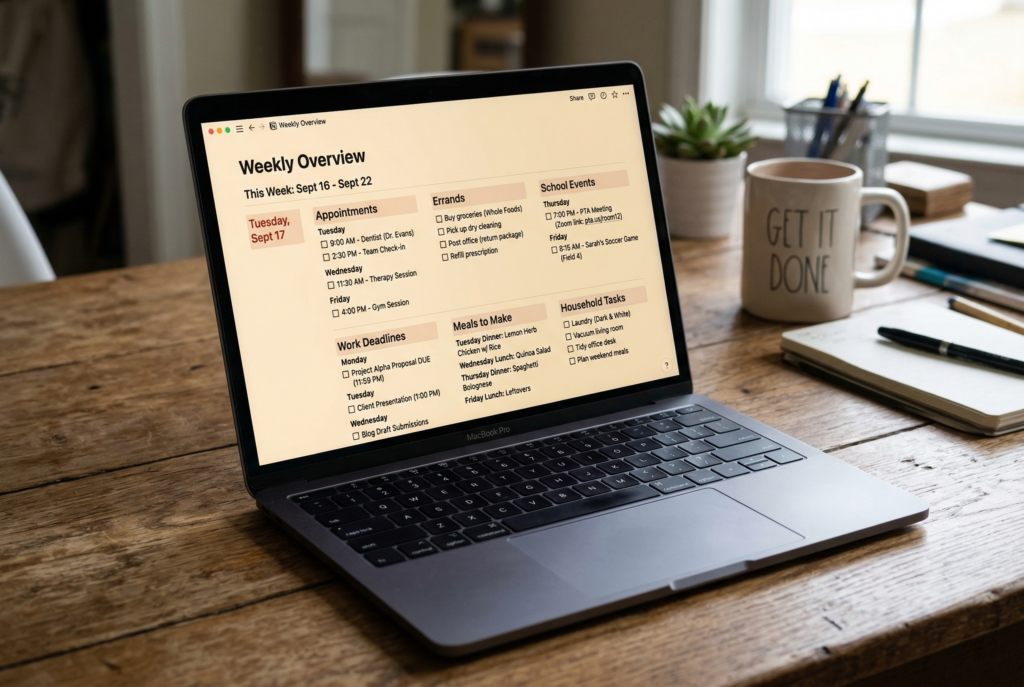
7. Tidy the Entryway and Other Transition Zones
Entryways, mudrooms, and drop zones tend to collect the mess of everyday life. Shoes pile up, bags get dropped, mail stacks grow, and random items land there because people are moving in and out quickly. These areas matter more than they seem because they shape the way your home feels when you come and go.
A reset day is the perfect time to put these spaces back in order. Straighten shoes, empty bags, sort the mail, toss trash, and return anything that drifted there during the week. When transition zones feel cleaner, the whole house often feels more settled.
8. Choose a Few High-Impact Cleaning Tasks
You don’t need to deep clean the entire house on reset day. It’s usually more effective to choose a few cleaning tasks that have a strong visual or practical payoff. That might mean vacuuming the living room, cleaning the bathroom mirror, wiping down the kitchen appliances, or changing the bed sheets.
These kinds of tasks help the home feel genuinely refreshed without turning the day into an exhausting cleaning marathon. Focus on what will make daily life more comfortable in the coming week. A little strategy goes a long way here.

9. Prepare One or Two Things That Save Time Later
A reset day can also include small forms of preparation that make weekdays easier. This might mean washing produce, prepping lunch ingredients, laying out outfits for the next day, refilling household essentials, or setting out what you need for Monday morning.
These small tasks may not look impressive, but they often reduce the rushed feeling that builds during busy weekdays. They help your future self move through the week with a little less stress and a little more ease. That’s one of the real benefits of a reset day. It creates support before things get busy again.
10. End With Something That Feels Mentally Calming
A good reset day doesn’t have to end with exhaustion. Once the essentials are handled, it helps to finish with one simple action that makes your space feel peaceful and your mind feel settled.
That could be lighting a candle, taking a shower, making tea, opening the windows for a while, or sitting in a tidy room without rushing into the next task. This matters because a reset day should improve how your home feels, not just how it looks.
When you pause long enough to notice the difference, the work feels more rewarding. That emotional payoff can also make it easier to stick with the routine week after week.

How to Make a Reset Day Routine More Sustainable
A weekly reset works best when it stays realistic. If the routine becomes too long or too demanding, it won’t last. The goal is to build a rhythm you can return to regularly, even during busy seasons. That may mean focusing on the most important rooms, skipping anything unnecessary, and accepting that some weeks will be lighter than others.
It also helps to avoid treating reset day like punishment for a messy week. It’s a support system, not a correction. When you approach it as a way to care for your space and lower stress, it becomes much easier to maintain. A good reset routine should leave you feeling clearer, not drained.
Conclusion
A simple reset day can help you refresh your home, reset your mind, and get organized for the week without turning the process into an overwhelming project. By clearing surfaces, catching up on laundry, refreshing the kitchen, checking food supplies, tidying key zones, and preparing for the days ahead, you create a home that feels more supportive and easier to manage.
The most effective reset day routines don’t depend on perfection. They depend on consistency, practicality, and a few thoughtful habits that make everyday life run more smoothly. Over time, even a modest weekly reset can help your home feel calmer, your schedule feel more organized, and your week feel far more manageable from the start.
Related Articles
- 7 Simple Evening Reset Routine Habits to Unwind, Clear Your Mind, and Wake Up Feeling in Control
- How to Clean Your House in One Day: Easy Steps for a Fresh and Sparkling Home
- 10 Simple Daily Habits to Keep Your Home Clutter-Free and Organized — Easy Routines for Busy Homes
- How to Create a Daily Decluttering Routine for a Simpler, Clutter-Free Home
- 10 Weekend Decluttering Projects to Refresh Your Home Quickly and Easily