

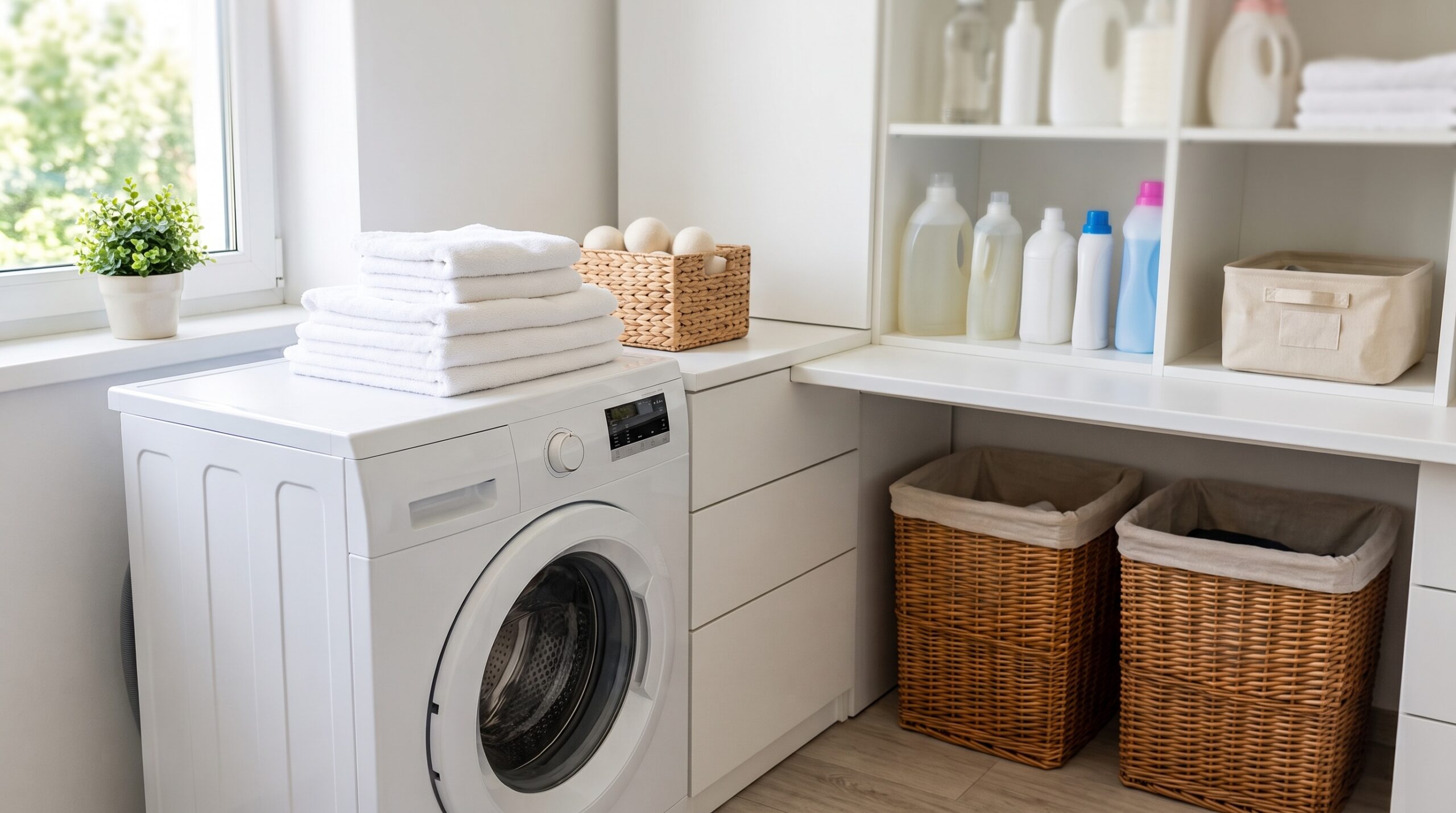
A laundry room works harder than most people realize. It handles dirty clothes, cleaning supplies, lint, moisture, and constant traffic, yet it’s often one of the easiest spaces to ignore until it starts feeling messy or unpleasant. The good news is that keeping a laundry space fresh and organized doesn’t require a full renovation. With a few simple cleaning habits and practical storage ideas, you can make the room easier to use, easier to maintain, and much less stressful during a busy week.
Start by Clearing Out What Doesn’t Belong
Laundry rooms tend to become holding zones for random household items. Extra paper towels, pet supplies, half-used cleaning products, shoes, tools, and miscellaneous clutter often end up there simply because there’s an empty shelf or corner. Over time, that overflow makes the room feel crowded and harder to clean.
Begin by removing everything that doesn’t directly support laundry or nearby household routines. If the room also functions as a mudroom, utility area, or cleaning closet, that’s fine, but each category should still have a defined home. The goal is to make the space feel purposeful instead of overloaded. Once the unnecessary items are gone, it becomes much easier to see what the room actually needs. In many cases, the laundry area already has enough space. It just hasn’t been protected from unrelated clutter.
Clean the Machines More Often Than You Think
Even though washing machines and dryers are designed to clean and dry, they still need regular maintenance. Detergent residue, fabric softener buildup, dust, lint, and moisture can all collect over time. When that happens, the room can start to smell stale, and the machines may not perform as well.
Wipe down the outside of both appliances regularly, especially around knobs, doors, and handles where detergent drips and dust settle. For the washer, clean the drum, gasket, and detergent drawer according to the manufacturer’s instructions. Front-load washers in particular can develop odor issues if moisture sits too long around the rubber seal.
Dryers need attention too. Clear lint from the filter after every load, and wipe the area around it periodically. Lint has a way of spreading onto nearby surfaces and floors, which makes the entire room feel dirtier than it is.
Don’t Ignore the Dryer Vent and Hidden Dust
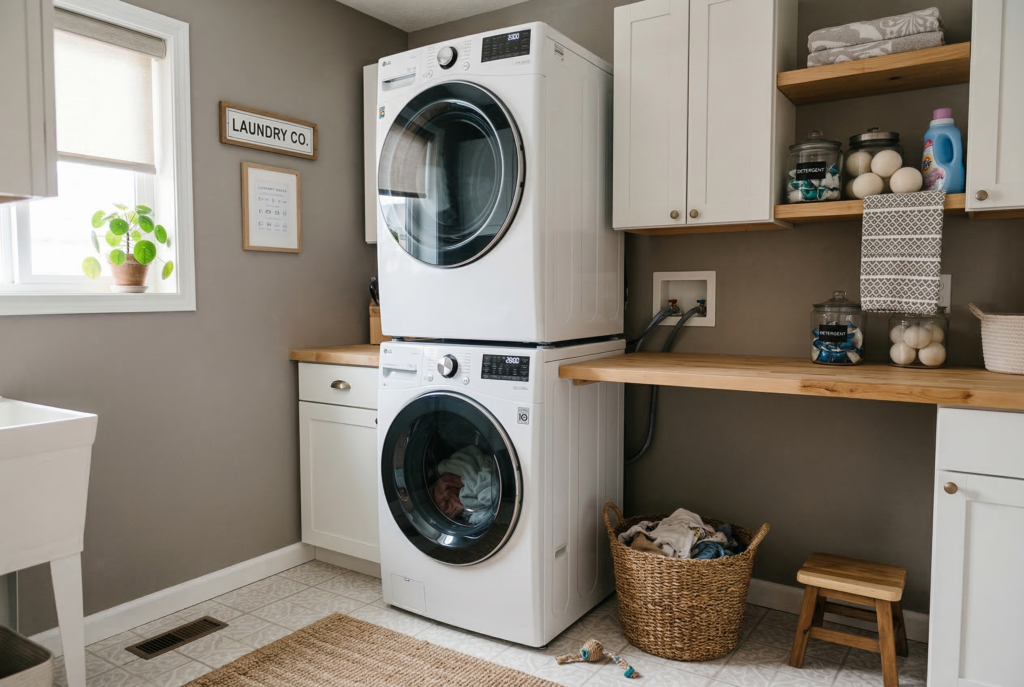
One of the most important laundry room cleaning tasks is also one of the most overlooked. Lint buildup behind the dryer and in the dryer vent can reduce efficiency and create a fire hazard. This is one area where regular maintenance matters for both cleanliness and safety.
Vacuum behind and under the dryer when possible, especially if the space tends to collect lint quickly. Check the vent hose for buildup and make sure the exterior vent flap opens properly. If drying times are getting longer, that’s often a sign the vent system needs attention. Keeping this area clean also improves the overall feel of the room. Dust and lint buildup make even an organized laundry room seem neglected. When those hidden zones are maintained, the whole space feels fresher.
Create Storage Based on What You Actually Use
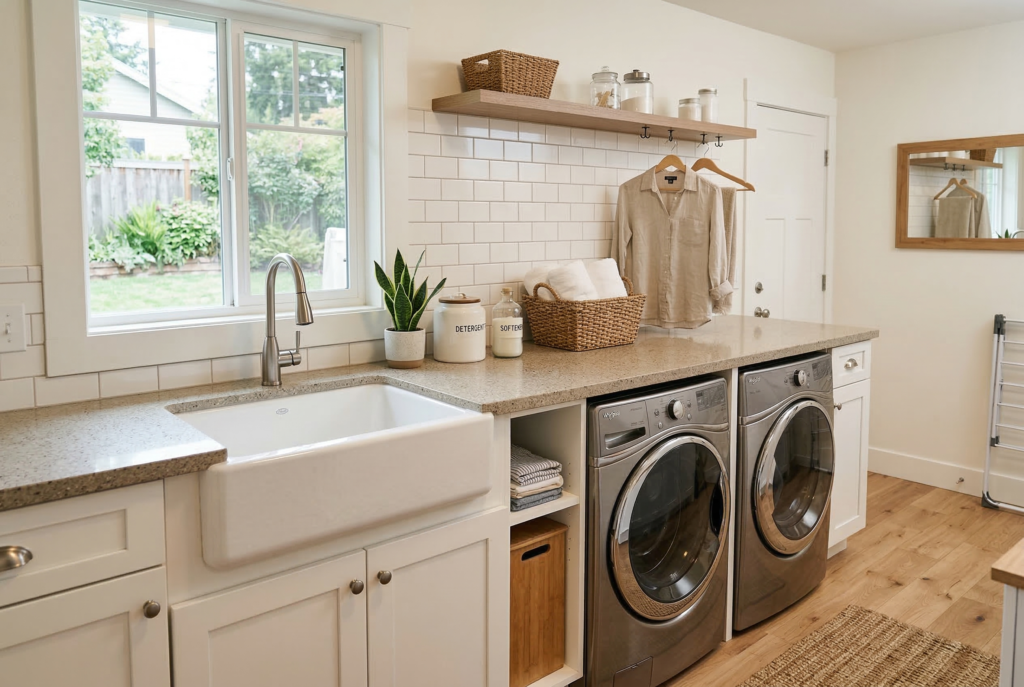
A well-organized laundry room doesn’t need a huge number of cabinets or fancy built-ins. It needs storage that fits the products and tools you use regularly. Start by grouping items into categories such as detergents, stain removers, dryer sheets, cleaning cloths, extra hangers, and laundry baskets.
Then store those categories according to frequency of use. Everyday products should be easy to reach. Backups can go on higher shelves or inside bins. This sounds simple, but it makes the room work much better because you aren’t constantly shifting items around to find what you need. Closed cabinets can help reduce visual clutter, but open shelving also works well when it’s kept neat. If you use shelves, try decanting smaller products into matching containers or using labeled bins so the room doesn’t look chaotic. A little visual order makes a functional space feel much calmer.
Use Containers to Prevent Small Items From Spreading
Laundry rooms often collect a lot of small things that don’t seem messy on their own but quickly create clutter together. Loose clothespins, stain sticks, spare buttons, mesh bags, socks waiting for a match, and packets of specialty cleaners can all end up scattered across shelves and countertops.
Simple containers make a big difference here. Small baskets, bins, or clear canisters can group similar items and keep them from spreading into every open space. If you have shelves above the washer and dryer, using a few matching bins can instantly make the room look more organized without adding complexity. The key is maintaining simplicity in the system. Rather than using numerous containers, provide only enough structure to keep loose items contained and easy to locate.
Keep Countertops and Appliance Tops as Clear as Possible
Laundry rooms function better when folding surfaces and appliance tops stay mostly clear. These flat areas attract clutter quickly because they’re convenient. Detergent bottles, receipts, random clothing, and half-finished sorting piles can take over fast.
Try to keep only true essentials on display. A small tray for daily-use items can help if you need certain products within reach, but most things should be stored nearby rather than spread across every surface. The clearer the tops of your machines and counters are, the easier the room is to wipe down and reset. This also makes laundry feel less overwhelming. Even a small room seems more manageable when there’s a clean space to fold clothes or set down a basket without first moving a pile of unrelated stuff.
Add Practical Sorting Solutions That Match Your Routine
Laundry gets easier when sorting is built into the room instead of happening reactively. If dirty clothes pile up on the floor or clean clothes linger in baskets for days, the issue is often a lack of systems rather than a lack of effort.
A few good hampers can help separate lights, darks, delicates, or household linens before wash day even begins. If space is limited, a divided hamper may work better than multiple bins. If the laundry room is shared by several people, labeled baskets can make the process smoother and reduce mix-ups. The best sorting system is the one you’ll actually maintain. If a setup is too complicated, it won’t last. In most homes, simple and visible works best.
Freshen the Room by Managing Moisture and Odors
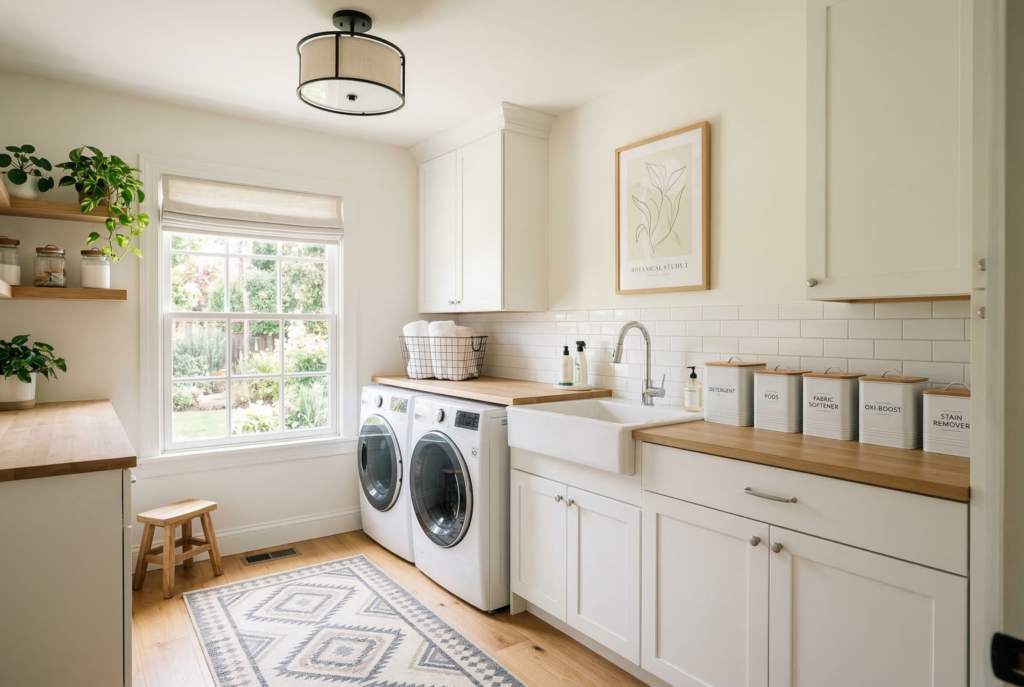
Laundry rooms can develop a musty feel because they deal with moisture so often. Damp towels, wet clothes, front-load washer seals, and poor airflow can all affect how fresh the space feels. Good ventilation makes a noticeable difference.
If the room has a window, open it when possible. If it has an exhaust fan, use it consistently. Leaving the washer door open between loads can also help the drum dry out more fully and reduce trapped moisture. Just make sure that works safely in your household, especially if small children or pets are around. A clean laundry room should smell neutral and fresh, not overly perfumed. Washing out hampers occasionally, cleaning the sink if there is one, and keeping damp cloths from sitting in corners all help prevent stale odors from building up.
Make Wall Space Work Harder
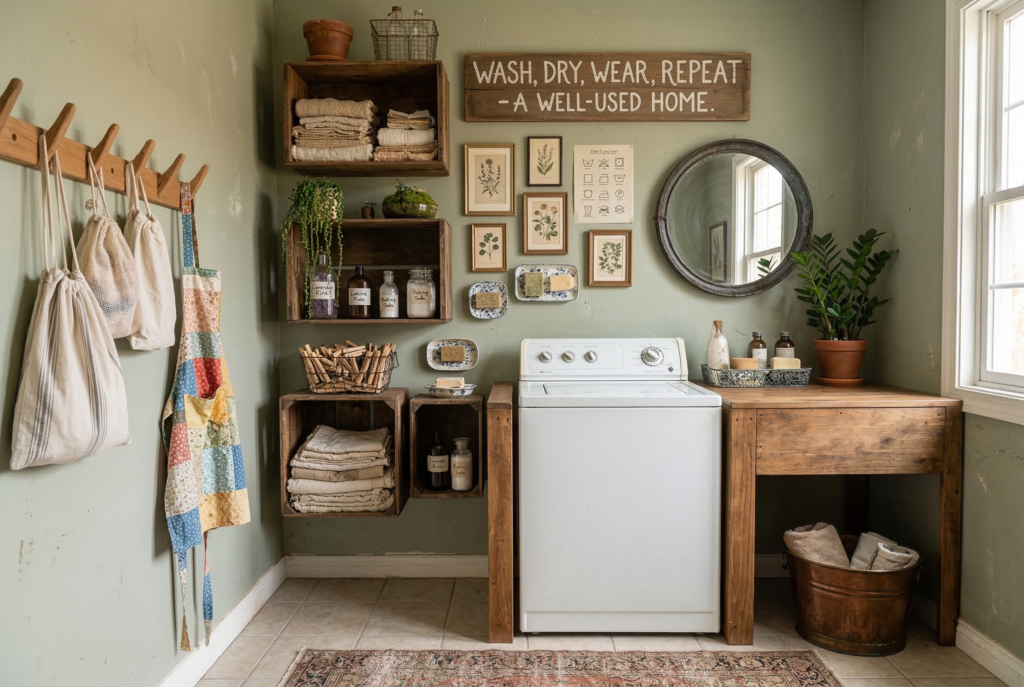
When floor space is limited, wall storage can make the room much more functional. Hooks, shelves, peg rails, and wall-mounted racks can hold tools and supplies without crowding the room. This is especially useful in smaller laundry spaces where every inch matters.
You might use wall hooks for reusable laundry bags or hangers, a shelf for detergents and bins, or a drying rack that folds away when not in use. If ironing happens in the laundry room, wall-mounted storage for the iron and board can also keep bulky items from becoming obstacles. Vertical storage works best when it stays selective. The goal is to support function without making the walls feel overloaded or visually noisy.
Build a Simple Weekly Reset Into Your Routine
Laundry rooms stay cleaner when they’re reset regularly instead of only getting attention once they become frustrating. A quick weekly routine is usually enough to keep things under control.
That reset might include wiping down the machines, sweeping the floor, emptying lint, checking supplies, and putting away anything that drifted into the room during the week. These tasks don’t take long when done consistently, and they prevent the deeper clean from becoming a much bigger project later. This kind of maintenance is especially helpful in busy households where laundry never really stops. A room that gets small, regular resets is much easier to keep functional than one that’s allowed to build up a mess for weeks at a time.
Make the Space More Pleasant Without Overdecorating
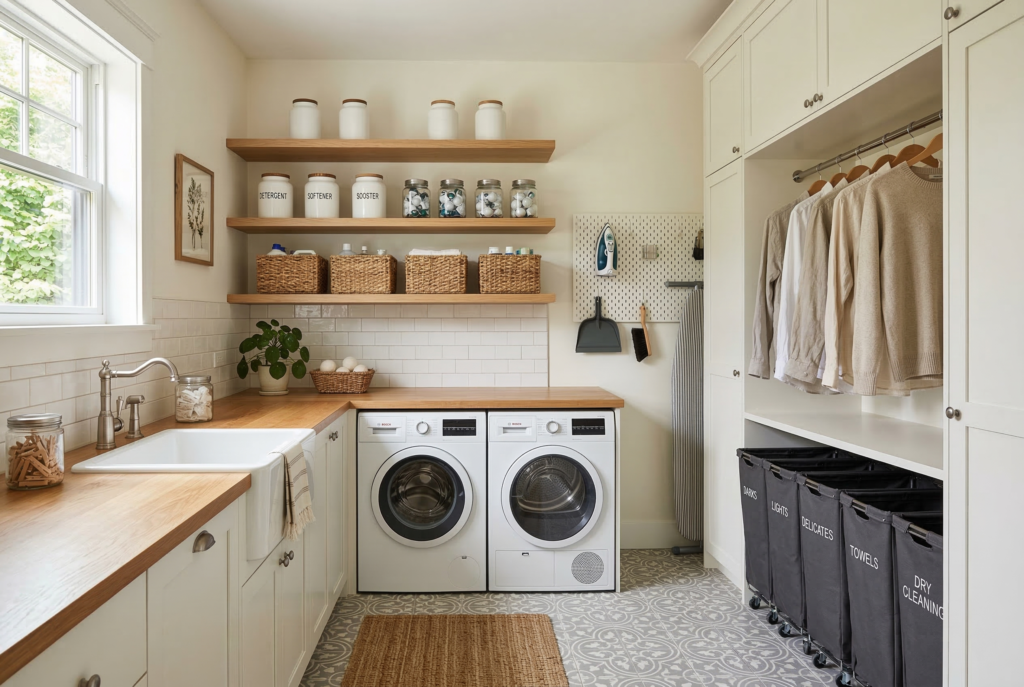
A laundry room doesn’t need elaborate styling, but a few thoughtful touches can make it feel more pleasant to spend time in. Better lighting, a washable rug, a simple piece of art, or a neat row of containers can make the space feel less utilitarian and more cared for.
The trick is keeping those touches practical. Anything you add should either improve comfort or support organization. Decorative items that collect dust or take up useful surface space usually don’t help in the long run. A laundry room feels best when it’s clean, efficient, and easy to use. That alone creates a calmer experience, even without much decoration.
Conclusion
A fresh and clutter-free laundry room comes from simple habits, realistic storage, and regular upkeep rather than perfection. By clearing out what doesn’t belong, cleaning your machines consistently, managing lint and moisture, and organizing supplies around your actual routine, you can create a space that feels cleaner and works better every day. Small changes such as using bins, keeping surfaces clear, and adding a quick weekly reset can have a big impact over time. When the laundry room is easy to maintain, the entire chore feels a little more manageable.
Related Articles
- 12 Eco-Friendly Laundry Tips to Save Energy, Reduce Chemicals, and Create a More Sustainable Cleaning Routine
- How to Deep Clean Your Bathroom: Essential Step-by-Step Tips for a Fresh, Spotless Space
- How to Deep Clean Your Kitchen in 1 Hour: A Complete Step-by-Step Guide
- How to Clean Your Bedroom Quickly: Simple Tips for a Fresh, Spotless Space in Minutes
- How to Effortlessly Clean Your Living Room: Simple Tips for a Fresh, Spotless Space
- Minimalist Cleaning Routine: A Practical Way to Save Time and Energy Every Day
- 10 Speed Cleaning Techniques: Quick, Time-Saving Tips for Fast, Efficient Home Cleaning on Busy Days