

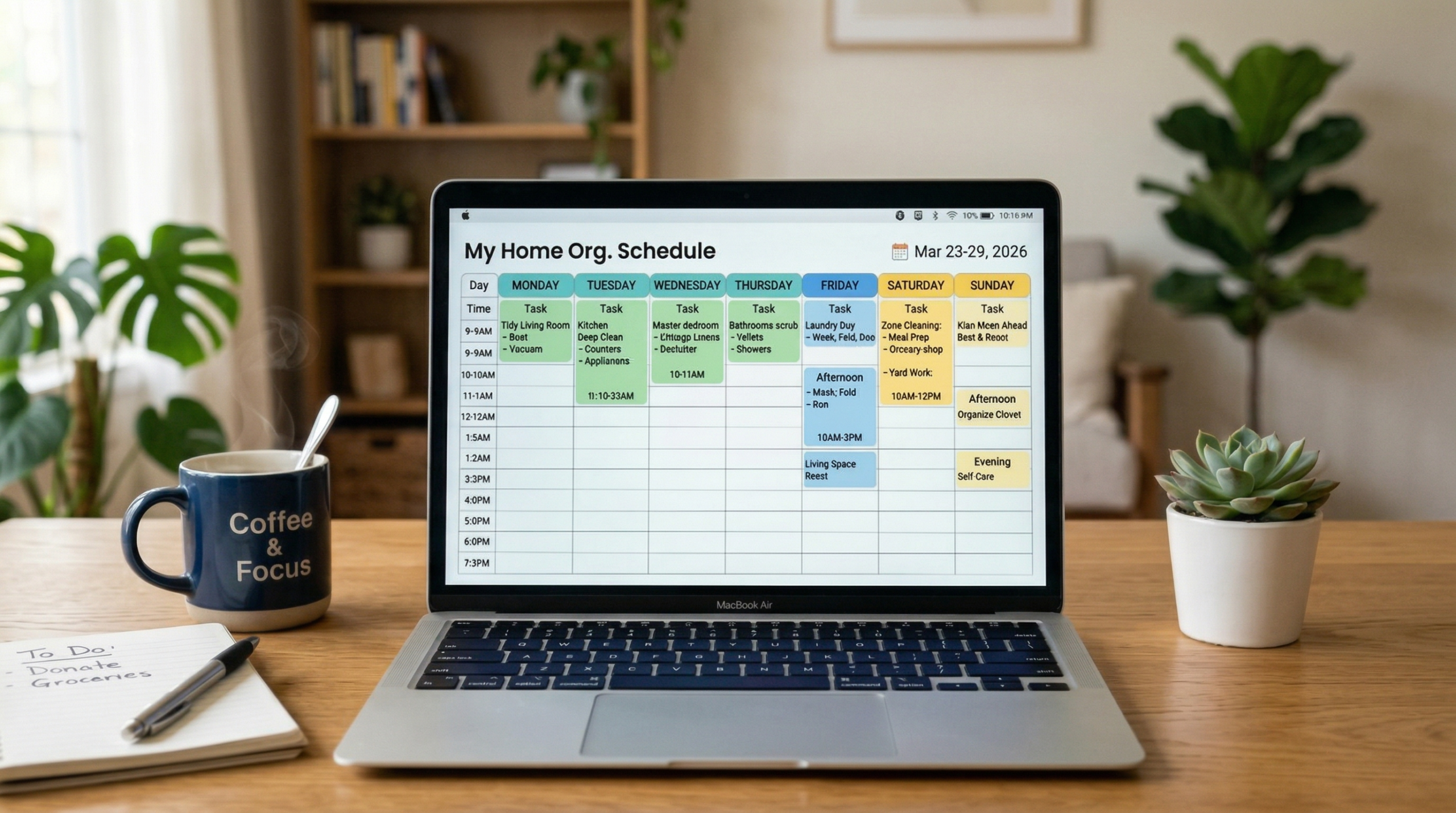
Keeping a home organized can feel manageable for a day or two, then suddenly everything starts slipping again. Laundry builds up, counters collect clutter, papers pile up, and the house begins to feel harder to reset than it should. That’s why a simple weekly home organization schedule can be so helpful. Instead of waiting until the mess feels overwhelming, you spread the work across the week in a way that feels realistic, repeatable, and much easier to maintain.
Why a Weekly Home Organization Schedule Works Better Than Random Catch-Up Cleaning
A lot of people don’t struggle because they’re lazy or careless. They struggle because home care often happens reactively. Tasks get done only when the clutter becomes too obvious or the stress becomes too annoying to ignore. The result is a cycle of falling behind, catching up, and falling behind again.
A weekly home organization schedule changes that pattern. It gives each day a light focus so your home gets regular attention without needing constant deep cleaning. For many households in the United States, where work, school, commuting, and family life leave limited extra time, that kind of structure can make a big difference. A steady routine helps prevent mess from building into something exhausting.
What Makes a Home Organization Routine Actually Work
The most effective schedule is one that fits real life. It shouldn’t require hours of effort every day or depend on perfect motivation. It works because it breaks home care into smaller parts and assigns them to manageable time windows.
A good weekly routine also recognizes that not every task needs to happen every day. Some things need daily attention, like dishes or a quick kitchen reset. Others only need to be checked once or twice a week, like organizing the fridge, clearing paper clutter, or tidying a closet shelf. When everything has a rough place in the week, the home feels easier to manage overall.
Start With a Few Daily Non-Negotiables
Before assigning tasks to specific days, it helps to establish a few daily habits that keep the house from sliding backward. These are the basic resets that support the whole schedule. For most homes, that includes making the bed, clearing the kitchen counters, loading or unloading the dishwasher, putting obvious clutter back where it belongs, and doing a short evening reset of the main living areas. These habits don’t have to take long, but they create a baseline of order that makes the weekly schedule much more effective.
Monday: Reset the Kitchen and Start Fresh

Monday is a good day to focus on the kitchen because it sets the tone for the rest of the week. After the weekend, refrigerators often need a quick check, counters may need a more thorough wipe-down, and meal planning feels easier when the kitchen is under control.
Use Monday to empty old leftovers, check what produce needs to be used, wipe appliances, and tidy one pantry or cabinet zone if needed. You don’t have to deep clean every surface. The goal is to make the kitchen feel fresh, functional, and ready for the week ahead. Since the kitchen is one of the most heavily used spaces in the home, giving it early attention pays off quickly.
Tuesday: Tackle Laundry and Bedroom Reset

Laundry tends to create stress when it lingers too long, which is why giving it a dedicated day can help so much. Tuesday works well for washing, drying, folding, and putting away clothes before the week gets too busy. Along with laundry, do a quick bedroom reset.
That might include clearing nightstands, putting away clothes that landed on a chair or bench, and straightening dresser surfaces. Bedrooms feel calmer when they aren’t carrying visible clutter, and staying ahead of laundry prevents it from becoming a weekend-long project. This also makes the home feel more settled in the middle of the week.
Wednesday: Focus on Bathrooms and Personal Care Areas
Bathrooms are small, but they affect how clean the whole house feels. Midweek is a good time to give them a focused reset. Wipe counters, clean mirrors, refresh towels, empty trash, and restock essentials like toilet paper or hand soap.
If there’s time, organize one drawer or under-sink area that tends to collect clutter. Bathrooms stay easier to maintain when products are grouped clearly and surfaces aren’t overloaded. A Wednesday bathroom reset can also make the second half of the week feel cleaner without requiring a full deep-clean session.

Thursday: Clear Paper Clutter and Entryway Mess
Paper clutter has a way of multiplying quietly. Mail, receipts, school forms, flyers, notes, and random documents can spread across kitchen counters, desks, and tables if they aren’t handled regularly. Thursday is a smart day to deal with that buildup.
Sort mail, recycle what you don’t need, file anything important, and clear off the surfaces where paper tends to land. Then take a few minutes to reset the entryway. Straighten shoes, hang jackets, empty bags, and return anything that drifted there during the week. These spaces often create more visual stress than people realize, so keeping them under control makes the whole home feel lighter.
Friday: Tidy Living Areas Before the Weekend
By Friday, shared spaces usually need attention. Living rooms, family rooms, and dining areas often collect the evidence of a busy week. Blankets get left out, toys spread across the floor, chargers pile up, and surfaces start to feel crowded.
Use Friday to tidy the rooms where everyone gathers most. Fold blankets, clear tables, put away obvious clutter, and vacuum or dust if needed. This is less about perfection and more about creating a cleaner, calmer start to the weekend. When shared spaces are reset before Saturday arrives, the home feels more enjoyable and less like it needs an immediate overhaul.
Saturday: Choose One Deeper Organization Task
Saturday is a good time for one focused project that goes beyond daily upkeep. This could be organizing a closet shelf, decluttering a kitchen drawer, sorting kids’ toys, rotating seasonal items, or cleaning out the car. The key word is one.
Trying to do too much on Saturday can make the schedule feel like a burden. One deeper task is enough to create progress without turning the day into nonstop housework. Over time, these small weekly projects lead to meaningful improvement throughout the home. They also help prevent hidden clutter from building up behind closed doors.
Sunday: Do a Weekly Reset for the Home and the Week Ahead

Sunday works best as a reset day rather than a heavy cleaning day. Use it to prepare the home and your schedule for the week ahead. That may include checking groceries, doing a quick fridge review, laying out school or work items, watering plants, refilling household basics, and doing a light tidy throughout the house.
This is also a good day to take a short walkthrough and notice what feels off. Maybe the bathroom needs extra towels, the kitchen needs a better meal plan, or the entryway is collecting too much again. Sunday helps you reconnect with the home before Monday begins, which makes the weekly routine feel more intentional and less reactive.
How to Keep the Schedule From Feeling Overwhelming
One reason home organization schedules fail is that they ask for too much. If each day comes with a long list, the routine starts feeling like punishment instead of support. A better approach is to treat each day’s focus as a priority, not an all-day assignment.
Most daily tasks in a weekly schedule should be possible in a short, reasonable block of time. Some days may take fifteen minutes. Others may take a little longer. What matters is consistency, not intensity. If you miss a day, you don’t have to give up. Just return to the next part of the routine and keep moving.
Why This Kind of Routine Keeps a Home Effortlessly Clean
No home stays clean effortlessly in the literal sense. But a weekly home organization schedule creates something that feels close to it. Because tasks are handled regularly, the home rarely reaches the point of full overwhelm. Messes get addressed earlier. Clutter has fewer chances to pile up. Rooms stay more stable because they’re being maintained in smaller pieces.
That’s what makes the space feel easier to care for. Instead of needing huge recovery sessions, you’re making small adjustments all week long. The result is a home that looks cleaner, feels calmer, and requires less emergency effort to stay that way.
How to Adapt the Schedule to Your Household
Every home runs differently, so this kind of schedule should be adjusted to match your reality. Some people may need laundry on multiple days. Others may prefer to move bathroom cleaning to the weekend or make Sunday their main kitchen reset day. The exact order matters less than the consistency.
It also helps to consider your natural energy patterns. If weekdays are packed, keep weekday tasks very light and use the weekend for one or two bigger resets. If weekends are busy with family activities, let weekdays carry more of the routine. A home organization schedule works best when it reflects the way your household already functions.
Conclusion
A simple weekly home organization schedule works because it replaces last-minute catch-up cleaning with steady, manageable routines. By giving each day a light focus, from kitchen resets and laundry to bathroom upkeep and paper clutter control, you create a home that stays more organized without demanding constant effort.
The goal isn’t to follow a perfect system. It’s to create a rhythm that helps your space stay clean, functional, and easier to maintain throughout the week. When home care is spread out in practical ways, the entire house feels less stressful and much more under control.