


You know that feeling when you look out your back window and see a steep, messy hill instead of a place to hang out? You’re definitely not alone. Many people deal with yards where the dirt just seems to wash away every time it rains, leaving a lot of wasted space.
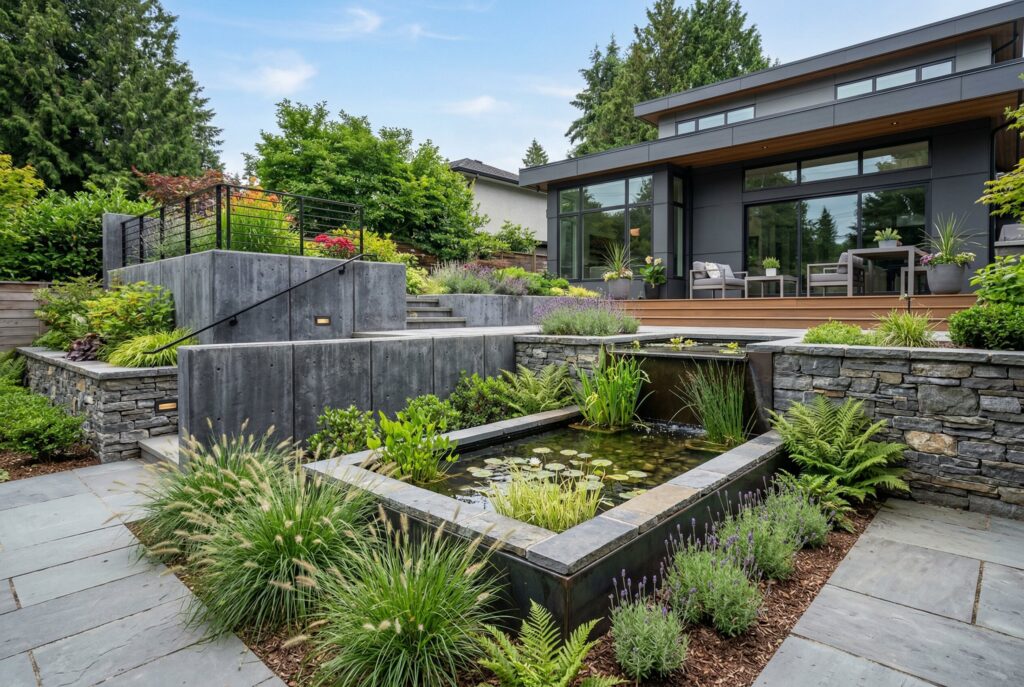
But before you start shopping for materials, it’s worth asking: what is a retaining wall? Essentially, it’s a structure that serves a dual purpose by holding back soil to stop erosion while also giving your yard a much cleaner, more finished look. Whether you’re trying to tame a hill or just want to add some style, the right retaining wall ideas can turn a difficult yard into a beautiful sanctuary.
Popular Materials & Cost Breakdown
One of the most frustrating parts of starting a project is finding only vague prices online. To make your planning easier, here is a breakdown of what you might actually pay per square foot, including both materials and labor:
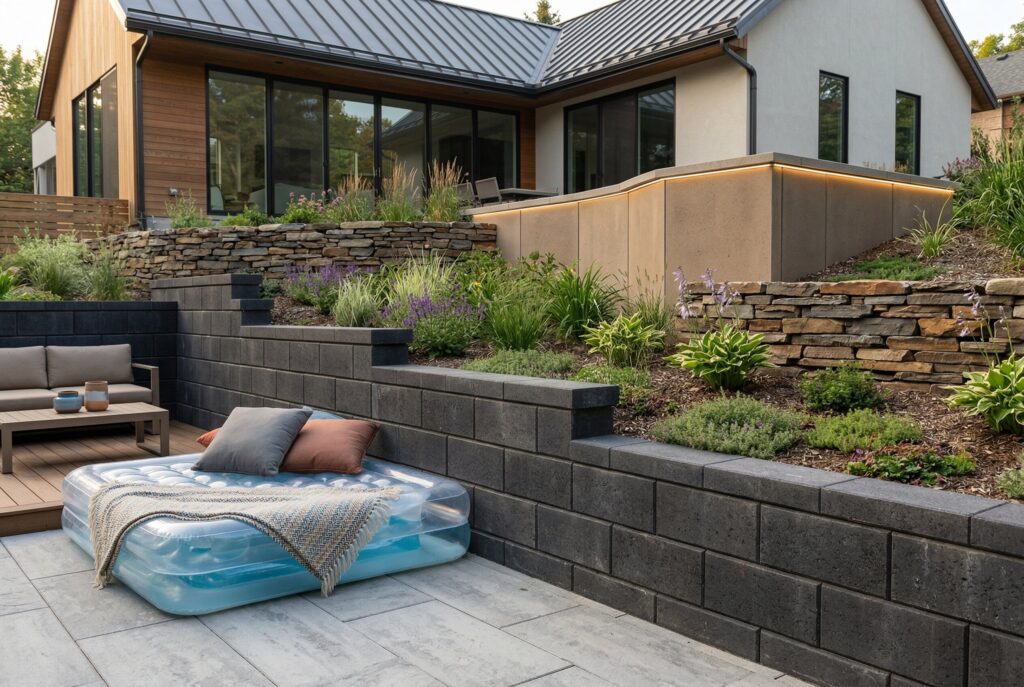
- Retaining wall blocks: These are a huge favorite because they’re tough and usually come in interlocking designs that make the work go faster. You can generally expect to pay somewhere between $15 and $30 per square foot.
- Stone retaining wall: If you want that classic, high-end look, a stone retaining wall is usually the top choice. Since natural rock takes more skill to stack properly, the price often sits between $25 and $55 per square foot.
- Concrete wall: For people who like a modern or industrial vibe, a poured concrete wall is a solid, structural powerhouse. These typically run between $20 and $40 per square foot.
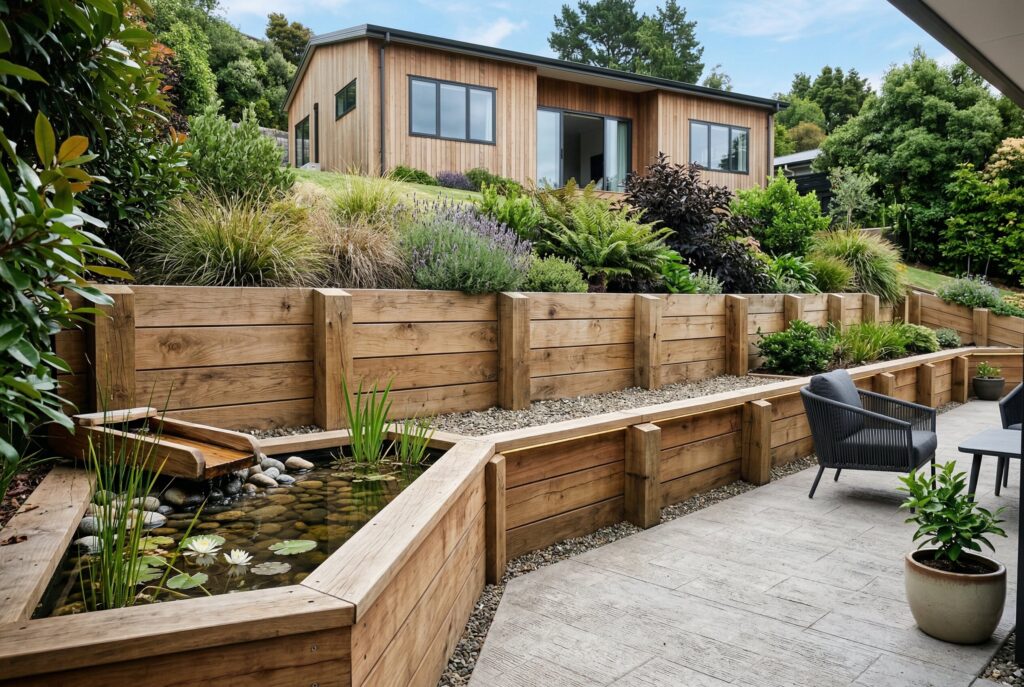
- Timber and wood: If you’re hunting for inexpensive cheap retaining wall ideas, pressure-treated wood is a go-to. It looks great in wooded areas and usually costs about $15 to $25 per square foot, though it won’t last quite as long as stone or concrete.
If you’re strictly looking for cheap retaining wall ideas, you might consider things like gabion baskets, which are wire cages filled with rock. They’re a creative way to keep costs down while still getting a wall that stays put.
5 Inspiring Design Concepts for Every Backyard
Instead of just picking a material, think about how you want to use the space. Here are five ways to turn a boring wall into a real feature:
1. The Tiered Terrace: Solving Severe Slopes
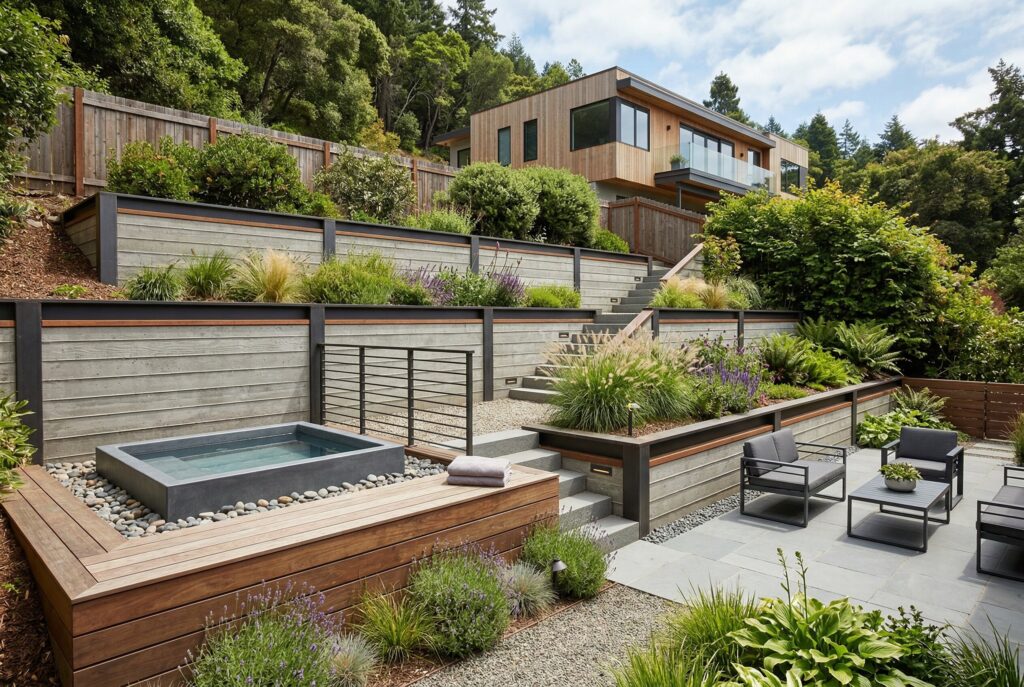
If you have a really steep hill, don’t try to fix it with one massive wall. Instead, look for retaining wall ideas for sloped backyard projects that use “terracing.” By creating two or three smaller levels, you get flat areas for plants and you take the heavy pressure off a single structure.
2. The Living Wall: Biophilic Integration

A big trend right now is moving away from cold stone and toward “living” walls. You can leave small gaps in a natural stone retaining wall to plant things like creeping thyme or ivy. It softens the look of the yard and makes the whole space feel more connected to nature.
3. Multi-Functional Seat Walls: Space Maximization
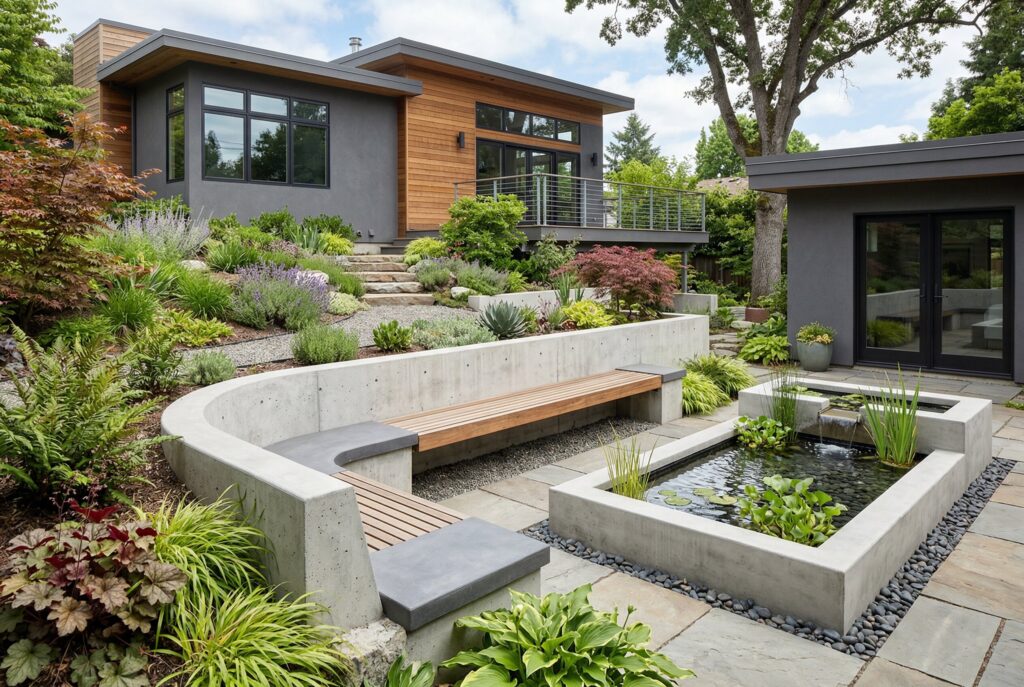
Why just build a wall when you can build a bench? A garden wall built at a height of about 18 to 24 inches is the perfect spot for people to sit during a BBQ. It’s a smart way to get extra seating without buying more outdoor furniture.
4. Waterfall & Water Features
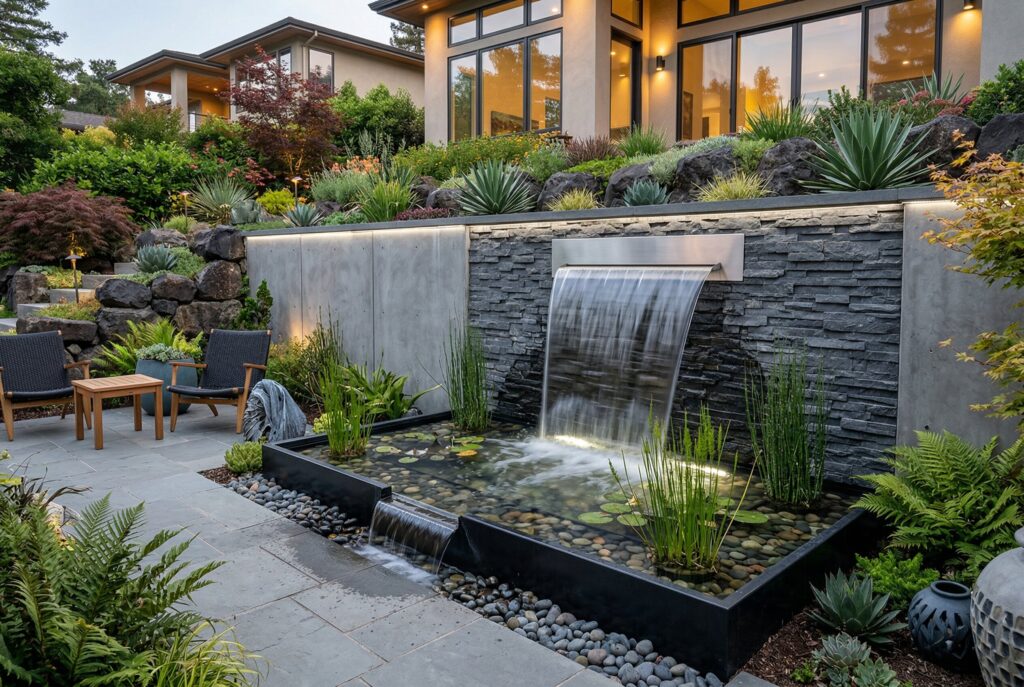
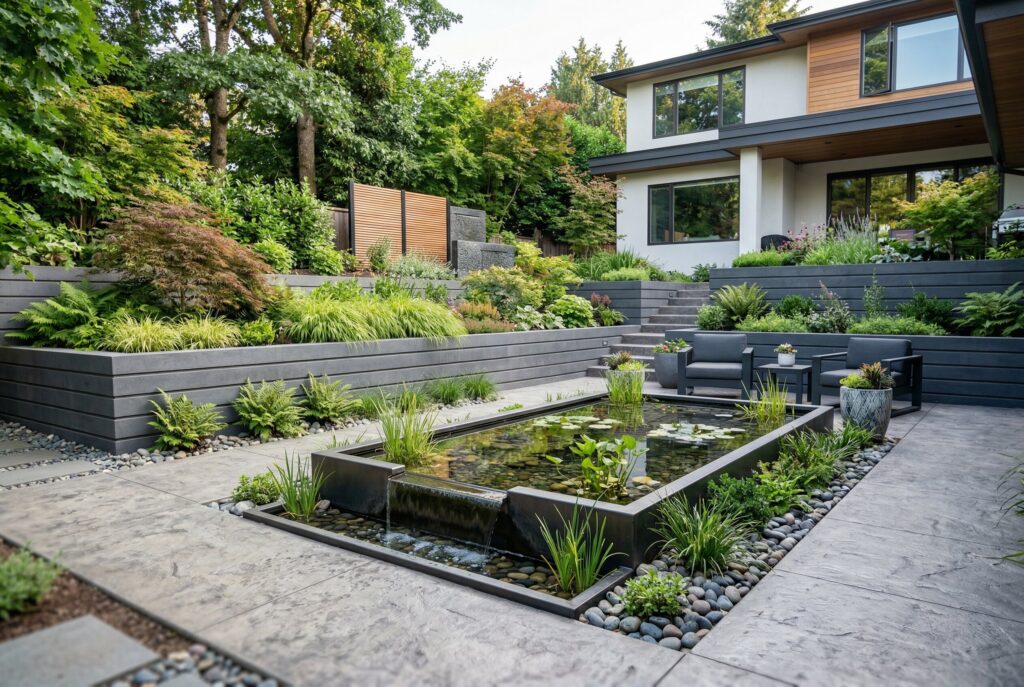
For a peaceful, spa-like atmosphere, you can build a waterfall right into your landscape design. The sound of water is great for blocking out neighborhood noise and it looks incredible as a focal point in the garden.
5. Integrated Outdoor Living: Kitchens & Fire Pits
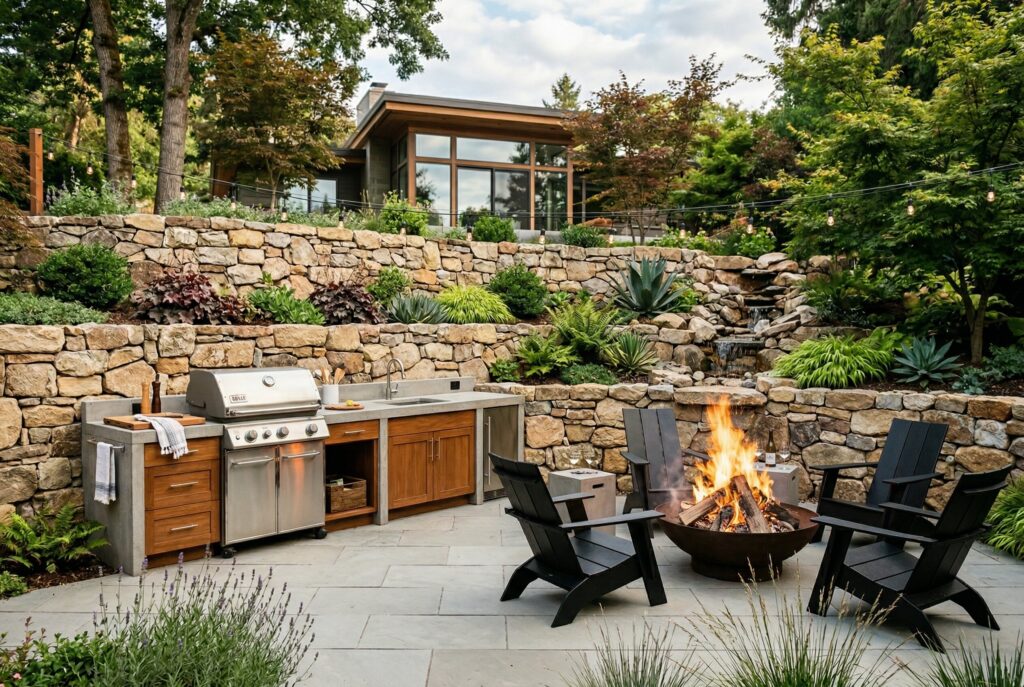
Many people now treat their backyard like an extra room in the house. You can use a retaining wall design to frame an outdoor kitchen or a cozy fire pit area, which creates a sense of privacy and makes the space feel much more high-end.
The “Missing Manual”: Drainage & Engineering Basics
Here is the truth: most walls don’t fail because of the materials, they fail because of water. Wet dirt is incredibly heavy, and that pressure can knock over even a strong wall if the water has nowhere to go.
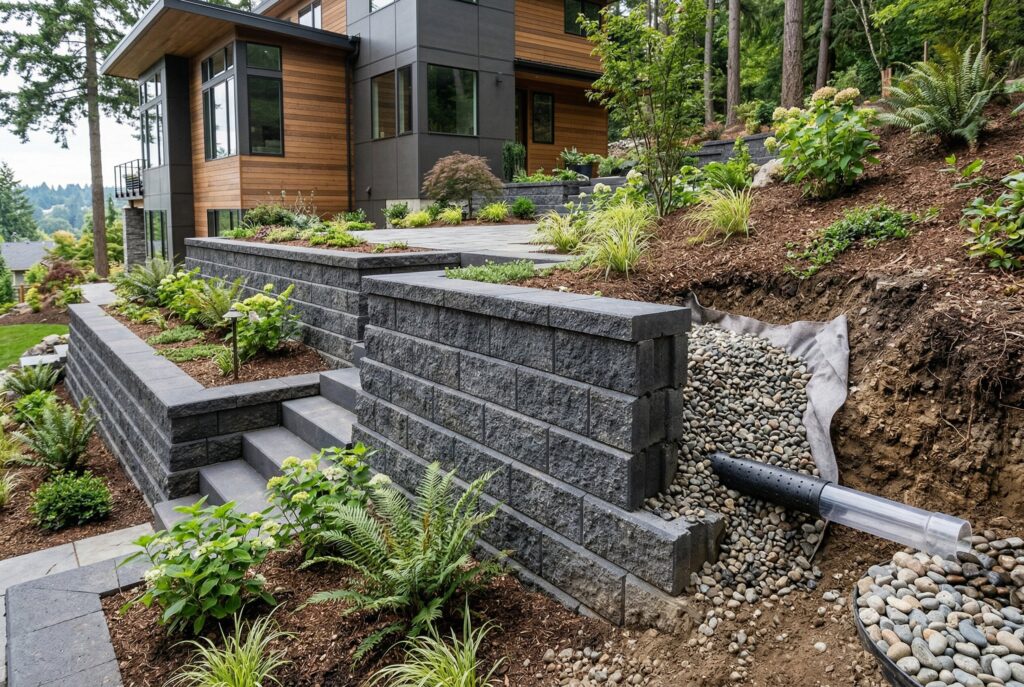
- Retaining wall drainage: You absolutely need a perforated pipe at the base and a layer of gravel right behind the wall to let water escape through weep holes.
- Permits and regulations: Before you start digging, check your local rules. In many places, any retaining wall construction over 3 or 4 feet tall requires a permit and a sign-off from an engineer to make sure it’s safe.
DIY Guide: How to Build a Small Retaining Wall
If your wall is going to be under 3 feet, a DIY retaining wall is a great weekend project that can save you a lot of money.
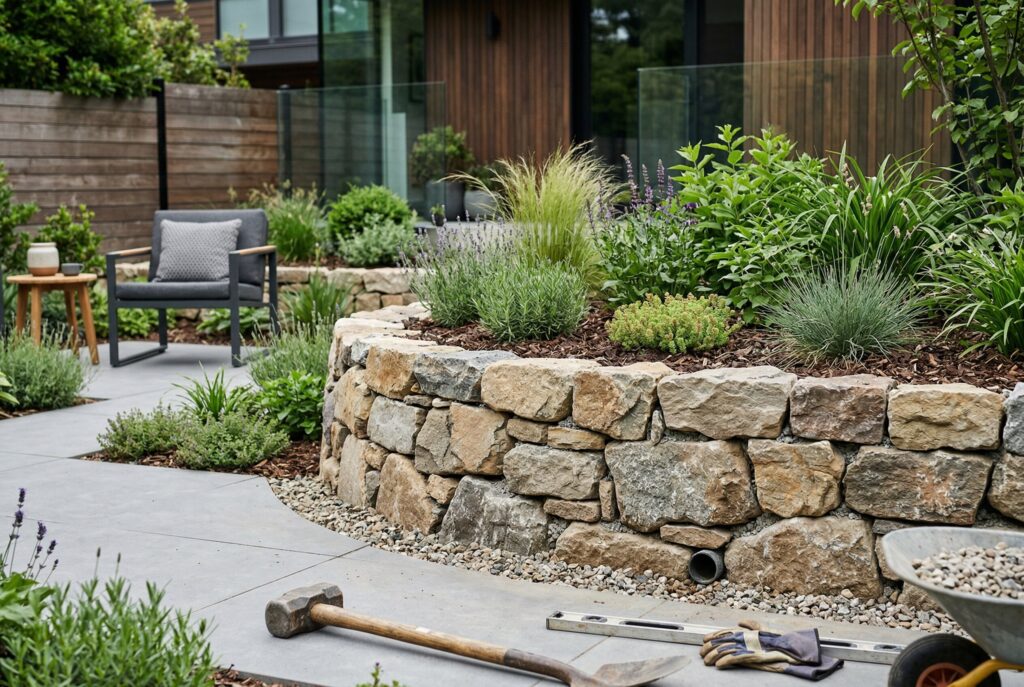
- Preparation: Dig a trench about 6 inches deep and twice as wide as the blocks you’re using.
- The foundation: Fill that trench with 4 inches of crushed stone and pack it down until it is completely solid.
- The first row: This is the most important part. If your first row isn’t perfectly level, the whole wall will be wonky by the time you reach the top.
- Stacking and backfilling: As you add rows, fill the space behind them with gravel to help with retaining wall drainage.
- Finishing: Use a strong masonry adhesive to glue the top cap stones in place so they don’t move.
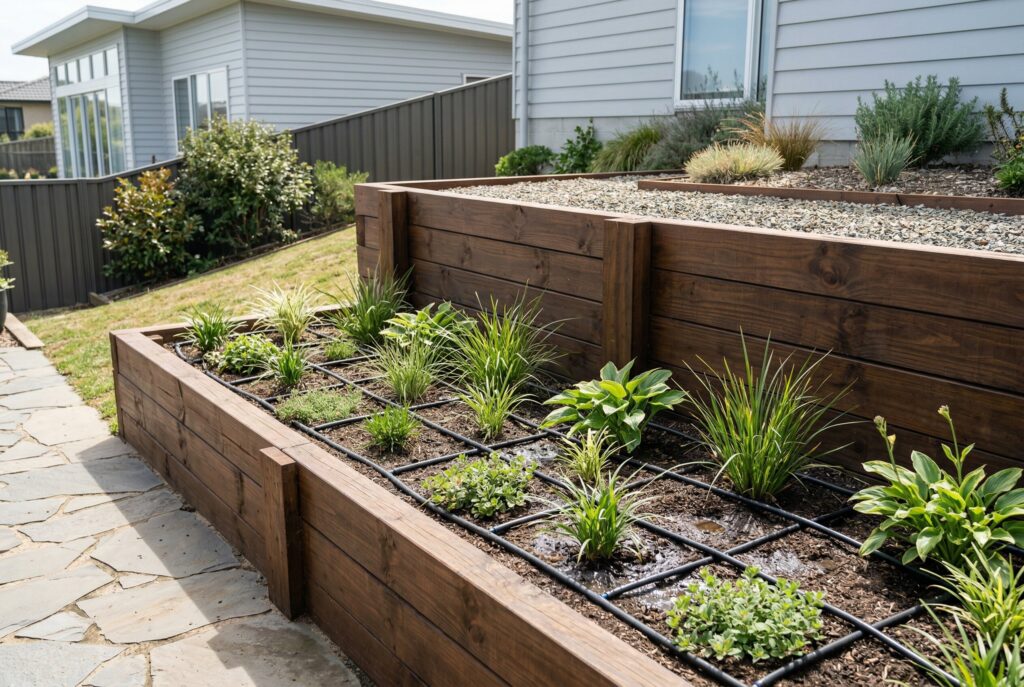
If you have a hill, you might need to look specifically at how to build a retaining wall on a slope, which usually involves “stepping” the foundation so it follows the grade of the land. If the project feels too big, a professional retaining wall installation is always a safe choice for something that will last a lifetime.
Current Trends: Biophilic & Smart Lighting
In 2026, retaining wall design is about more than just holding back dirt. People are getting really creative with how these structures look at night and how they help the environment.

- Living walls: More homeowners are choosing designs that integrate plants directly into the wall itself. This biophilic trend helps support local bees and butterflies while making a hard structure look soft and green.
- Smart lighting: A huge trend right now is installing LED strips right under the wall caps. You can often control these from your phone to change the mood of your landscape design, and it makes the whole yard much safer to walk around in after dark.
Your Roadmap to a Better Backyard
A great project starts with a good plan, not just a pile of rocks. Whether you choose a modern concrete wall or a rugged rock retaining wall, focus on your drainage first to make sure your hard work stays standing. By mixing some of these retaining wall ideas with solid construction, you can finally turn that “problem hill” into your favorite part of the home.
If you’re ready to dive in, the first thing you should do is get an accurate measurement of your yard. You’ll need to know exactly how high and long the wall is going to be so you can figure out if you need to pull a permit for the project.
After that, you can decide on a style by looking at your home’s exterior and choosing between the look of natural stone or standard retaining wall blocks. Just keep in mind that if your wall is going to be over three feet tall, it is definitely a good idea to call in a professional. Having an expert handle the installation ensures that everything is engineered correctly and built to last.
Related Articles
9 Small Retaining Wall Ideas: The Cheapest Retaining Wall Solutions