

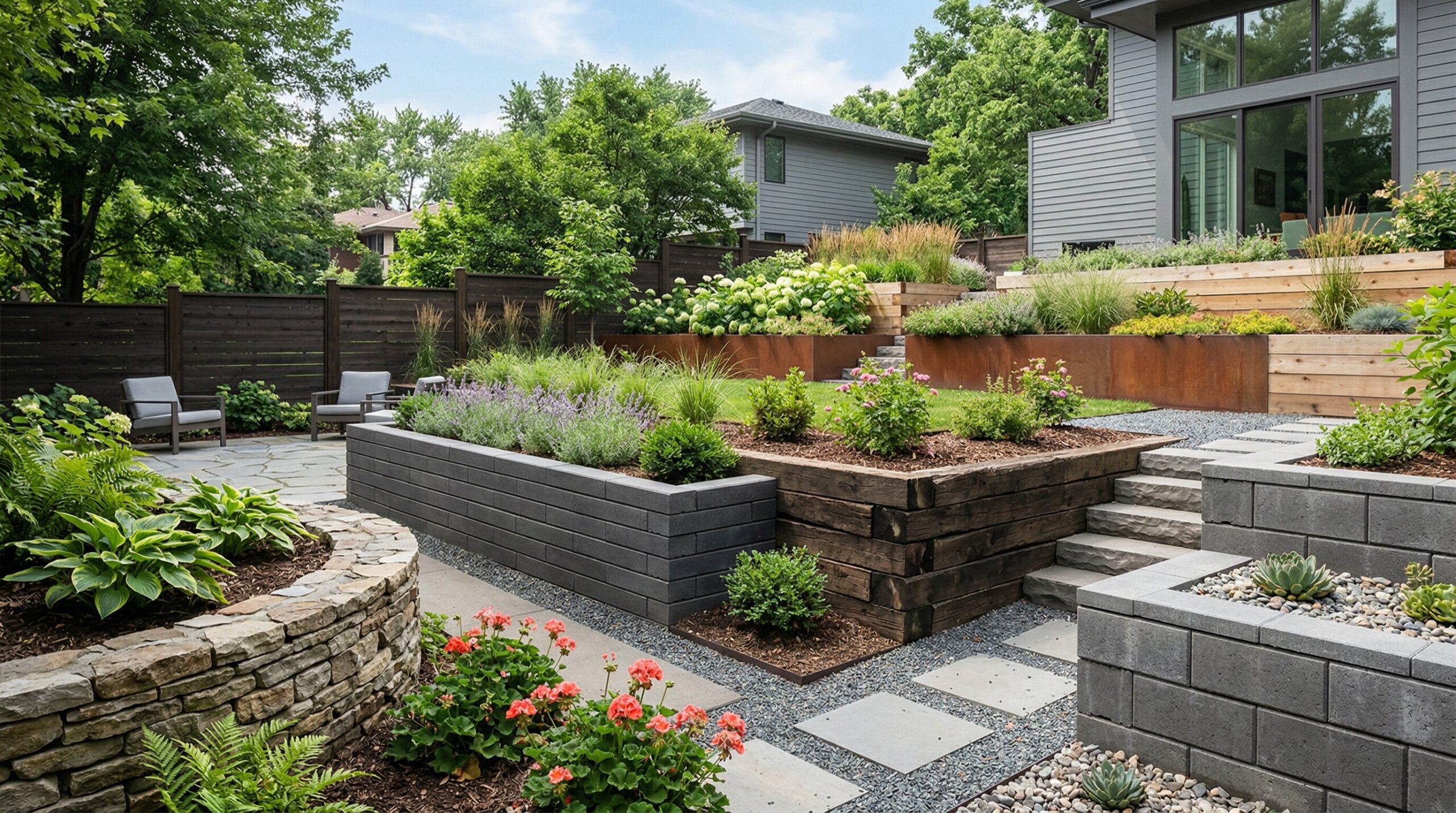
Backyard renovations often carry the reputation of being notoriously expensive, yet a small retaining wall doesn’t necessarily need to exhaust a household budget. These structures serve a dual purpose: providing essential erosion control while simultaneously boosting the aesthetic appeal of a landscape.
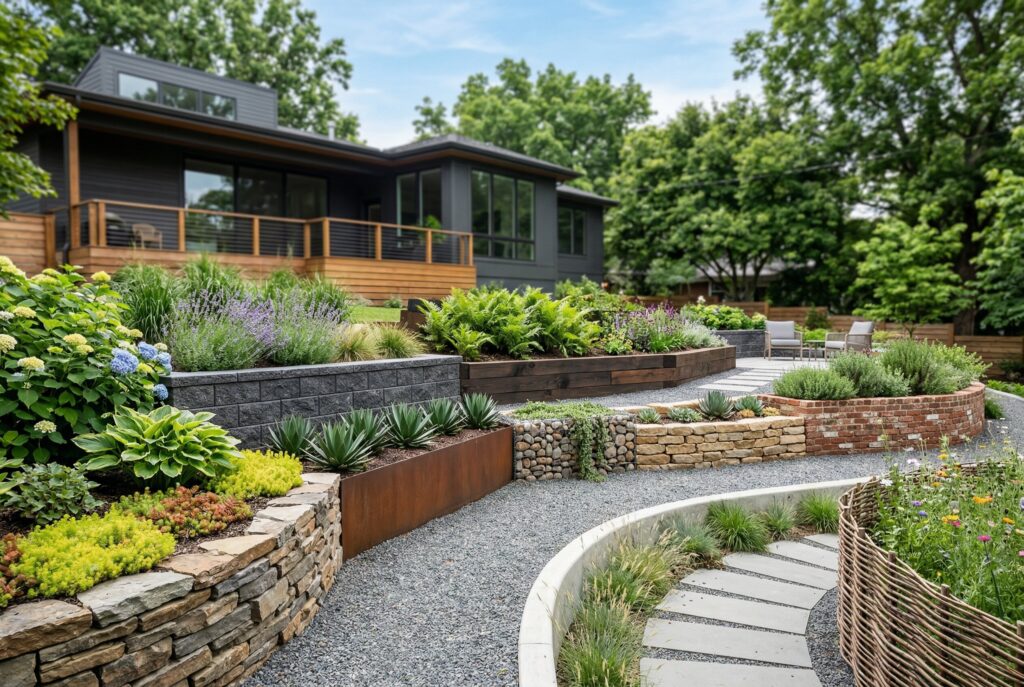
Whether the goal is to define a flower bed or stabilize a minor incline, identifying small retaining wall ideas and cheap retaining wall ideas early in the planning phase can lead to significant savings. It’s entirely possible to achieve professional results using affordable materials and DIY techniques that don’t require high-end contractor fees.
The Golden Rules of Building a Cheap Small Retaining Wall
Constructing a durable structure on a budget requires a focus on foundational principles to avoid costly repairs later. The cheapest retaining wall isn’t just about the initial price of the stone; it’s the one that stays standing for decades.
- Prioritize the foundation: A solid start involves digging a trench that is at least 200mm deep and 300mm wide.
- Master the mix: For the base, a 6:1 ballast-to-cement concrete mix provides the necessary stability. When laying the actual materials, a 4:1 mortar mix is the standard for long-term durability.
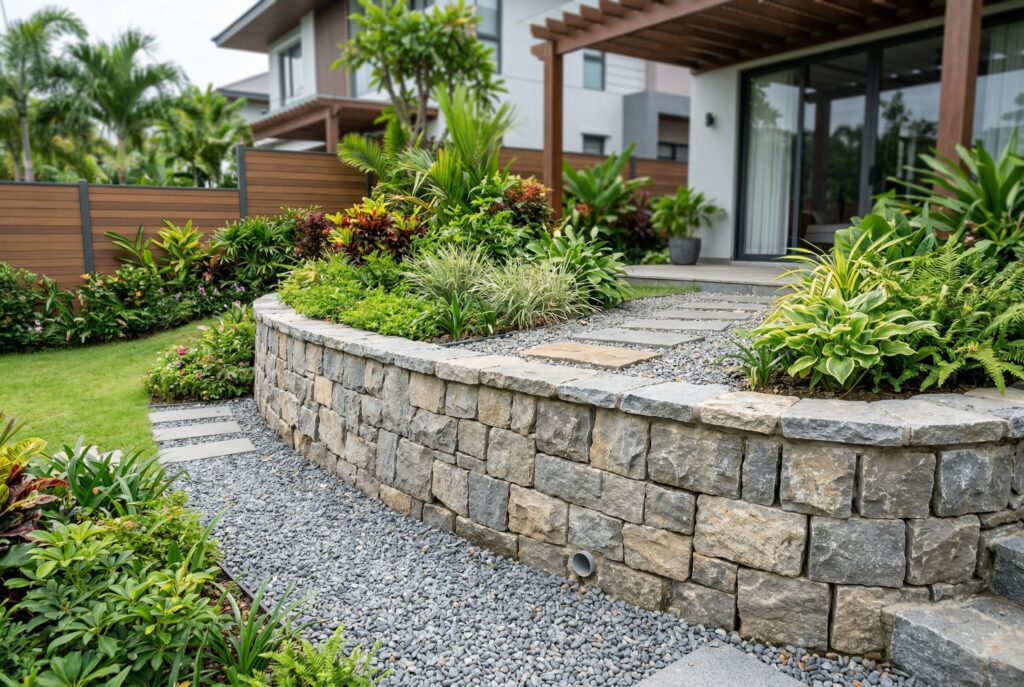
- Manage water pressure: Water is the primary cause of wall failure, so integrating retaining wall drainage is non-negotiable. Using crushed rock for backfill and installing weep holes allows moisture to escape rather than pushing against the structure.
- Leveling is key: Success in retaining wall construction depends on the first row being perfectly level. Even a minor tilt in the base layer creates significant structural issues as the wall grows taller.
9 Inexpensive & Small Retaining Wall Ideas for Every Budget
Selecting the right materials involves balancing cost, effort, and the desired look of the outdoor space. These nine ideas fit into three distinct categories based on the needs of the builder.
Natural Rock Retaining Wall Ideas
For those with access to rocky land, a natural stone retaining wall can potentially cost nothing in terms of materials.
1. Fieldstone borders
Using stones found directly on your property creates a look that blends seamlessly with the environment. Since these stones are often irregular in shape and size, the result is a charming, rustic border that feels like it has always been part of the landscape.
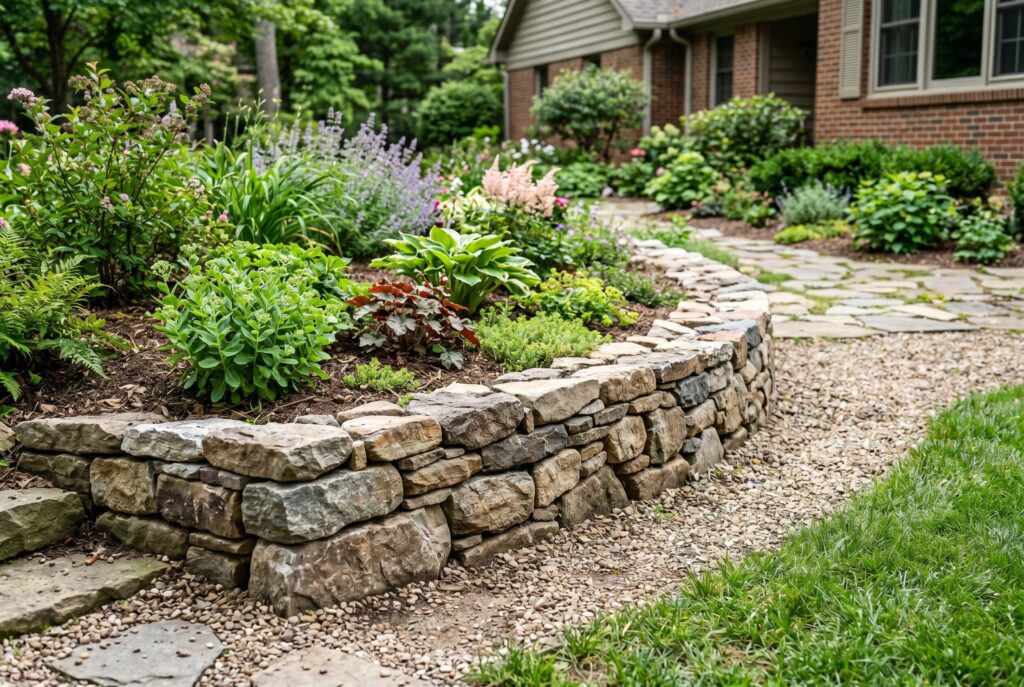
The key to success here is sorting your stones by size before you start. Use the largest, flattest rocks for the base layer to provide a stable foundation, then stack the smaller ones on top. It is a slow, meditative process that turns “debris” into a functional design element.
2. Dry-Set stone walls
A rock retaining wall built without mortar relies on gravity and clever stacking. This method allows for natural drainage through the gaps, which is essential for preventing water pressure from building up behind the wall.
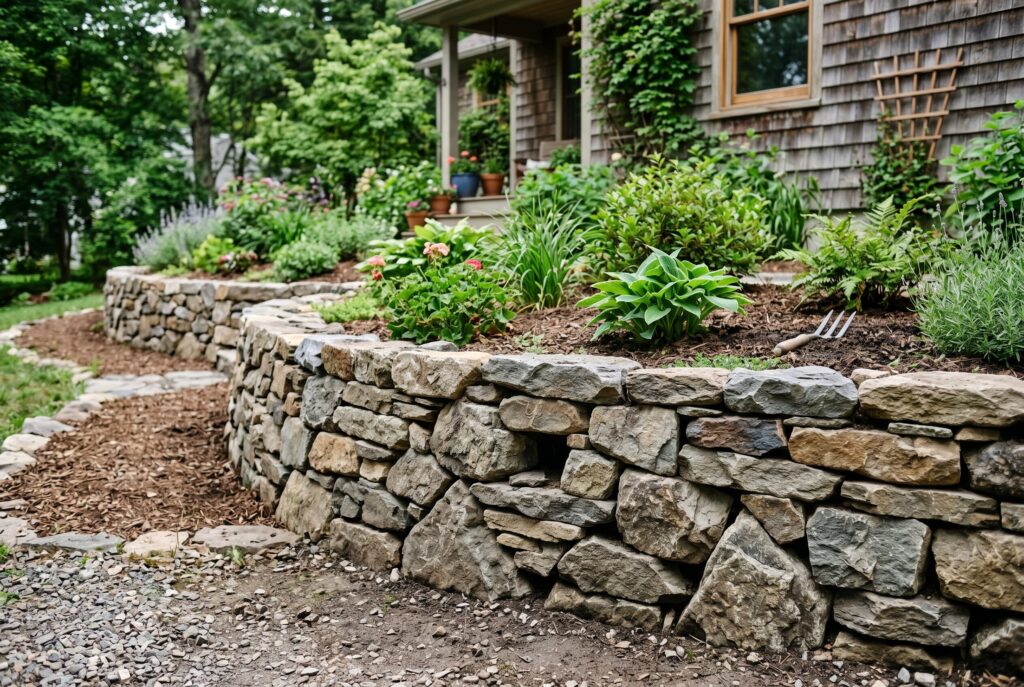
When you build a dry-set wall, you should slightly “batter” the stones, meaning you tilt the face of the wall back toward the hill as you go higher. This structural lean ensures that the weight of the earth helps hold the stones in place rather than pushing them over.
3. Flagstone tiers
Thin, flat stones work well for low-profile garden borders that prioritize a clean and classic appearance. Because flagstones are naturally consistent in thickness, they’re much easier to stack than rounded fieldstones.
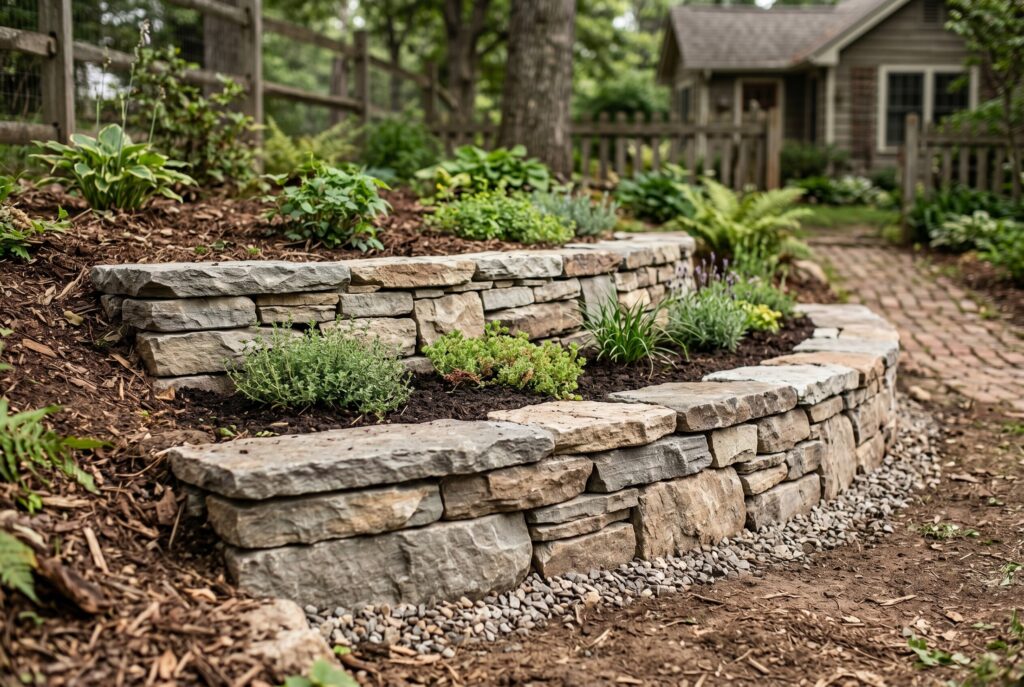
You can create beautiful, multi-tiered garden beds by layering these stones just a few inches high. This approach is perfect for highlighting specific flower beds or creating a crisp edge along a patio without the need for heavy machinery or deep excavation.
Interlocking Retaining Wall Blocks
Often considered the most beginner-friendly option, interlocking retaining wall blocks provide a “build in a day” solution for those new to masonry.
4. Standard wedge blocks
These retaining wall blocks feature a rear lip that automatically creates the necessary setback as layers are added. This built-in design takes the guesswork out of the engineering.
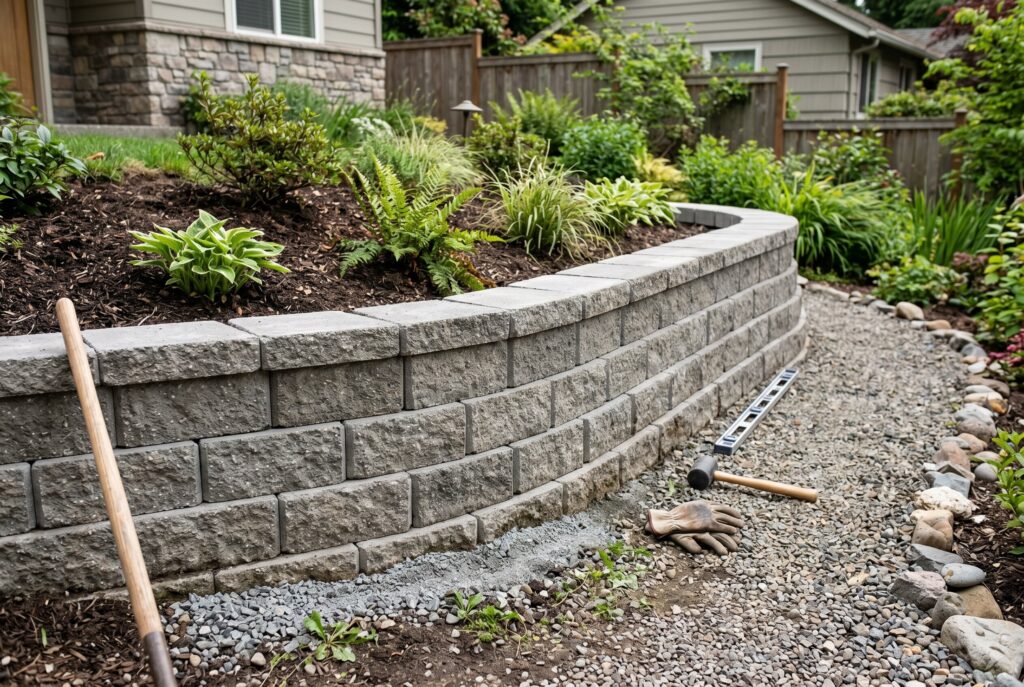
As you stack them, each row sits slightly further back than the one below it, which naturally resists the pressure of the soil. They’re widely available at most home improvement stores and come in a variety of earthy tones to match your home’s exterior.
5. Cinder block foundations
Using basic concrete blocks is incredibly cost-effective, especially when finished with a decorative cap or stone veneer. While raw cinder blocks might look a bit industrial, they’re incredibly strong.
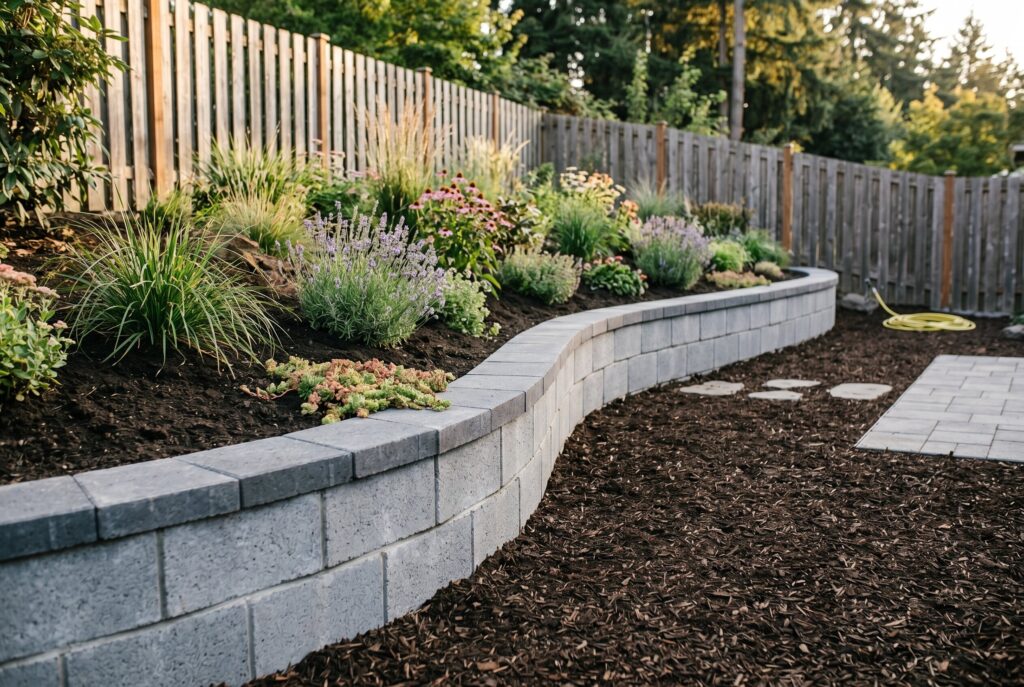
You can fill the hollow cores with gravel for added weight and drainage. To elevate the look, many homeowners apply a layer of stucco or thin stone “flats” to the front. This gives you the strength of a commercial wall at a fraction of the cost of solid stone.
6. Textured garden walling
Modern garden walling blocks come in various colors and finishes, often mimicking the look of expensive tumbled stone. These blocks are manufactured to look weathered and organic, but they retain the uniform dimensions that make installation fast and easy.
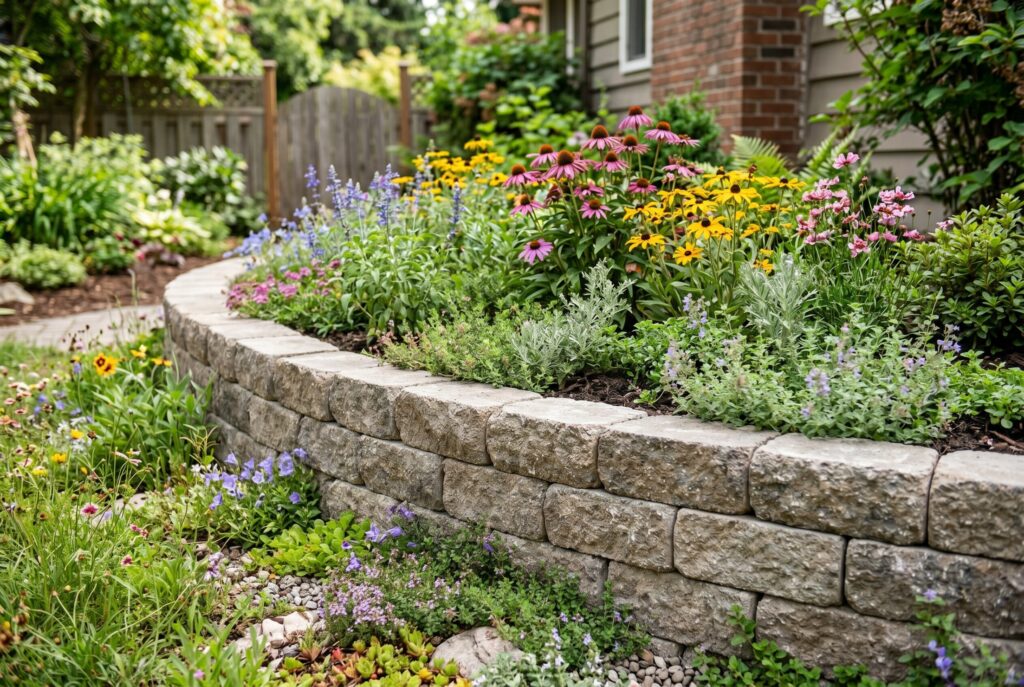
They’re a great middle-ground for someone who wants the high-end look of a hand-carved stone wall but prefers the “lego-like” simplicity of manufactured concrete products.
Timber & Reclaimed Wood Walls
Timber offers a rustic, organic beauty that complements traditional gardens.
7. Pressure-Treated 4x4s
These are easy to cut and stack, making them ideal for straight lines and modern geometric designs. Because the wood is treated to resist rot and insects, these walls can last for a decade or more if maintained properly.
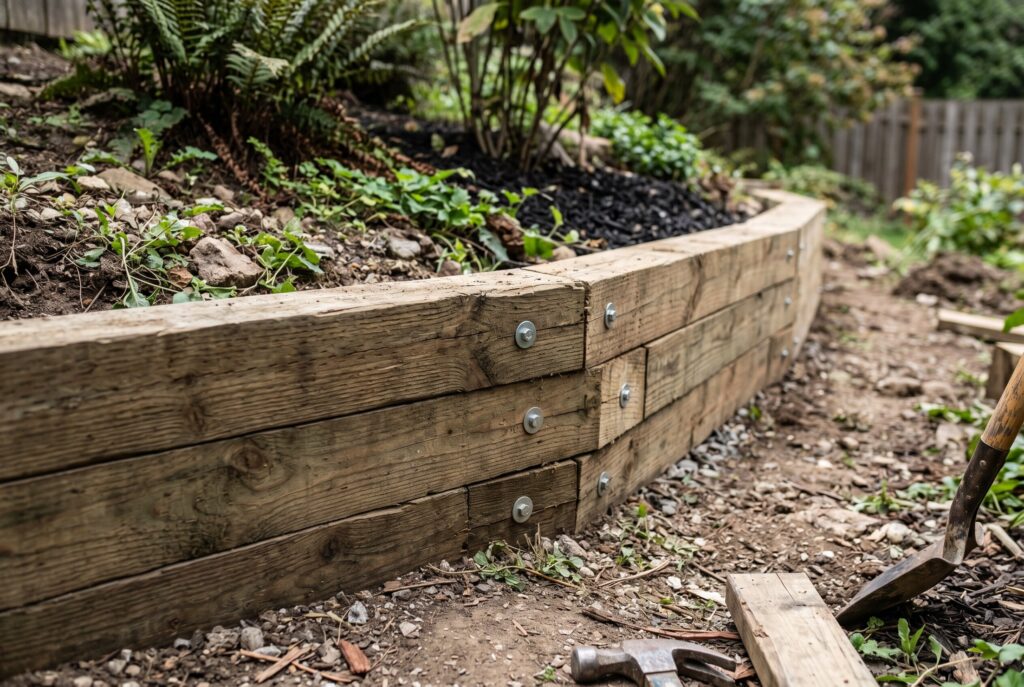
They’re particularly useful for creating sharp, 90-degree corners in contemporary landscaping. To keep them secure, you can drill through the layers and drive long “rebar” spikes into the ground to prevent the wood from shifting over time.
8. Reclaimed railway ties
Using salvaged wood provides a rugged, heavy-duty look that is perfect for larger garden beds. These ties are incredibly dense and heavy, which means they stay put once they’re laid down.
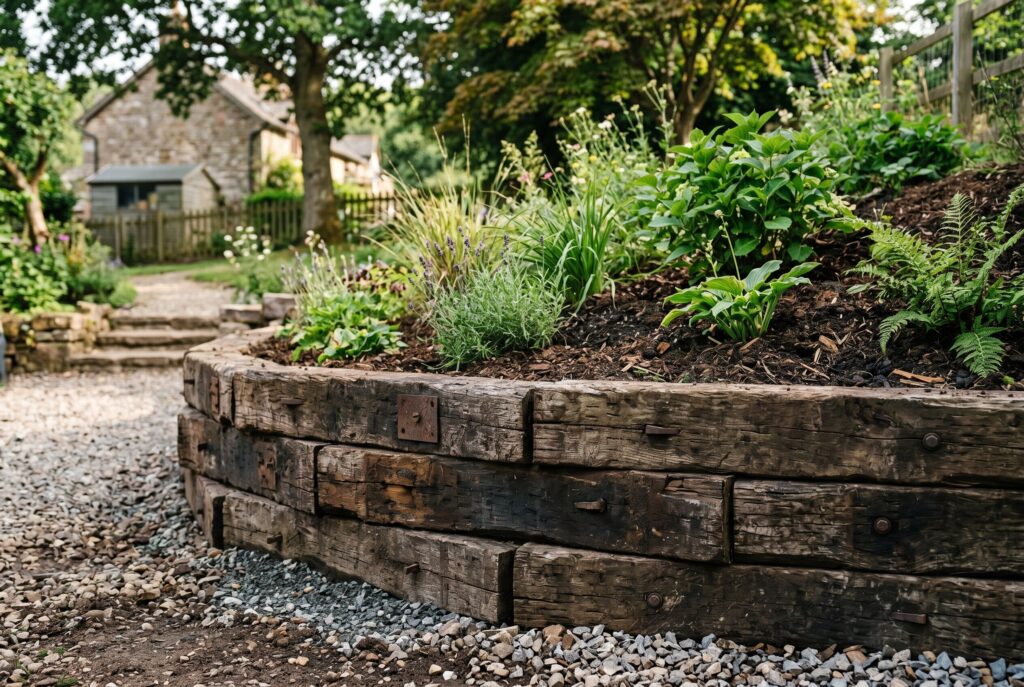
They bring a sense of history and character to a backyard that new lumber simply cannot match. Just be sure to wear heavy gloves when handling them, as they’re often treated with preservatives that make them very durable but also quite messy to move.
9. Vertical timber posts
Setting wood posts vertically at varying heights creates a unique, palisade-style wall that handles curves exceptionally well. Unlike horizontal beams, vertical posts can be placed in a trench to follow the exact contour of a winding garden path.
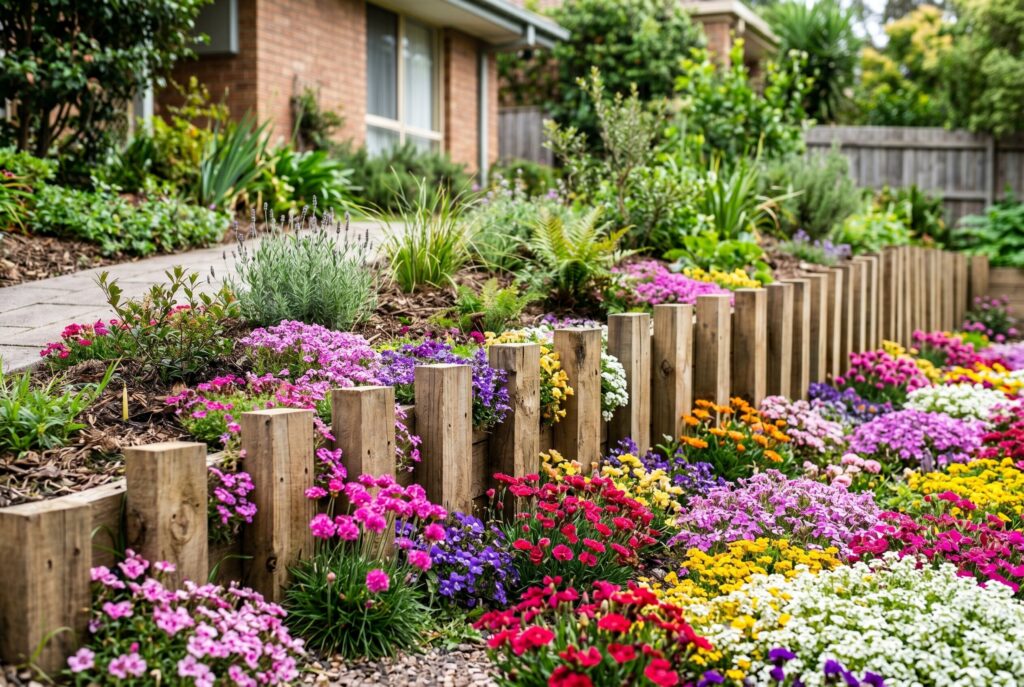
By staggering the heights of the posts, you create a visual “wave” effect that adds movement and artistic flair to your yard. This is an excellent solution for steep sections where a standard straight wall would look too rigid.
Solutions for Tough Terrain: Retaining Wall Ideas for Sloped Backyard
Handling a steep incline requires a strategic approach to prevent soil movement and water runoff. Instead of building one massive, expensive barrier, the most effective retaining wall ideas for sloped backyard often involve “tiering” the land.
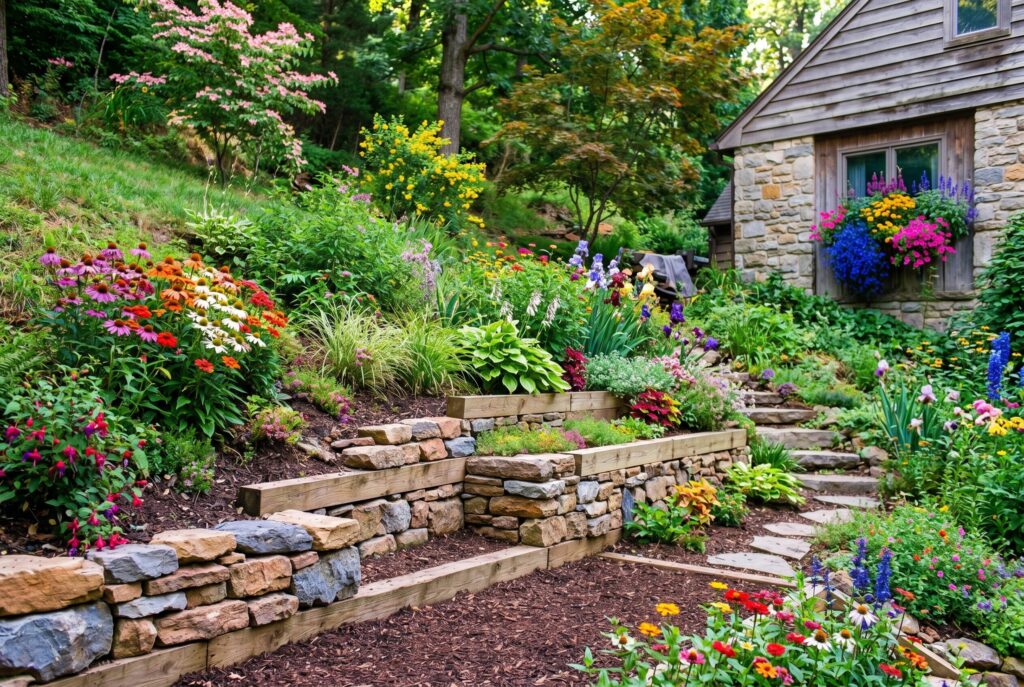
By creating a series of smaller “steps,” the pressure from the earth is distributed across multiple structures. This method is much safer for a DIY project because it keeps each individual wall at a manageable height.
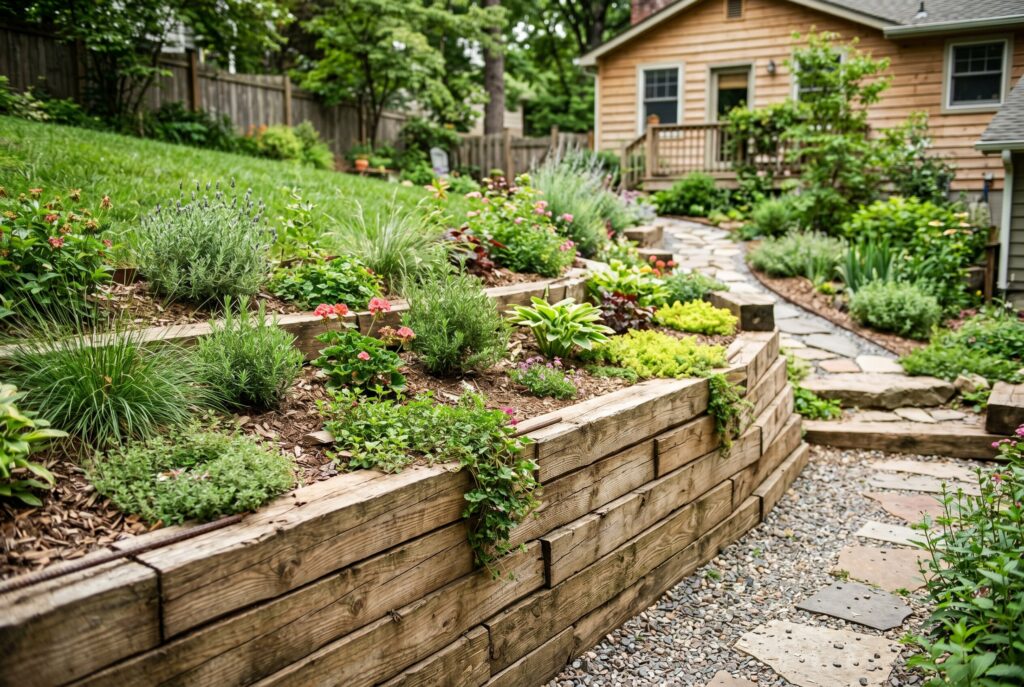
Learning how to build a retaining wall on a slope involves carefully measuring the “rise and run” of the hill to ensure each tier has enough space for proper drainage and planting. This “staircase” effect not only saves money on heavy engineering but also creates more usable flat ground for gardening or seating.
Essential Math: Calculating Your Materials to Save Money
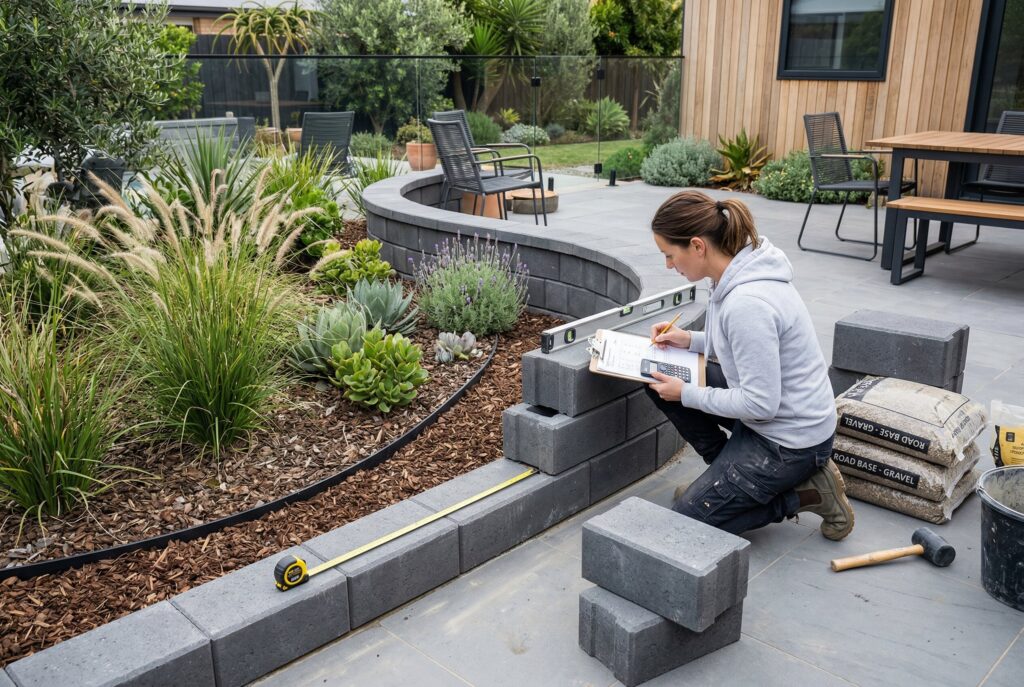
Precision in the planning phase prevents the waste of both time and money. Buying exactly what’s needed no more and no less is a hallmark of a budget-conscious project. To determine the necessary depth for the foundation trench, the following formula is a reliable guide:
Depth = Block Height x Rows +Cap Height + Base Depth
It’s also vital to account for the soil type. Projects in heavy clay might require a deeper gravel base for drainage compared to those in sandy soil. Calculating the total linear footage and multiplying it by the number of desired rows ensures the correct number of retaining wall stones arrives in a single delivery, avoiding extra shipping fees.
Smart Integration: Elevating Cheap Walls with Technology
Modern landscaping trends emphasize the integration of functional technology to increase a home’s value. These landscaping features can make a budget wall look like a high-end architectural element.
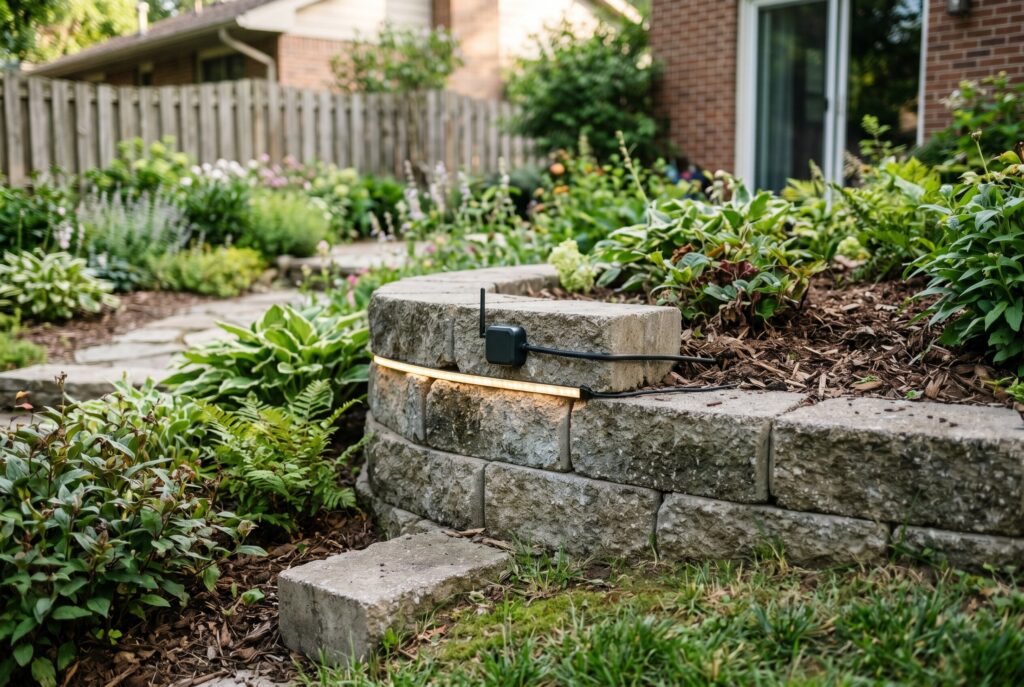
- Solar lighting: Adding solar-powered LED strips under the coping stones or within the structure provides safety and ambiance without the need for complex electrical wiring.
- Smart irrigation: Hiding automated drip lines behind the wall allows for outdoor space maximization by keeping tiered plants healthy with minimal effort.
- Permeable materials: Using eco-friendly, permeable backing or “living wall” blocks that allow plants to grow directly in the structure is a growing trend for 2024-2026.
Budgeting Your Project: DIY vs. Professional Installation
Deciding whether to take the DIY route or hire a professional usually comes down to the height and complexity of the project.
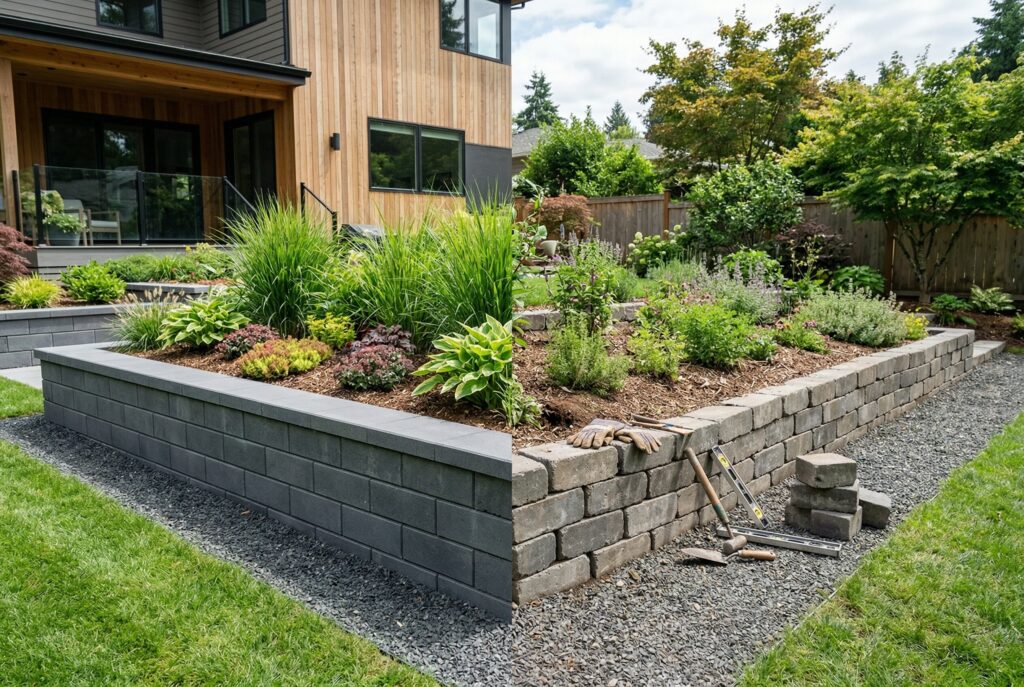
- When to save: A homeowner can save significant costs by performing the manual labor for walls under 3 feet (approximately 90cm). This involves personal digging, leveling, and stacking.
- When to splurge: It’s crucial to hire a professional if a wall exceeds 3 feet, as these structures often require structural engineering and local permits to ensure safety.
- Hidden costs: Don’t forget to check for underground utility lines before digging. In the U.S., calling 811 is a mandatory safety step that prevents hitting gas or water lines.
Turning Inspiration into a Solid Reality
Transforming an outdoor area doesn’t require a massive investment when the right materials and techniques are used. By focusing on retaining wall stones that fit the budget and following a logical construction process, anyone can create a lasting landscape feature.
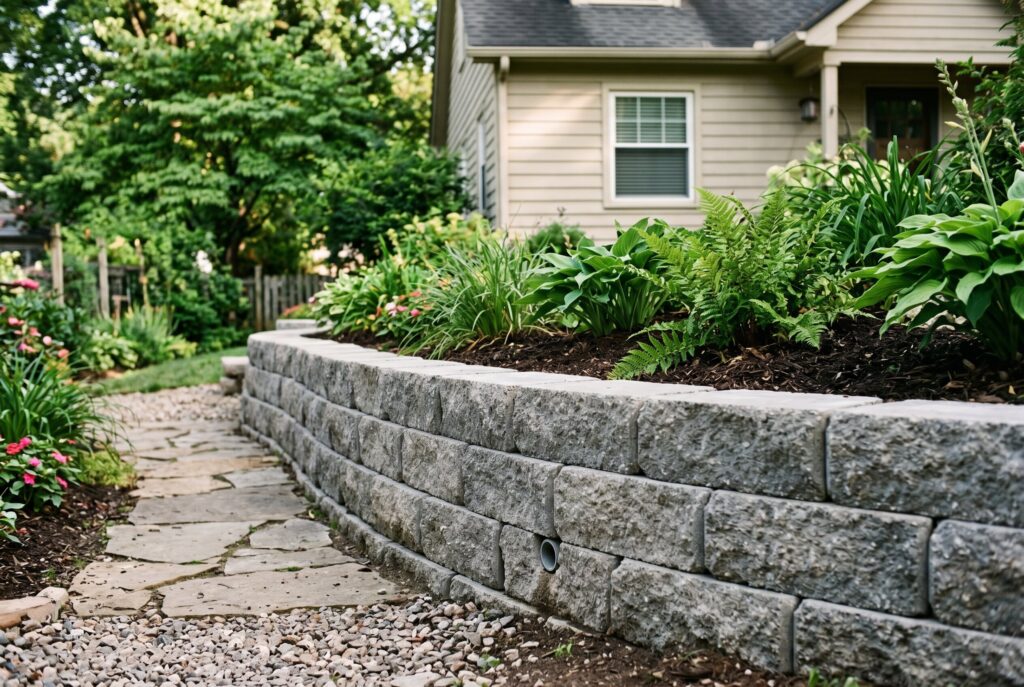
The keys to success are a solid foundation, proper drainage, and accurate mathematical planning. For those ready to begin, a “Shopping List & Cheat Sheet” is an excellent tool to keep the project on track and under budget.
Related Articles
- The Ultimate Guide to Retaining Wall Ideas: Cost, Types & DIY Tips
- Top 5 Inexpensive Cheap Retaining Wall Ideas (With Cost Breakdown)