

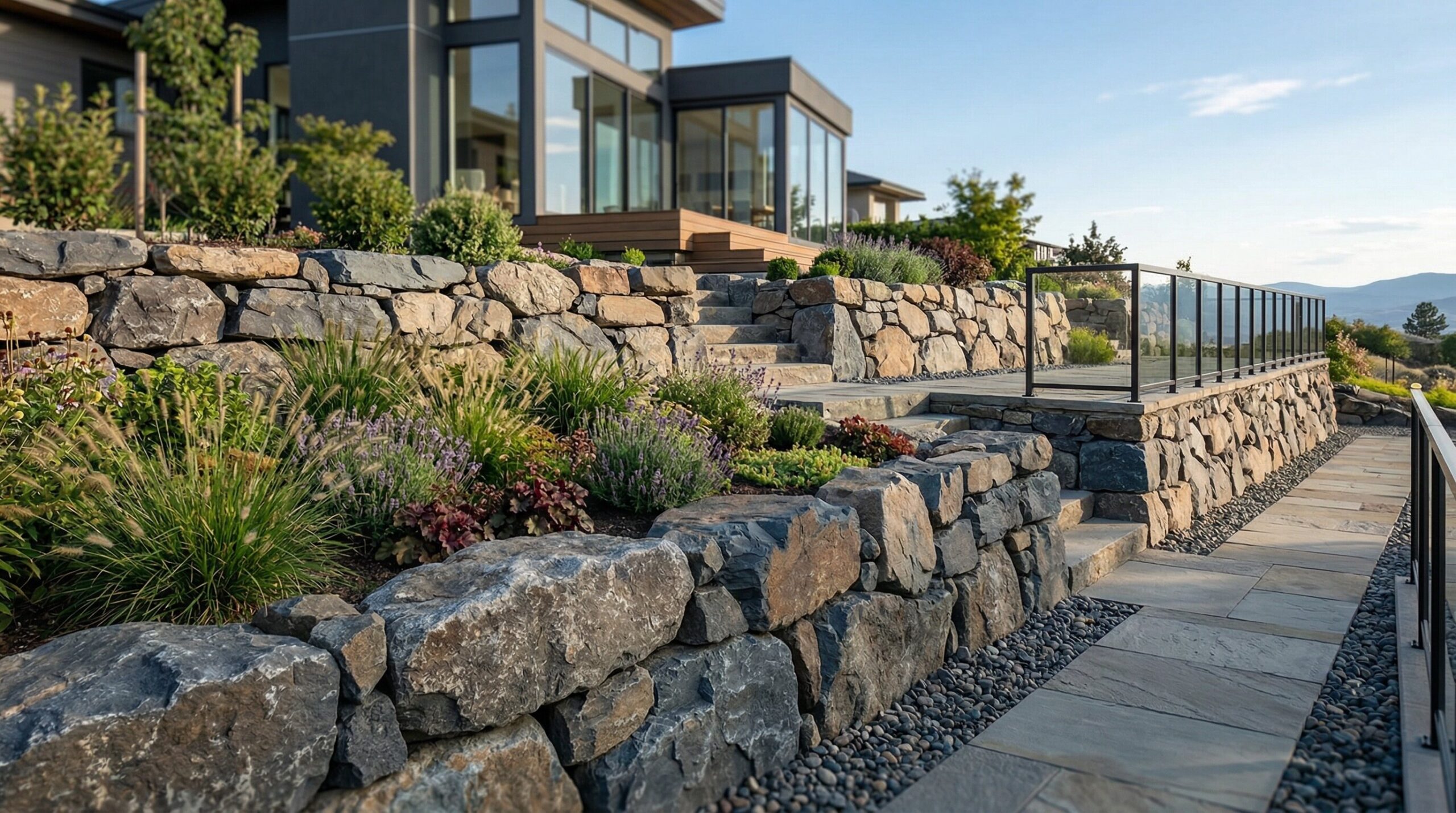
A sloped backyard often feels like a missed opportunity. Whether it’s a steep hill causing runoff issues or a cramped corner that defies traditional landscaping, the challenge is significant.
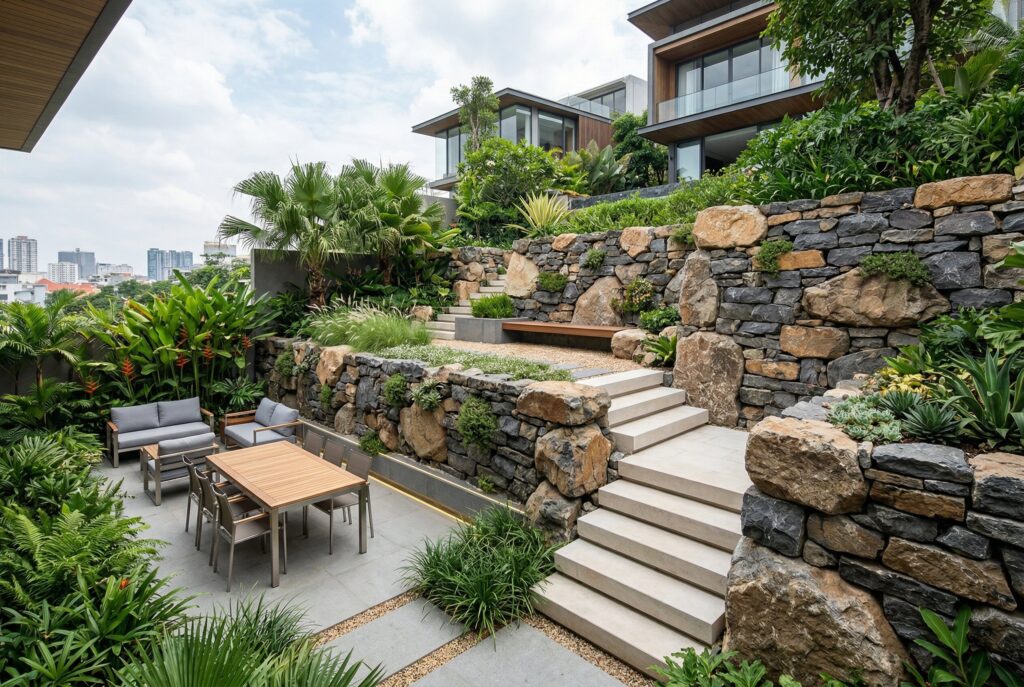
However, a well-placed natural stone retaining wall can transform an awkward incline into the garden’s primary anchor. In landscape architecture, the concept of the “vista” is essential: it’s the visual destination a person sees immediately upon entering a garden space. A thoughtfully designed wall doesn’t just hold back soil; it creates a structured, permanent focal point that elevates the entire property’s value.
15 Inspiring Natural Stone Retaining Wall Ideas
When homeowners explore natural rock retaining wall ideas, the goal is typically to find a style that complements the home’s architecture while solving structural problems. These 15 concepts range from rustic and wild to polished and modern.
1. Rustic Fieldstone Stack
This approach utilizes imperfect natural fieldstone to achieve a timeless, organic appearance. It is a staple in cottagecore or xeriscaping designs because the stones look like they have existed in the landscape for centuries.
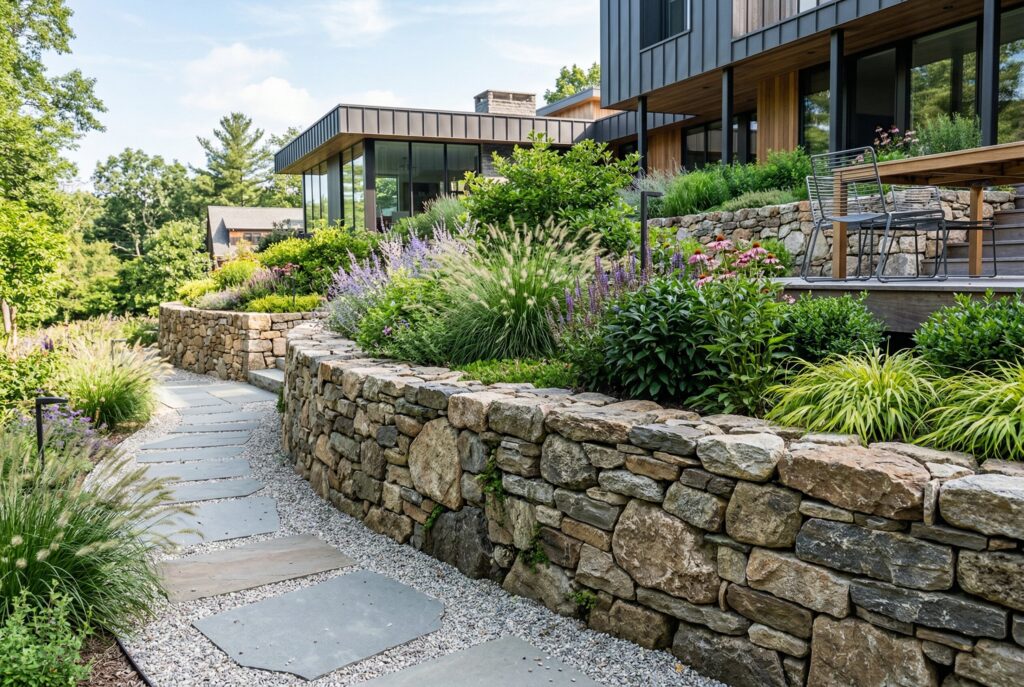
By using stones of various shapes and sizes found right on the land, you create a wall that feels deeply connected to its environment. These walls are often built using a dry-stack method, which allows for natural drainage and gives the structure a sturdy, chunky silhouette that complements wilder garden styles.
2. Large Granite Boulder Barrier
For those dealing with massive slope stabilization, granite boulders provide a rugged and high-impact boundary. The sheer weight of these stones makes them an effective choice for a wild look that naturally resists movement.
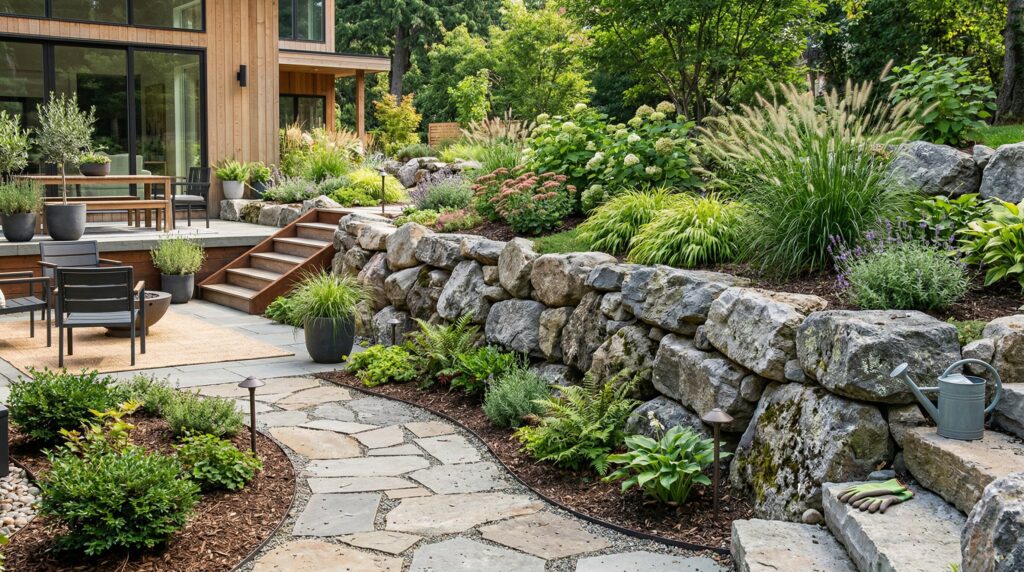
Because of their scale, these boulders often require heavy machinery for placement, but the result is a permanent structure that can withstand significant soil pressure. Over time, moss and lichen often colonize the granite, further softening the edges and helping the barrier blend into a woodland or mountainous backdrop.
3. Elegant Layered Flagstone
Flagstones offer a clean and horizontal aesthetic that is hard to beat for a polished finish. The flat surfaces stack neatly on top of one another, creating a sophisticated look that fits modern or formal landscape designs perfectly.
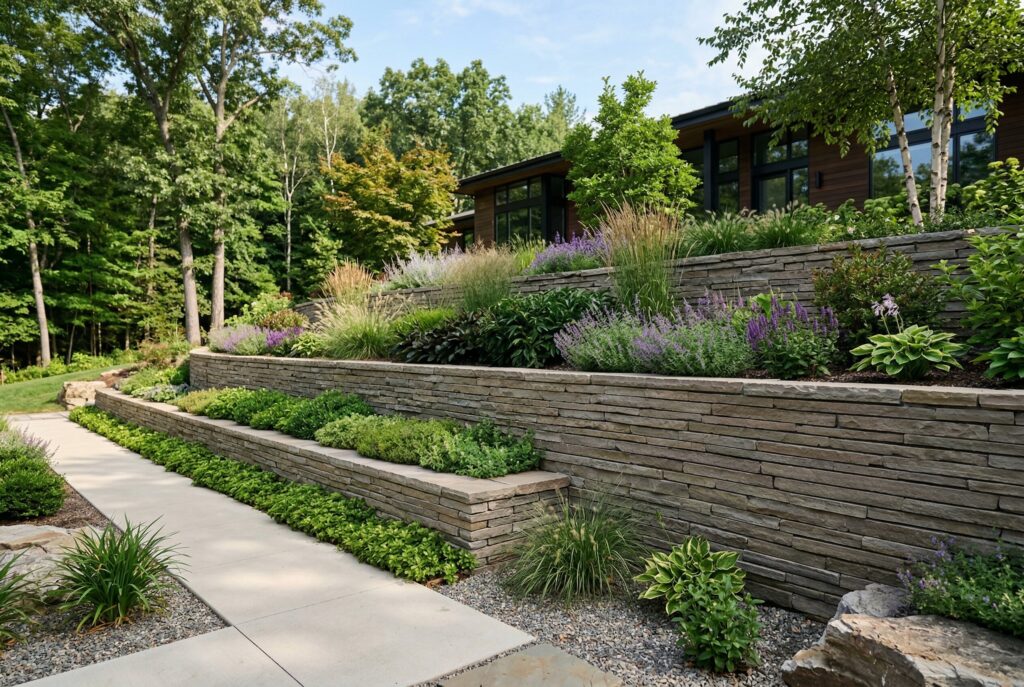
Because the stones are relatively uniform in thickness, you can achieve a very level top surface that looks intentional and architectural. Using shades of slate or bluestone can add a cool, contemporary vibe to a backyard patio or a formal entryway.
4. Terraced Garden Beds
This is among the most effective retaining wall ideas for sloped backyard projects. By breaking a steep incline into multiple manageable levels, homeowners can create distinct floors for varied planting and easier garden maintenance.
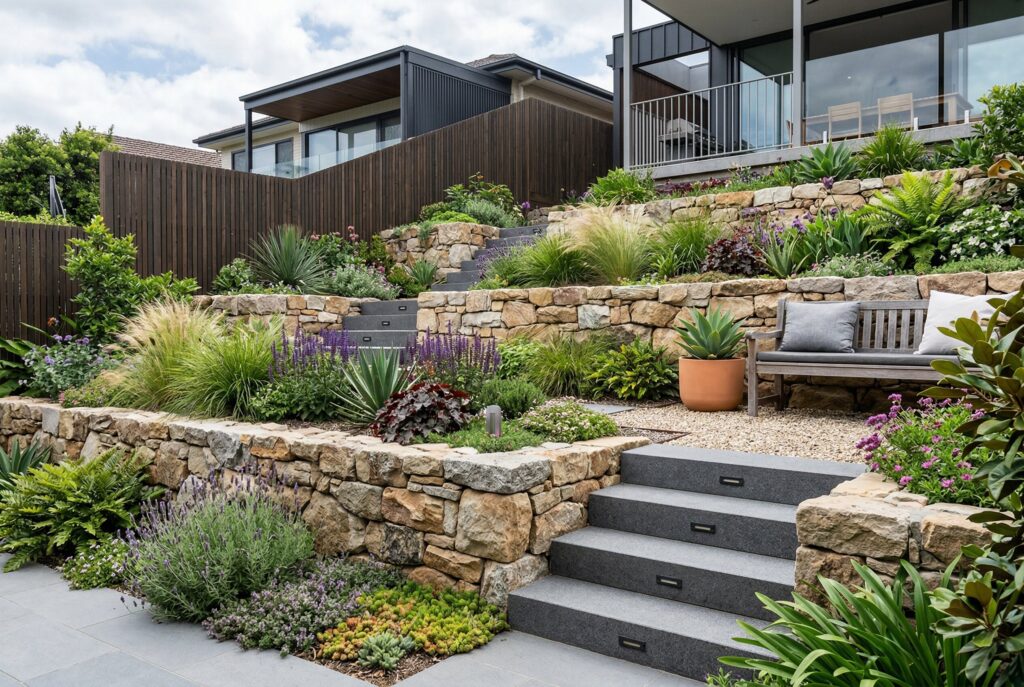
This method solves the problem of soil erosion while providing a beautiful staircase effect for the eyes. You can dedicate one level to a kitchen herb garden and the next to flowering perennials, making a previously unusable hill the focal point of the entire yard.
5. Integrated Bench Seating
Functionality meets design when a wall is built at chair height, which is roughly 18 inches. This provides built-in seating for fire pits or patios without the need for extra furniture.
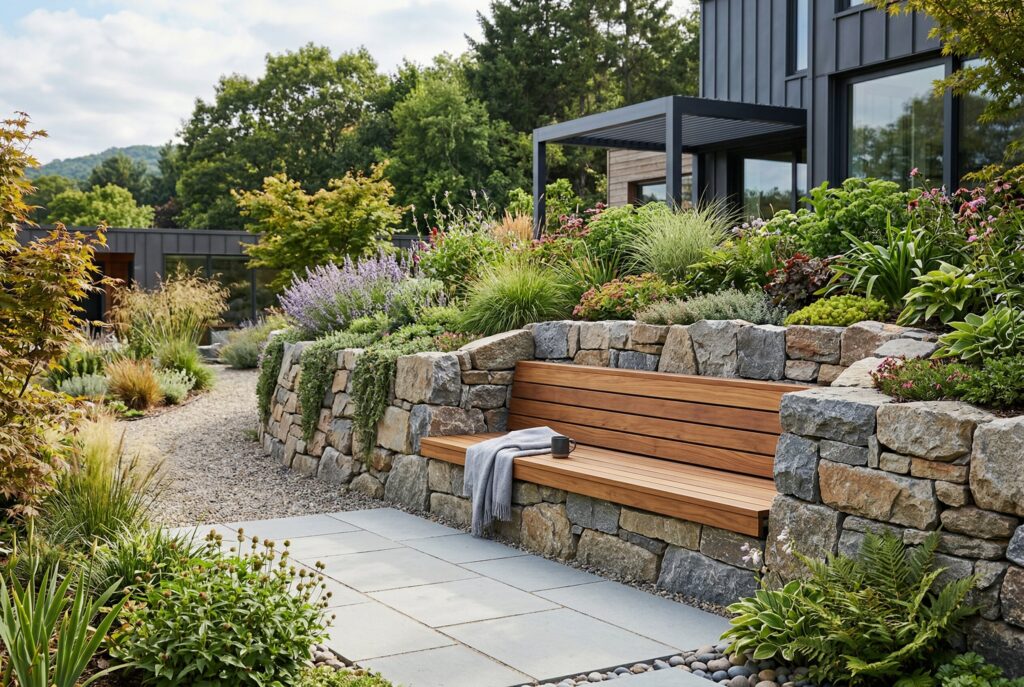
To make this comfortable, it is best to use smooth, flat capstones on the top layer so people can sit without catching their clothes on rough edges. This dual-purpose design is excellent for small yards where every square foot counts, as it defines the space while providing a place for guests to gather.
6. Dry-Stack Living Wall
Leaving intentional gaps between stones allows for the growth of creeping plants such as sedum, thyme, or alpine phlox. This biophilic design trend integrates the structure directly into the ecosystem, as the plants help soften the stone’s appearance over time.
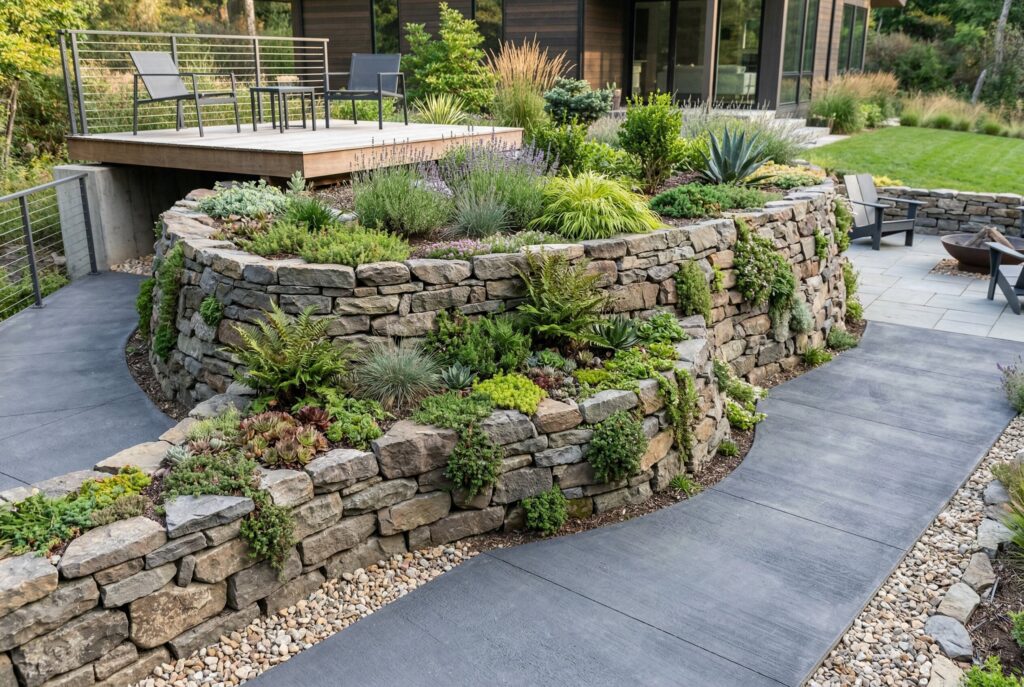
As the roots grow into the crevices, they actually help to bind the soil behind the wall, adding a secondary layer of stability. It is a beautiful way to turn a hard masonry project into a breathing, flowering part of the garden.
7. Cascading Waterfall Feature
A water element can be built directly into the stone structure to add sensory appeal. This can mask urban noise such as traffic, turning a functional retaining wall design into a tranquil retreat.

By hiding a pump and reservoir behind the stone, you can create a spillway where water dances over the natural textures of the rock. This setup not only cools the air in the immediate area during the summer but also serves as a vital water source for local birds and pollinators.
8. Modern Geometric Limestone
Cut limestone provides a high-end and sophisticated style. It is a popular choice for homeowners who want the durability of natural stone with the crisp lines of modern architecture.
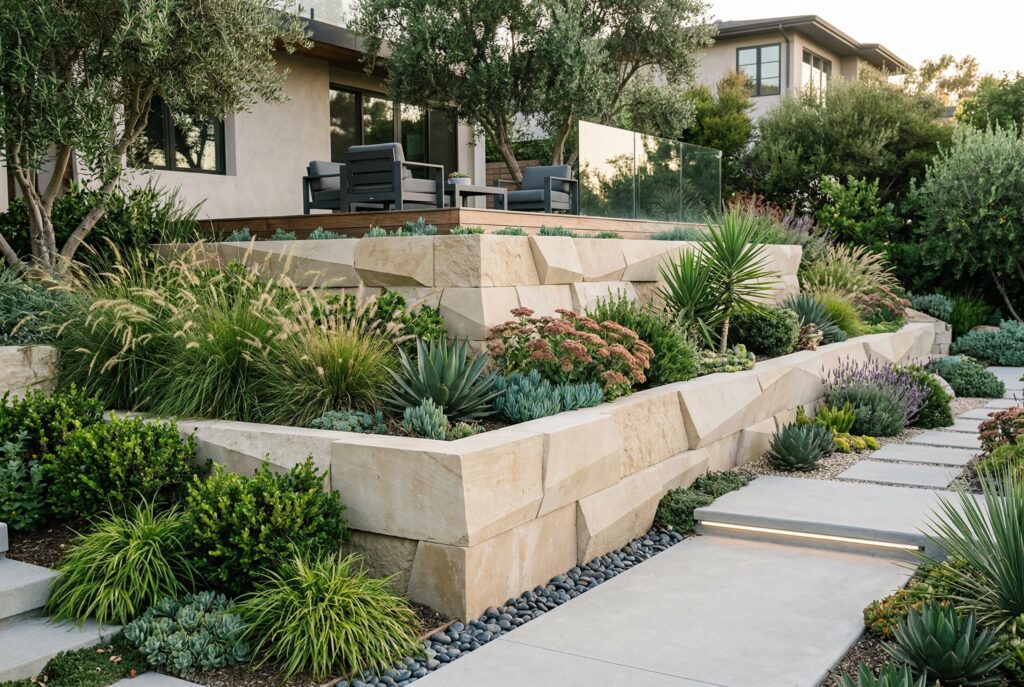
Unlike fieldstone, limestone is often sawn into precise rectangular blocks, allowing for tight joints and a very smooth face. The light, creamy color of limestone reflects sunlight beautifully, making a small patio feel much brighter and more expansive than darker stone varieties would.
9. Poolside Rock Borders
Natural rock creates a seamless transition between the water and the surrounding landscape. It avoids the industrial feel of concrete and helps a pool area feel like a natural oasis or a hidden swimming hole.
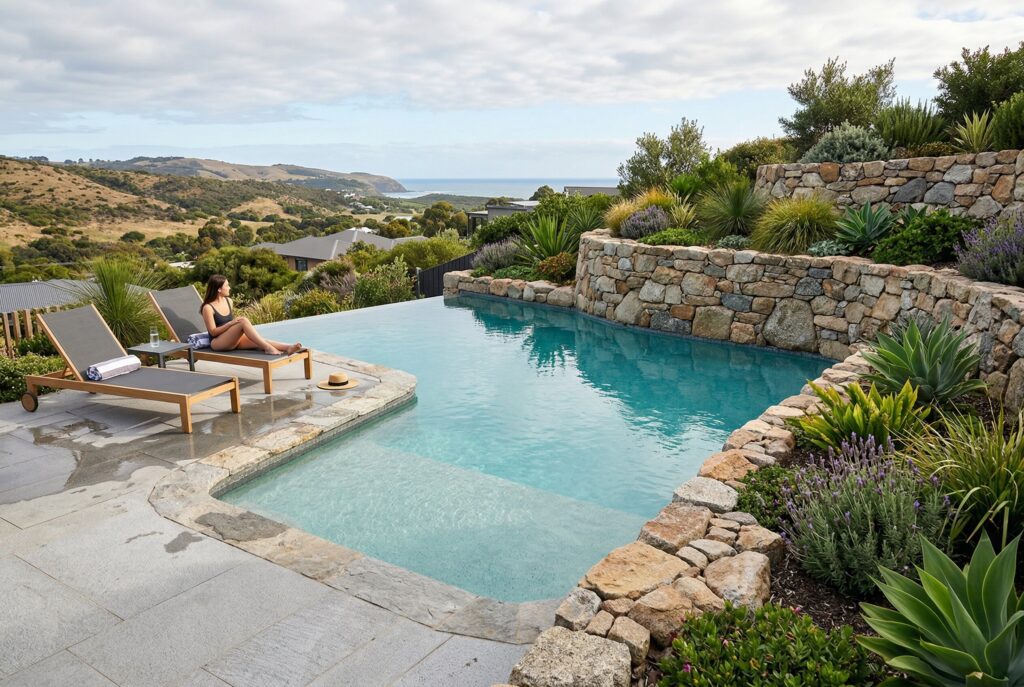
When choosing stone for a pool area, it is important to select non-slip varieties that can handle splashing and chlorine. These walls can also be used to cleverly hide pool filters and pumps, keeping the mechanical side of the pool out of sight while maintaining a beautiful aesthetic.
10. Low-Profile Garden Edging
Not every project requires a tall structure. Walls under one foot can define flower beds, improve curb appeal, and prevent mulch from washing onto pathways during heavy rain.
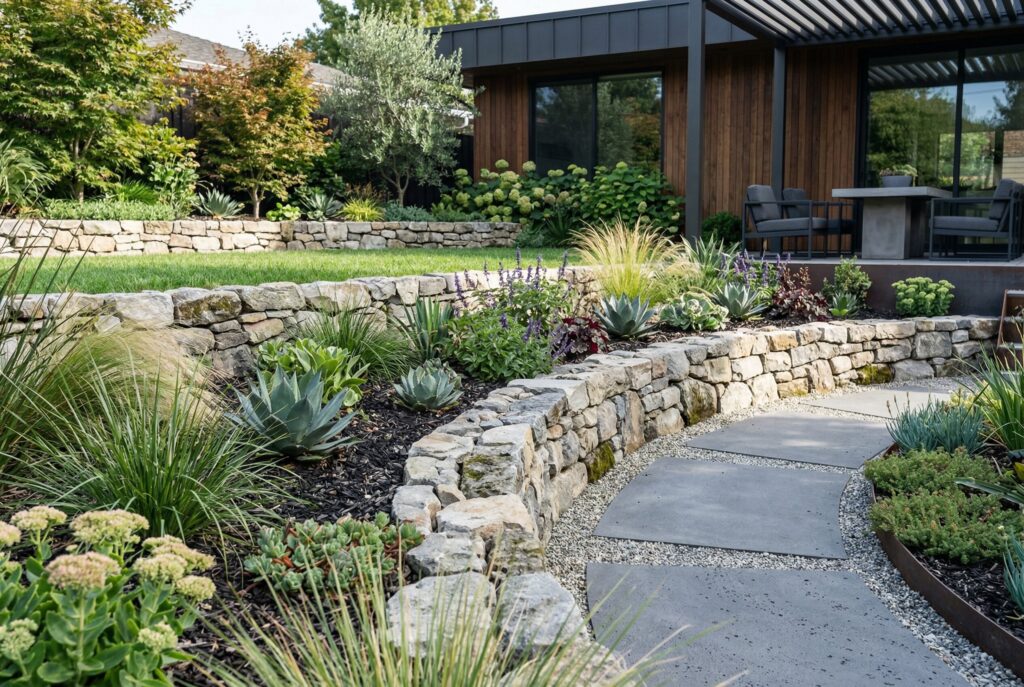
These mini walls provide a finished look to the front of a home and make lawn mowing easier by creating a clear boundary for the grass. Using smaller, tumbled stones for this purpose adds a touch of texture without overwhelming the delicate flowers planted just behind them.
11. Curved Snake Walls
To avoid rigid lines, smaller stones can be used to create flowing and undulating shapes. These curves mimic natural geological formations and can make a small yard feel much larger by leading the eye on a journey.
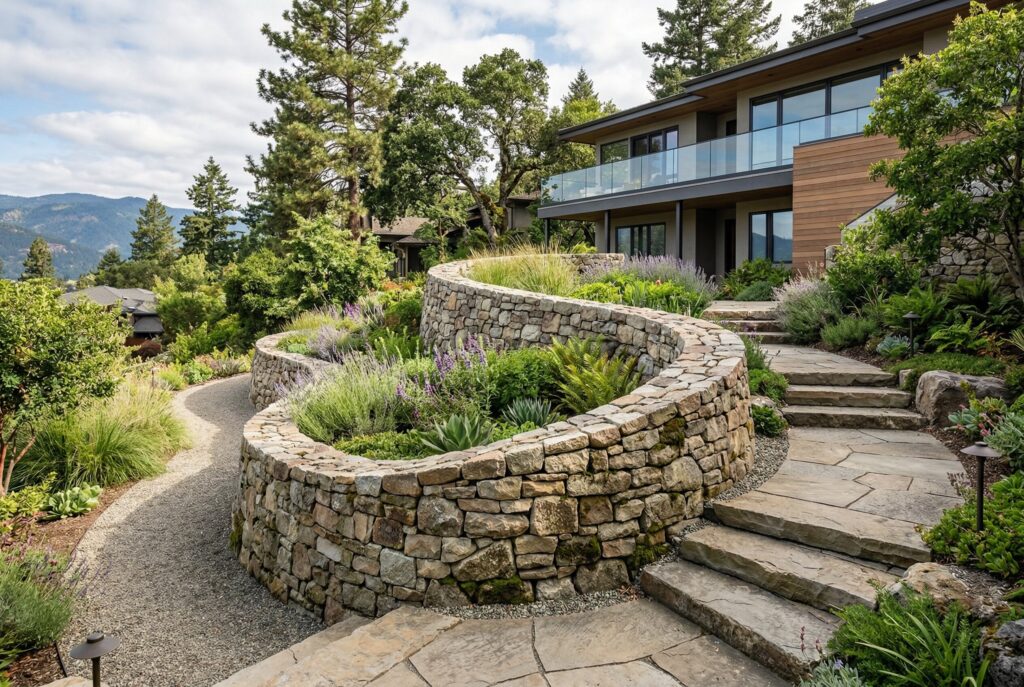
Building a curved wall requires a bit more patience and skill to ensure stability, but the visual payoff is a softer, more inviting landscape. It is an ideal way to wrap around a favorite tree or to follow the natural contours of a winding garden path.
12. Gabion Basket Industrial Look
Filling wire cages with local rocks offers a modern and permeable solution. It is an excellent choice for drainage-heavy areas and provides a unique industrial-chic texture to the garden. Because the rocks are contained within a steel mesh, you can use smaller stones that would otherwise be difficult to stack.
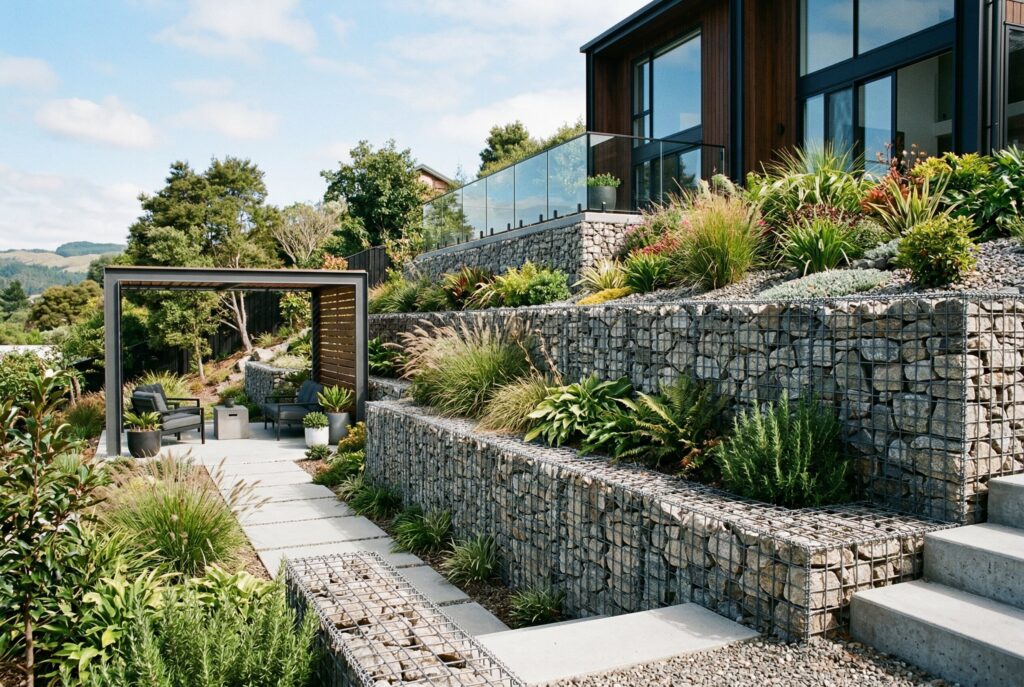
This style is incredibly durable and allows water to flow through the wall freely, which prevents the buildup of hydrostatic pressure that often causes solid walls to lean or crack.
13. Arched Stone Entrances
For a dramatic secret garden atmosphere, an archway can be incorporated into a taller section of the wall. This creates a sense of mystery and serves as a transition between different outdoor rooms.
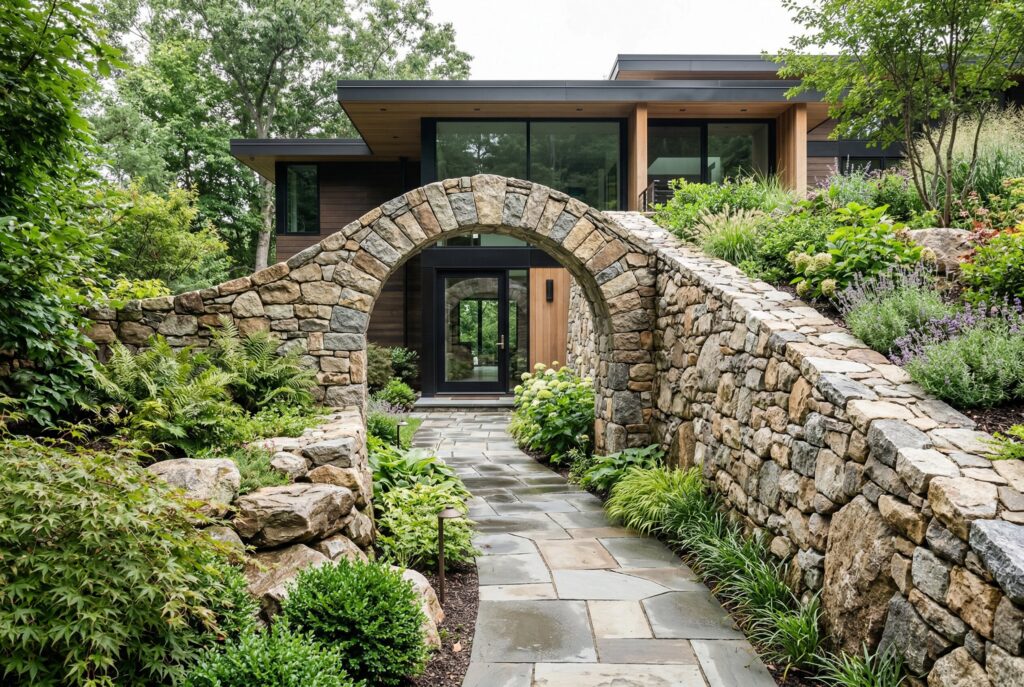
An arch requires careful masonry work and a sturdy temporary form during construction, but it becomes an architectural masterpiece once finished. It invites people to explore what lies on the other side, whether it is a vegetable garden, a hidden bench, or a wooded trail.
14. Integrated LED Step Lighting
Subtle LED strips embedded under capstones enhance nighttime safety and ambiance. It is a current trend that transforms the wall into a glowing feature after sunset while highlighting the natural textures of the stone.
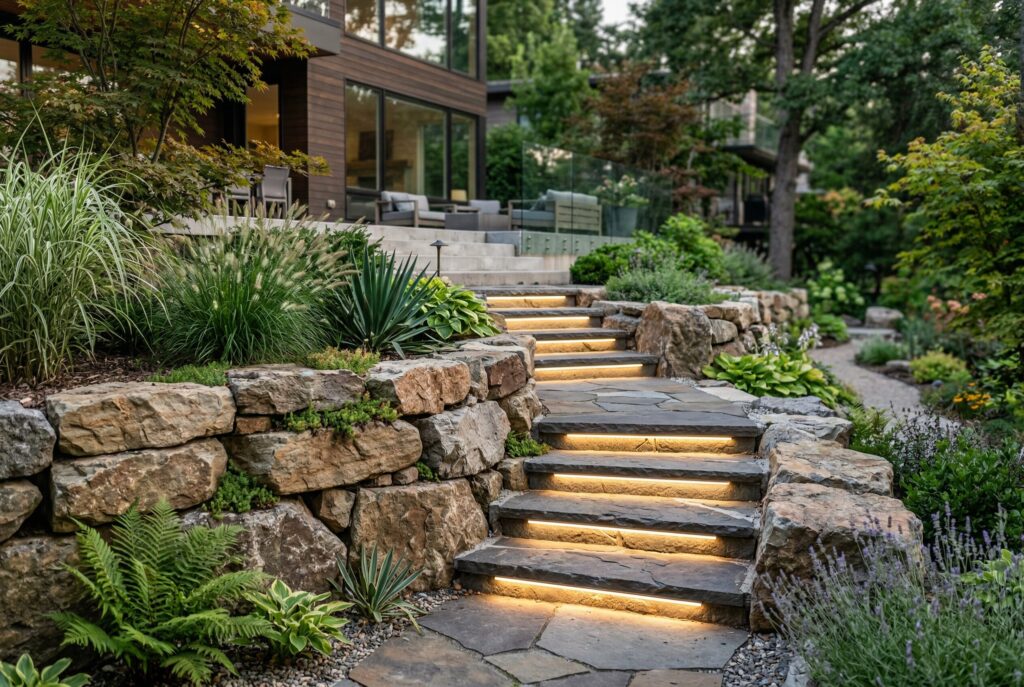
By placing the lights in the shadows of the overhanging capstones, you avoid glare and create a soft wash of light across the path. This is especially useful for terraced walls where there are steps, ensuring that guests can navigate the levels of the yard safely in the dark.
15. Outdoor Kitchen Backdrop
A stone wall can serve as the structural boundary for a grilling station or a stone-clad pizza oven. This anchors the kitchen space and provides a heat-resistant surface for cooking that is much safer than wood fencing.
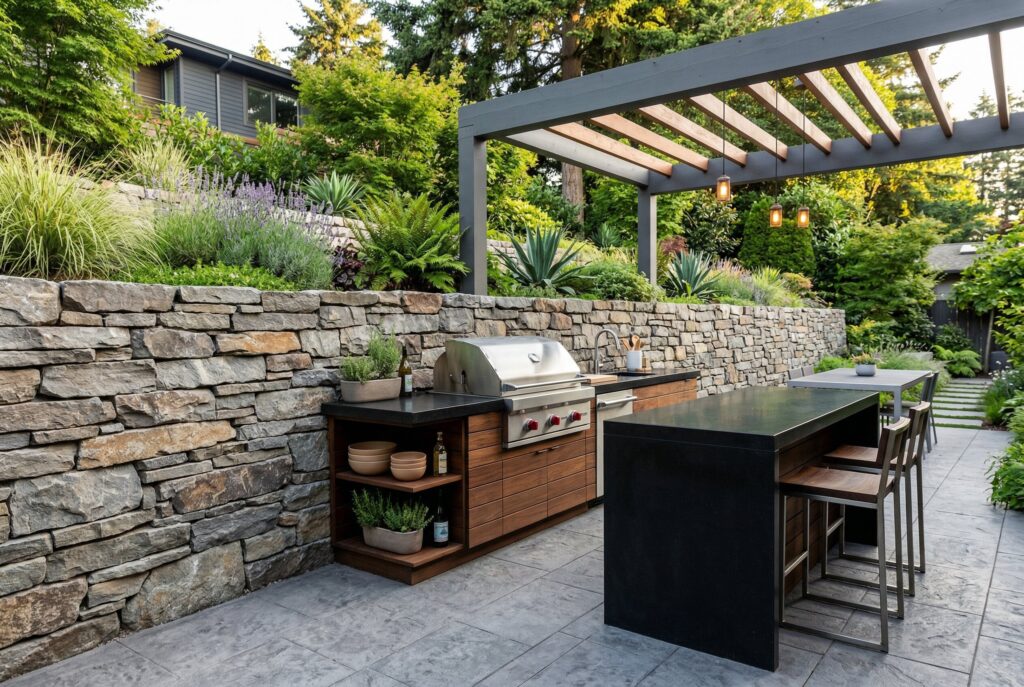
The wall can also include built-in niches for storing firewood or hooks for grilling tools. By using the same stone for the retaining wall and the kitchen island, you create a cohesive and luxurious outdoor living area that feels like a natural extension of the home.
Step-by-Step: How to Build a Dry-Stack Natural Stone Retaining Wall
Building a dry-stack natural stone retaining wall requires a focus on two forces: water and gravity. If these aren’t managed correctly, the wall will eventually lean or fail.
1. Foundation & Drainage Excellence
The process begins with digging a trench. This trench is then filled with several inches of compacted drainage gravel.
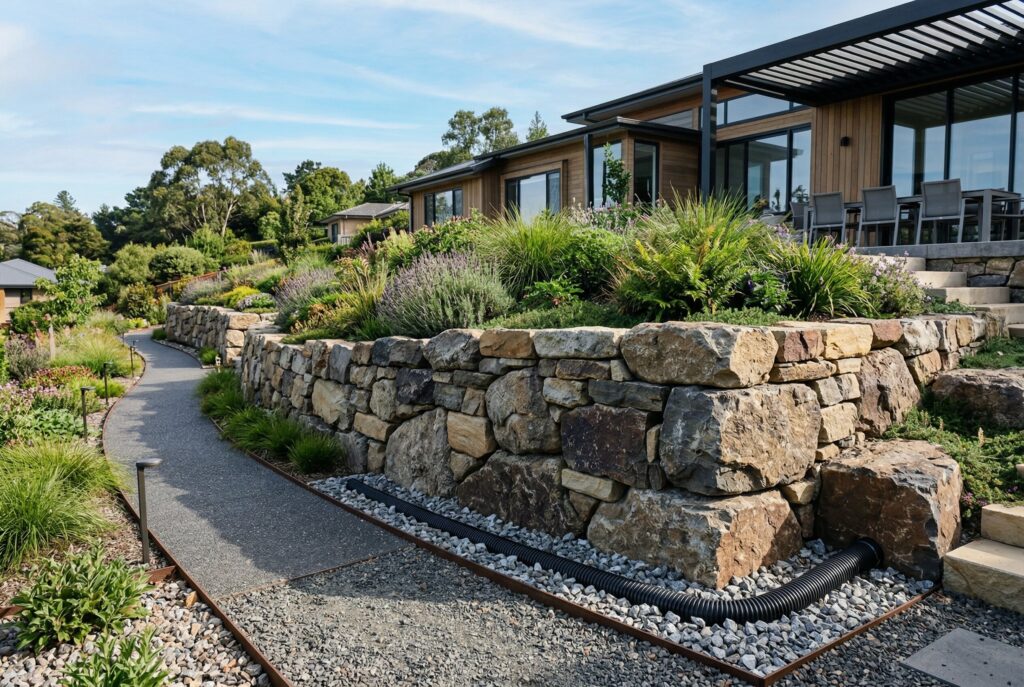
It’s a critical step because the gravel prevents hydrostatic pressure, which is the weight of trapped water, from pushing against the back of the stones.
2. The Dry-Stack Method & Batter
The dry-stack method relies on gravity rather than mortar. The secret to a stable wall is the “batter,” which refers to an inward lean toward the hill.
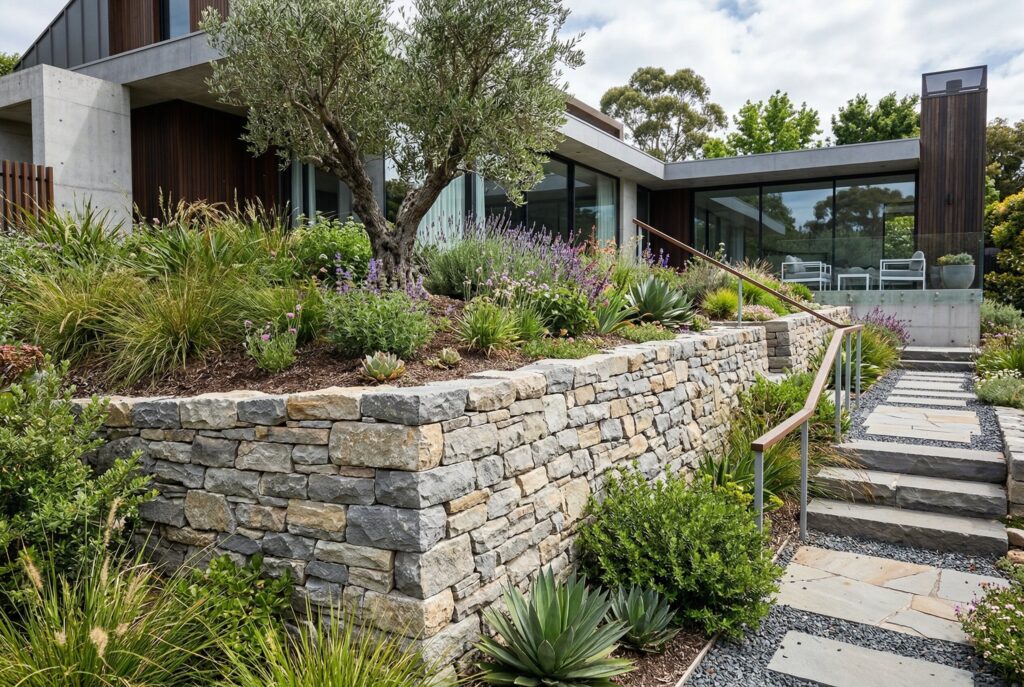
A standard ratio is a 1-inch lean for every foot of height. Additionally, “tie-back” stones should be placed every few feet: these are long stones that extend deep into the soil to anchor the wall to the hillside.
3. Material Selection
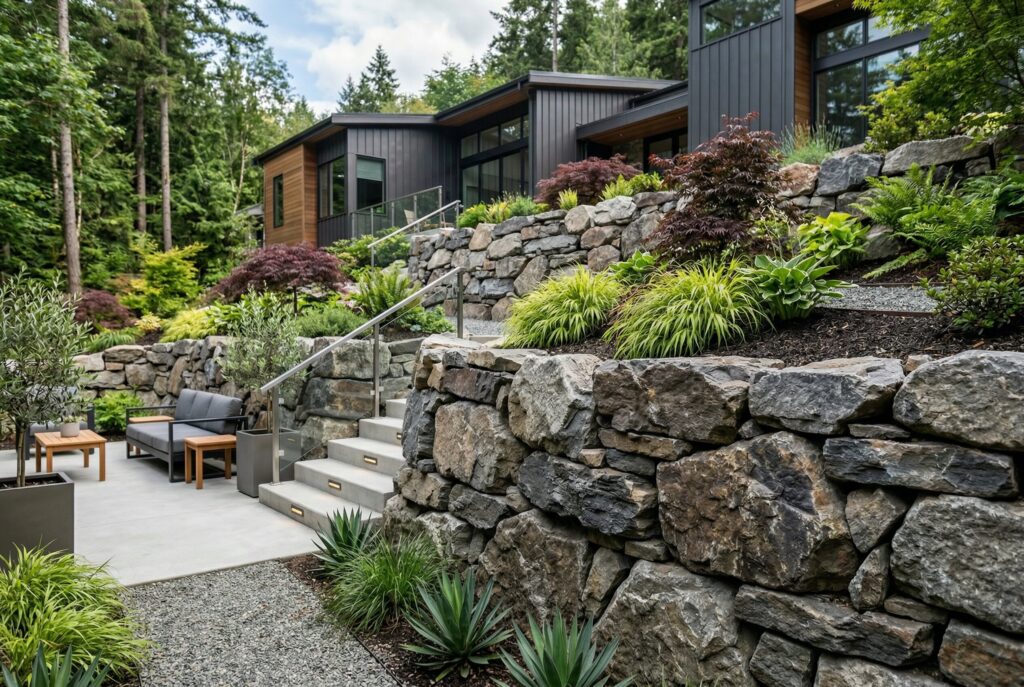
While manufactured retaining wall blocks are common, natural stones offer a more authentic aesthetic. Using local materials like fieldstone or limestone isn’t just budget-friendly; it also reduces the carbon footprint associated with transport.
>>> See more: How to Patch a Large Hole in Drywall (The California Patch Method)
Budgeting Your Layout: Save vs. Splurge
Finding budget-friendly retaining wall ideas doesn’t mean sacrificing quality. It’s about being strategic with material sourcing and project scope.
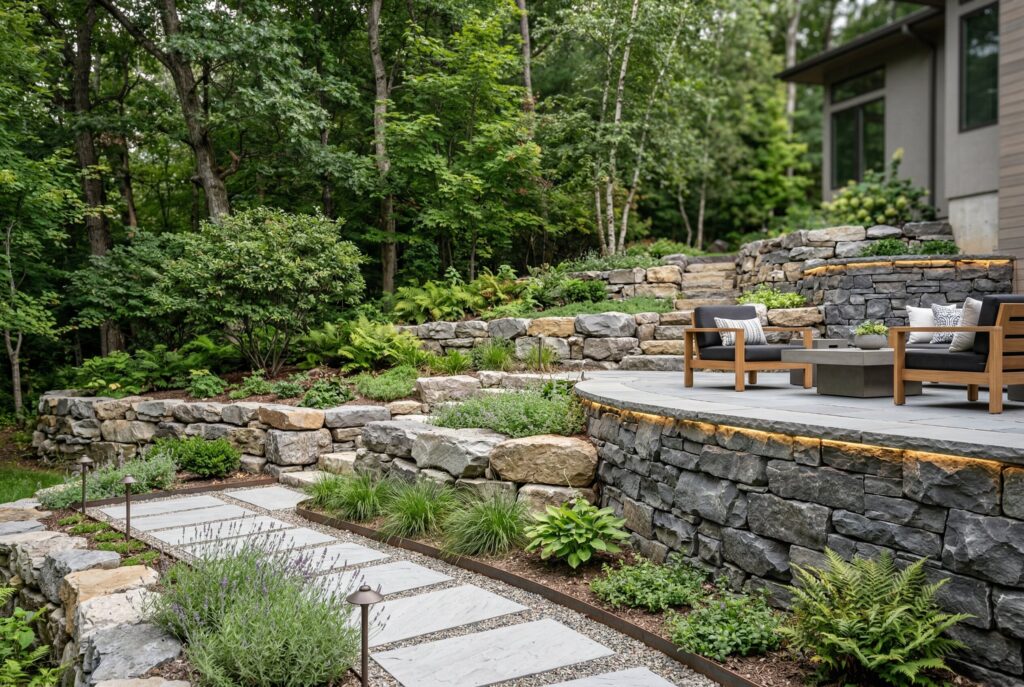
- Save: In many areas, keeping the wall under 3–4 feet means you won’t need a permit or a structural engineer, but rules vary, so check your local building code first. Using locally sourced fieldstone is often the most cost-effective way to get high-quality materials.
- Splurge: High-impact features like integrated lighting, heated stone seating, or professional water features can significantly increase the “wow” factor of a project.
Maintenance of the Natural Look
Natural stone is incredibly durable, but it isn’t entirely maintenance-free. Over time, moss or algae might develop, especially in shaded or damp areas.
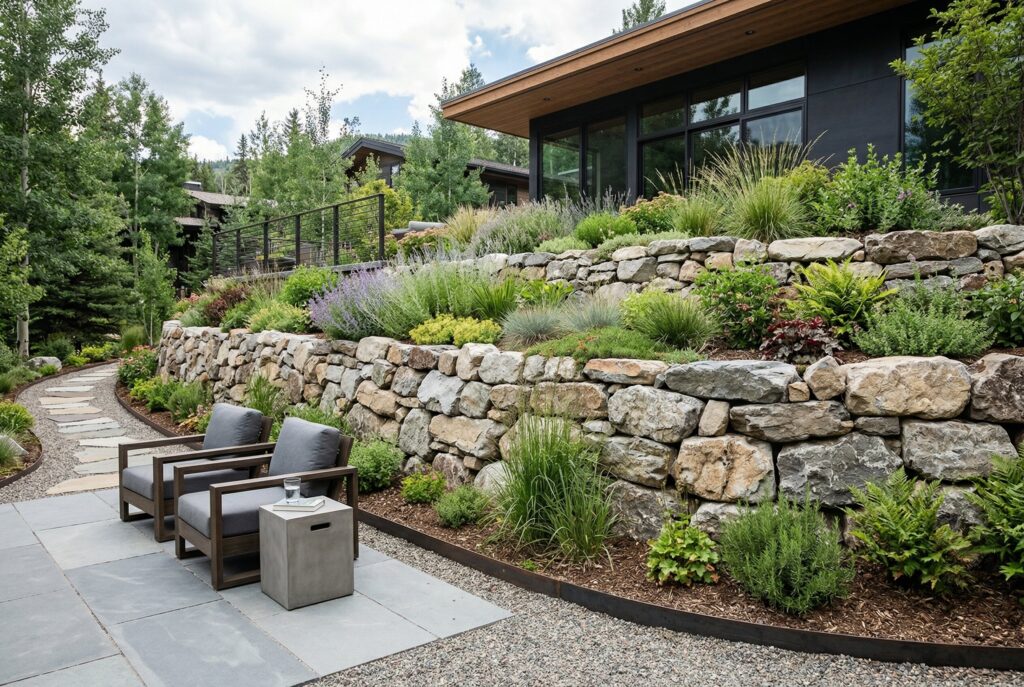
A stiff brush and a bit of water can usually clear away debris, though some homeowners prefer the aged look of weathered stone.
Natural Stone Wall Trends in 2026
Modern landscaping is shifting toward sustainable and multi-functional designs. Sustainable hardscaping is a major trend, as dry-stack walls don’t use high-carbon cement and allow for natural water filtration.
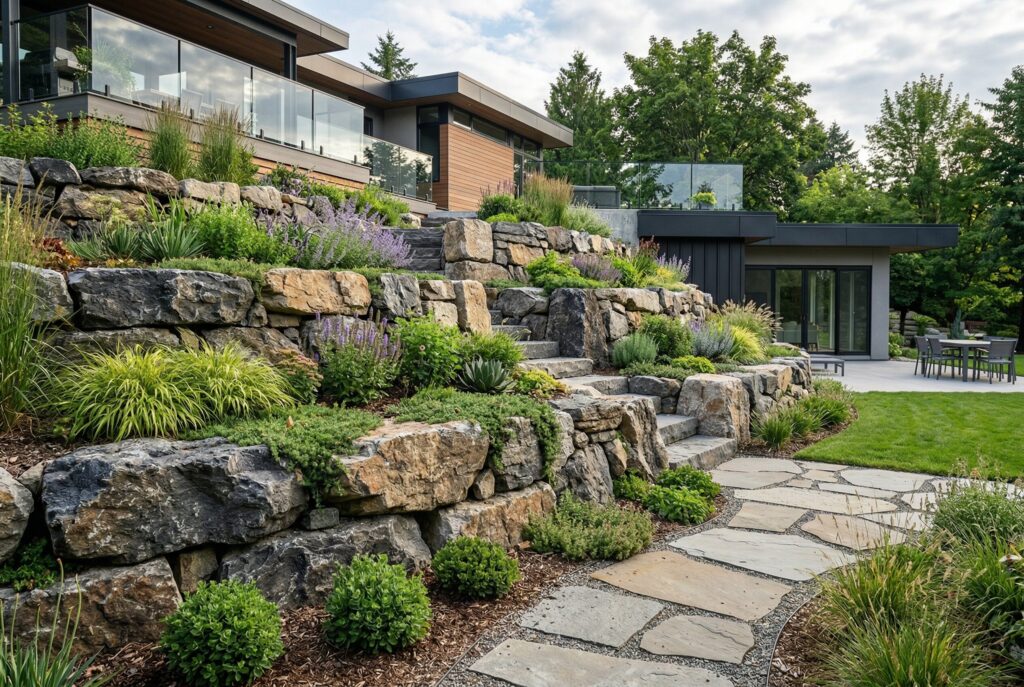
There is also a growing interest in “permeable landscaping” as a response to urban flash-flooding. Because dry-stack walls allow water to pass between the stones, they’re naturally more resistant to the pressures that often destroy solid concrete walls.
Finally, biophilic design continues to dominate. Homeowners are no longer seeking “perfect” industrial looks; instead, they want “organic” textures and walls that incorporate living elements like mosses and creeping flora.
Preparing for Construction
A successful garden remodel starts with a solid floor plan. Before purchasing any stone, it’s essential to call 8-1-1 to check for underground utility lines. Once the area is cleared, a “Stone Calculator” can be used to estimate the precise volume of stone and gravel needed based on the wall’s dimensions.
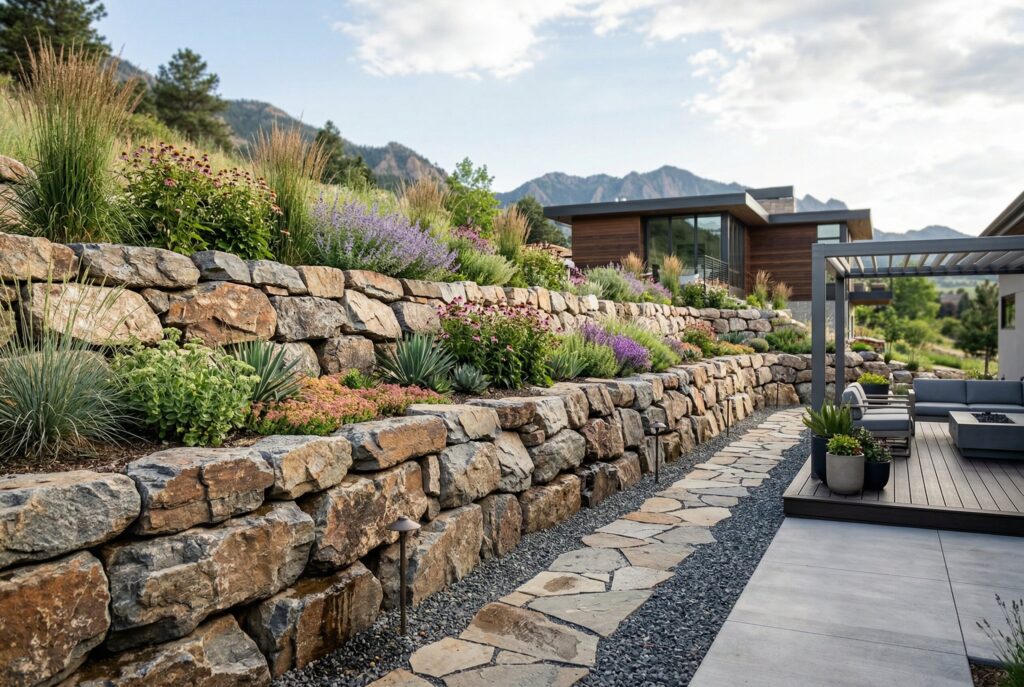
Building a natural stone retaining wall is a labor-intensive project, but it’s one that pays off for decades. It’s a permanent solution to erosion that adds character, beauty, and functional space to any yard.