

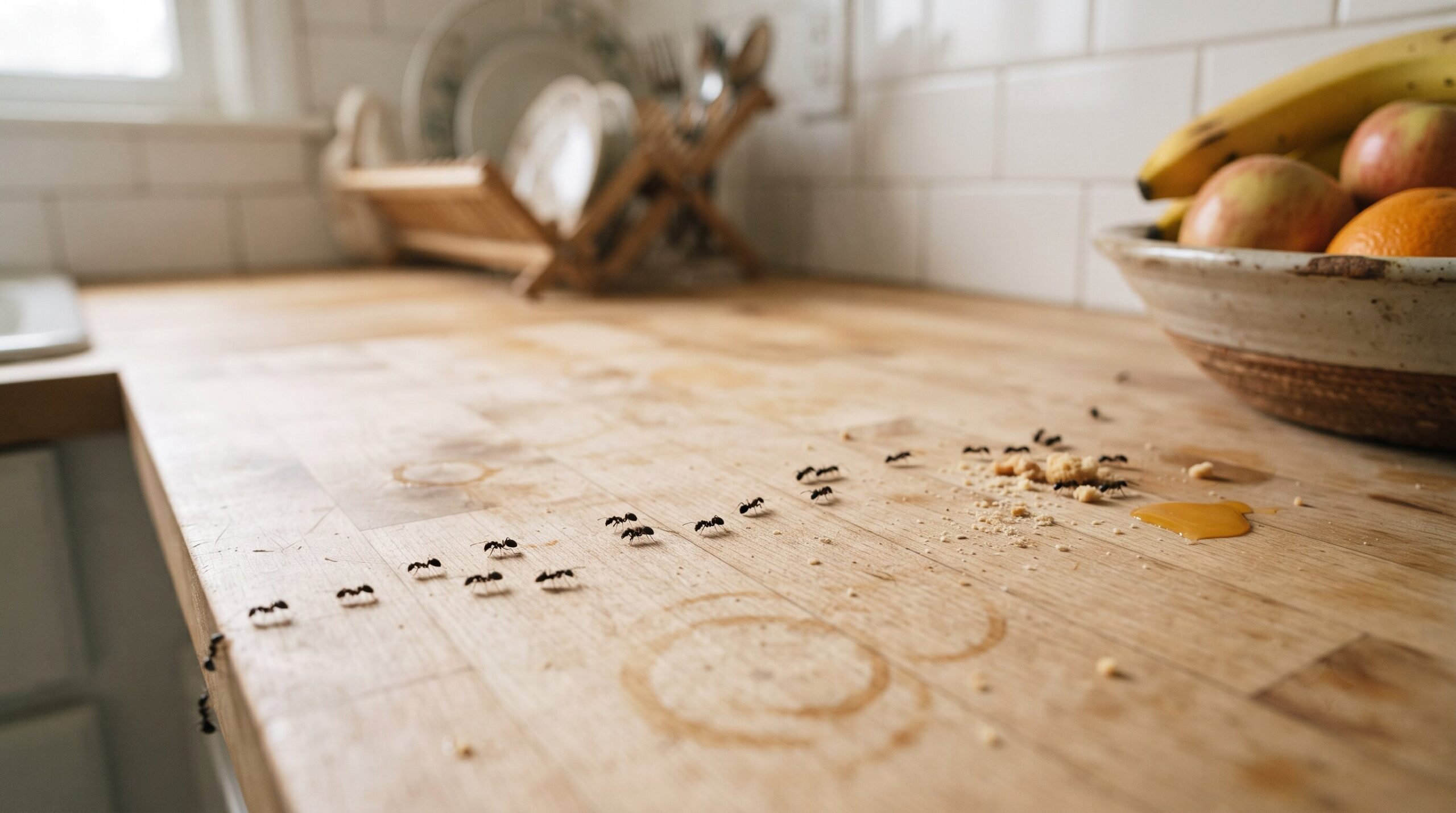
When ants show up in the kitchen, most people reach for a spray. It feels fast. It looks effective. Within seconds, the ants on the counter are gone. But the next morning, they’re back. That’s because the ants you see are rarely the real problem. They’re only workers, sent out to search for food and carry it back to the colony. The nest, the queen, and thousands of hidden ants may still be safe behind a wall, under a floor, outside near the foundation, or deep inside a crack you’ll never reach with spray.
That’s where a DIY ant killer made with borax and sugar for ants becomes powerful. It doesn’t just kill the ants on the surface. It turns the worker ants into delivery carriers. They take the bait home, share it with the colony, and help destroy the source. If you want to know how to get rid of ants without wasting money on repeated sprays, the answer is patience, placement, and the right bait ratio.
The Science: Why This DIY Ant Killer Actually Works
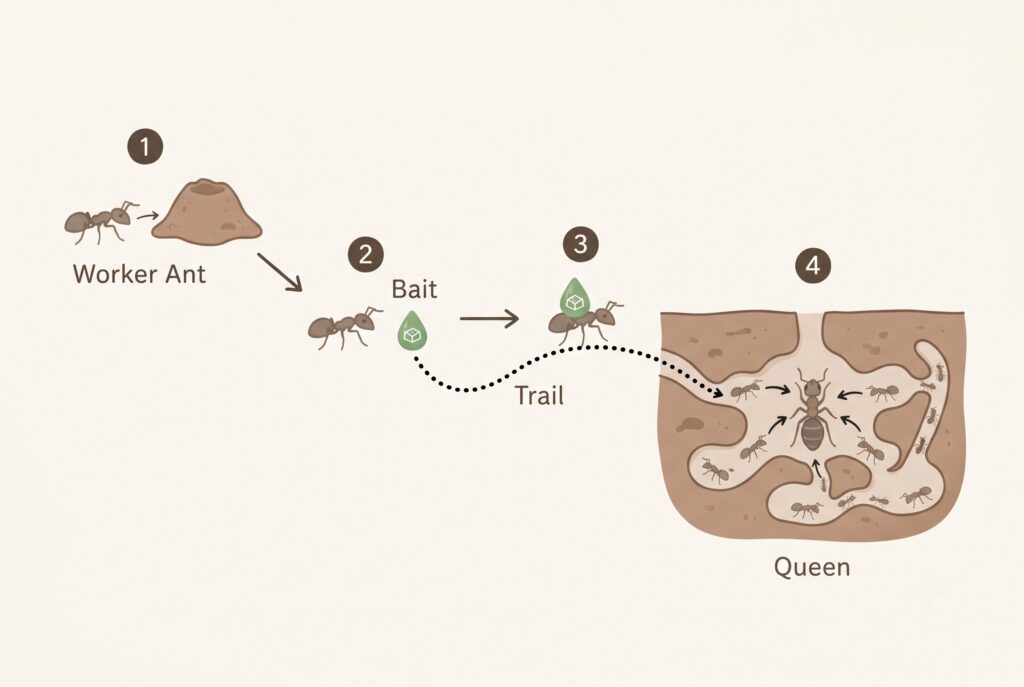
Ant colonies operate like organized delivery networks. Worker ants leave the nest, locate food, then lay down pheromone trails so other ants can follow. That’s why ants often appear in perfect lines along baseboards, counters, windows, or cabinet edges.
Contact killers interrupt only the visible part of that system. They kill workers, but they don’t reach the queen. A colony can simply send out more workers.
A DIY ant trap works differently. It uses sugar as the attraction and borax as the delayed toxin. The delay matters. Worker ants feed on the bait and return to the colony before dying. They may also share the bait with other ants through food exchange behavior. That’s why the real target of borax and sugar for ants isn’t the ant on your countertop. It’s the queen hidden far away from sight. Once the queen and colony are weakened, the trail stops returning.
The 3-Ingredient Recipe for the Perfect Homemade Ant Trap
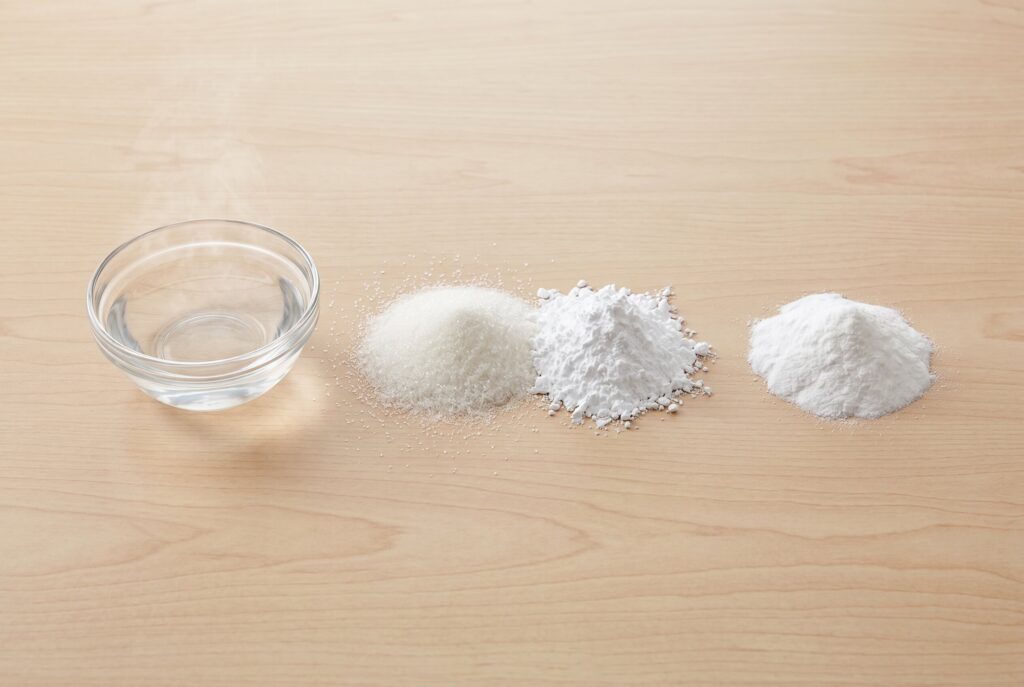
You only need three simple ingredients:
- Warm water
- Sugar, powdered sugar, or fine granulated sugar
- Borax
Mix 1 cup of warm water with 3 tablespoons of sugar until dissolved. Add 1 teaspoon of borax and stir again. The liquid should look clear or slightly cloudy, not gritty.
Now choose your trap format. For a simple cotton ball trap, soak cotton balls in the mixture and place them on small pieces of foil, wax paper, bottle caps, or shallow lids.
For a safer enclosed DIY ant trap, pour a small amount into a plastic container, add a soaked cotton ball inside, and poke tiny holes around the side. The holes should be large enough for ants but too small for pets or children to reach the bait.
For a low-mess version, dip small pieces of paper towel in the bait and lay them flat near ant trails. Don’t make one giant trap. Make several small ant traps. Multiple bait points increase the chance that ants will find the food quickly.
Strategic Placement: Where to Put Your Ant Traps
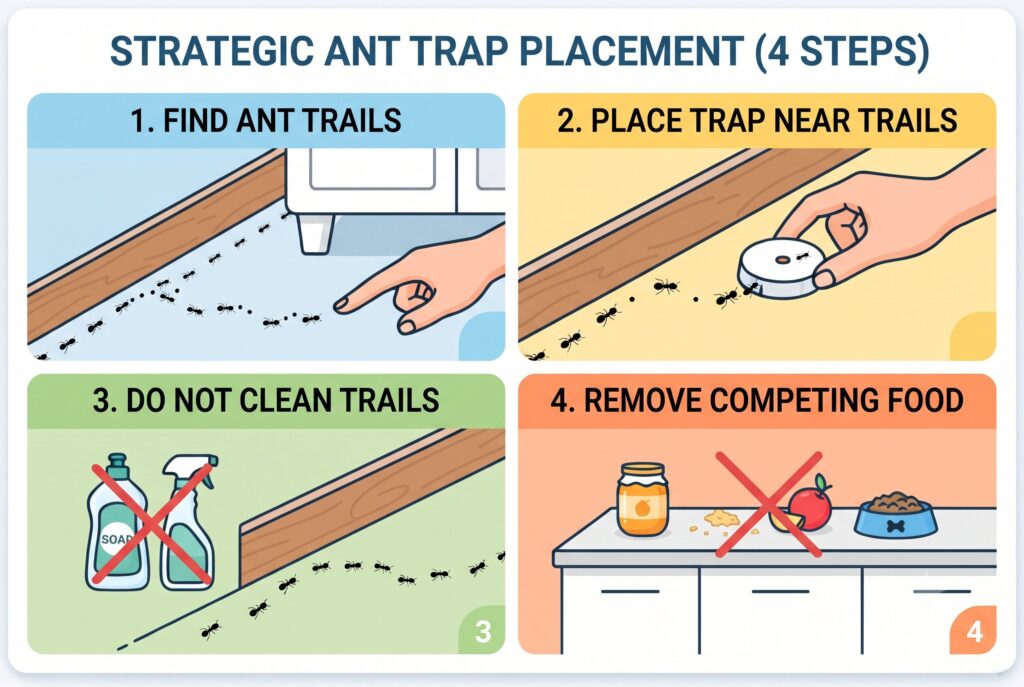
Placement can make or break the whole method. Put your homemade ant trap where ants already travel. Look for trails along baseboards, behind appliances, under the sink, near windows, inside cabinets, around trash cans, and beside pantry shelves.
If you’re trying to learn how to get rid of sugar ants, follow the trail before cleaning it. Sugar ants often move between sweet food sources and hidden entry points. Place the bait near their route, not randomly in the middle of the room.
Don’t scrub the ant trail with soap before baiting. Soap, vinegar, or disinfectant can erase the pheromone path, which sounds useful but can backfire if the ants haven’t found the bait yet. First, let them discover the trap. After activity slows, then clean the area thoroughly.
Also remove competing food. Wipe syrup, juice, honey, fruit residue, crumbs, and pet food spills. If ants have access to real food, they may ignore your bait.
The Golden Rule: Do Not Kill the Ants You See
This part feels wrong, but it’s essential. Once your bait is placed, you may see more ants. Sometimes the trail becomes heavier within the first few hours. That doesn’t mean the treatment failed. It usually means the bait is attractive.
Don’t spray them. Don’t crush them. Don’t wipe them away. The ants you see are doing the work for you. Every worker that feeds and returns to the nest becomes part of the delivery system. Killing them too early breaks the chain.
If you need the area to look less disturbing, place the trap behind an appliance, inside a cabinet, or under the edge of a baseboard where ants can feed without crossing your main counter space. Patience is the difference between temporary relief and colony control.
Pet and Child Safety: Is Borax Safe?
Borax is often described as natural, but natural doesn’t mean harmless. Borax can irritate skin, eyes, and stomachs. It can be harmful if swallowed in larger amounts, especially by children, dogs, cats, or other pets.
Never leave open borax bait on the floor if pets or children can reach it. Use enclosed bait stations instead. A recycled plastic food container works well. Put bait inside, punch tiny ant-sized holes in the sides, close the lid tightly, and tape it shut. Place the station behind the refrigerator, behind the stove, inside a locked cabinet, under a heavy appliance, or in another inaccessible area.
Label the container clearly. Keep extra borax stored away from food and cleaning supplies. Wash your hands after mixing bait. If a child or pet eats borax bait, don’t guess. Contact poison control, a pediatrician, or a veterinarian right away and give them the product details.
Troubleshooting: Why the Borax Trap Isn’t Working
If ants ignore the bait, they may not want sugar at that moment. Some ants switch between sweet and protein-based foods depending on colony needs. Try placing a tiny dot of peanut butter nearby to test whether they’re looking for protein. If ants die around the bait quickly, the borax concentration may be too high. Dilute the mixture with more sugar water.
If ants disappear then return a week later, you may have multiple entry points or more than one colony. Keep baiting and seal cracks after activity slows. If you see large black ants, hollow wood, sawdust-like material, or ants coming from damp structural areas, stop relying on DIY ant killer alone. That may indicate carpenter ants, which can require professional inspection.
Conclusion
The best way to get rid of ants isn’t always the fastest-looking method. Ant spray gives instant satisfaction, but it often leaves the colony untouched. Borax for ants works more quietly. It takes time because it depends on worker ants carrying bait home.
Set the right ratio, place the bait along active ant trails, and remove any competing food sources nearby. Avoid killing the ants while they’re feeding because they need time to carry the borax bait back to the colony. Always keep borax out of reach of pets and children. Then give it 24 to 48 hours to work. A well made homemade ant trap doesn’t just get rid of the ants you see. It also helps eliminate the colony causing the problem in the first place.
Related Articles
- How to Get Rid of Ants in the House: 7 Safe Hacks to End Them For Good
- Natural Ant Repellent: 5 Kitchen Formulas to Stop the Invasion