

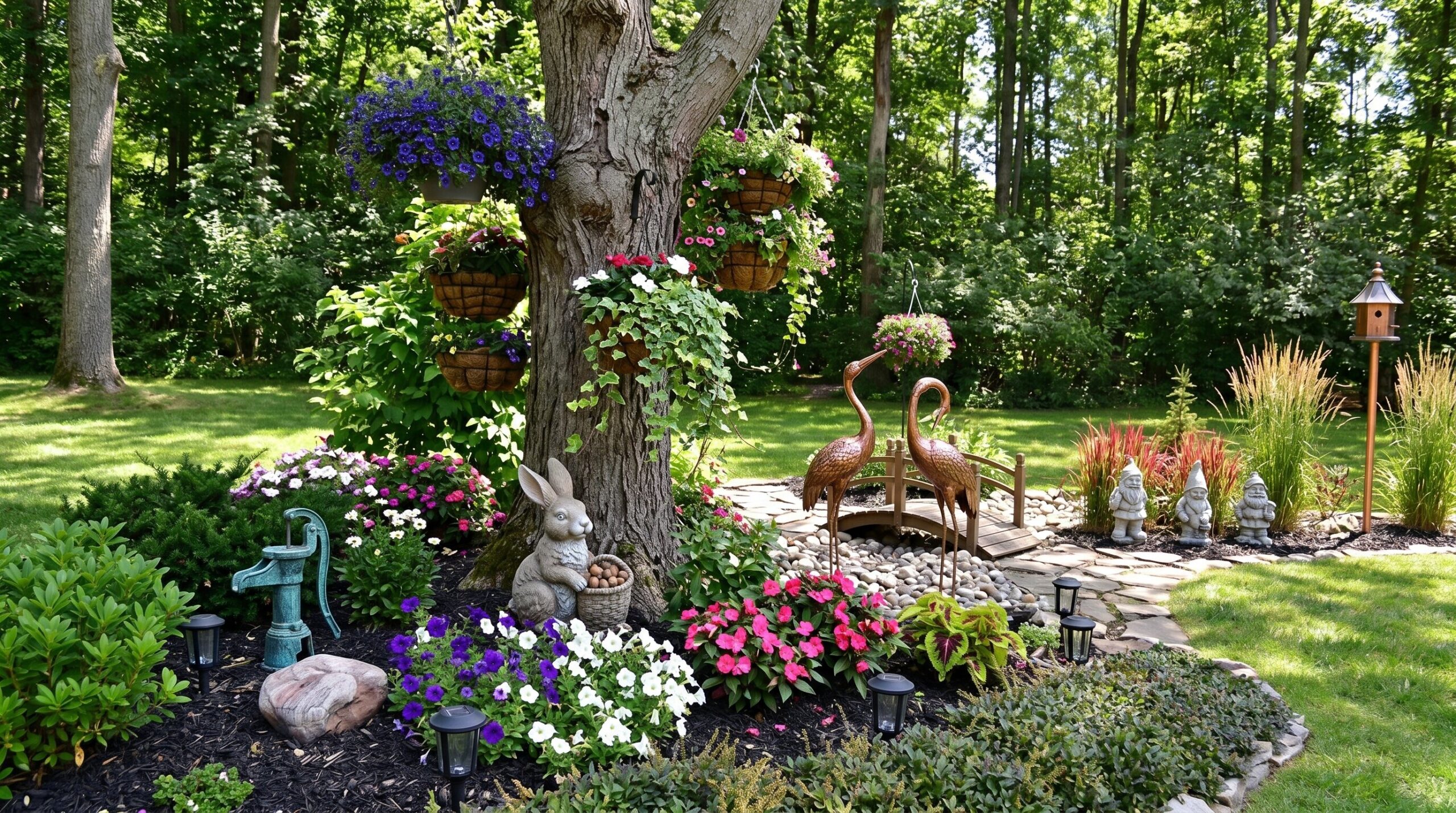
Landscaping around trees can turn a bare, awkward patch of dirt into one of the most beautiful focal points in your yard. But when you are working near mature trees, beauty should never come before root health.
The best landscaping ideas around tree roots are root-safe, shallow, and no-dig. Exposed tree roots landscaping isn’t about hiding every root under heavy soil. It’s about making the roots look intentional while protecting the root flare, the slightly widened base where the trunk meets the roots.
Never pile soil or mulch into a volcano shape around the trunk. That traps moisture, encourages rot, and can slowly damage the tree. Instead, use these 17 designs to create a tree root focal point that looks polished without suffocating the tree.
3 Golden Rules for Landscaping Around Mature Trees
Before adding plants, rocks, edging, or mulch, understand the tree first. Landscaping around mature trees requires a lighter touch than ordinary garden beds.
- First, don’t cut large roots. Those roots may support the tree and move water and nutrients. If a root is a tripping hazard or seems dangerous, ask an arborist before removing it.
- Second, protect the root flare. Keep soil, mulch, gravel, and plants a few inches away from the trunk. The base of the tree needs air and should stay visible.
- Third, respect the drip line. The area beneath the tree canopy is full of shallow feeder roots, so avoid deep digging, heavy compaction, and thick raised beds.
The Minimalist Approach: Mulch and Rock Layouts
1. The Classic Organic Mulch Ring
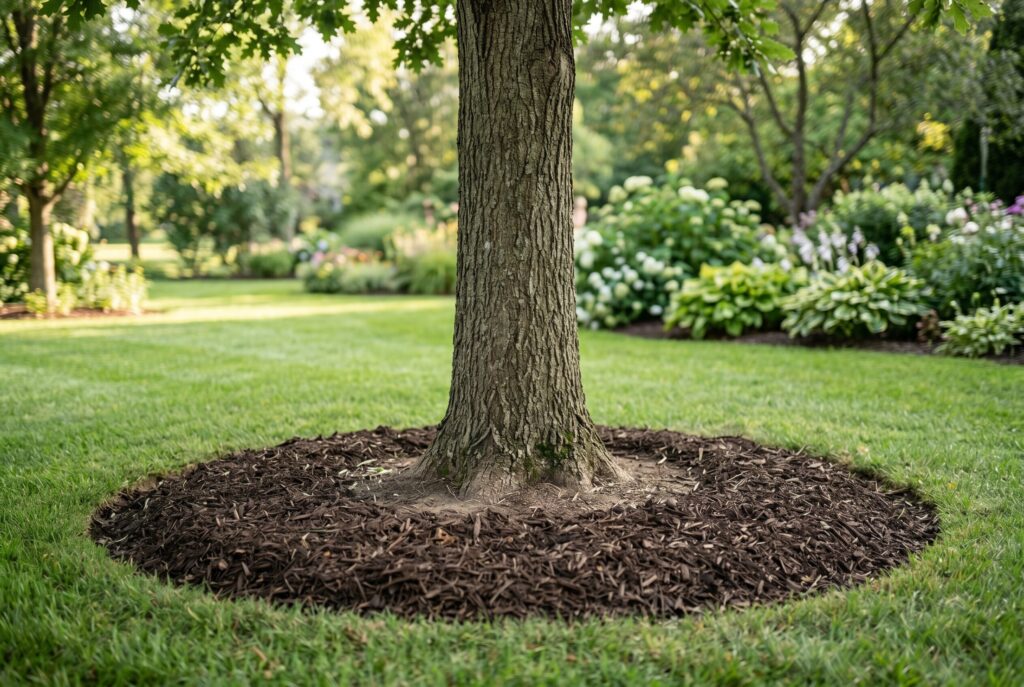
A mulch ring is the safest and easiest form of DIY landscaping around trees. Spread organic mulch around tree roots in a thin, even layer about two to three inches deep. Leave at least three to four inches of open space around the trunk so the root flare stays exposed. This keeps soil cool, reduces mowing damage, holds moisture, and makes exposed roots look intentional instead of neglected.
2. The River Rock Drip Edge

A river rock drip edge works well when mulch keeps washing away after rain. Place larger smooth stones around the outer edge of the mulch ring, not piled against the trunk. The rocks help hold the border in place and define the tree bed. This is especially useful for front yard tree landscaping because it gives the area a clean, finished outline from the street.
3. The Floating Pea Gravel Bed

Pea gravel creates a calm, Zen-style look around mature trees, but it must be installed carefully. Use a breathable landscape fabric, keep the gravel shallow, and avoid compacting the soil. The idea is to float the gravel over the surface, not bury the roots. This works best around trees in dry or modern landscapes where you want a simple, low-maintenance finish.
4. Pine Needle Straw Blanket

Pine needles are one of the most root-friendly coverings for under tree landscaping. They are lightweight, breathable, affordable, and easy to refresh. They also create a natural woodland look that feels softer than stone. Use pine straw under pines, oaks, and other mature trees where grass struggles. It gently covers bare soil without smothering shallow roots.
5. Decomposed Granite Zen Circle
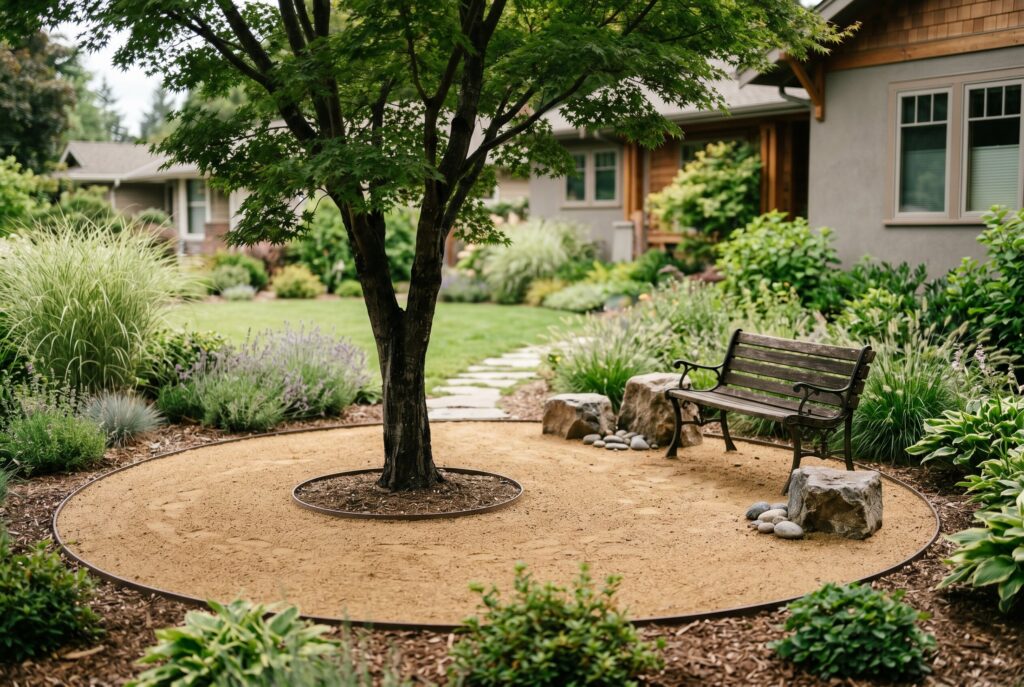
Decomposed granite can create a smooth, modern circle around a tree, especially in a front yard. Keep the layer shallow and avoid packing it too tightly near the root flare. Pair it with one bench, a few boulders, or simple edging for a refined look. This option is best where you want a clean walking surface without planting directly into root-filled soil.
The Green Canopy: Shade Garden Under Tree
6. The Hosta and Fern Oasis
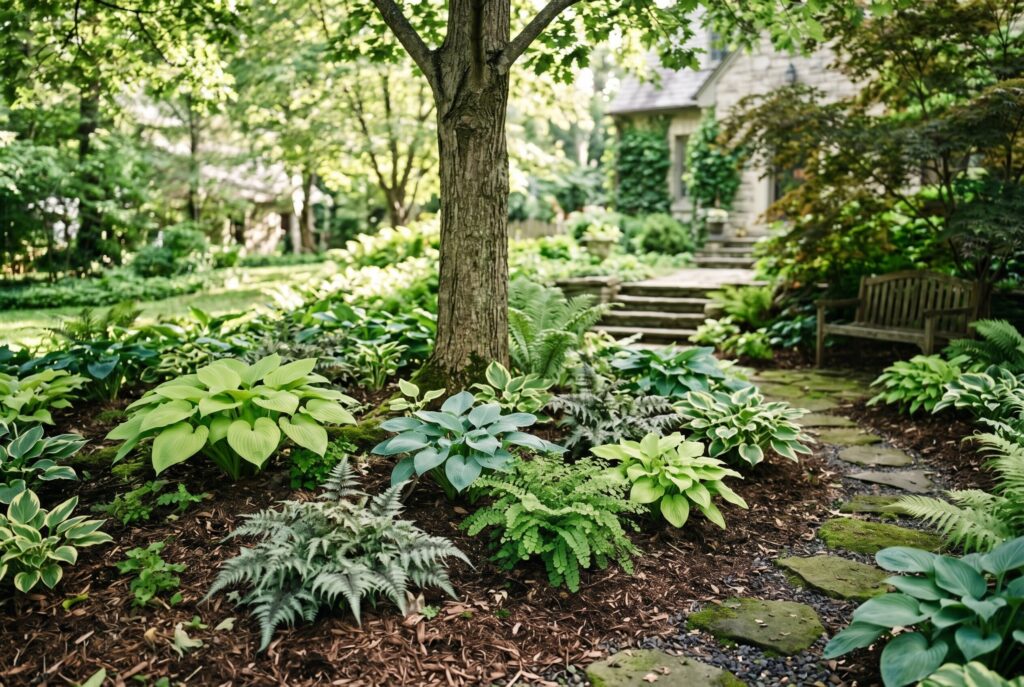
A shade garden under a tree can feel lush if you choose plants that tolerate root competition and low light. Hostas and ferns are classic choices because they have shallow roots and soft foliage. Plant small specimens between major roots without cutting into them. Add compost only lightly, then finish with mulch. This design turns a dry, empty tree base into a green woodland corner.
7. Creeping Thyme Ground Cover
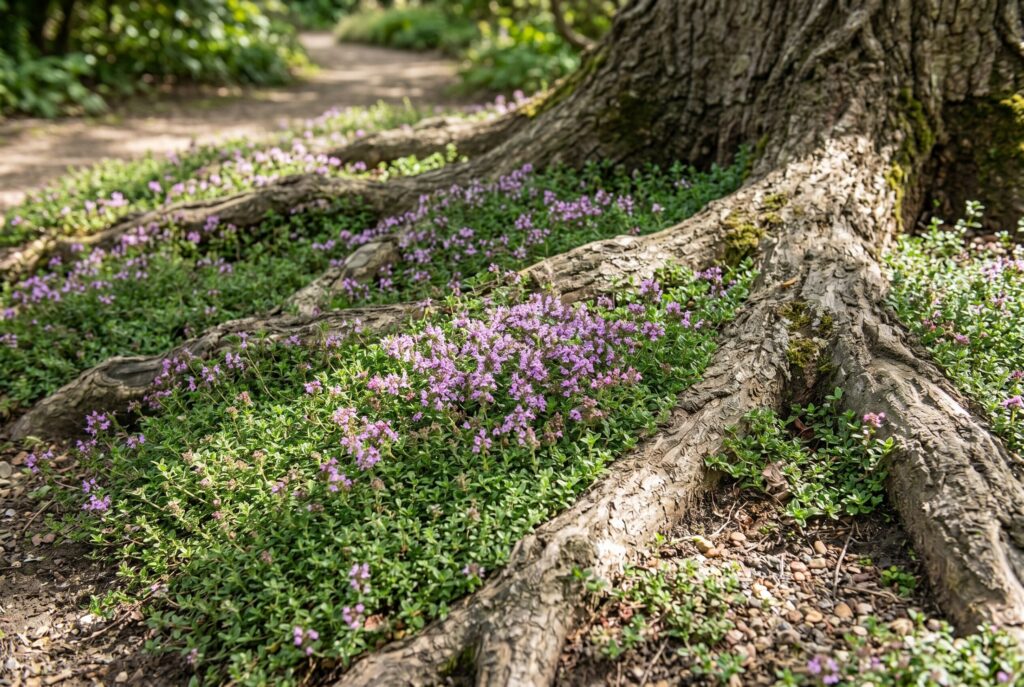
Creeping thyme is a delicate groundcover that can soften the space between visible roots. It works best where the area receives some sun and has good drainage. Don’t dig deeply to install it. Instead, tuck small plugs into natural soil pockets and let them spread gradually. Over time, the thyme creates a low, fragrant mat that makes the tree base feel intentional.
8. The Potted Plant Ring
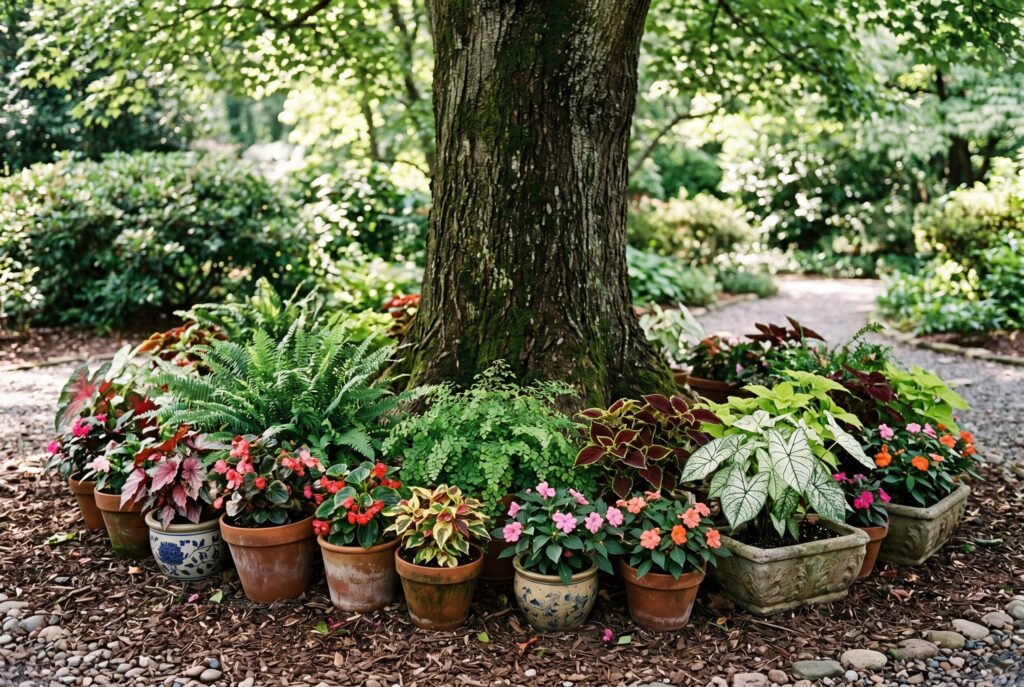
A potted plant ring is the safest no-dig design for landscaping around tree roots. Instead of planting into root-filled soil, arrange ceramic, terracotta, or stone-look pots around the tree bed. Use shade-loving plants such as begonias, ferns, caladiums, impatiens, or coleus. This adds color without disturbing the roots, and you can move the pots as light conditions change.
9. Spring Bulbs Around Tree Roots
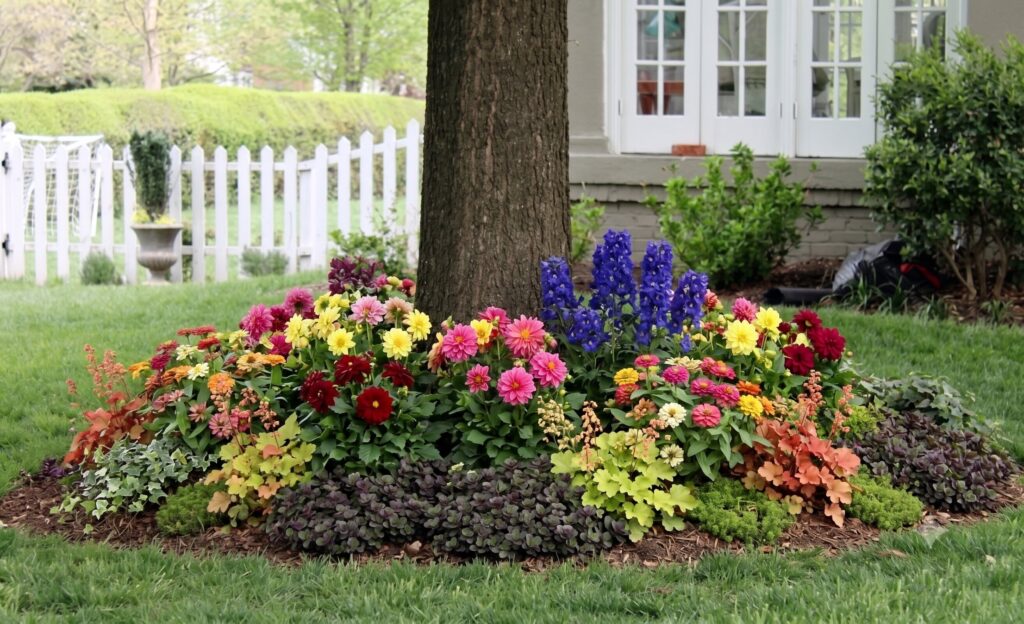
Spring bulbs can bring early color before the tree canopy fills in. Daffodils, crocuses, snowdrops, and small woodland bulbs are good options. Plant them only in soft soil pockets between roots, never by chopping through large roots. These flowers around tree roots work beautifully because they bloom when sunlight still reaches the ground, then fade back as the tree leaves out.
10. Native Woodland Wildflowers
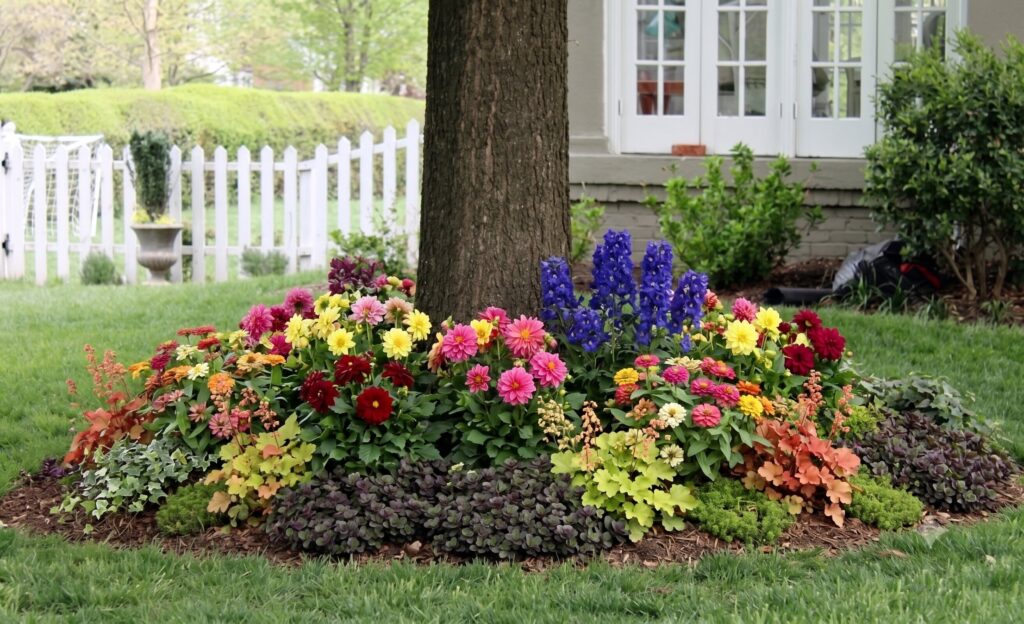
Native woodland wildflowers make the tree base feel natural rather than forced. Choose species adapted to your region, such as violets, woodland phlox, trillium, or columbine where appropriate. These plants usually handle shade better than typical bedding flowers. They also support pollinators and create a softer, more ecological tree root garden bed.
11. Coral Bells Color Pop
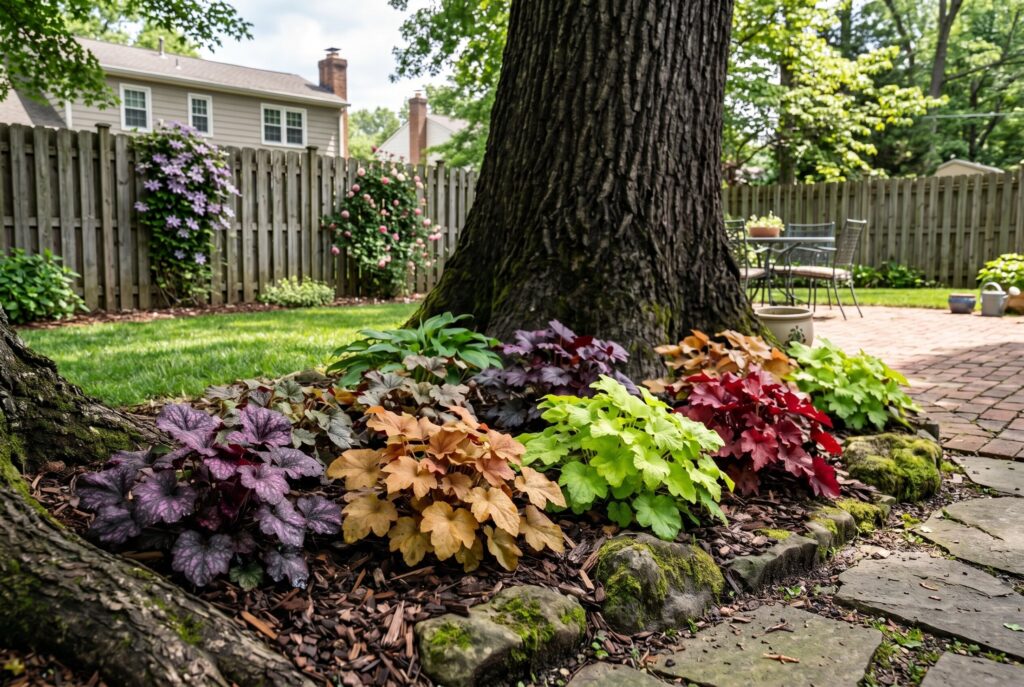
Coral bells, also called Heuchera, are useful when you want color without relying on flowers. Their leaves come in purple, bronze, lime, amber, and deep red tones. They grow well in partial shade and can be tucked into shallow pockets. Use them near the front edge of the tree bed where their color is visible. They add contrast against bark, mulch, and exposed roots.
Hardscaping and Architectural Features
12. The Floating Deck
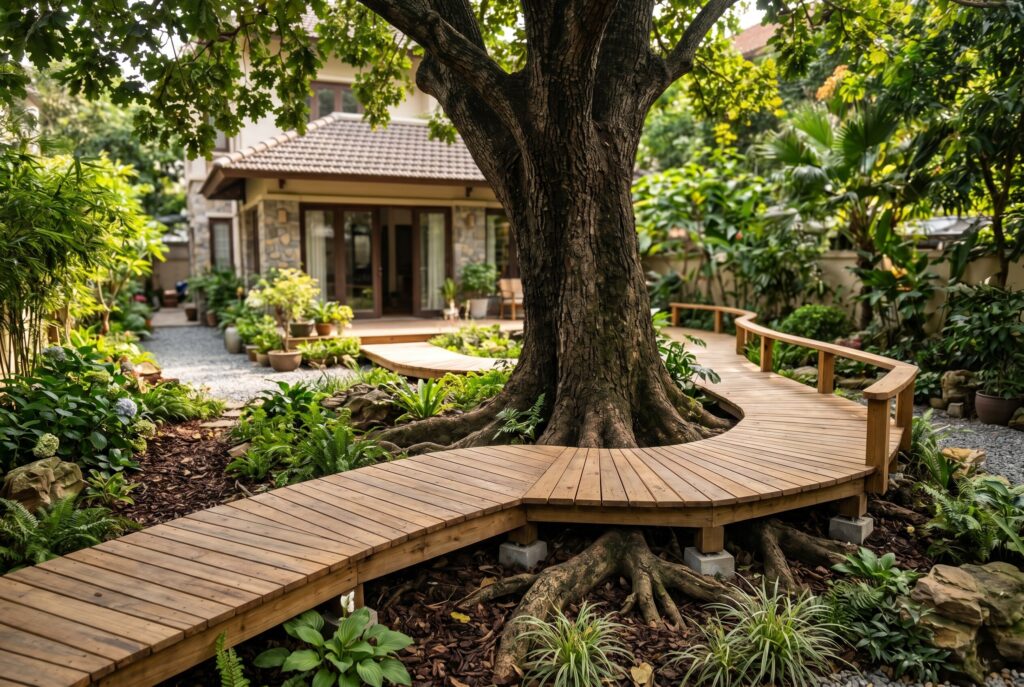
A floating deck or boardwalk can protect the soil from foot traffic while allowing air and water to move through gaps. This is useful when large roots make the ground uneven. Build the structure on small supports rather than digging heavy footings near the trunk. Leave space around the tree so the trunk can grow. This turns difficult roots into part of the architecture.
13. Semicircle Wrap-Around Bench
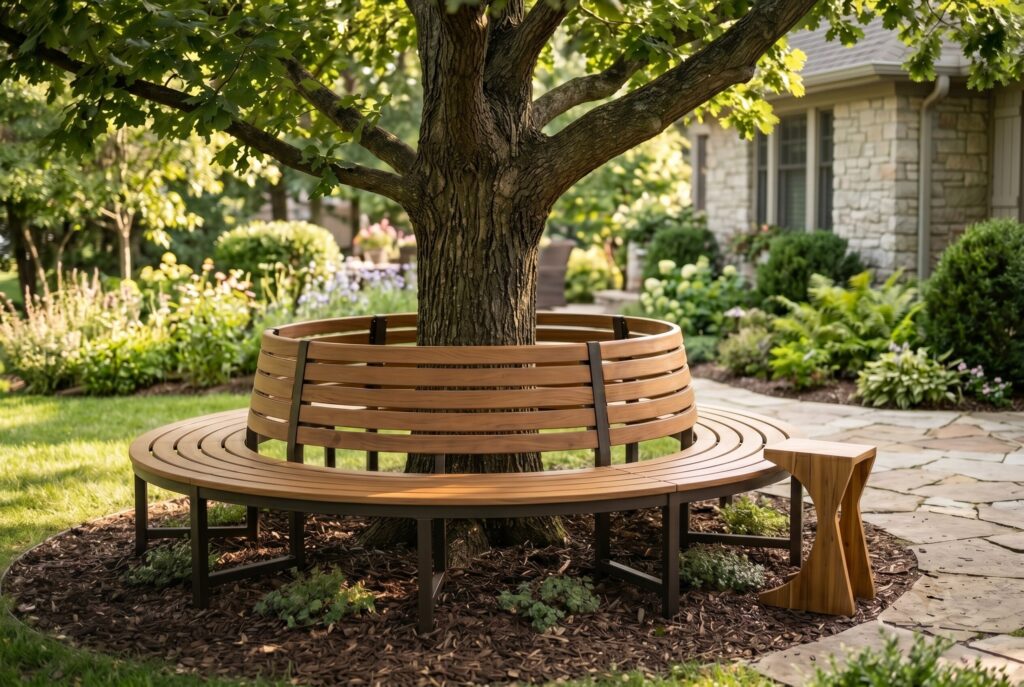
A semicircle bench creates a shaded sitting area without covering the entire root zone. Build the bench around part of the tree, leaving the trunk open and untouched. This works beautifully for reading corners, backyard gathering spots, or front yard focal points. Use breathable groundcover or mulch beneath it to avoid soil compaction from repeated foot traffic.
14. Shallow Stone Dry-Stack Wall
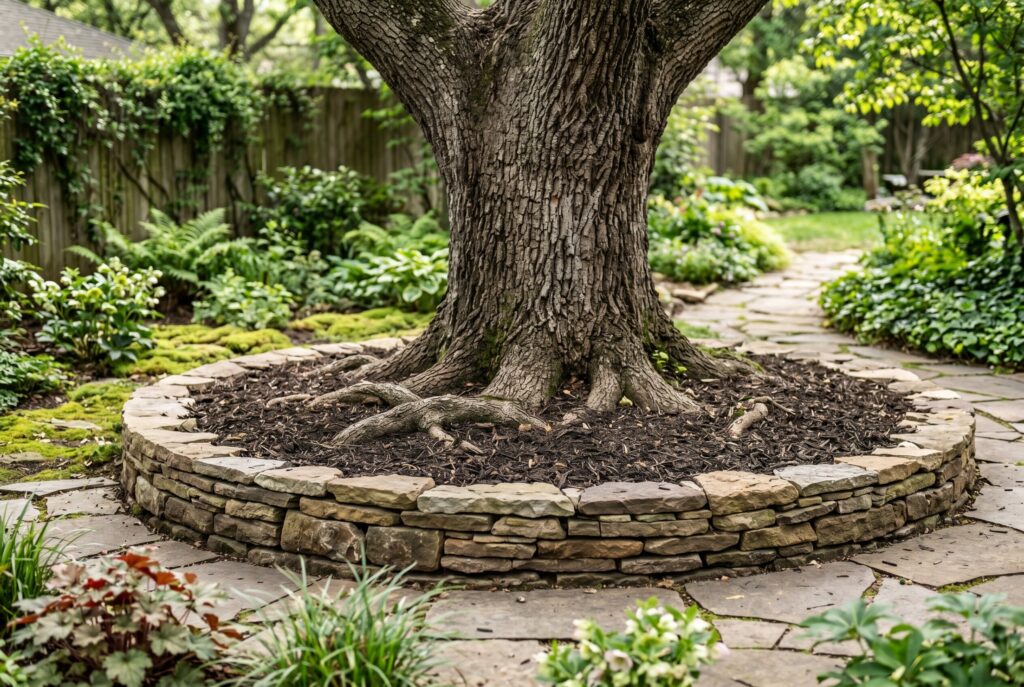
A dry-stack stone edge can define a tree root garden bed without using mortar or deep footings. Keep the wall low, around four to six inches, and avoid filling the inside with heavy soil. The purpose is to hold a light mulch layer, not create a raised bed that buries roots. Natural stone also blends beautifully with mature bark and exposed roots.
15. Stepping Stone and Moss Path
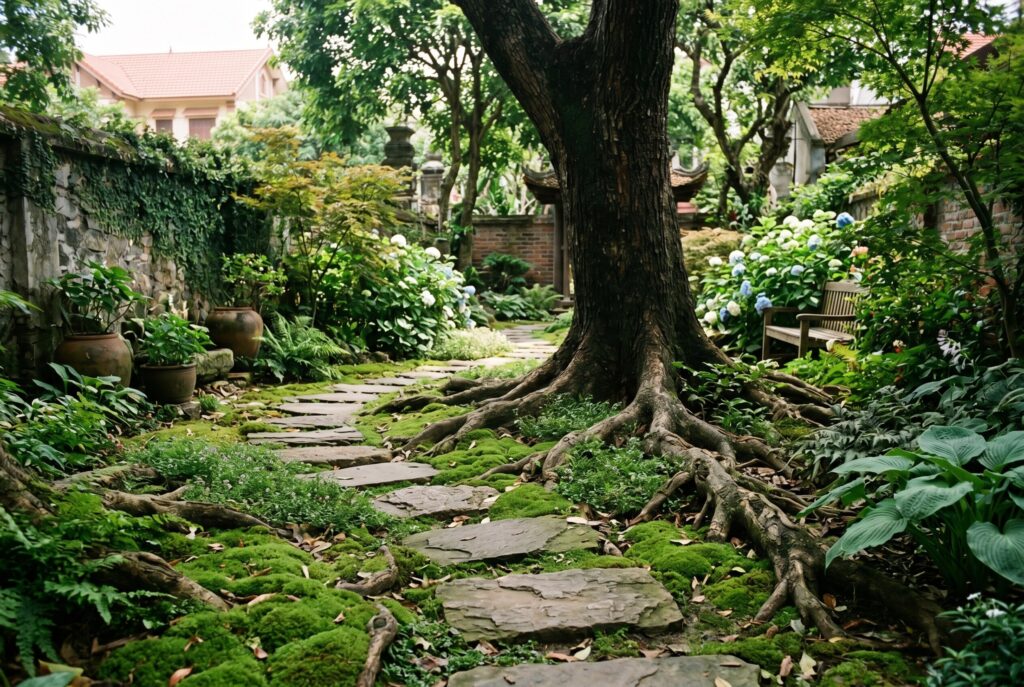
If people walk near the tree, guide them with stepping stones instead of letting them compact soil everywhere. Place flat stones in natural gaps between roots, then encourage moss or low groundcover around them if conditions allow. This makes the path safer while protecting the root zone. It also gives the space a quiet, old-garden feeling.
16. Solar Lantern Fairy Ring
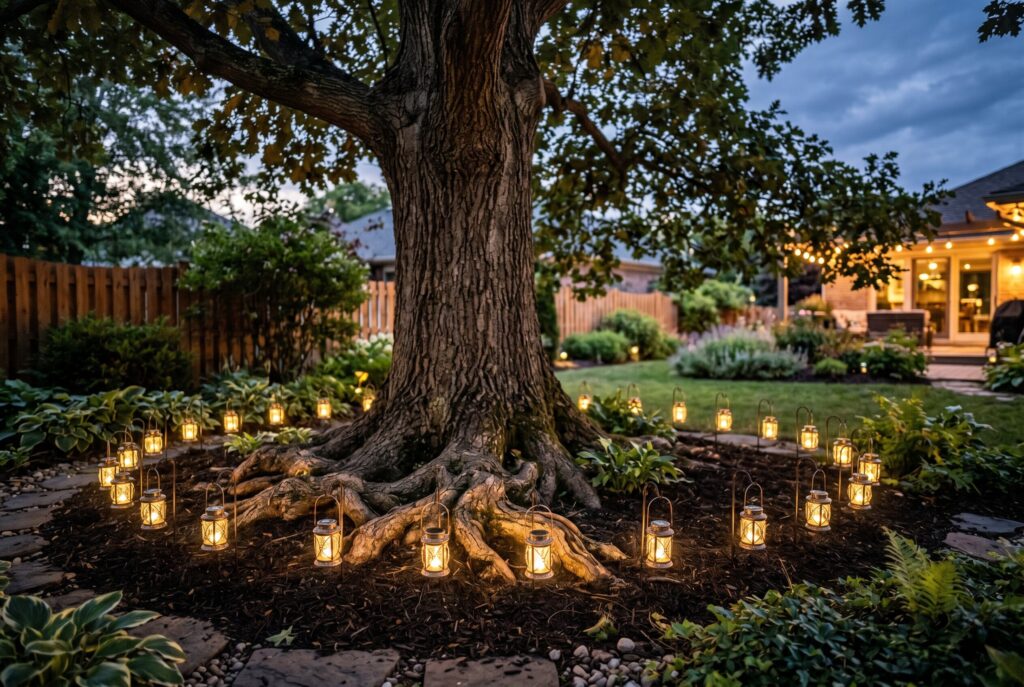
Solar lanterns can transform landscaping around trees at night without digging trenches for wiring. Place small lanterns around the outer edge of the bed, following the canopy line or mulch ring. Warm light makes exposed roots look sculptural and adds atmosphere to the yard. Keep fixtures lightweight and easy to move during maintenance.
17. The Asymmetrical Boulder Accent
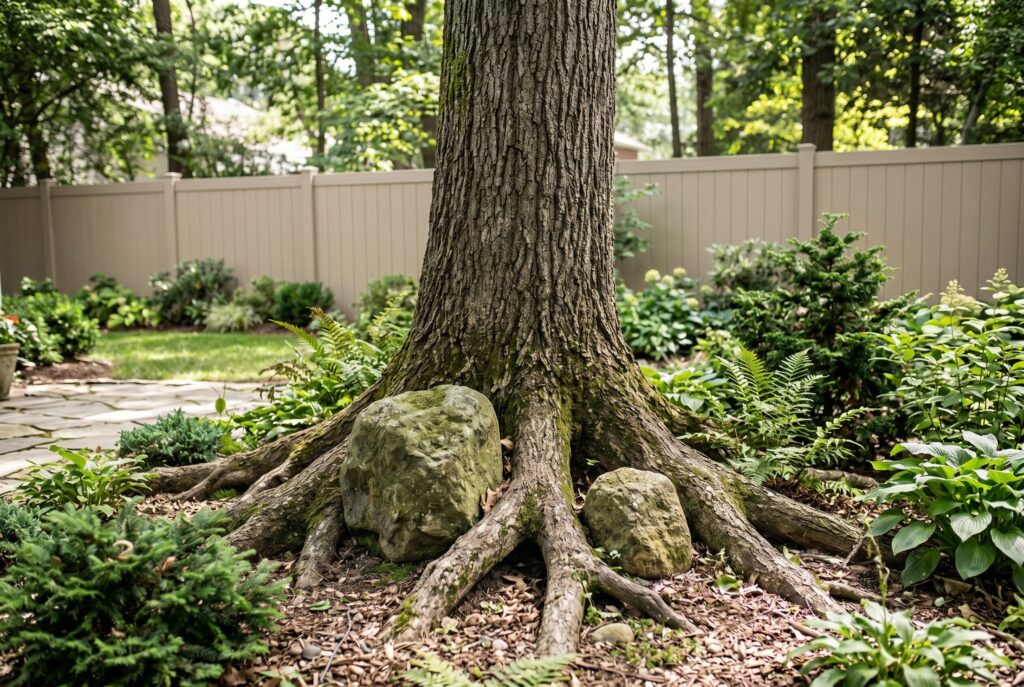
A few boulders placed between natural root openings can make exposed tree roots look like part of a designed landscape. Use two or three stones in different sizes rather than a perfect circle. Don’t place heavy boulders directly on major roots. The goal is to create balance and texture while leaving the root system undisturbed.
Conclusion
The golden rule is simple: the tree comes first, and the design follows. Don’t bury the trunk, cut large roots, compact the soil, or build deep raised beds over the root zone. The best landscaping around trees uses light layers, shallow planting, breathable materials, and no-dig design. Whether you choose mulch, shade plants, pots, stepping stones, or a floating bench, your goal is to make the tree healthier and more beautiful at the same time. Done well, a rough patch of exposed roots can become one of the most memorable features in your landscape.
Related Articles
Low Maintenance Front Yard Landscaping: 31 Zero-Effort Designs for Epic Curb Appeal