

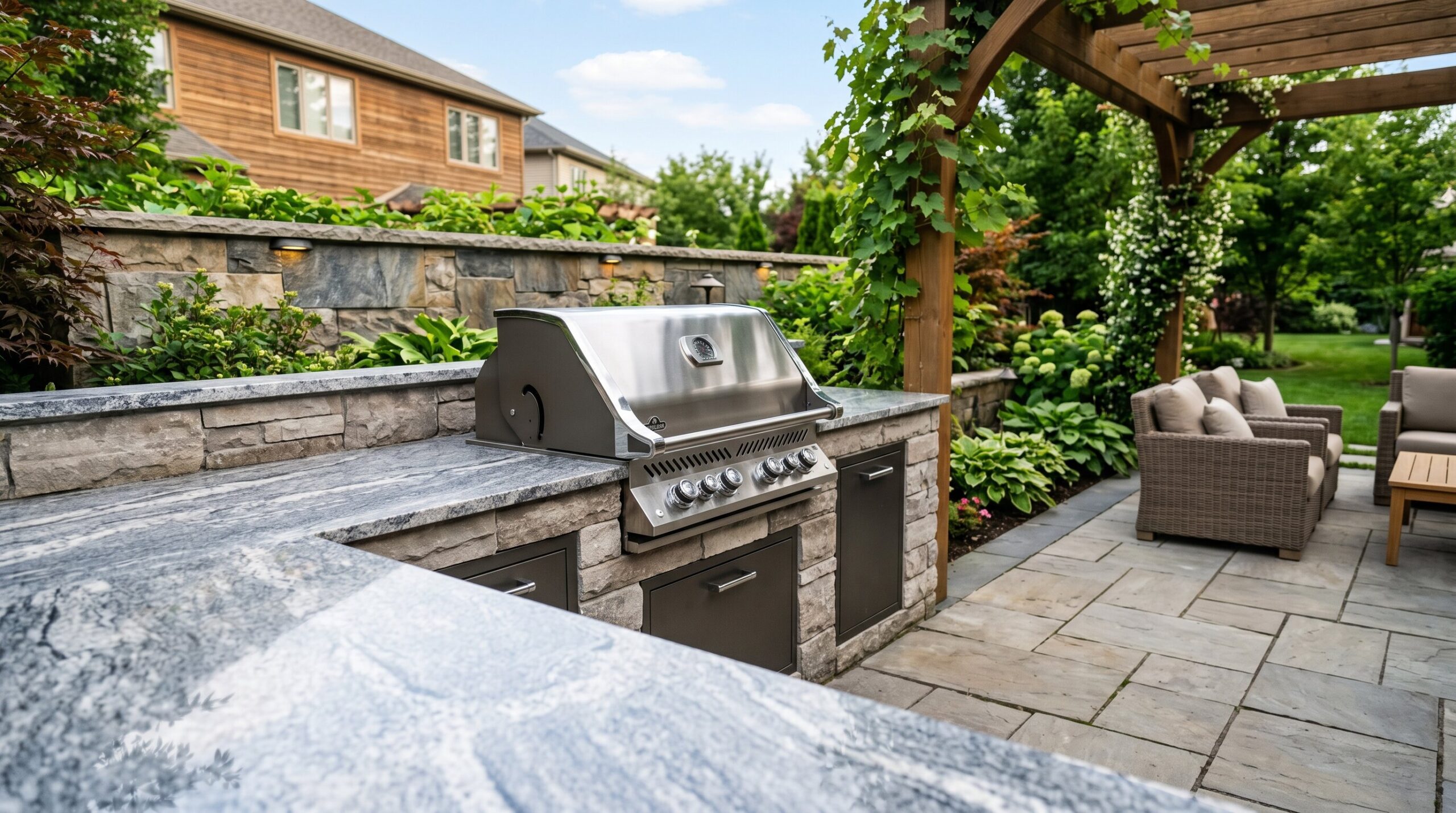
A grill cart can cook food, but it doesn’t create a complete outdoor cooking experience. It usually lacks prep space, a sink, storage, lighting, and a comfortable place for guests to gather. That is why an outdoor grill station feels so different. It’s a dedicated backyard cooking hub where the grill is built into outdoor kitchen cabinets, stonework, stainless steel modules, or a custom outdoor kitchen island.
The Fire and Safety Rulebook
Before building a DIY grill station, safety must come first. A grill produces high heat, grease, smoke, and sometimes trapped gas. If the structure around it isn’t designed correctly, the station can become dangerous.
If you’re using wood framing, you need an insulated jacket around the grill before setting it into the frame. Without that barrier, heat can transfer into the wood and create a fire risk. Galvanized steel framing, cinder block, brick, and concrete are safer choices for a fire resistant grill station.
Ventilation is just as important. Natural gas rises, but propane sinks. If your outdoor kitchen cabinets hold a propane tank or gas connection, lower vent openings help prevent gas from collecting inside the cabinet. A station placed against a wall also needs a non combustible backsplash made from brick, stone, tile, or stainless steel. Painted siding, wood panels, and vinyl aren’t appropriate directly behind a hot grill.
15 Custom Outdoor Grill Station Layouts for 2026
1. The Straight Wall Station
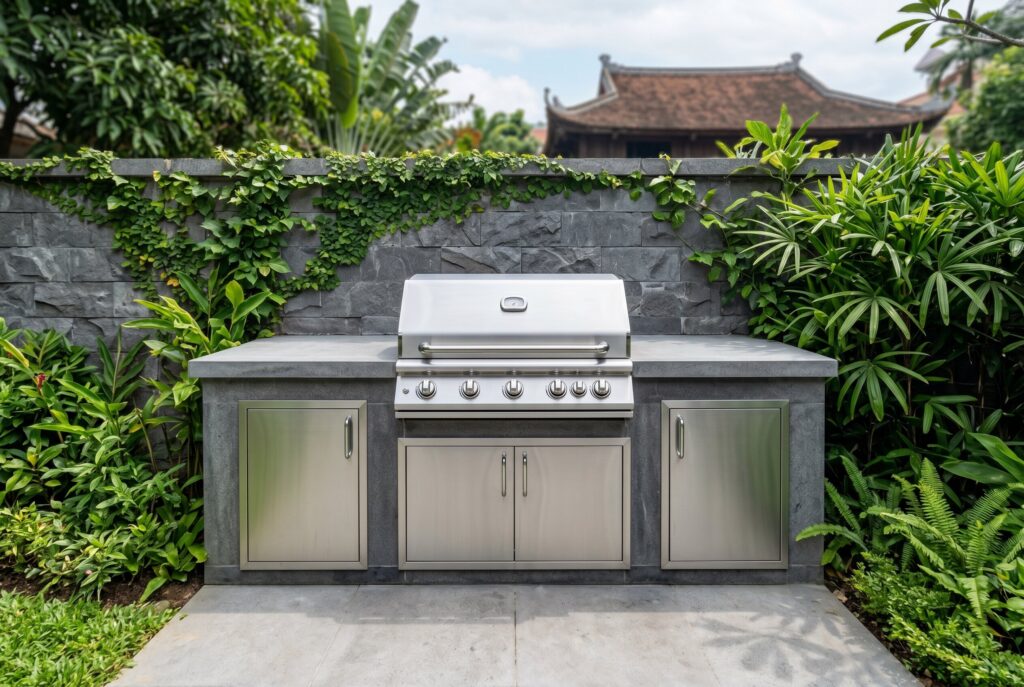
This is one of the most practical layouts for narrow patios, side yards, and small backyards. A built-in grill sits at the center of a straight counter, with landing space on both sides for prep and serving. Storage cabinets below keep fuel, tools, and accessories organized without taking up additional room.
The design works best for small households and homeowners who want a simple, budget-friendly outdoor kitchen. When building, prioritize ventilation, heat-resistant materials, and safe clearance from doors and windows. While it offers less prep space than larger layouts, its compact footprint makes it highly efficient and easy to maintain.
2. The Balcony Compact
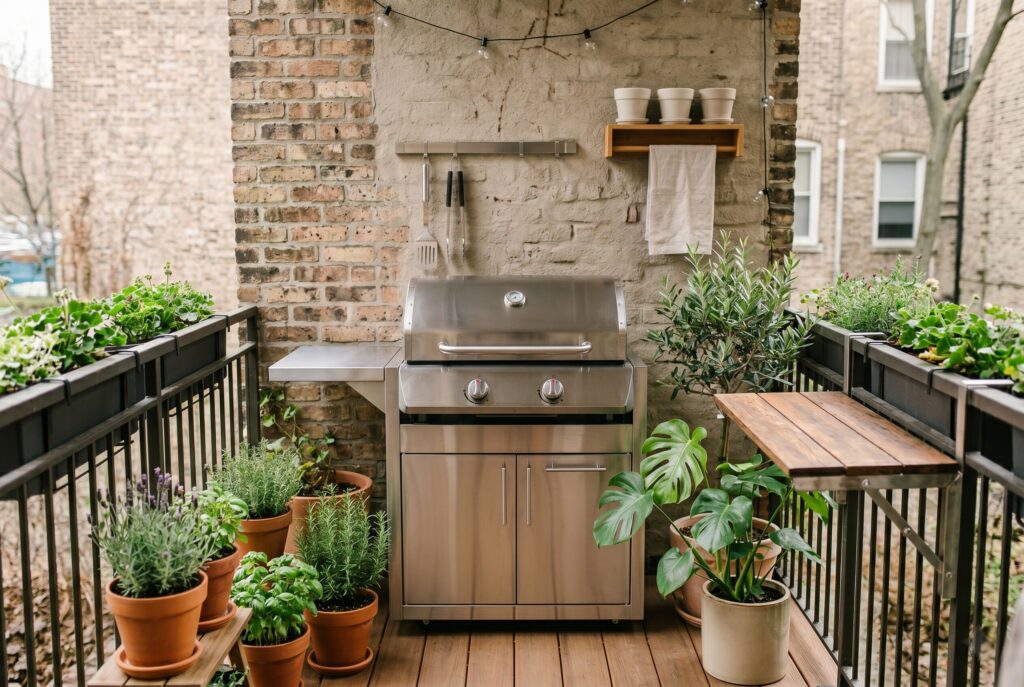
For apartments, condos, and small balconies, an electric outdoor grill station is often the safest and most practical option. Pair the grill with stainless steel outdoor kitchen cabinets, a slim prep shelf, and a fold-down counter to maximize functionality without using too much space.
This setup works best for homeowners who have limited square footage or building restrictions on gas and charcoal grills. Before installing anything, check HOA and building regulations, electrical capacity, and ventilation requirements. While electric grills produce less heat than traditional models, they offer easier maintenance, cleaner operation, and year-round convenience in compact outdoor spaces.
3. The Mobile Prep Cart
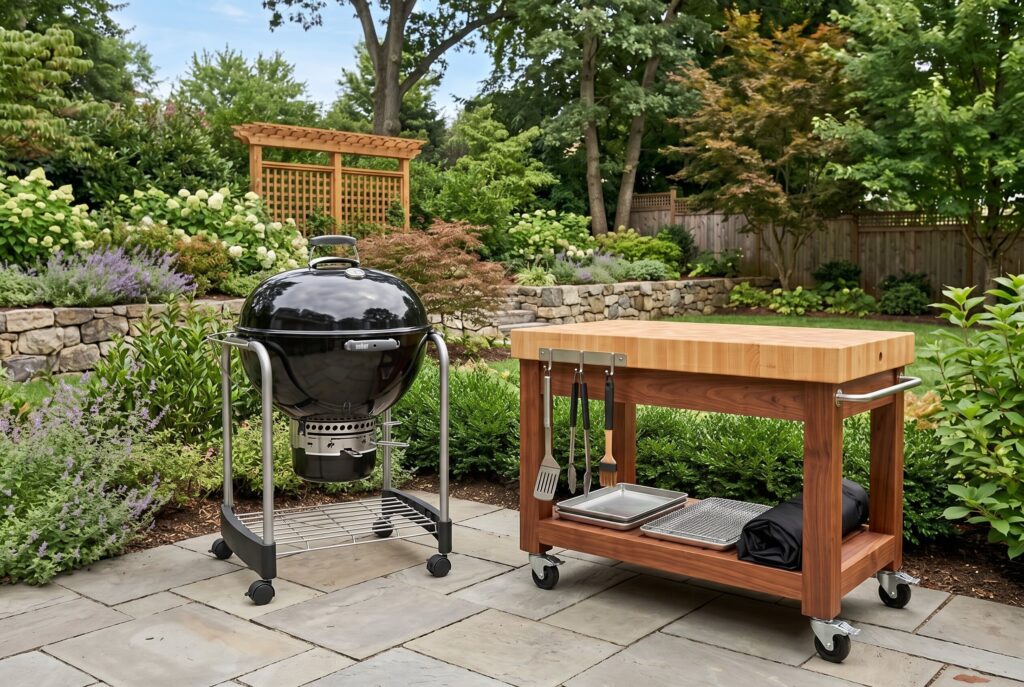
A freestanding grill station is ideal for renters, homeowners who move frequently, or anyone who wants an outdoor kitchen without permanent construction. Pair a quality grill with a rolling butcher block prep cart, then add hooks for tools, a lower shelf for trays, and locking wheels for stability while cooking.
This setup offers flexibility, affordability, and easy reconfiguration as your needs change. When choosing components, look for weather-resistant materials and sturdy wheels that can handle outdoor surfaces. While it provides less storage and counter space than built-in kitchens, it’s one of the simplest ways to create a functional outdoor cooking area.
4. The Outdoor Grill Station With Sink
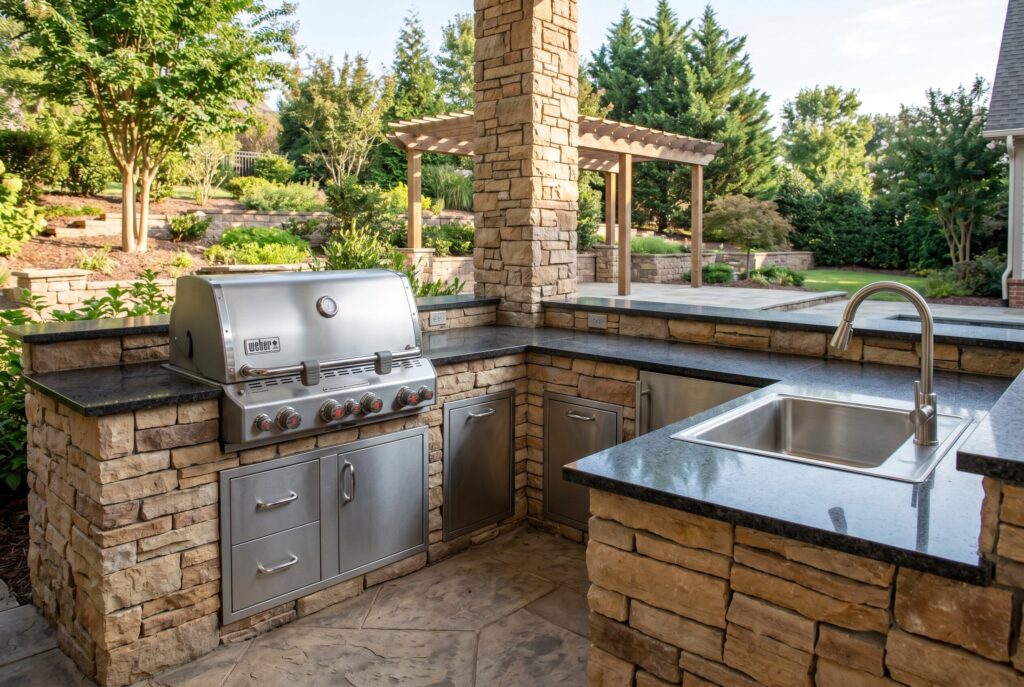
An outdoor grill station with a sink creates a more efficient cooking workflow by keeping food prep and cleanup in the same area. An L-shaped layout works especially well, with the grill on one side and the sink on the other. Leave at least 24 inches between them to maintain a safe and comfortable workspace.
This setup is ideal for homeowners who cook outdoors frequently or entertain guests on a regular basis. When planning the layout, consider water supply, drainage, and weather-resistant materials around the sink area. Although installation costs are typically higher than a grill-only station, the added convenience can make outdoor cooking feel much closer to an indoor kitchen experience.
5. The Peninsula Bar
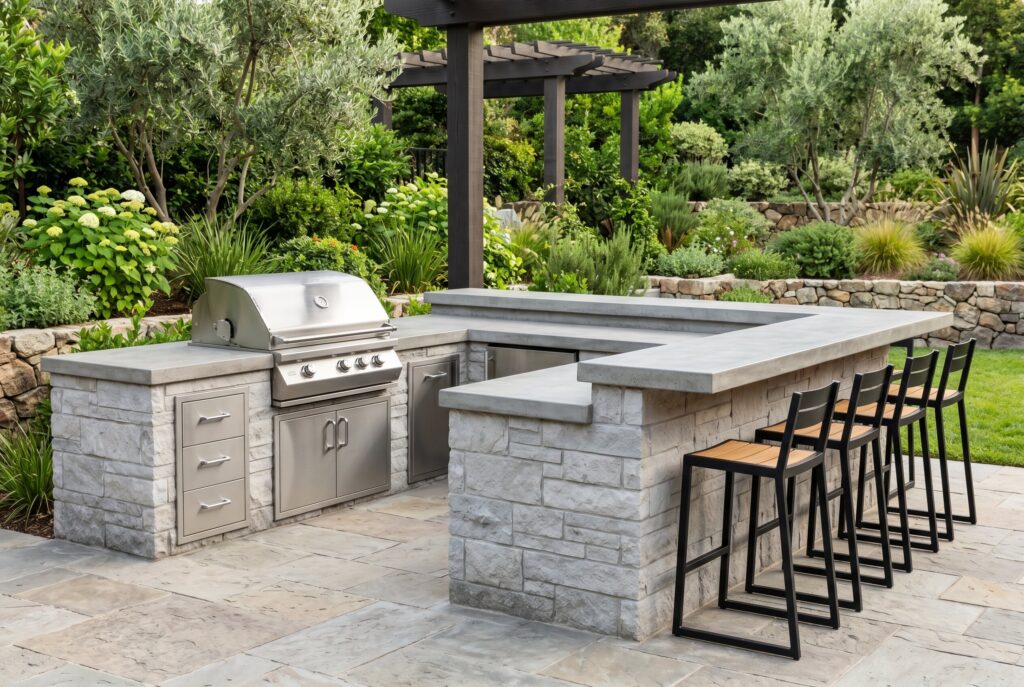
This outdoor kitchen island layout is designed for homeowners who love entertaining. Place the grill on the cook’s side and raise the opposite counter to bar height, creating a comfortable seating area where guests can relax, chat, and enjoy drinks while food is being prepared. The elevated ledge also helps conceal cooking tools, ingredients, and prep clutter from view.
This setup works best for social gatherings and family events where interaction is part of the experience. When designing the island, allow enough clearance behind seating and around the grill for safe movement. While it requires more space than a basic grill station, it creates a natural gathering spot that blends cooking, dining, and conversation in one area.
6. The Dual Zone L Shape
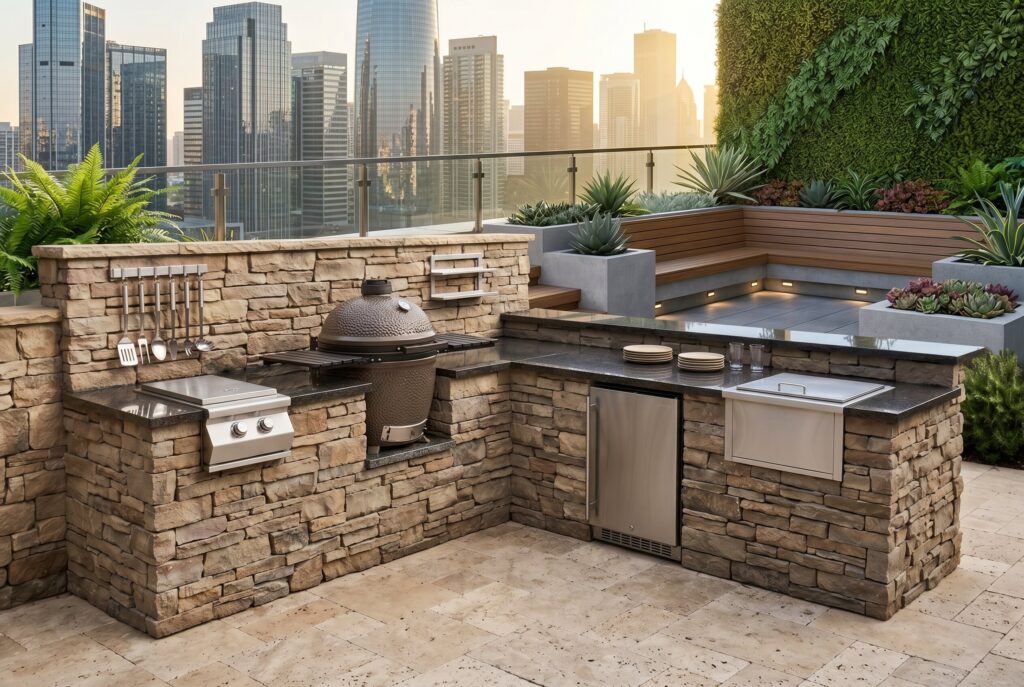
This layout is ideal for homeowners who entertain frequently and want separate zones for cooking and serving. One leg of the layout holds the gas grill and side burner, while the other includes an undercounter refrigerator, ice bin, and serving counter. By separating hot and cold functions, the space feels more organized and easier to navigate during gatherings.
The design works especially well for weekend parties and larger groups because guests can access drinks and snacks without entering the cooking area. When planning the layout, ensure there is enough walkway space between zones and convenient access to power, gas, and refrigeration. Although it requires more room than a basic grill station, it creates a smoother and more guest-friendly entertaining experience.
7. The Grill Station With Pizza Oven
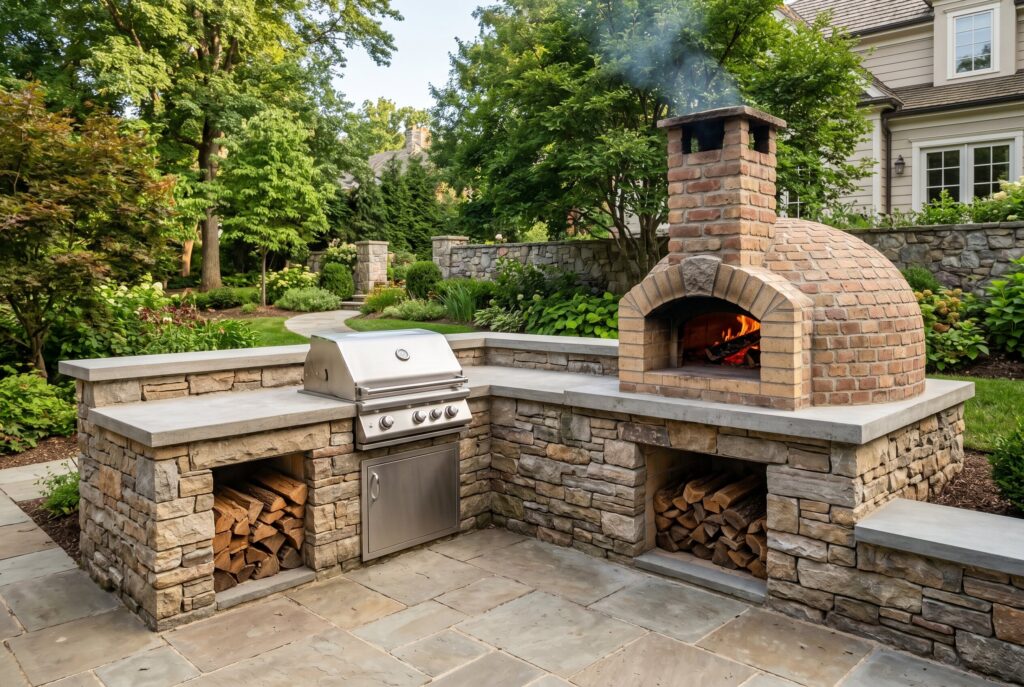
A grill station with a pizza oven is perfect for homeowners who enjoy outdoor entertaining and wood-fired cooking. Place the pizza oven at one end as the focal point, then position a smaller grill beside it for steaks, vegetables, and side dishes. Materials such as firebrick, natural stone, and concrete help create a durable, built-in look that anchors the entire outdoor kitchen.
This layout works best in medium to large backyards where the cooking area can become a gathering point for guests. Because both appliances generate significant heat, proper spacing, ventilation, and heat-resistant surfaces are essential. While the upfront cost is higher than a standard grill setup, the combination of live-fire cooking and visual appeal makes it one of the most impressive outdoor kitchen designs.
8. The Pellet Grill Station
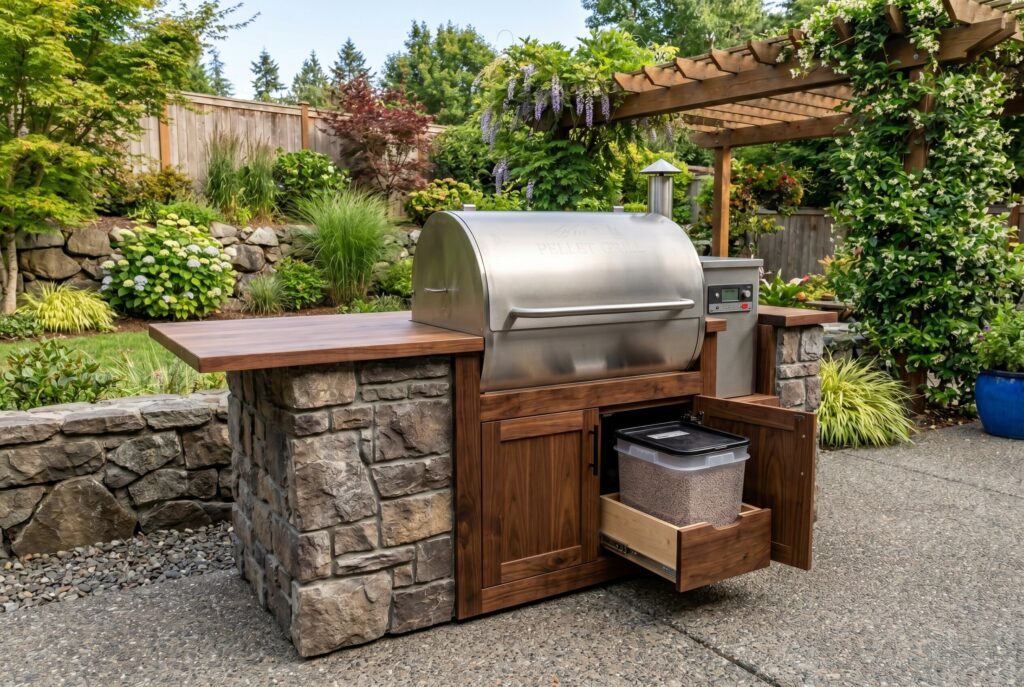
A pellet grill station is ideal for homeowners who enjoy low-and-slow barbecue, smoking, and precise temperature control. Because wood pellets must stay dry, include a dedicated storage cabinet with sealed bins or pull-out drawers beneath the grill. A long prep counter nearby provides space for trays, thermometers, seasonings, and resting food during longer cooking sessions.
This layout works best for serious grillers who regularly cook larger cuts of meat or host weekend gatherings. When designing the station, prioritize weather protection and moisture-resistant storage to keep pellets in good condition. While pellet grills require more storage space than traditional gas grills, they offer excellent versatility for smoking, roasting, grilling, and baking.
9. The Argentine Asado Build
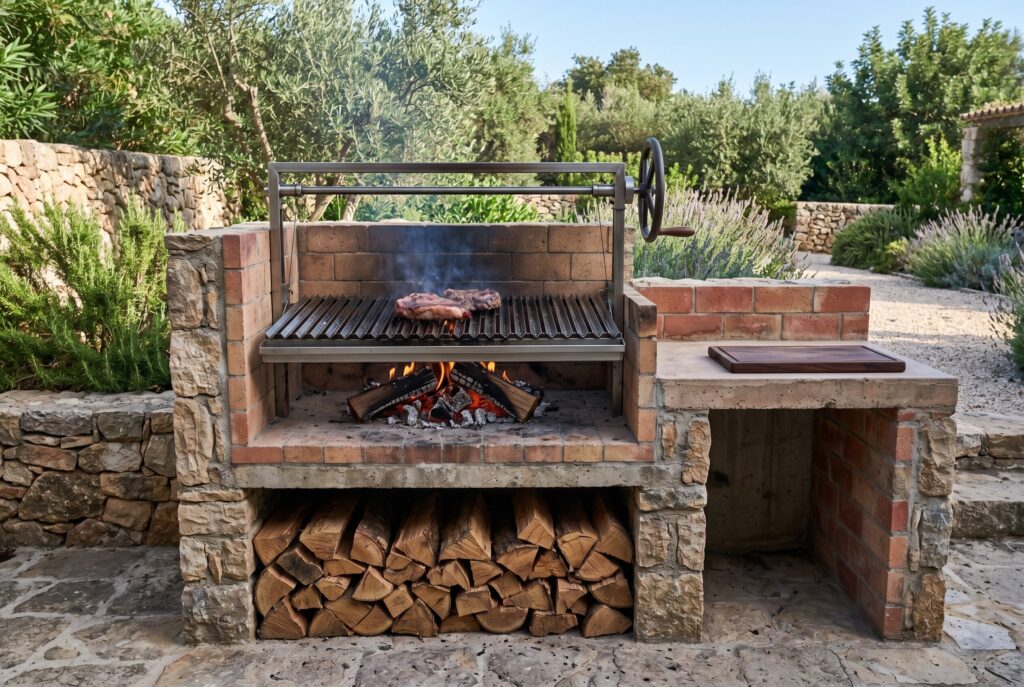
This firebrick grill station is designed for homeowners who enjoy traditional wood-fired and charcoal cooking. The height-adjustable grate allows better control over heat, while a side counter provides space for carving, serving, and food prep. A dedicated storage bay below keeps firewood organized and within easy reach during longer cooking sessions.
This layout works best for outdoor cooks who value hands-on grilling and authentic live-fire flavor. Because open-fire cooking generates more heat, smoke, and sparks than conventional grills, proper clearance, ventilation, and fire-resistant materials are essential. While it requires more attention during use, it delivers a cooking experience and visual impact that few modern grill stations can match.
10. The Ultimate Smoker Corner
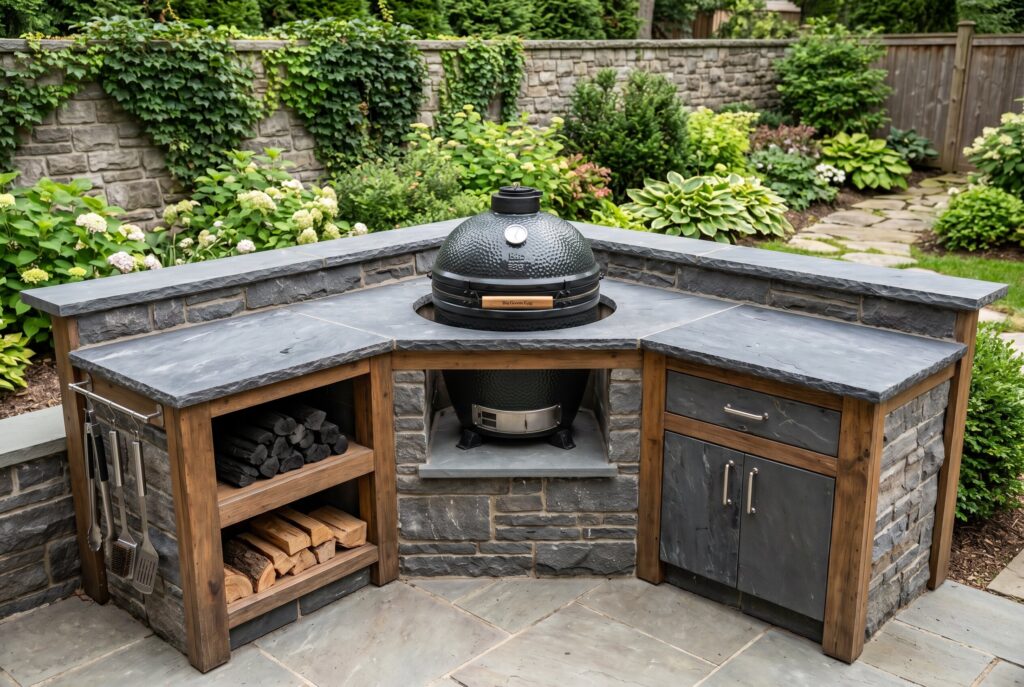
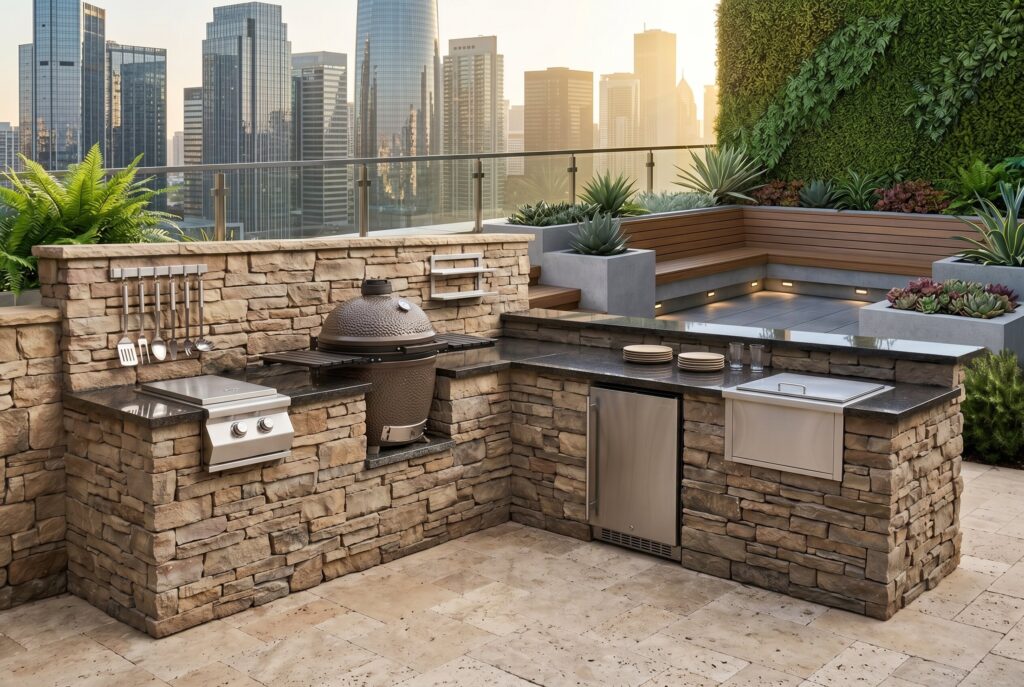
A Kamado-style smoker station is perfect for homeowners who enjoy smoking, roasting, grilling, and baking with a single cooker. A corner counter with a circular cutout keeps the heavy ceramic smoker secure while providing surrounding workspace for tools, ingredients, and serving trays. The built-in design also gives the station a clean, custom appearance.
This layout works best for dedicated outdoor cooks who use their Kamado regularly and want a permanent setup. Because ceramic cookers are extremely heavy and retain heat for long periods, the supporting structure must be strong, level, and made from heat-resistant materials. While it requires more planning than a freestanding setup, the result is a safer, more functional, and more polished outdoor cooking station.
11. The Covered Outdoor Grill Station
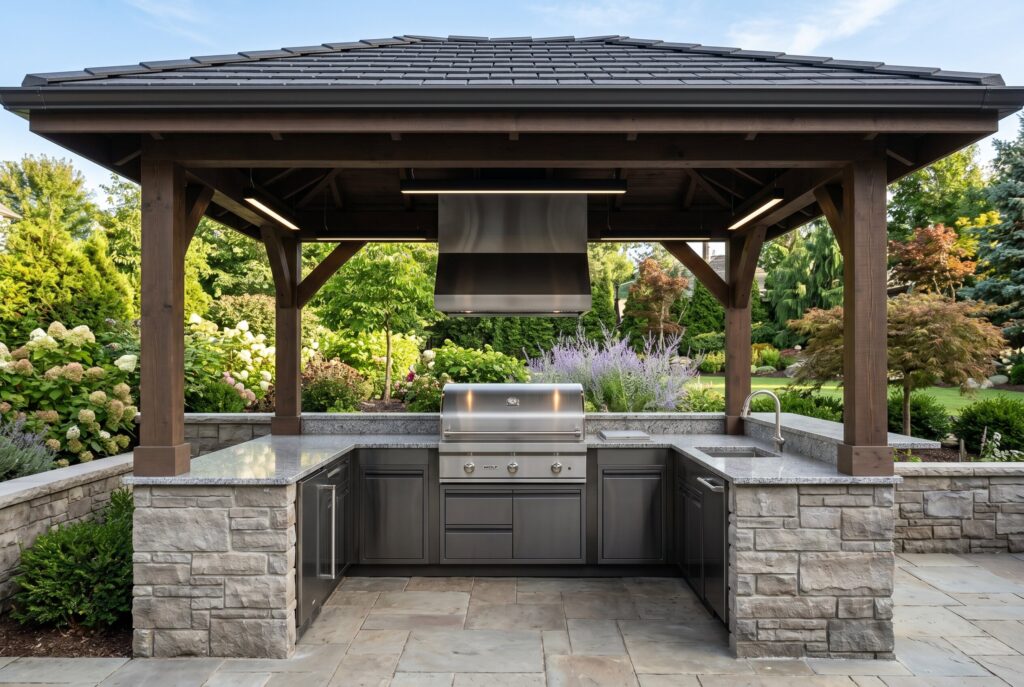
A covered outdoor grill station is an excellent choice for homeowners who want to cook comfortably throughout the year. Under a pergola, pavilion, or roof extension, proper ventilation is essential, especially when the grill sits beneath a solid ceiling. An outdoor-rated vent hood helps manage smoke and heat, while task lighting keeps the cooking area functional after sunset.
This setup works well in a wide range of climates because it provides protection from sun, rain, and seasonal weather. When planning the design, pay close attention to ventilation clearances, fire-safe materials, and local building codes. Although the added roof structure increases the overall cost, it significantly improves comfort, extends the cooking season, and helps protect appliances from the elements.
12. The Concrete Monolith
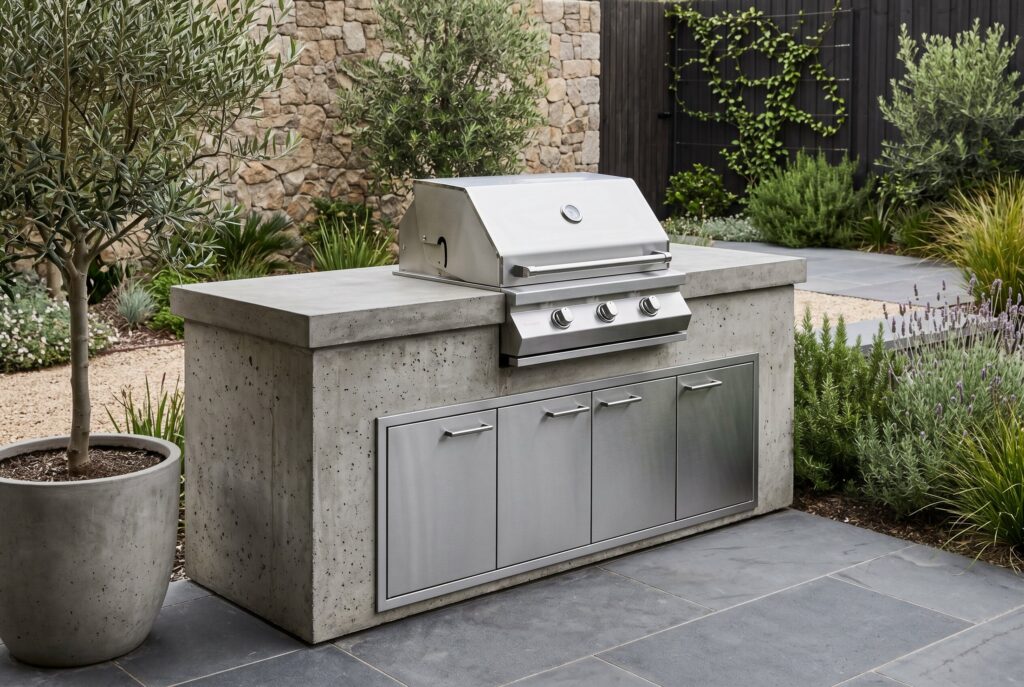
This concrete outdoor kitchen is ideal for homeowners who want a durable, low-maintenance cooking station that can withstand heat, rain, and changing weather conditions. Using poured concrete or concrete block for the base and countertop creates a solid structure that pairs well with stainless steel doors and a simple built-in grill for a clean industrial look.
This layout works especially well in harsh climates and high-use outdoor spaces where longevity matters more than flexibility. When building, ensure proper drainage and consider sealing exposed concrete to reduce staining and moisture absorption. While concrete construction is heavier and more permanent than other options, it offers exceptional durability and one of the longest lifespans among outdoor kitchen designs.
13. The Ready To Assemble Module
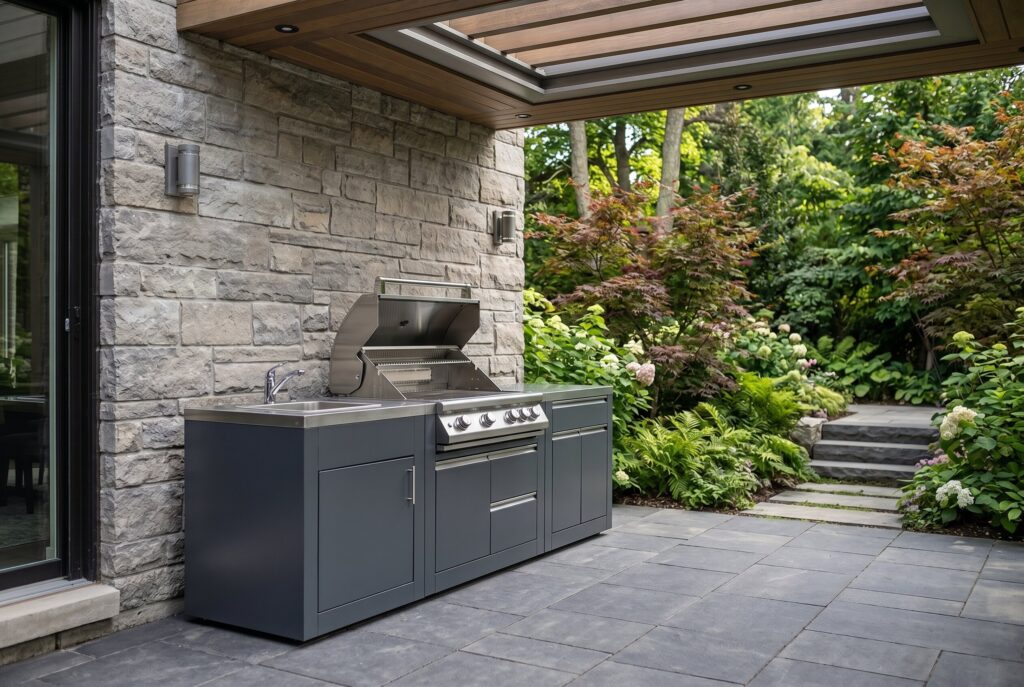
A ready-to-assemble grill station is a great option for homeowners who want a built-in look without the time, cost, or complexity of a fully custom outdoor kitchen. Modular panels, pre-cut openings, and matching outdoor kitchen cabinets simplify installation while creating a more polished appearance than a standalone grill cart.
This setup works best for DIY projects, first-time outdoor kitchen builders, and homeowners looking for a faster installation process. Before purchasing, verify that the modules are compatible with your grill model and available space. While customization options are more limited than custom masonry builds, the balance of convenience, affordability, and professional appearance makes this one of the most popular outdoor kitchen solutions.
14. The V Shaped Corner Station
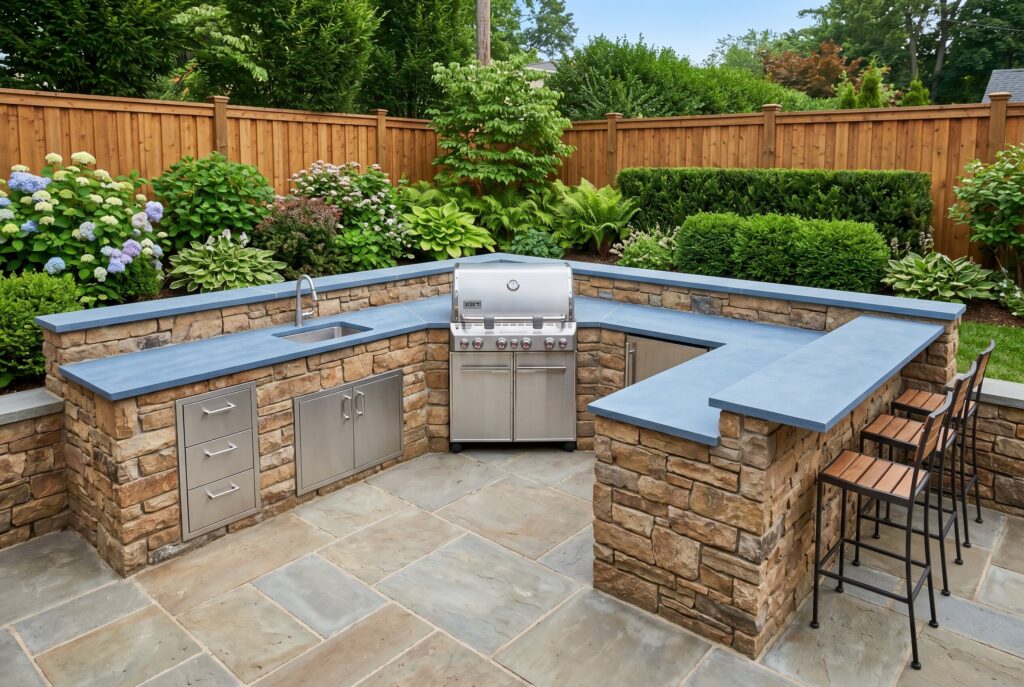
A V-shaped outdoor grill station is an excellent choice for corner locations and patios where space needs to be used efficiently. Position the grill at the center point of the V, with one wing dedicated to food preparation and the other to serving, storage, or drinks. This arrangement creates a natural workflow while keeping the cooking area organized.
This layout works best for homeowners who enjoy entertaining but don’t want the kitchen to dominate the entire patio. The open design keeps the cook engaged with guests while preserving valuable central gathering space. When planning the layout, ensure each wing has enough counter space and maintain comfortable walkways around the station for easy movement during gatherings.
15. The Grill and Fireplace Combo
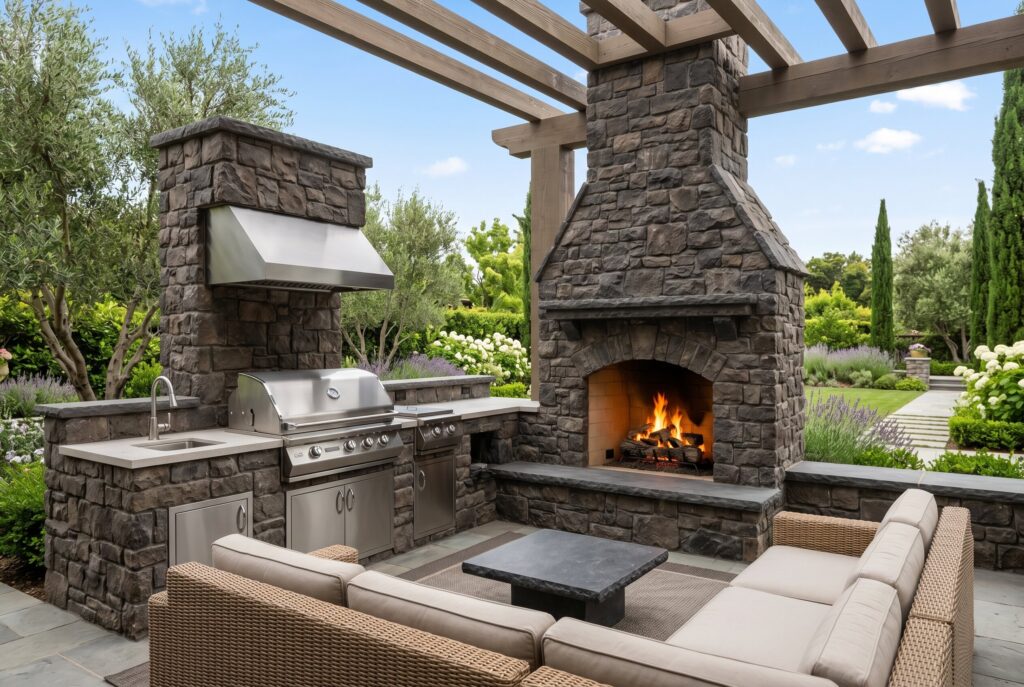
For a luxury backyard, combining a grill station with an outdoor fireplace creates a space that feels more like an outdoor living room than a simple cooking area. Keep the cooking zone on one side and the lounge area on the other, using a large sectional sofa or extended bench seating to encourage conversation and relaxation.
This layout is ideal for homeowners who entertain frequently and want a destination space for dining, cooking, and gathering. When designing the layout, maintain enough separation between the fireplace and grill for safety and comfort, while ensuring both areas remain visually connected. Although it requires more space and a larger budget, the result is a highly functional outdoor retreat that can be enjoyed throughout the year.
Conclusion
The difference between a messy grilling corner and a polished outdoor kitchen grill station is workflow. A well-designed station provides heat, counter space, storage, safe clearances, lighting, and a smooth path from prep to serving.
Start with your grill type, then choose the structure around it. Gas, charcoal, pellet, electric, and smoker-based outdoor kitchen grill setups all require different amounts of space, ventilation, and storage. Once the safety requirements are addressed, style becomes much easier. Add stone, stainless steel, brick, concrete, or warm wood accents to create an outdoor kitchen grill station that makes every cookout smoother, safer, and more enjoyable.
Related Articles
Outdoor Bar Ideas: 17 Layouts for Happy Hour at Home
19 Genius Outdoor Kitchen Layouts to Upgrade Your Yard (2026)