

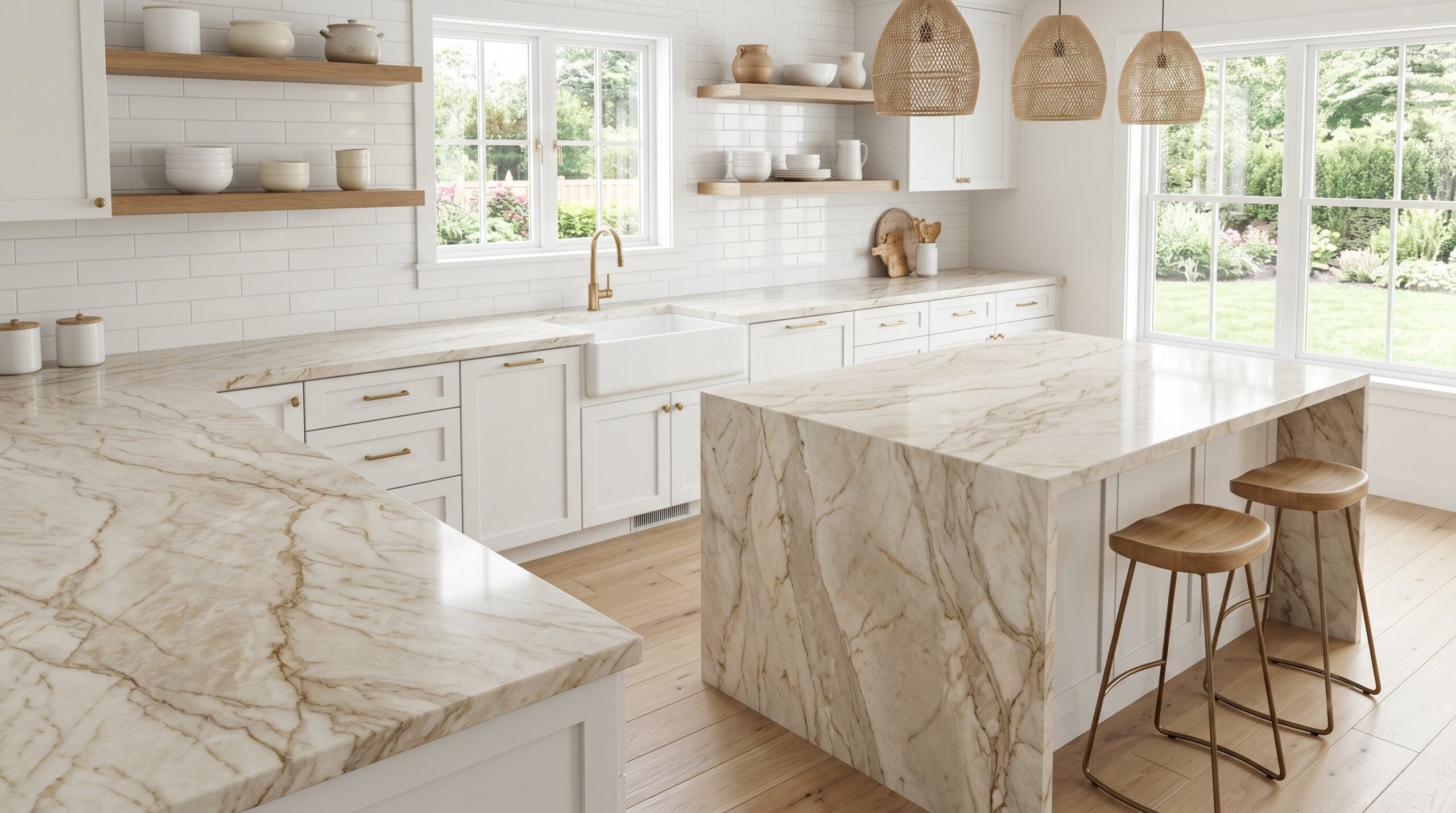
The biggest shift in 2026 kitchen countertop trends is simple: homeowners want beauty without babysitting. Glossy, delicate, high-maintenance surfaces are losing ground to countertop materials that hold up to spills, knife marks, fingerprints, and everyday cooking, and in several cases hot pans too.
The strongest kitchen countertop trends for 2026 include porcelain countertops, honed quartz countertops, soapstone countertops, sintered stone, and Taj Mahal quartzite. These surfaces last while still looking warm, refined, and expensive. The design mood is moving toward warm neutrals, marble-look surfaces, honed and leathered finishes, softer edge profiles, and statement islands that feel elegant without being fragile.
Countertop Comparison at a Glance
| Material | Hot pans | Scratches | Stains and acids | Needs sealing? | Typical installed cost |
|---|---|---|---|---|---|
| Porcelain | Excellent | Very good (edges can chip) | Very good | No | About $55–$120 per sq ft |
| Honed quartz | Poor (always use a trivet) | Good | Very good (nonporous) | No | About $50–$150 per sq ft |
| Soapstone | Excellent | Scratches easily, but sands out | Good (resists acids) | No | About $70–$150 per sq ft |
| Sintered stone | Excellent | Very good (edges can chip) | Very good | No | About $95–$200 per sq ft |
| Taj Mahal quartzite | Very good | Very good | Good once sealed | Yes, periodically | About $70–$200 per sq ft |
Prices are typical 2026 installed ranges and vary widely by region, slab grade, and edge details. Get quotes from local fabricators before you budget.
The 5 Toughest Countertop Materials for 2026
1. High-Performance Porcelain
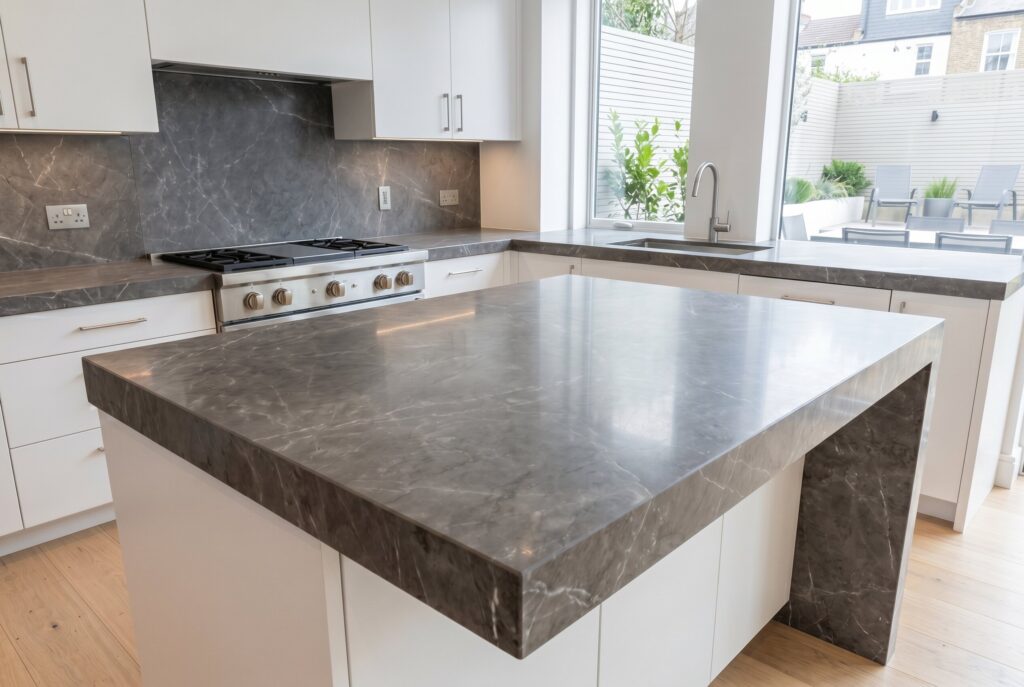
Porcelain countertops are becoming one of the most practical choices for 2026 because they solve several problems at once. They resist heat, stains, UV exposure, and scratches better than many traditional surfaces, which makes them especially useful for busy kitchens and even outdoor cooking zones.
The deeper reason porcelain is rising isn’t only durability. It’s visual flexibility. Modern porcelain slabs can mimic marble, concrete, limestone, and warm stone with impressive realism. That means homeowners can get the look of luxury natural stone without worrying as much about wine rings, lemon juice, or constant sealing.
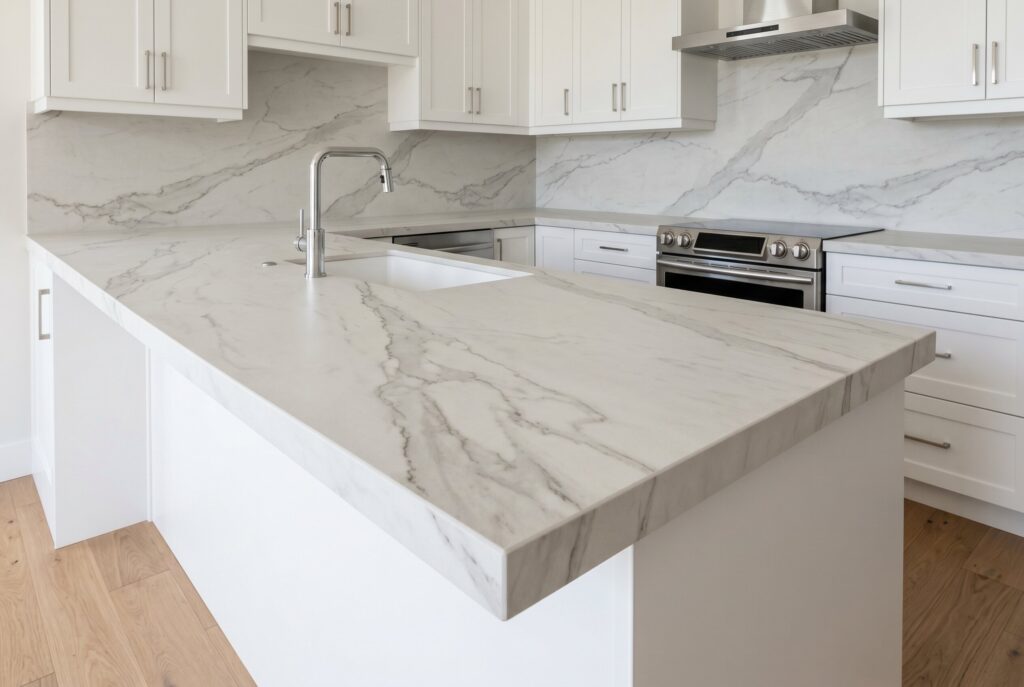
Porcelain does require careful fabrication because thin slabs can chip at the edges if poorly installed. The smartest move is to choose a skilled fabricator, thicker-looking edge buildup, and a finish that suits your lifestyle. For families, matte or softly textured porcelain hides smudges better than glossy white slabs. It’s beautiful, but it doesn’t demand museum-level caution.
One more thing to check before you order: many porcelain slabs carry their pattern on the surface only, so a cut edge can show a plain body color. If the edge will be visible, ask for a full-body slab or a mitered edge that wraps the pattern around.
>>> 10 Best Grocery List Apps for Meal Planning & Saving
2. Matte and Honed Quartz Countertops
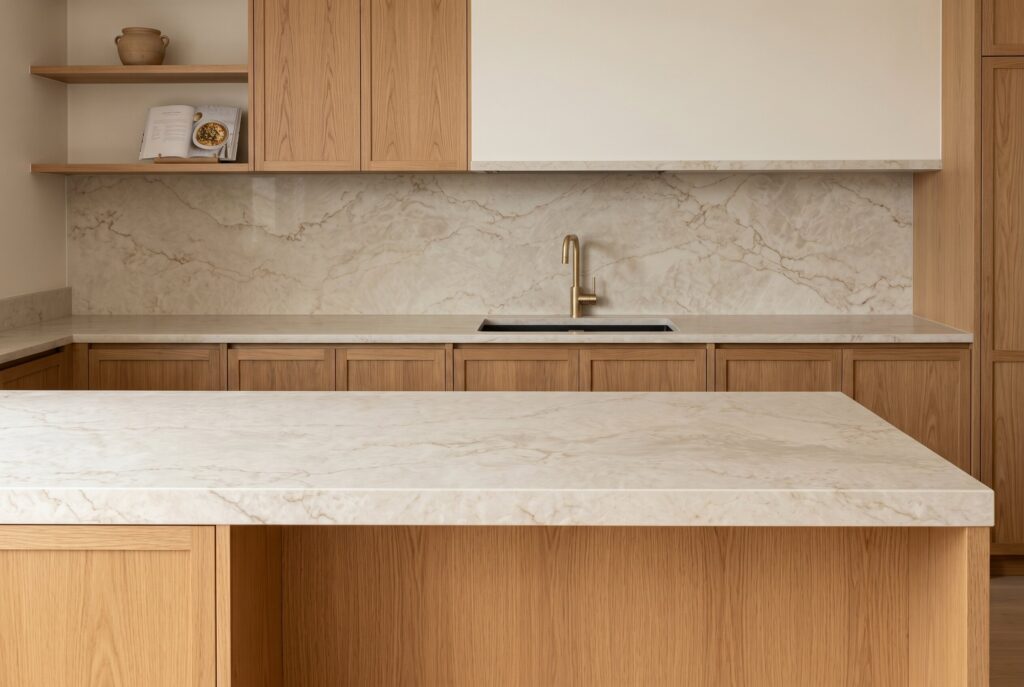
Quartz countertops aren’t new, but the 2026 version looks very different from the shiny white quartz that dominated the last decade. The trend is moving toward honed, matte, and leathered finish surfaces that feel softer to the touch and more architectural in the room.
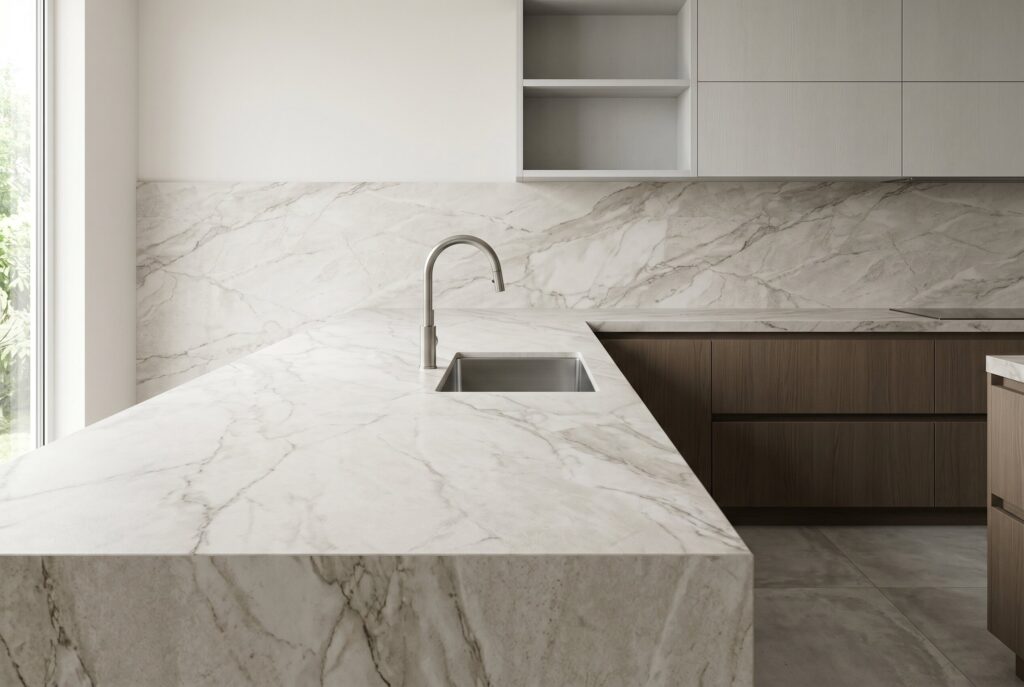
The appeal is practical. Quartz is nonporous, so it doesn’t need annual sealing like many natural stones. It handles coffee, oil, and everyday food prep well, which is why it’s still one of the most homeowner-friendly countertop materials. The mistake is choosing a surface that looks too flat, plastic, or overly artificial.
The one thing quartz can’t do is take a hot pan. Its resin binder can scorch, discolor, or crack under direct heat, and major quartz brands exclude heat damage from their warranties, so keep a trivet or hot pad next to the stove.
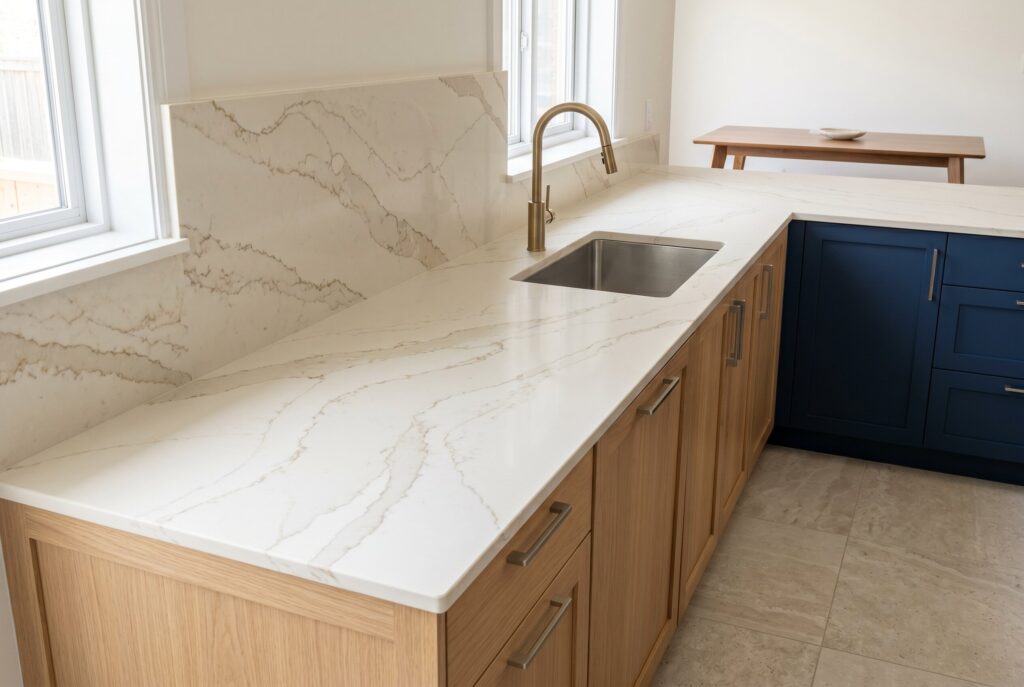
The better 2026 direction is marble-look quartz with warm veining, creamy backgrounds, mushroom tones, taupe movement, and sandy gold accents. These warm neutral countertops feel calmer than stark white and pair beautifully with oak, walnut, sage green, and navy cabinetry. Honed quartz does need regular wiping because matte surfaces can show oils differently, but it still offers a strong balance between beauty, performance, and ease.
It’s also worth knowing the health debate around engineered quartz. Cutting and polishing it releases crystalline silica dust that has been linked to a rise in silicosis among countertop fabrication workers. Australia banned engineered stone in July 2024, and in September 2026 California regulators released a draft emergency rule that would prohibit fabricating artificial stone containing more than 1% crystalline silica. Installed countertops aren’t considered a hazard in normal use, but ask your fabricator how they control dust, and expect lower-silica product lines to become more common.
3. Soapstone Countertops
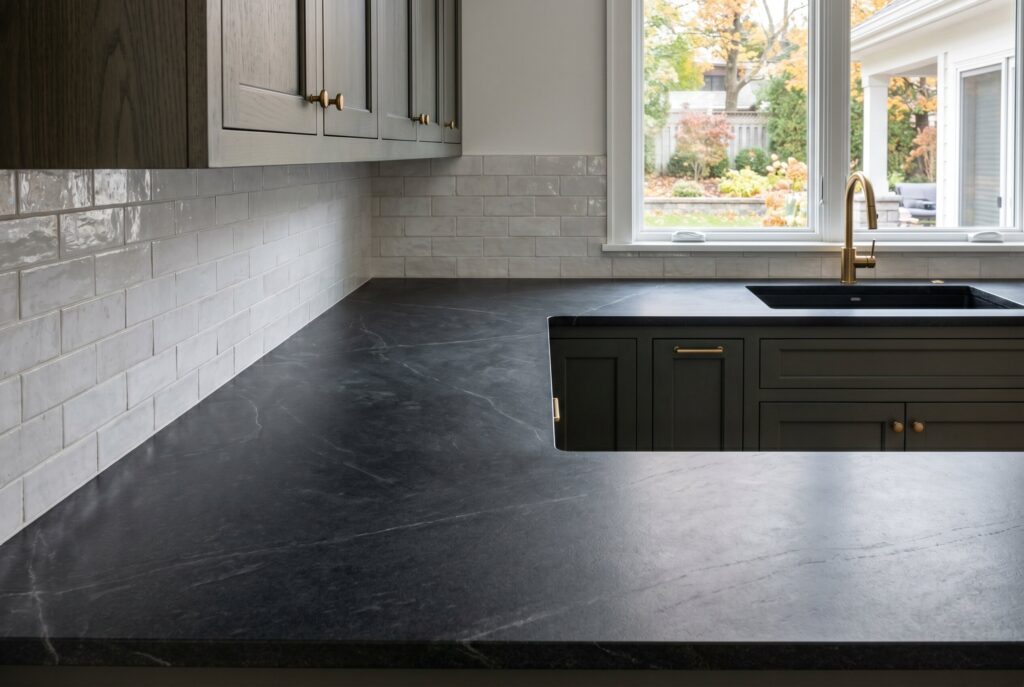
Soapstone countertops are perfect for homeowners who want natural stone with character but don’t want the anxiety of marble. Soapstone is dense, nonporous, heat resistant, and naturally resistant to acids. Lemon juice, vinegar, and tomato sauce don’t attack it the same way they can attack marble or limestone.
Its beauty is quieter and moodier. Soapstone often appears in deep charcoal, gray, blue-gray, or green-black tones with soft veining. Over time, it develops a patina, which is exactly why some designers love it. It doesn’t stay frozen in showroom perfection. It ages with the home.
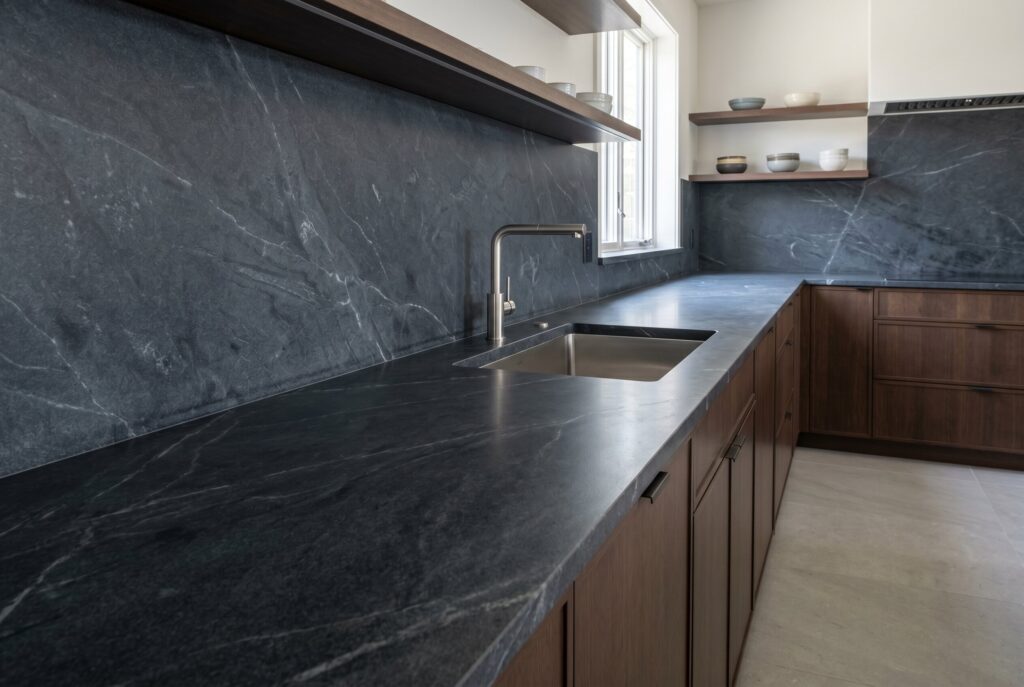
That said, soapstone isn’t indestructible in the same way porcelain or sintered stone is. It can scratch because it’s softer. But scratches can often be sanded or blended with mineral oil. This makes soapstone ideal for people who appreciate a lived-in kitchen. It’s not the right surface for someone who wants every inch to stay flawless, but it’s excellent for anyone who values warmth, honesty, and tactile depth.
4. Sintered Stone
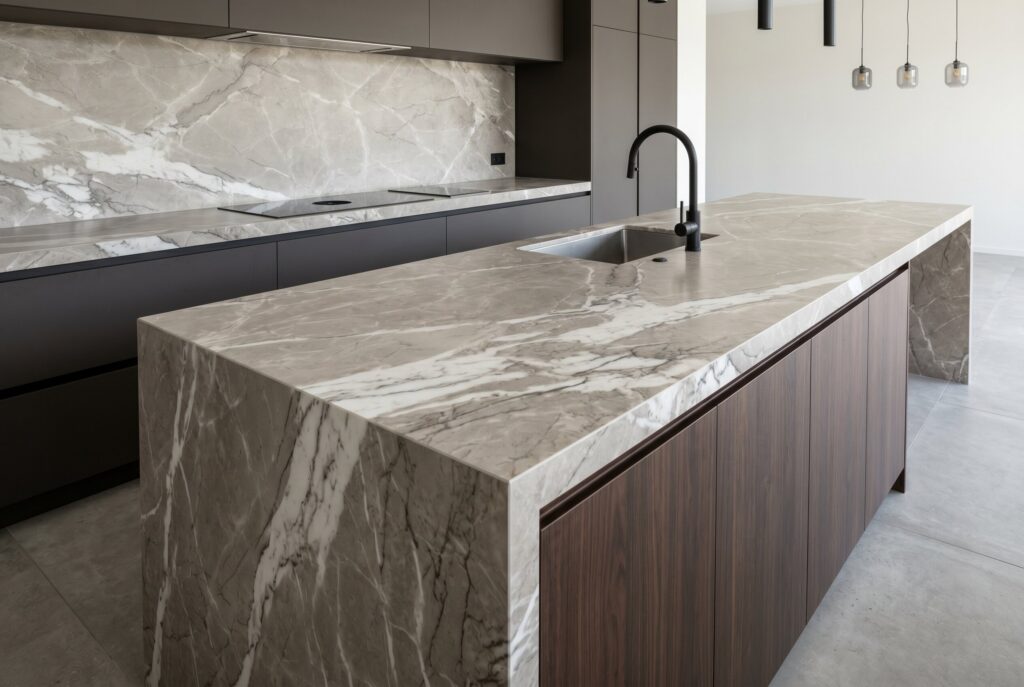
Sintered stone is one of the most advanced countertop materials for homeowners who want extreme performance. It is made through intense heat and pressure, creating a surface that resists scratches, stains, UV light, heat, and moisture. In many ways, it takes the strengths of porcelain and pushes them further.
The line between sintered stone and porcelain is blurry. Both are made by compressing mineral powders and firing them at very high temperatures, and well-known slab brands are often sold under either label. In practice, compare slab thickness, whether the pattern runs through the body, and your fabricator’s experience rather than the name on the sample.
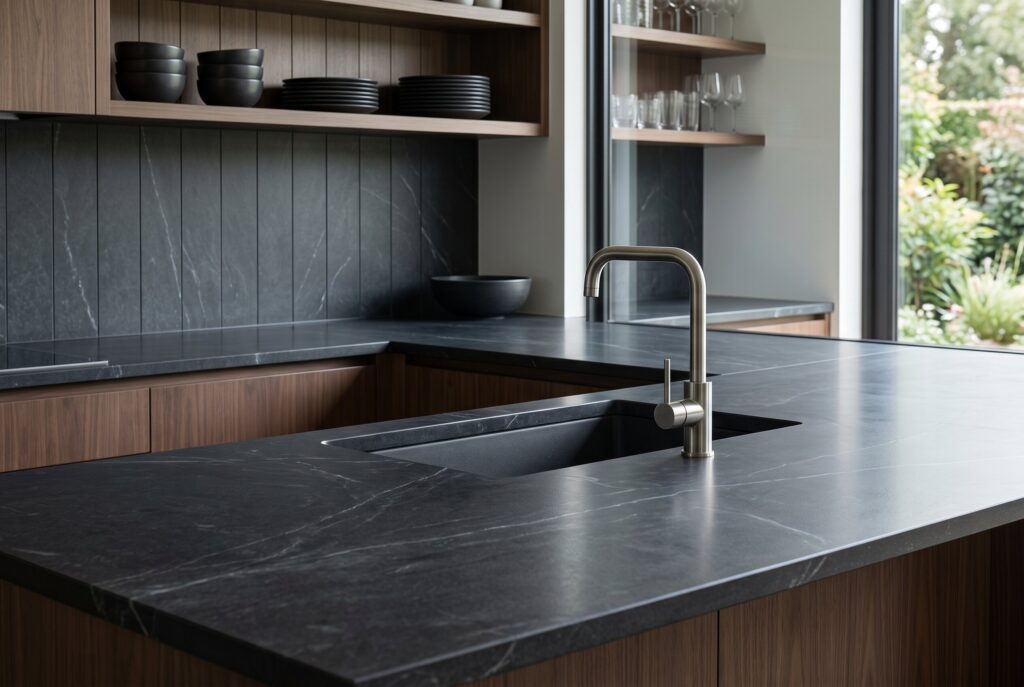
This material fits 2026 kitchen countertop trends because it allows dramatic veining and refined color without the maintenance worries of natural marble. You can get bold stone looks, concrete effects, soft limestone moods, or highly minimal slabs while keeping the surface tough enough for real cooking.
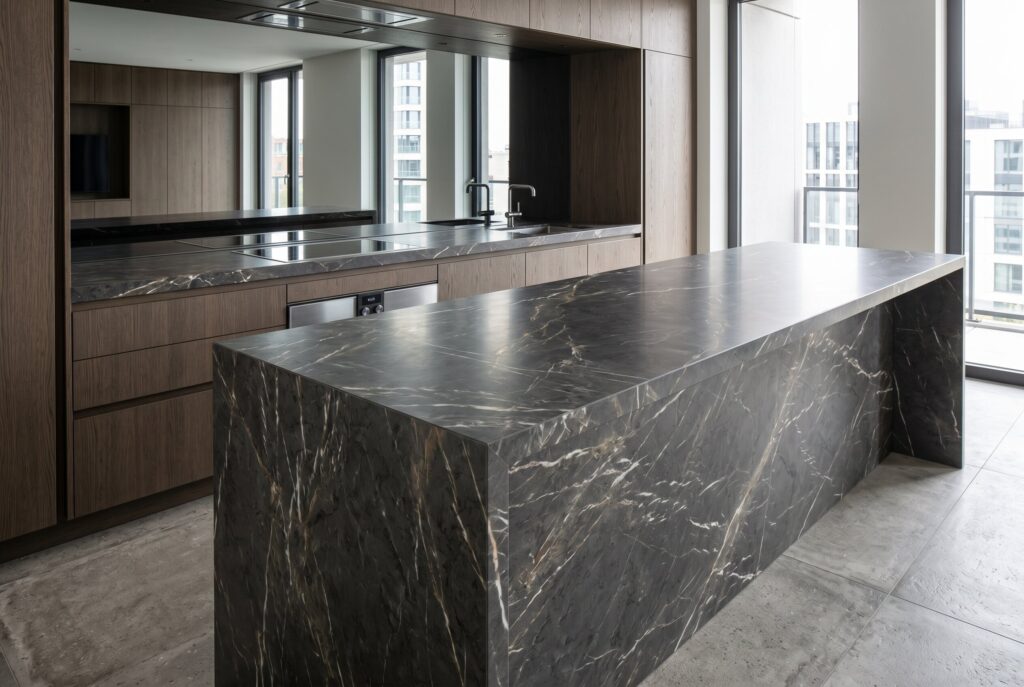
The tradeoff is cost and installation precision. Sintered stone can be expensive, and not every contractor handles it well. Poor fabrication can lead to chipping at seams or edges. If you’re investing in it, the installer matters as much as the slab. Used well, it’s one of the strongest choices for a statement kitchen island that needs to survive children, guests, hot cookware, and daily use.
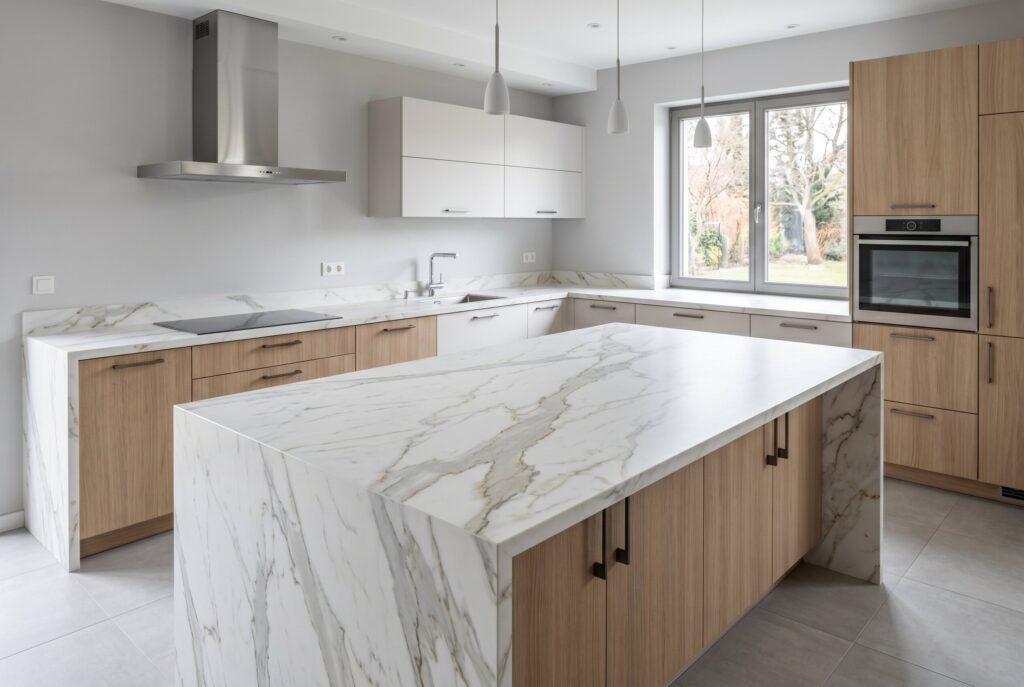
5. Taj Mahal Quartzite
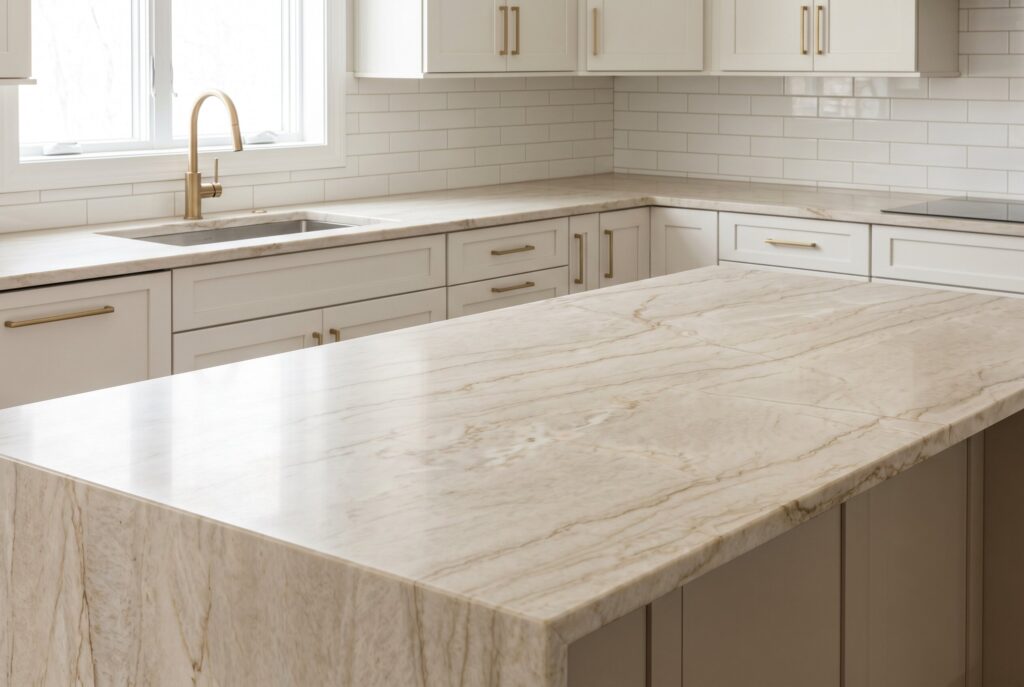
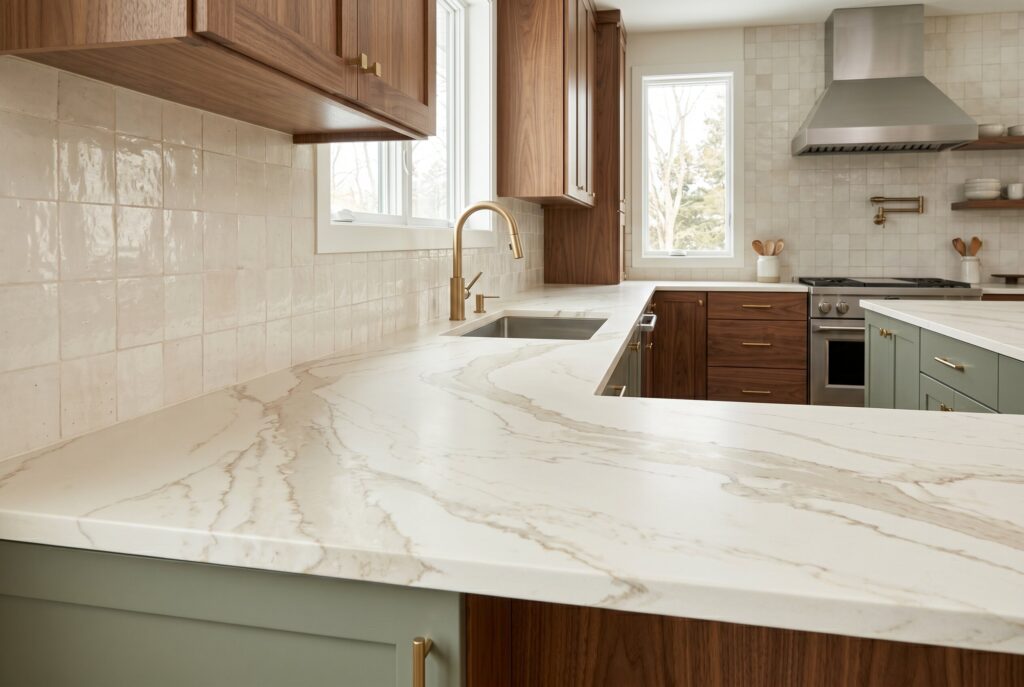
Taj Mahal quartzite is the luxury choice for homeowners who want the elegance of marble but need better countertop longevity. It has a creamy background, soft gold veining, and a warm organic movement that works beautifully in Transitional, Organic Modern, and Modern Farmhouse kitchens.
Unlike marble, quartzite is generally harder and more resistant to scratching. It brings natural depth that engineered surfaces often try to imitate but can’t fully replicate. On a large island, Taj Mahal quartzite can become the quiet centerpiece of the room. It looks expensive without screaming for attention.
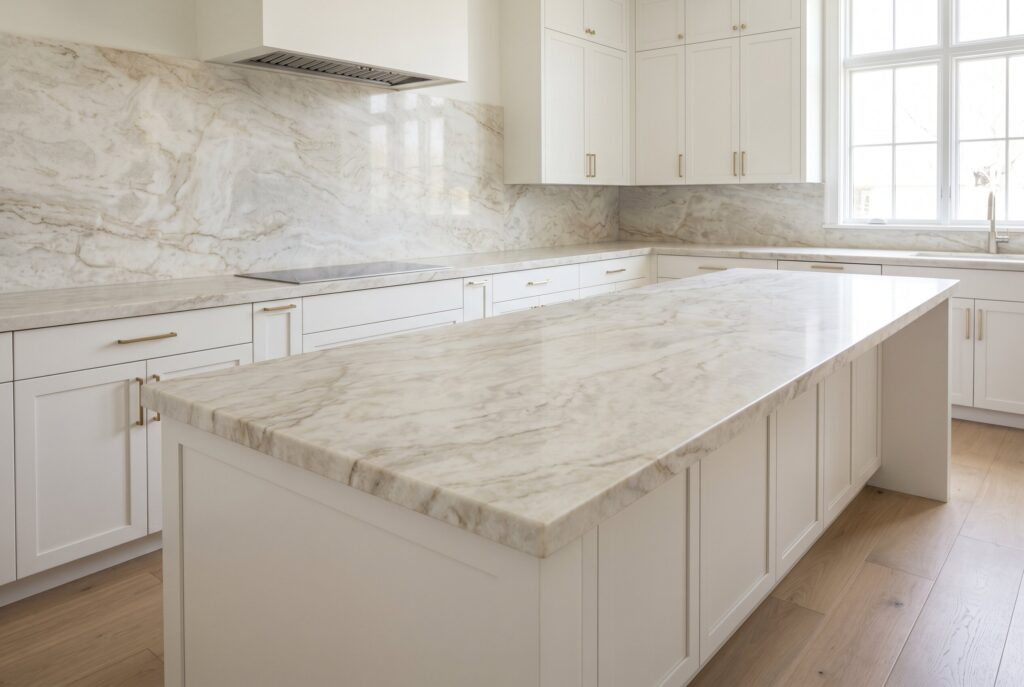
Still, it’s important to understand the maintenance. Quartzite usually needs sealing, and the quality can vary by slab. Some materials are mislabeled, so homeowners should confirm the stone is true quartzite, not a softer marble sold under a similar name. If chosen and sealed correctly, it’s one of the most timeless countertop materials for 2026 and beyond.
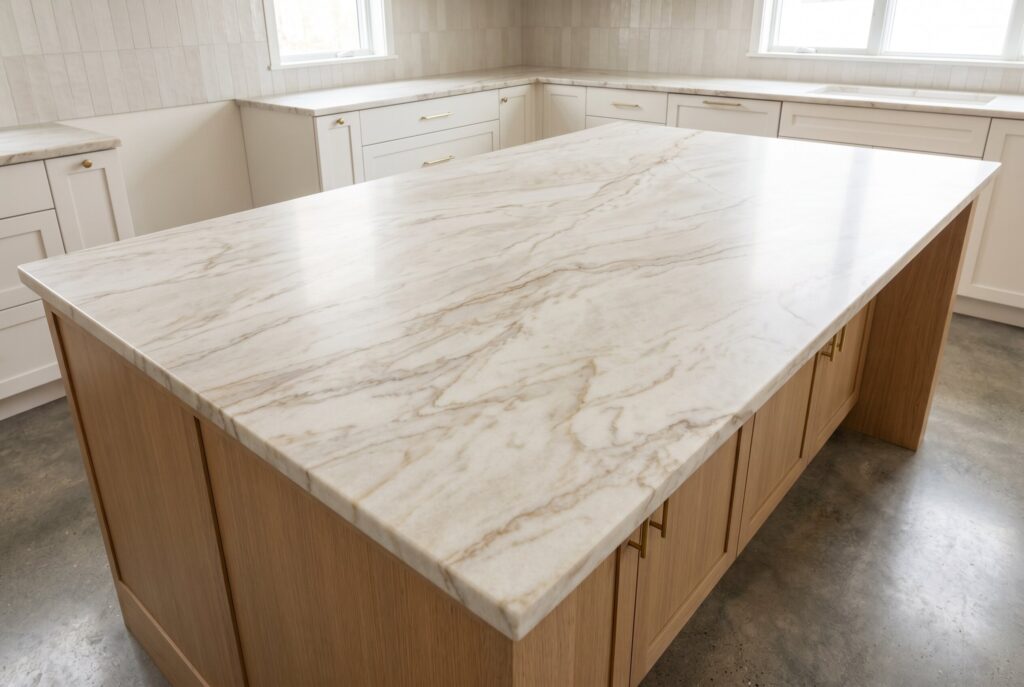
The Edge Debate: Is the Waterfall Edge Dead?
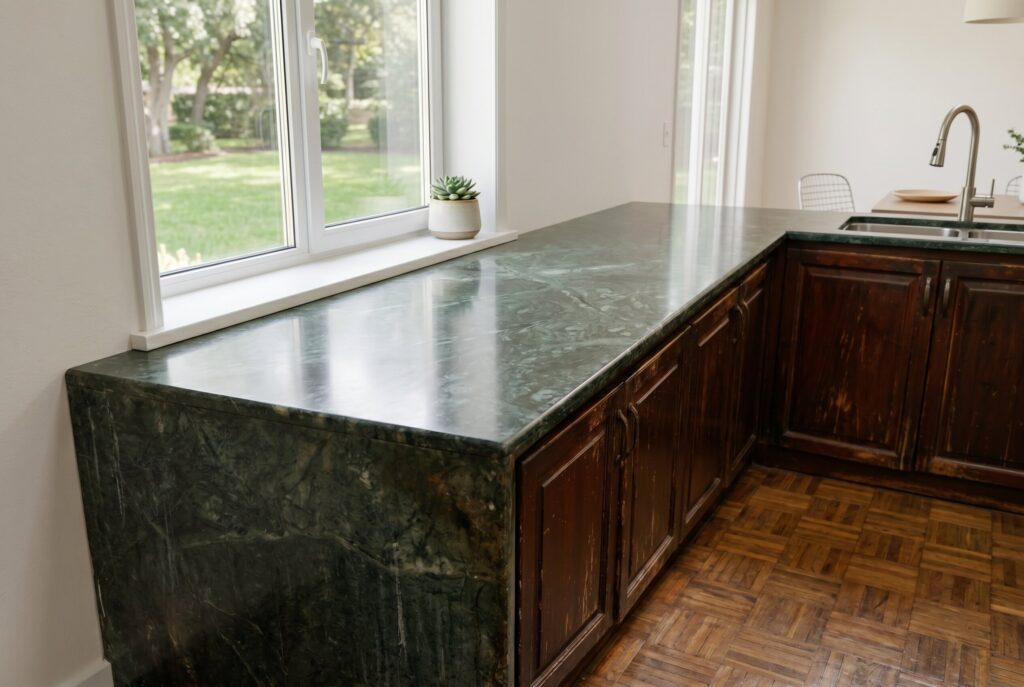
The waterfall edge isn’t completely dead, but it’s changing. The sharp 90-degree slab dropping to the floor can still work in ultra-modern kitchens, but it often feels heavy, expensive, and too rigid for the warmer direction of 2026 design.
New countertop edge styles are softer and more detailed. Curved profiles, eased edges, ogee edges, small ledges, and subtle rounded corners are gaining attention because they feel more crafted. They also make the kitchen more comfortable to live with, especially in homes with children or narrow walkways.
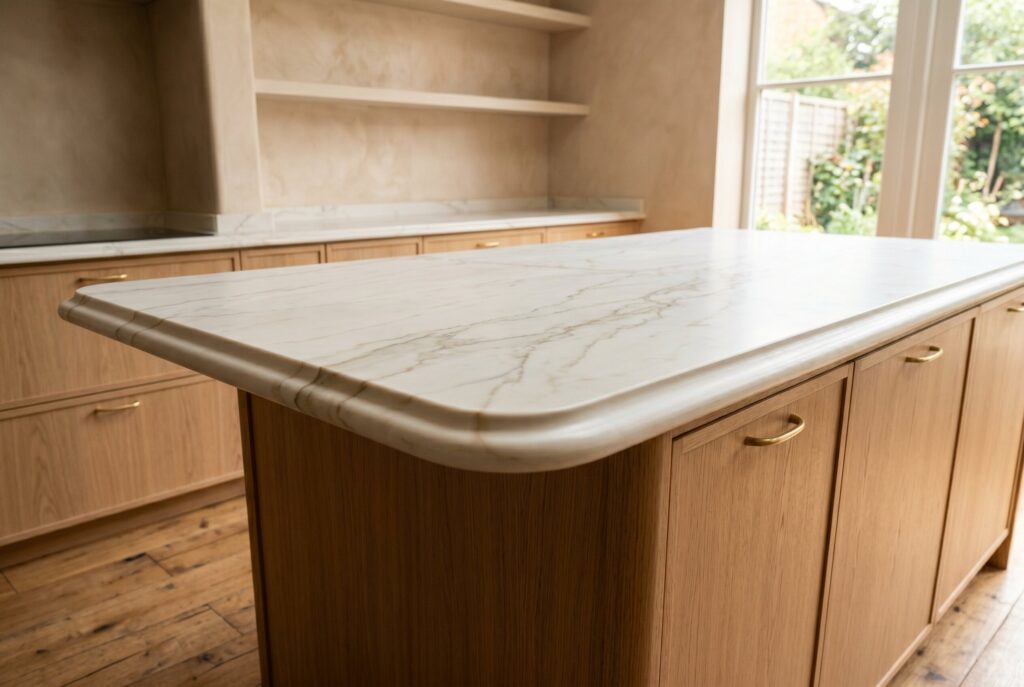
A waterfall edge makes the most sense when the slab is truly special and the island has room to breathe. If the kitchen is compact, a softer edge profile may look more elegant and cost less. The best 2026 approach isn’t to follow one rule. It’s to match the edge to the architecture, material thickness, cabinet style, and how the family actually moves through the room.
Frequently Asked Questions
What is the most durable kitchen countertop?
For all-around toughness, porcelain and sintered stone handle heat, scratches, and stains better than most surfaces. If you want natural stone, quartzite and granite are the most durable choices, though both need periodic sealing.
Is quartz heat resistant?
Only partly. The quartz itself tolerates heat, but the resin that binds it can scorch or discolor under a hot pan, and most brands don’t cover heat damage under warranty. Always use a trivet.
What is the difference between quartz and quartzite?
Quartz is an engineered surface made from roughly 90% ground quartz bound with resin, so it’s nonporous and never needs sealing. Quartzite is a natural stone that’s harder and more heat tolerant, but it needs periodic sealing and every slab is different.
Do soapstone countertops scratch?
Yes. Soapstone is softer than most countertop materials, so it scratches more easily, but light scratches can usually be sanded out or blended with mineral oil.
Conclusion
Your kitchen isn’t a museum. It’s where coffee spills, pans land, children climb onto stools, guests gather, and weeknight dinners happen fast. The best 2026 kitchen countertop trends respect that reality.
Porcelain, honed quartz countertops, soapstone countertops, sintered stone, and Taj Mahal quartzite all offer different versions of liveable luxury. Some are nearly maintenance-free. Some age beautifully. Some create a statement kitchen island that defines the entire room.
The smartest countertop choice isn’t always the most expensive slab. It’s the one that fits your cooking habits, cleaning tolerance, design style, and long-term plans. Choose a surface that lets you enjoy the kitchen instead of fearing every stain, scratch, or hot pan.