

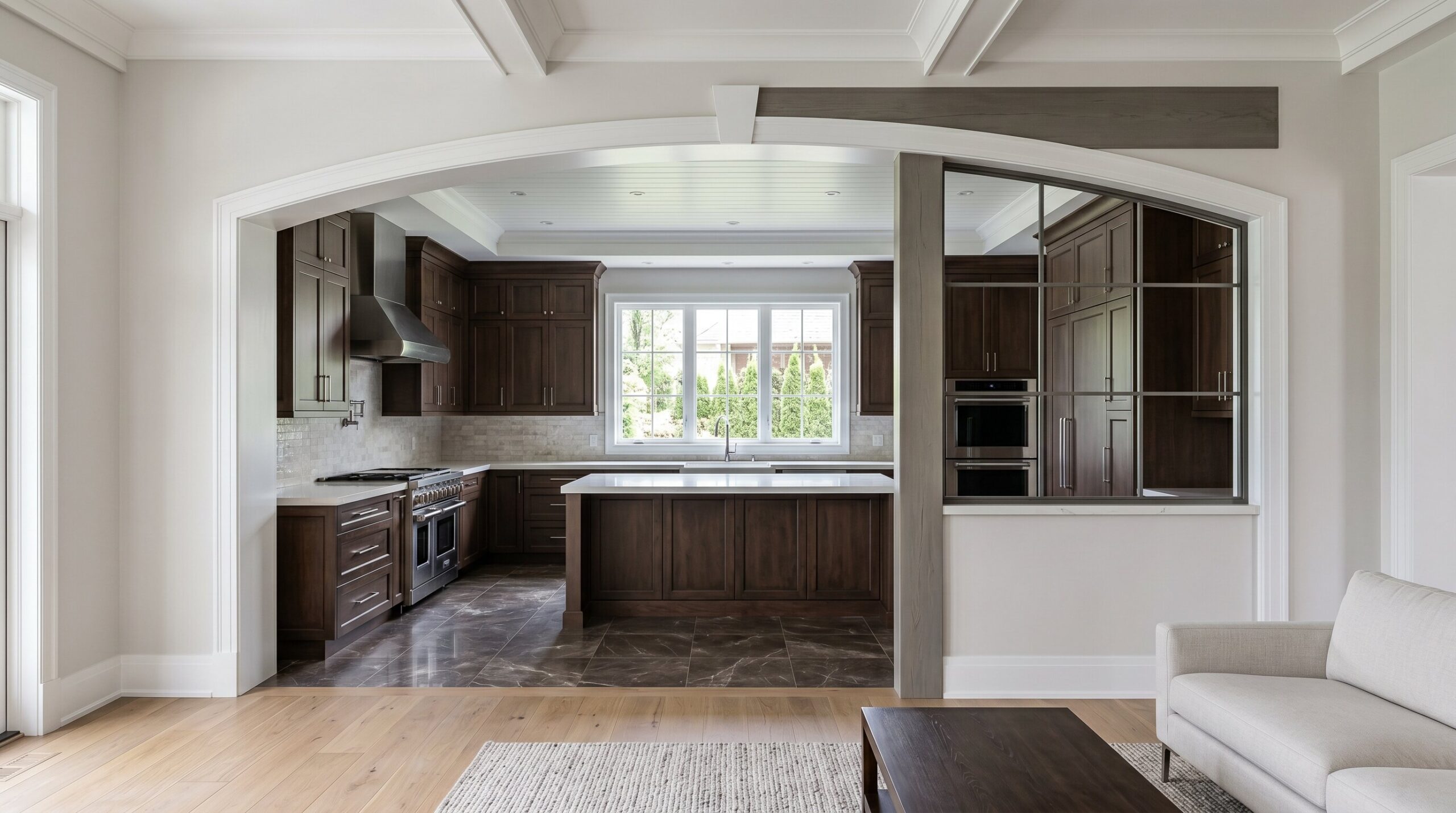
After more than a decade of open concept dominance, the closed kitchen trend comeback is reshaping 2026 kitchen trends. Homeowners are tired of hearing the blender over the TV, smelling dinner in the sofa fabric, and seeing dirty pans from the living room.
A modern closed kitchen isn’t a dark, isolated room. It’s a smarter zoning strategy. The best kitchen trends 2026 use glass partitions, pocket doors, sculleries, appliance garages, walk-in pantries, pass through windows, blue kitchen cabinets, and warm kitchen paint colors to create privacy without losing light or connection.
8 Tactics to Master the Closed Kitchen Trend Comeback
1. The Glass Partition & Pocket Doors
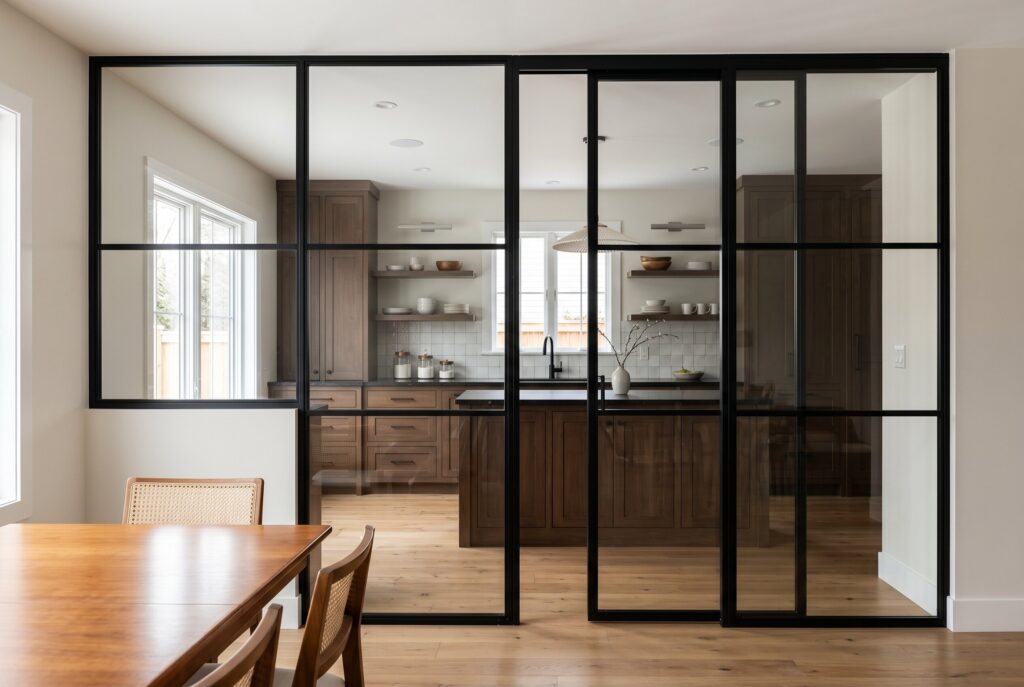
A full wall can make a kitchen feel boxed in, but a glass partition gives you separation without visual heaviness. This is one of the smartest kitchen layout ideas for homeowners who want to hide kitchen mess while keeping natural light moving through the home.
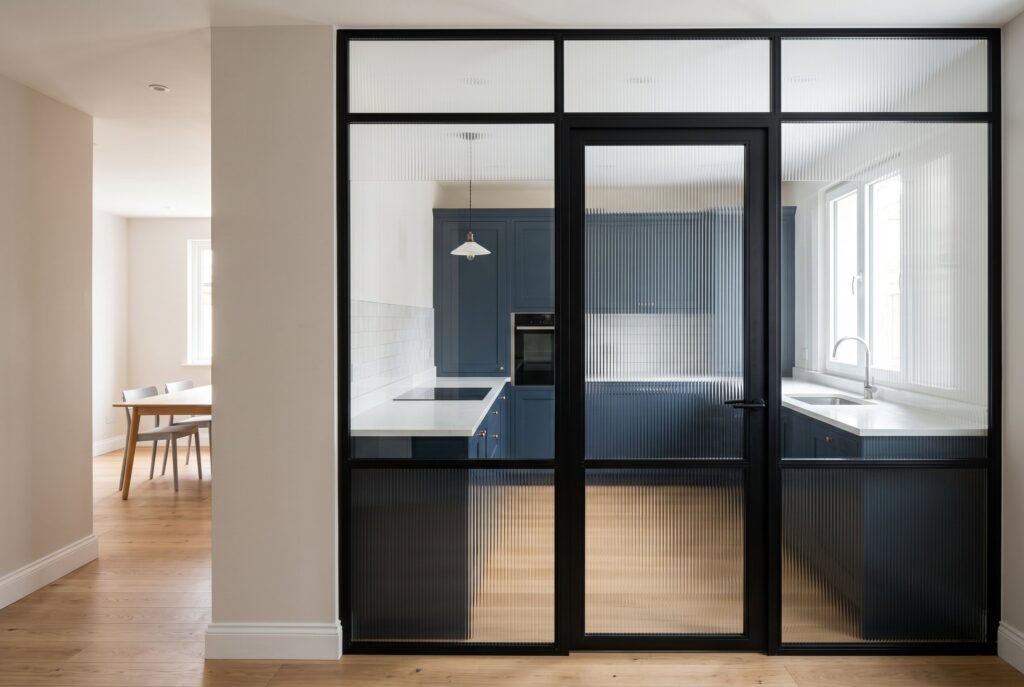
Pocket doors are especially useful because they disappear when open and create real privacy when closed. During a party, you can close the doors to block cooking smells, dishwasher noise, and prep clutter. On quiet mornings, you can leave them open so the kitchen still feels connected to the dining or living area.
For a more architectural look, choose black steel framed glass, warm wood frames, or fluted glass. Clear glass feels modern and airy, while ribbed or reeded glass softens the view when counters aren’t perfectly clean. The result is a kitchen that feels refined, flexible, and much more livable than a fully exposed open plan.
2. The Scullery or Butler’s Pantry
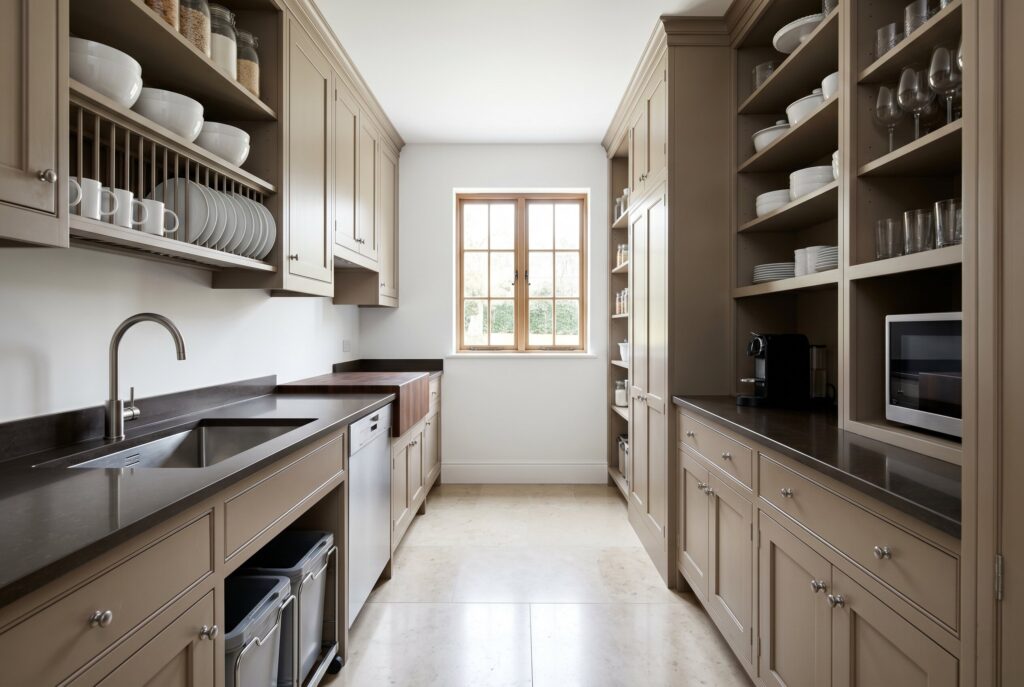
The scullery is the hidden engine behind many luxury 2026 kitchen trends. Instead of forcing the main kitchen to handle prep, cleanup, storage, coffee, small appliances, and entertaining all at once, a scullery moves the mess into a secondary zone.
This space doesn’t need to be huge. A narrow room behind the kitchen can hold a second sink, dishwasher, microwave, trash pullout, food storage, and serving pieces. During everyday life, it keeps cereal boxes, dirty pans, and countertop clutter out of sight. During parties, it lets the main kitchen stay camera ready while real work happens behind the scenes.
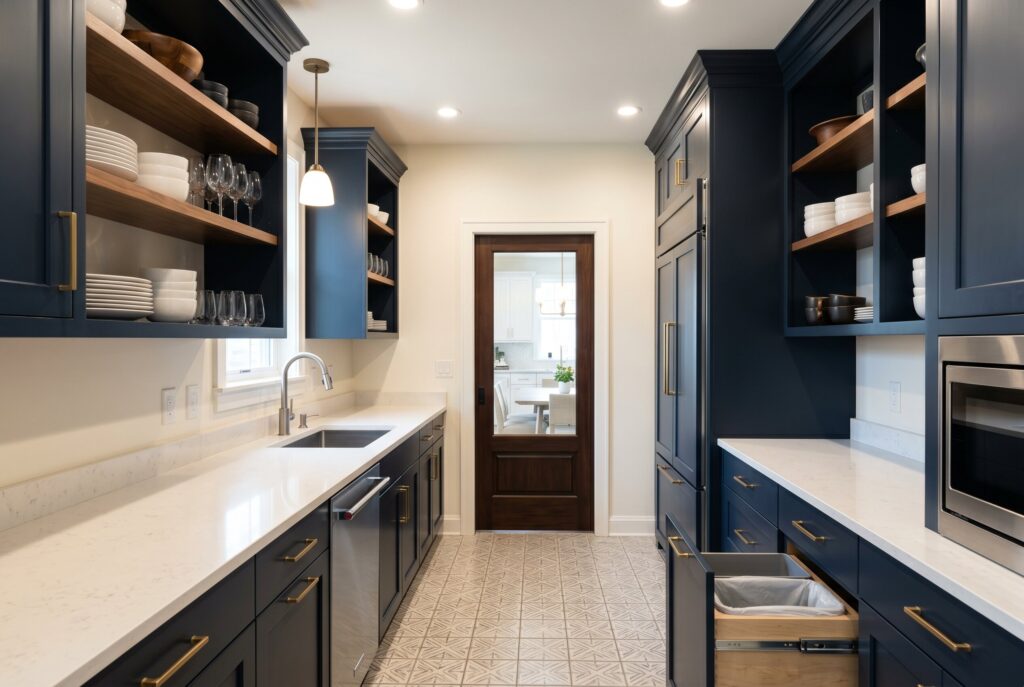
A butler’s pantry works beautifully between the kitchen and dining room. It can function as a beverage station, dessert counter, coffee bar, or storage wall. This is why the closed kitchen comeback isn’t really about hiding from guests. It’s about giving every task a proper place.
3. Appliance Garages
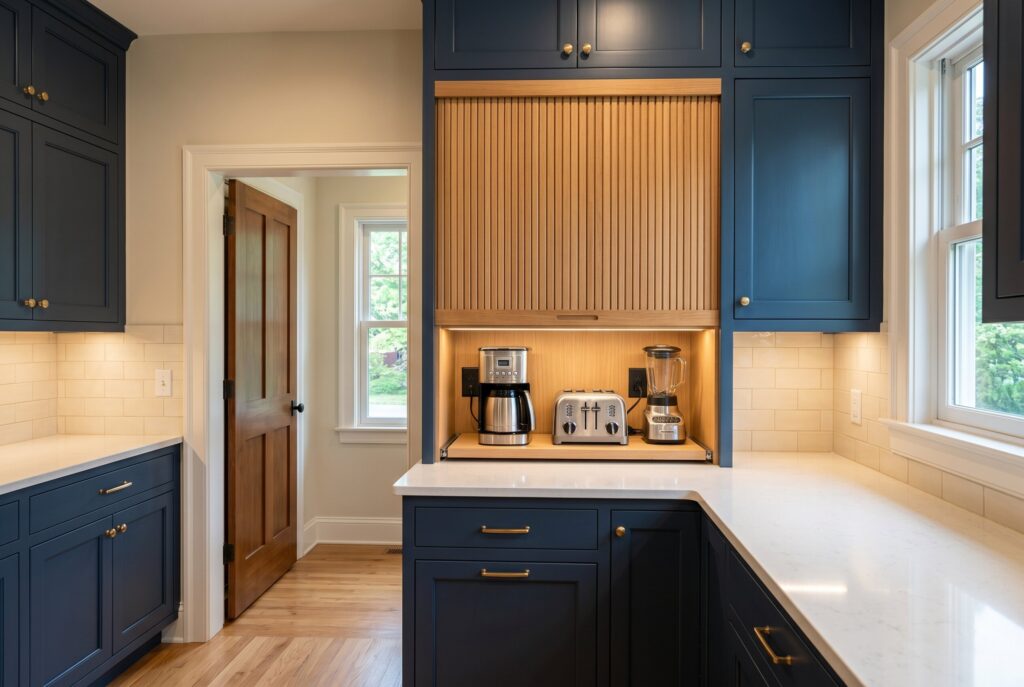
Small appliances are useful, but they destroy the calm of a kitchen faster than almost anything else. Coffee makers, toasters, air fryers, blenders, mixers, and charging cords can make even custom cabinetry feel chaotic.
An appliance garage solves that problem by giving these items a dedicated home. Tambour doors, lift up doors, pocket cabinet doors, or bi fold doors can hide the entire station when it isn’t being used. When you need coffee or toast, everything is already plugged in and ready.
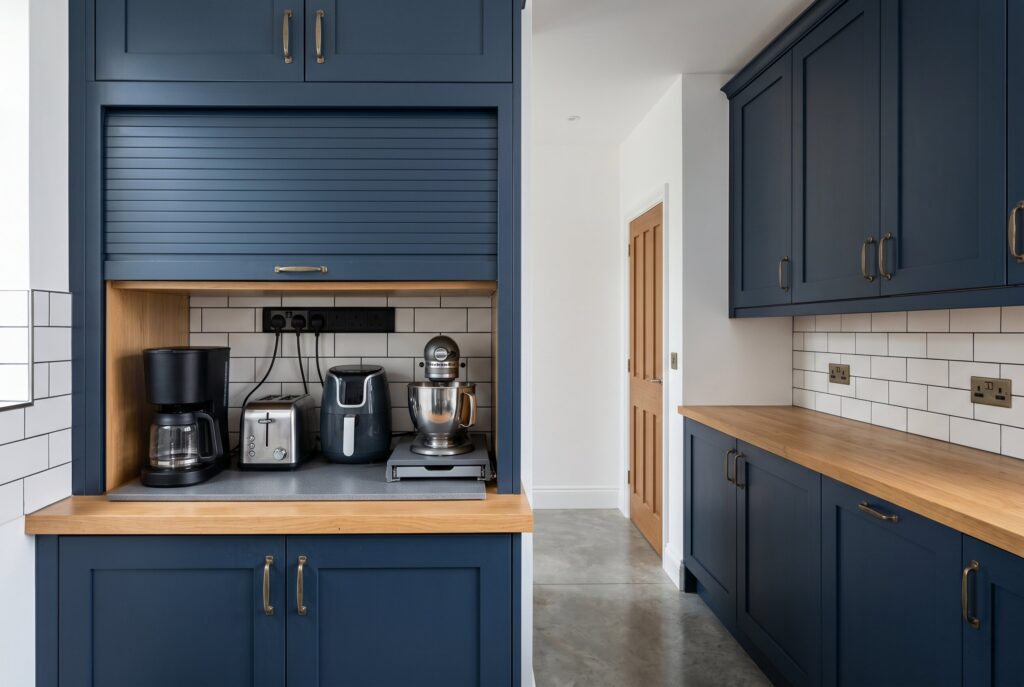
This tactic works especially well in a closed kitchen because the room can feel more intentional and furniture like. Instead of displaying every tool, you reveal only what supports the design. Pair an appliance garage with hidden outlets, pull out trays, and easy wipe surfaces so function doesn’t suffer. It’s a quiet upgrade, but it changes how clean the kitchen feels every single day.
4. Deep, Saturated Cabinetry
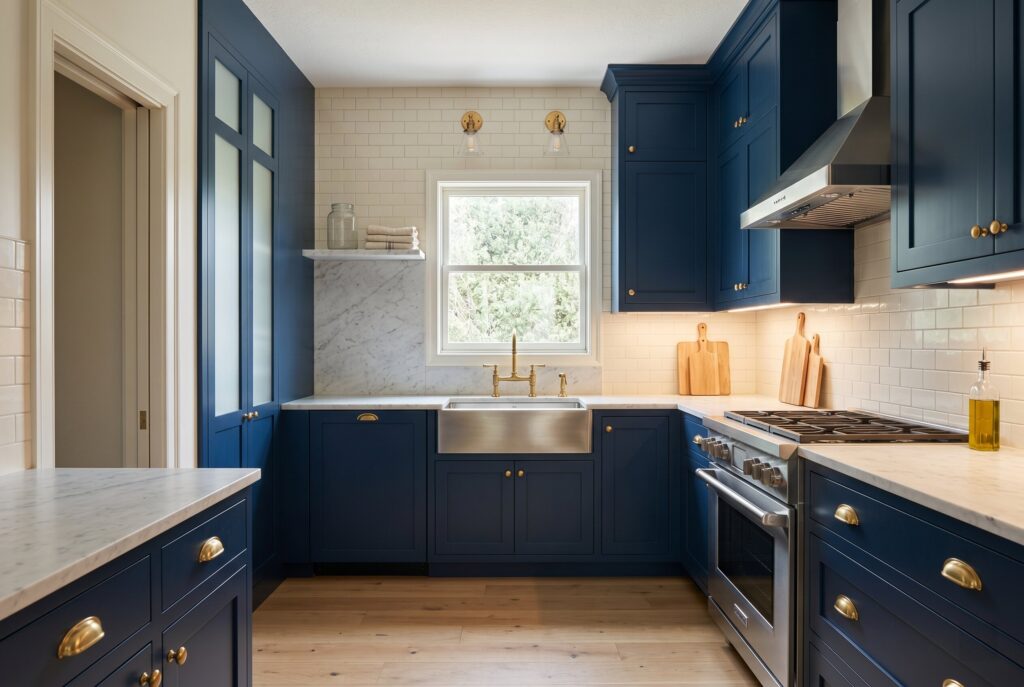
A closed kitchen gives you permission to create mood. Unlike an open kitchen, where every cabinet color must coordinate with the living room, a defined kitchen can become its own jewel box.
That is why blue kitchen cabinets are so powerful in 2026. Navy feels rich, tailored, and timeless without being as severe as black. It also pairs beautifully with oak, walnut, marble, unlacquered brass, stainless steel, and creamy tile.
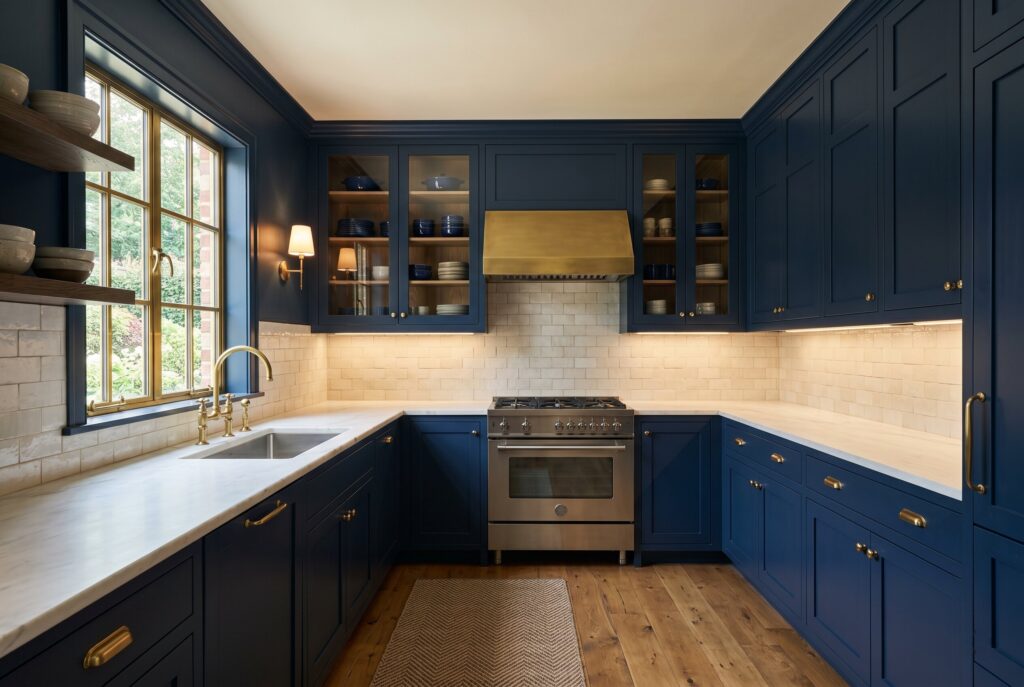
For softer spaces, sage green, mushroom, olive, clay, and warm taupe are strong choices. These kitchen paint colors create depth while still feeling natural. The key is to balance saturated cabinetry with good lighting and warm materials. Use under cabinet lighting, wall sconces, pale countertops, or glass doors so the room doesn’t become heavy. A closed kitchen shouldn’t feel smaller. It should feel more intentional.
5. The Pass Through Window
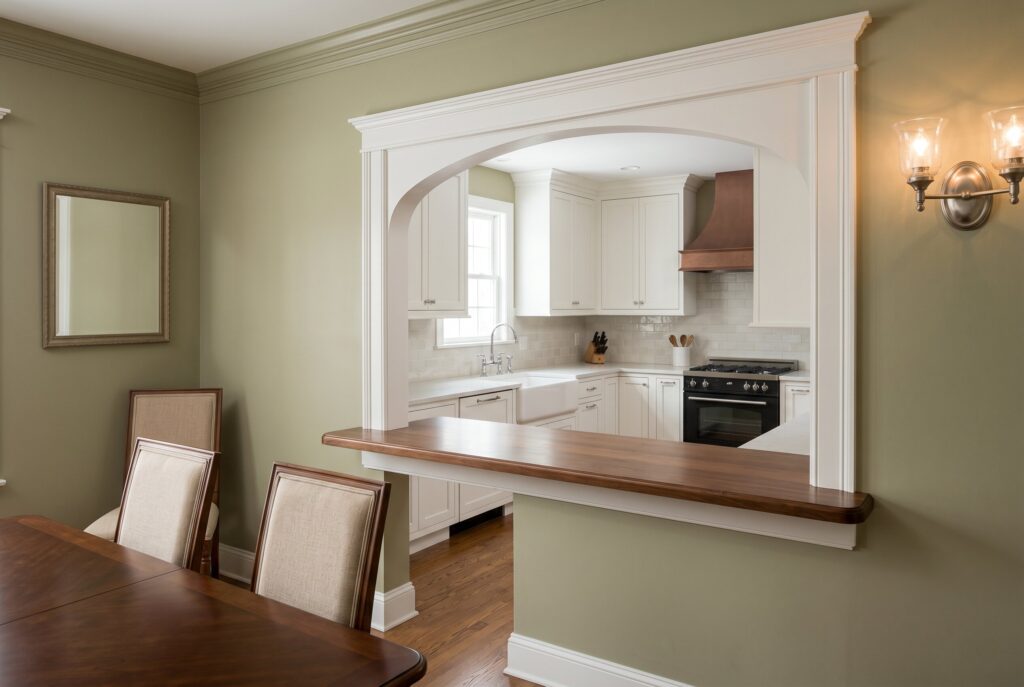
A pass through window is one of the most underrated ways to balance open kitchen vs closed kitchen needs. It keeps the wall, but it gives the cook a clear serving route and a visual connection to the dining area. This idea works especially well in older homes, apartments, and prewar layouts where removing the entire wall could damage the home’s architectural rhythm. Instead of erasing the boundary, you refine it.
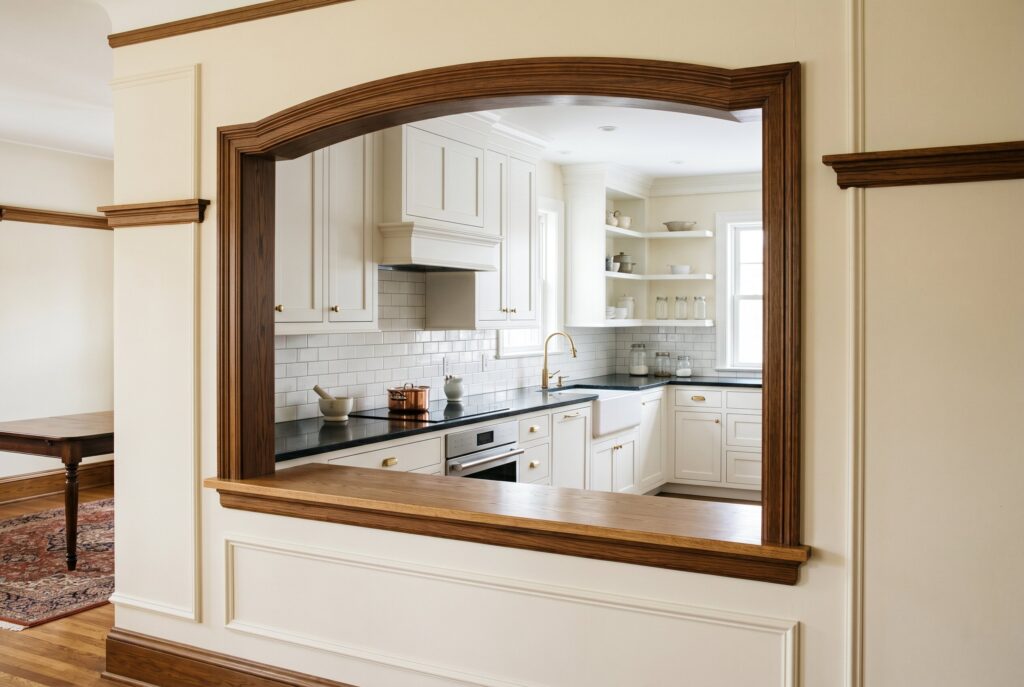
A pass through can be simple and rectangular, or it can feel custom with arched trim, stone ledges, wood casing, or interior shutters. Add a counter ledge and it becomes a casual breakfast spot or drink station. The best part is that guests can receive food and conversation without seeing the sink full of pans. It’s practical, charming, and far less disruptive than a complete open concept renovation.
6. Moody & Earthy Kitchen Paint Colors
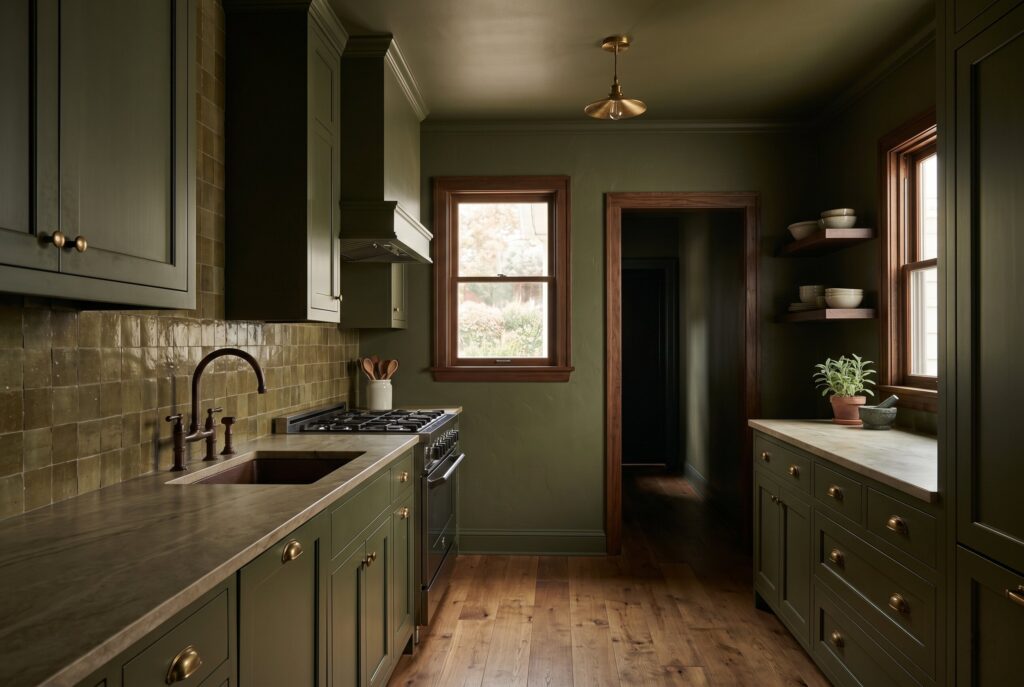
Closed kitchens can handle more color than open kitchens because the palette doesn’t have to stretch across the entire main floor. That makes them perfect for richer kitchen paint colors.
Sage green creates calm. Navy blue adds polish. Mushroom brown feels warm and grounded. Terracotta brings a European mood. Deep olive feels organic and sophisticated. These colors can turn a closed kitchen into a room people actually want to spend time in, not just a functional box.
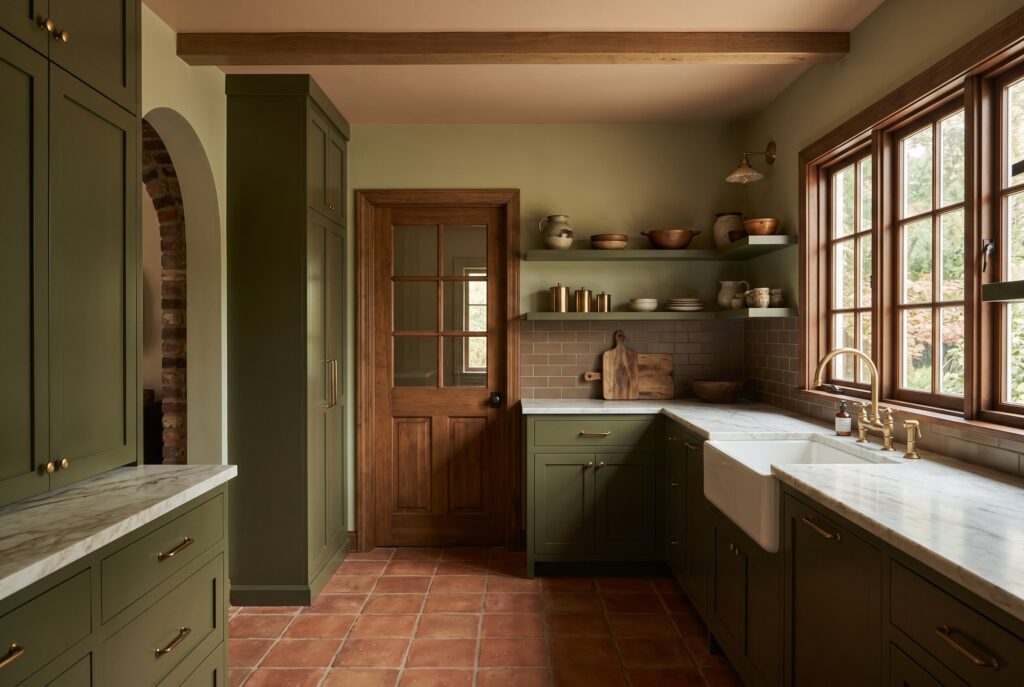
For a more immersive look, try color drenching. Paint the walls, trim, ceiling, and cabinetry in related tones to create a cocoon like effect. This works best when paired with natural wood, stone, soft lighting, and simple hardware. The goal isn’t darkness. It’s the atmosphere. A closed kitchen should feel intimate, not cramped.
7. Strategic Interior Windows
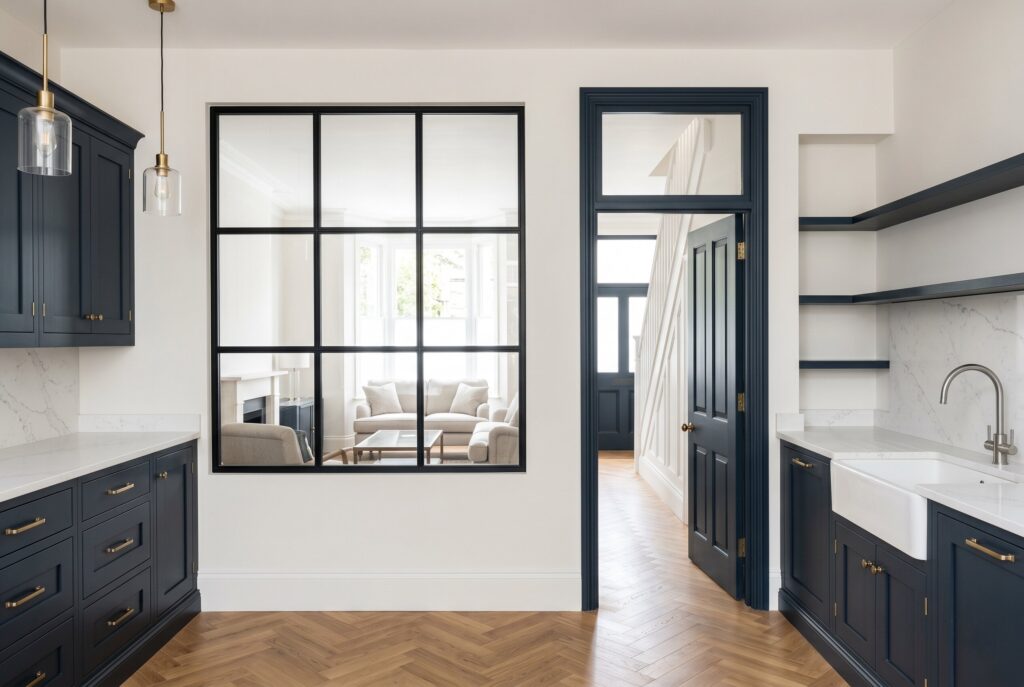
If your closed kitchen doesn’t have enough exterior windows, interior windows can borrow light from nearby rooms. This is a smart solution for townhouses, older homes, and compact layouts where full openness isn’t desirable.
Transom windows above a doorway can pull light from a living room or hallway without exposing the kitchen mess. A fixed interior window between the kitchen and dining room can create connection while still blocking sound and smells. Frosted, fluted, or divided light glass can add privacy while keeping the room bright.
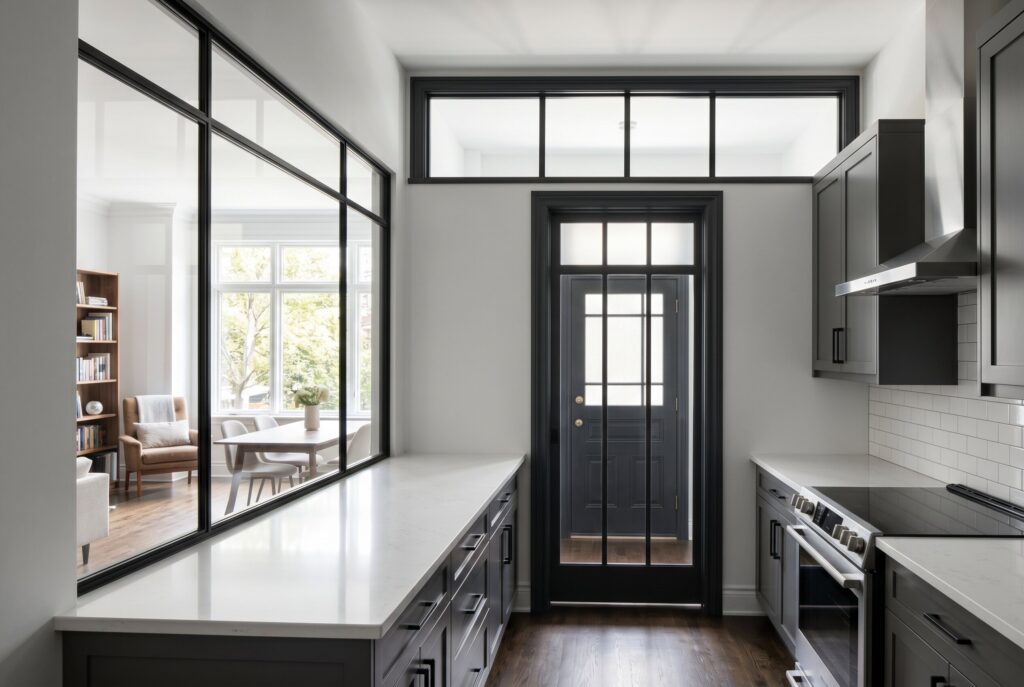
This tactic is especially useful when the kitchen sits in the middle of the home. Instead of removing walls completely, you edit them. The room keeps its boundary, but the light improves. That is the essence of the modern closed kitchen trend comeback: privacy with elegance, not isolation.
8. Architectural Broken Plan Design
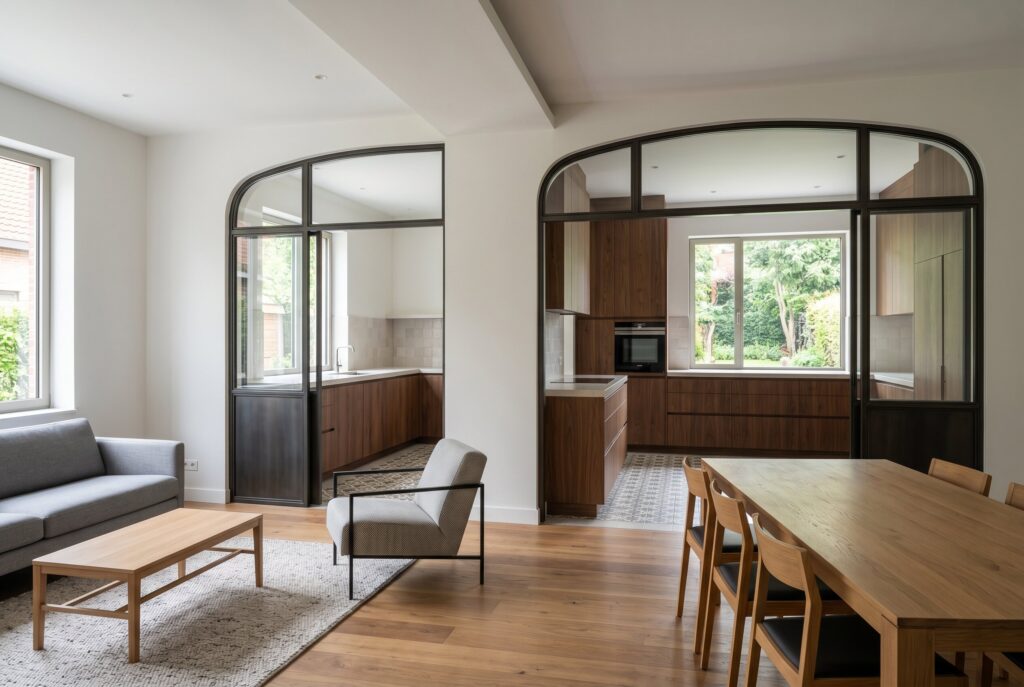
Broken plan design is the middle ground between fully open and fully closed. It uses partial walls, wide cased openings, arches, ceiling changes, flooring transitions, and built in storage to define zones without shutting everything down.
This approach is ideal for homeowners who like connection but hate chaos. A large cased opening can frame the kitchen like a beautiful room while still allowing conversation. A half wall can hide lower cabinets and dirty prep surfaces. A ceiling beam or material change can separate cooking from lounging without adding a full door.
Broken plan layouts also help resale value because they feel adaptable. Buyers can understand the zones immediately, but the home doesn’t feel chopped up. It supports real life: cooking, hosting, working, relaxing, and cleaning all happen with less conflict.
Conclusion
The closed kitchen trend comeback isn’t about returning to cramped, outdated rooms. It’s about reclaiming comfort, quiet, and control. Open kitchens promised connection, but they often exposed too much noise, smell, and mess.
The best kitchen trends 2026 create defined zones that still feel bright and social. Glass doors, sculleries, appliance garages, pass through windows, interior windows, blue kitchen cabinets, navy blue kitchen cabinets, and thoughtful kitchen paint colors all help the kitchen work harder without overwhelming the rest of the home. Privacy doesn’t mean disconnection. In 2026, it means designing a kitchen that supports real cooking, real hosting, and real life.
Related Articles
2026 Kitchen Countertop Trends: 5 Indestructible Slabs