

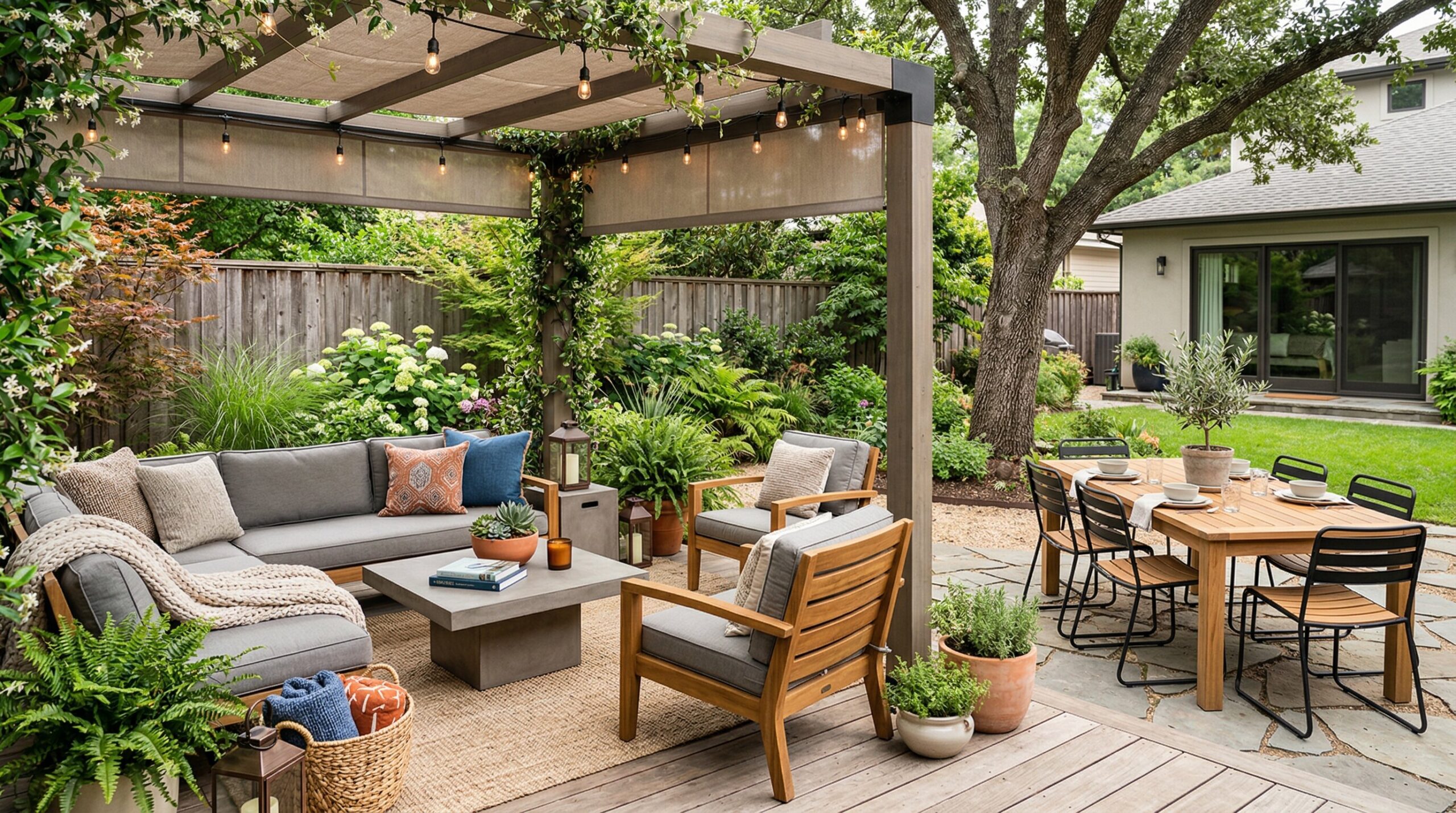
A well-designed outdoor room can make a backyard feel like a true extension of the home. With the right layout, furniture, and practical features, even a modest outdoor area can become more useful for relaxing, dining, entertaining, or simply enjoying better everyday living. For homeowners in the United States, creating a backyard living space often means finding a balance between comfort, durability, climate needs, and a style that feels connected to the rest of the home.
Why Outdoor Rooms Matter in Modern Home Design
Outdoor spaces have become more important as people look for ways to make their homes feel more flexible and enjoyable. A backyard isn’t only extra square footage outside. It can also serve as a casual dining area, a lounge space, a quiet reading corner, or a gathering spot for friends and family.
The most successful outdoor room ideas start with function. Before choosing decor or accent pieces, it helps to decide how the space will actually be used. Some households want a covered patio for outdoor meals. Others need a backyard setup that works for children, pets, and everyday lounging. Some simply want a stylish place to unwind after work.
When the design responds to real habits, the space feels more natural to use and easier to maintain over time. That practical approach is what turns a backyard from an empty exterior zone into a functional outdoor living area.
1. Create a True Outdoor Living Room With Comfortable Seating
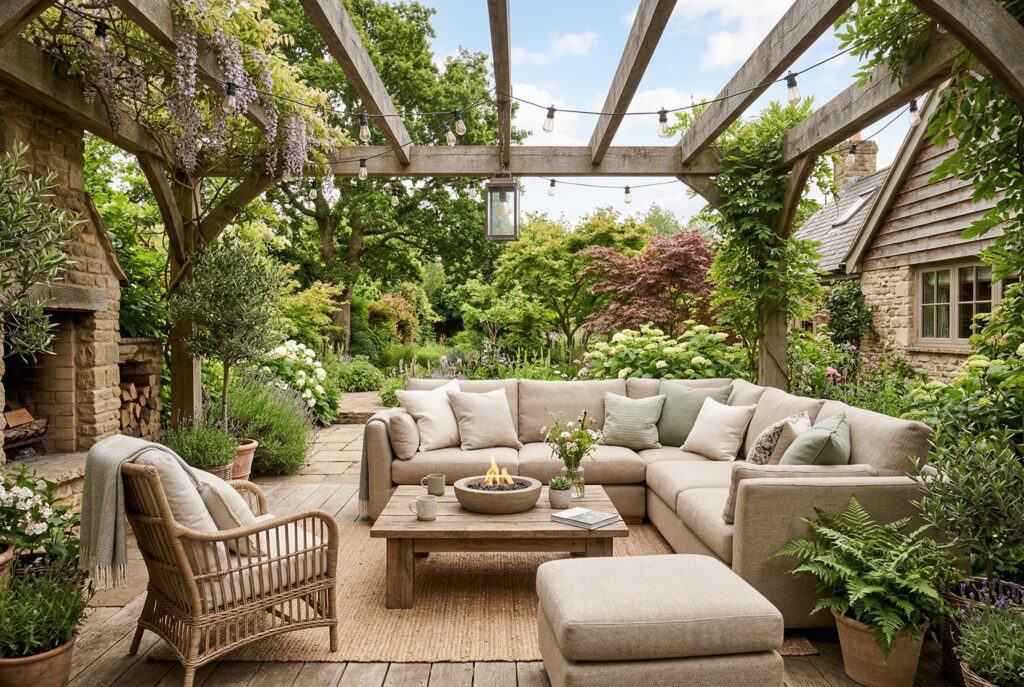
One of the most effective outdoor room ideas is to treat part of the backyard like a real living room. That means choosing seating that encourages people to stay awhile rather than just pass through.
A weather-resistant sofa, a pair of lounge chairs, and a sturdy coffee table can create a comfortable setup for conversation or quiet downtime. Outdoor rugs help anchor the space and make it feel more finished. Cushions and pillows add softness, but they should be made from durable fabrics that can handle sun, moisture, and regular use.
Scale matters here. Furniture should fit the size of the patio or deck without crowding it. A smaller backyard may work better with compact seating and flexible pieces, while a larger yard can support a more expansive arrangement.
2. Add an Outdoor Dining Area That’s Easy to Use
Dining outdoors is one of the most popular reasons homeowners invest in backyard upgrades. A well-planned dining zone makes everyday meals, weekend brunches, and casual entertaining feel easier and more inviting.
The table should match the way the household eats and gathers. A round table often works well in tighter spaces because it improves flow. A rectangular table suits longer patios and larger groups. Chairs should be comfortable enough for lingering, not just quick meals.
Location also matters. Placing the dining area close to the kitchen or grill usually makes the setup more practical. If the space gets strong in the afternoon sun, shade becomes essential. An umbrella, pergola, or covered patio can make the area far more usable during warmer months.
3. Use Zones to Make the Backyard Feel More Functional
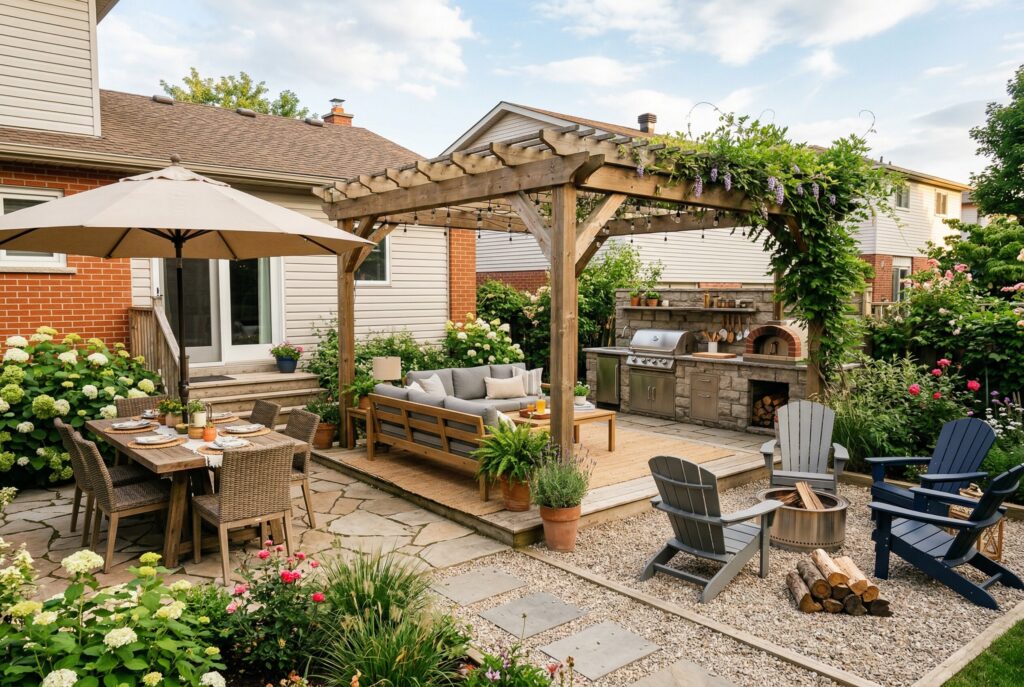
Just like indoor spaces, outdoor areas work better when they have clear zones. A backyard can feel much more intentional when seating, dining, cooking, and play areas each have a defined purpose.
Zoning doesn’t require a huge yard. It can be achieved with layout choices, rugs, planters, lighting, or changes in material. A lounge area might sit on a deck, while a dining section rests on a paved patio nearby. A fire pit zone can be set apart with gravel or arranged seating.
This kind of planning helps the backyard feel organized instead of scattered. It also makes the space easier to furnish because each section has a role rather than trying to do everything at once.
4. Build Around Shade for Better Comfort
A backyard living space won’t get much use if it’s too hot, too exposed, or uncomfortable during the brightest parts of the day. Shade is one of the most important features in any outdoor room, especially in areas with long summers or strong sun exposure.
Pergolas, umbrellas, covered patios, retractable awnings, and shade sails can all improve comfort. The best choice depends on budget, climate, and how permanent the structure should be. Trees and tall landscaping can also help soften sunlight naturally, though they take time to mature.
Adding shade makes outdoor furniture last longer, improves comfort for guests, and allows the backyard to function more like a true living space rather than a space that only works in perfect weather.
5. Include Lighting That Extends the Space Into the Evening
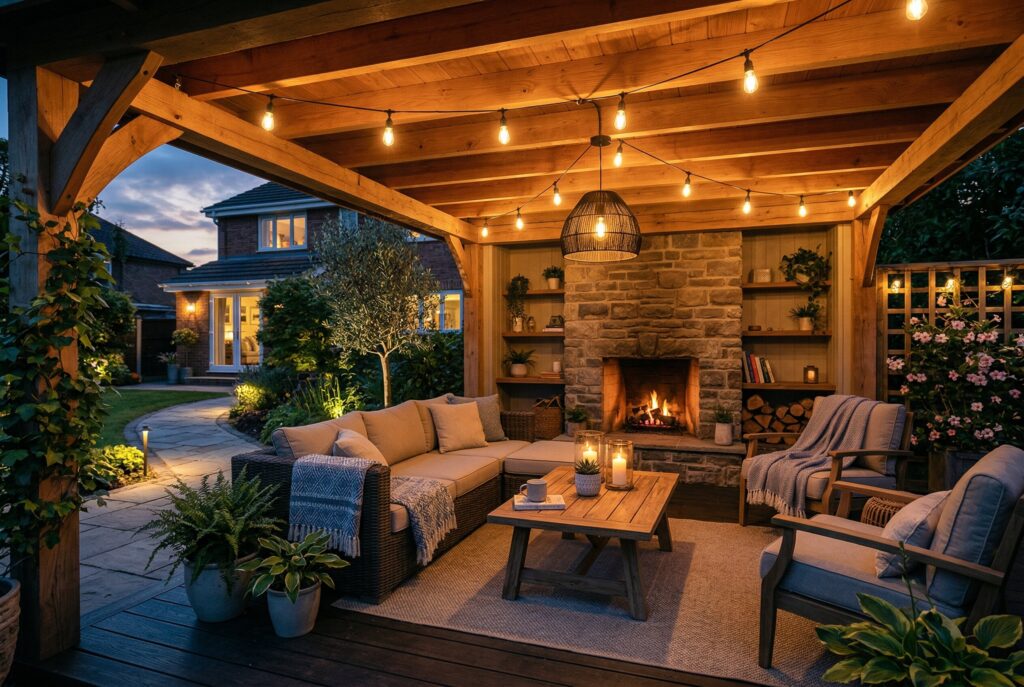
Good outdoor lighting helps a backyard feel warm, safe, and usable after sunset. It also adds atmosphere, which matters when trying to create a stylish backyard living space.
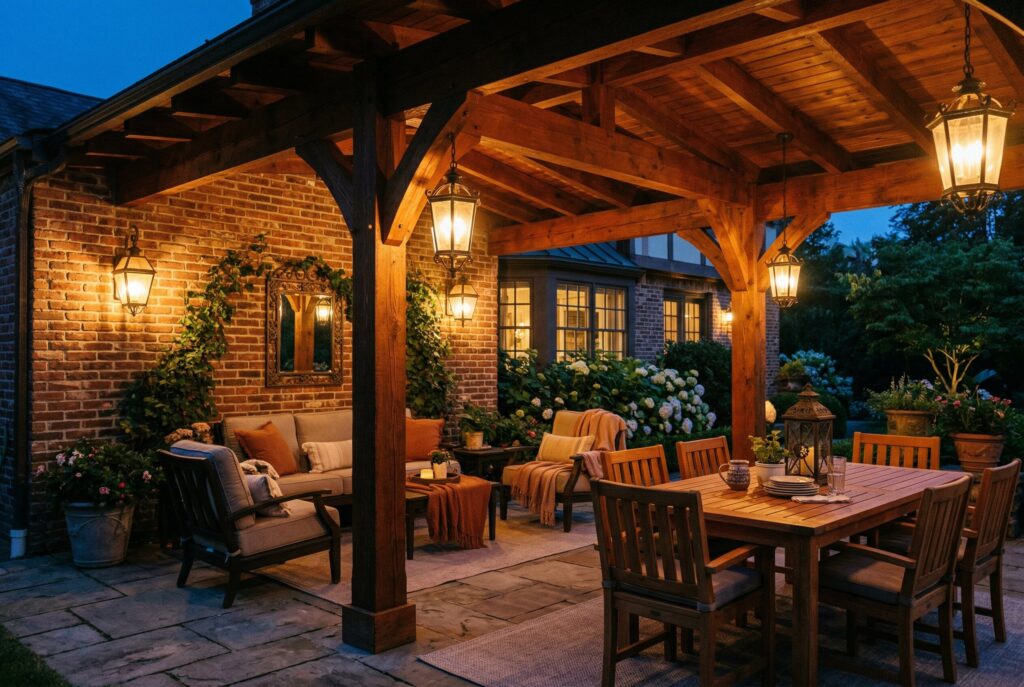
Layered lighting works best. String lights can create softness overhead. Wall sconces or porch lights help illuminate entry points. Path lights improve safety and guide movement. Lanterns, table lamps rated for outdoor use, or subtle landscape lighting can add depth without making the yard feel overly bright.
The goal is to make the backyard feel welcoming and functional in the evening, not harsh or floodlit. Lighting should support how the space is used while helping architectural and landscape features stand out in a natural way.
6. Add a Fire Feature for Warmth and Gathering
A fire feature often becomes the heart of an outdoor room. It creates a focal point, adds warmth in cooler seasons, and encourages people to gather longer outside.
Depending on the size of the space, this could mean a built-in fireplace, a gas fire pit, or a portable fire bowl. In smaller yards, a compact fire table may be the most practical choice because it combines function and visual appeal without taking over the layout.
Seating should be arranged to make conversation easy. Materials around the fire feature should also suit the setting and hold up well outdoors. A fire element can make the backyard more usable for a greater part of the year, which adds real value beyond appearance alone.
7. Choose Materials That Can Handle Real Weather
Stylish design matters, but outdoor rooms also need materials that can perform well over time. Backyard furniture and finishes have to deal with sun, rain, humidity, dirt, and temperature changes, depending on the region.
Teak, powder-coated metal, all-weather wicker, concrete, and performance fabrics are common choices because they’re durable and relatively easy to care for. Cushions should dry well and resist fading. Rugs should be rated for exterior use. Hardscaping materials should suit the local climate and the level of maintenance the homeowner is comfortable with.
A backyard living space won’t stay attractive for long if the materials can’t keep up with actual use. Long-term function is part of good design, not separate from it.
8. Bring in Greenery to Soften the Space
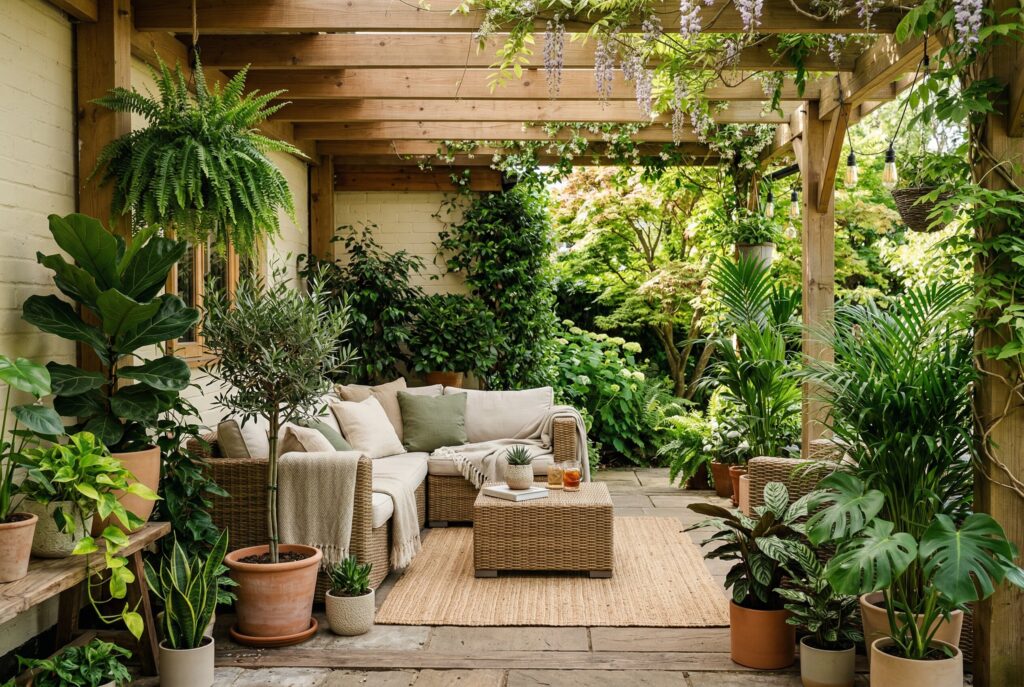
Plants help outdoor rooms feel more inviting and connected to the landscape. Without them, patios and decks can feel flat or unfinished. The right greenery adds texture, privacy, and a sense of life to the design.
Potted plants work well for patios, porches, and decks because they add flexibility. Raised beds or border plantings can define edges and soften transitions. Taller planters or layered landscaping can create privacy from neighboring yards without making the space feel closed off.
Plant choices should reflect local growing conditions and maintenance expectations. A stylish outdoor room doesn’t require rare or difficult landscaping. It simply benefits from enough natural softness to balance the furniture and hard surfaces.
9. Make Small Backyards Feel Intentional, Not Limited
A small backyard can still support a beautiful and practical outdoor room if the layout is handled carefully. In fact, smaller spaces often benefit the most from smart planning because every square foot matters.
Choose furniture with slimmer profiles, avoid overcrowding the area, and focus on one or two strong uses rather than trying to fit too much into the design. Built-in benches can save space. Foldable or stackable chairs can help when flexibility matters. Vertical planters or privacy screens can add function without using too much floor area. What makes a small outdoor room feel successful is clarity. When the purpose is obvious and the layout feels balanced, the yard feels usable rather than constrained.
10. Connect the Outdoor Room to the Style of the Home
The best outdoor spaces feel related to the home rather than disconnected from it. That doesn’t mean everything has to match exactly, but there should be some visual continuity between indoor and outdoor areas.
This can happen through color palette, material choices, furniture style, or architectural details. A modern home may pair well with clean-lined seating and simple concrete planters. A traditional home may feel more natural with classic lantern lighting, brick accents, or a warmer wood finish. Repeating tones and textures helps the backyard feel more integrated and thoughtfully designed. This connection is important because it makes the outdoor room feel like an extension of daily living rather than an afterthought placed outside.
Conclusion
Creating a functional, stylish backyard living space starts with thoughtful planning and realistic choices. The most effective outdoor room ideas focus on how the space will be used, then build around comfort, layout, durability, and visual cohesion. Whether that means adding a lounge area, an outdoor dining setup, better lighting, shade, or a fire feature, each decision should help the backyard feel easier to enjoy.
A successful outdoor room doesn’t depend on size alone. It depends on whether the space supports real life in a comfortable and attractive way. When the design is practical, well-zoned, and suited to the home, the backyard becomes more than an exterior area. It becomes a place people genuinely want to spend time in.
Related Articles
10 Best Waterproof Outdoor Ceiling Fans with Lights for Your Patio