

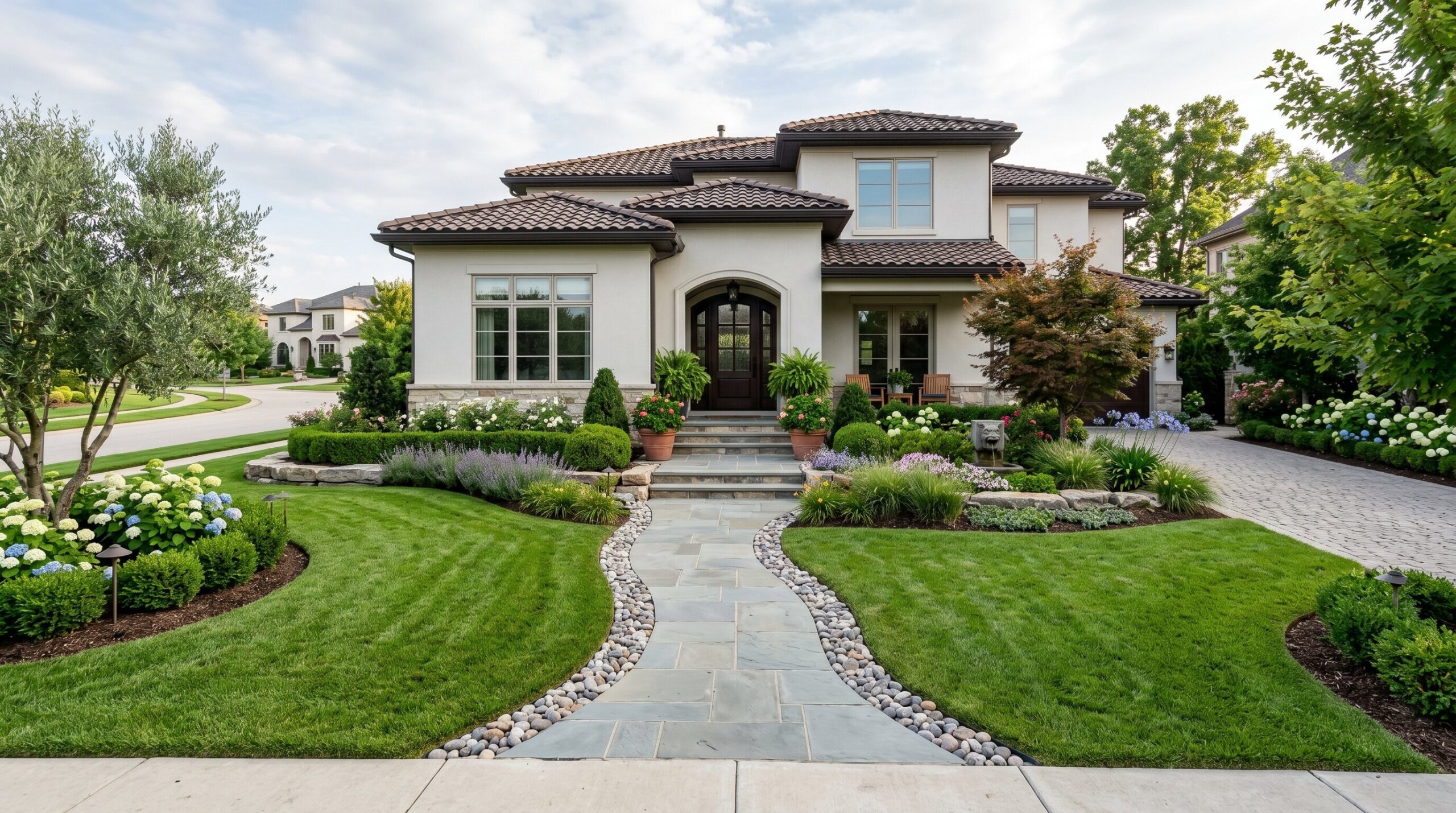
The best cheap simple front yard landscaping ideas don’t start with buying plants. They start with a clean plan, a sharp edge, fresh mulch, and a few low maintenance choices that make the whole house look more intentional.
If you want front yard landscaping ideas that look expensive without hiring a contractor, focus on three things first: define the garden beds, use repeated plants or materials, and choose perennials or native plants that return year after year. With smart DIY choices, you can improve curb appeal for $50 to $300 per weekend project. The goal isn’t to fill every inch of the yard. The goal is to make the front of your home feel calm, cared for, and easy to maintain.
12 Low Maintenance Front Yard Landscaping Ideas
1. Plant Perennials That Come Back Every Year
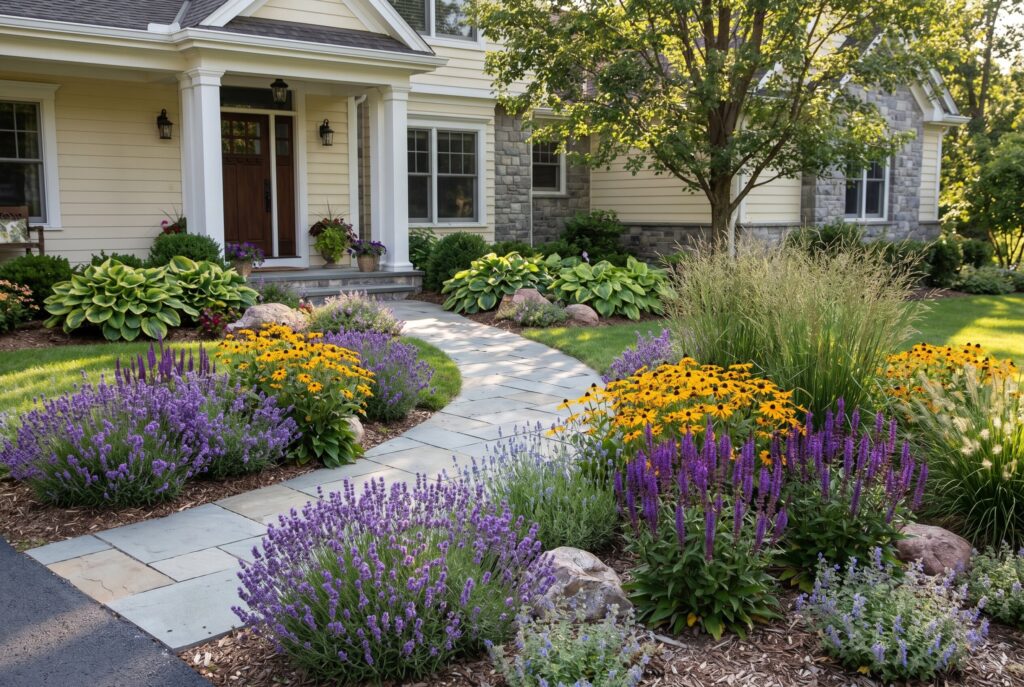
Perennials are one of the smartest cheap simple front yard landscaping ideas because you pay once and enjoy them for years. Unlike annuals, which must be replaced every season, perennials return each spring with very little effort.
For low maintenance front yard landscaping, choose hardy plants that match your garden zone and sun/shade conditions. Lavender, salvia, coneflowers, hostas, daylilies, black-eyed Susans, and ornamental grasses can all create color and texture without constant replanting. Group them in clusters instead of scattering single plants everywhere. This makes the yard look fuller, more intentional, and more expensive than it really is.
2. Refresh Garden Beds With Mulch
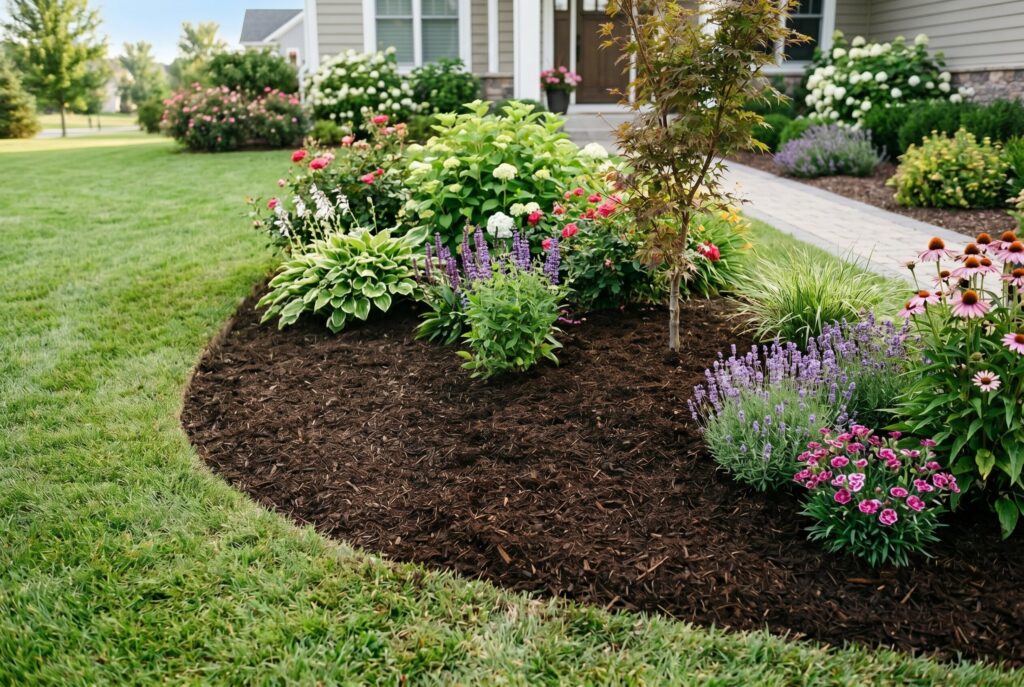
Fresh mulch is one of the fastest ways to make a front yard look clean and finished. It covers bare soil, helps control weeds, holds moisture, and creates a strong contrast around plants. If your yard looks tired but you don’t have money for a full makeover, start here. A dark brown, black, or natural cedar mulch can instantly sharpen curb appeal. For best results, remove weeds first, edge the garden bed, then spread mulch two to three inches deep. Don’t pile mulch against tree trunks or plant stems, because that can trap moisture and cause rot.
3. Add Clean Edging Around Garden Beds
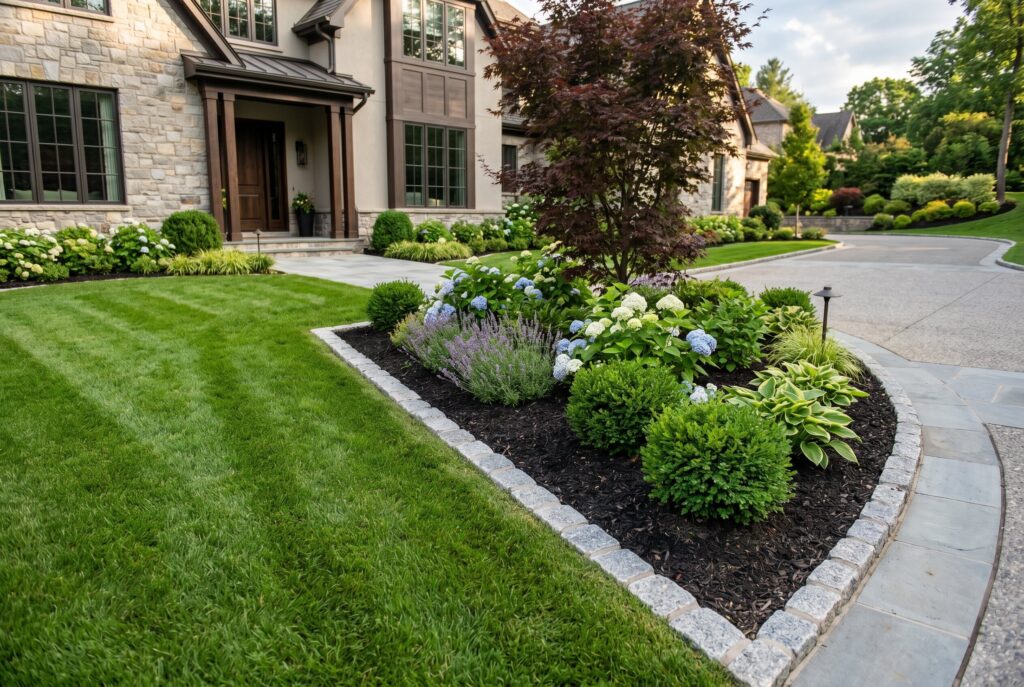
Edging is a small detail that makes a big difference. A messy border can make even healthy plants look unplanned, while a crisp edge makes the whole front yard feel polished. You can use a manual edger for a free DIY option, or install metal edging, brick, stone, or recycled pavers for a more permanent look. Edging also keeps mulch, gravel, and soil from spilling into the lawn. For budget front yard landscaping, this is one of the best high-impact projects because it improves structure before you buy anything decorative.
4. Use Shrubs as the Backbone of the Yard
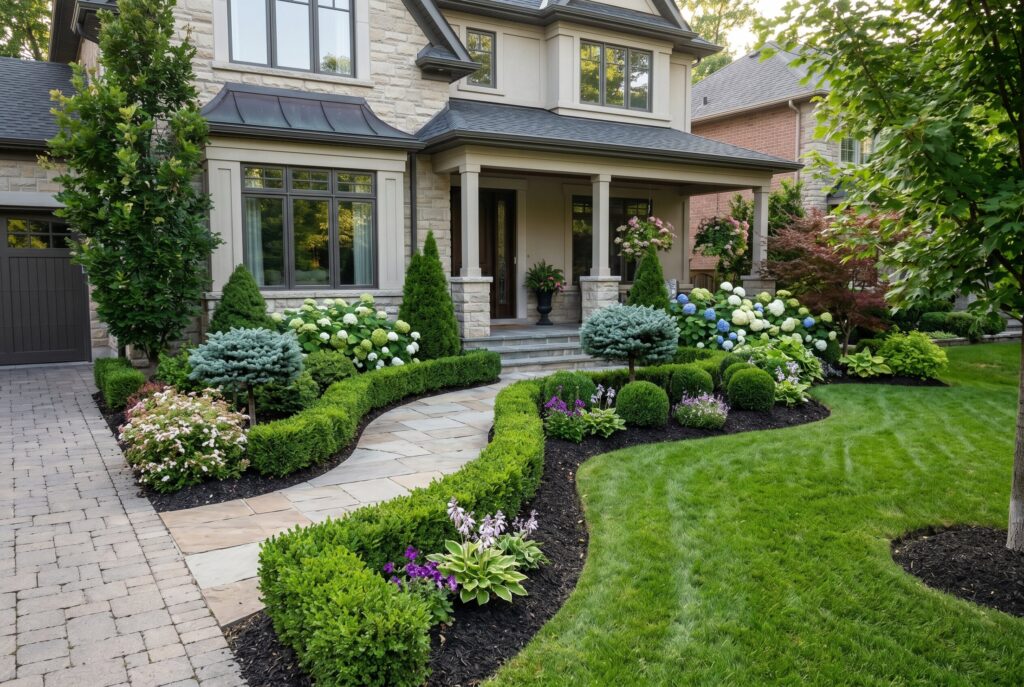
Flowers add color, but shrubs create structure. If you are starting your front yard from scratch, place shrubs before adding smaller plants. They give the design shape through every season and help the yard look mature.
Boxwood, hydrangea, dwarf evergreens, spirea, viburnum, and native shrubs are good options depending on your climate. Use them near the foundation, along walkways, or beside the front porch. Keep mature size in mind so they don’t block windows later. A few well-placed shrubs often look better than dozens of small flowers.
5. Group Plants in Odd Numbers
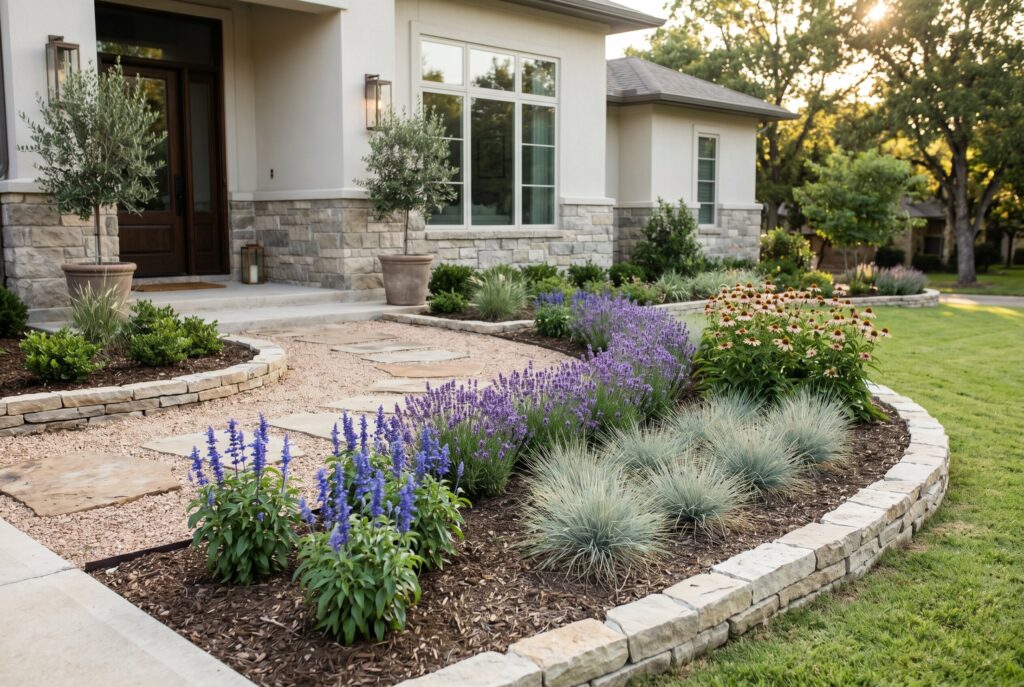
A simple designer trick is to plant in groups of three, five, or seven. Odd-numbered groupings look more natural and balanced than single plants placed randomly. For example, instead of buying one lavender, one salvia, and one grass, buy three of the same plant and repeat that group along the bed. This creates rhythm and makes small front yard landscaping ideas feel cohesive. Repetition also helps the yard look calmer, which is important if you want an expensive-looking design on a small budget.
6. Choose Native Plants for Easier Care
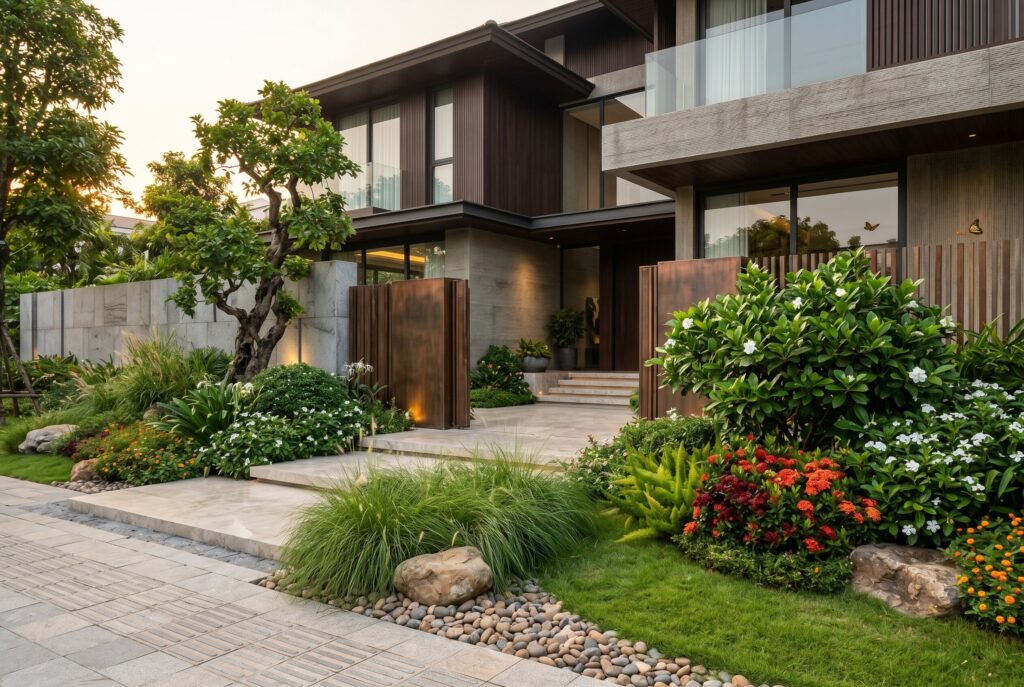
Native plants are adapted to your local climate, soil, rainfall, and wildlife. That often means they need less water, fertilizer, and maintenance after they are established. They can also support pollinators like bees, butterflies, and birds.
If you want low maintenance front yard landscaping, visit a local nursery and ask which native shrubs, flowers, and grasses work well in your area. Native plants are especially useful in hot, dry, or drought-prone regions where traditional lawns can be expensive to maintain.
7. Replace Weak Grass With Groundcover
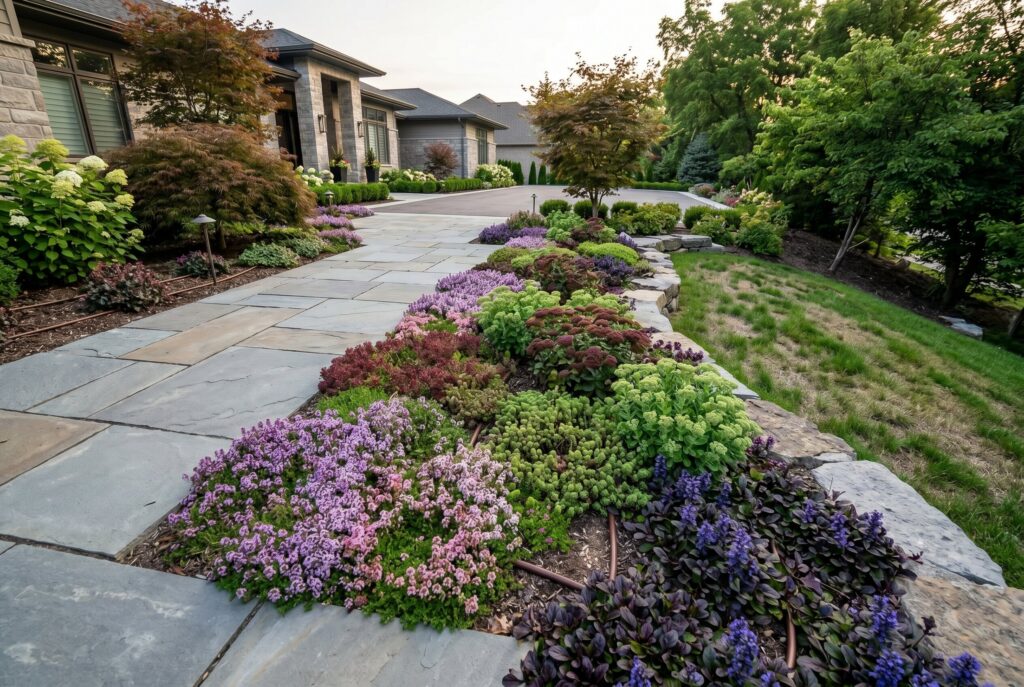
If part of your front lawn is patchy, shaded, or hard to mow, groundcover may be a better solution than reseeding again and again. Creeping thyme, sedum, ajuga, mondo grass, clover, and native groundcovers can fill bare areas and reduce weeds. Groundcover works well along walkways, under trees, and in small strips where grass struggles. It also softens hard edges and gives the yard a fuller look. Choose a variety that matches foot traffic, sunlight, and water needs.
8. Use Ornamental Grasses for Texture
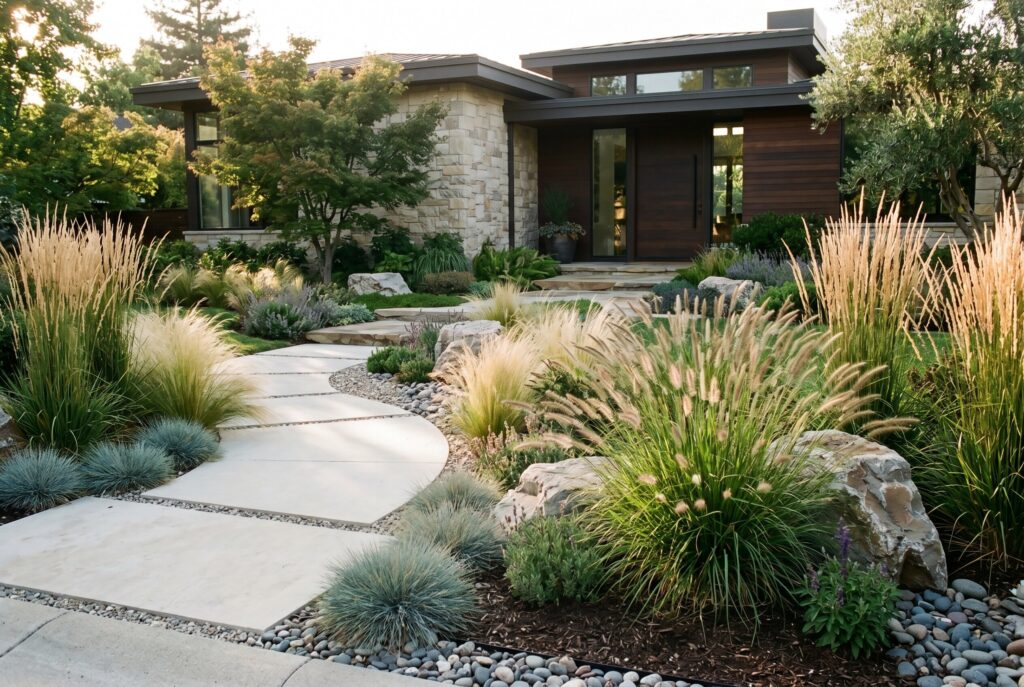
Ornamental grasses are affordable, stylish, and easy to maintain. They add movement, height, and softness to the yard without needing constant pruning or deadheading. Many grasses also look beautiful in fall and winter, when flowers are no longer blooming. Try fountain grass, feather reed grass, blue fescue, switchgrass, or deer grass depending on your region. Use them near rocks, along pathways, or behind lower perennials. Their sculptural shape makes them perfect for modern, farmhouse, and natural front yard landscaping ideas.
9. Create One Strong Focal Point
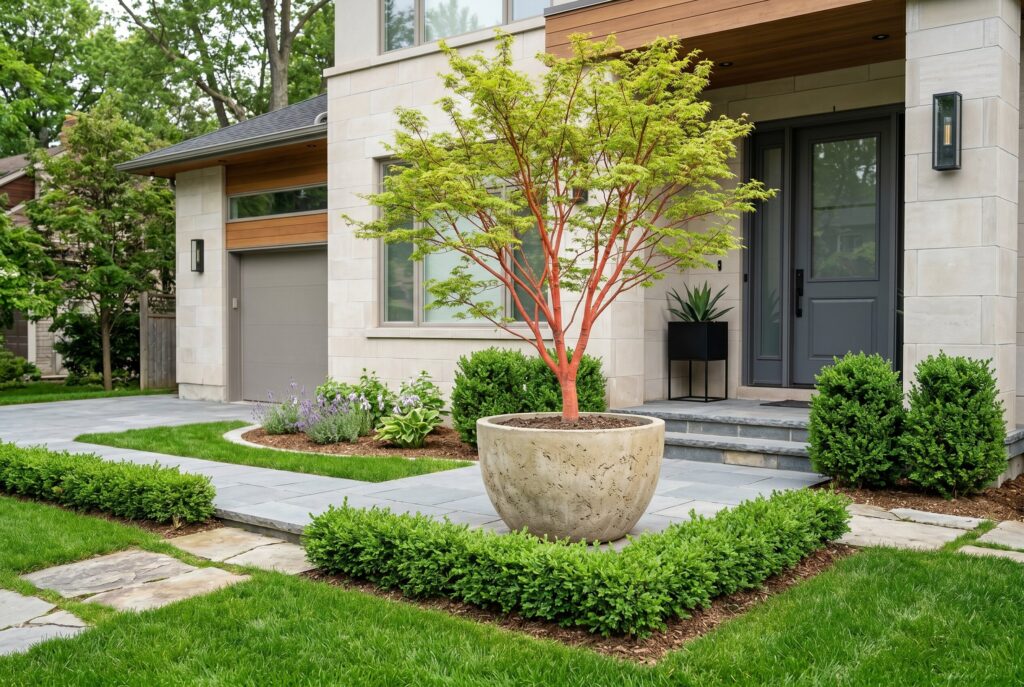
A small front yard doesn’t need many decorations. In fact, too many details can make it look crowded. Instead, create one focal point that draws the eye. This could be a small ornamental tree, a large planter, a boulder, a birdbath, a curved flower bed, or a pair of matching shrubs by the entry. For small front yard landscaping ideas, one strong focal point makes the space feel designed rather than cluttered. Keep the surrounding plants simple so the focal point can stand out.
10. Add Window Boxes for Instant Charm
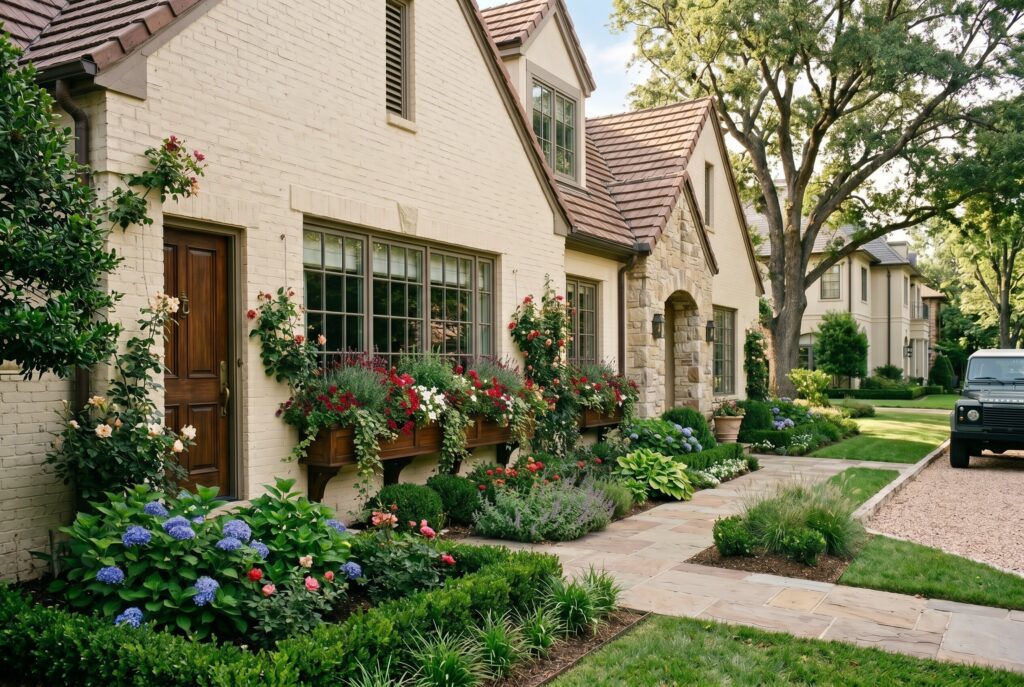
Window boxes are a budget-friendly way to add color and personality without digging new beds. They work especially well on cottages, farmhouse-style homes, townhouses, and small front yards. Use trailing plants, herbs, seasonal flowers, or compact evergreens. To keep them low maintenance, choose drought-tolerant plants and use good potting soil. Window boxes also connect the house to the landscape visually, making the whole front exterior feel more finished.
11. Grow Flowers From Seeds
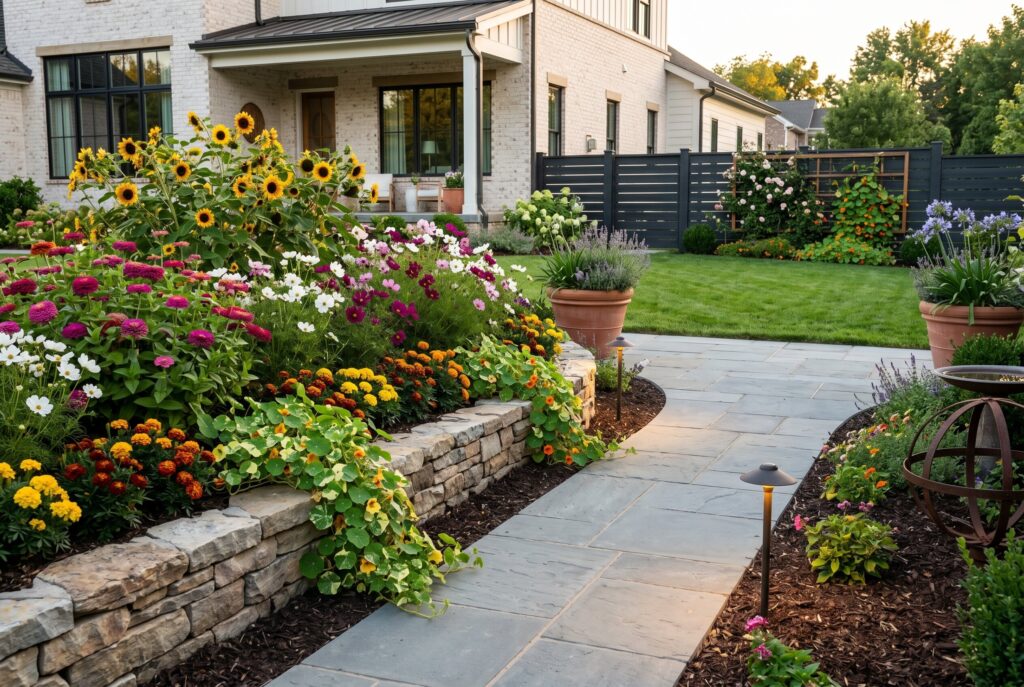
Buying mature plants can get expensive quickly. Seeds are much cheaper and can cover a larger area if you have patience. Wildflowers, zinnias, cosmos, marigolds, nasturtiums, and sunflowers are beginner-friendly choices. Seed planting works well in open beds, along fences, or in a sunny strip near the walkway. The key is soil preparation: loosen the soil, remove weeds, follow spacing instructions, and water gently until seedlings establish. This is one of the easiest cheap front yard landscaping ideas for adding color on a tight budget.
12. Layer Plants by Height
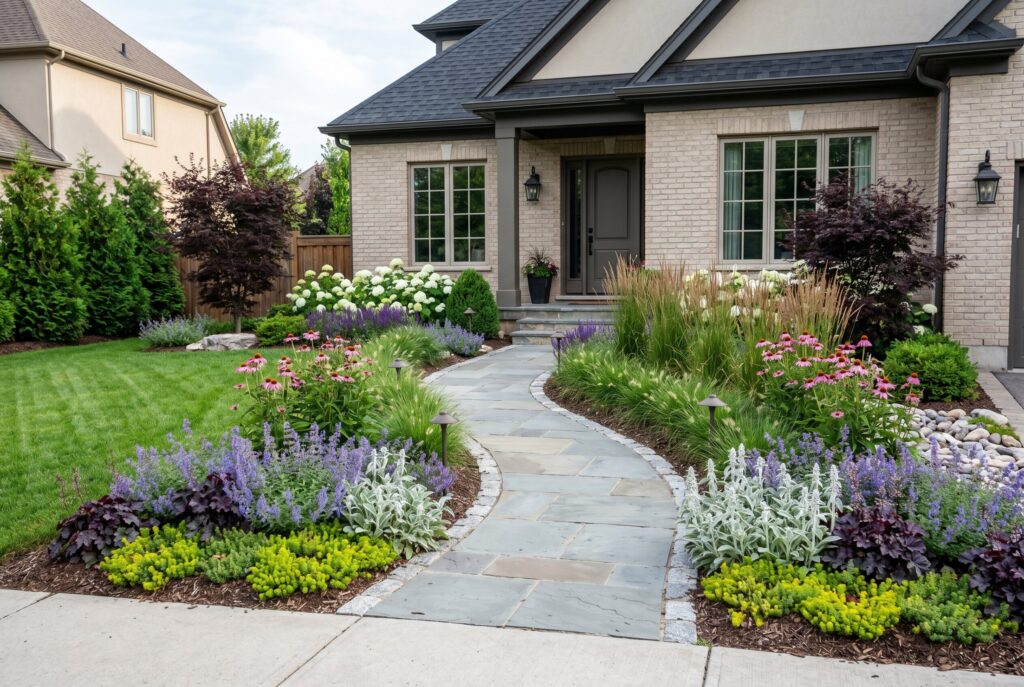
Layering makes a front yard look professionally designed. Place taller shrubs or grasses in the back, medium perennials in the middle, and low plants or groundcover near the front edge. This creates depth and prevents smaller plants from disappearing behind larger ones. It also keeps the view from the street balanced. For foundation planting, avoid placing tall shrubs directly in front of windows. A layered bed looks fuller, cleaner, and more expensive even when the plant list is simple.
10 Front Yard Landscaping Ideas With Rocks
13. Build a Rock Garden for a Dry, Modern Look
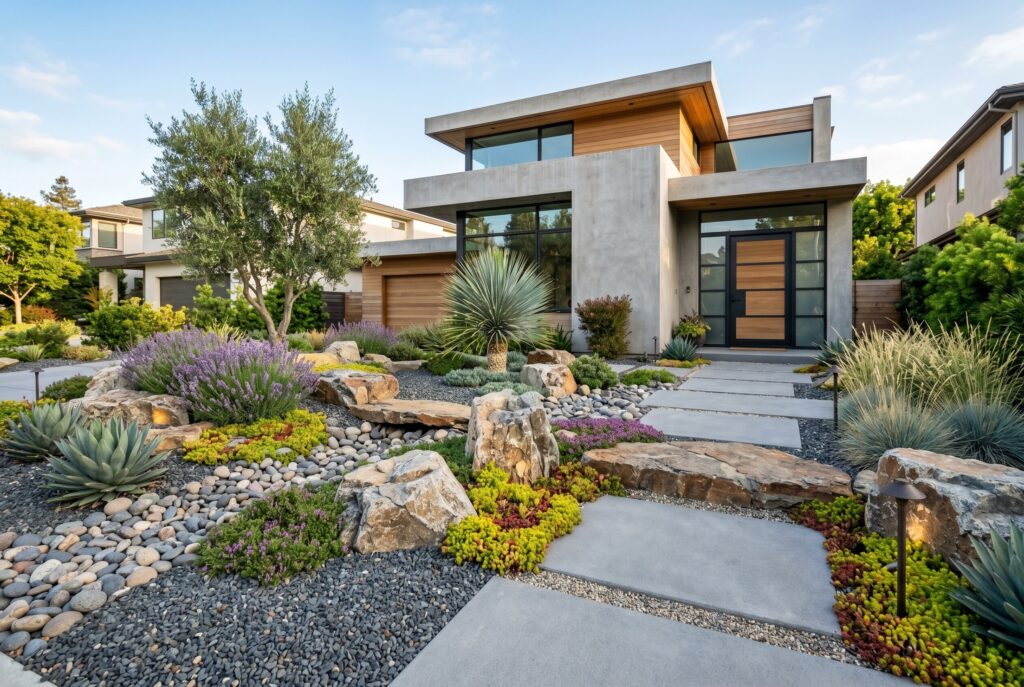
Rock garden ideas are perfect for homeowners who want less lawn, less watering, and more texture. A rock garden can work in a sunny corner, along a slope, or in an area where grass keeps dying.
Start with landscape fabric if needed, then layer gravel, river rocks, boulders, and drought-tolerant plants. Sedum, lavender, yucca, agave, ornamental grasses, and creeping thyme all pair beautifully with stone. Keep the design simple and leave breathing room between elements so it feels intentional, not messy.
14. Use River Rocks Around Downspouts
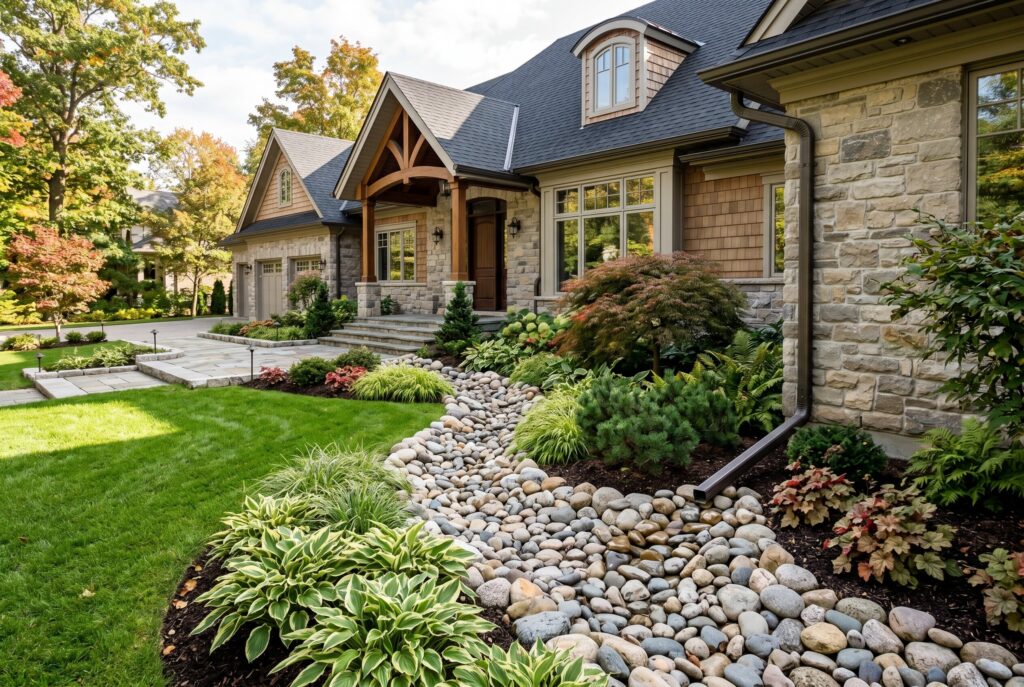
River rocks aren’t just decorative. They can help manage water runoff and reduce soil erosion around downspouts. Instead of letting rainwater carve a muddy path through your mulch, create a small dry creek bed with river rocks. Curve it naturally away from the foundation and toward a drainage-safe area. This adds movement to the landscape while solving a practical problem. River rocks also look softer and more organic than sharp gravel, making them ideal for natural front yard landscaping ideas with rocks.
15. Try Black Rocks for Landscaping Contrast
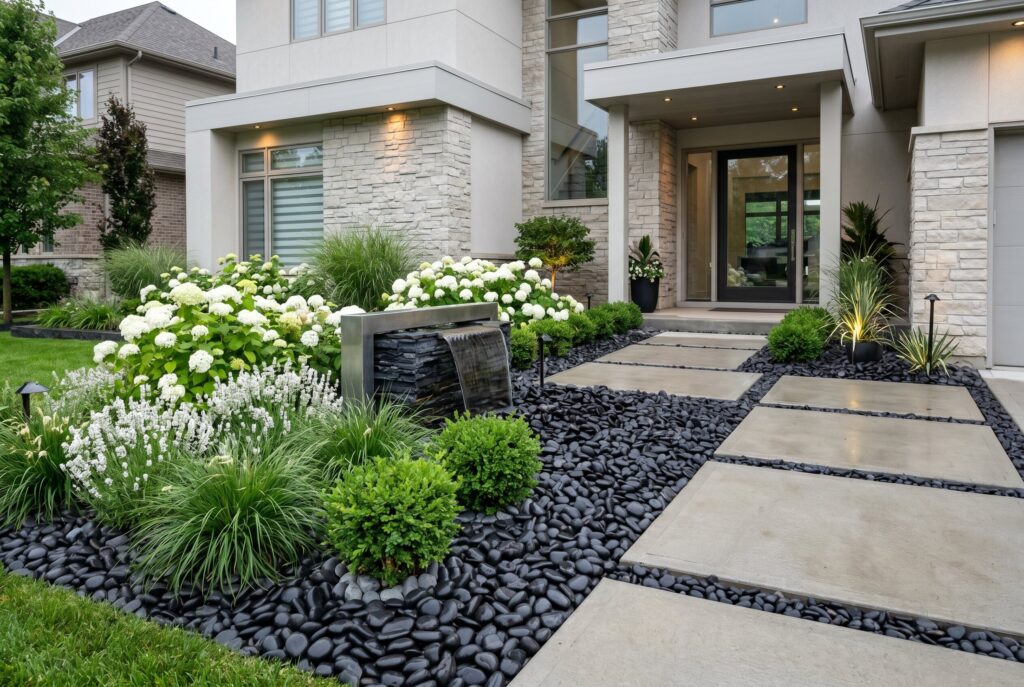
Black rocks for landscaping create a bold, modern contrast against green plants, white flowers, and light-colored siding. They work especially well with minimalist, Japandi, and contemporary homes.
Use them around sculptural plants, along a walkway, or in a small feature bed near the entry. Because black stone can absorb heat, avoid using it around delicate plants in very hot climates unless they are heat-tolerant. A small amount goes a long way, so use black rocks as an accent rather than covering the entire yard.
16. Make a Gravel Walkway
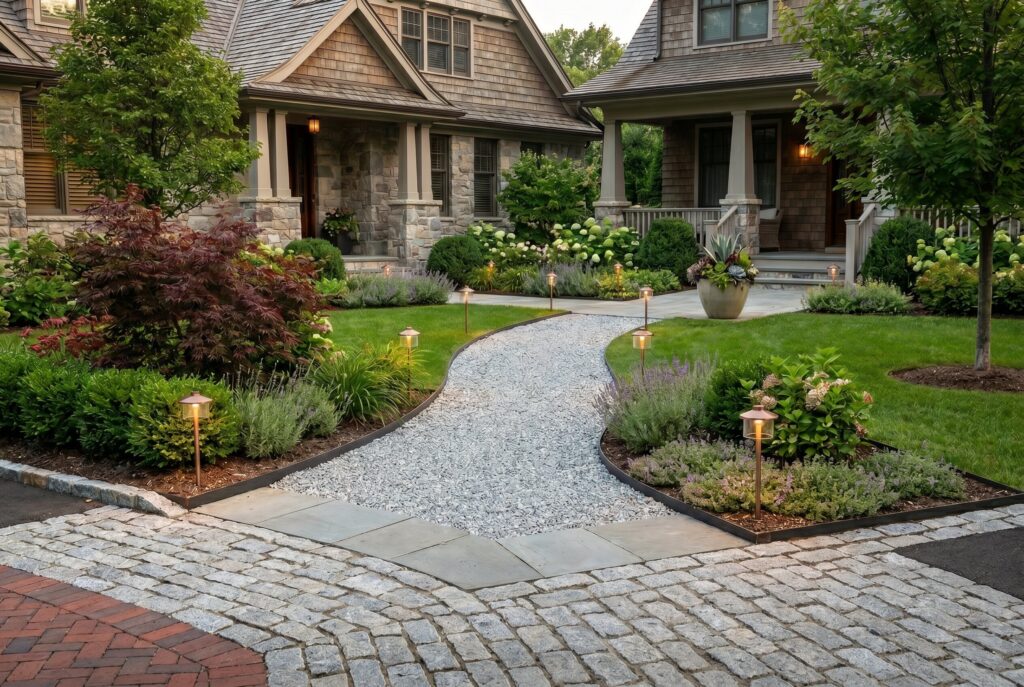
A gravel walkway can make the front yard feel more welcoming without the cost of poured concrete or professional stonework. Use edging to keep the gravel in place, then add a compacted base layer before spreading the top gravel. Pea gravel has a softer look, while crushed stone feels more stable underfoot. A walkway can guide visitors from the driveway to the front door and prevent worn grass paths. Add solar lights along the edge for a more finished effect.
17. Add Stepping Stones Through Mulch or Gravel
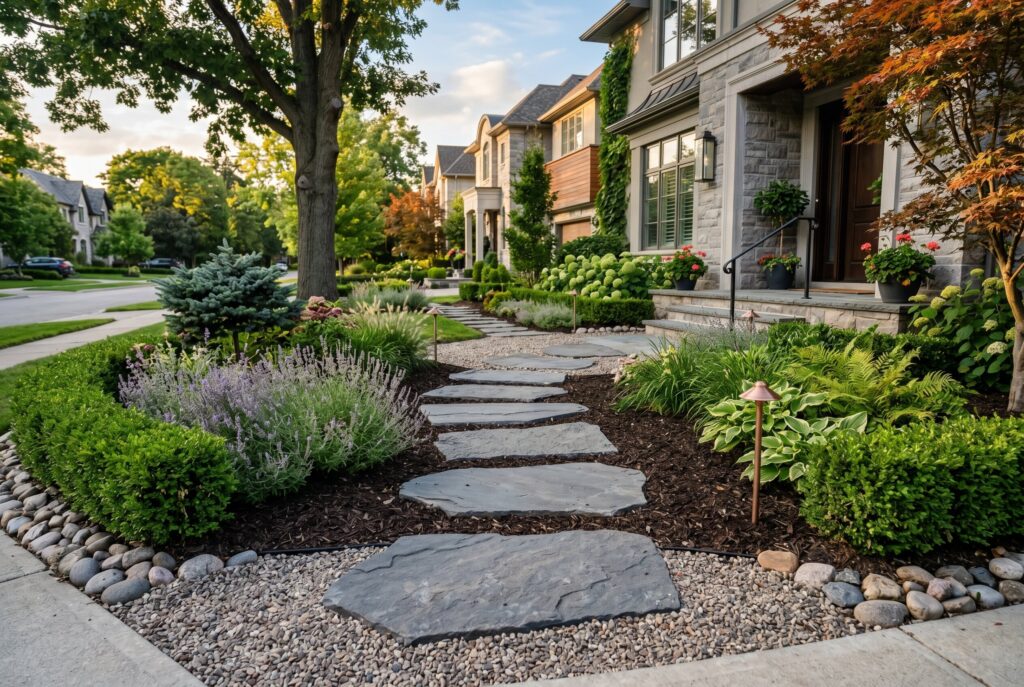
Stepping stones are an easy DIY project that can look surprisingly high-end. Place large flat stones through mulch, gravel, or groundcover to create a casual path. This works well for side entries, garden beds, and small front yards where a full walkway would feel too heavy. Keep spacing comfortable for walking, and set each stone level with the ground to prevent tripping. The best designs look simple, natural, and slightly irregular.
18. Frame the Mailbox With Rocks and Plants
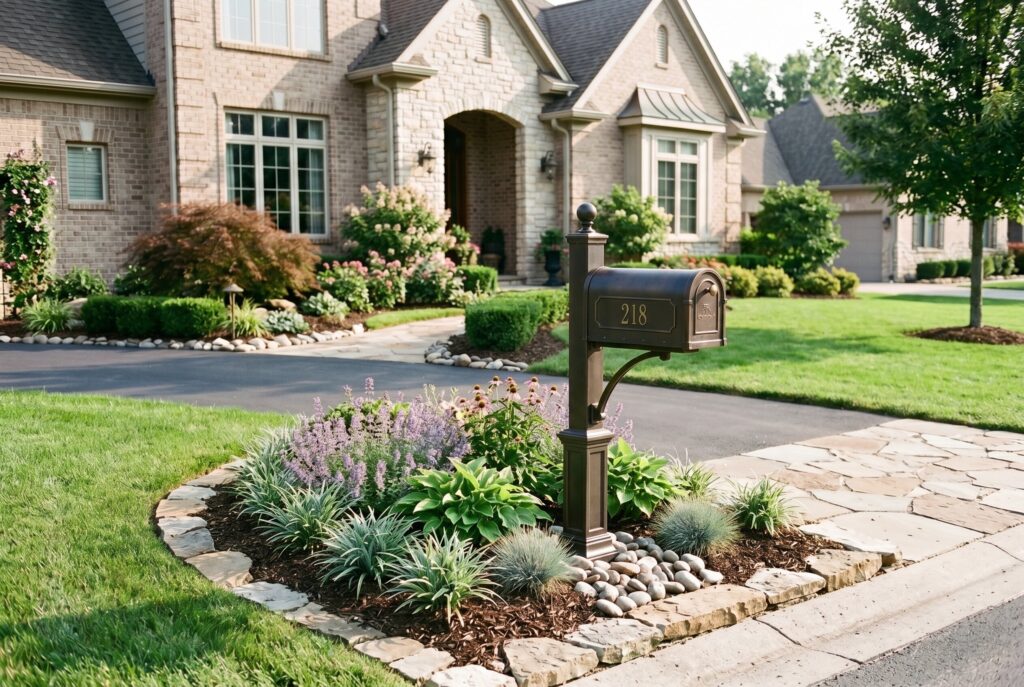
Mailbox landscaping is small, affordable, and highly visible from the street. Create a simple bed around the mailbox using edging, mulch or river rocks, and a few tough plants. Choose low-growing perennials or ornamental grasses that won’t block the mailbox or make it hard for mail delivery. This is a great place to repeat plants used elsewhere in the yard, which helps the whole design feel connected. Even a tiny mailbox bed can improve curb appeal.
19. Replace Narrow Grass Strips With Stone
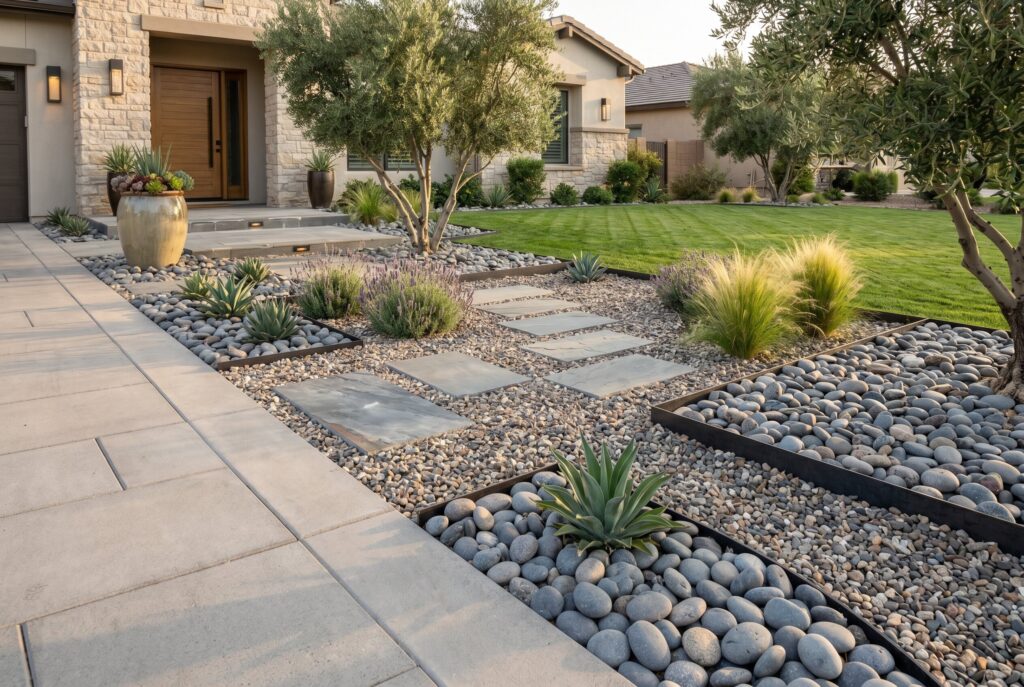
Narrow grass strips beside driveways, sidewalks, or fences are often difficult to mow and water. Replacing them with stone can reduce maintenance and make the yard look cleaner. Use gravel, river rocks, stepping stones, or a mix of rocks and drought-tolerant plants.
This idea is especially useful for hot climates and small front yards. Make sure water can still drain properly, and use edging so the stones don’t scatter into the lawn or driveway.
20. Use One or Two Boulders as Natural Sculptures
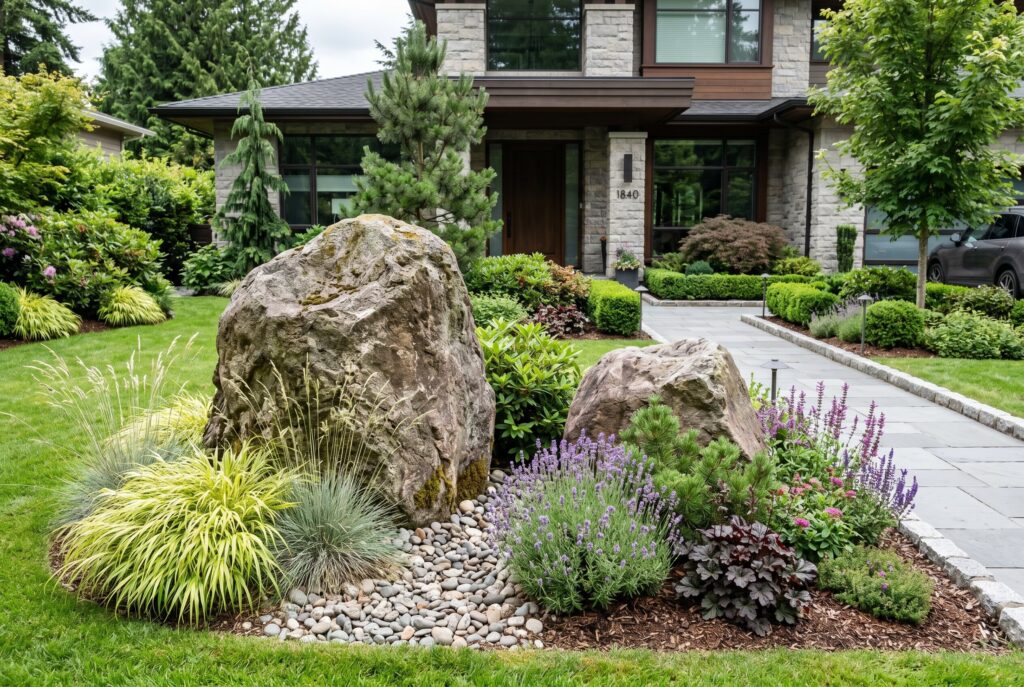
A large boulder can act like outdoor sculpture. It adds weight, texture, and a natural focal point without needing maintenance. The mistake is using too many small stones, which can look busy. One or two well-placed boulders near ornamental grasses, shrubs, or a rock garden will look more intentional. Choose boulders that match your local landscape if possible, because they will feel more natural beside your home.
21. Combine Mulch and Stone for a Balanced Look
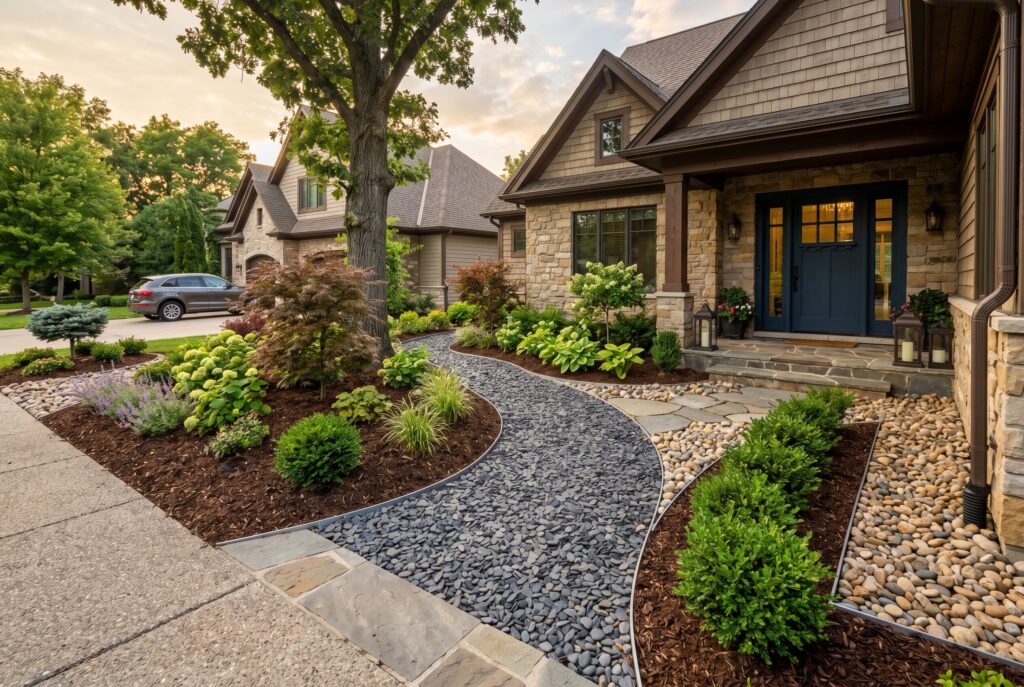
Mulch and stone work best when each has a clear purpose. Use mulch around plants because it improves soil moisture and supports plant health. Use stone for drainage areas, pathways, borders, and decorative accents.
When the two materials are mixed without a plan, the yard can look cluttered. But when they are separated with clean edging, the result feels polished and practical. This combination is one of the best low maintenance front yard landscaping approaches for budget-conscious homeowners.
22. Use Landscape Fabric Carefully Under Rock Areas
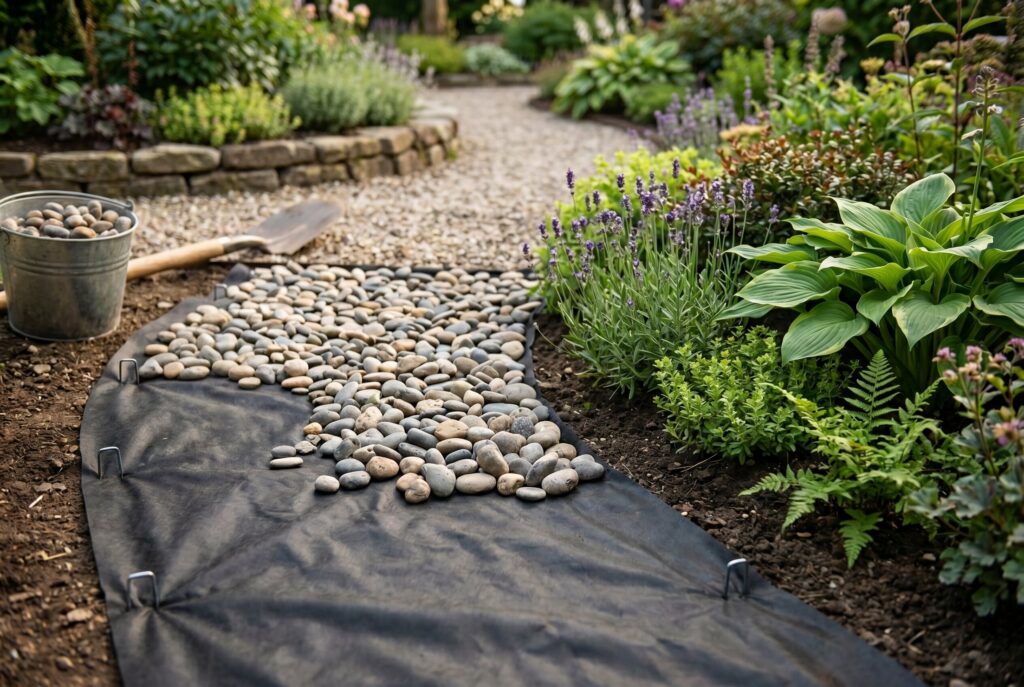
Landscape fabric can help reduce weeds under gravel or rock beds, but it should be used wisely. It works best under decorative stone pathways, dry creek beds, and non-planting areas. Avoid using heavy fabric around perennials that need to spread or in beds where you plan to improve the soil over time. Weeds can still grow on top if leaves and dirt collect between rocks, so maintenance is still needed. Think of fabric as a helper, not a permanent weed-proof solution.
5 Porch and Entryway Ideas
23. Add Solar Lights Along the Walkway
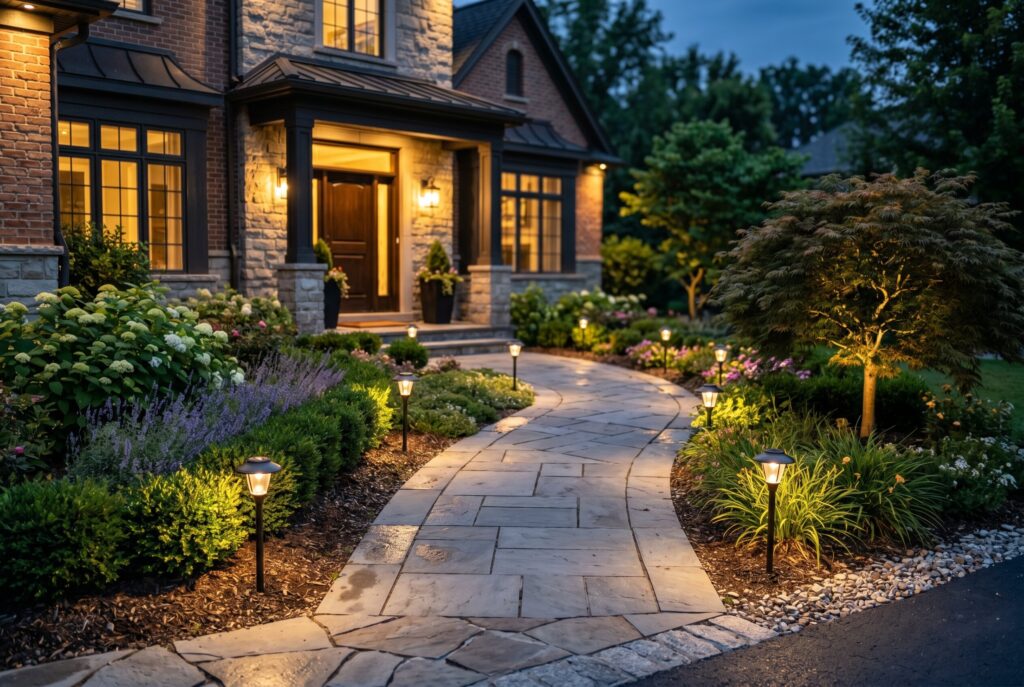
Solar lights are affordable, easy to install, and perfect for improving curb appeal in one afternoon. Place them along walkways, near steps, around garden beds, or beside a feature tree. They make the home feel safer and more welcoming at night. Choose warm white lights for a softer, more expensive look instead of harsh blue-white lighting. For best results, space them evenly and avoid using too many. A few well-placed lights look more refined than a crowded row.
24. Use Matching Planters by the Front Door
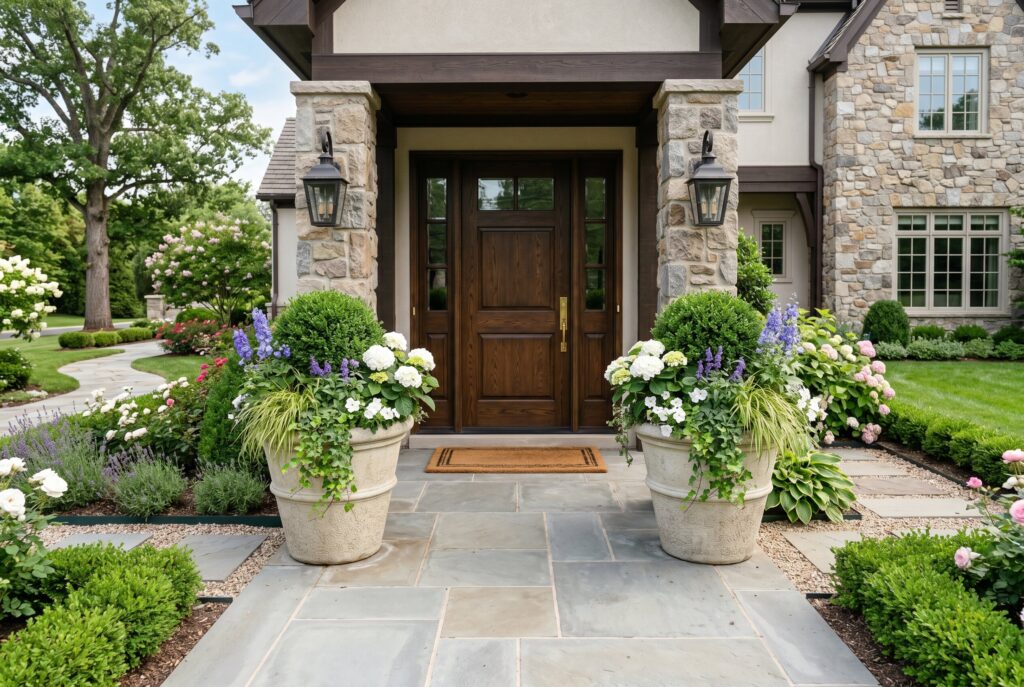
Two matching planters can make the entryway look instantly more polished. This is one of the easiest small front porch ideas because it works even if you have almost no yard. Use tall planters for drama, concrete planters for a modern look, or terracotta for warmth. Fill them with evergreen shrubs, ornamental grasses, seasonal flowers, or trailing plants. Matching planters create symmetry, which makes the front door feel intentional and welcoming.
25. Paint the Front Door for a Budget Upgrade
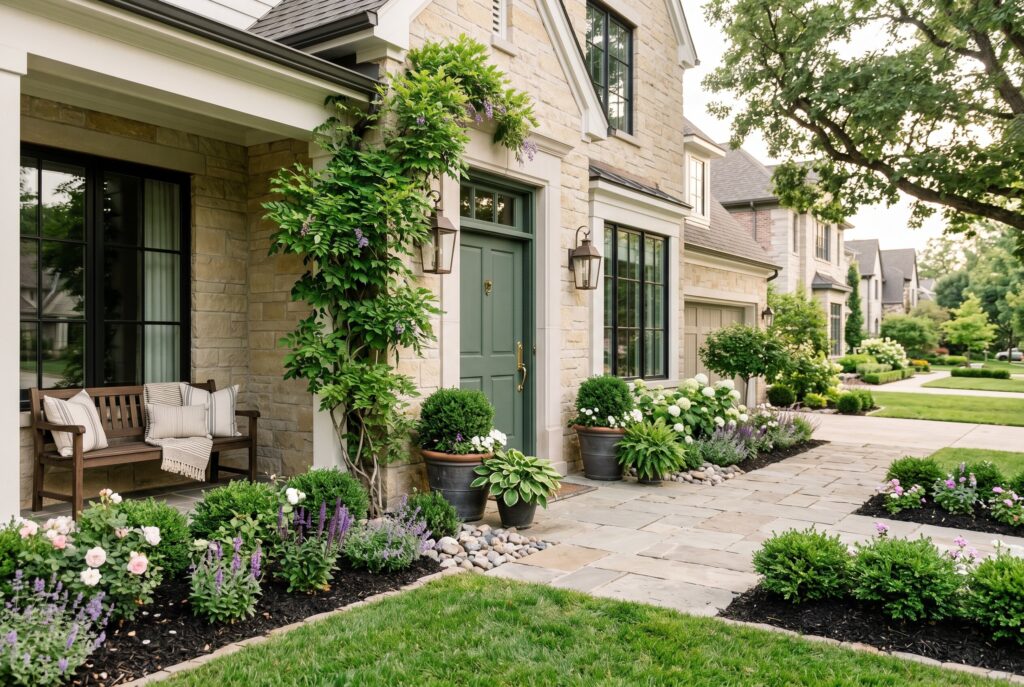
A fresh front door color can change the entire mood of the house. Sage green, charcoal, navy, black, deep red, and warm wood tones all pair well with simple landscaping. This project is cheaper than replacing plants or hardscape, but it has a strong visual impact. Choose a color that connects with your garden materials, such as mulch, stone, flowers, or porch decor. When the door color and landscaping work together, the home looks more expensive.
26. Style Seasonal Decor Without Clutter
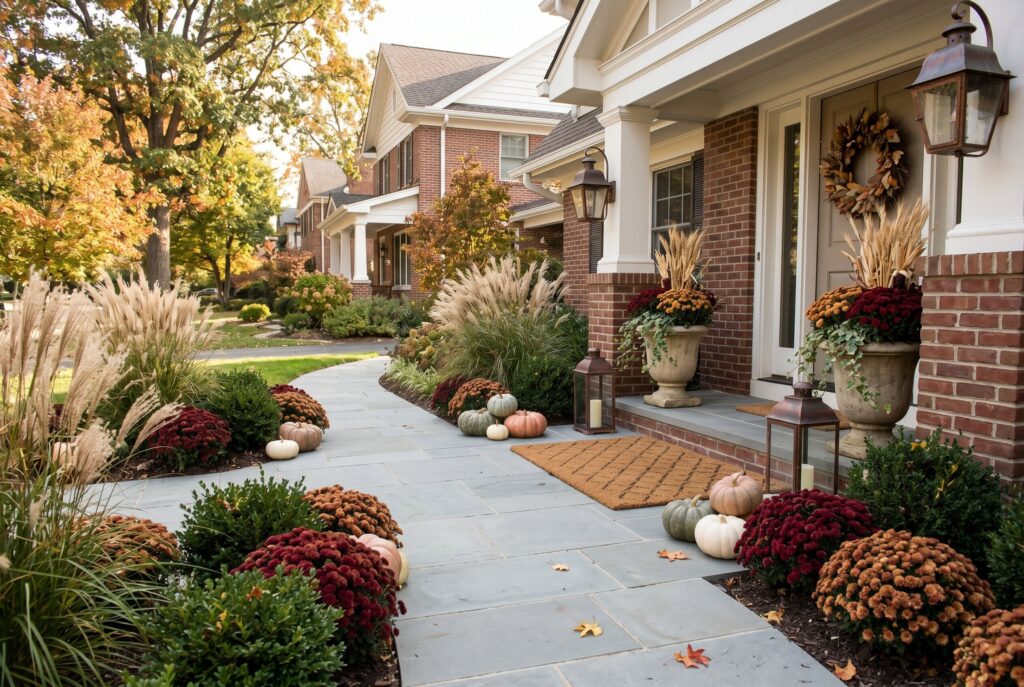
Seasonal decor can refresh the entry without changing the landscape. Fall front porch decor might include pumpkins, mums, lanterns, dried grasses, and a textured doormat. The key is restraint. Too many items can make a small porch look crowded. Choose two or three repeated colors and keep the walkway clear. Seasonal porch ideas work best when they complement the plants and materials already in the front yard.
27. Build the Yard in Stages Instead of All at Once
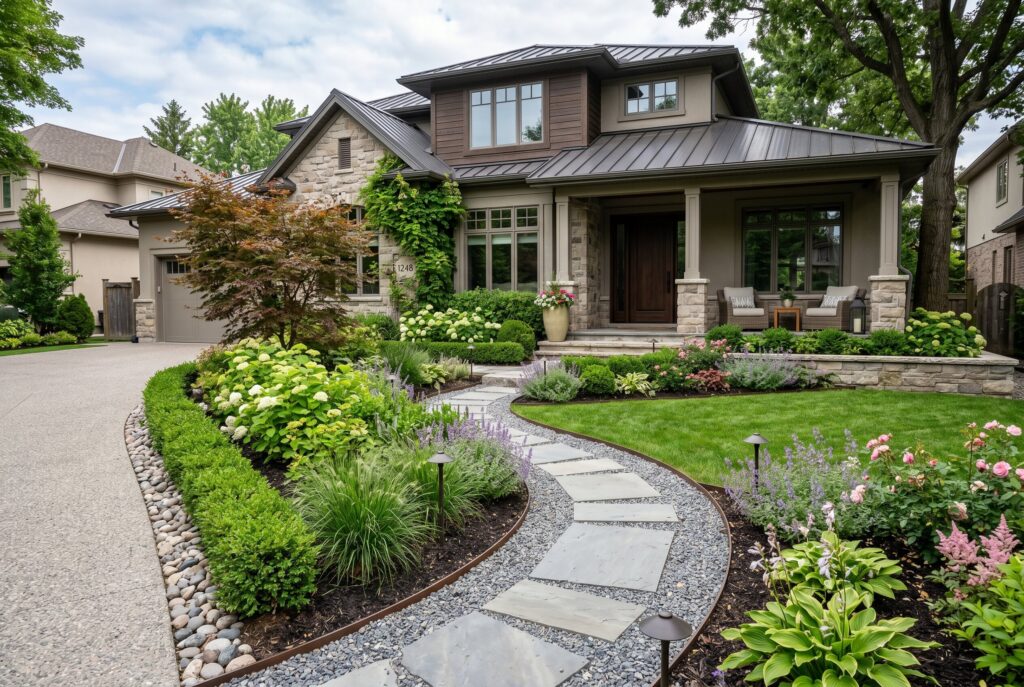
The smartest budget strategy is to build in stages. Start with cleanup, edging, and mulch. Next, add shrubs and perennials. Later, install river rocks, gravel paths, solar lighting, and porch decor. This approach prevents overspending and gives you time to see what the yard really needs. A staged yard often turns out better because each decision is more thoughtful. Cheap simple front yard landscaping ideas work best when every upgrade has a purpose.
Conclusion
The secret to beautiful, budget-friendly front yard landscaping isn’t spending thousands of dollars at once. Instead, focus on a simple plan, low-maintenance materials, and gradual improvements over time.
Start with the basics: clean edges, fresh mulch, trimmed shrubs, and a layout that complements your home. Then add elements like perennials, river rocks, gravel pathways, or solar lights as your budget allows. Small, intentional upgrades often have the biggest impact on curb appeal.
Remember, the best front yard landscaping ideas aren’t always the most expensive. Whether you prefer modern rock gardens, cottage-style flowers, or minimalist designs with rocks, the goal is to create a welcoming, attractive space that is easy to maintain. Start with one project, build in stages, and enjoy the transformation along the way.