

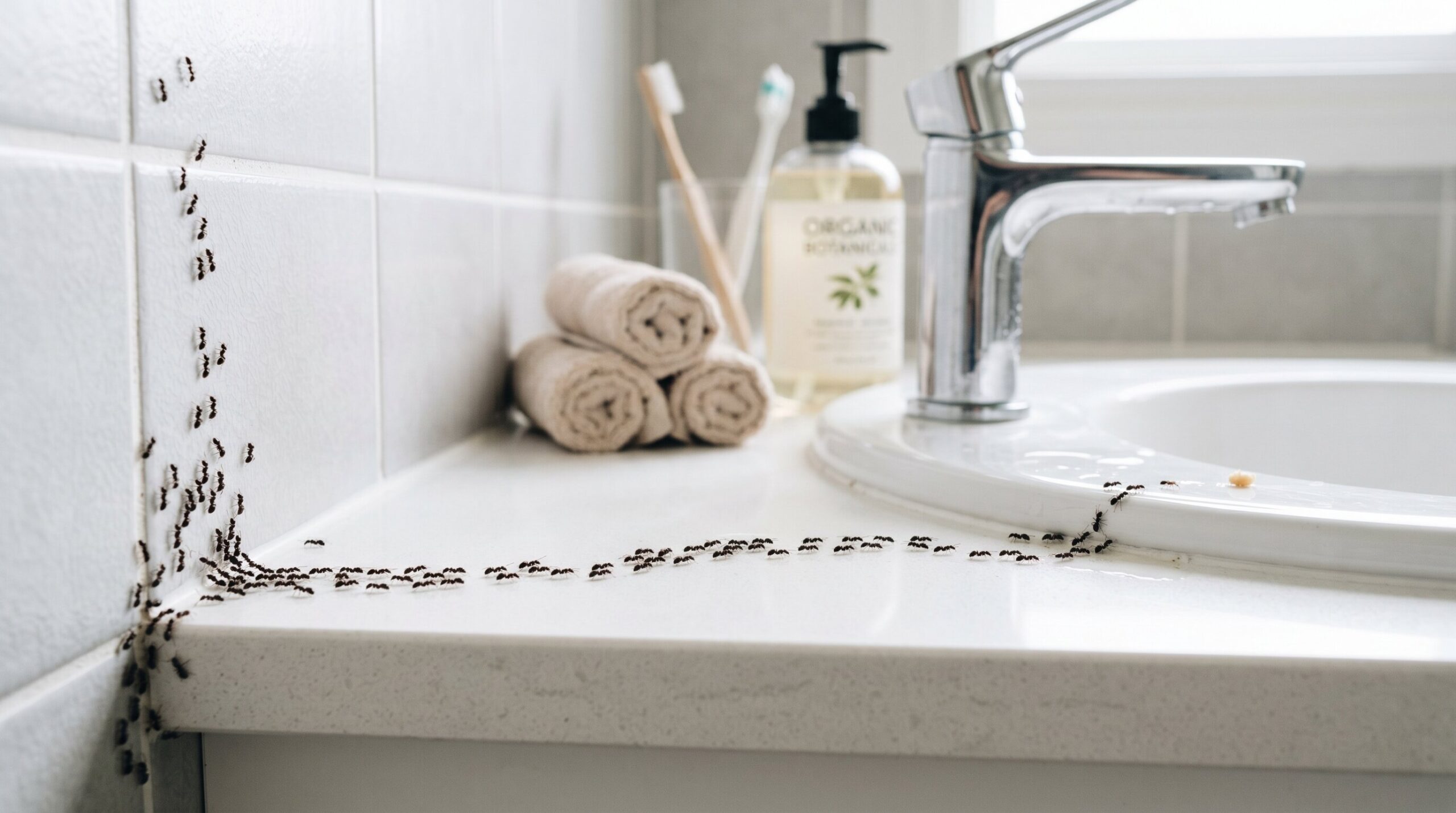
Seeing ants in bathroom corners can feel confusing. Most people expect ants near sugar, crumbs, or trash, not around sinks, drains, or shower tiles. But bathrooms give ants something just as valuable as food: water. If you want to know how to get rid of ants in bathroom areas for good, you need to treat the bathroom as a moisture problem first and a pest problem second. The real fix is to remove hidden water sources, erase scent trails, use the right ant baits, and seal the tiny gaps ants use to enter.
Why Are There Ants in My Bathroom? The Moisture Trap
Moisture attracts ants because water is essential for colony survival. A bathroom offers a perfect mix of humidity, shelter, and organic residue. Condensation on tiles, water around sink rims, damp bathmats, leaking pipes, wet grout, and clogged drains can all create an ant-friendly zone.
Bathrooms also contain “food” ants can use. Soap scum, toothpaste residue, shed skin cells, hair, and biofilm inside drains may attract insects or support tiny organisms that ants investigate. Even if your bathroom looks clean, ants may still find enough scent and moisture to keep returning. That’s why spraying visible ants doesn’t solve the problem. You need to remove what keeps attracting them.
Fix 1: Eliminate the Invisible Water Sources
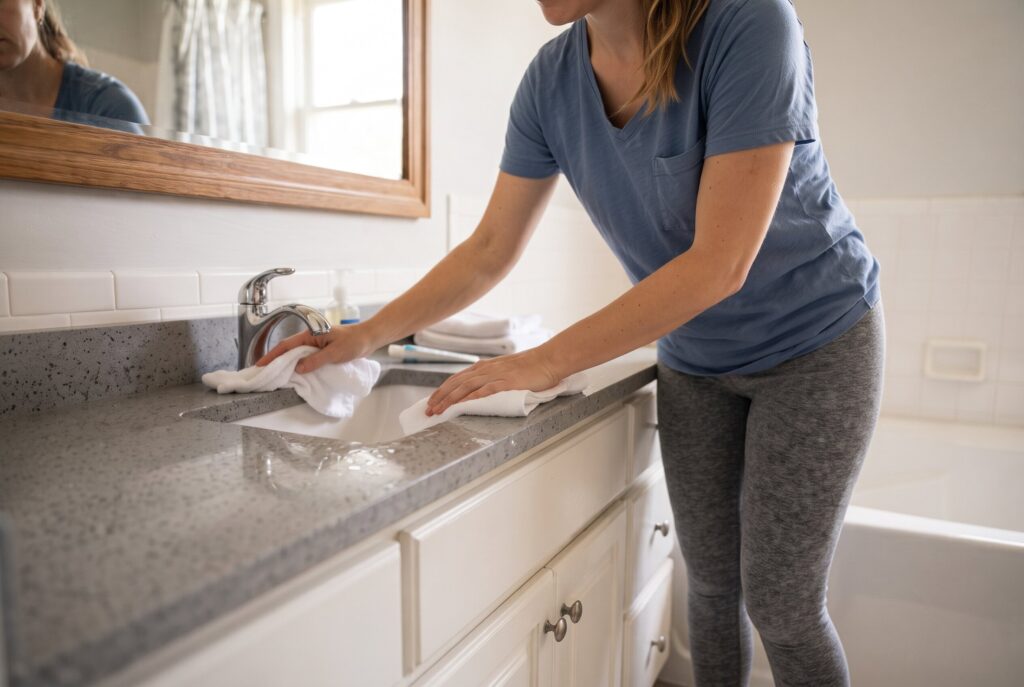
Start under the sink. Inspect the P-trap, shutoff valves, supply lines, and the wall area where pipes enter. Touch the cabinet floor and back panel. If it feels damp, warped, or musty, there may be a slow leak.
Next, check ants around drains. Pour boiling water carefully down the drain to loosen soap, hair, and biofilm. Then scrub the drain cover and overflow opening. Don’t ignore the tub or shower drain, especially if ants appear after showers.
Use the dry night rule. Before bed, wipe the sink basin, faucet base, tub edge, and countertop dry. Hang wet towels. Squeeze out sponges. Run the exhaust fan after showers. A bathroom that stays damp overnight becomes a drinking station for ants.
Fix 2: Erase Pheromone Trails on Tiles and Grout
Ants don’t explore randomly. They follow pheromone trails, which are invisible chemical paths left by worker ants. If you kill the visible ants but leave the trail, new ants can follow the same route tomorrow.
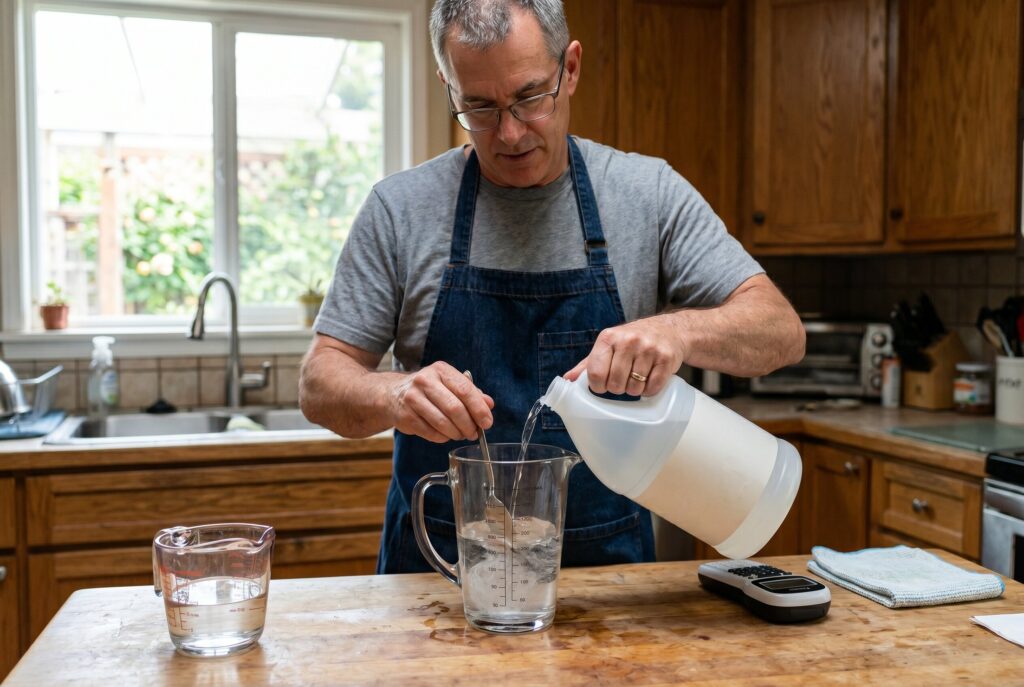
Mix a 50/50 solution of white vinegar and water. Wipe floor edges, baseboards, vanity corners, tile grout lines, windowsills, and the path where ants are moving. Vinegar isn’t a long-term ant killer, but it’s useful for trail cleanup. Let the area dry completely before placing bait. If you leave surfaces wet, you may create the same moisture attraction you’re trying to remove.
Fix 3: Deploy Moisture-Safe Ant Baits
Bathrooms are humid, so powders often fail. Diatomaceous earth and open borax for ants powders can clump when exposed to moisture. Once they turn into damp paste, ants may avoid them or the treatment may lose effectiveness.
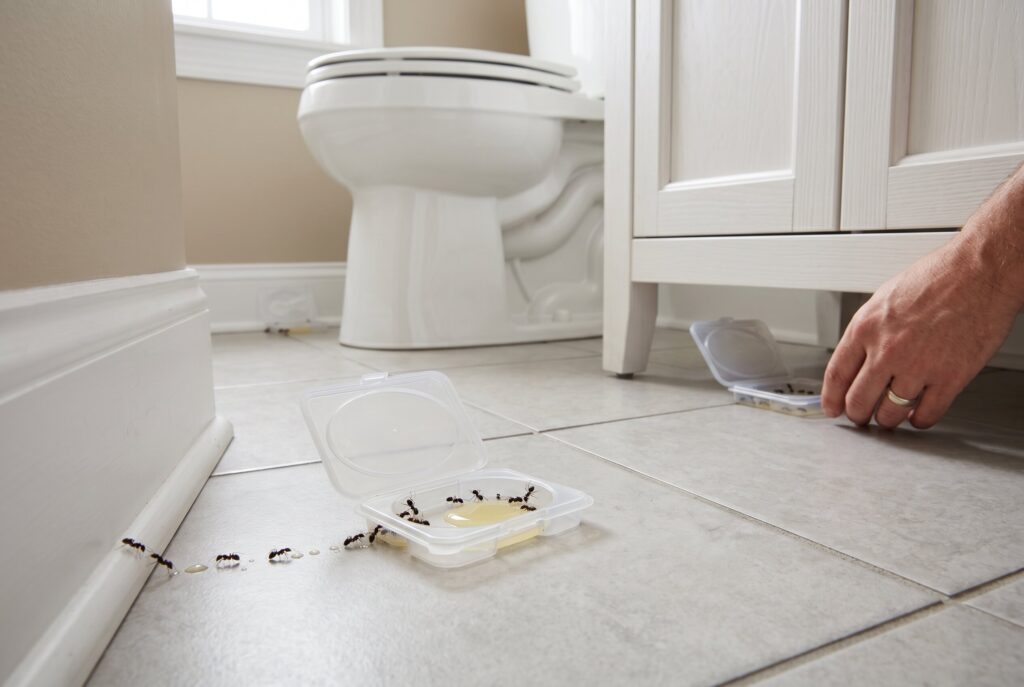
For bathrooms, enclosed liquid or gel ant baits are usually more practical. Place them under the vanity, behind the toilet, near baseboards, or outside the bathroom entry where the surface stays dry. Don’t place bait directly inside the shower or on wet floors.
Ant baits work slowly by design. Worker ants feed on the bait and carry it back to the colony. That is how the treatment can reach the queen. Don’t spray cleaners or repellents directly over bait stations, because that can stop ants from feeding.
Fix 4: Seal the Micro-Entry Points
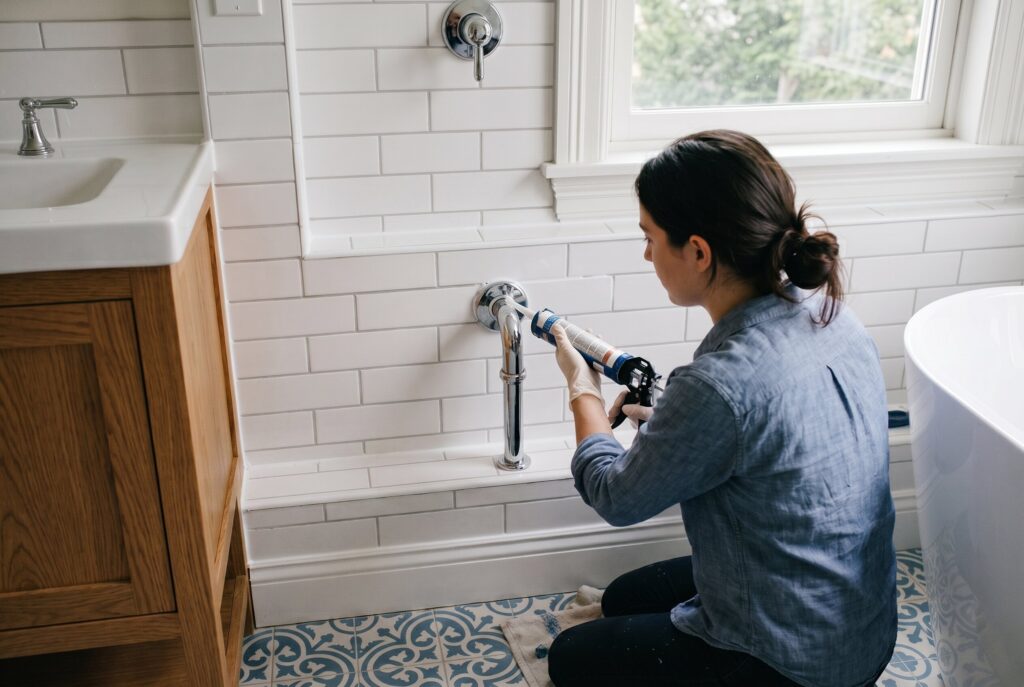
Ants often nest outside, inside wall voids, or near moist structural areas. The bathroom may only be their destination. Once the trail slows, seal the gaps they used to enter.
Use silicone caulk around plumbing escutcheons where pipes enter walls, gaps behind the vanity, cracked grout, window frames, baseboards, and the seam where the tub meets tile. Replace damaged caulk around the bathtub or shower.
Also check exterior walls near the bathroom if you want to know how to get rid of ants in bathroom areas effectively. Trim plants touching the house, repair window gaps, and keep mulch away from foundation edges if ants are entering from outside.
Red Alert: When to Call an Ant Exterminator
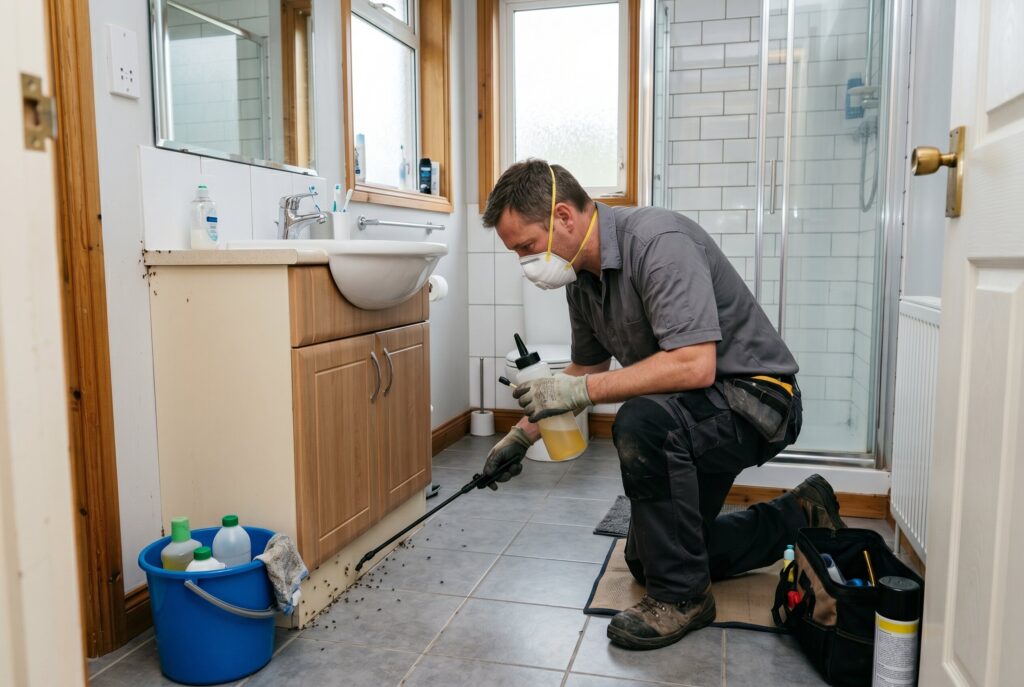
Not all bathroom ants are harmless. If you see large black ants, especially near soft wood, bubbling paint, ceiling stains, or damp trim, call an ant exterminator. Carpenter ants don’t eat wood like termites, but they tunnel through softened or water-damaged wood to create galleries.
That means the ant issue may be a symptom of a bigger moisture or structural problem. DIY bait may reduce activity, but it won’t repair the leak, rot, or damaged framing. You should also call a professional if ants keep returning after two weeks, appear from multiple rooms, or form heavy trails near walls and ceilings.
Conclusion
The best bathroom ant control strategy for how to get rid of ants in bathroom problems is moisture control. Fix leaks, dry surfaces, clean drains, erase pheromone trails, use enclosed ant baits, and seal entry points. A bathroom that stays dry, clean, and well-ventilated gives ants fewer reasons to return. Run the exhaust fan, wipe standing water, store toiletries neatly, and inspect pipes regularly. Once the hidden moisture disappears, the bathroom stops being an ant oasis.
Related Articles
- How to Get Rid of Ants in Kitchen: 7 Food-Safe Steps
- How to Get Rid of Ants in the House: 7 Safe Hacks to End Them For Good
- Pet Safe Ant Killer: 5 Natural Remedies Safe for Dogs & Cats (2026)