

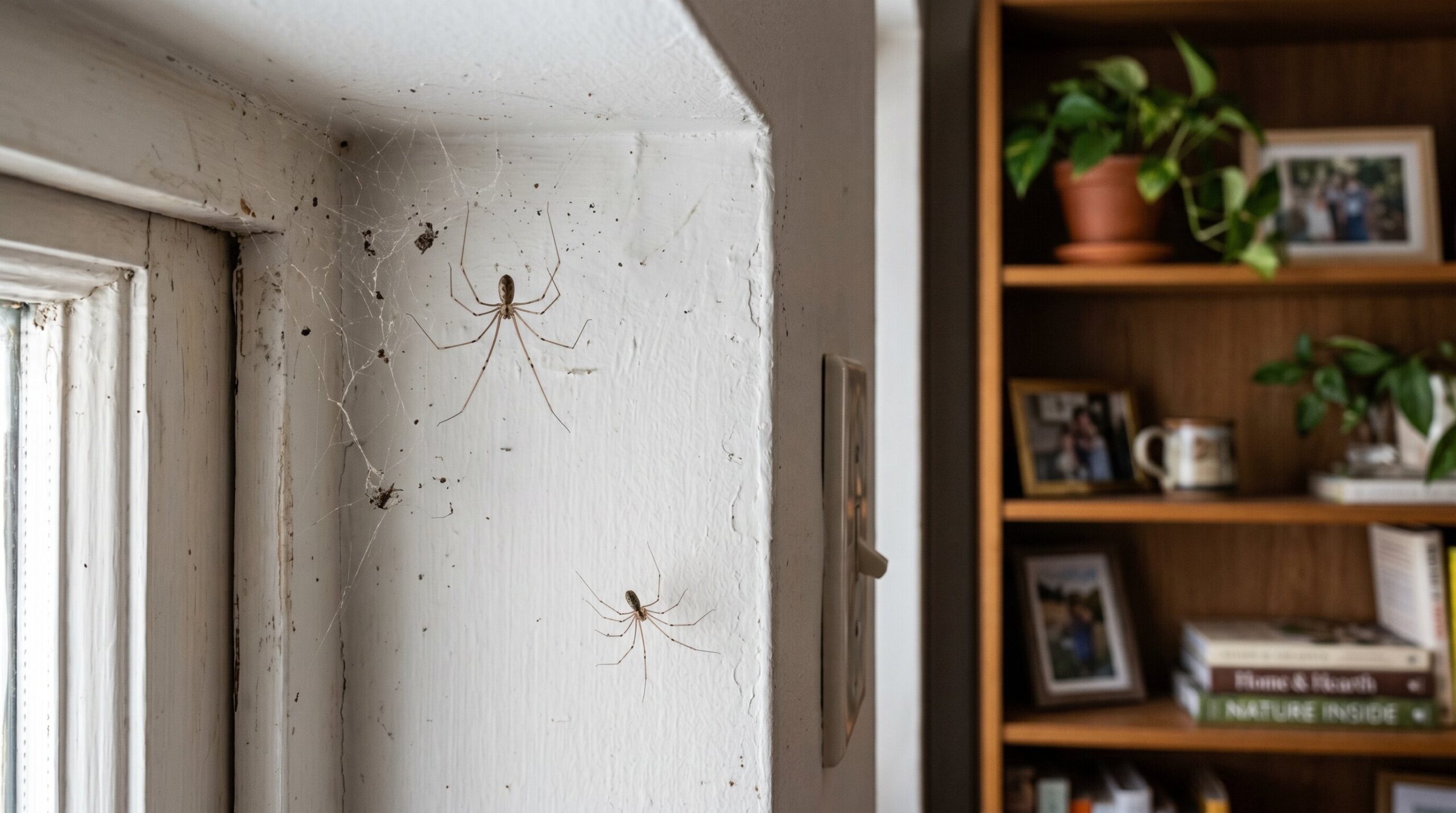
Learning how to get rid of spiders in the house starts with one important truth: random spraying isn’t real spider control. Spiders enter homes for shelter, warmth, moisture, mates, and food. If your house has flies, gnats, ants, roaches, or other small insects, spiders may stay because the buffet is open. To get rid of spiders in the house for good, you need a complete system: remove webs and egg sacs, trap active hunters, use spider spray correctly, cut off their food supply, and seal the gaps they use to enter.
The Spider Treatment & Safety Matchmaker
A spider treatment matchmaker should ask three questions.
- Where are you seeing spiders? Corners and ceilings usually mean web-building spiders. Floors, closets, garages, and under beds often mean ground-hunting spiders.
- Do you have children, pets, or sensitive airways in the home? If yes, start with vacuuming, sticky traps, sealing, and targeted applications instead of broad spraying.
- Are you seeing dangerous spiders? If you suspect a black widow or brown recluse, don’t rely on homemade spider repellent. Use traps for monitoring and call professional pest control if sightings continue.
Step 1: The Non-Chemical Purge
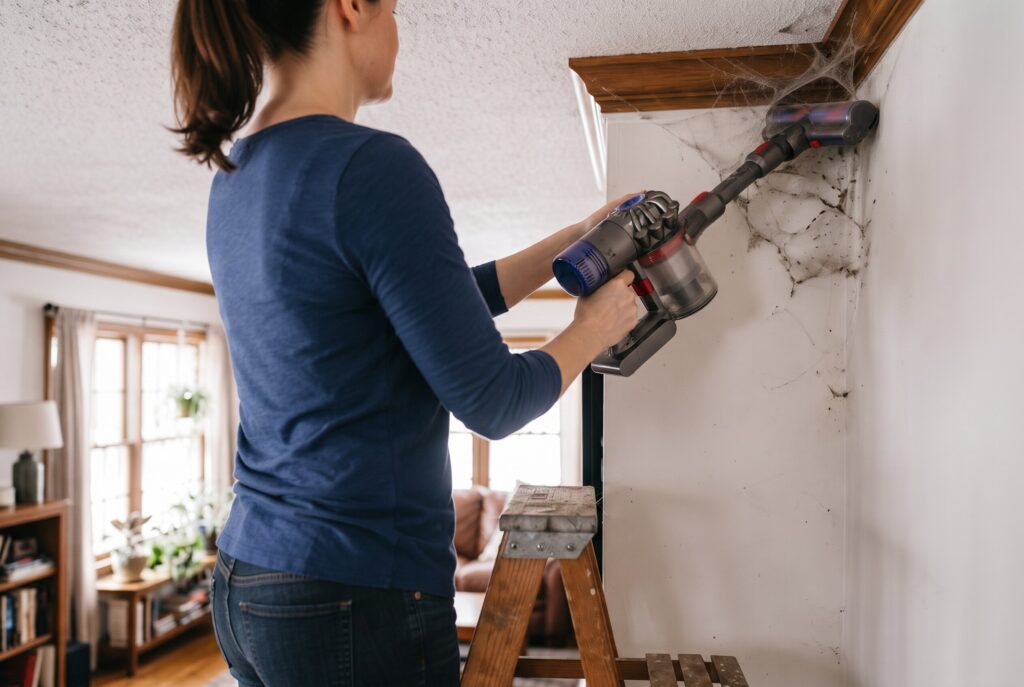
Start with the vacuum. This is the most overlooked step because people focus on sprays, but a single egg sac can hold many spiderlings. If you leave egg sacs behind, the problem can return even after you kill adult spiders.
Use a hose attachment to vacuum webs, egg sacs, adults, dead insects, and dusty corners. Focus on ceiling corners, behind furniture, under beds, closets, window frames, garage shelves, basements, attics, and storage boxes. After vacuuming, empty the canister or bag outdoors immediately. Don’t leave it inside overnight. Wipe the area afterward so new webs are easier to spot.
Step 2: Choosing the Right Spider Spray
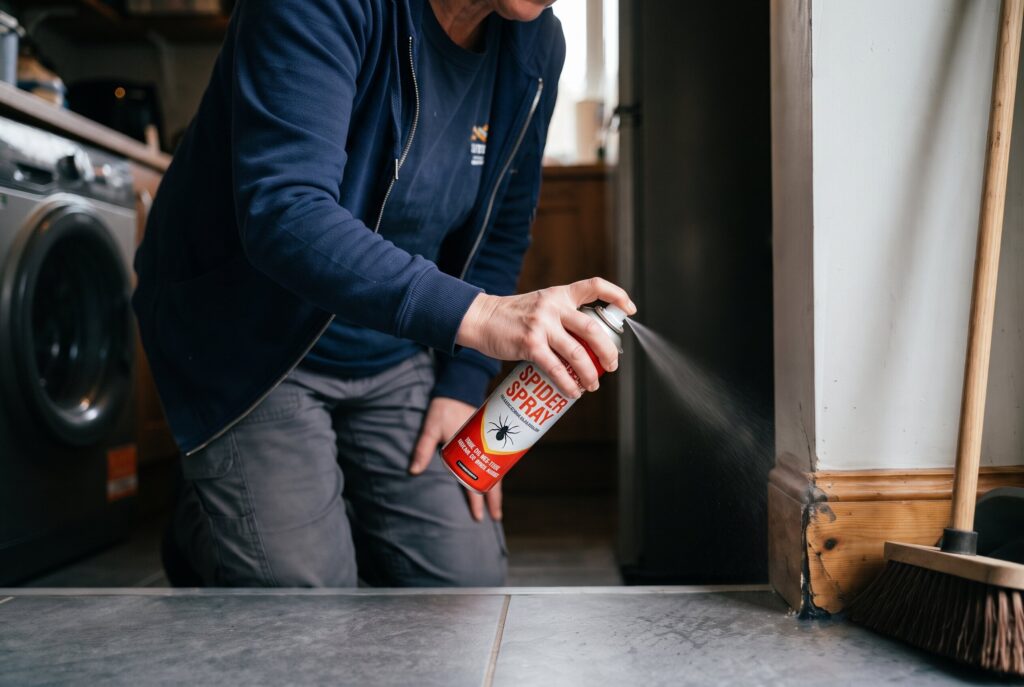
Not all spider spray products do the same job. A direct-contact spider killer spray is designed to kill spiders you can see. A residual barrier spray is designed to leave a treated zone where spiders or insects may pass later.
Use spider spray indoor only in targeted areas: baseboards, cracks, dark corners, door thresholds, behind appliances, and around window frames. Don’t spray bedding, food surfaces, toys, or open-air rooms without reading the label.
Outdoor perimeter treatment is an important step in how to get rid of spiders in house situations. Apply spray around foundation edges, door frames, porch corners, garage entries, window frames, eaves, and gaps where spiders may enter. The goal isn’t to soak the house but to create narrow, strategic treatment zones. Always follow the product label, because more spray doesn’t mean better control.
Step 3: Deploying Sticky Traps for Ground Hunters
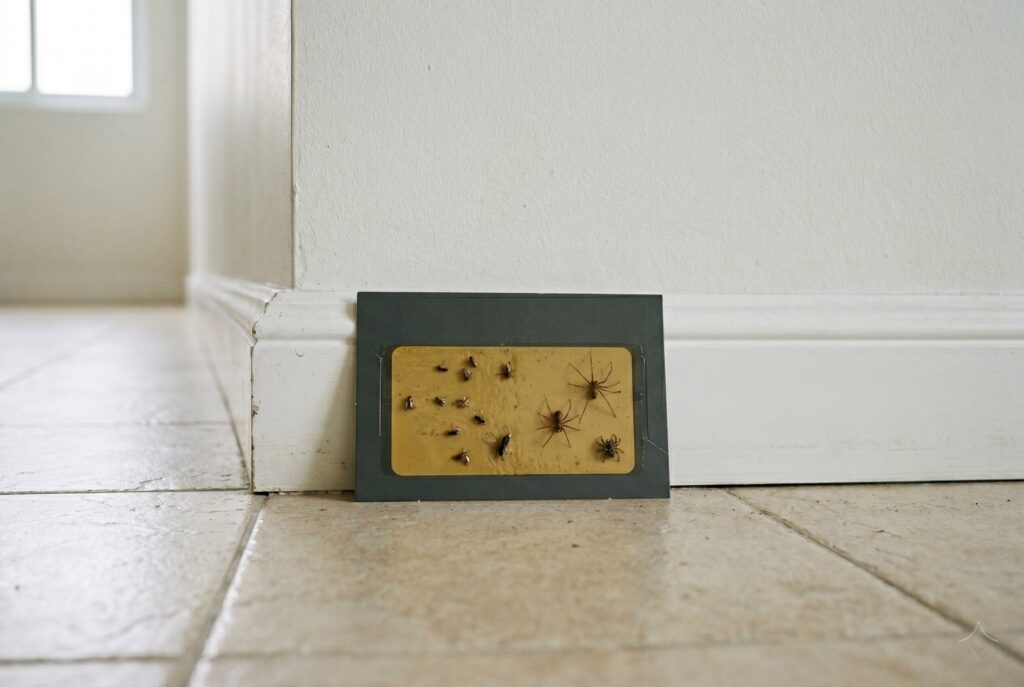
Some spiders don’t sit in webs. Wolf spiders, brown recluses, and other hunting spiders move along floors, walls, storage areas, and dark edges. These spiders may not cross enough dry spray residue to die quickly.
Sticky traps are often the better spider killer for these ground hunters. Place glue boards under beds, behind toilets, inside closets, along garage walls, behind storage bins, near basement edges, and beside doorways. Put traps flat against walls because spiders often travel along edges. Check traps weekly. If one area catches multiple spiders, you’ve found a travel route that needs sealing or treatment.
Step 4: The Natural Spider Repellent Perimeter
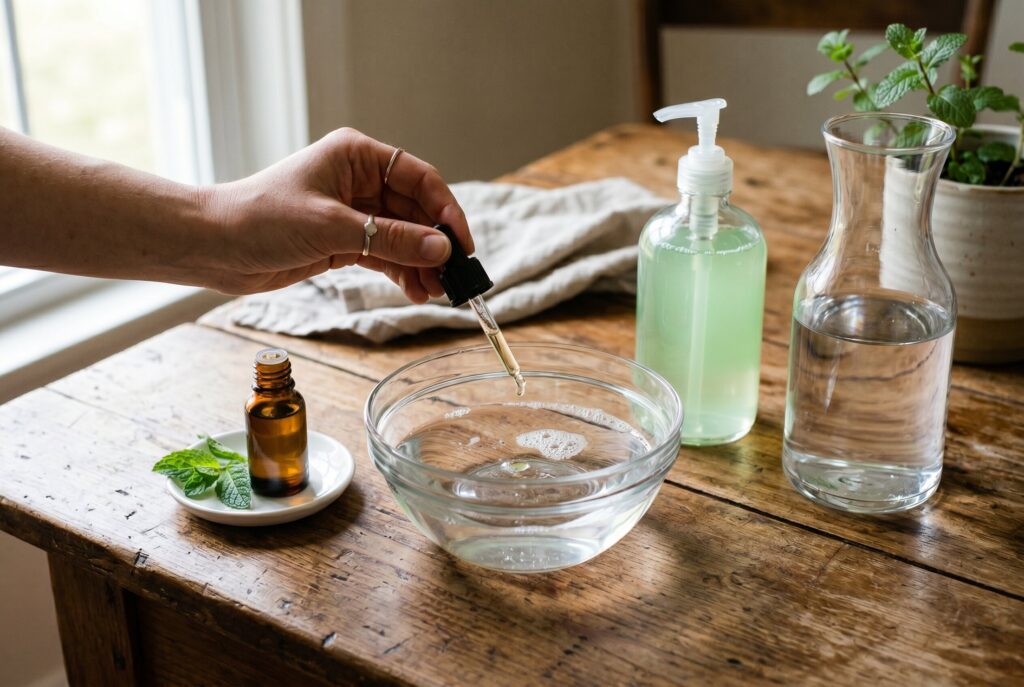
Natural spider repellent can help with prevention, but it shouldn’t be treated like eradication. Peppermint oil, tea tree oil, vinegar, and citrus scents may discourage spiders for a short time, but they fade quickly and need reapplication.
A simple DIY spider repellent indoor spray can be made with water, a small amount of dish soap, and a few drops of peppermint oil. Spray it lightly around window sills, exterior door thresholds, and garage corners.
Be careful with essential oils around cats, dogs, babies, and people with asthma. Many oils can irritate pets and lungs. Use natural repellents as a light boundary tool, not as your main spider control plan.
Step 5: Starving Them Out
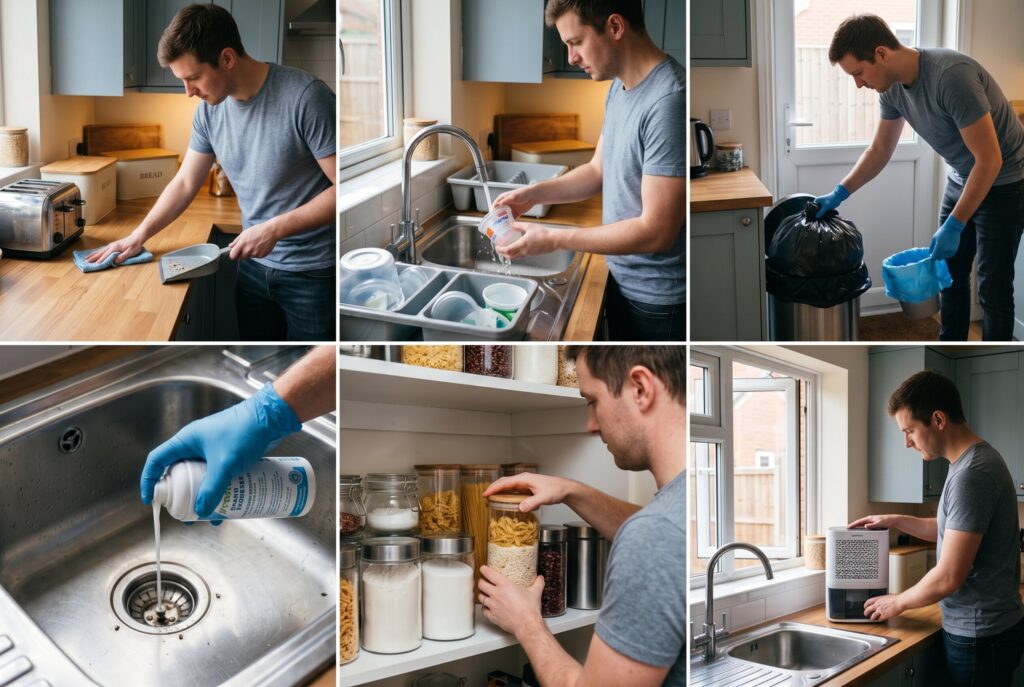
The ultimate spider control method is insect control. Spiders eat other bugs. If your home has fruit flies, drain flies, ants, mosquitoes, moths, roaches, or gnats, spiders have a reason to stay.
Clean food crumbs, rinse recycling, empty trash, fix drain flies, store pantry goods tightly, and reduce indoor moisture. Replace bright outdoor bulbs with warmer bulbs that attract fewer flying insects. Keep porch lights off when not needed. When the prey disappears, many spiders leave or die because the house no longer supports them.
Step 6: Sealing the Micro-Cracks
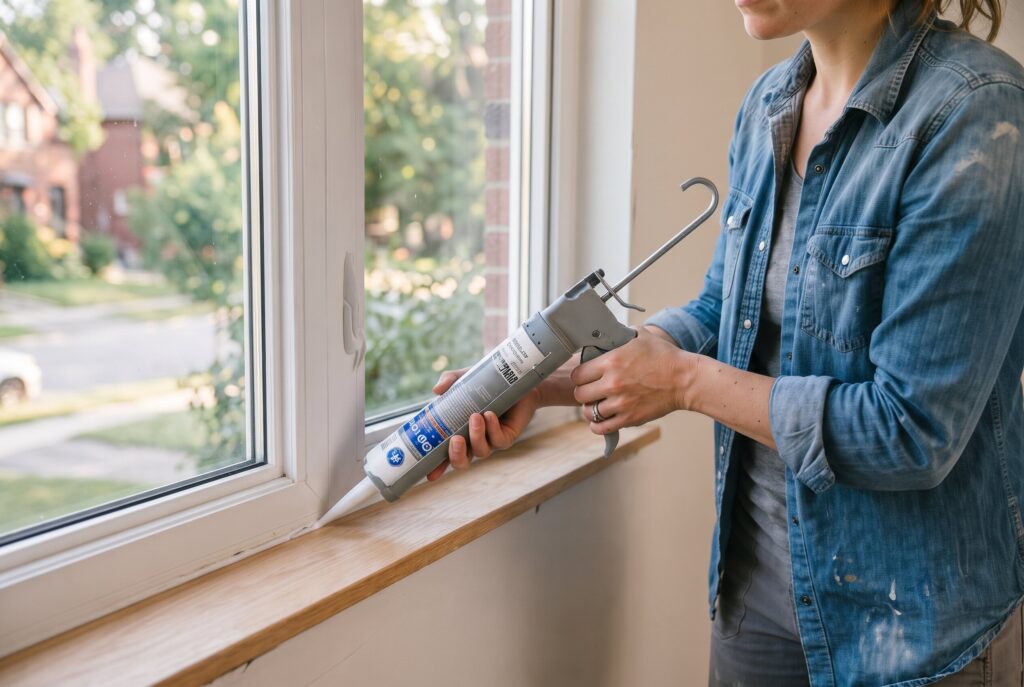
To learn how to keep spiders away, think like a spider. They enter through tiny gaps around windows, doors, vents, utility lines, foundation cracks, torn screens, garage doors, and attic openings.
Replace worn weather stripping. Add door sweeps. Repair window screens. Use silicone caulk around window frames and pipe penetrations. Seal gaps where siding meets trim. Keep firewood, cardboard, and clutter away from the foundation. Inside, reduce hiding places by organizing storage bins, lifting boxes off floors, and removing piles of clothes, paper, or unused items.
Step 7: When to Call Professional Pest Control
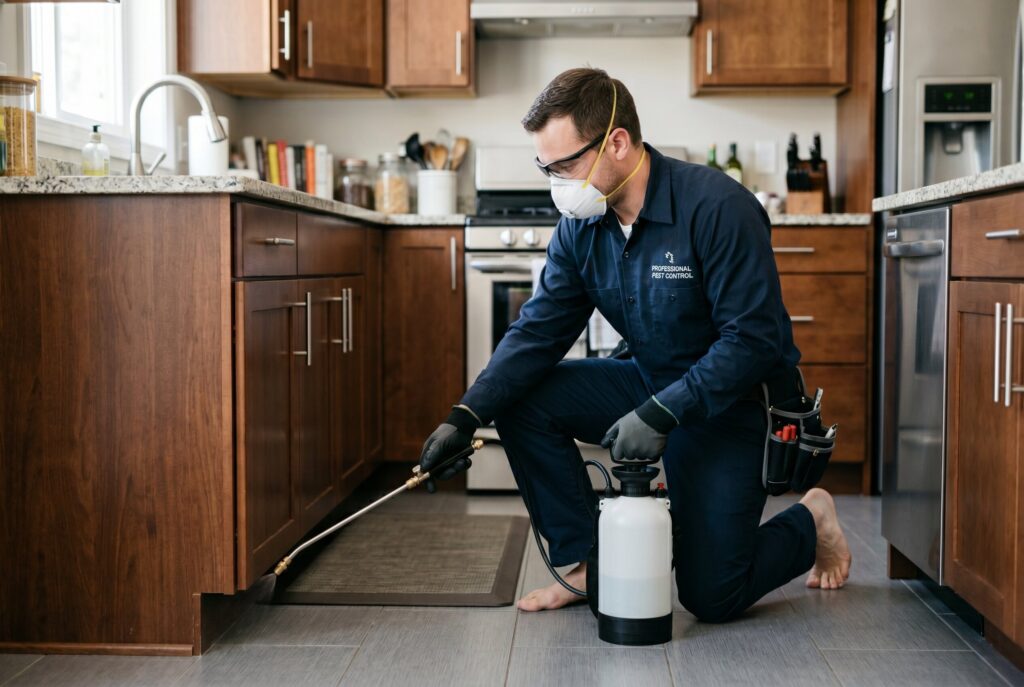
Call professional pest control if you see black widows, brown recluses, repeated egg sacs, or multiple spiders daily after cleaning and trapping. You should also call if spiders appear in bedrooms, nurseries, closets, or shoes despite ongoing treatment.
Professional spider control may include inspection, species identification, exclusion work, targeted residual products, dust in wall voids, and treatment for the insects spiders are eating. This is especially important if someone in the home is vulnerable to bites or allergic reactions.
Conclusion
The best way for how to get rid of spiders in your house isn’t one product. It’s a system. Vacuum webs and egg sacs, use sticky traps, apply spider spray precisely, reduce insects, seal cracks, and keep rooms clean and dry. Spiders are persistent, but they’re also predictable. Remove their hiding places, food supply, and entry points, and your home becomes much less inviting.
Related Articles
- How to Get Rid of Spiders Outside: 5 Yard Plants to Stop Web Building
- How to Get Rid of Ants in the House: 7 Safe Hacks to End Them For Good