

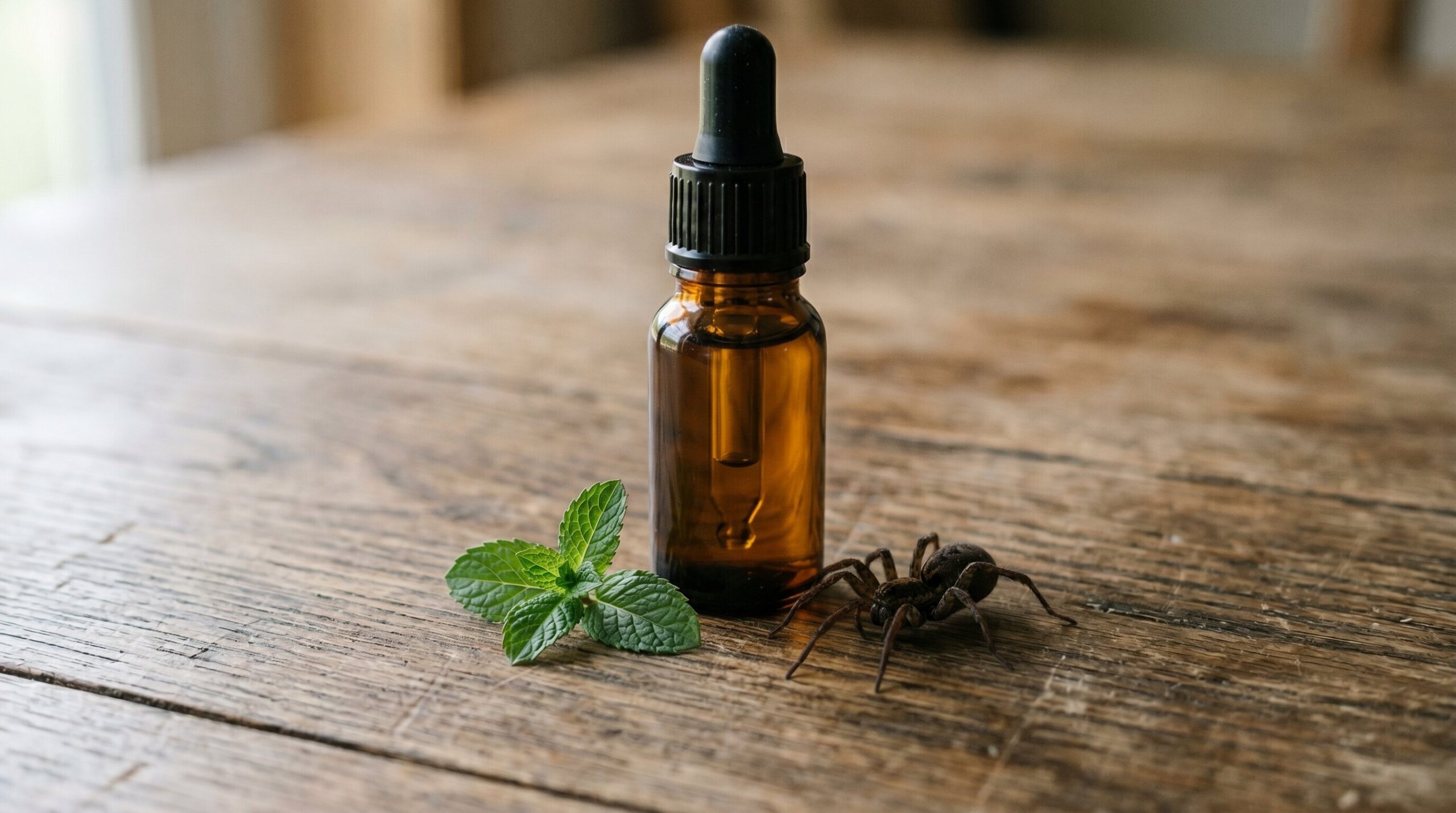
If you want a chemical-free home, a natural spider repellent can feel like the perfect middle ground: strong enough to discourage spiders, but gentler than a harsh spider killer spray. So, does peppermint oil repel spiders? Yes, it can help. But natural scents aren’t magic. They work best as short-term barriers, not full infestation control. To truly learn how to get rid of spiders, you need to combine scents with cleaning, sealing, clutter control, and prey reduction.
The Safe Spider Scent Mixer
A safe spider scent mixer should help you choose the right repellent based on your home. If you don’t have pets, peppermint oil spray is a strong first choice for windows, baseboards, and storage rooms.
If you have cats or small dogs, avoid essential oil sprays and use vinegar or horse chestnuts instead. If spiders appear near porch lights, use cedar, eucalyptus, or lavender nearby to reduce flying insects that attract spiders. If spiders keep returning daily, scents alone won’t solve the problem. You need sealing, sticky traps, and insect control.
The Science: How Do Spider Repellents Actually Work?
Spiders don’t smell like humans do. They sense the world through tiny hairs and sensory organs on their legs. These organs help them detect vibration, chemicals, prey, moisture, and safe hiding places. Strong scents may irritate or overwhelm these sensory systems. That is why some spiders avoid peppermint oil or chestnut compounds. But the effect can vary by species, surface, concentration, and how fresh the scent is.
There are two types of repellents. Direct repellents are scents spiders may avoid themselves. Peppermint oil and horse chestnut have the strongest support. Indirect repellents work by reducing the insects spiders eat. Lavender, eucalyptus, and cedar may help because they discourage moths, flies, mosquitoes, and other small prey.
Scent 1: Peppermint Oil, the Heavy Hitter

Peppermint oil is the most popular natural spider repellent for a reason. It smells strong, spreads easily, and works well around entry points. To make a spray, mix two cups of water, 15 to 20 drops of peppermint essential oil, and one small drop of dish soap. Shake well before each use. Spray lightly around window sills, baseboards, exterior door frames, closets, garage corners, and under sinks.
Reapply every two to three days because essential oils evaporate quickly. Reapply sooner after cleaning, rain, or heavy airflow. Safety matters. Peppermint oil can be risky for cats, small dogs, and sensitive people. Don’t spray it on bedding, pet areas, food surfaces, or children’s toys.
Scent 2: Horse Chestnut, the Traditional Deterrent

Horse chestnuts are a low-effort spider deterrent. People have long placed them on windowsills, shelves, and corners where spiders enter. They’re useful because they don’t require mixing, spraying, or adding essential oils to the air. Place whole horse chestnuts near window frames, basement ledges, garage shelves, and entry corners. This method is best for prevention, not removal. If you already have webs, egg sacs, or multiple spiders, clean and vacuum first. Then use horse chestnuts as a passive barrier.
Scent 3: White Vinegar, the Unsung Hero

Vinegar is one of the safest spider repellent indoor options for homes with pets. It doesn’t smell pleasant, but it’s practical, cheap, and easy to apply. Mix equal parts white vinegar and water. Spray or wipe baseboards, window tracks, closet corners, and garage edges. Vinegar may bother spiders on contact, but its bigger value is cleaning. It removes dust, insect residue, and scent trails from other bugs.
That matters because spiders follow food. If vinegar helps reduce the signs and smells of flies, ants, and gnats, your home becomes less attractive to spiders. Avoid vinegar on natural stone, unfinished wood, or delicate surfaces.
Scents 4, 5, and 6: Lavender, Eucalyptus, and Cedar

Lavender, eucalyptus, and cedar are often listed as smells spiders hate. The truth is more nuanced. Evidence that they directly repel spiders is weaker than peppermint or chestnut. But they can still help by reducing the insects spiders hunt.
Lavender sachets can work well in closets and linen cabinets. Eucalyptus can be used near windows or utility rooms, with pet caution. Cedar blocks or cedar chips are useful in wardrobes, storage boxes, and garages where moths and other insects may appear. Think of these scents as support tools. They help make the environment less attractive, but they won’t eliminate a spider problem by themselves.
The Lemon Oil Myth: What Not to Use

Many blogs recommend lemon oil or citrus oil for spiders. But this advice is shaky. Some research-based summaries note that lemon oil didn’t show meaningful repellent effects in tested spiders, while peppermint and chestnut performed better.
That doesn’t mean lemon smells bad to no spider ever. It means lemon oil shouldn’t be your main strategy. If you want a natural spider repellent, peppermint oil, horse chestnut, vinegar cleaning, and cedar are more practical choices. Don’t waste time spraying lemon oil everywhere and expecting spiders to disappear.
Beyond Scents: How to Keep Spiders Away Permanently
First, declutter. Spiders love quiet hiding places: cardboard boxes, piles of clothes, garage clutter, under-bed storage, basement shelves, and unused corners. Second, seal cracks. Use silicone caulk around windows, baseboards, pipe gaps, and foundation cracks. Replace torn screens and worn weather stripping.
Third, reduce prey. Turn off porch lights when not needed, fix fruit fly or drain fly problems, store food tightly, and vacuum dead insects. This is what keeps spiders away long term: fewer hiding spots, fewer entry points, and fewer insects to eat.
Conclusion
While many people ask if peppermint oil repels spiders, the answer is yes, but it works best as part of a complete plan. Use scents for prevention, not panic control. For the strongest natural setup, start with peppermint oil if your home is pet-safe, use horse chestnuts for passive entry-point control, clean with vinegar, and add cedar, lavender, or eucalyptus where insects gather. Then do the real work: vacuum webs and egg sacs, reduce clutter, seal cracks, and remove the bugs spiders feed on. Natural spider control isn’t one smell. It’s a cleaner, drier, tighter home that gives spiders fewer reasons to stay.
Related Articles
- How to Get Rid of Spiders: 7 Pro Steps to Eradicate Them For Good
- How to Get Rid of Spiders Outside: 5 Yard Plants to Stop Web Building
- How to Keep Spiders Away: 4 Invisible Barriers to Seal Your Home (2026)