

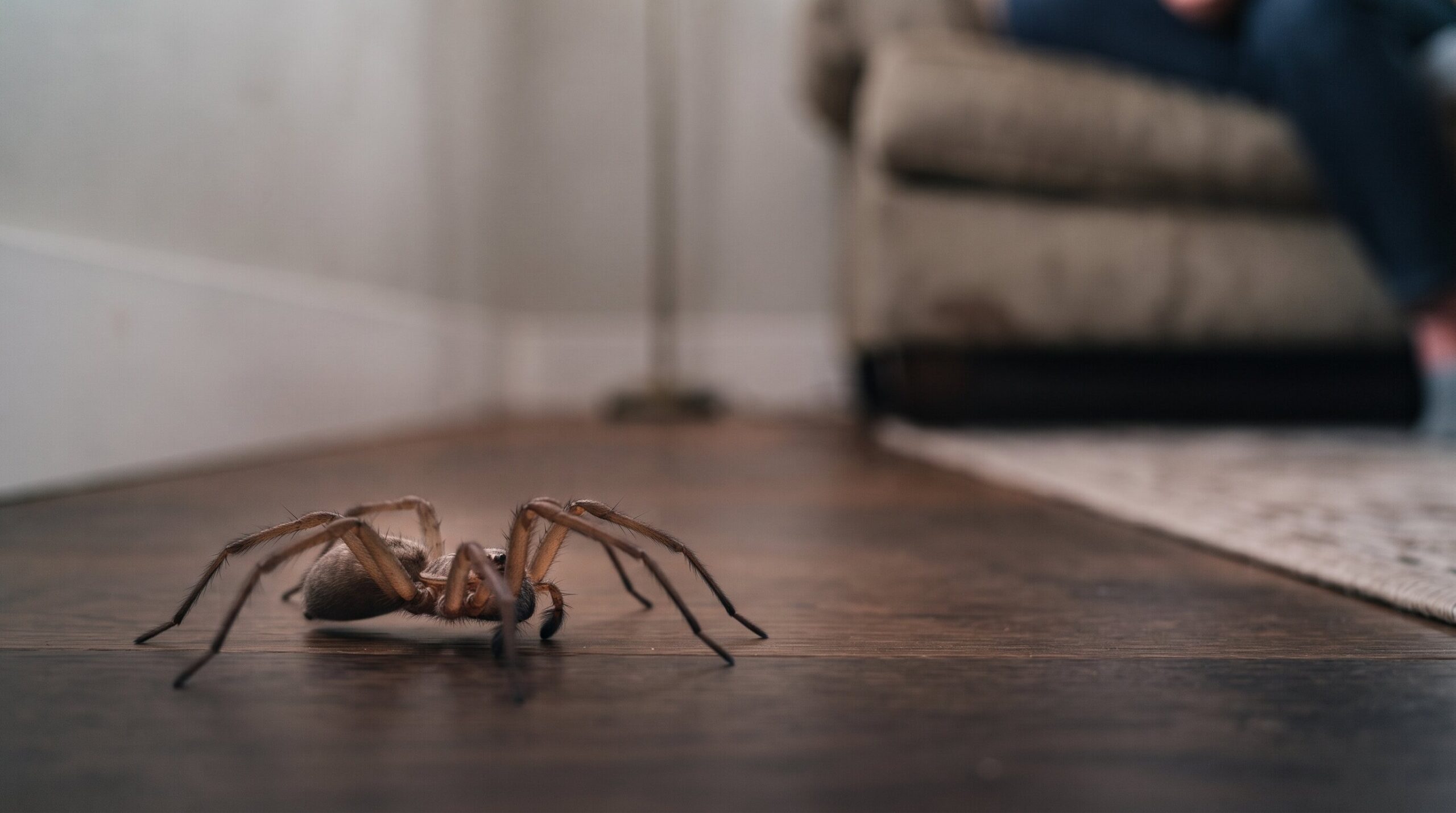
Seeing a spider crawl across the floor can instantly make a room feel uncomfortable. During spider season, that feeling can get worse because spiders seem to appear in corners, bathrooms, bedrooms, basements, and entryways almost overnight. The good news is that learning how to keep spiders away isn’t about chasing every spider with a shoe. It’s about making your home harder to enter, less attractive to insects, and less comfortable for spiders to stay.
If you want to know how to keep spiders out of your house, think in terms of barriers. Spiders don’t usually come inside because they love your furniture. They enter through gaps, follow prey insects, seek warmth, or hide in quiet, cluttered places. Build the right invisible barriers, and your home becomes much less inviting.
The Science of Prevention: Why Do Spiders Come Inside?
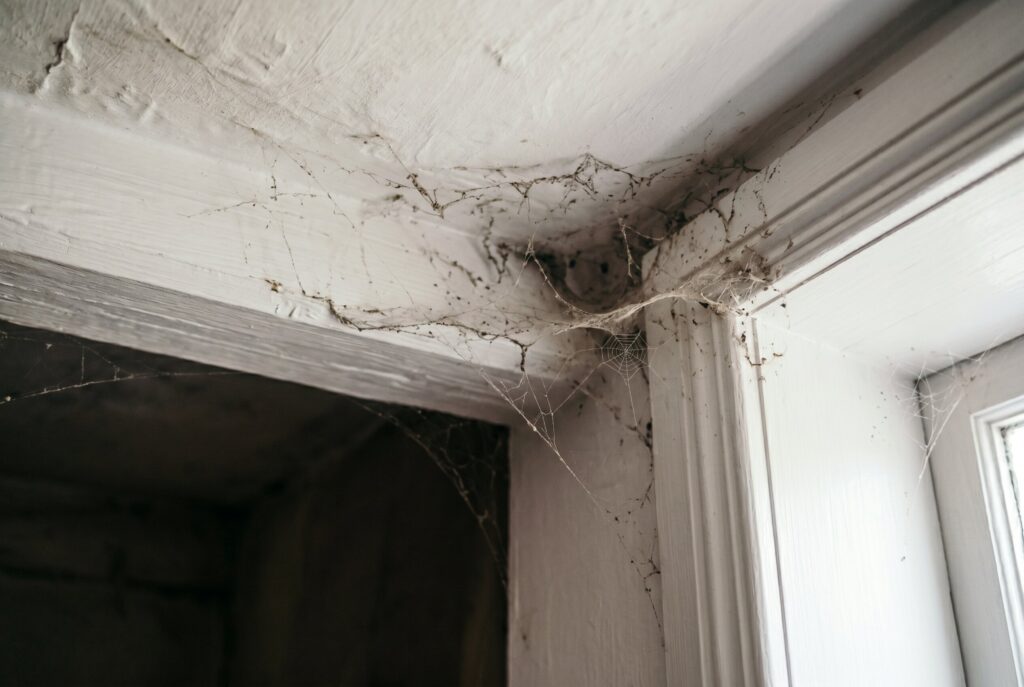
Spiders aren’t trying to invade your life. In most cases, they’re following survival signals: food, warmth, shelter, and mating opportunities. Your home may accidentally provide all four.
Outdoor lights attract moths, gnats, flies, and mosquitoes. Those insects attract spiders. Gaps around windows, doors, vents, pipes, and foundations give them access. Cluttered storage areas give them quiet places to hide. In colder months, warm indoor spaces become especially appealing.
True prevention means changing the environment. When your home has fewer insects, fewer hiding places, fewer cracks, and fewer web-friendly corners, spiders have less reason to stay.
Barrier 1: The Physical Seal
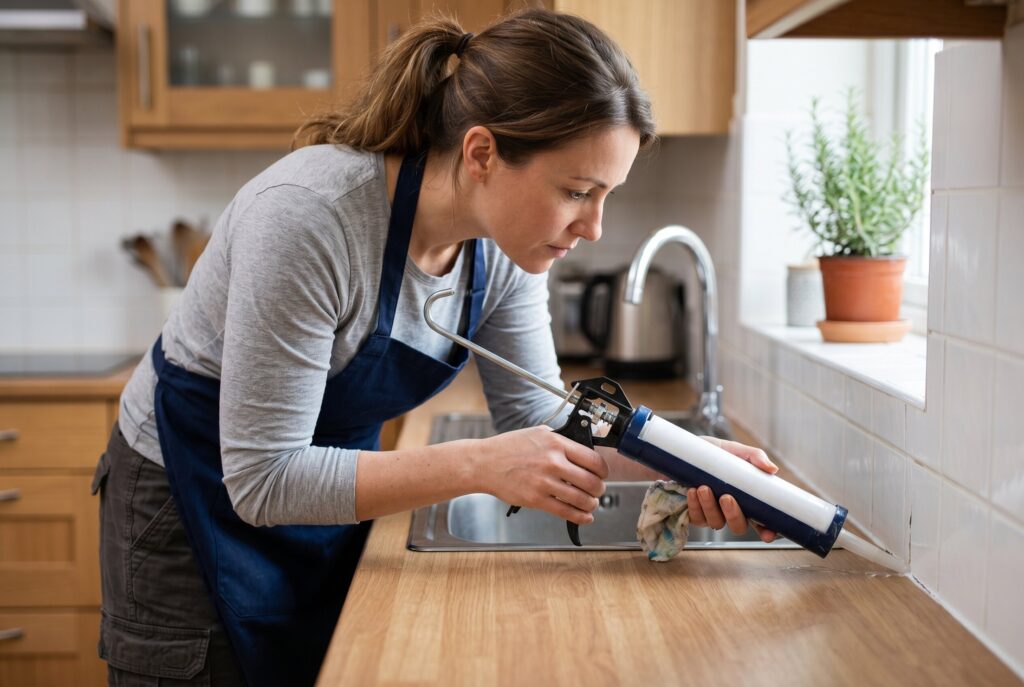
The most reliable spider deterrent is a physical seal. A scent may fade. A spray may wear down. But a sealed gap blocks access every day.
Spiders can enter through surprisingly thin openings, including cracks around window frames, loose baseboards, damaged screens, utility penetrations, foundation gaps, and worn door sweeps. Start with the doors you use most. If you can see daylight under an exterior door, spiders and insects can enter too. Replace worn weather stripping and install a tight door sweep.
Next, inspect window frames and tracks. Use clear silicone caulk around small cracks and gaps. Repair torn screens, especially on bedroom and bathroom windows. Check where pipes, cables, and vents enter the wall. These openings often look harmless, but they can become hidden pest highways. This is the core of how to keep spiders out of your house. You’re not just removing spiders; you’re closing the doors they use.
Barrier 2: The Light Shield
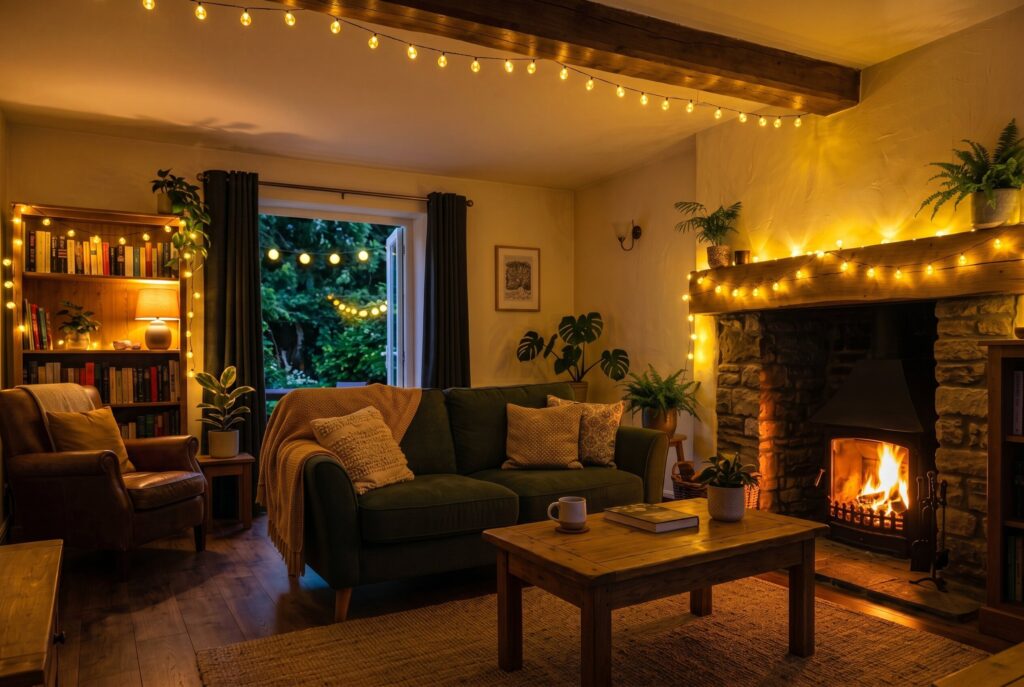
If you’re asking what keeps spiders away long term, don’t overlook lighting. Spiders go where prey gathers. Bright white porch lights, garage lights, and patio lights attract flying insects at night. Once insects gather, spiders build webs nearby. The fix is simple: change the food pattern. Swap bright white exterior bulbs for warm yellow LED bug lights. These bulbs are less attractive to many flying insects, which means fewer insects hovering around your entry points. Fewer insects means fewer spiders.
Also consider turning off unnecessary outdoor lights overnight. Motion-sensor lighting is better than constant lighting because it reduces the hours insects have to gather. Trim plants away from lit walls, keep trash bins closed, and avoid leaving damp organic debris near doors. This barrier works because it targets the spider’s food chain. When the buffet disappears, the web builders move elsewhere.
Barrier 3: The Scent Shield

A natural spider repellent can help in low-pressure areas, especially after you’ve sealed gaps and reduced insects. Spiders sense their environment partly through their legs, so strong odors may discourage them from settling in certain spots.
For a DIY spider repellent indoor spray, mix water with a few drops of peppermint oil in a spray bottle. Apply lightly along window tracks, baseboards, closet corners, and entry points. Don’t soak wood, painted surfaces, or fabrics. Test a small area first.
However, there’s an important safety note. Peppermint oil and tea tree oil can be toxic to cats and small dogs. If you have pets, don’t spray essential oils where they walk, lick, sleep, or rub their fur. A safer alternative is a 50/50 mix of white vinegar and water sprayed lightly on hard surfaces, then wiped down after a few minutes.
Natural repellents are best used as support, not the whole strategy. They fade quickly and need refreshing every few days. They can discourage wandering spiders, but they won’t seal cracks, remove insects, or fix heavy activity by themselves.
Barrier 4: The Chemical Perimeter
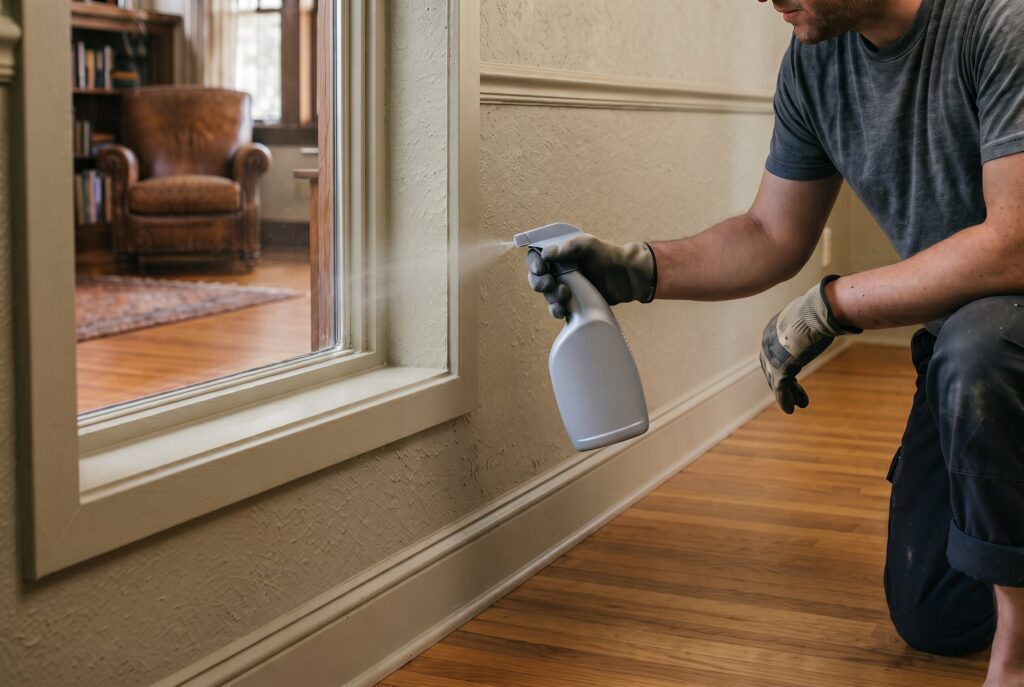
For homes near woods, fields, heavy landscaping, or damp foundations, natural scents may not be enough. In those situations, a targeted exterior spider spray can create a stronger defensive line.
Use spider spray outside, not randomly across indoor living areas. Apply it around the foundation, door thresholds, garage edges, basement windows, crawl-space vents, and other entry points. A common method is spraying about one foot up the exterior wall and one foot out onto the ground, creating a band spiders must cross before reaching the structure.
For indoor use, only choose a product specifically labeled spider spray indoor, and follow the label exactly. Avoid spraying bedding, food surfaces, pet areas, children’s toys, or poorly ventilated rooms. More product isn’t better. Careful placement is what matters. Chemical barriers are most useful during peak spider season or when you’re seeing repeated activity despite cleaning and sealing.
The 30-Day Maintenance Checklist
Spider prevention works best when it becomes a simple monthly rhythm.
- Week 1: Seal gaps around doors, windows, pipes, and baseboards. Replace damaged door sweeps and screens.
- Week 2: Change outdoor bulbs to warm yellow bug lights. Reduce unnecessary nighttime lighting.
- Week 3: Vacuum corners, ceiling edges, under furniture, closets, garages, and storage areas. Remove webs and egg sacs immediately. Empty the vacuum outside.
- Week 4: Refresh your natural spider repellent on safe surfaces. Recheck the foundation after storms, heavy rain, or temperature changes.
Repeat this cycle monthly during spider season. Prevention isn’t a one-day trick; it’s a perimeter habit.
Conclusion
The best way to keep spiders away is to stop thinking only about the spider you see. Think about the conditions that allowed it inside. Open gaps, bright lights, insects, clutter, and quiet corners all invite spider activity.
When you combine all four invisible barriers, including physical sealing, light control, scent support, and exterior spider spray when needed, your home becomes harder to enter and far less appealing for spiders to explore. Start with the vulnerability scanner, identify your weakest point, and strengthen your perimeter before the next wave of spiders arrives.
Related Articles
- How to Get Rid of Spiders: 7 Pro Steps to Eradicate Them For Good
- How to Get Rid of Spiders Outside: 5 Yard Plants to Stop Web Building