

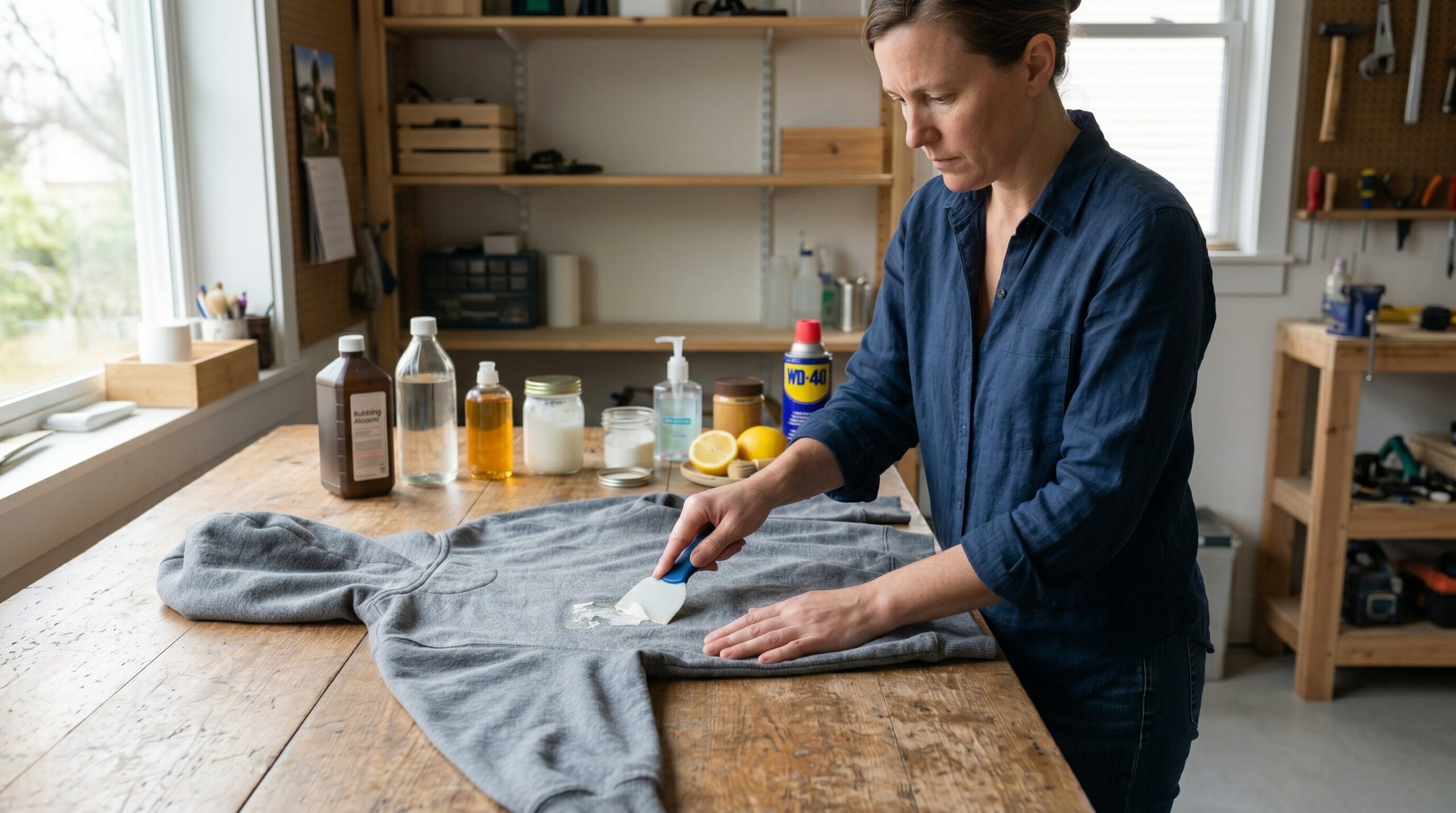
A museum name tag or a price sticker accidentally left on a garment can create a difficult mess once it goes through a laundry cycle. The high heat of a dryer often causes the glue to bond deeply into the fabric fibers.
While this situation is frustrating, professional cleaning insights suggest that learning how to get sticker residue off clothes is entirely possible with common household items or specialized solvents. This guide provides a comprehensive breakdown of nine methods to restore clothing without causing damage to the material.
Project Overview
| Category | Details |
| Time Needed | 5 to 30 minutes |
| Skill Level | Easy (DIY friendly) |
| Estimated Cost | $0 to $15 |
The Golden Rules: Fabric Safety First
Before attempting to remove any glue, the specific fabric type must be identified. Natural fibers like cotton and linen respond differently to chemicals than synthetic materials like polyester or acrylic.
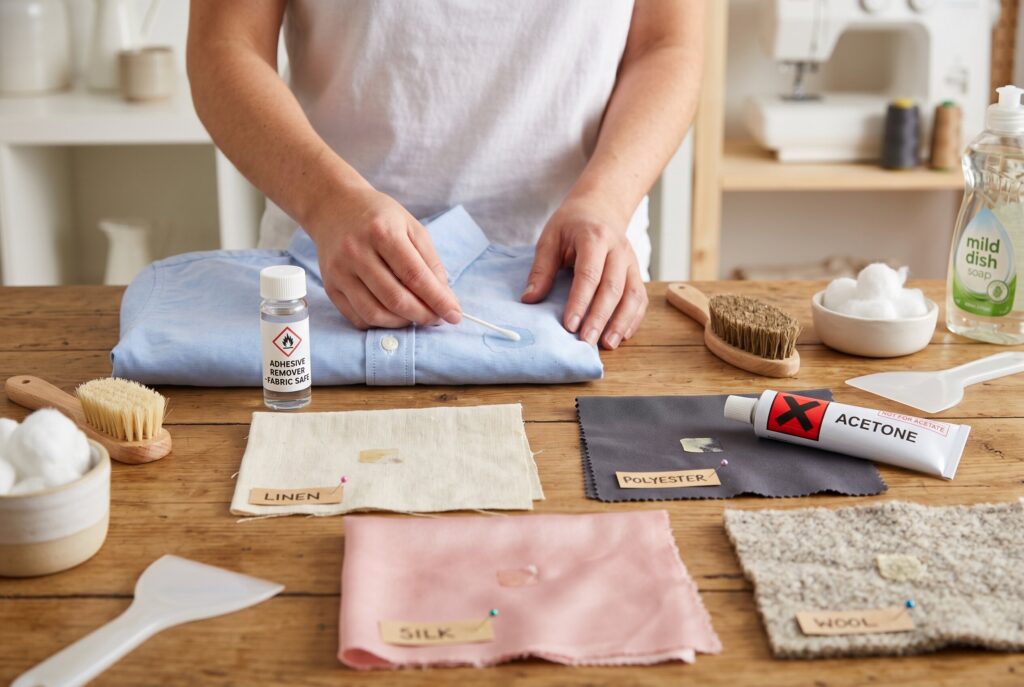
A critical safety warning is that acetone must never be used on acetate fabrics because it will cause the fibers to melt. Additionally, aggressive scrubbing should be avoided on delicate materials like silk or wool to prevent distorting the weave. A spot test on a hidden seam is always recommended before treating the visible area.
9 Detailed Methods for Adhesive Removal
1. The Duct Tape Press and Pull Technique
The duct tape method is a mechanical solution most effective for sturdy cotton fabrics and dry residue. To execute this, a piece of fresh duct tape is wrapped around the hand with the sticky side facing out.
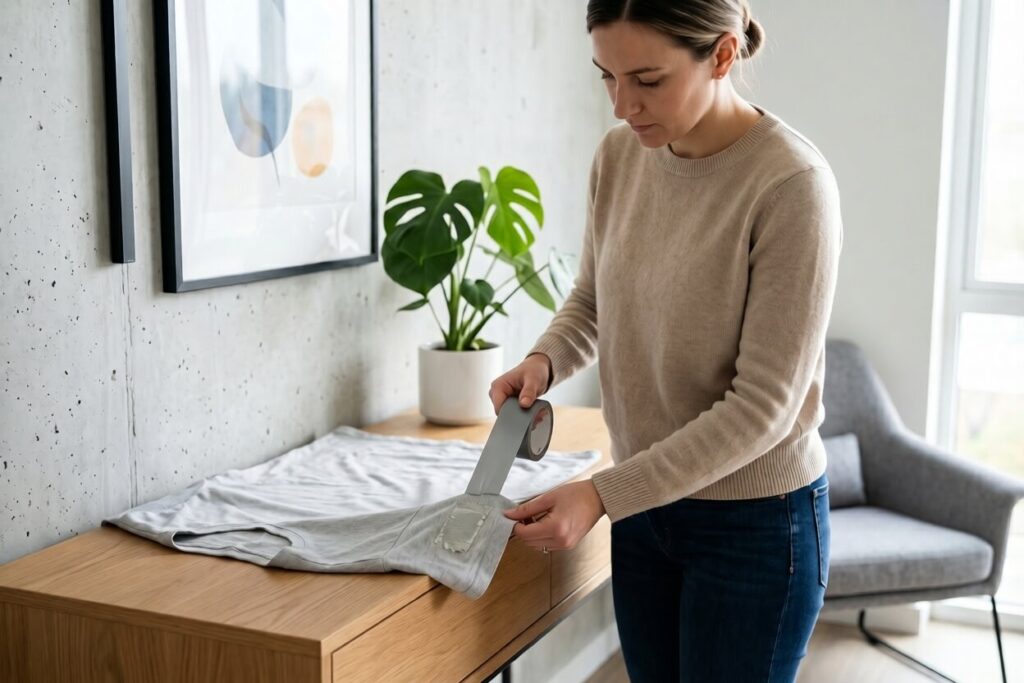
The tape is pressed firmly onto the residue and pulled away with a quick motion to lift the glue from the fabric. This process is repeated several times until the adhesive has migrated entirely from the garment to the tape. This is often the best initial approach to figure out how to get sticker residue off clothes before moving on to liquid-based treatments.
2. Dawn Dish Soap and Warm Water Scrub
Using Dawn dish soap for stains is a reliable tactic for fresh adhesive on nearly any washable fabric. A small amount of liquid soap is applied directly to the sticky area. An old toothbrush is then used to work the soap into the fibers using gentle, circular motions.

After the soap has saturated the spot, the garment is soaked in warm water for several minutes before a final rinse. This method is gentle enough for most everyday items and is a staple trick for how to get sticker residue off clothes without specialized tools.
3. White Vinegar Natural Acid Breakdown
White vinegar acts as a mild natural acid that can break down the polymer bonds in many commercial adhesives. For this method, a cloth or sponge is soaked in undiluted white vinegar and pressed against the residue.

The liquid must sit on the fabric for 5 to 10 minutes to allow the acid to penetrate the glue. Once the adhesive softens, it can be gently scraped away or wiped off with a clean cloth. This approach is particularly effective for natural fibers and is a staple for those seeking non-toxic cleaning options.
4. Rubbing Alcohol Isopropyl
Blotting isopropyl rubbing alcohol is a powerful solvent that can dissolve many types of set-in glue. To use this effectively, a cotton ball or pad is saturated with alcohol and dabbed onto the sticky spot.

The alcohol works quickly to liquefy the adhesive, which then allows the residue to be blotted away. Because alcohol can sometimes affect dyes, the spot test is especially important. This is a frequent recommendation for how to get sticker residue off clothes that have been stuck for a long period.
5. Acetone Professional Grade
Dissolving Acetone is a very strong solvent suitable only for natural fibers like 100% cotton or real silk. It must be kept away from all synthetic blends to prevent permanent damage. A small amount of acetone is applied to a cotton swab and touched only to the adhesive.
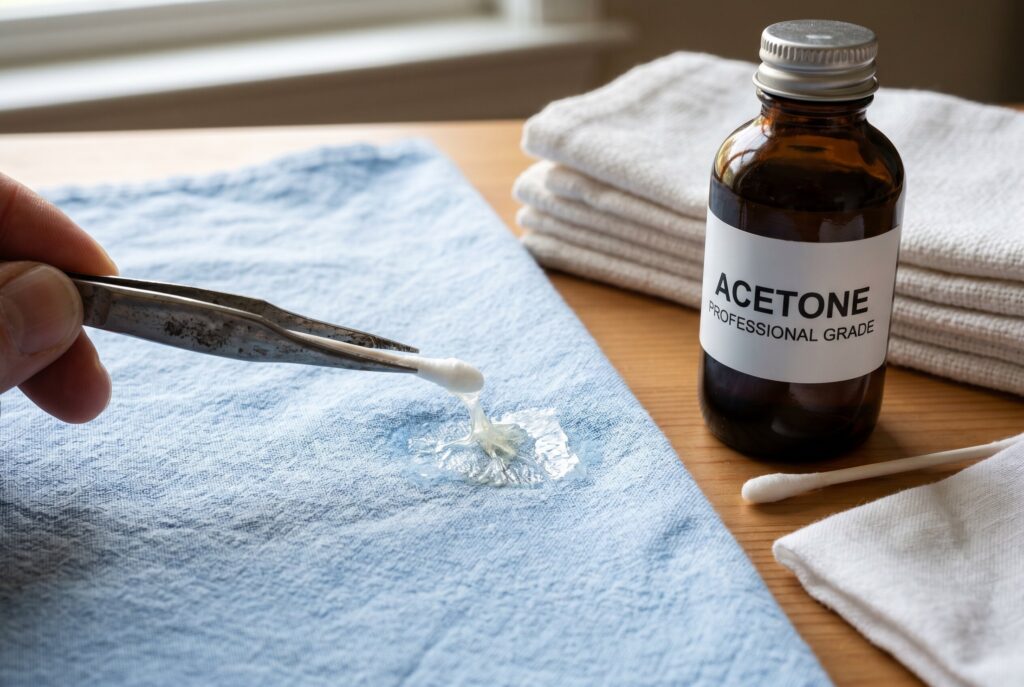
The chemical dissolves the resin almost instantly, allowing it to be wiped clear. Due to its strength, this should be considered a secondary option for particularly difficult industrial-grade adhesives.
6. Peanut Butter Oil Saturation
The natural oils found in peanut butter can serve as an effective solvent to soften glue that has been through a dryer and become brittle.
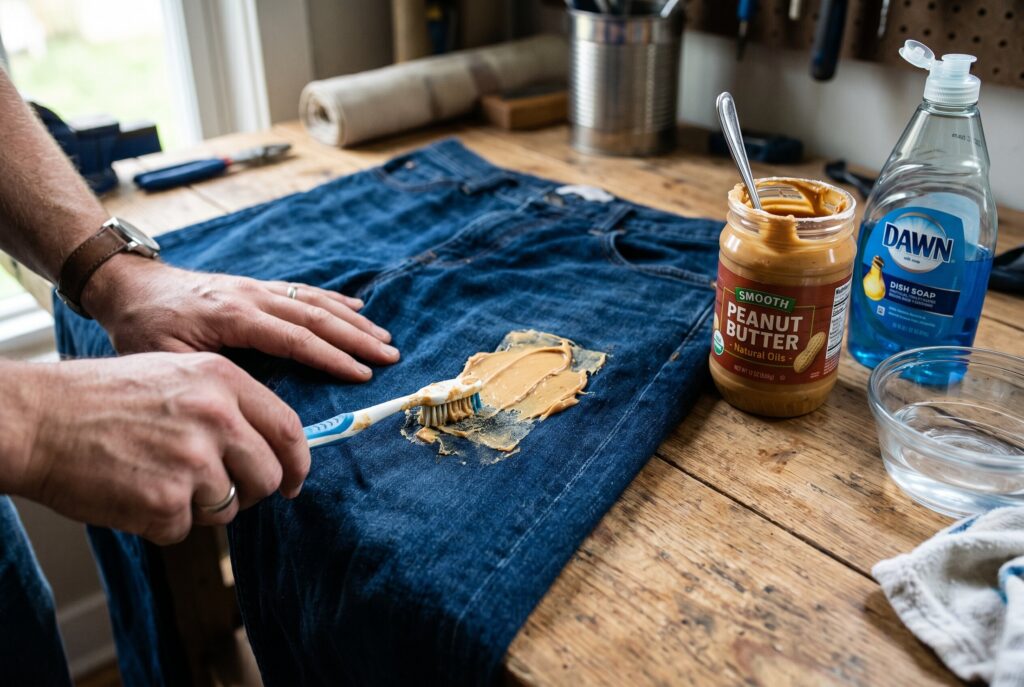
A layer of smooth peanut butter is spread over the residue and left to sit until the oils penetrate the adhesive. Afterward, a toothbrush is used to scrub the area gently. It’s vital to wash the garment with dish soap immediately after this process to remove the peanut butter oils, which could otherwise leave a greasy stain.
7. Goo Gone or Commercial Solvents
When DIY methods are insufficient, specialized products like Goo Gone adhesive remover or 3M adhesive remover provide professional-grade results.
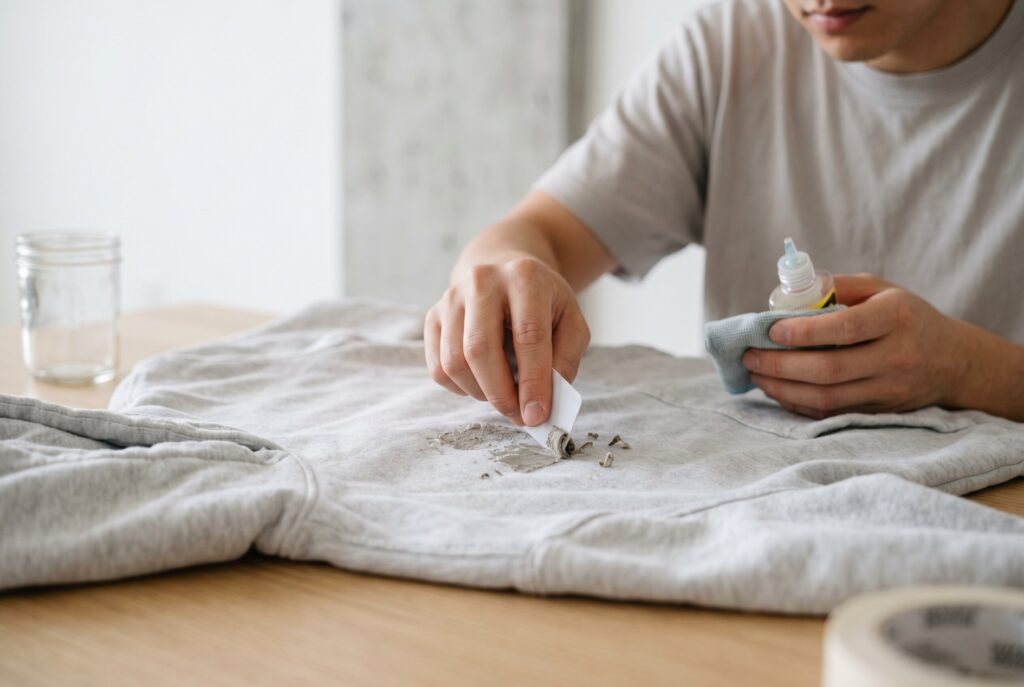
These products are formulated specifically to target complex chemical bonds in stickers. The solvent is applied to the fabric according to the manufacturer’s instructions on the bottle. These cleaners are generally highly effective but require thorough laundering afterward to remove the chemical scent and oily residue.
8. Ice and Freezing Method
The ice method is ideal for thick layers of glue or for use on synthetic fabrics that might be sensitive to heat or chemicals. An ice cube is placed directly on the residue or held against it until the adhesive becomes frozen and brittle.

Once hardened, the glue can often be cracked and scraped off using a dull butter knife, a plastic card, or a fingernail. This mechanical removal avoids the use of liquids entirely during the initial lifting phase.
9. The Iron and Paper Towel Heat Hack
For sticker residue that has already been heat-set by a dryer, reactivating the glue with an iron is a clever solution. A plain white paper towel is placed over the sticky spot, and a warm iron set to a low temperature is pressed onto it.
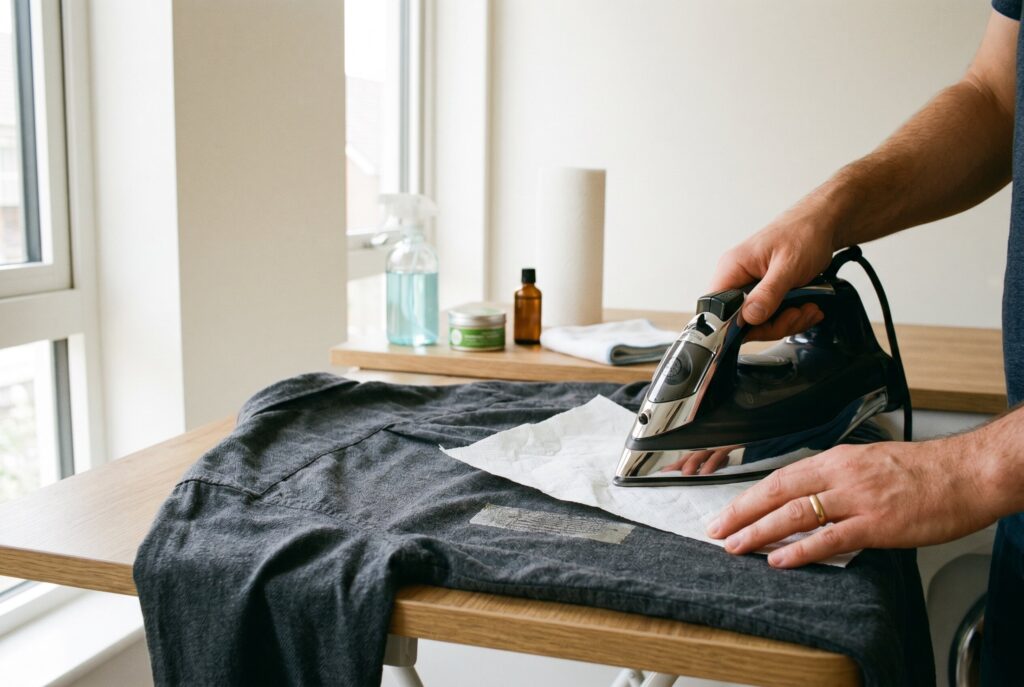
A warm iron set to a low temperature is then pressed onto the paper towel. The heat melts the adhesive, causing it to transfer from the fabric and onto the paper towel. This process may need to be repeated several times with a fresh section of paper towel until no more residue is visible.
Troubleshooting: Fabric Compatibility Chart
| Adhesive Remover | Safe for Cotton? | Safe for Synthetics? | Safe for Delicates? |
|---|---|---|---|
| Duct Tape | Yes | Yes | No |
| Vinegar | Yes | Yes | Yes (Spot test first) |
| Acetone | Yes | No (Will melt) | No |
| Alcohol | Yes | Yes | No |
Conclusion: Expert Pro-Tips for Final Success
Professional cleaners emphasize that a garment should never be returned to the dryer until there is absolute certainty that the spot is gone. Re-applying heat will only reinforce any remaining glue.
Always perform a final wash after using any of these nine methods to ensure all traces of the remover are gone. If the goal is how to get sticker residue off clothes without causing permanent damage, patience and repeating a gentle method is usually better than one aggressive attempt.
Related Articles
- How to Remove Sticker Residue: 9 Best Adhesive Remover Hacks (2026)
- How to Remove Duct Tape Residue: 7 Heavy-Duty Methods (2026)
- How to Remove Adhesive from Wall: 5 Paint-Safe Methods (2026)
- How to Get Sticky Residue Off Plastic: 5 Scratch-Free Hacks
- How to Remove Stickers from Glass: 15 Easy DIY Glue Remover Methods for a Streak-Free Finish