


Peeling back a strip of old tape often reveals a stubborn, greyish film that seems fused to the surface. Dealing with duct tape adhesive that has been baked onto a material by high heat is a common frustration for homeowners and professionals alike.
Success in figuring out how to remove duct tape residue depends on choosing the right solvent to break down the chemical bonds without causing damage. Solutions range from common household items to industrial options like 3M adhesive remover. Integrating how to remove adhesive techniques early in the process saves significant time and effort.
The Golden Rules of Adhesive Removal (Safety First)
Prioritizing a test spot in an inconspicuous area is the most critical step before applying any cleaner to a visible surface. This precaution prevents the accidental stripping of paint or the clouding of delicate finishes. Using how to remove tape residue methods safely also means being aware of environmental risks.
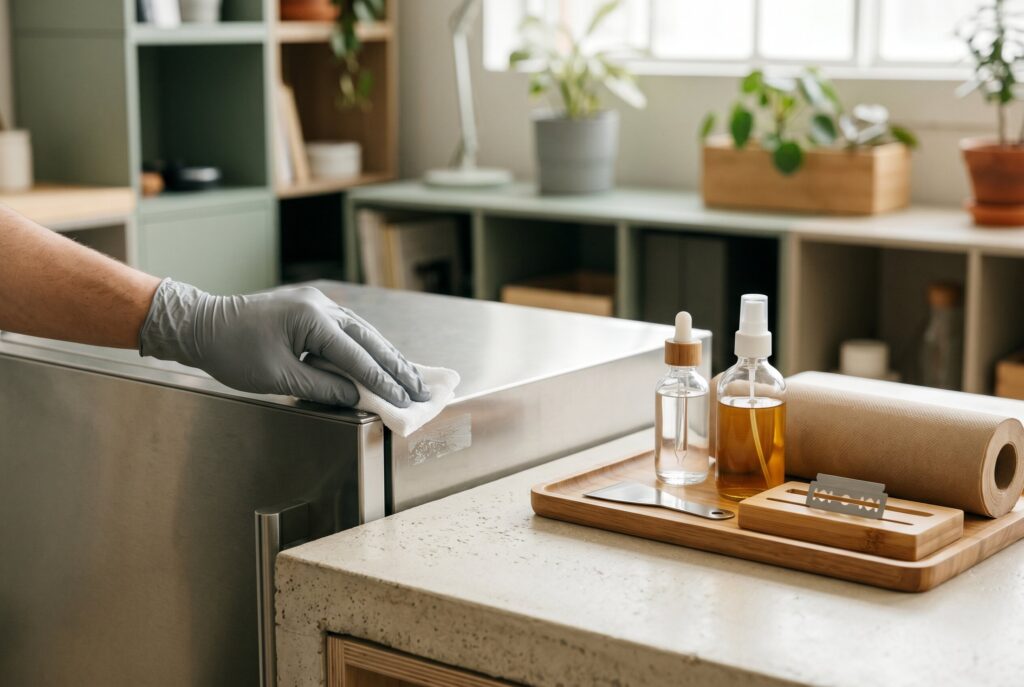
For instance, WD-40 for adhesive removal creates a major slip hazard on stairs, ladders, or boat decks. Additionally, substances like Tiki torch fuel are highly flammable and require excellent ventilation away from open flames.
7 Heavy-Duty Methods to Remove Sticky Messes
Seven distinct approaches offer solutions for various surface types and levels of stickiness.
The Heat Method (Hairdryers & Heat Guns)
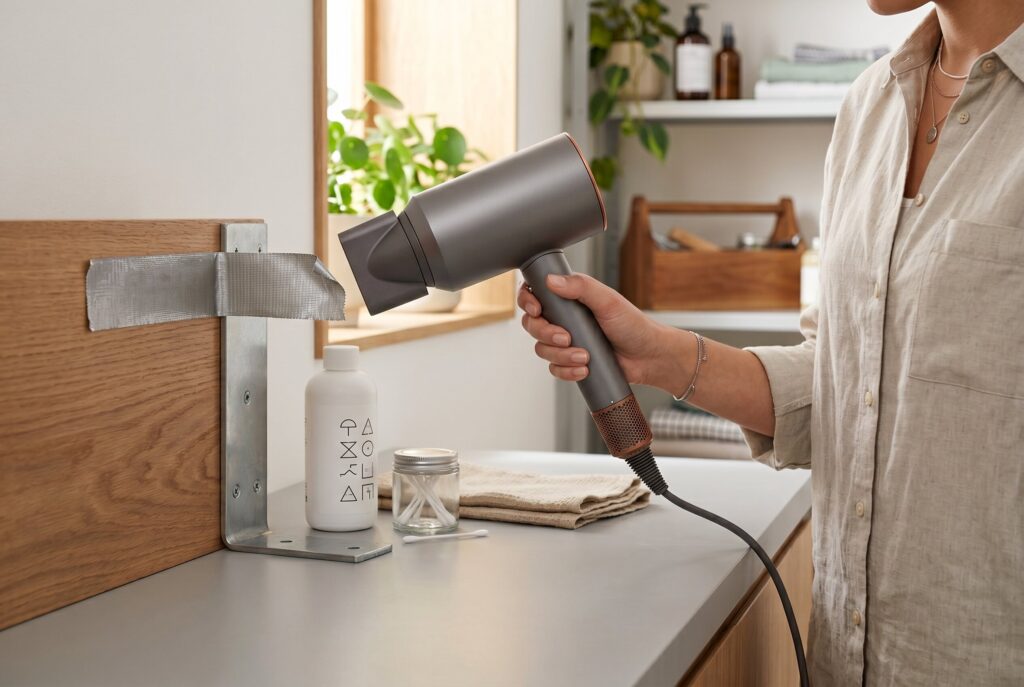
Applying heat is a reliable way to soften the polymer links within the glue. A hairdryer or heat gun held a few inches away for a minute makes the gunk much easier to scrape off. Using a blow torch is far too dangerous and should be avoided entirely to prevent fire or surface scorching.
The WD-40 “Hook”
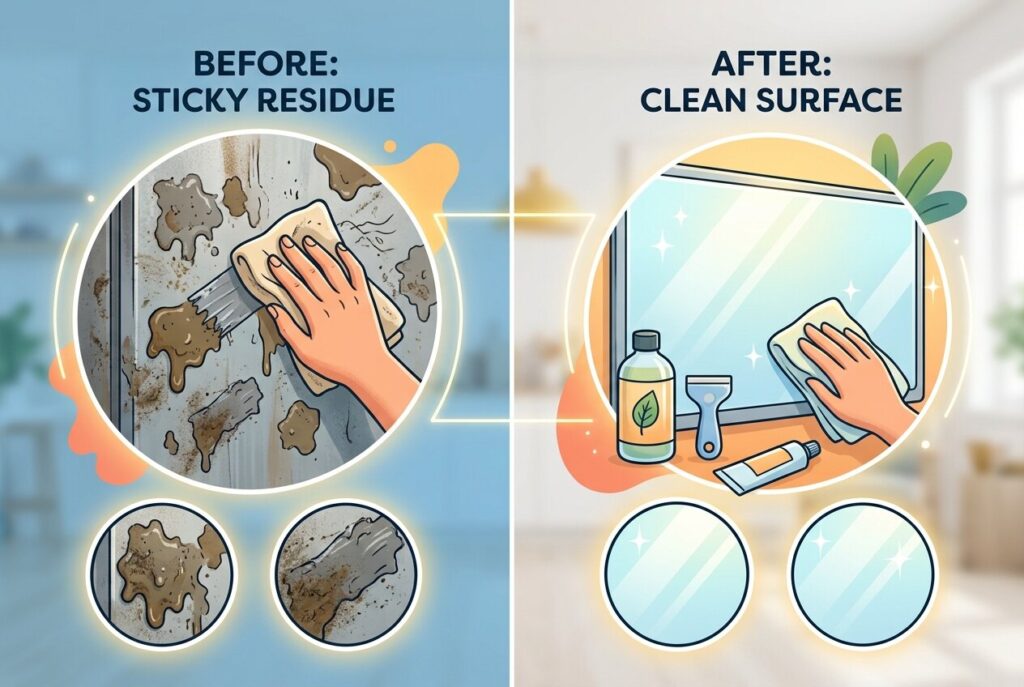
Although primarily known as a lubricant, WD-40 acts as a powerful solvent for rubber-based adhesives. Letting the liquid sit for several minutes allows it to penetrate the residue. The use of a textured terry cloth is essential for providing the friction needed to lift the adhesive away from the surface.
Alcohol & Solvents
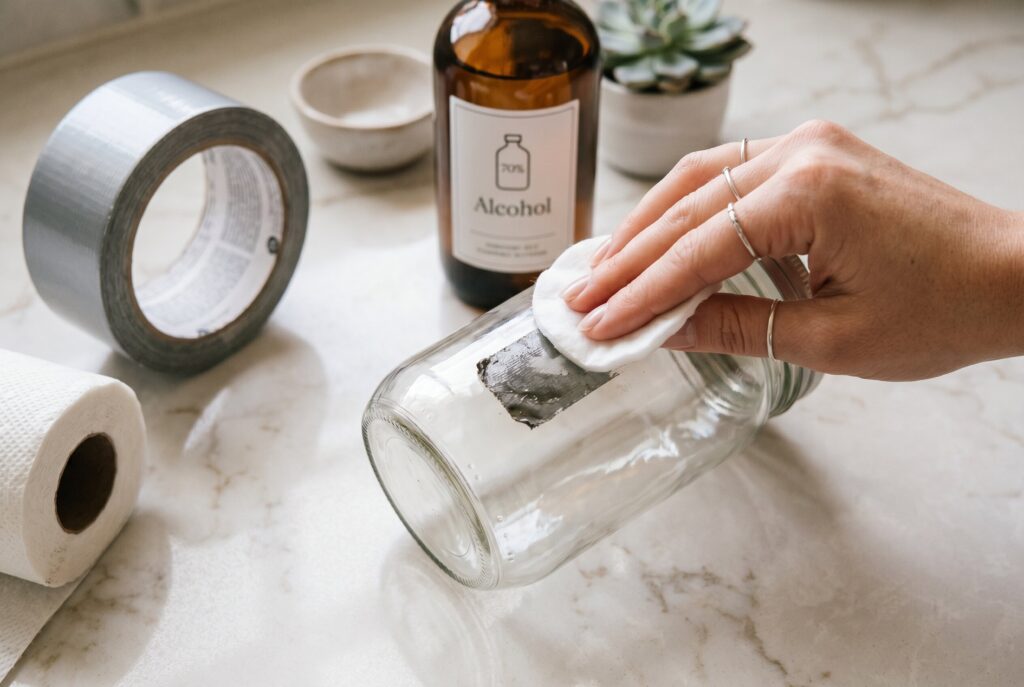
Rubbing alcohol is highly effective for cleaning hard surfaces like glass, metal, and certain ceramics. It breaks down the sticky film quickly and evaporates without leaving a greasy trail. This method is a primary choice when figuring out how to remove sticker residue from non-porous items.
Oil-Based Solutions (The Eco-Friendly Choice)
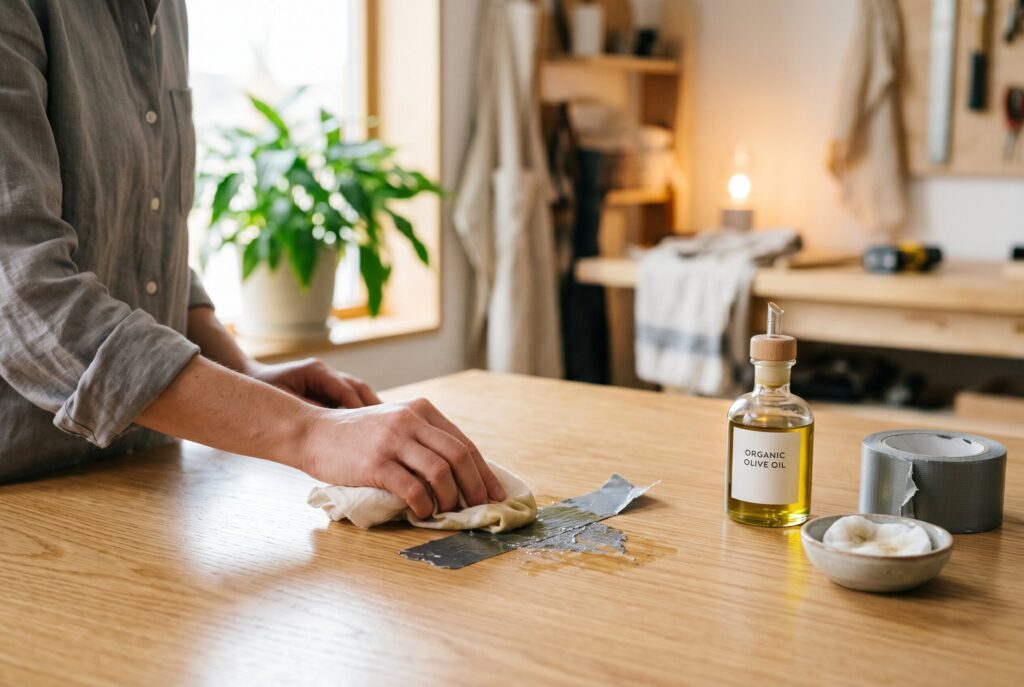
Household staples like vegetable oil or baby oil offer a non-toxic alternative for breaking down chemical bonds. These oils work well on sensitive materials but should be avoided on porous surfaces like fabric or unfinished wood where permanent staining might occur.
The “Secret” Tiki Torch Fuel Hack
Citronella oil found in Tiki torch fuel serves as a surprising and effective secret for lifting heavy-duty grime. This method often works on stubborn spots where typical household cleaners or manual scraping fail. It’s particularly useful for removing residue without the harshness associated with pure acetone.
Commercial Removers (Goo Gone & 3M)
Specific tasks require the strength of industrial-grade products. While Goo Gone adhesive remover is sufficient for most residential projects, 3M adhesive remover provides the extra power needed for automotive or professional construction cleanups.
Soapy Water for Delicate Surfaces
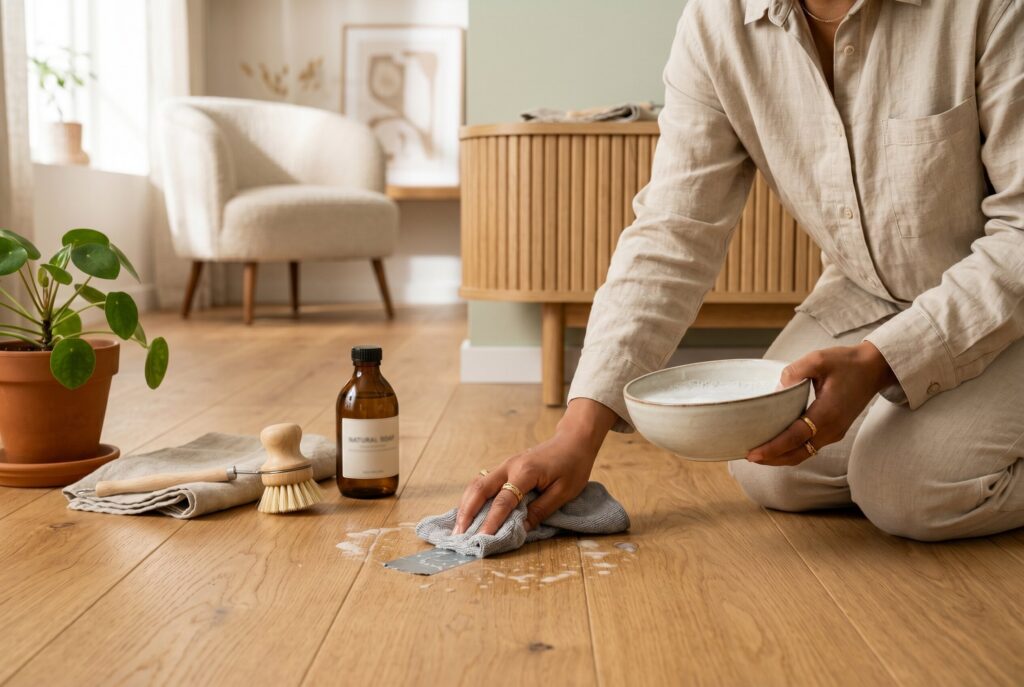
A mixture of warm water and dish soap is the safest starting point for painted walls, wallpaper, or finished wood. While this requires more physical effort, it carries the lowest risk of damaging the underlying material.
Surface Compatibility Matrix: What to Use Where?
A comparison of surfaces and methods helps ensure the right tool is used for the job.
| Surface | Recommended Method |
| Plastic | Oil or Soap and Water |
| Glass | Alcohol or WD-40 |
| Car Surfaces | Commercial Removers |
| Clothing | Warm Soapy Water |
| Walls | Heat or Soapy Water |
The “Post-Clean” Step: Why Most People Fail
A common oversight involves leaving behind a film after the stickiness is gone. Washing the area thoroughly with soap and water after using oils or WD-40 is vital for removing the slippery or greasy residue. This step ensures a clean finish and prevents the area from attracting new dust and dirt.
Prevention: Choosing the Right Tape for the Future

Preventing the mess begins with selecting high-performance materials. Gaffer’s tape is a premium alternative that offers strong adhesion without leaving a messy film upon removal. Proper storage also plays a role; keeping rolls in a cool, dry environment prevents the adhesive from melting and leaking before use.
Conclusion & Next Steps
Eliminating adhesive is straightforward when matching the correct solvent to the specific surface material. Success is achieved by prioritizing safety and ending every job with a final rinse to remove lingering chemicals.
For the best results in 2026, using circular motions during the wiping process helps lift the gunk more effectively than back-and-forth scrubbing.
Related Articles
- How to Remove Sticker Residue: 9 Best Adhesive Remover Hacks (2026)
- How to Remove Adhesive from Wall: 5 Paint-Safe Methods (2026)
- How to Get Sticky Residue Off Plastic: 5 Scratch-Free Hacks
- How to Get Sticker Residue Off Clothes: 9 Safe Adhesive Removers
- How to Remove Stickers from Glass: 15 Easy DIY Glue Remover Methods for a Streak-Free Finish