

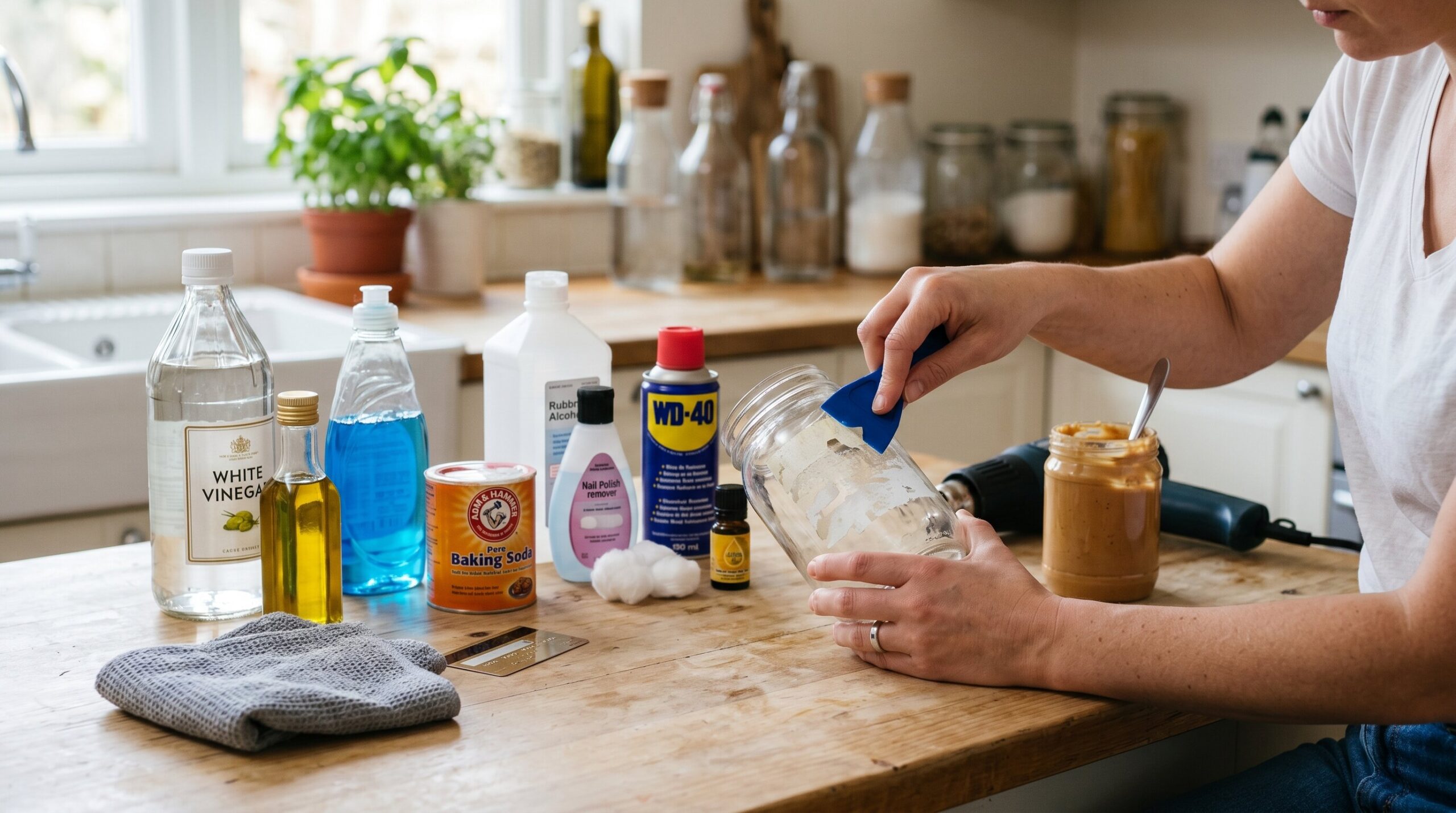
Finding a gummy, half-peeled sticker on a new jar, window, or mirror is a common frustration, especially when you want to reuse the glass. The good news is that glass is one of the easiest surfaces to clean up, because it isn’t porous and it tolerates most solvents. This guide explains how to remove stickers from glass using pantry staples, heat, and store-bought removers, plus how to handle leftover glue and finish without streaks. If the glue is on another surface, see our general guide to how to remove sticker residue.
Quick answer: Soak or warm the sticker to soften the glue, then peel it off slowly. Rub any leftover residue with cooking oil or rubbing alcohol, let it sit for a few minutes, and scrape gently with a plastic scraper or old card. Wash the glass with hot soapy water and dry it with a microfiber cloth for a streak-free finish.
How to Remove Stickers from Glass: Basic Steps
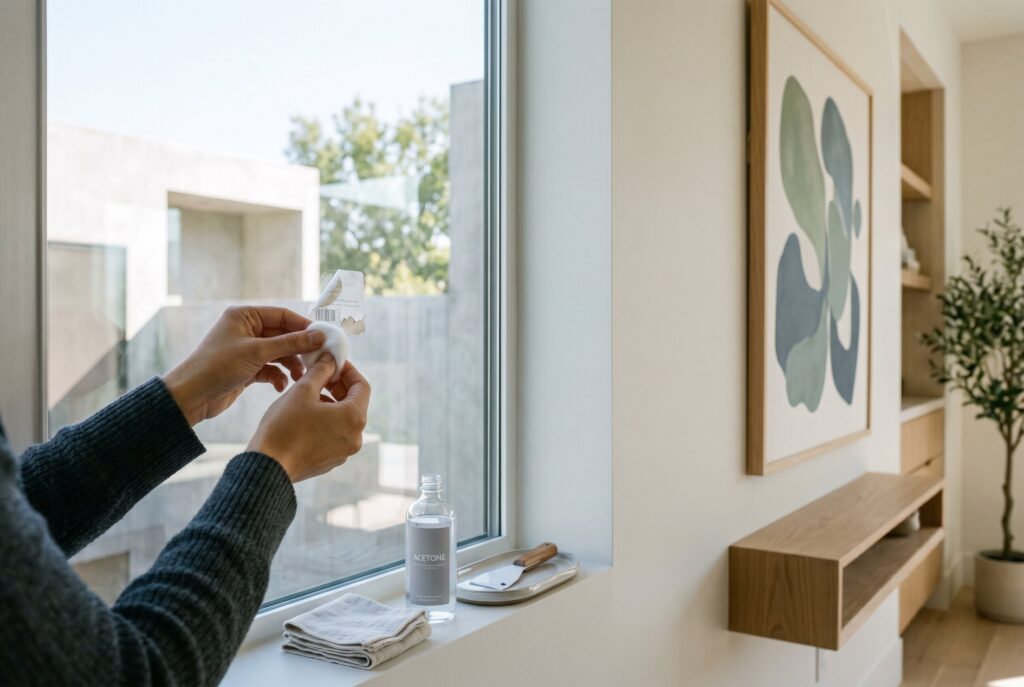
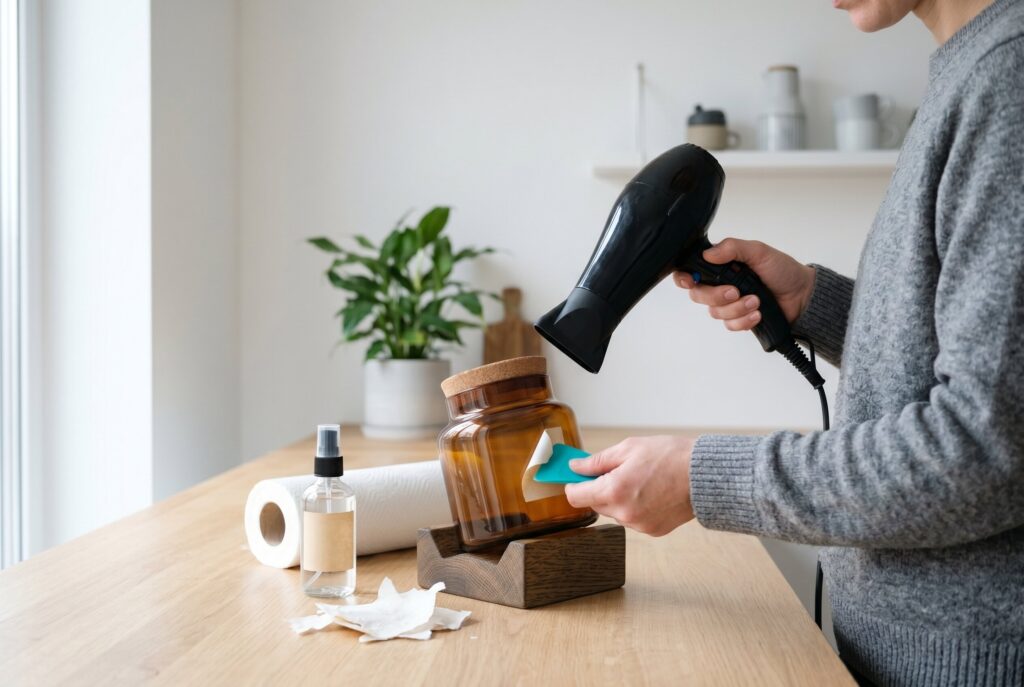
- Loosen the sticker. Soak removable items like jars in hot soapy water, or warm stickers on windows and mirrors with a hairdryer.
- Peel slowly. Lift a corner with a fingernail or plastic scraper and pull the sticker back at a low angle instead of straight up.
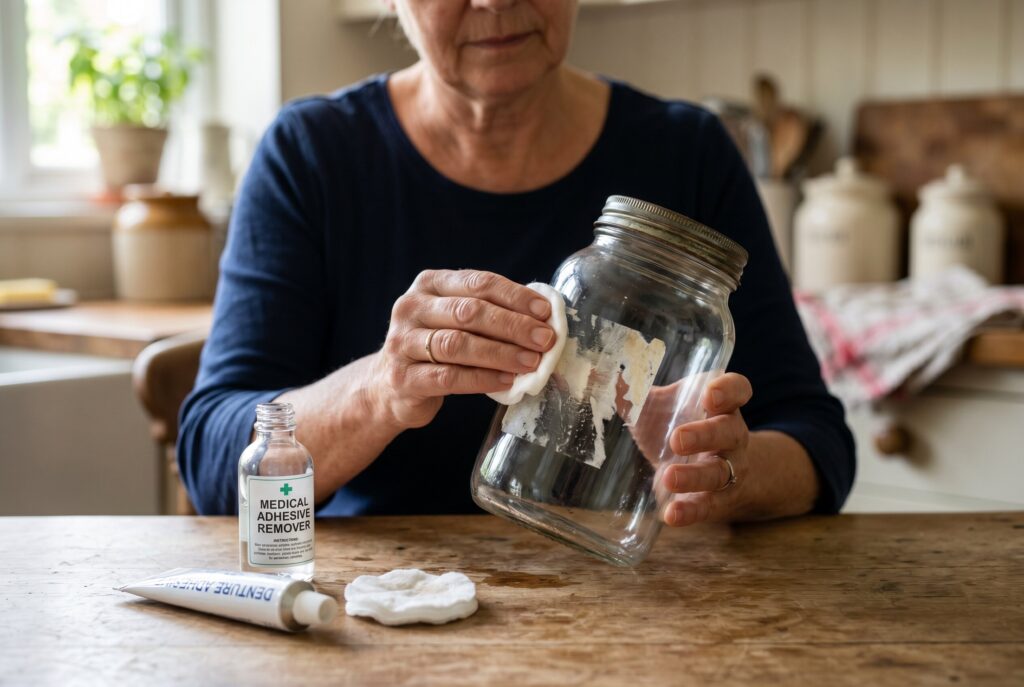
- Dissolve the residue. Apply cooking oil, rubbing alcohol, or an adhesive remover to the sticky patch and give it a few minutes to work.
- Scrape and wipe. Use a plastic scraper, old gift card, or the rough side of a sponge to lift the softened glue, then wipe it away.
- Wash and polish. Clean the glass with hot soapy water to remove any oily film, rinse, and buff dry with a microfiber cloth.
The Science of Stickiness: Why Some Adhesives Won’t Budge
Most sticker and label adhesives are oil-based or rubber-based, so water alone doesn’t dissolve them. That’s why plain soaking often removes the paper but leaves a tacky layer behind. Oils and solvents like rubbing alcohol break down that layer, while heat softens it so it releases more easily. Instead of scrubbing harder, the most effective approach is to dissolve or soften the glue first, then wipe it away.
Preparation 101: Scoring and Pre-Soaking
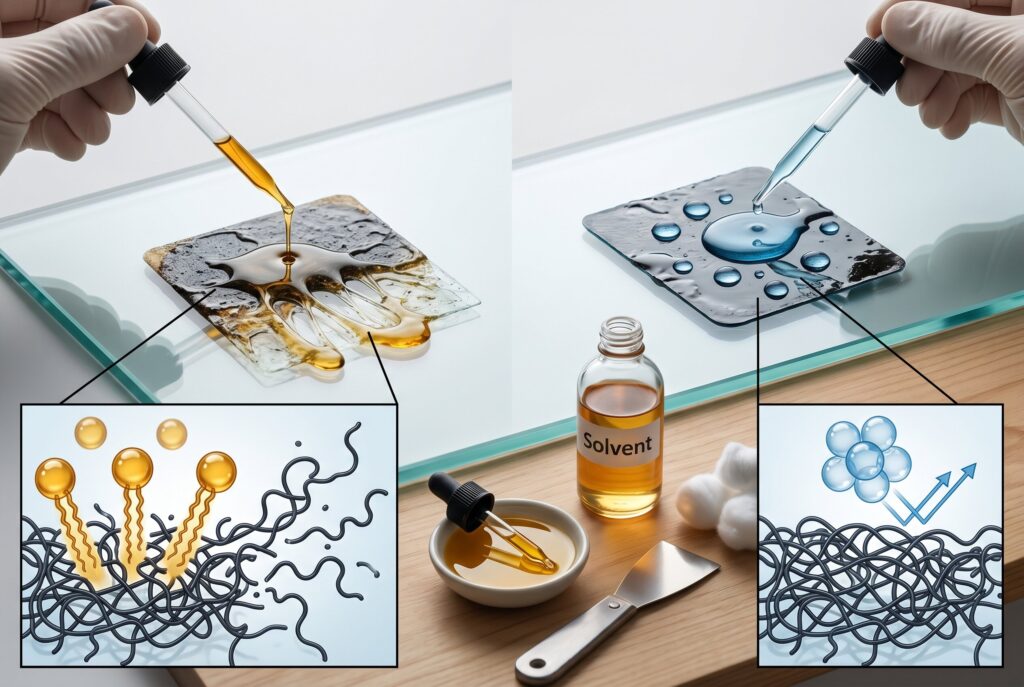
Waterproof labels, such as plastic-coated bottle labels, block water and solvents from reaching the glue. Peel off as much of the top layer as you can, then lightly score the remaining label with the tines of a fork or the edge of a plastic scraper so moisture can get underneath, working gently so you don’t scratch the glass. After applying your chosen method, give it time to work. Most soaks and solvents need somewhere between a few minutes and 30 minutes before the glue softens enough to scrape off easily.
15 Proven DIY & Commercial Methods
The methods below start with the gentlest options you probably already have at home and move up to stronger solvents and commercial removers. Start at the top and only move down the list if the residue won’t budge.
Natural Pantry Solvents
Kitchen staples are a good first choice, especially for glass jars and containers you plan to reuse for food.
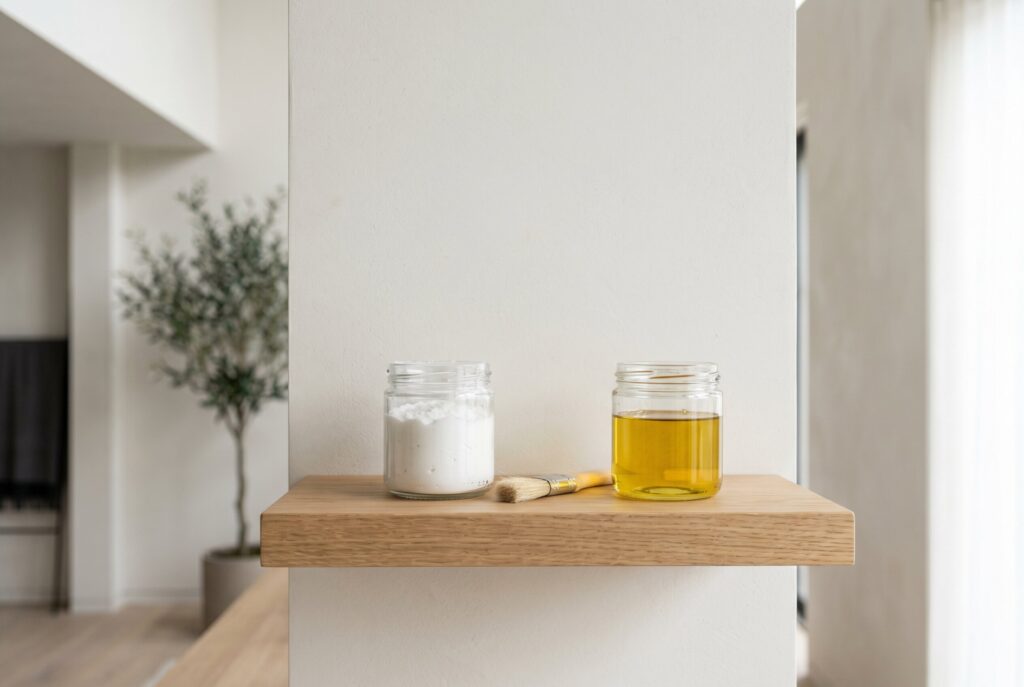
1. Baking Soda and Cooking Oil (1:1 Ratio)
Mix equal parts baking soda and cooking oil into a paste. Rub it over the residue with your fingers or a cloth and let it sit for 10 to 30 minutes. The oil loosens the glue while the baking soda acts as a gentle scrub. Rub in small circles, wipe the paste away, then wash the glass with hot soapy water.
2. White Vinegar

Warm some white vinegar, soak a paper towel in it, and lay the towel over the label for 15 to 20 minutes. Vinegar works best on paper labels and lighter residue, softening them so they wipe or scrape away. For thick or rubbery glue, switch to oil or rubbing alcohol.
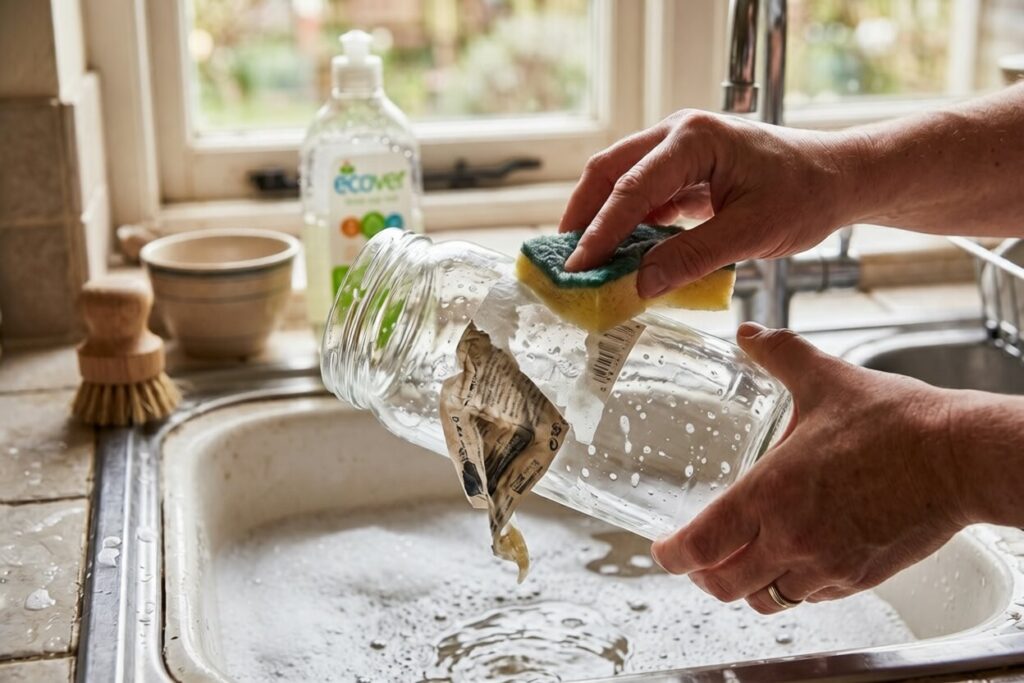
3. Hot Soapy Water

For paper labels on jars and bottles, fill a sink or bowl with hot water and a squirt of dish soap and let the glass soak for 20 to 30 minutes. The paper absorbs water and slides off, often taking most of the glue with it. This is the simplest first step when learning how to remove stickers from glass jars, and it’s safe for anything that will hold food again.
4. Household Cooking Oils
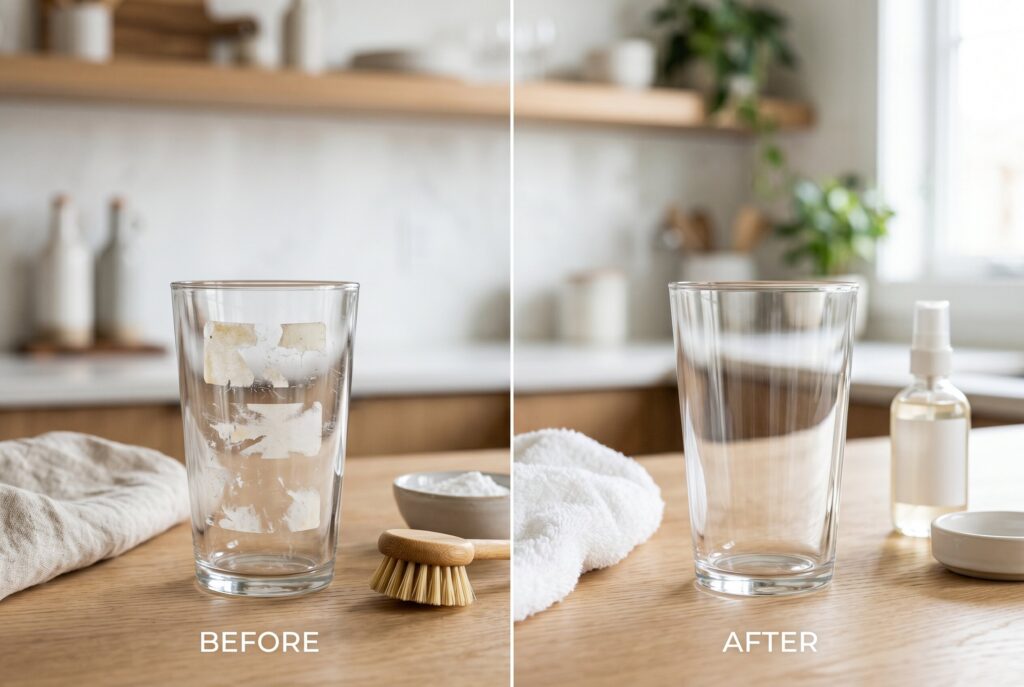
Olive, vegetable, canola, or coconut oil all work well on the tacky layer left after the paper comes off. Rub a small amount into the residue, wait 5 to 10 minutes, and wipe or scrape it away. Wash the glass afterward so no oily film remains.
5. Mayonnaise or Peanut Butter
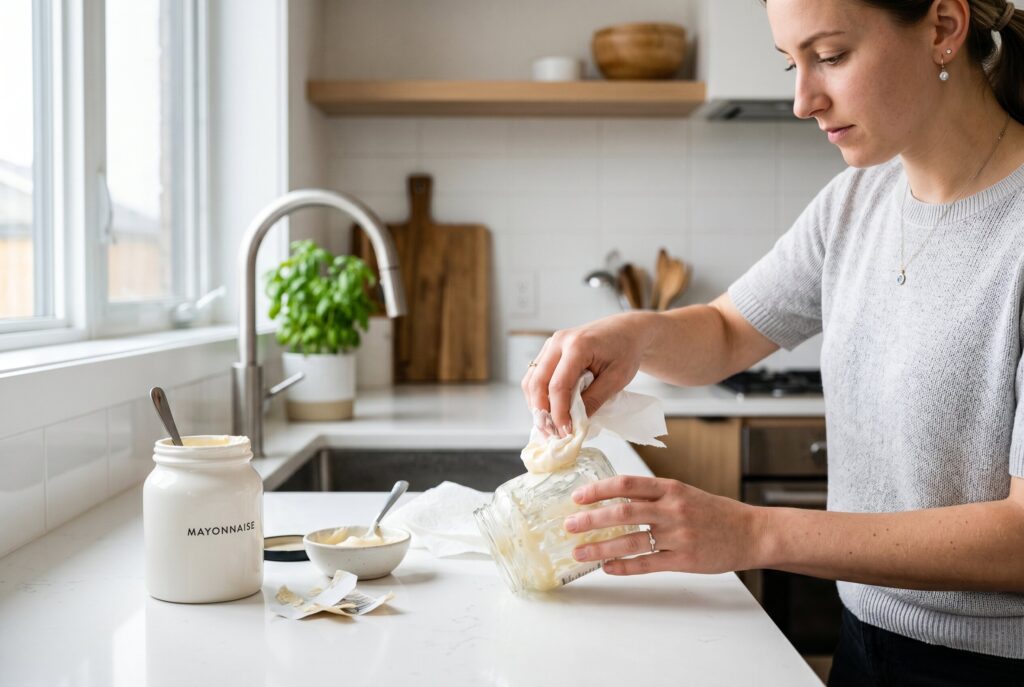
If you’re out of cooking oil, mayonnaise or smooth peanut butter works the same way because of its oil content. Spread a thin layer over the residue, leave it for 10 to 15 minutes, then wipe it off and wash the glass thoroughly with soap and water.
6. Essential Oils
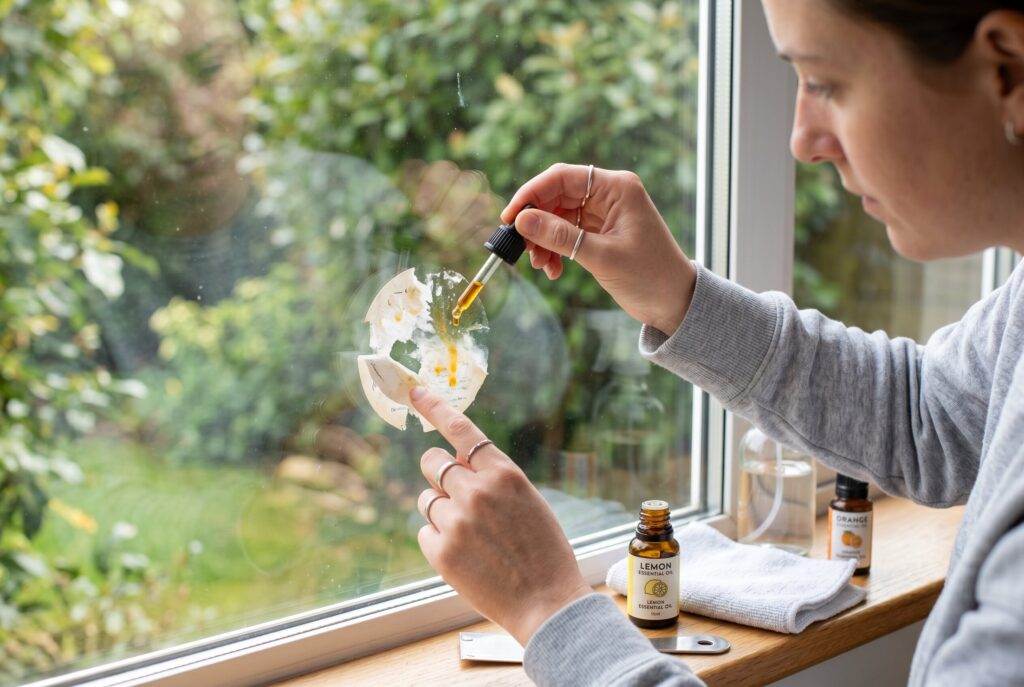
A few drops of lemon or orange essential oil on a cotton ball can dissolve stubborn residue and leave a fresh scent. Dab it on, wait a couple of minutes, then rub the glue away and wash the glass. Keep essential oils away from painted frames and some plastics, which they can dull.
Temperature-Based Hacks
Heat softens adhesive so the sticker peels off in one piece, while cold can make thick, gummy residue brittle enough to chip away.
7. Hairdryer (The Heat Method)
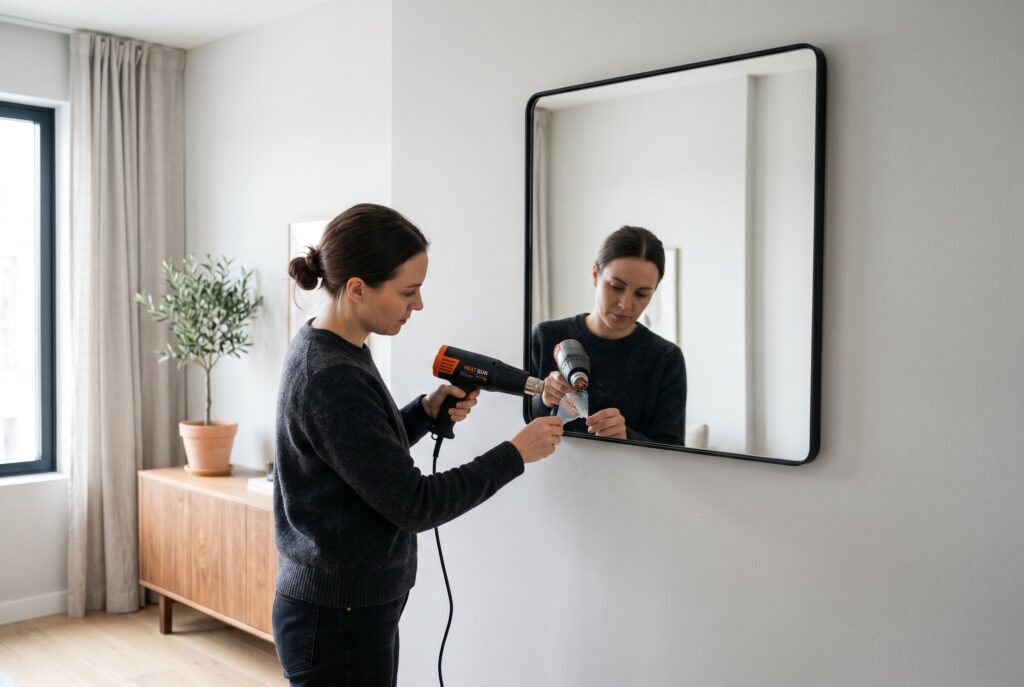
Set a hairdryer to medium or high and hold it a few inches from the sticker for 30 to 60 seconds, moving it back and forth. Once the glue softens, lift a corner and peel slowly at a low angle, warming again if it starts to tear. This is one of the fastest ways to remove price tags and window stickers. If the glass is very cold, such as a window in winter, warm it gradually to avoid stressing the glass.
8. Heat Gun
A heat gun helps with large decals or thick vinyl lettering, but it gets much hotter than a hairdryer. Use the lowest setting, keep it moving, and never hold it on one spot. Avoid heat guns on thin glass, cold windows, and tinted windows, where concentrated heat can crack the glass or damage the film.
9. Ice Cubes
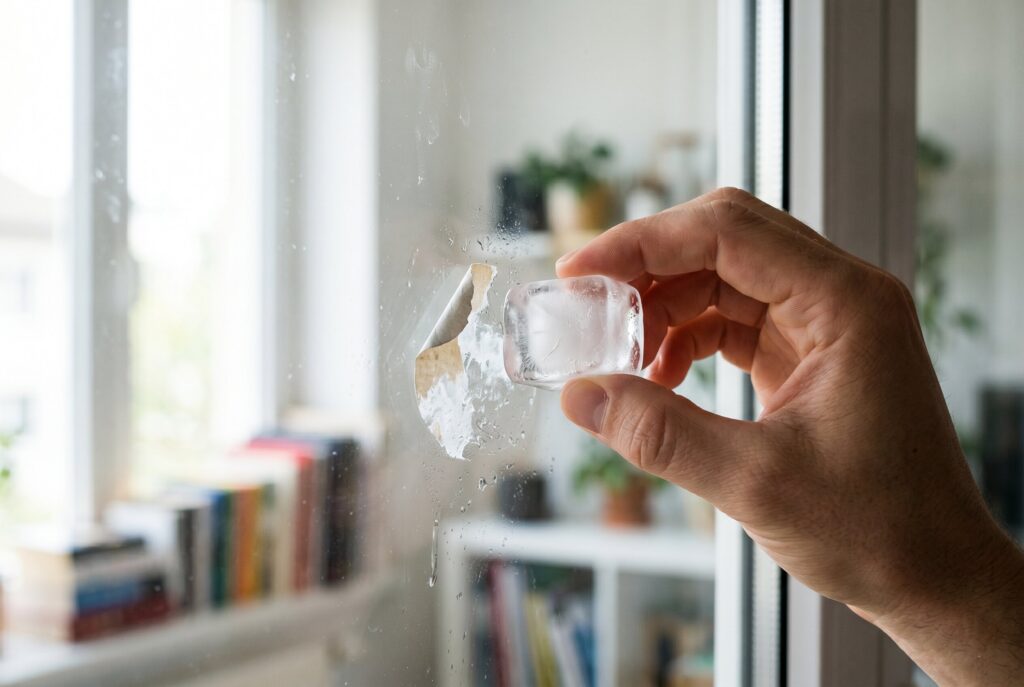
For thick, gummy residue, hold an ice cube or ice pack against it for a few minutes. The cold makes the adhesive stiff and brittle, so you can chip or scrape it off with a plastic scraper instead of smearing it around.
Strong Household Chemicals
If pantry methods don’t work, these solvents dissolve tougher or older adhesive, including glue that has baked in the sun.
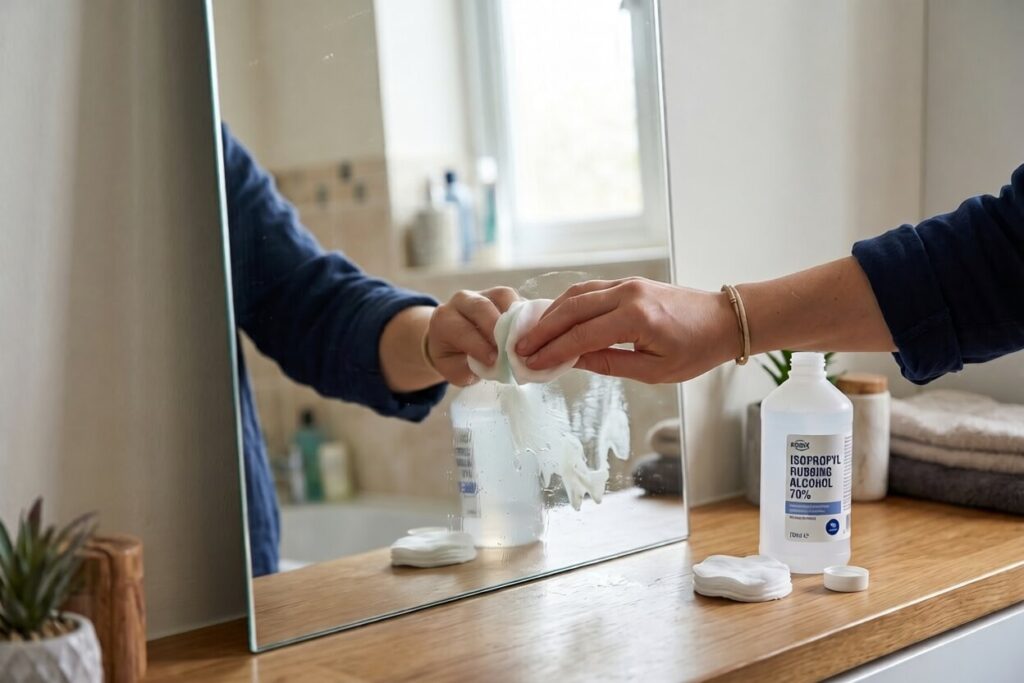
10. Rubbing Alcohol (Isopropyl)
Dampen a cloth or cotton ball with rubbing alcohol, press it on the residue for a minute or two, then rub. Alcohol evaporates quickly and doesn’t leave an oily film, which makes it a good choice for windows and mirrors. It’s flammable, so keep it away from open flames.
11. Nail Polish Remover (Acetone)
Acetone-based nail polish remover cuts through stubborn glue quickly. Apply it with a cotton ball, wait a minute, and wipe. Acetone can damage paint, varnish, and many plastics, so protect nearby frames and trim, work in a ventilated room, and keep it away from flames.
12. WD-40
Spray a light coat of WD-40 on the residue, wait a few minutes, and wipe it away. It’s useful for old, sun-baked adhesive on outdoor glass. Afterward, wash the glass with soapy water to remove the oily film, and wash jars very thoroughly before using them for food. WD-40 is flammable, so use it in a ventilated area.
Professional-Grade Products
Commercial adhesive removers are formulated for tough glues and are worth keeping on hand if you remove stickers often. Always follow the label directions.
13. Goo Gone Adhesive Remover
Goo Gone is a widely available citrus-oil-based remover. Apply it to the residue, let it sit for the time listed on the label, then wipe it off. Wash the glass with warm soapy water afterward to remove the product.
14. 3M Adhesive Remover
Automotive adhesive removers like 3M’s are designed for strong adhesives, such as dealer stickers and parking permits on car windows. Use them on the outside of the glass and keep them off tinted film, rubber seals, and the rear window’s defroster lines. Follow the label for dwell time and ventilation.
15. Citrus-Based Adhesive Remover
Citrus-based removers use d-limonene, a solvent made from orange peels, to dissolve sticky residue with a milder smell than many chemical removers. They work well on jars, bottles, and household glass. Apply, wait a few minutes, wipe, and wash the glass with soapy water afterward.
Surface-Specific Guides: Beyond the Glass Jar
Different kinds of glass need slightly different care. Use this table to pick the safest starting point.
| Type of Glass | Best First Method | Avoid |
|---|---|---|
| Jars and bottles for food | Hot soapy water soak, then oil | Boiling water; solvents without washing afterward |
| Windows | Hairdryer, then rubbing alcohol | Heat guns on cold glass; metal blades on coated glass |
| Mirrors | Rubbing alcohol on a cloth | Soaking the edges, which can damage the silver backing |
| Car windows (outside) | Hairdryer, then automotive adhesive remover | Harsh solvents near paint and rubber seals |
| Rear window with defroster lines | Rubbing alcohol, wiping along the lines | Scraping across the lines |
| Tinted windows (film side) | Soapy water and a plastic card | Razor blades, ammonia cleaners, acetone |
| Shower doors (tempered glass) | Oil or alcohol with a plastic scraper | Metal razor blades |
Common Mistakes to Avoid
Using a metal blade on the wrong glass. A new, single-edge razor blade held at a low angle on wet, soapy glass is a common way to remove stubborn residue from ordinary flat glass. But metal blades can scratch tinted film, coated or Low-E glass, and tempered glass such as shower doors, and they can cut car defroster lines. Try a plastic scraper first, and only use a metal blade on plain glass.
Pouring boiling water on glass. Sudden temperature changes can crack glass, especially thick jars or cold windows. Use hot tap water instead.
Scrubbing before the glue softens. Rubbing dry adhesive just smears it. Give oil, alcohol, or heat time to work first.
Skipping the final wash. Oils and solvents leave a film that attracts dust and causes streaks, and residue from products like WD-40 shouldn’t stay on containers used for food.
How to Get a Streak-Free Finish
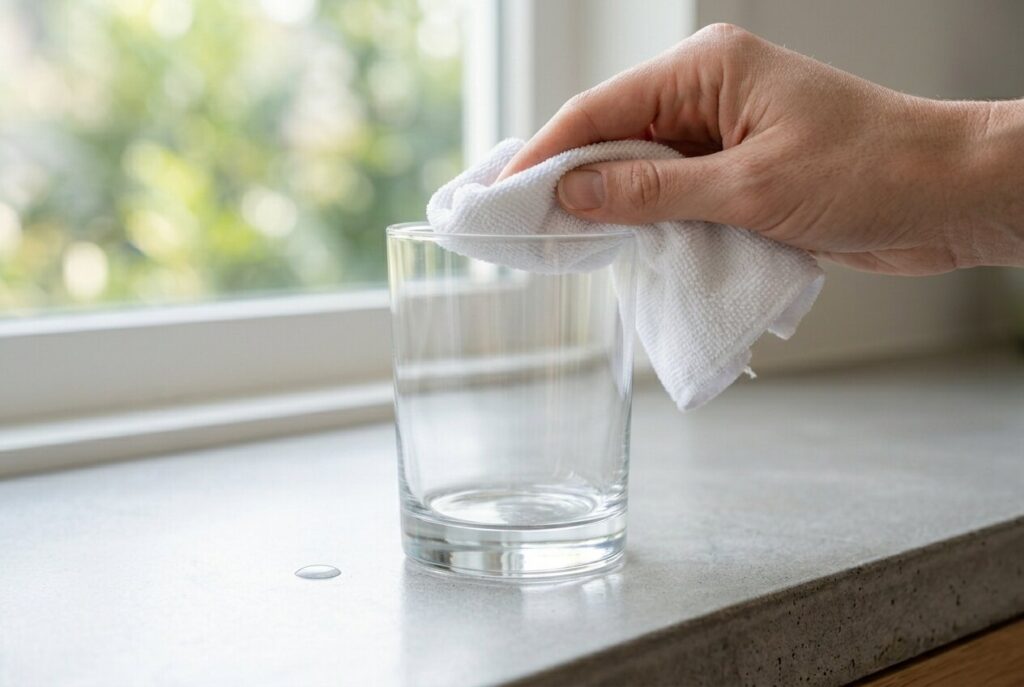
Once the glue is gone, wash the area with warm water and a drop of dish soap to cut any oily film, then rinse. Spray on glass cleaner or a 50/50 mix of white vinegar and water and buff with a clean, dry microfiber cloth. Work out of direct sunlight, since cleaner that dries too fast is the most common cause of streaks.
Crucial Safety & Tools Checklist
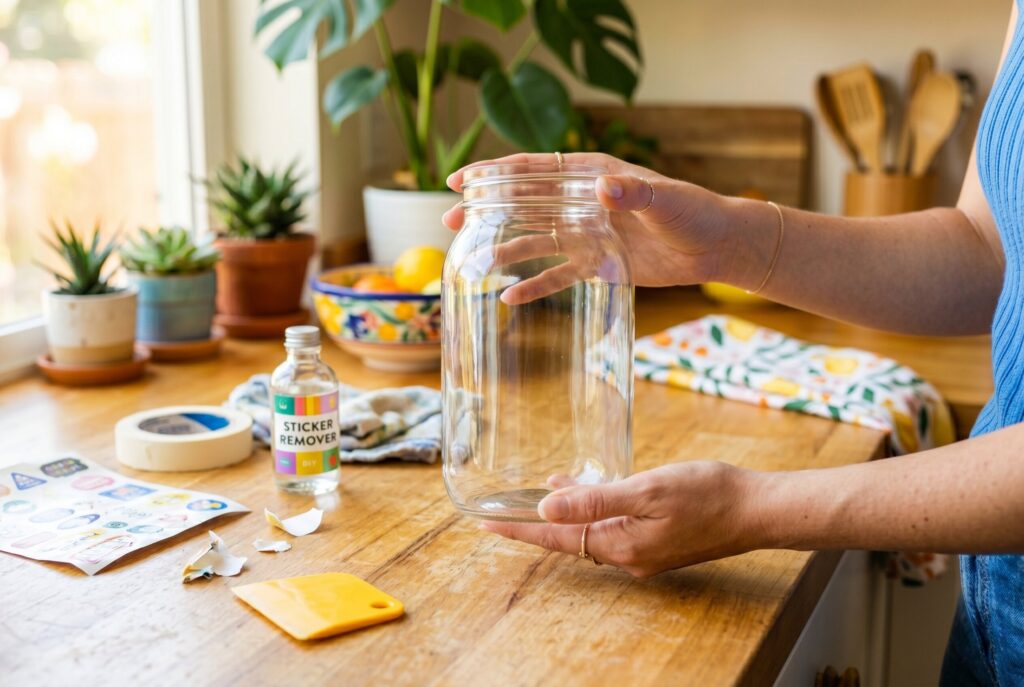
- Plastic scraper or an old gift card
- Microfiber cloths and paper towels
- Dish soap and hot water
- Cooking oil and baking soda
- Rubbing alcohol
- A hairdryer
- A commercial adhesive remover for tough jobs
Rubbing alcohol, acetone, WD-40, and many adhesive removers are flammable, so use them in a ventilated room away from flames and heat sources, and never combine them. Wear gloves if you have sensitive skin, test near painted or plastic parts first, and always wash glass that will hold food or drinks.
>>> How to Organize Bathroom Cabinets in 6 Simple Steps
Frequently Asked Questions
What is the fastest way to remove a sticker from glass?
Warm the sticker with a hairdryer for 30 to 60 seconds, peel it off slowly, then wipe any leftover glue with rubbing alcohol. For jars, a 20- to 30-minute soak in hot soapy water is just as quick and easier.
Can you use a razor blade on glass?
On plain, flat glass, yes, if you use a new blade at a low angle on wet, soapy glass. Avoid metal blades on tinted windows, coated or Low-E glass, tempered shower doors, and car defroster lines, and try a plastic scraper first.
Does vinegar remove sticker residue from glass?
Vinegar can soften paper labels and light residue, but oil or rubbing alcohol usually works better on thick, gummy adhesive.
How do you remove a label from a glass jar you want to reuse for food?
Soak the jar in hot soapy water, peel the label, and rub off the remaining glue with cooking oil or a baking soda and oil paste. Finish by washing the jar thoroughly in hot soapy water before using it for food.
Will Goo Gone or WD-40 damage glass?
They won’t harm the glass itself, but they can affect nearby paint, plastic, rubber seals, and window tint. Keep them on the glass only, and wash the surface with soapy water afterward.
Conclusion

Knowing how to remove stickers from glass mostly comes down to patience and the right order of steps: soften the glue with water, heat, or oil, peel slowly, dissolve what’s left, and finish with a soapy wash and a microfiber polish. Start with the gentlest method and move to stronger solvents only when you need them, and your jars, windows, and mirrors will come out clean and undamaged.